
Best LTE Proxy Providers.
LTE proxies sit in a strange corner of the proxy market. Everyone wants them when regular residential proxies start failing, but not everyone understands what they are actually buying.
Some providers sell “LTE proxies.” Others call them “4G mobile proxies,” “5G mobile proxies,” or simply “mobile proxies.” In practice, they all point to the same basic idea: your traffic routes through real mobile carrier networks instead of a datacenter or home broadband connection.
That difference matters.
A datacenter IP may be fast, cheap, and easy to scale, but many sites can spot it quickly. A residential IP looks more natural, but it still comes from fixed-line internet. A mobile LTE proxy comes from a cellular network, often behind carrier-grade NAT, where many real users may share similar outward-facing carrier infrastructure. That makes mobile traffic harder to separate from normal smartphone traffic when used properly. SOAX explains this carrier-grade NAT effect as one reason mobile proxies are harder for websites to block compared with ordinary proxy types.
This guide breaks down the best LTE proxy providers for serious users: data teams, ad verification teams, app testers, social media managers, ecommerce researchers, SEO analysts, and automation operators who need mobile-grade IP trust without guessing which vendor is worth testing.
Use these tools responsibly. LTE proxies should be used for legal research, public data collection, quality assurance, localization testing, ad verification, brand monitoring, and similar permitted workflows. They are not a free pass to abuse platforms, bypass account restrictions, or violate privacy rules.
Quick Comparison Table: Best LTE Proxy Providers
| Provider | Best For | Mobile IP Pool | Network Type | Targeting | Rotation Control | Pricing Snapshot | Main Strength | Possible Drawback |
|---|---|---|---|---|---|---|---|---|
| Oxylabs | Enterprise scraping and ad verification | 20M+ mobile IPs | 3G, 4G, 5G, LTE | Country, state, city, ASN, coordinates | Rotating and sticky | Starts around $7.50/GB on starter mobile plans | Premium infrastructure and targeting | Not the cheapest for small projects |
| SOAX | Precise geo targeting and compliance focused teams | 33M+ mobile IPs | 3G, 4G, 5G, LTE | Country, city, ASN, carrier style targeting | Rotating, sticky, time based | Starter mobile plan listed at $3.60/GB with 25GB included | Strong control and clean dashboard | Minimum monthly plans may be high for casual users |
| Bright Data | Large scale enterprise workflows | 7M+ mobile IPs listed across 195 countries | 3G, 4G mobile | Country, city, ZIP, ASN, carrier | Advanced session control | Custom and plan based pricing | Mature tooling and massive proxy ecosystem | More complex setup for beginners |
| Decodo | Balanced mobile proxies for app testing and scraping | 10M+ mobile IPs | 3G, 4G, 5G | 160+ locations, 700+ carriers | Rotating and sticky sessions | Mobile plans vary by setup | Strong usability and broad coverage | Advanced enterprise features may cost more |
| NetNut | Business teams wanting stable plans | Not always publicly separated by mobile pool size | 3G, 4G, 5G, LTE | Geo and network based options | Rotating sessions | Starter plan shown at $7.6/GB with 13GB included | Straightforward business pricing | Less talked about than Bright Data or Oxylabs |
| IPRoyal | Budget friendly mobile proxy users | Smaller but practical network | 3G, 4G, 5G, LTE | Location based | Auto rotation and session control | Flexible packages, unlimited traffic on rotating mobile proxies | Good value and simple UI | Smaller network than top enterprise vendors |
| Proxy-Seller | Dedicated mobile IPs and per IP buying | Dedicated and shared mobile pools | 4G, 5G, LTE | Country and carrier options | Timer and on demand rotation | From about $10/IP | Easy dedicated mobile proxy buying | Less ideal for huge data pipelines |
| Rayobyte | High traffic scraping teams | Rotating mobile network | 3G and 4G | Primarily scraping focused | Rotating mobile IPs | Trial listed at $250 for 500GB, then monthly plans | Very aggressive bandwidth pricing | Fewer mobile generations than some rivals |
| Infatica | Flexible mobile data collection | 5M+ mobile IPs | Mobile carrier IPs | Geo targeting options | Rotating sessions | Trial and per GB plans available | Flexible plans and public mobile offering | Interface may feel less polished than bigger brands |
| AirProxy | Dedicated SIM based mobile proxies | Dedicated SIM setup | 4G mobile | Location limited compared with large pools | Custom rotation time | €67 per proxy for 30 days | Dedicated SIM card and unlimited bandwidth | Not built for global enterprise scale |
What Is an LTE Proxy?
An LTE proxy is a proxy connection that routes your internet traffic through a mobile carrier network, usually via 4G LTE, 5G, or sometimes older 3G infrastructure.
Instead of your request coming from a cloud server, it appears to come from a mobile device or mobile network endpoint. That makes LTE proxies useful when you need to see how a website, app, ad, or marketplace behaves for real mobile users.
A strong LTE proxy setup usually includes:
- Real mobile carrier IPs
- Rotation by request, timer, or manual trigger
- Sticky sessions for logins or multi step workflows
- Country, city, carrier, or ASN targeting
- HTTP, HTTPS, and sometimes SOCKS5 support
- Clean usage rules and abuse prevention
The real value is not only the IP. It is the network reputation behind that IP. Mobile IPs tend to carry higher trust because they are tied to real carrier infrastructure and real consumer traffic patterns.
Best LTE Proxy Providers Reviewed
1. Oxylabs: Best LTE Proxy Provider for Enterprise Teams
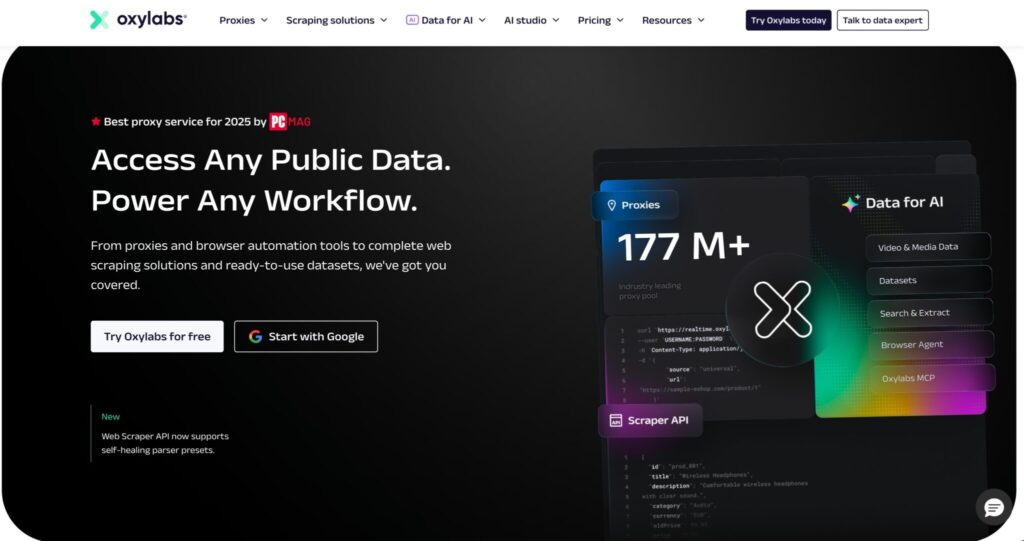
Oxylabs is one of the strongest picks if your proxy work is tied to serious data collection, brand monitoring, ad verification, or multi country testing.
Its mobile proxy product lists 20M+ mobile IPs across 140+ countries, with filtering by continent, country, state, city, coordinates, and ASN. Oxylabs also lists 99.9% uptime for its mobile proxy network.
That level of targeting matters when your project depends on location accuracy. For example, checking mobile ad placements in a specific region is not the same as scraping a public page from “somewhere in the United States.” You may need the traffic to appear from a city, carrier, or network type that matches the campaign.
Oxylabs pricing is also clearer than many enterprise vendors. Its mobile proxy pricing page lists plans such as Starter at 4GB for $30, Basic at 15GB for $100, Advanced at 100GB for $500, and Corporate at 715GB for $2,500, with lower per GB rates on larger plans.
Best For
Oxylabs works best for larger teams that care about uptime, targeting precision, documentation, support, and predictable scaling.
Pro Tip
Use Oxylabs when the cost of failed requests is higher than the proxy bill. If your workflow loses money when sessions fail, cheap mobile proxies can quickly become expensive.
2. SOAX: Best for Granular Targeting and Clean Proxy Control
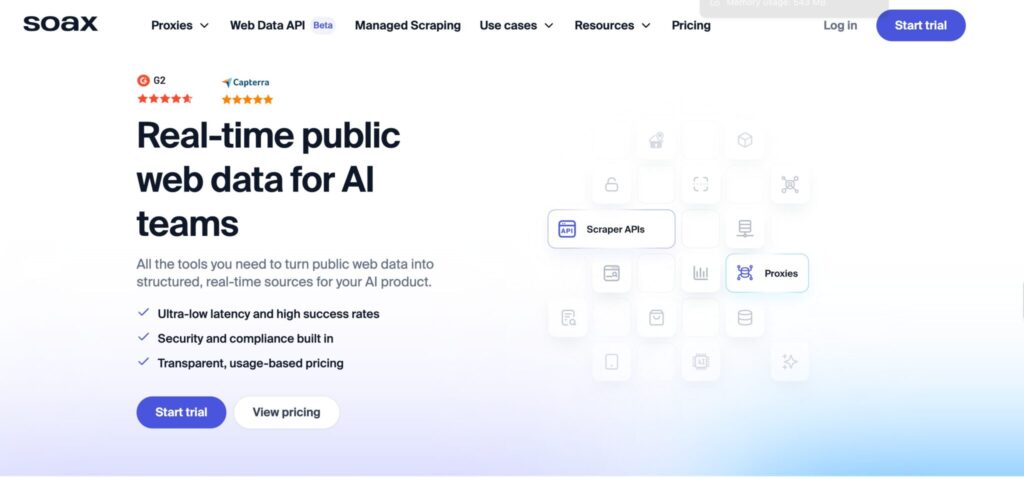
SOAX has become a popular name in the mobile proxy space because it gives users strong targeting control without making the interface feel like an enterprise firewall.
Its mobile proxy page lists 33M+ mobile IPs in 195+ countries, covering 5G, 4G, 3G, and LTE connections. SOAX also shows bundled plans starting at $3.60/GB with 25GB included on the Starter plan, then lower per GB rates on larger tiers.
The platform is especially useful when your proxy workflow needs tighter control over geography and sessions. Think ecommerce price checks, mobile SERP tracking, ad previews, app localization QA, and mobile content testing.
SOAX also publicly emphasizes reliable and ethically sourced proxy infrastructure, with claims such as 99.95% proxy success rate and 99.9% uptime on its broader proxy page.
Best For
SOAX is a good fit for teams that need precise targeting, decent scale, and a dashboard that does not require too much hand holding.
Pro Tip
SOAX is worth testing when city level or carrier style targeting matters more than raw volume. It is not only about having millions of IPs. It is about getting the right IP at the right moment.
3. Bright Data: Best for Large Scale Proxy Infrastructure
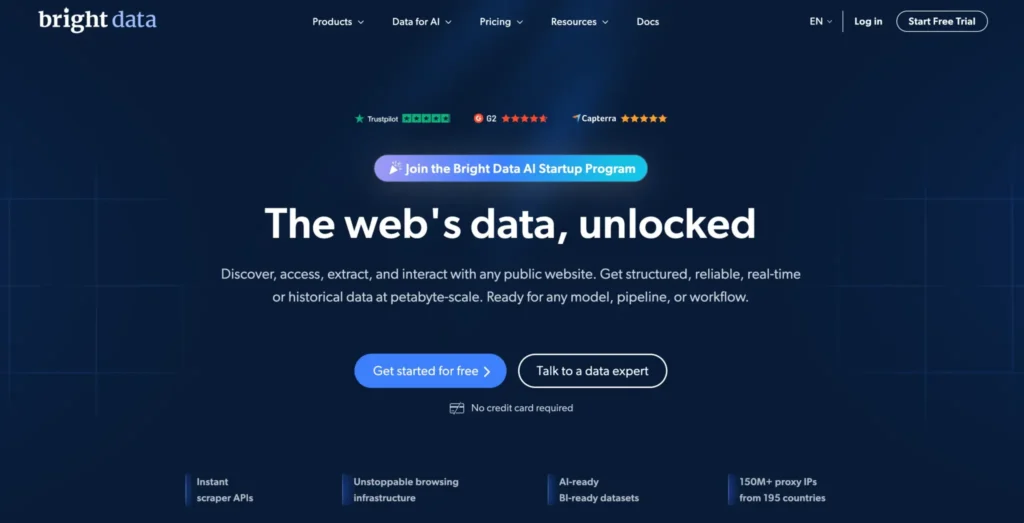
Bright Data is one of the most established names in the proxy industry. It is not always the simplest option, but it is one of the most complete.
Bright Data lists mobile proxies as part of a wider proxy infrastructure that includes residential, datacenter, ISP, and mobile IPs. Its HTTP/S proxy page lists mobile proxies with 7M+ IPs available in 195 countries and describes them as a large real peer 3G and 4G mobile network used for mobile ad verification and mobile site crawling.
Bright Data is more than a proxy seller. It offers proxy management, scraping tools, data products, monitoring, logs, and enterprise level controls. That makes it useful for teams that want a full data collection stack instead of only a proxy endpoint.
The tradeoff is complexity. Beginners may find it more technical than plug and play providers. But for teams that know what they are doing, Bright Data gives deep control.
Best For
Bright Data is best for enterprise teams, serious data operations, and companies that need proxy infrastructure plus tooling.
Pro Tip
Bright Data makes the most sense when you need governance, logs, team access, and scale. If you only need one LTE proxy for a few browser profiles, it may be more than you need.
4. Decodo: Best Balanced LTE Proxy Provider
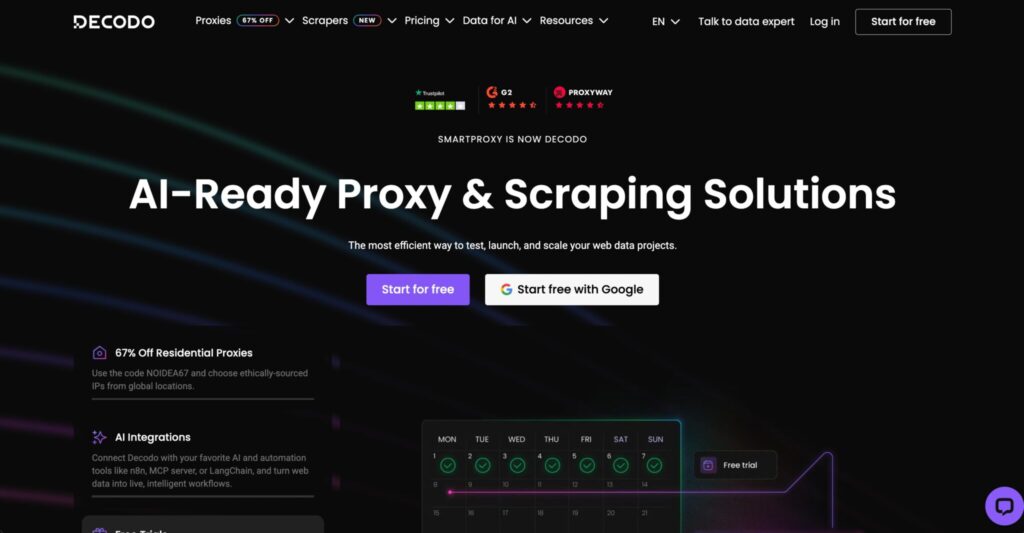
Decodo, formerly known as Smartproxy, is a strong middle ground between enterprise power and everyday usability. TechRadar notes the Smartproxy to Decodo rebrand and describes the platform as offering residential, mobile, datacenter, scraping tools, and site unblocker products.
Its mobile proxy page lists 10M+ 3G, 4G, and 5G mobile IPs from 700+ carriers across 160+ worldwide locations. It also explains the difference between 3G, 4G LTE, and 5G proxies, with 4G LTE positioned as a common choice for scraping, automation, and app testing.
Decodo is easy to recommend for teams that want mobile proxies without getting buried under enterprise onboarding. The dashboard is cleaner than many older proxy tools, and the provider offers enough coverage for most commercial use cases.
Best For
Decodo is ideal for app testing, mobile web QA, SERP checks, ecommerce monitoring, and users who want a balanced provider.
Pro Tip
If you are comparing Decodo against SOAX, test both on your actual target sites. The “best” mobile proxy provider often depends on which pool performs better on your use case, not on who has the bigger homepage number.
5. NetNut: Best for Business Friendly Mobile Proxy Plans
NetNut is another serious provider with mobile proxies covering 3G, 4G, 5G, and LTE connections. Its mobile proxy page lists pricing such as Starter at $7.6/GB with a 13GB plan for $99 monthly, Advanced at $7.35/GB with 34GB for $250 monthly, and Production at $6.93/GB with 72GB for $499 monthly.
NetNut’s broad positioning is simple: use mobile proxies to avoid IP based blocks, access geo restricted experiences, and collect data from the perspective of real mobile users.
The provider is not always as heavily discussed as Bright Data or Oxylabs, but it has a place for teams that prefer clear monthly packages and business grade infrastructure.
Best For
NetNut is a good match for companies that want predictable mobile proxy plans and do not want to build everything from scratch.
Pro Tip
NetNut is worth testing if you need mobile proxies as part of a broader business workflow, not just one off browser sessions.
6. IPRoyal: Best Value LTE Proxy Provider
IPRoyal is often a practical choice for users who want mobile proxies without jumping straight into enterprise pricing.
Its mobile proxy product supports 5G, 4G, 3G, and LTE. The provider promotes flexible pricing, unlimited bandwidth on rotating mobile proxies, and quick response times of around 0.8 seconds.
IPRoyal’s documentation says dedicated mobile proxies are available in plans from 1 to 90 days, while rotating mobile proxies run on 30 day subscription cycles. It also describes the mobile setup as real mobile IPs from residential mobile network pools, using physical mobile devices with SIM cards.
That makes IPRoyal useful for users who want something closer to a real device based mobile setup rather than only a large shared pool.
Best For
IPRoyal is best for small teams, solo operators, social media managers, and buyers who want affordable mobile proxy access.
Pro Tip
If unlimited bandwidth is attractive, check rotation rules and fair usage details before buying. Unlimited traffic is useful only if the session quality stays stable under your workload.
7. Proxy-Seller: Best for Dedicated Mobile Proxy Buying
Proxy-Seller is a strong option when you want to buy mobile proxies in a more direct, per IP style.
Its mobile proxy page advertises 5G, 4G, and LTE rotating mobile proxies from real mobile carriers, with options for dedicated or shared pools. It also mentions timer based or on demand IP rotation.
The same page lists pricing from about $10/IP and says its mobile proxies use carrier IPs from companies such as AT&T, T-Mobile, Verizon, Vodafone, Jio, and Orange.
This makes Proxy-Seller attractive for users who care more about dedicated access and simple buying than huge enterprise proxy pools.
Best For
Proxy-Seller works well for mobile account testing, localized browsing, social media workflows, and users who prefer per IP pricing.
Pro Tip
Use dedicated mobile proxies when session consistency matters. Shared pools can be fine for broad scraping, but dedicated setups are usually better for account based workflows.
8. Rayobyte: Best for High Bandwidth Mobile Scraping
Rayobyte’s mobile proxy product is built with scraping in mind. Its page says it currently offers rotating mobile proxies, assigning a unique mobile IP address to every connection, and supports 3G and 4G generations.
The pricing is interesting because it is bandwidth heavy. Rayobyte lists a Trial plan at $250 for 500GB, Professional at $250/month for 200GB, Business at $1,000/month for 909GB, Corporate at $2,500/month for 2,632GB, and Enterprise plans as low as $0.50/GB for 5TB+.
That is unusual in the mobile proxy market, where many providers charge much more per GB. The catch is that Rayobyte’s mobile offering may not be as flexible on targeting and mobile generation support as some premium vendors.
Best For
Rayobyte is best for high bandwidth scraping teams that want rotating mobile IPs at aggressive usage rates.
Pro Tip
Rayobyte should be tested with your exact targets before committing. Cheap bandwidth is excellent, but only if success rates stay strong.
9. Infatica: Best for Flexible Mobile Proxy Testing
Infatica offers mobile proxies with 5M+ IPs and plan options that include trials and traffic based packages. Its mobile proxy page mentions a 7 day trial for $8, while its pricing page lists pay as you go and larger bandwidth packages with lower per GB rates as volume rises.
Infatica is not always the first name mentioned in enterprise proxy comparisons, but it can be useful when you want a flexible mobile proxy provider that supports practical testing before moving into larger plans.
Best For
Infatica is good for teams testing mobile data collection, QA, ad checks, or regional access before committing to a more expensive provider.
Pro Tip
Infatica is worth shortlisting if you are testing several providers side by side. The goal should be real target performance, not only homepage claims.
10. AirProxy: Best for Dedicated SIM Based 4G Proxies
AirProxy takes a more dedicated route. Its product page lists 4G mobile proxies at €67 per proxy for 30 days, with unlimited bandwidth, a dedicated SIM card, limitless IP rotations, custom rotation time, and instant delivery.
This is not the same model as a giant rotating mobile pool. AirProxy is more suited to users who want a dedicated mobile connection and tight control over a smaller number of proxies.
That can be useful for browser profiles, mobile social media testing, and workflows where you want the behavior of a dedicated SIM instead of a massive shared proxy pool.
Best For
AirProxy is best for dedicated mobile sessions, account workflows, and users who prefer quality over global scale.
Pro Tip
Dedicated SIM based proxies are usually better for fewer, longer sessions. They are not always the best choice for millions of lightweight scraping requests.
How to Choose the Best LTE Proxy Provider
1. Check the Real Mobile IP Pool, Not Just the Marketing Number
A huge IP pool sounds impressive, but it does not always mean better performance for your use case.
Ask these questions:
- How many mobile IPs are available in your target country?
- Does the provider support your required city or region?
- Can you target carrier, ASN, or mobile network type?
- Are the IPs shared, dedicated, or both?
- Does the provider publish uptime or success rate claims?
- Can you test the pool before buying a large plan?
For example, Oxylabs advertises 20M+ mobile IPs across 140+ countries, while SOAX lists 33M+ mobile IPs across 195+ countries. Both are strong numbers, but the better choice depends on the country, carrier, target website, and session type you need.
2. Understand Rotation Protocols Before You Buy
Rotation is where many buyers make mistakes.
There are four common rotation styles:
| Rotation Type | How It Works | Best For |
|---|---|---|
| Per request rotation | New IP for each request | Large scraping jobs |
| Timed rotation | IP changes every few minutes | SERP tracking, product monitoring |
| Sticky sessions | Same IP stays for a set period | Logins, carts, multi step workflows |
| Manual rotation | User triggers IP change | Browser profiles, account checks |
If you are scraping public pages at scale, per request rotation may work well. If you are logging into a dashboard, checking an ad placement, or testing an app flow, sticky sessions are usually safer.
3. Match Proxy Type to Use Case
LTE proxies are powerful, but they are not always the cheapest or fastest option.
Use LTE proxies for:
- Mobile ad verification
- App testing
- Mobile SERP tracking
- Social platform QA
- Ecommerce localization checks
- Brand protection
- Public mobile web data collection
- Mobile first scraping targets
Avoid using LTE proxies when:
- A datacenter proxy works fine
- You only need speed and low cost
- You are scraping static pages with no strict blocking
- You need long term static IPs more than mobile trust
For static sessions, ISP proxies may sometimes be better. For high speed API style scraping, datacenter proxies may be enough. For mobile trust, LTE proxies win.
4. Test Latency and Success Rate Together
Do not judge proxies only by speed.
A fast proxy that gets blocked is useless. A slower proxy with a 95% success rate may save more money.
Track:
- Response time
- Timeout rate
- CAPTCHA rate
- Block rate
- Session drop rate
- Cost per successful request
- IP reuse pattern
- Geo accuracy
The best metric is not “price per GB.” It is “cost per successful result.”
5. Look at Session Control for Account Based Workflows
If you use LTE proxies for browser profiles, app QA, social media testing, or account workflows, session stability is critical.
Look for:
- Sticky sessions
- Manual IP refresh
- Dedicated IP or SIM options
- Carrier selection
- Low IP reuse
- Consistent location
- SOCKS5 support if your tool requires it
For this type of use, providers like AirProxy, IPRoyal, and Proxy-Seller may be easier to manage than giant rotating pools.
6. Check Protocol Support
Most LTE proxy providers support HTTP and HTTPS. Some also support SOCKS5.
SOCKS5 can be useful when your tool needs broader traffic handling beyond standard web requests. HTTP/S is usually enough for browser based scraping, SERP tracking, and web QA.
Before buying, confirm:
- HTTP support
- HTTPS support
- SOCKS5 support
- Username and password authentication
- IP whitelist authentication
- API access
- Endpoint format
- Rotation endpoint or dashboard control
7. Review Compliance and Abuse Controls
Serious providers now care about responsible proxy use. That is a good thing.
Look for:
- Clear acceptable use policy
- KYC or business review for sensitive use cases
- No shady “anything goes” language
- Support for legal public data collection
- Transparent sourcing claims
- Documentation on prohibited activities
Cheap anonymous providers with no rules may look attractive, but poor abuse control often leads to burned IP pools and lower success rates.
Which LTE Proxy Provider Should You Choose?
Here is the simple version:
- Choose Oxylabs if you need enterprise grade mobile proxies with strong targeting.
- Choose SOAX if you want clean controls, strong geo targeting, and mobile specific flexibility.
- Choose Bright Data if you need a full proxy and data collection ecosystem.
- Choose Decodo if you want a balanced mobile proxy provider that is easier to operate.
- Choose NetNut if you prefer business friendly mobile proxy plans.
- Choose IPRoyal if you want budget friendly mobile proxies with flexible setup.
- Choose Proxy-Seller if you want dedicated or shared mobile proxies sold in a simple per IP model.
- Choose Rayobyte if your main concern is high bandwidth mobile scraping.
- Choose Infatica if you want flexible testing and traffic based mobile plans.
- Choose AirProxy if you want dedicated SIM based 4G proxies for controlled sessions.
For most professional users, I would start testing with SOAX, Oxylabs, Decodo, and IPRoyal. That gives you a strong mix of enterprise quality, usability, price flexibility, and real mobile coverage.
FAQs About LTE Proxy Providers
1. What is the difference between LTE proxies and mobile proxies?
LTE proxies are a type of mobile proxy. Most providers use the broader term “mobile proxies” because their networks may include 3G, 4G LTE, and 5G connections. If you specifically need LTE, check whether the provider allows network type or carrier filtering.
2. Are LTE proxies better than residential proxies?
LTE proxies usually have higher trust for mobile specific workflows because they route through carrier networks. Residential proxies are often cheaper and still reliable for many scraping and geo testing tasks. LTE proxies are better when the target site treats mobile traffic differently or blocks regular proxy traffic aggressively.
3. Are LTE proxies good for web scraping?
Yes, LTE proxies can work well for public web scraping, especially on mobile heavy websites or platforms with strict IP reputation checks. They are more expensive than datacenter proxies, so they should be used where cheaper proxy types fail or where mobile accuracy matters.
4. Do LTE proxies support sticky sessions?
Many good LTE proxy providers support sticky sessions. Sticky sessions let you keep the same IP for a set period, which is useful for logins, carts, mobile app testing, and multi step workflows. Always confirm the maximum sticky session length before buying.
5. Why are LTE proxies more expensive?
LTE proxies cost more because mobile IPs are harder to source and maintain. Providers may need carrier SIMs, mobile devices, modem farms, carrier partnerships, traffic management systems, and stricter abuse controls. SOAX also notes that mobile proxies generally cost more than datacenter and other proxy types because mobile IP infrastructure is more expensive to operate.
6. What is the best LTE proxy provider for beginners?
IPRoyal, Proxy-Seller, and Decodo are usually easier for beginners than enterprise first platforms. SOAX is also beginner friendly if you are comfortable with bandwidth based plans and proxy dashboards.
7. What is the best LTE proxy provider for enterprise scraping?
Oxylabs, Bright Data, and SOAX are stronger choices for enterprise scraping because they offer large pools, better targeting, support, and more mature infrastructure. Oxylabs is especially strong if your team needs detailed geo filters and high uptime.
8. Should I choose rotating or dedicated LTE proxies?
Choose rotating LTE proxies for scraping, SERP monitoring, ad verification, and large request volume. Choose dedicated LTE proxies for browser profiles, account based workflows, mobile QA, and any task where session consistency matters.
9. Can LTE proxies be detected?
Yes. No proxy type is invisible. Sites can still detect automation through browser fingerprints, headers, behavior, request timing, cookies, JavaScript signals, and account history. LTE proxies help with IP trust, but they do not fix bad automation patterns.
Final Verdict
The best LTE proxy provider depends on what you are trying to protect: scale, session quality, geo accuracy, price, or simplicity.
For enterprise grade mobile scraping and ad verification, Oxylabs and Bright Data are the safest premium picks. For strong targeting with a cleaner buying experience, SOAX is one of the best all round choices. For a balanced mix of usability and coverage, Decodo deserves a serious test. For smaller teams watching budget, IPRoyal and Proxy-Seller are practical options. For high bandwidth scraping, Rayobyte is hard to ignore. For dedicated SIM style sessions, AirProxy has a clear niche.
The smart move is simple: shortlist three providers, run the same workflow on each, and measure cost per successful result. LTE proxies are not bought on homepage claims. They are bought on how cleanly they perform against your real targets.