
Best Residential SOCKS5 Proxies.
Most proxy mistakes do not happen because someone picked a “bad” provider. They happen because they picked the wrong type of proxy for the job.
A residential HTTP proxy might work fine for basic scraping. A datacenter proxy might fly through simple requests at a lower cost. But when your workflow needs app-level compatibility, TCP traffic support, sticky sessions, browser automation, SEO tools, social platforms, market intelligence tools, or software that simply does not behave well with HTTP-only proxies, SOCKS5 becomes a much better fit.
That is where residential SOCKS5 proxies sit in a sweet spot.
You get the trust profile of real ISP-assigned residential IPs, plus the wider protocol compatibility of SOCKS5. The result is a proxy setup that feels less fragile when you are running more technical workflows, especially anything involving non-browser tools, custom scripts, scraping clients, account workflows, app testing, or multi-location monitoring.
Still, not every provider that says “SOCKS5” is equal. Some support SOCKS5 only on certain proxy types. Some restrict target ports. Some are great for rotating residential traffic but weaker for long sticky sessions. Some offer huge pools but charge more. Others are cheaper, but you may trade away targeting depth, support, or pool quality.
This guide breaks down the best residential SOCKS5 proxy providers, what they are actually good at, and how to choose one without burning money on the wrong setup.
Quick Answer: Best Residential SOCKS5 Proxy Providers
If you want a quick shortlist, these are the strongest options right now:
- Bright Data: Best enterprise-grade residential SOCKS5 proxy network
- Oxylabs: Best for large-scale data collection and premium infrastructure
- Decodo: Best balance of speed, usability, and pricing
- SOAX: Best for precise geo-targeting and clean dashboard control
- NetNut: Best for high-scale teams needing unlimited concurrency
- IPRoyal: Best budget-friendly residential SOCKS5 proxies
- Infatica: Best for developer-friendly SOCKS5 integrations
- Webshare: Best for affordable static and rotating residential options
- DataImpulse: Best low-cost pay-as-you-go residential SOCKS5 provider
- Proxyrack: Best for protocol flexibility, including SOCKS5 and UDP
What Are Residential SOCKS5 Proxies?
A residential proxy routes your traffic through an IP address assigned by an internet service provider to a real residential connection. That makes the request look closer to normal user traffic than traffic coming from a data center.
SOCKS5 is a proxy protocol that works at a lower level than HTTP proxies. Instead of being limited mostly to web traffic, SOCKS5 can handle a wider range of traffic types. This is why it is often used for scraping tools, SEO software, desktop apps, automation clients, app testing, and other workflows where HTTP-only proxying feels too narrow.
SOAX describes SOCKS proxies as internet protocols that route network packets between a client and server through a proxy server, while Bright Data notes that SOCKS5 can support TCP and UDP-style traffic handling depending on the provider’s configuration and proxy type.
In plain English, residential SOCKS5 proxies give you two things at once:
Residential trust: Your traffic comes from real residential IP space.
SOCKS5 compatibility: Your proxy can work with more tools, clients, and traffic types than a basic HTTP proxy.
That combination is useful when you care about both connection quality and software compatibility.
Residential SOCKS5 Proxies vs HTTP Residential Proxies
HTTP proxies are easier to set up for standard web scraping, browser requests, and API-style workloads. They are often enough for simple jobs.
SOCKS5 proxies make more sense when the tool or workflow needs broader protocol support. For example, desktop software, certain bots, app testing tools, custom network clients, FTP-style workflows, and traffic-heavy systems may perform better with SOCKS5.
There is one important catch. SOCKS5 does not automatically encrypt traffic by itself. If privacy matters, you still need HTTPS targets, TLS, SSH tunneling, or another secure layer. Several providers explain that SOCKS5 is flexible, but encryption depends on how the traffic is handled above the proxy layer.
Massive Comparison Table: Best Residential SOCKS5 Proxy Providers
| Provider | Best For | Residential SOCKS5 Support | IP Pool | Geo Coverage | Rotation Options | Pricing Style | Main Strength | Main Limitation |
|---|---|---|---|---|---|---|---|---|
| Bright Data | Enterprise teams | Yes | 400M+ monthly residential IPs | 195+ countries | Rotating and sticky | Pay-as-you-go and plans | Huge network, advanced controls | More technical setup |
| Oxylabs | Large-scale scraping | Yes | 177M+ proxy pool | 188 countries on SOCKS5 page | Rotating residential | Premium plans | Strong infrastructure and uptime | Higher cost |
| Decodo | Balanced value | Yes | 115M+ residential IPs | 195+ locations | Rotating and sticky | Starts from GB-based plans | Easy dashboard, strong speed | Not the deepest enterprise toolkit |
| SOAX | Geo-targeted projects | Yes | 155M+ residential IPs | 195+ geos | Sticky and rotating | GB-based plans | Clean targeting and session control | Can cost more at scale |
| NetNut | High concurrency | Yes | 85M+ residential IPs | 195 countries | Rotating residential | Subscription/custom | Unlimited concurrency | Less beginner-friendly pricing |
| IPRoyal | Budget SOCKS5 users | Yes | 32M+ residential IPs on alternative page, dedicated SOCKS5 page varies | 195+ locations | Sticky up to 7 days | Traffic-based | Affordable and flexible | Smaller premium feature set |
| Infatica | Developers and teams | Yes | 35M+ residential IPs | Global coverage | Custom sessions | GB/custom plans | API-friendly and practical | Less known than top-tier brands |
| Webshare | Affordable residential proxies | Yes | 80M+ rotating residential IPs | Global | Rotating and static residential | Low-entry plans | Strong pricing and simple UI | Fewer advanced controls |
| DataImpulse | Low-cost PAYG users | Yes | 90M+ IP pool claimed in 2026 post | 195 countries | Rotating and sticky | Pay-as-you-go | Low starting price | Less enterprise polish |
| Proxyrack | Protocol flexibility | Yes | Varies by plan | Global | Rotating and private residential | Plan-based | HTTP, HTTPS, SOCKS4, SOCKS5, UDP | Interface and documentation can feel less polished |
1. Bright Data: Best Enterprise Residential SOCKS5 Proxy Network
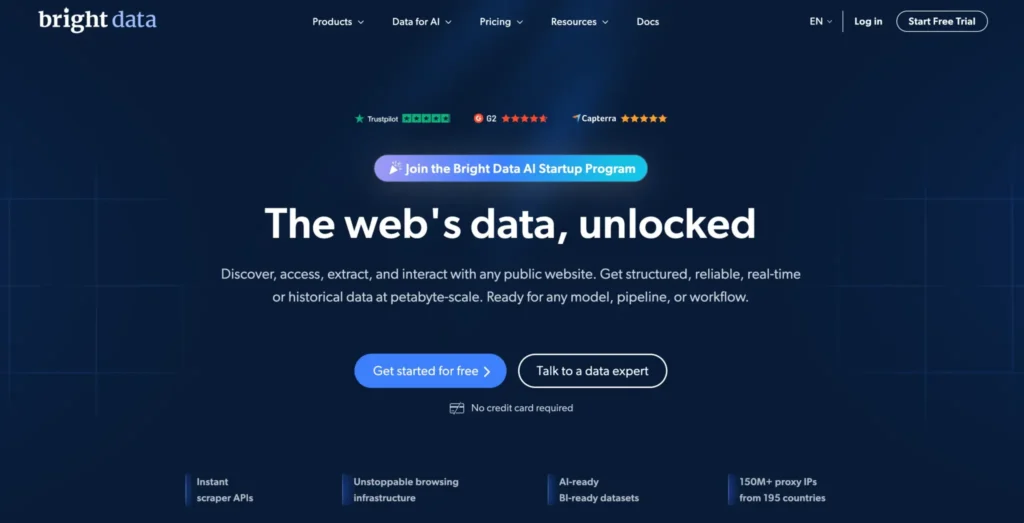
Bright Data is one of the most serious names in the proxy market, and it shows in the control you get. Its residential network is built for teams that need scale, compliance workflows, geo-targeting, session control, and infrastructure that can handle demanding data collection.
Bright Data says its residential proxy network includes 400M+ monthly residential IPs across 195+ countries. Its residential proxy documentation also explains that traffic is routed through real residential devices from users who have opted in.
For SOCKS5 specifically, Bright Data supports SOCKS5 connections across its proxy networks, including residential, ISP, datacenter, and mobile. Its documentation notes a few important technical restrictions: SOCKS5 uses port 22228, SOCKS5 targeting must use hostnames rather than explicit IP addresses, and residential SOCKS5 support has specific target-port limits.
Why Bright Data Stands Out
Bright Data is not just a proxy pool. It is closer to a full data access platform. You get advanced geo-targeting, dashboard controls, compliance checks, documentation, and enterprise support.
For residential SOCKS5 users, Bright Data is strongest when you need:
- Large global IP coverage
- City, state, ZIP, or ASN-style targeting
- Enterprise compliance standards
- Advanced proxy configuration
- Large-scale scraping or monitoring workflows
Where It Falls Short
Bright Data is powerful, but it is not the simplest option for beginners. The SOCKS5 rules are also more specific than with some providers. If your setup depends on raw IP targets, unusual ports, or quick plug-and-play testing, you need to read the documentation before committing.
Pro Tip
Use Bright Data when the cost of failure is higher than the cost of the proxy. If your project involves enterprise scraping, compliance-sensitive monitoring, or large-scale market intelligence, its infrastructure can justify the higher learning curve.
2. Oxylabs: Best Premium Residential SOCKS5 Provider for Data Collection
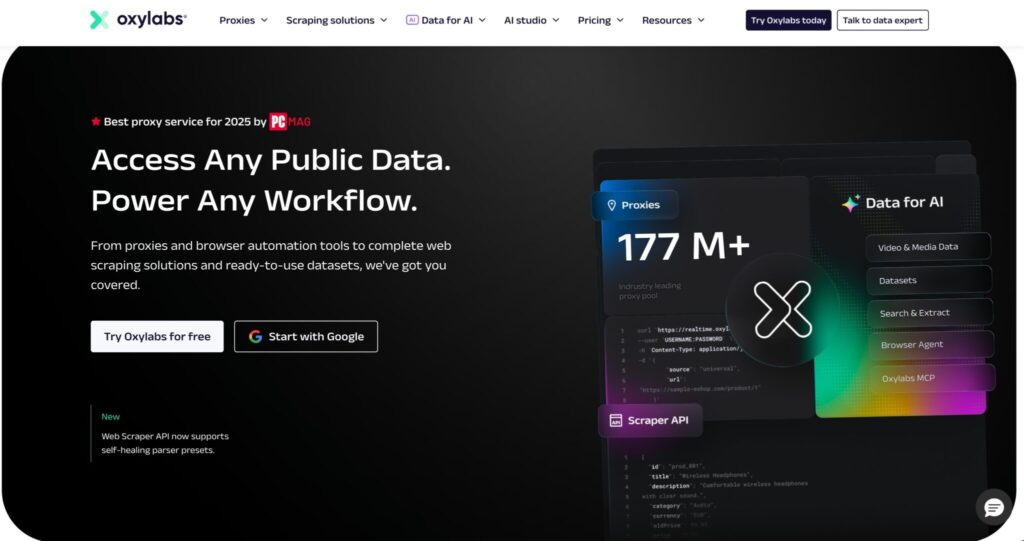
Oxylabs is another premium provider built for businesses that care about scale and reliability. Its SOCKS5 proxy page highlights residential and dedicated SOCKS5 proxies, global targeting in 188 countries, unlimited concurrent sessions, free geo-targeting, and a 99.9% uptime claim.
Oxylabs also states that residential proxies support SOCKS5 protocol connections, which makes them useful for teams that need more than standard HTTP or HTTPS proxying.
Why Oxylabs Stands Out
Oxylabs works well for serious scraping, price intelligence, brand protection, review monitoring, ad verification, and other data-heavy tasks. Its network and tooling are designed for companies, not only hobby users.
The big advantage is stability. You get a premium proxy environment, strong documentation, account-level support on higher tiers, and a network built around data collection use cases.
Best Use Cases
Oxylabs is a good pick for:
- Enterprise scraping
- Large ecommerce monitoring
- Travel fare collection
- SERP intelligence
- Ad verification
- Brand monitoring
- Data collection pipelines
Where It Falls Short
Oxylabs is not the cheapest provider on this list. If you only need a few GB per month for small tasks, you may find better value with Decodo, IPRoyal, Webshare, or DataImpulse.
Pro Tip
Oxylabs is worth testing when your main concern is not the lowest price per GB, but fewer failed requests, better infrastructure, and support that understands data collection workflows.
3. Decodo: Best Balance of Speed, Usability, and Value
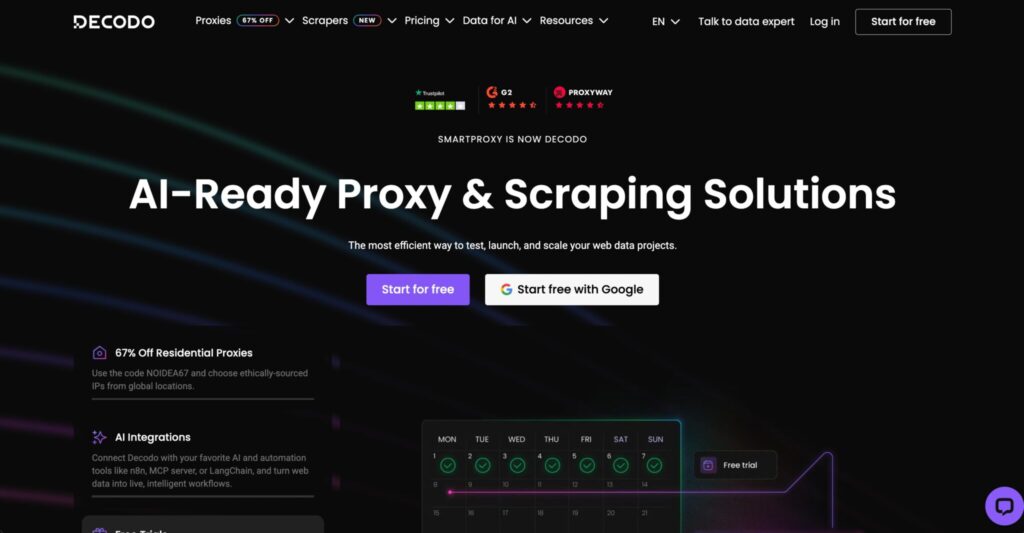
Decodo, formerly Smartproxy, has become one of the most practical choices for users who want strong proxy quality without enterprise-level complexity. Its residential proxy page lists 115M+ ethically sourced residential IPs in 195+ locations, HTTP, HTTPS, and SOCKS5 protocol support, rotating and sticky sessions, a 99.86% success rate, and under 0.6s average response time.
Its SOCKS5 page also says users can access 125M+ IPs across residential, mobile, datacenter, and ISP proxy types, with TCP and UDP support on its SOCKS5 offering.
Why Decodo Stands Out
Decodo is the provider I would point many mid-sized users toward first. The dashboard is approachable, the pricing is easier to understand than some enterprise tools, and the session settings are practical for both scraping and account-based workflows.
You can use rotating sessions for high-volume scraping, or sticky sessions when you need the same IP to stay consistent for a short workflow.
Best Use Cases
Decodo works especially well for:
- SEO monitoring
- Localized SERP checks
- Ecommerce scraping
- Social media tools
- Browser automation
- Small to mid-sized data teams
Where It Falls Short
Decodo is strong across the board, but it is not always the deepest choice for very complex enterprise use cases. If you need advanced compliance workflows, custom contracts, or highly specific technical restrictions, Bright Data or Oxylabs may fit better.
Pro Tip
Decodo is a smart first test provider. If you are unsure whether residential SOCKS5 will improve your workflow, start here before moving into more expensive enterprise territory.
4. SOAX: Best for Precise Geo-Targeting and Clean Session Control
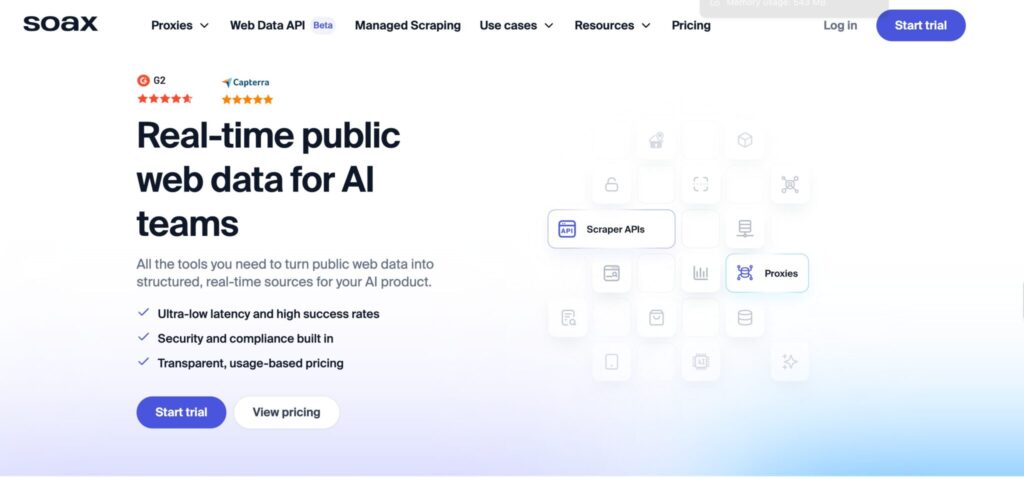
SOAX offers SOCKS5 and HTTP(S) proxies across residential, mobile, ISP, and datacenter categories. Its residential proxy page lists 155M+ residential proxies, coverage across 195+ geos, city-level targeting, sticky and rotating sessions, a 99.95% success rate, and 0.55s response time.
For users who care about location accuracy, SOAX is one of the more appealing choices. The dashboard is built around clean filtering, and the provider has a reputation for strong geo controls.
Why SOAX Stands Out
SOAX is useful when you do not just need “a US proxy” or “a UK proxy.” You need more granular targeting. For example, city-level tests, regional pricing checks, localized content QA, or market research in specific countries.
The ability to combine SOCKS5 support with detailed targeting makes SOAX strong for more controlled workflows.
Best Use Cases
SOAX is a good fit for:
- Local SEO tracking
- Regional price monitoring
- Ad verification
- App testing by region
- Market research
- Location-sensitive automation
Where It Falls Short
SOAX can become costly if you need heavy traffic volume. It is better for users who value targeting quality and session control over bargain pricing.
Pro Tip
If your results change heavily by city, region, or ISP, do not choose a provider only by pool size. Choose one that gives you targeting controls you can actually use.
5. NetNut: Best for High-Concurrency Residential SOCKS5 Workloads
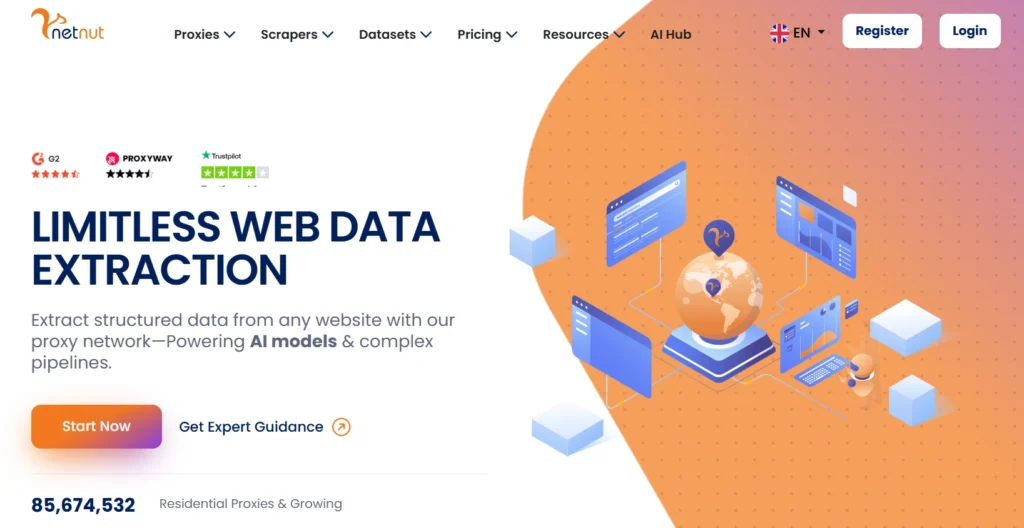
NetNut’s rotating residential proxy page lists 85M+ residential IPs across 195 countries, unlimited concurrency, and support for HTTP, HTTPS, and SOCKS5.
That unlimited concurrency angle is the key reason NetNut belongs on this list. Some providers look affordable until your scaling needs hit connection limits. NetNut is designed for larger operations where many simultaneous sessions matter.
Why NetNut Stands Out
NetNut has historically positioned itself around direct ISP connectivity and scalable proxy infrastructure. For teams running large scraping pipelines, this can matter more than a polished beginner dashboard.
If your workload involves thousands of concurrent requests, rotating traffic, and business-grade data collection, NetNut deserves a close look.
Best Use Cases
NetNut works well for:
- High-volume scraping
- Large-scale monitoring
- Data aggregation
- SERP tracking at scale
- Price comparison engines
- Enterprise automation
Where It Falls Short
NetNut may not be the friendliest starting point for small users. Its value becomes clearer when you have volume, concurrency needs, or a team that knows how to measure proxy performance properly.
Pro Tip
Before buying any high-concurrency proxy plan, run a small benchmark with your actual target sites. Do not rely only on advertised pool size. Test success rate, median response time, retry rate, and cost per successful request.
6. IPRoyal: Best Budget Residential SOCKS5 Provider
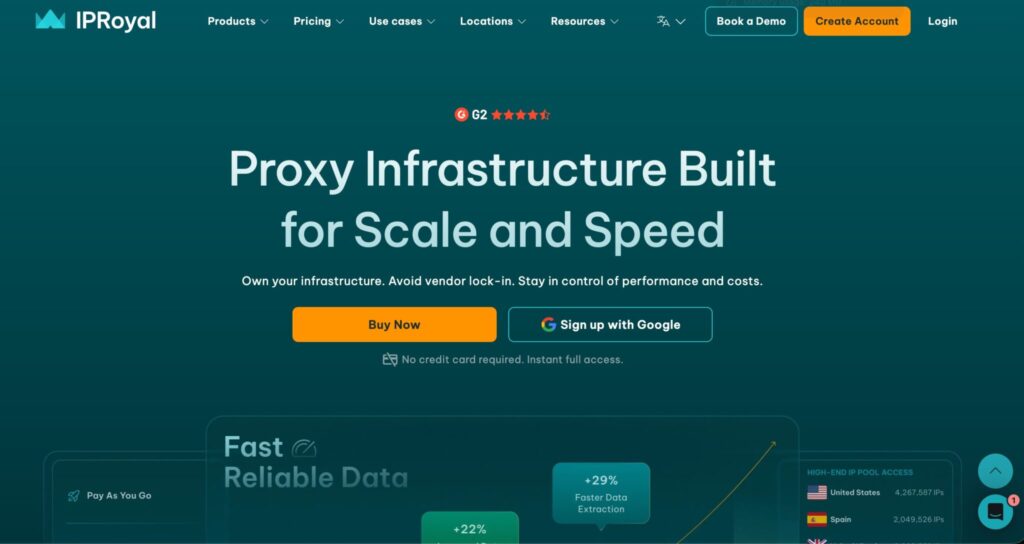
IPRoyal is one of the more affordable names in the residential proxy space. Its dedicated residential SOCKS5 page says each IP is private, supports 195+ locations, and allows sticky SOCKS proxies that can retain the same IP for up to 7 days.
IPRoyal also promotes native residential SOCKS5 support, flexible plans, non-expiring traffic, and ethically sourced residential IPs on related pages.
Why IPRoyal Stands Out
IPRoyal is attractive because it gives you practical SOCKS5 access without forcing enterprise pricing. The ability to keep the same IP for longer sessions can also be useful for workflows that do not tolerate constant IP switching.
For buyers who want residential SOCKS5 proxies but do not want to start with a large monthly commitment, IPRoyal is a strong candidate.
Best Use Cases
IPRoyal is useful for:
- Small scraping projects
- Account workflows
- Sneaker or retail monitoring
- Local testing
- Browser automation
- Budget-conscious proxy users
Where It Falls Short
IPRoyal does not feel as enterprise-heavy as Bright Data or Oxylabs. If you need advanced controls, very large-volume support, or the biggest possible pool, it may not be your final destination.
Pro Tip
IPRoyal is good for testing SOCKS5 workflows cheaply. If your scripts work well and your traffic volume grows, you can later compare its real cost per successful request against premium providers.
7. Infatica: Best Developer-Friendly Residential SOCKS5 Proxies
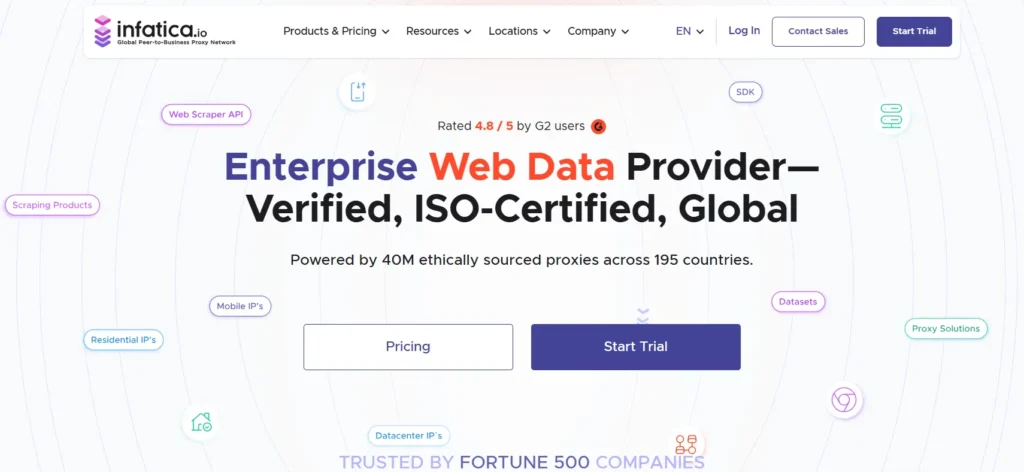
Infatica offers SOCKS5 proxy servers for residential and datacenter use cases. Its SOCKS5 page highlights use cases such as web scraping, SEO, cybersecurity, brand protection, data collection, and research. It also mentions developer-friendly API access, third-party proxy manager support, customizable session time, and proxy user management.
Infatica’s residential documentation recommends HTTP and SOCKS5 protocols for performance-sensitive work, while noting that HTTPS is available but may not be ideal for every speed-sensitive task.
Why Infatica Stands Out
Infatica is not always the first name people mention, but it has a practical developer angle. If you want SOCKS5 support, API access, dashboard stats, user management, and configurable sessions, it is worth testing.
It can be especially useful for teams building internal tools rather than just using browser extensions or no-code proxy integrations.
Best Use Cases
Infatica fits:
- Developer-led scraping
- Internal data tools
- SEO automation
- Uptime monitoring
- Brand protection
- Research workflows
Where It Falls Short
Infatica has less mainstream brand recognition than Bright Data, Oxylabs, or Decodo. For some buyers, that means they will need more testing before committing to volume.
Pro Tip
Use Infatica when you want control at the integration level. Check how easily your team can rotate sessions, manage users, pull stats, and update proxy settings through the dashboard or API.
8. Webshare: Best Affordable Static and Rotating Residential Option
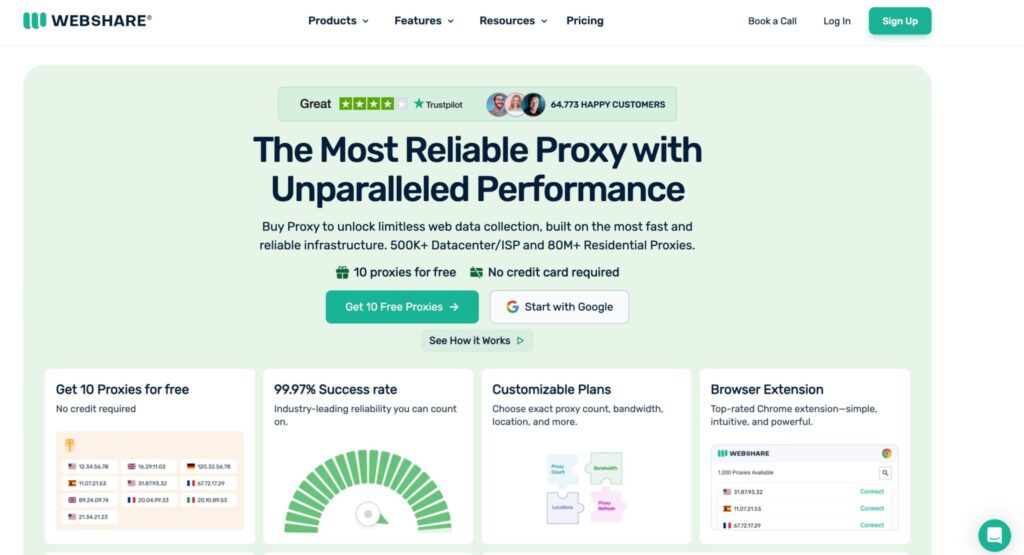
Webshare has become popular because of its simple pricing and easy setup. Its residential proxy page lists rotating residential proxies with 80M+ residential IPs and pricing starting at low GB-based levels. It also states that its residential proxy pool is ethically sourced from selected partners.
For SOCKS5 support, Webshare has a dedicated SOCKS5 feature page, and its static residential proxy page says the proxy pool supports HTTP and SOCKS5 endpoints.
Why Webshare Stands Out
Webshare is good for users who want a lower-friction experience. The dashboard is simple, pricing is approachable, and you can choose between different proxy categories depending on the task.
Its static residential option is especially useful if you need IP consistency rather than constant rotation.
Best Use Cases
Webshare is a good choice for:
- Small businesses
- Developers on a budget
- Static residential workflows
- Basic scraping
- Ecommerce monitoring
- Testing SOCKS5 setups
Where It Falls Short
Webshare may not offer the same depth of targeting and enterprise support as bigger providers. If you need advanced region, ASN, ZIP, or compliance workflows, compare carefully before scaling.
Pro Tip
Webshare is a good provider to test when your project needs predictable cost control. Just make sure the targeting depth matches your actual use case before buying a larger plan.
9. DataImpulse: Best Low-Cost Pay-As-You-Go Residential SOCKS5 Proxies
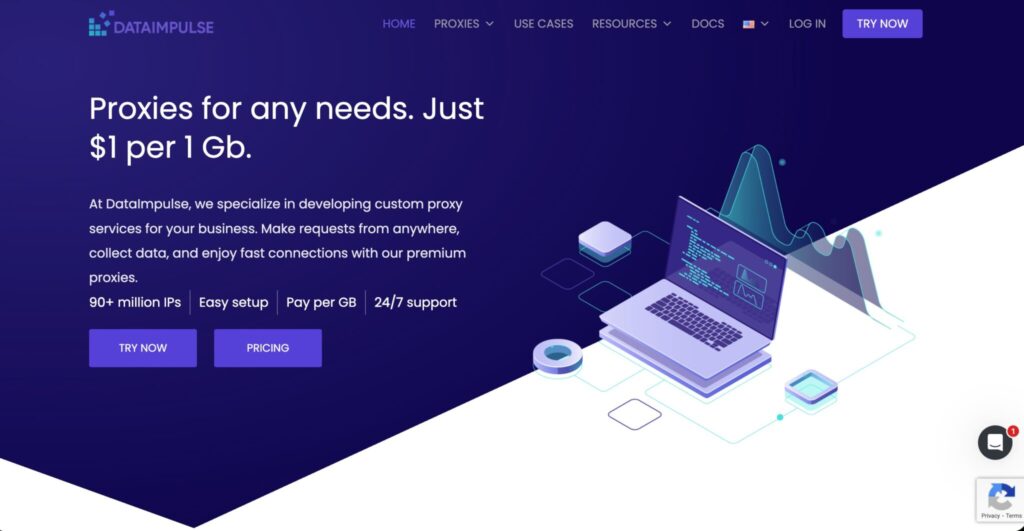
DataImpulse is attractive for buyers who want flexible pricing without mandatory subscriptions. Its site highlights pay-as-you-go usage, country targeting, state, city, ZIP, and ASN targeting.
A 2026 DataImpulse provider comparison post lists HTTP(S)/SOCKS5 support, country/state/city/ASN/ZIP targeting, 195-country coverage, 99.9% uptime, a 90M+ IP pool, and response time under one second.
Why DataImpulse Stands Out
DataImpulse is a value play. If you are price-sensitive but still need residential SOCKS5 support and flexible targeting, it deserves a place on your shortlist.
It is especially useful for smaller scraping, testing, and research workflows where you do not want to commit to expensive monthly plans.
Best Use Cases
DataImpulse fits:
- Budget scraping
- Testing projects
- Small SEO tools
- Low-volume monitoring
- Pay-as-you-go workflows
- Startup data collection
Where It Falls Short
The tradeoff is brand maturity and enterprise depth. Larger teams may still prefer providers with longer track records, deeper dashboards, stronger SLAs, and heavier documentation.
Pro Tip
If you use DataImpulse, track your real output cost. A cheaper GB price is great only if success rates stay strong on your target sites.
10. Proxyrack: Best for Protocol Flexibility
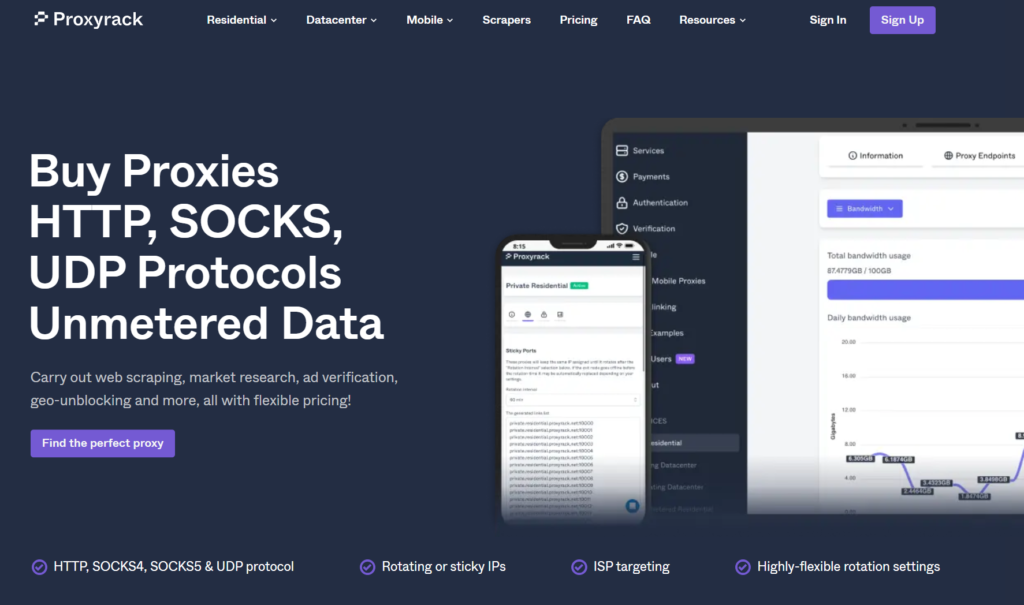
Proxyrack is interesting because it supports a wide protocol range. Its main site says it accepts HTTP, HTTPS, SOCKS4, SOCKS5, and UDP protocols. Its residential proxy page also says its residential proxies are compatible with SOCKS5 and UDP protocols.
For users who care about protocol flexibility more than a polished SaaS-style experience, Proxyrack can be useful.
Why Proxyrack Stands Out
Most buyers compare proxy providers by pool size and price. Proxyrack stands out more on flexibility. If your workload needs SOCKS5, SOCKS4, UDP, HTTP, and HTTPS compatibility, it gives you room to work.
Best Use Cases
Proxyrack is useful for:
- Mixed protocol workflows
- App testing
- Technical proxy users
- Private residential setups
- UDP-sensitive tools
- Non-standard client setups
Where It Falls Short
The buying experience may not feel as sleek as Decodo or Webshare. If you want a clean modern dashboard and beginner-friendly documentation, test before scaling.
Pro Tip
Choose Proxyrack when protocol support is the deciding factor. If your workload is ordinary HTTP scraping, you may not need this level of flexibility.
How to Choose the Best Residential SOCKS5 Proxy Provider
A good proxy choice starts with the workflow, not the provider logo. Here is the practical framework I would use.
1. Check Whether You Really Need SOCKS5
Do not buy SOCKS5 just because it sounds more advanced.
You need SOCKS5 if:
- Your software requires SOCKS5
- You are proxying non-browser traffic
- You use desktop automation tools
- You need better compatibility with custom clients
- You want TCP-level proxying
- HTTP proxies are failing in your tool stack
If you only scrape normal websites through Python requests, browser automation, or APIs, HTTP(S) residential proxies may be enough.
2. Look at Real IP Pool Quality, Not Only Pool Size
Big pool numbers look nice on a landing page. They do not always tell you how many usable IPs are available for your specific target, country, ASN, or city.
When testing providers, measure:
- Success rate
- Response time
- Timeout rate
- CAPTCHA rate
- Ban rate
- Repeat IP frequency
- Cost per successful request
A provider with a smaller but cleaner usable pool can outperform a huge network that burns through requests.
3. Understand Rotation Protocols
Residential SOCKS5 proxies usually come with two core session styles.
Rotating sessions change the IP frequently, often per request or after a short interval. These are good for broad scraping, price collection, and large-scale public data gathering.
Sticky sessions keep the same IP for a defined period. These are better for logins, carts, multi-step workflows, app testing, and anything where sudden IP changes break the session.
The best provider depends heavily on which session type you need.
4. Match Location Targeting to the Task
Do not overpay for ZIP-level targeting if country-level targeting is enough.
Use:
- Country targeting for basic localized access
- State targeting for regional content
- City targeting for local SEO, ads, or delivery testing
- ZIP targeting for very specific retail, insurance, finance, or local availability checks
- ASN targeting when ISP identity matters
Providers like Bright Data, Decodo, SOAX, and DataImpulse all highlight granular targeting options, but the depth and usability vary by plan and region.
5. Confirm SOCKS5 Restrictions Before Buying
This is where many buyers get caught.
Some providers support SOCKS5 only on certain proxy types. Some restrict ports. Some require remote DNS. Some do not support SOCKS5 for every target type.
Bright Data, for example, documents specific SOCKS5 requirements around port 22228, hostname targeting, remote DNS resolution, and residential/mobile target ports.
Before buying, check:
- Does SOCKS5 work on residential proxies specifically?
- Are target ports restricted?
- Does it support remote DNS?
- Does your tool require
socks5://orsocks5h://? - Are UDP-style workflows supported?
- Are sticky sessions available through SOCKS5?
6. Avoid Free Residential SOCKS5 Proxies for Real Work
Free proxies are tempting, but they are usually a bad idea for business workflows. They are unstable, shared by unknown users, frequently blocked, and often risky from a privacy angle.
Use paid providers with clear sourcing policies, dashboard controls, and support. For anything involving accounts, business data, or long-running automation, free proxies are not worth the risk.
7. Test With Your Real Target Sites
A provider can be excellent overall and still perform poorly on your exact target. Anti-bot systems vary by website, region, IP reputation, request pattern, headers, browser fingerprint, and behavior.
Run a small test with:
- 1,000 to 10,000 real requests
- The same country and session settings you plan to use
- Your actual tool stack
- Your normal request rate
- Your real target pages
Then compare providers by cost per successful result, not just advertised price per GB.
Best Residential SOCKS5 Proxy by Use Case
Best Overall: Bright Data
Choose Bright Data if you need scale, compliance, targeting depth, and strong infrastructure.
Best Premium Alternative: Oxylabs
Choose Oxylabs if you want enterprise-grade performance with less focus on complex custom configuration.
Best Value Pick: Decodo
Choose Decodo if you want a strong mix of speed, SOCKS5 support, usability, and pricing.
Best for Geo-Targeting: SOAX
Choose SOAX if city-level targeting, clean rotation, and precise location control matter most.
Best Budget Pick: IPRoyal
Choose IPRoyal if you want affordable residential SOCKS5 proxies and flexible session options.
Best for Developers: Infatica
Choose Infatica if API access, session configuration, and integration control are more important than brand popularity.
Best Low-Cost PAYG Pick: DataImpulse
Choose DataImpulse if you want pay-as-you-go residential SOCKS5 proxies with low entry cost.
Residential SOCKS5 Proxy Testing Checklist
Before scaling any provider, test these points:
- Does SOCKS5 work in your exact software?
- Does the provider support
socks5h://if you need remote DNS? - Are your required ports allowed?
- Can you choose rotating or sticky sessions?
- Can sticky sessions last long enough for your workflow?
- Does the target website return normal content?
- What is the timeout rate?
- How often do IPs repeat?
- What is the cost per successful page, not per GB?
- Does support respond with useful technical answers?
A provider that passes this checklist is far safer than one that only looks good in a comparison table.
Common Mistakes to Avoid
Choosing by Pool Size Alone
Pool size matters, but it is not everything. A 150M IP provider with weak performance on your target can lose to a smaller provider with cleaner routing and better location availability.
Ignoring Session Length
Rotating every request is great for large scraping tasks. It is terrible for workflows that need continuity. If you log in, move through multiple pages, or test an app flow, you probably need sticky sessions.
Using SOCKS5 Without Understanding Encryption
SOCKS5 is flexible, but it does not encrypt traffic by default. Use HTTPS destinations and secure configurations when privacy or sensitive data is involved.
Not Checking Port Restrictions
Some SOCKS5 providers restrict ports. This can break tools that require specific ports or connection types.
Scaling Before Testing
Never buy a large plan before testing your actual target. Proxy performance is use-case specific.
FAQs About Residential SOCKS5 Proxies
1. What is the best residential SOCKS5 proxy provider?
Bright Data is the strongest enterprise option, Oxylabs is excellent for premium data collection, and Decodo offers one of the best balances between price, performance, and usability. For budget users, IPRoyal, Webshare, and DataImpulse are worth testing.
2. Are residential SOCKS5 proxies better than HTTP proxies?
They are better for certain workflows, not all workflows. SOCKS5 is more flexible because it can support broader traffic types. HTTP proxies are often easier and cheaper for standard web scraping. If your tools need SOCKS5, choose SOCKS5. If you are only making normal web requests, HTTP(S) may be enough.
3. Are SOCKS5 proxies encrypted?
No, SOCKS5 does not provide encryption by default. It routes traffic through a proxy, but encryption depends on the traffic layer, such as HTTPS, TLS, SSH, or another secure tunnel.
4. Can residential SOCKS5 proxies rotate IPs?
Yes, many providers offer rotating residential SOCKS5 proxies. Some also support sticky sessions, where the same IP stays active for a set period. Decodo, SOAX, IPRoyal, Webshare, and DataImpulse all promote rotating or sticky residential proxy options.
5. Are residential SOCKS5 proxies good for web scraping?
Yes, they can be very useful for scraping, especially when the target site blocks datacenter IPs or when your scraping tool requires SOCKS5. Still, success depends on your headers, browser fingerprint, request rate, session logic, and whether your scraping follows the site’s terms and applicable laws.
6. What is the difference between rotating and sticky SOCKS5 proxies?
Rotating proxies change IPs frequently, often per request or after a short time. Sticky proxies keep the same IP for a longer session. Use rotating proxies for large data collection. Use sticky proxies for login flows, carts, app testing, or multi-step workflows.
7. Are residential SOCKS5 proxies legal?
Residential proxies are legal when used for lawful purposes, such as public data collection, ad verification, QA testing, market research, and privacy protection. Misuse can still violate laws, platform rules, or website terms. Bright Data, for example, mentions a strict KYC process because proxy tools can be misused.
8. Which provider is best for beginners?
Decodo and Webshare are the easiest starting points for many users. IPRoyal is also beginner-friendly if budget matters. Bright Data and Oxylabs are better suited for advanced users, teams, and enterprise workflows.
9. Which residential SOCKS5 proxy is cheapest?
DataImpulse, Webshare, and IPRoyal are usually among the more affordable choices. That said, the cheapest listed price is not always the cheapest real-world option. Always calculate cost per successful request.
10. Do I need residential SOCKS5 proxies for SEO tools?
Sometimes. Many SEO tools work with HTTP proxies, but SOCKS5 can help when the software specifically supports or requires it. For local rank tracking, SERP monitoring, and multi-region checks, residential proxies with strong geo-targeting are usually more important than the protocol alone.
Final Verdict: Which Residential SOCKS5 Proxy Should You Choose?
If you want the safest premium pick, choose Bright Data. It has the scale, targeting, documentation, and enterprise controls serious teams need.
If you want a premium data collection provider without overthinking every setting, choose Oxylabs.
If you want the best balance for most users, choose Decodo. It has strong speed, SOCKS5 support, sticky and rotating sessions, and a cleaner learning curve.
If your project depends on location accuracy, choose SOAX.
If budget matters, start with IPRoyal, Webshare, or DataImpulse and benchmark them against your actual target sites.
For more technical workflows where protocol flexibility matters, Proxyrack is also worth testing.
The smartest approach is simple: shortlist two or three providers, run the same workload on each, and compare real success rate, latency, block rate, and total cost. Proxy buying gets much easier when you stop asking “Which provider is best?” and start asking “Which provider performs best for my exact target, location, and session pattern?”