
Europe is one of the trickier proxy markets because “Europe proxy” can mean ten different things depending on the job.
For one person, it means clean UK residential IPs for ad verification. For another, it means German city-level targeting for price monitoring. For a developer, it may simply mean cheap EU datacenter proxies that do not collapse under load.
That is why the best Europe proxy provider is not always the one with the biggest pool. You need the right blend of IP quality, country depth, sticky sessions, rotation control, compliance standards, and pricing that does not punish you once your traffic scales.
Below is a practical buyer’s guide to the best Europe proxy providers in 2026, based on coverage, pricing, targeting options, rotation controls, and real-world use cases.
Key Considerations for European Proxies:
Before choosing a provider, look beyond the headline IP count.
The first thing to check is country depth. A provider may claim 195-country coverage, but that does not mean it has strong IP availability in Germany, France, Italy, Spain, Poland, the Netherlands, or the UK. For EU-heavy work, country-level depth matters more than global marketing numbers.
Second, check targeting quality. For broad scraping, country targeting is enough. For ad verification, SERP tracking, and localized pricing, you may need city, ZIP, ASN, ISP, or carrier targeting. Oxylabs, Bright Data, SOAX, NodeMaven, and ProxyEmpire all promote granular location targeting in different forms. Oxylabs lists continent, country, city, state, and ZIP targeting for residential proxies, while Bright Data also highlights city, state, country, ZIP, and ASN targeting.
Third, study rotation settings. Rotating IPs on every request works well for large-scale scraping. Sticky sessions work better for logins, carts, account dashboards, checkout flows, and any workflow where a sudden IP change looks suspicious.
Fourth, understand the difference between residential, ISP, datacenter, and mobile proxies. Residential proxies use real consumer IPs, so they usually perform better on strict websites. ISP proxies give you static residential-like IPs with better speed. Datacenter proxies are cheaper and fast, but easier to detect. Mobile proxies are expensive, but useful for mobile-first testing, app intelligence, and carrier-specific checks.
Fifth, do not ignore GDPR and compliance. If your work involves public data collection in the EU, you need a provider that takes consent, sourcing, and acceptable use seriously. Cheap proxies are tempting, but dirty pools can cost you more in blocks, failed sessions, and account risk.
9 Best Europe Proxy Providers in 2026
1. Oxylabs: Best Overall for European Proxy Coverage
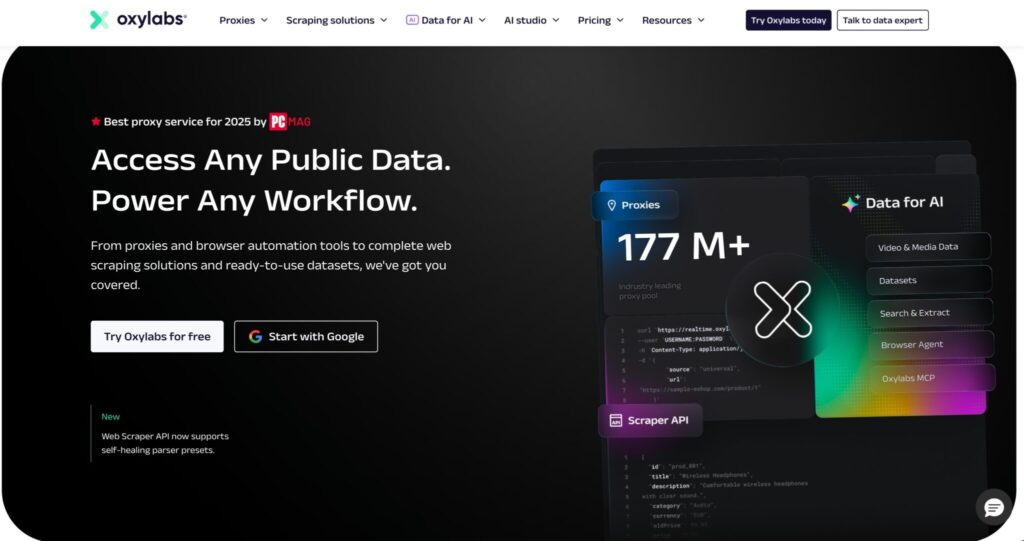
Oxylabs is the safest premium pick if you need serious European coverage, high reliability, and enterprise-grade controls. Its residential proxy network is listed at 175M+ IPs with coverage across 195 locations, and its Europe proxy page focuses on EU proxy access with city-level targeting.
Where Oxylabs stands out is operational maturity. The dashboard, documentation, proxy performance, and account support are built for teams that cannot afford random instability. If you are scraping EU ecommerce sites, tracking SERPs across multiple European cities, verifying ads, or collecting pricing data across several countries, Oxylabs gives you enough control to build a stable pipeline.
It is not the cheapest option. That is the tradeoff. Oxylabs makes more sense when failed requests, downtime, or bad IP reputation cost more than the proxy bill itself.
Best for: enterprise scraping, EU ecommerce monitoring, SERP tracking, ad verification, market intelligence.
Pro Tip: Use Oxylabs when you need country and city precision across multiple EU markets, not when you only need a few cheap IPs for light browsing.
2. Decodo: Best Value for EU Residential Proxies at Scale
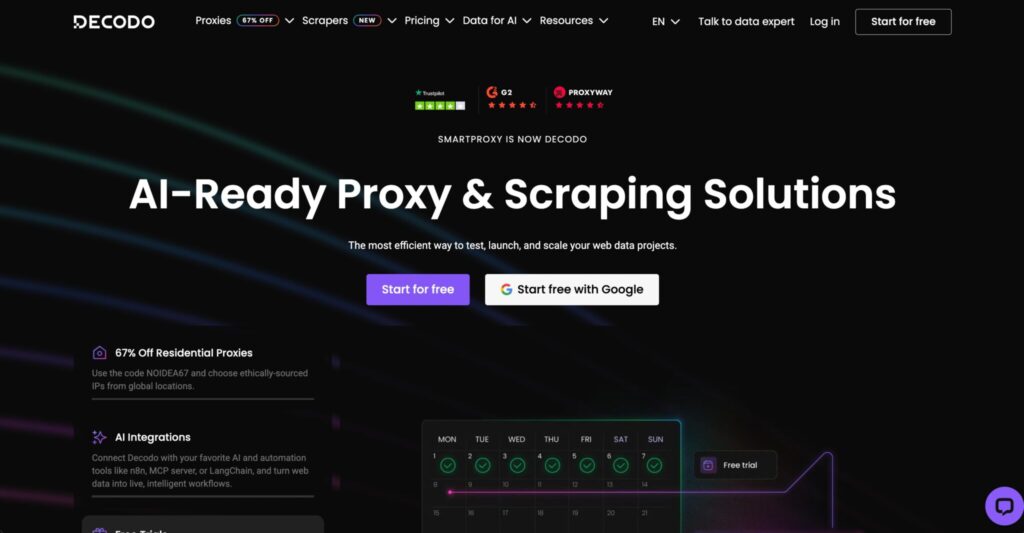
Decodo, formerly Smartproxy, is one of the best middle-ground choices for European residential proxies. It claims 125M+ IPs, 195+ locations, 99.99% uptime, and pricing that starts from low per-GB rates depending on plan size.
The reason Decodo fits this list so well is balance. You get strong residential coverage, a clean interface, scraping tools, flexible plans, and pricing that is easier to justify than some enterprise-first providers. For agencies, affiliate teams, SEO teams, and growth teams running EU campaigns, Decodo often hits the sweet spot.
Its residential pricing page shows monthly plans such as 3 GB, 10 GB, 25 GB, and 50 GB packages, with rates decreasing as usage increases.
Best for: SEO tracking, ad verification, ecommerce scraping, mid-size data teams, EU market research.
Pro Tip: Decodo is a strong pick if you want premium-style performance without jumping straight into enterprise pricing.
3. Webshare: Best Budget EU Proxy for Developers and Lean Teams
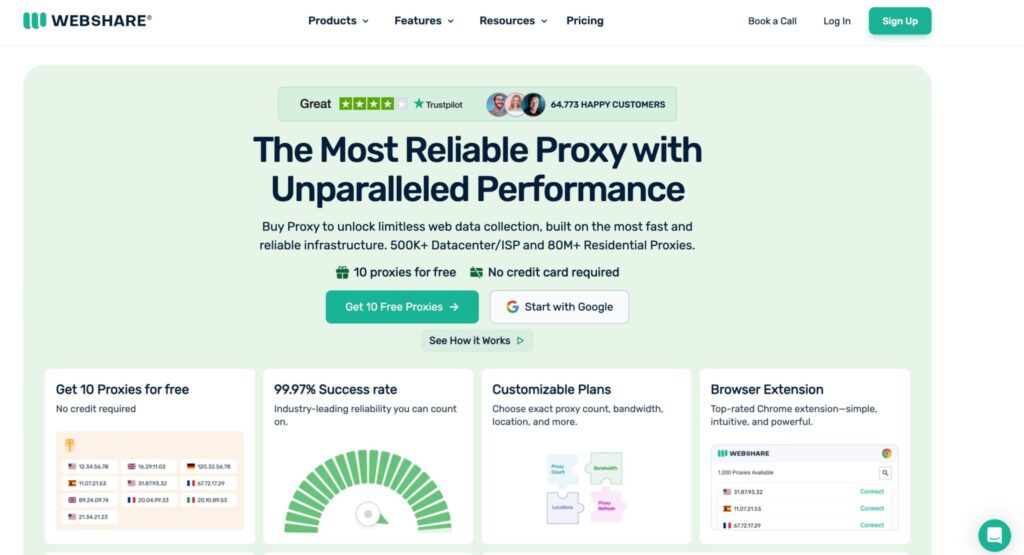
Webshare is a practical option for developers and smaller teams that care about price, API access, and simple setup. Its pricing page lists datacenter proxies from $0.05 per IP and residential proxies from $1.4 per GB. It also promotes 80M+ residential IPs for rotating residential proxies.
This is not the provider I would choose for the most sensitive login workflows or complex compliance-heavy data projects. But for lightweight scraping, testing, automation, development environments, and budget-controlled proxy usage, Webshare is hard to ignore.
The dashboard is simple. The pricing is transparent. The barrier to entry is low. That combination makes it appealing for solo developers, small SEO teams, and businesses testing proxy workflows before moving into higher-volume setups.
Best for: developers, budget scraping, testing, automation, small-scale EU proxy usage.
Pro Tip: Start with Webshare if you are still validating your workflow. Once you know your target sites, success rates, and bandwidth needs, you can decide whether you need a premium pool.
4. SOAX: Best Flexible EU Targeting
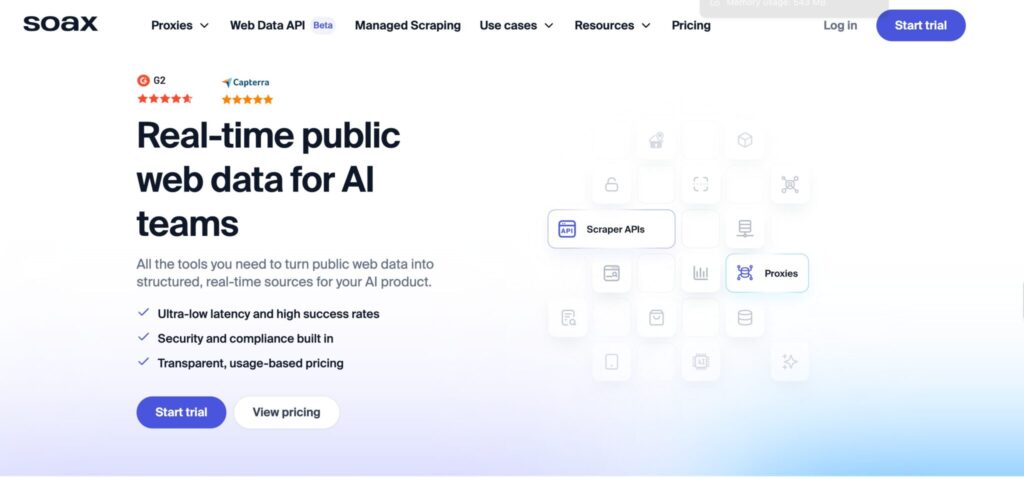
SOAX is a strong choice when targeting flexibility matters more than rock-bottom pricing. It offers residential, mobile, datacenter, and ISP proxies, and its pricing page mentions access to a large pool across proxy types, with rotation options on each request or set intervals. SOAX states that mobile and residential proxies can rotate up to a maximum interval of one hour, while datacenter and ISP proxies can go up to 24 hours.
SOAX also lists 155M+ residential proxies and pricing tiers such as Starter and Advanced plans based on included bandwidth.
The main attraction is control. If you need to test different EU countries, rotate intelligently, and adjust sessions based on target behavior, SOAX gives you a flexible toolkit.
Best for: localized testing, mobile research, ad verification, flexible EU scraping, app intelligence.
Pro Tip: Use SOAX when you need to experiment with rotation rules. For sensitive flows, start with longer sessions rather than rotating too aggressively.
5. Bright Data: Best for EU Data Collection at Scale
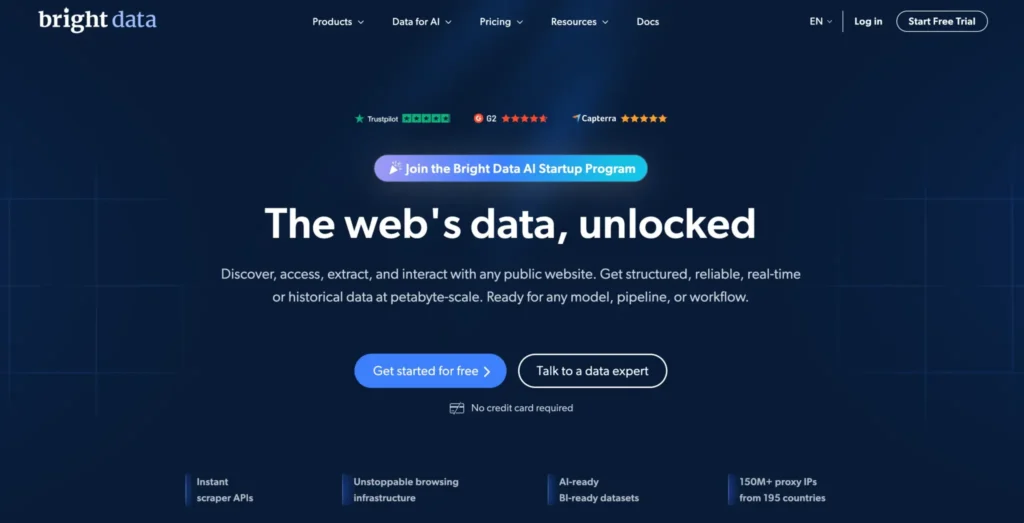
Bright Data is built for serious data collection. Its residential proxy page claims 400M+ monthly residential IPs across 195 countries, with free geo-targeting and options such as city, state, country, ZIP, and ASN targeting.
This is one of the strongest providers for large-scale EU data operations. If your team collects public web data across Germany, France, Spain, Italy, the Netherlands, the UK, and other European markets, Bright Data gives you deep targeting and advanced tooling.
The downside is complexity and cost. Bright Data can feel heavy if you only need simple proxy access. But for large data teams, legal-conscious organizations, and companies that need structured collection workflows, it remains one of the most capable options in the market.
Its residential pricing page lists starting pricing from $5.88 per GB.
Best for: enterprise data collection, public web scraping, price intelligence, compliance-conscious teams, large EU datasets.
Pro Tip: Bright Data is best when proxies are part of a broader data operation, not just a small scraping script.
6. IPRoyal: Best Budget EU Residential With Long Sessions
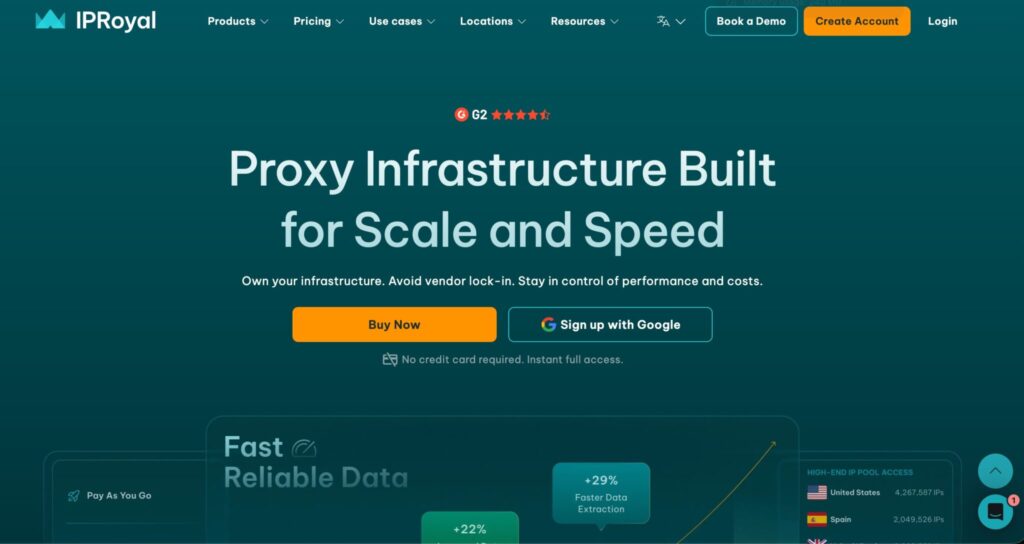
IPRoyal is a good fit for users who want residential proxies without premium pricing. It is often chosen by budget-conscious marketers, smaller scraping teams, and users who need flexible residential access without long commitments.
Its public site emphasizes premium proxy services and strong success-rate claims, while third-party coverage highlights affordability as one of its strongest selling points. TechRadar’s 2026 proxy guide lists IPRoyal as suitable for budget-conscious users and notes residential pricing around $2.45 per GB in its comparison.
IPRoyal is especially appealing for long-session use cases, such as account workflows, marketplace research, and projects where sudden IP rotation can break the session.
Best for: budget residential proxies, long sessions, small teams, account-friendly workflows.
Pro Tip: Test IPRoyal against your exact target sites before buying larger bandwidth. Budget residential pools can be excellent, but performance varies heavily by target.
7. DataImpulse: Best Ultra-Budget EU Proxy for High-Volume, Cost-Sensitive Projects
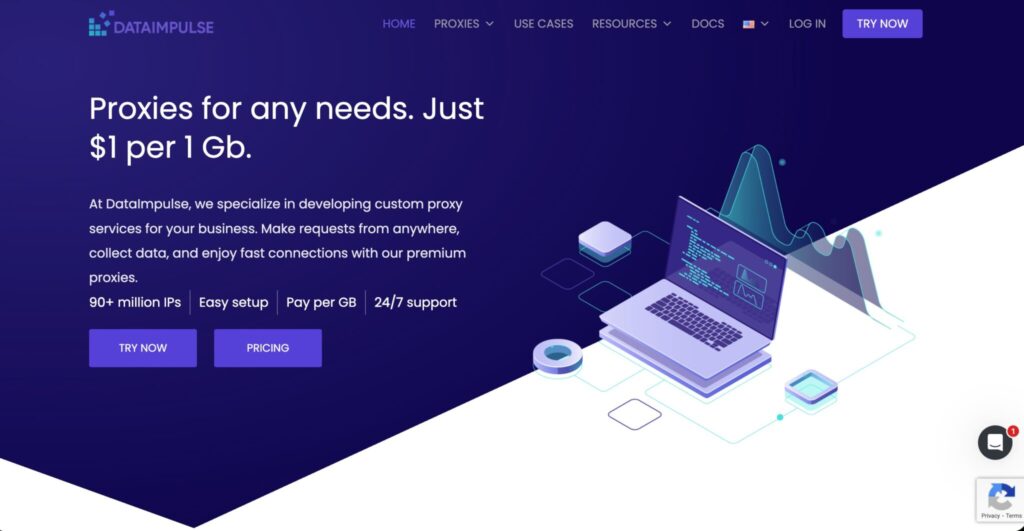
DataImpulse is the price disruptor in this list. Its residential proxy page lists 90M+ residential IPs, 195-country coverage, and pricing starting from $1 per GB.
That makes it attractive for high-volume scraping where cost per GB matters. If you are collecting large datasets, monitoring public pages, or running broad EU research where premium targeting is less important than total bandwidth cost, DataImpulse can be a smart option.
It also lists country targeting and newer state, city, ZIP, and ASN targeting. That makes the product more interesting than a basic low-cost residential pool.
Still, ultra-budget providers should be tested carefully. Your real cost is not only price per GB. It is price per successful request.
Best for: high-volume scraping, cost-sensitive research, broad EU data collection, budget experiments.
Pro Tip: Track success rate by country. A $1 per GB proxy is only cheap if it gets through your target sites consistently.
8. NodeMaven: Best EU Proxy for Login-Sensitive Workflows and Long Sticky Sessions
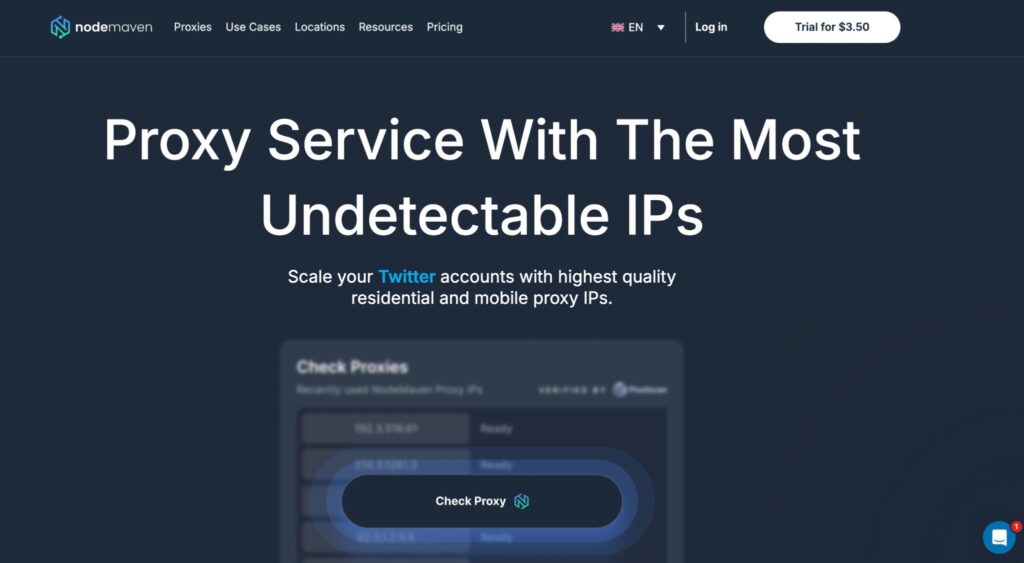
NodeMaven is interesting because it focuses heavily on IP quality and sticky-session behavior. Its site lists 30M+ residential plus 250K mobile IPs, 95% IP clean rate, sticky sessions up to 7 days, traffic rollover, and country, city, and ISP targeting.
That makes NodeMaven a strong choice for workflows where IP consistency matters. Think dashboards, logins, carts, account-based research, social workflows, marketplace monitoring, and anything where constantly changing IPs can create risk.
Its Europe proxy page specifically promotes EU residential proxies with rotating and sticky sessions, HTTPS and SOCKS5 support, and GB-based pricing.
NodeMaven may not have the same massive brand recognition as Oxylabs or Bright Data, but its positioning is clear: cleaner IPs, longer sessions, better control.
Best for: login-sensitive workflows, account research, sticky sessions, marketplace monitoring, EU residential projects.
Pro Tip: If your workflow includes login steps, do not use aggressive rotation. Keep the same sticky IP through the full user journey.
9. ProxyEmpire: Best for Rollover Bandwidth on EU Research Projects
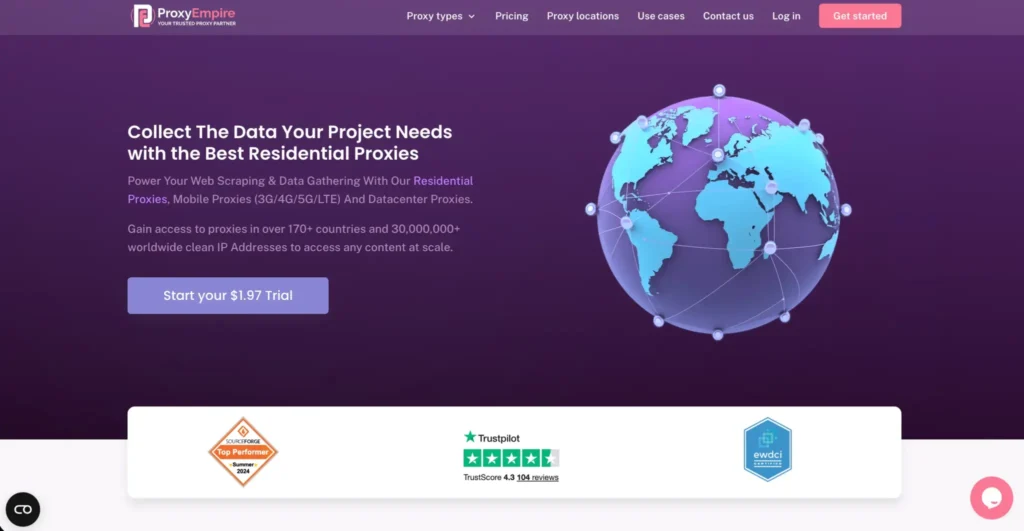
ProxyEmpire is useful when your proxy usage is irregular. Some months you use a lot of traffic. Other months you barely touch the pool. Its biggest selling point is rollover bandwidth, which lets unused traffic carry forward.
ProxyEmpire states that it offers 30M+ ethically sourced rotating residential proxies across 170+ countries, with targeting by country, region, city, ISP, and mobile carrier. It also supports HTTP, HTTPS, and SOCKS5.
Its documentation confirms targeting options for rotating residential and mobile proxies, including country, region, city, and ISP or mobile carrier targeting.
The pricing can feel less straightforward than some competitors, but the rollover model is valuable for research teams, agencies, and seasonal campaigns.
Best for: irregular EU research, agency projects, ad verification, social research, rollover bandwidth needs.
Pro Tip: ProxyEmpire makes the most sense when your usage is uneven. If you use the same bandwidth every month, compare the effective per-GB price carefully.
Quick Comparison Table:
| Provider | Best For | Proxy Types | EU Targeting Strength | Rotation and Sessions | Starting Price Snapshot | Best User Type |
| Oxylabs | Best overall EU coverage | Residential, datacenter, ISP, mobile | Country, city, state, ZIP | Flexible session control | Residential pricing varies by plan | Enterprise teams |
| Decodo | Best value at scale | Residential, ISP, mobile, datacenter | 195+ locations | Rotating and sticky options | Residential plans from low per-GB rates | SEO and data teams |
| Webshare | Best budget option | Residential, static residential, datacenter | Broad global coverage | Rotating residential and static options | Residential from $1.4 per GB, datacenter from $0.05 per IP | Developers |
| SOAX | Best flexible targeting | Residential, mobile, ISP, datacenter | Strong country and location control | Request-based or interval rotation | Starter plan listed at $3.60 per GB | Growth teams |
| Bright Data | Best enterprise data collection | Residential, ISP, datacenter, mobile | City, state, country, ZIP, ASN | Advanced rotation and sticky sessions | Residential from $5.88 per GB | Large data teams |
| IPRoyal | Best budget residential | Residential, datacenter, ISP, mobile | Good country coverage | Long-session friendly | Around $2.45 per GB in third-party comparison | Small teams |
| DataImpulse | Best ultra-budget bandwidth | Residential, mobile, datacenter | Country, city, ZIP, ASN options | Rotating residential | From $1 per GB | High-volume budget users |
| NodeMaven | Best for sticky sessions | Residential, mobile, ISP | Country, city, ISP targeting | Sticky sessions up to 7 days | Trial and GB-based pricing | Login-sensitive workflows |
| ProxyEmpire | Best rollover bandwidth | Residential, mobile, datacenter, ISP | Country, region, city, ISP | Rotating and sticky sessions | Trial and plan-based pricing | Irregular research projects |
How to Choose the Best Europe Proxy Provider
Choose residential proxies for strict EU websites
If your target sites block datacenter IPs quickly, use residential proxies. They look closer to normal user traffic because they come from real ISP-assigned addresses.
Residential proxies are best for ecommerce scraping, ad verification, localized SERP tracking, and market intelligence.
Choose ISP proxies for stable sessions
ISP proxies sit between datacenter and residential proxies. They are usually faster and more stable than rotating residential proxies, while still looking more trusted than standard datacenter IPs.
Use ISP proxies for logins, dashboards, long sessions, and workflows where the same IP needs to stay active.
Choose datacenter proxies for speed and low cost
Datacenter proxies are fast and affordable. They work well for development, basic scraping, testing, and targets with weaker anti-bot systems.
Do not expect them to perform well on strict ecommerce, social, ticketing, or banking-style platforms.
Choose mobile proxies only when mobile identity matters
Mobile proxies are expensive, but useful for app testing, carrier-level checks, social platforms, mobile SERPs, and mobile ad verification.
For normal web scraping, residential proxies are usually more cost-effective.
Match rotation to your workflow
Fast rotation is good for large-scale crawling. Sticky sessions are good for login flows. This one decision can make or break your success rate.
A common mistake is rotating too often. If a website expects one user to keep one IP during a session, changing IPs every few requests can trigger blocks.
Test by country, not only provider
A provider can perform well in Germany but poorly in Spain. Another may have great UK IPs but weak coverage in smaller EU markets.
Before scaling, test your top countries separately. Track success rate, average response time, CAPTCHA rate, and cost per successful request.
FAQs: Best Europe Proxy Providers in 2026
Do I need a GDPR-compliant proxy provider for EU data collection?
Yes, especially if you are collecting public data at scale in Europe. You should choose providers that clearly explain IP sourcing, acceptable use, compliance controls, and consent-based residential networks. This matters for legal safety, brand protection, and long-term account stability.
What is the difference between a UK proxy and a Europe proxy?
A UK proxy gives you an IP address from the United Kingdom. A Europe proxy may refer to any European location, such as Germany, France, Spain, Italy, the Netherlands, Poland, Sweden, or the UK. If your target website shows different content by country, you need the exact country, not just “Europe.”
Can I access EU streaming services like Netflix Germany with a proxy?
Technically, some proxies may route traffic through Germany or another EU country, but streaming platforms aggressively detect and block proxy traffic. Residential or ISP proxies may work better than datacenter proxies, but access is never guaranteed. Also, you should follow the platform’s terms of service.
What countries have the deepest IP coverage in EU proxy pools?
The strongest European proxy markets are usually the UK, Germany, France, Spain, Italy, the Netherlands, and Poland. These countries tend to have stronger demand, larger internet populations, and better commercial proxy availability.
Is city-level targeting available for European proxies?
Yes, many premium providers offer city-level targeting. Oxylabs, Bright Data, SOAX, NodeMaven, and ProxyEmpire all promote granular targeting options in some form. The quality depends on the country and city, so always test availability before committing to a large plan.
How do I know if my EU proxy IPs are clean?
Check success rates, CAPTCHA frequency, block rates, ASN quality, and whether the IP appears on abuse lists. Some providers, like NodeMaven, actively promote clean-IP filtering and IP quality metrics. For serious workflows, test IPs against your actual target sites rather than relying only on generic proxy checkers.
Are residential proxies better than datacenter proxies for Europe?
For strict websites, yes. Residential proxies usually perform better because they look like normal consumer traffic. Datacenter proxies are faster and cheaper, but easier to detect. If your target is sensitive, start with residential or ISP proxies.
Which Europe proxy provider is best for SEO tracking?
Decodo, Oxylabs, Bright Data, and SOAX are strong choices for SEO tracking because they offer broad location coverage and flexible targeting. For budget SEO testing, Webshare and DataImpulse can also work well.
Which provider is best for long sticky sessions?
NodeMaven is one of the strongest picks for long sticky sessions because it promotes sticky sessions up to 7 days. IPRoyal and ProxyEmpire are also worth testing for session-heavy workflows.
Conclusion: Best Europe Proxy Providers in 2026
The best Europe proxy provider depends on what you are trying to do.
Choose Oxylabs if you want the safest overall premium option. Pick Decodo if you want strong value with reliable EU residential coverage. Go with Webshare if you need a budget-friendly proxy setup for developers.
Choose SOAX if flexible targeting is your priority. Use Bright Data if you need enterprise-grade EU data collection. Pick IPRoyal for budget residential sessions, DataImpulse for low-cost bandwidth, NodeMaven for login-sensitive workflows, and ProxyEmpire if rollover bandwidth matters.
For most professional users, the smartest approach is simple: shortlist two or three providers, run the same test across your target EU countries, and compare cost per successful request. That number tells you far more than any homepage claim.