
Managing social media at scale is not as simple as opening ten browser tabs and logging into ten accounts. Platforms like Instagram, Facebook, TikTok, X, LinkedIn, Reddit, and Pinterest look at IP reputation, location consistency, device signals, session behavior, login history, and sudden activity spikes.
That is why a basic cheap proxy is rarely enough.
A good social media proxy should help you keep accounts stable, reduce suspicious login triggers, test content by location, run ad verification, manage client profiles, and collect public social data without constantly fighting blocks. The goal is not to “beat” platforms. The goal is to build a cleaner, safer, more predictable setup.
Below is a practical buyer’s guide to the best social media proxy providers in 2026, based on proxy type availability, IP pool quality, pricing, rotation controls, session stability, geo-targeting, and real-world social media use cases.
What Makes a Proxy “Social Media Ready”
A social media-ready proxy is not just an IP address. It needs to behave like a normal internet connection from a believable location.
For social platforms, the most important factors are:
Residential or mobile IP quality: Residential and mobile proxies look closer to real user traffic than datacenter proxies. For Instagram, TikTok, Facebook, and LinkedIn, this usually matters more than raw speed.
Sticky sessions: Social media accounts need session stability. If your IP changes every request, the platform may see it as suspicious. Sticky sessions help keep one account tied to one IP for a longer period.
Clean IP history: Previously abused IPs can trigger login challenges, SMS checks, or account locks. Providers with quality filters, clean pools, or ethical sourcing usually perform better.
Geo consistency: If an account was created in New York, logging in daily from Germany, Singapore, and Brazil can look unnatural. Strong city or country targeting helps keep account behavior consistent.
Rotation control: Rotation should be flexible. For scraping public social data, rotating residential proxies can work well. For account management, static residential, ISP, or mobile proxies are often safer.
Protocol support: HTTP, HTTPS, and SOCKS5 support gives more flexibility with browsers, automation tools, social media dashboards, and anti-detect browser profiles.
9 Best Social Media Proxy Providers in 2026
1. Decodo, formerly Smartproxy: Best Value for Social Media Agencies
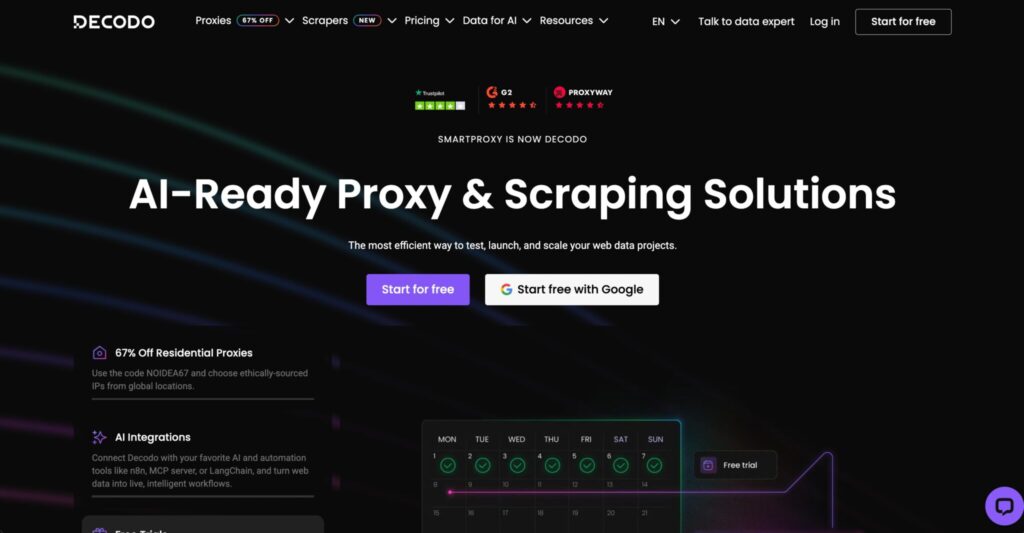
Decodo, formerly Smartproxy, is one of the safest first picks for agencies managing multiple client accounts, social dashboards, and public data workflows. Its main strength is balance. You get a large proxy network, friendly dashboard, good pricing compared with enterprise providers, and enough control for most serious social media operations.
Decodo says it offers 125M+ IPs, 99.99% uptime, and coverage across 195+ locations. TechRadar also lists Decodo as a top proxy provider in 2026, highlighting its large IP pool, scraping tools, and broad proxy product range.
For social media agencies, Decodo works well because it offers residential, mobile, ISP, and datacenter proxy options. That gives you room to separate use cases. You can use residential proxies for general account management, mobile proxies for more sensitive mobile-first platforms, and datacenter proxies for lower-risk tasks like research, QA, or basic geo checks.
The dashboard is clean enough for non-technical team members, while still giving developers API access and proxy generation controls. That matters if you are managing client accounts across multiple tools.
Best for: Social media agencies, affiliate teams, ad verification, location testing, and multi-account workflows.
Key strengths:
| Feature | Why it matters |
| Large IP pool | Better location spread and lower reuse pressure |
| Residential and mobile options | Useful for Instagram, TikTok, Facebook, and X |
| Sticky sessions | Helps maintain account consistency |
| Good dashboard | Easier team setup |
| Strong value | Cheaper than many enterprise-first providers |
Possible drawback: It is not always the cheapest option for tiny users. If you only need a few proxies, Webshare or IPRoyal may feel more budget-friendly.
Pro Tip: For client account management, assign one proxy location per client profile and keep it consistent. Do not rotate aggressively unless you are scraping public data.
2. Webshare: Best for Developers and Budget-Conscious Social Media Operators
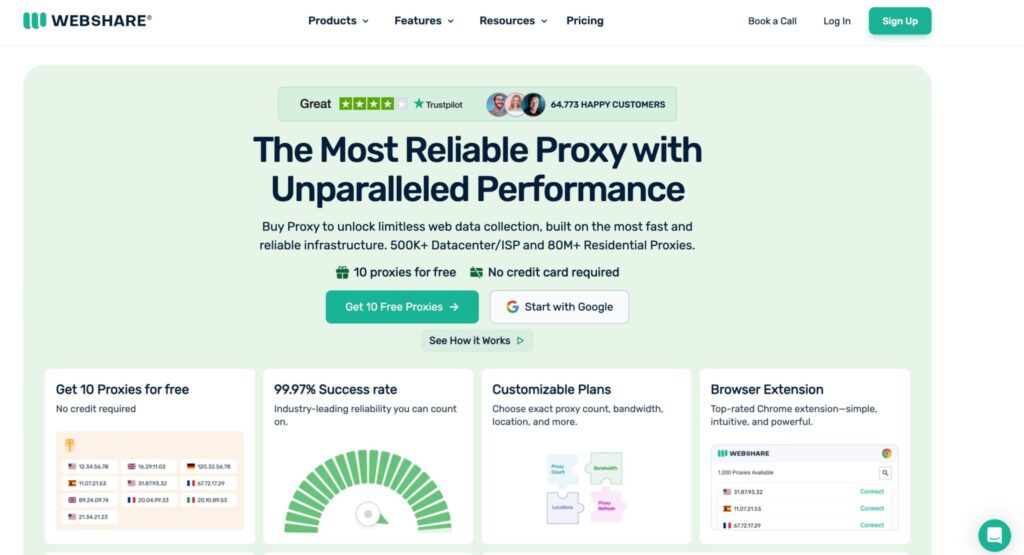
Webshare is a strong choice if you want affordable proxies with a clean developer experience. It is especially useful for teams that need simple API access, fast setup, and predictable pricing.
Webshare lists rotating residential proxies starting at $1.40 per GB, static residential proxies from $0.23 per IP, and datacenter proxies from $0.05 per IP. Its residential network is listed at 80M+ IPs, and TechRadar notes that Webshare has coverage across 195 UN-recognized countries.
For social media work, Webshare is best when you need cost control. Developers can spin up proxies, rotate them, test them, and connect them to internal systems without dealing with a heavy enterprise sales process.
It is not my first pick for highly sensitive Instagram or TikTok account farming. But for public monitoring, social listening, QA, geo checks, and lighter account workflows, it offers excellent value.
Best for: Developers, small agencies, QA teams, public social monitoring, and budget-conscious operators.
Key strengths:
| Feature | Why it matters |
| Low starting prices | Good for testing and smaller projects |
| Residential and datacenter options | Flexible for different risk levels |
| API-friendly setup | Great for developers |
| Free proxy option | Useful for basic testing |
| Simple dashboard | Easy to manage proxy lists |
Possible drawback: Support and advanced tooling are more limited compared with Bright Data, Decodo, or SOAX.
Pro Tip: Use Webshare datacenter proxies only for low-risk social tasks. For account logins, residential or static residential proxies are usually safer.
3. Bright Data: Best for Enterprise Social Media Operations
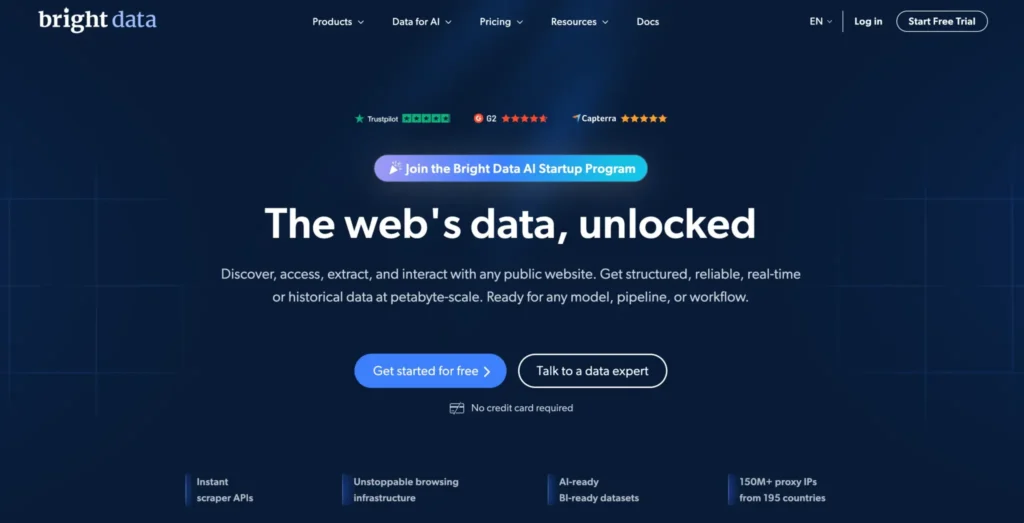
Bright Data is the heavyweight option. It is not the cheapest provider, but it is one of the strongest choices for large-scale teams that care about compliance, support, advanced targeting, and infrastructure depth.
Bright Data lists 400M+ monthly residential IPs across 195 countries, sticky and rotating sessions, free geo-targeting, and a claimed 99.95% success rate for residential proxies. Its residential proxy pricing page shows residential proxies starting from $5.88 per GB.
For enterprise social media operations, Bright Data makes sense when you are doing market intelligence, social listening, brand protection, ad verification, competitor research, or public web data collection at scale. It also offers ISP, mobile, datacenter, and web scraping tools, so you are not limited to basic proxy ports.
Bright Data is overkill for a small freelancer managing five Instagram accounts. But for bigger companies, media intelligence teams, SaaS platforms, and agencies with compliance needs, it is one of the most complete platforms available.
Best for: Enterprise social listening, public data collection, brand monitoring, ad verification, and compliance-heavy teams.
Key strengths:
| Feature | Why it matters |
| Huge residential pool | Strong global coverage |
| Advanced geo-targeting | Useful for local social testing |
| ISP and mobile proxies | Better for session-sensitive workflows |
| Enterprise support | Helpful for larger teams |
| Data collection tools | Useful beyond basic proxy access |
Possible drawback: Pricing is premium. Smaller teams may find it too expensive or too complex.
Pro Tip: Use Bright Data when proxy reliability is tied to revenue, compliance, or client reporting. If you only need cheap IPs, choose another provider.
4. SOAX: Best for Multi-Platform Targeting
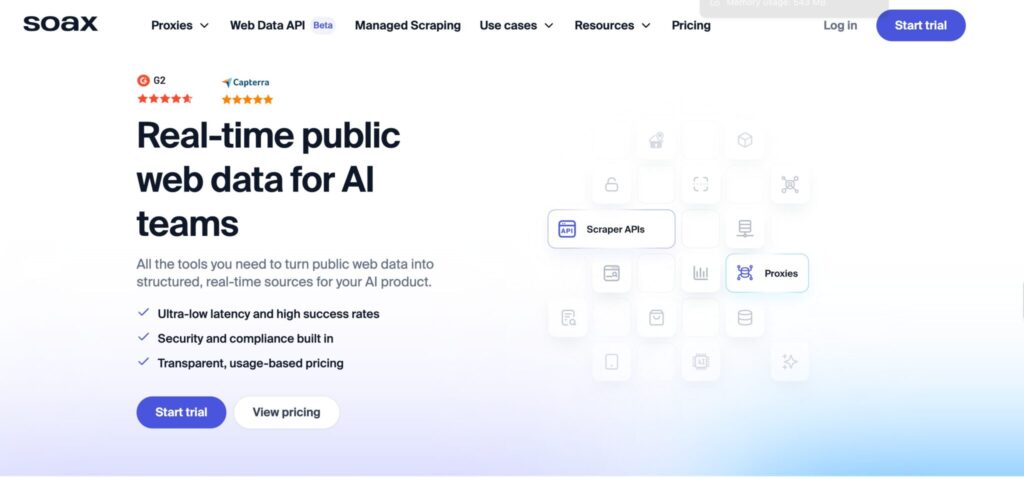
SOAX is a strong mid-market provider for teams that need clean targeting and flexible proxy types. It works well when your social media activity spans several platforms and regions.
SOAX lists residential, mobile, US datacenter, and web data API options, with bundled plans starting at $3.60 per GB on its starter tier. Its residential proxy page mentions enterprise rates from $0.32 per GB for high-volume customers, while its pricing page also promotes a 3-day 400MB trial for $1.99.
For social media workflows, SOAX stands out because of targeting. If you need to test how TikTok content appears in different cities, check Facebook ad placements by location, or monitor public social content across markets, granular targeting can save a lot of time.
SOAX is also a practical option for agencies that have outgrown cheap providers but do not need full enterprise complexity.
Best for: Multi-platform social teams, location testing, ad verification, and social monitoring.
Key strengths:
| Feature | Why it matters |
| Residential and mobile proxies | Useful across social platforms |
| Strong location targeting | Helpful for geo-specific testing |
| Trial available | Easier to test before scaling |
| Flexible bundled plans | Good for growing teams |
| Ethical usage focus | Better for long-term operations |
Possible drawback: The entry price can be higher than basic budget providers.
Pro Tip: Use SOAX when location accuracy matters more than the absolute lowest price.
5. NodeMaven: Best for Session-Heavy Social Media Work
NodeMaven is a newer provider, but it has become interesting for social media teams because of IP quality filtering and long sticky sessions.
NodeMaven lists 30M+ residential IPs, 250K mobile IPs, 99.54% average success rate, 95% clean IP rate, sub-0.6s average speed, traffic rollover, country, city and ISP targeting, and sticky sessions up to 7 days. That sticky session length is the main reason it deserves attention for social media.
For account management, sudden IP rotation is often worse than no rotation. If you are warming accounts, managing profiles, or keeping browser fingerprints consistent, longer sticky sessions can help.
NodeMaven also promotes real-time filtering to deliver higher-quality residential IPs and reduce interruptions. That is useful because a cheap proxy with bad history can cost more in account recovery time than it saves in monthly fees.
Best for: Session-heavy workflows, account warming, profile management, and teams that care about IP cleanliness.
Key strengths:
| Feature | Why it matters |
| Sticky sessions up to 7 days | Strong for account stability |
| IP quality filtering | Helps avoid poor IPs |
| Residential and mobile pool | Useful for social platforms |
| Traffic rollover | Good for uneven usage |
| City and ISP targeting | Better profile consistency |
Possible drawback: It is newer than providers like Bright Data, Decodo, or Rayobyte, so some buyers may want more long-term track record.
Pro Tip: For sensitive accounts, test a small batch first. Track login challenges, checkpoint rates, and session drops before scaling.
6. IPRoyal: Best Budget Option for Smaller Teams
IPRoyal is a practical choice for smaller social media teams that want residential, ISP, datacenter, and mobile proxies without enterprise pricing.
IPRoyal lists residential proxies from $1.75 per GB, a 32M+ proxy pool, ISP proxies from $2.40 per proxy, and non-expiring residential traffic. HostAdvice’s 2026 review also lists residential proxies from $1.75 per GB, ISP proxies from $2.40 per proxy, datacenter proxies from $1.39 per proxy, and mobile proxies from $10.11 per day.
For social media, the non-expiring traffic is attractive. Many small teams do not use bandwidth evenly every month. Some weeks are busy with campaigns, launches, or testing. Other weeks are quiet. Non-expiring residential traffic gives more breathing room.
IPRoyal is not as feature-heavy as Bright Data or Decodo, but it gives you enough proxy types to build a solid social setup on a budget.
Best for: Small agencies, freelancers, affiliate marketers, and lean social media teams.
Key strengths:
| Feature | Why it matters |
| Affordable residential pricing | Good for smaller teams |
| Non-expiring traffic | Less wasted bandwidth |
| ISP and mobile options | Useful for account stability |
| Simple dashboard | Easy setup |
| Flexible product range | Works for mixed use cases |
Possible drawback: Smaller pool and fewer advanced tools compared with enterprise providers.
Pro Tip: Use IPRoyal residential proxies for general social tasks, but consider ISP or mobile proxies for your most important accounts.
7. ProxyEmpire: Best Social Media Proxy for Rollover Flexibility
ProxyEmpire is a good fit for teams that want flexible proxy plans, rollover bandwidth, and access to residential, mobile, static residential, and datacenter proxies.
ProxyEmpire lists rotating residential, static residential, rotating mobile, dedicated mobile, and rotating datacenter proxies. Its pricing table shows rotating mobile pay-as-you-go pricing and high-volume options, with custom residential pricing starting from $0.75 per GB for very large usage.
For social media use, ProxyEmpire’s biggest advantage is flexibility. Rollover-style thinking matters because campaign usage is rarely perfectly predictable. A team may need extra bandwidth during a launch, product drop, influencer push, or paid ad audit, then much less the next month.
ProxyEmpire is especially interesting for social media monitoring, international testing, and multi-region workflows.
Best for: Teams with uneven monthly usage, mobile proxy users, and international social testing.
Key strengths:
| Feature | Why it matters |
| Rollover-friendly positioning | Helps avoid wasted spend |
| Residential and mobile options | Useful for social media |
| Multiple proxy types | Flexible setup |
| Pay-as-you-go options | Good for testing |
| Geo-targeting | Useful for regional campaigns |
Possible drawback: Some pricing pages and plan details can feel less straightforward than Webshare or IPRoyal.
Pro Tip: ProxyEmpire is useful when your bandwidth usage changes month to month. For always-on heavy usage, compare the effective cost per GB carefully.
8. Rayobyte: Best Social Media Proxy for Ethical Sourcing
Rayobyte is a good option for buyers who care about ethical sourcing, stable infrastructure, and a more transparent provider image.
Rayobyte lists residential proxies, static ISP proxies, static datacenter proxies, and rotating ISP proxies. Its 2026 proxy guide mentions residential proxies as low as $0.50 per GB, static ISP proxies from $4.60 per IP, and static datacenter proxies from $1 per IP. Its pricing page also lists ISP proxy tiers starting around $5 per IP on smaller plans and lower per-IP pricing at larger volumes.
For social media teams, Rayobyte is not always the flashiest provider, but it is dependable. It can work well for public content monitoring, geo testing, basic social QA, and workflows where you want residential or ISP proxies from a provider with a stronger ethical angle.
ISP proxies can be especially useful when you need longer-lasting sessions and better speed than rotating residential proxies.
Best for: Ethical sourcing-focused buyers, social QA, market monitoring, and ISP proxy workflows.
Key strengths:
| Feature | Why it matters |
| Residential and ISP options | Useful for different social workflows |
| Ethical positioning | Better for risk-aware teams |
| Datacenter proxies available | Good for low-risk research |
| Bulk pricing options | Useful for scale |
| Stable infrastructure | Good for repeat workflows |
Possible drawback: It may not feel as modern or social-media-specialized as newer providers.
Pro Tip: Use Rayobyte ISP proxies for accounts that need stable sessions and datacenter-like speed with better trust than pure datacenter IPs.
9. ProxyCheap: Best Budget Social Media Proxy

ProxyCheap is built for buyers who want low-cost proxy access across multiple proxy types. It offers static residential, rotating residential, datacenter, static mobile, and rotating mobile options.
ProxyCheap lists static residential proxies starting at $2.12 per month, rotating residential proxies starting at $4.99 per GB, datacenter IPv4 proxies from $1.49 per month, static mobile proxies from $9 per proxy, and rotating mobile proxies from $5.99 per GB. Its residential proxy page also mentions 50M+ residential IPs across 195+ countries, SOCKS5 and HTTPS support, and 99.9% uptime.
For social media use, ProxyCheap is best for testing, smaller setups, and budget-sensitive campaigns. It is not the provider I would choose for a large enterprise social listening system, but it can work well for small operators who need affordable residential or mobile IPs.
Best for: Budget users, testing, small social projects, and basic account separation.
Key strengths:
| Feature | Why it matters |
| Low-cost plans | Good for small budgets |
| Residential and mobile options | Useful for social media |
| SOCKS5 and HTTPS support | More tool compatibility |
| Global coverage | Helps with location testing |
| Simple buying process | Fast setup |
Possible drawback: Budget providers can be less consistent than premium providers, so testing is important.
Pro Tip: Do not put your most valuable social accounts on the cheapest proxy tier without testing IP reputation first.
Best Social Media Proxy Providers 2026: Quick Comparison Table
| Provider | Best For | Proxy Types | Starting Price Snapshot | Best Social Use Case | Main Drawback |
| Decodo | Best value for agencies | Residential, mobile, ISP, datacenter | Residential pricing commonly starts around pay-as-you-go tiers | Client account management, ad checks, social data | Not the cheapest for tiny users |
| Webshare | Developers and budget users | Residential, static residential, datacenter | Residential from $1.40/GB, datacenter from $0.05/IP | Social monitoring, QA, light automation | Limited advanced support |
| Bright Data | Enterprise teams | Residential, mobile, ISP, datacenter | Residential from $5.88/GB | Enterprise social intelligence | Expensive |
| SOAX | Multi-platform targeting | Residential, mobile, datacenter | Starter listed at $3.60/GB | Geo-specific social testing | Higher entry commitment |
| NodeMaven | Session-heavy accounts | Residential, mobile, ISP | Pricing varies by usage | Account stability, sticky sessions | Newer provider |
| IPRoyal | Small teams | Residential, ISP, mobile, datacenter | Residential from $1.75/GB | Budget social workflows | Smaller toolset |
| ProxyEmpire | Rollover flexibility | Residential, mobile, datacenter | Trial and pay-as-you-go options listed | Uneven campaign usage | Pricing can require closer review |
| Rayobyte | Ethical sourcing | Residential, ISP, datacenter | Residential as low as $0.50/GB in 2026 guide | Social QA, ISP workflows | Less modern UI feel |
| ProxyCheap | Cheapest entry | Residential, mobile, datacenter | Rotating residential from $4.99/GB, mobile from $5.99/GB | Budget testing | Consistency may vary |
Proxy Type Guide for Social Media
Residential Proxies
Residential proxies route traffic through real household-style IPs. These are usually the safest general-purpose option for social media account management, public content monitoring, and geo testing.
Best for: Instagram, Facebook, X, Reddit, Pinterest, social scraping, and account separation.
Avoid when: You need a fixed IP for a long time and cannot risk rotation.
Mobile Proxies
Mobile proxies use carrier-grade mobile networks. They are often more trusted by mobile-first platforms because many real users share mobile carrier IP ranges.
Best for: Instagram, TikTok, app testing, mobile ad verification, and sensitive accounts.
Avoid when: You need cheap bandwidth. Mobile proxies are usually more expensive.
ISP Proxies
ISP proxies are hosted in datacenters but registered through internet service providers. They are faster and more stable than rotating residential proxies while still carrying better trust than standard datacenter IPs.
Best for: Long sessions, account management, browser profiles, and stable social logins.
Avoid when: You need huge rotating pools for large public scraping jobs.
Datacenter Proxies
Datacenter proxies are fast and cheap, but social platforms often detect them more easily. They are useful for basic research, testing, and low-risk tasks.
Best for: QA, public page checks, simple geo tests, and non-login workflows.
Avoid when: Managing valuable social accounts.
How to Choose the Best Social Media Proxy Provider
1. Match Proxy Type to Platform Risk
Instagram, TikTok, Facebook, and LinkedIn are more sensitive than many other platforms. For these, residential, mobile, or ISP proxies are safer. For public X monitoring or Reddit research, rotating residential proxies may be enough.
2. Keep Account and IP Location Consistent
If an account is built around a US audience, use a US proxy. If it is tied to a local business in London, use a UK or London-based proxy when possible.
Location jumps are one of the easiest ways to trigger security checks.
3. Use Sticky Sessions for Account Management
For account management, stability beats aggressive rotation. A proxy that changes every few minutes can look suspicious. Use sticky sessions, static residential proxies, ISP proxies, or mobile proxies with controlled rotation.
4. Separate Accounts Properly
Do not run too many accounts on one proxy. A safer structure is one account per proxy for important accounts, or a small group of low-risk accounts per proxy if you are testing.
5. Test IP Reputation Before Scaling
Before moving all accounts to a provider, test a small batch. Track:
| Metric | What to Watch |
| Login checkpoints | Frequent checks mean IP trust may be poor |
| SMS verification prompts | Can signal risky IP behavior |
| Session drops | Bad for account stability |
| Speed | Slow proxies hurt workflow |
| Location accuracy | Wrong geo can cause mismatches |
6. Avoid Free Proxies for Social Media
Free proxies are risky. Many are overloaded, abused, logged, or already flagged. They may be fine for a quick test, but not for serious account management.
7. Read Platform Rules
Using proxies is not automatically illegal, but it can violate a platform’s terms depending on how you use them. Do not use proxies for spam, impersonation, scraping private data, bypassing bans, or abusive automation.
FAQs: Best Social Media Proxy Providers 2026
Can I manage multiple social media accounts with one proxy?
Technically, yes. Practically, it is not ideal for valuable accounts. One proxy per important account is safer. If you use one proxy for many accounts, one flagged account can put the others at risk.
What is the safest proxy type for Instagram in 2026?
Mobile proxies and ISP proxies are usually the safest options for Instagram account management. Residential proxies can also work well if they are clean and support sticky sessions.
Will proxies prevent social media bans?
No. Proxies only help with IP separation and location consistency. They do not protect you from spam behavior, poor automation, suspicious browser fingerprints, bad content, or platform rule violations.
How do I know if my proxy IPs are clean?
Test them with a few low-risk accounts first. Watch for login challenges, forced verifications, location mismatch warnings, and unusually frequent session resets. Providers like NodeMaven also promote IP quality filtering, which can help reduce bad IP exposure.
Is using proxies for social media legal?
In most places, proxies themselves are legal. The risk depends on how you use them. Managing accounts, testing ads, checking public pages, and doing compliant market research are very different from spam, fraud, impersonation, or scraping private information.
How many social media accounts can I run per proxy?
For important accounts, use one account per proxy. For lower-risk testing, some teams run two to five accounts per proxy, but that increases risk. The safer answer is simple: the more valuable the account, the fewer accounts you should attach to one IP.
Are residential proxies better than datacenter proxies for social media?
Yes, for most account-based social media work. Datacenter proxies are cheaper and faster, but they are easier to detect. Residential proxies look closer to normal user traffic.
Should I use rotating or static proxies for social media?
Use static, sticky, ISP, or mobile proxies for account management. Use rotating residential proxies for public data collection, testing, and monitoring where you do not need one account tied to one IP.
Bottom Line: Best Social Media Proxy Providers 2026
For most social media agencies, Decodo is the best all-around pick because it balances pool size, usability, proxy types, and value. Bright Data is the best enterprise choice. Webshare and IPRoyal are strong budget options. SOAX is excellent for location-heavy workflows. NodeMaven stands out for sticky sessions and IP quality. ProxyEmpire is useful when rollover flexibility matters. Rayobyte is a good ethical-sourcing choice. ProxyCheap is best for low-cost testing.
My practical recommendation: start with residential or ISP proxies, keep locations consistent, avoid over-rotation, and test every provider with a small batch before scaling. In social media proxy work, clean behavior matters as much as clean IPs.