
Best 4G Mobile Proxy Providers.
4G mobile proxies are expensive for a reason. They route traffic through real mobile carrier networks, which makes them look far more natural than regular datacenter IPs. For serious scraping, ad verification, app testing, social media management, and geo specific research, they are often the safest option.
Below is a practical buyer’s guide to the best 4G mobile proxy providers in 2026.
What Separates Good 4G Mobile Proxy Providers?
A strong 4G mobile proxy provider is not just about having “millions of IPs.” That claim is everywhere. What matters more is IP quality, carrier diversity, rotation control, targeting options, uptime, session stability, and compliance standards.
Good providers usually offer:
- Real 3G, 4G, LTE, and 5G carrier IPs
- Country, city, ASN, or carrier targeting
- Sticky sessions and rotating sessions
- HTTP, HTTPS, and SOCKS5 support
- Clean dashboard and API access
- Transparent pricing
- Strong uptime
- Ethical sourcing and usage rules
For most users, the best provider is not always the biggest one. It is the one that gives stable sessions, clean IPs, and predictable costs.
9 Best 4G Mobile Proxy Providers in 2026
1. Decodo, formerly Smartproxy: Best Mobile Proxy Value
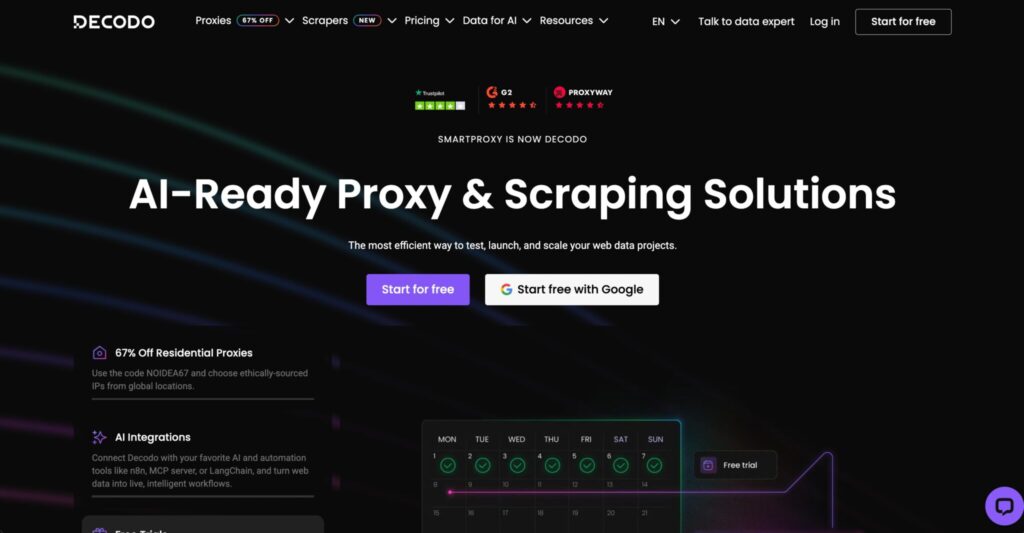
Decodo is one of the easiest 4G mobile proxy providers to recommend for users who want strong performance without enterprise level complexity. Its mobile proxy network includes real 3G, 4G, and 5G carrier IPs, with pricing starting from around $2.25 per GB on higher volume plans. Decodo also says it offers 10M+ mobile IPs across 160+ locations and 700+ carriers.
The dashboard is clean, setup is simple, and the provider works well for social media automation, ad verification, app testing, SEO research, and sneaker style use cases where mobile trust matters.
Best for: users who want a balance of price, usability, and reliable mobile IP access.
Pros
- Strong value compared to premium enterprise providers
- Large mobile IP pool
- Easy dashboard
- Good geo coverage
- Suitable for beginners and agencies
Cons
- Advanced enterprise controls are not as deep as Bright Data
- Heavy users may still need a larger custom plan
Pro Tip: Decodo is a smart starting point if you are moving from residential proxies to mobile proxies for the first time.
2. Oxylabs: Best Overall 4G Mobile Proxy Provider
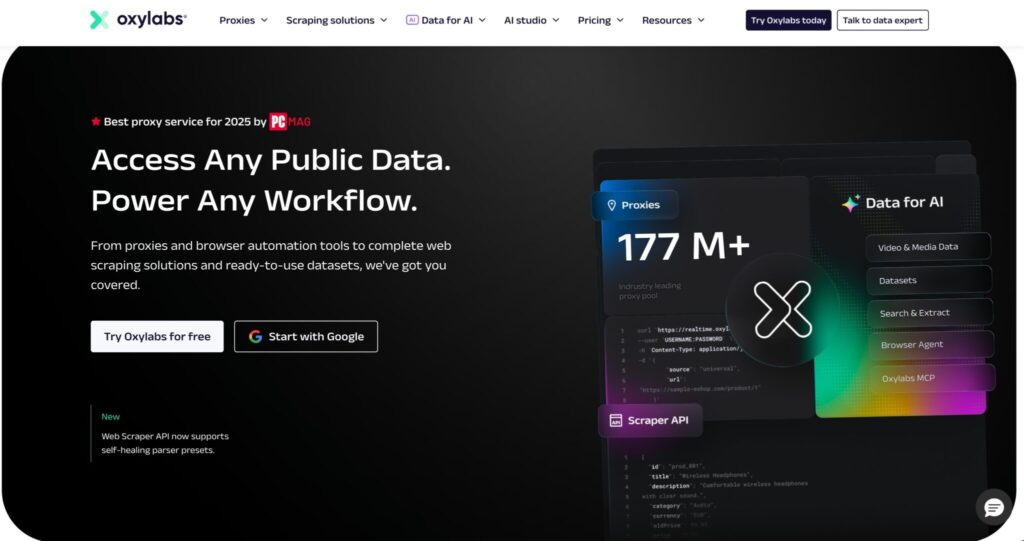
Oxylabs is built for serious data teams. Its mobile proxy pool includes 20M+ mobile IPs, supports 140+ countries, and offers filtering by continent, country, state, city, coordinates, and ASN. It also claims 99.9% uptime for mobile proxies.
Pricing starts at around $7.50 per GB on smaller mobile plans, with lower rates on higher tiers. For example, its listed pricing includes 4 GB at $7.50 per GB, 15 GB at $6.67 per GB, 100 GB at $5 per GB, and larger corporate pricing at lower per GB rates.
Oxylabs is not the cheapest provider, but it is one of the most complete options for scale, targeting, compliance, support, and reliability.
Best for: enterprises, large scraping teams, ad verification, market intelligence, and high volume workflows.
Pros
- Very large mobile proxy pool
- Excellent targeting controls
- Strong uptime
- Business grade support
- Good for complex scraping projects
Cons
- Higher entry cost
- May be too advanced for casual users
Pro Tip: Choose Oxylabs if missed requests cost you more than proxy fees.
3. Bright Data: Best for Feature Rich 4G Mobile Access
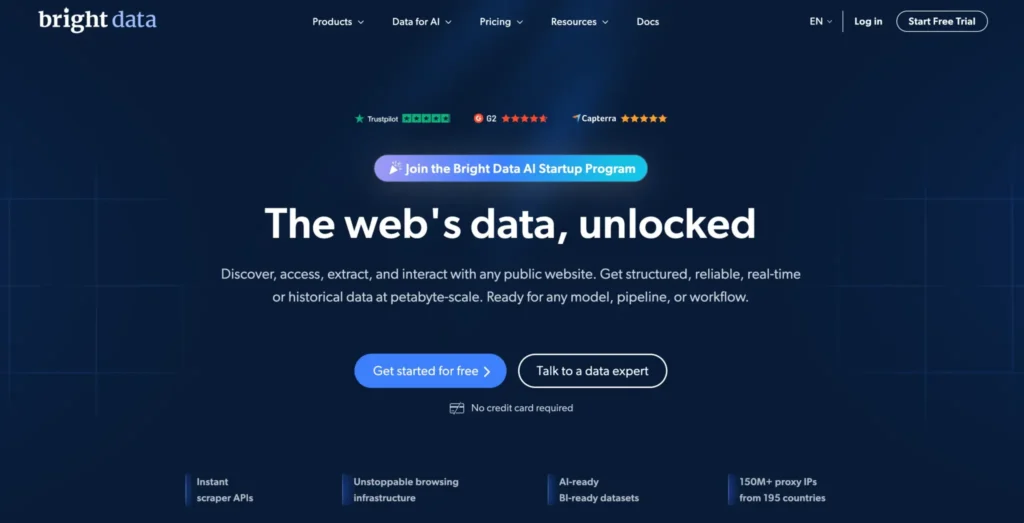
Bright Data is one of the most feature packed proxy platforms in the market. Its mobile proxy pricing page lists access to 7M+ mobile proxies, with pay as you go pricing shown at $8 per GB, while other plan types may reduce the rate.
What makes Bright Data different is not just the mobile pool. It also offers proxy management tools, scraping APIs, browser extensions, datasets, compliance controls, and detailed targeting. For users who want a complete data collection stack, Bright Data feels more like infrastructure than a simple proxy seller.
Best for: advanced teams that need mobile proxies plus scraping tools, compliance, datasets, and automation features.
Pros
- Strong tool ecosystem
- Excellent targeting and control
- Good documentation
- Flexible proxy options
- Suitable for large business use
Cons
- More expensive than budget providers
- Setup can feel complex for beginners
Pro Tip: Bright Data is best when you need more than IPs. If you need workflow control, data collection tools, and enterprise governance, it is a strong pick.
4. SOAX: Largest 4G Mobile Proxy Pool
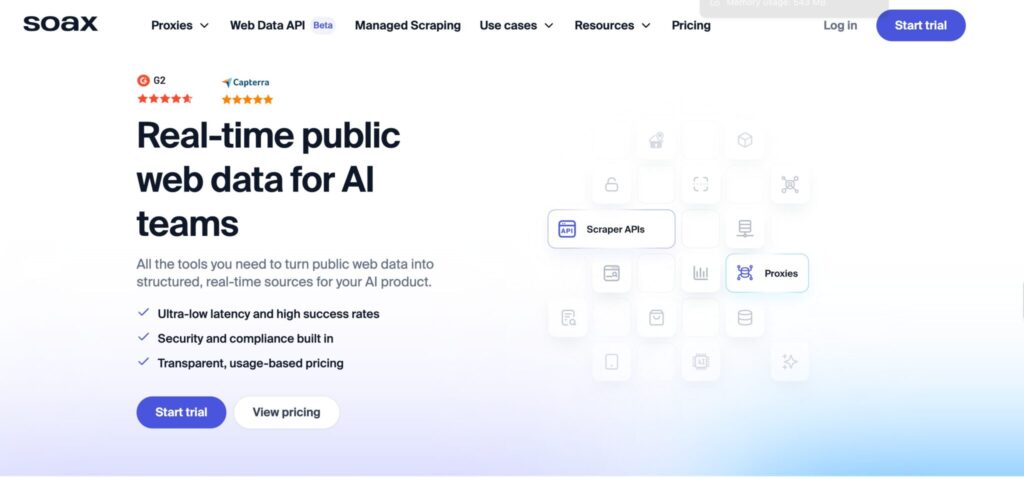
SOAX is known for its huge proxy network and flexible targeting. Its mobile proxy page mentions 33M+ mobile IPs across 195+ locations, while its broader proxy network is listed at 191M+ proxy servers. Its bundled pricing starts around $3.60 per GB with a 25 GB starter plan.
SOAX is especially strong for users who care about clean targeting, rotation settings, and global reach. It supports common protocols and is useful for SEO monitoring, price tracking, social media, app testing, and localized web research.
Best for: users who want a large mobile pool with strong geo flexibility.
Pros
- Huge mobile IP pool
- Strong location coverage
- Flexible rotation
- Good pricing for mid volume users
- Trial option available
Cons
- Smaller users may find the monthly minimum high
- Some advanced tooling is less polished than Bright Data
Pro Tip: SOAX is a good middle ground between budget tools and enterprise platforms.
5. IPRoyal: Best Budget 4G Mobile Proxies With Unlimited Traffic
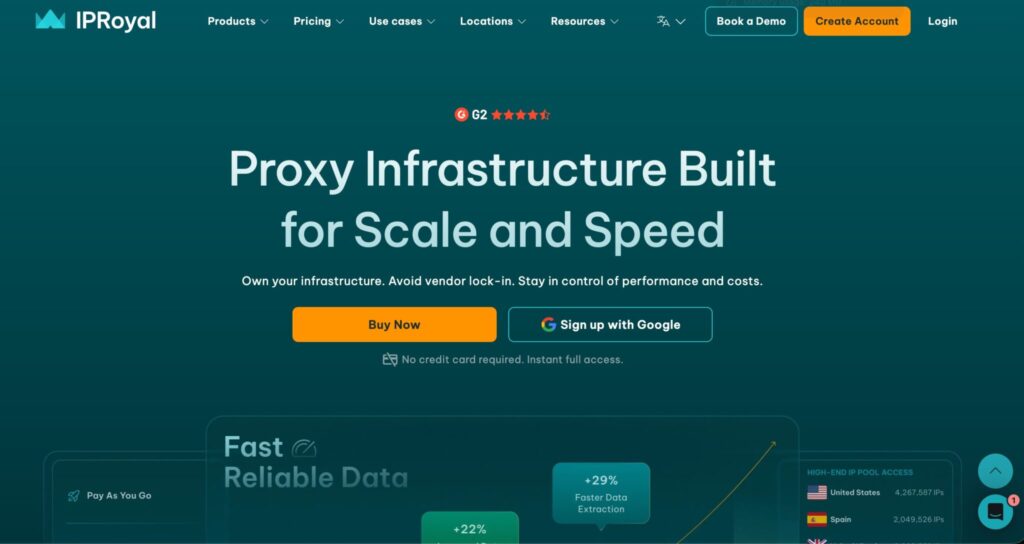
IPRoyal is attractive because it keeps mobile proxy buying simple. Its dedicated mobile proxies include unlimited traffic and sessions, while rotating mobile proxies are billed per GB. Its pricing page lists rotating mobile proxy plans from around $6.80 per GB for 2 GB, dropping to $5.20 per GB for 100 GB.
The dedicated mobile proxy option is especially useful for users who need a stable mobile identity for account based workflows. It supports 5G, 4G, 3G, and LTE, with location and provider options in many markets.
Best for: smaller teams, social media managers, and users who want unlimited traffic on dedicated mobile proxies.
Pros
- Budget friendly compared to premium vendors
- Unlimited traffic on dedicated mobile proxies
- Simple setup
- Good for account management
- Flexible options
Cons
- Smaller ecosystem than Oxylabs or Bright Data
- Less ideal for massive scraping teams
Pro Tip: IPRoyal is worth testing if your biggest issue is bandwidth cost.
6. ProxyEmpire: Best 4G Mobile Proxy for Unlimited Rollover
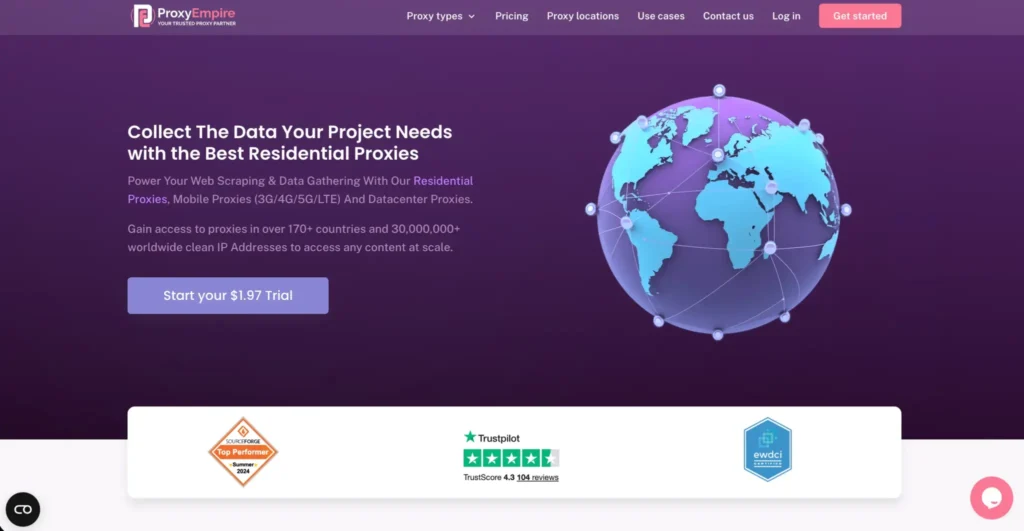
ProxyEmpire focuses heavily on flexibility. Its mobile proxy network includes real 3G, 4G, 5G, and LTE mobile IPs across 170+ countries, and it promotes data rollover as one of its standout features. It also mentions unlimited concurrent connections, 99.86% uptime, and average response time claims around 0.6 seconds on its site.
The biggest advantage is rollover data. Many proxy providers reset unused bandwidth every month. ProxyEmpire lets you keep unused data, which is helpful for agencies with uneven workloads.
Best for: agencies and users with inconsistent monthly usage.
Pros
- Rollover bandwidth
- Wide country coverage
- Good mobile proxy flexibility
- Unlimited concurrent connections
- Dedicated and rotating options
Cons
- Pricing can rise quickly at scale
- Dashboard may not feel as refined as larger competitors
Pro Tip: ProxyEmpire makes sense if your usage changes month to month and you hate wasting unused bandwidth.
7. Rayobyte: Best 4G Mobile Proxy for Transparent Ethical Infrastructure
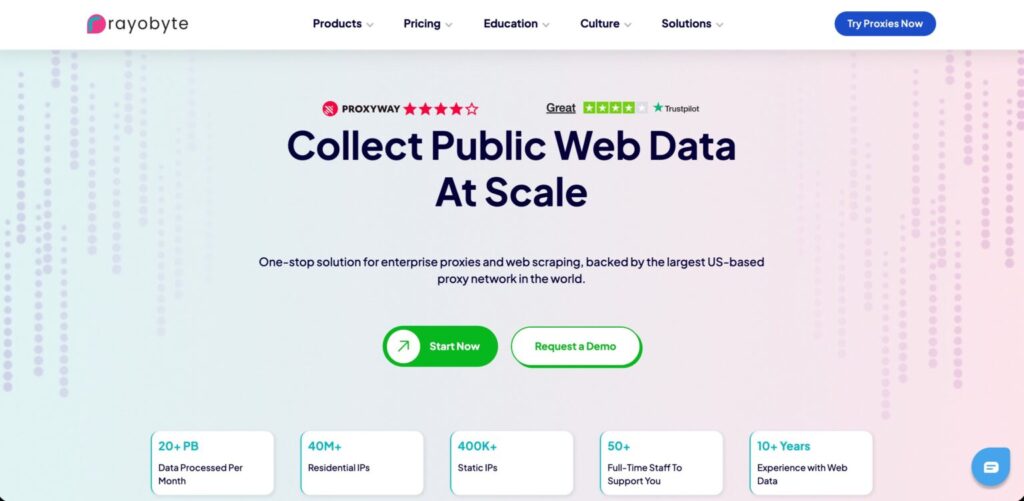
Rayobyte has built its brand around ethical proxy infrastructure. Its mobile proxy pricing page lists a trial at $250 for 500 GB, equal to $0.50 per GB for the first 500 GB, and regular plans such as $250 per month for 200 GB, equal to $1.25 per GB. It also highlights ethical web data collection and industry membership signals.
Rayobyte is better suited for high volume users than casual buyers. Its plans are not designed for someone who needs only 1 or 2 GB of mobile traffic. But for bigger teams, the per GB pricing can be very competitive.
Best for: high volume teams that care about ethics, transparency, and stable infrastructure.
Pros
- Strong ethical positioning
- Competitive high volume pricing
- Good for business use cases
- Clear plan structure
- Useful for ecommerce and SERP data
Cons
- Not beginner friendly on pricing
- Minimum spend is higher than many budget providers
Pro Tip: Rayobyte is best when you already know your traffic volume and need a serious long term provider.
8. ProxyCheap: Best Budget 4G Mobile Proxy

ProxyCheap is one of the more accessible providers for affordable mobile proxy access. Its mobile proxy page mentions 5M+ IPs, real carrier networks, dynamic rotation, unlimited bandwidth, and coverage in 100+ countries. It also offers static mobile proxies from several locations and rotating mobile proxy plans.
A recent ProxyCheap pricing page lists static mobile proxy options such as a 7 day trial and monthly pricing, while rotating mobile proxies are shown from around $3.59 per proxy in promotional pricing.
Best for: budget users who want mobile IPs without enterprise contracts.
Pros
- Affordable entry point
- Static and rotating mobile options
- Large advertised IP pool
- Simple dashboard
- Good for testing smaller projects
Cons
- May not match premium providers for advanced targeting
- Support and infrastructure depth may vary by use case
Pro Tip: ProxyCheap is a practical option for testing mobile proxies before moving to a higher scale provider.
9. NodeMaven: Best 4G Mobile Proxy for Pre Screened Clean IPs
NodeMaven is newer compared to giants like Bright Data and Oxylabs, but it has gained attention for focusing on clean, quality checked proxy pools. Its key selling point is IP quality over raw pool size.
For 4G mobile proxy users, this matters because not every mobile IP is equal. Some IPs are overused, flagged, or unstable. A smaller but cleaner pool can sometimes outperform a huge messy pool, especially for social platforms, app testing, and account sensitive workflows.
Best for: users who care about clean IP reputation and stable sessions.
Pros
- Focus on cleaner IP quality
- Good for sensitive workflows
- Useful for account based platforms
- Modern provider experience
- Strong alternative to older proxy brands
Cons
- Smaller brand compared to enterprise providers
- Public mobile pool size and pricing details may be less visible than bigger competitors
Pro Tip: Test NodeMaven if your current provider has too many burned IPs or inconsistent session quality.
Best 4G Mobile Proxy Providers 2026: Quick Comparison Table
| Provider | Best For | Mobile Pool | Starting Price Snapshot | Targeting Strength | Best Use Case |
| Decodo | Best value | 10M+ mobile IPs | From about $2.25 per GB | Strong | Social, scraping, app testing |
| Oxylabs | Best overall | 20M+ mobile IPs | From about $7.50 per GB | Excellent | Enterprise scraping and verification |
| Bright Data | Best features | 7M+ mobile proxies | Pay as you go around $8 per GB | Excellent | Advanced data collection |
| SOAX | Largest pool | 33M+ mobile IPs | From about $3.60 per GB | Strong | Global targeting |
| IPRoyal | Budget unlimited traffic | Global mobile pool | From about $6.80 per GB for rotating plans | Good | Dedicated mobile sessions |
| ProxyEmpire | Rollover data | 4M+ mobile IPs | Varies by plan | Good | Agencies and uneven usage |
| Rayobyte | Ethical infrastructure | Business grade mobile pool | From about $1.25 per GB on regular plans | Good | High volume teams |
| ProxyCheap | Budget testing | 5M+ IPs | Low cost static and rotating options | Basic to good | Small projects |
| NodeMaven | Clean IP quality | Quality checked pool | Varies | Good | Account sensitive workflows |
How to Choose the Best 4G Mobile Proxy Provider
1. Check IP Quality Before Pool Size
A provider can advertise millions of mobile IPs, but that does not mean every IP is useful. You want clean IPs with low abuse history, stable sessions, and natural carrier routing.
For account based work, quality beats quantity every time.
2. Look at Rotation Control
Good mobile proxies should support:
- Automatic rotation
- Manual IP refresh
- Sticky sessions
- Session duration control
- API based rotation
For scraping, shorter rotation can help. For account management, sticky sessions are usually safer.
3. Choose Carrier Targeting When Needed
Carrier targeting is useful when platforms behave differently across networks like Verizon, T Mobile, AT&T, Vodafone, Orange, or Airtel.
Not every project needs carrier targeting. But if your workflow depends on app testing, localized ads, or mobile only platforms, it can be valuable.
4. Compare Bandwidth Pricing Carefully
Mobile proxies can get expensive fast. Always check:
- Price per GB
- Minimum monthly spend
- Rollover policy
- Overage fees
- Trial availability
- Refund policy
Cheap pricing is not always cheaper if success rates are poor.
5. Test Latency in Your Target Location
Mobile proxies are naturally slower than datacenter proxies. That is normal. But if latency is too high, your tools may timeout or behave inconsistently.
Always test speed from your target country, not just your own location.
FAQs: Best 4G Mobile Proxy Providers in 2026
What is the difference between 4G and residential proxies?
4G mobile proxies use IPs assigned by mobile carriers. Residential proxies use IPs from home internet connections. Mobile proxies usually have higher trust on mobile first platforms because many real users share carrier grade NAT IPs.
Are 4G mobile proxies worth the higher price?
Yes, if your task needs high trust mobile traffic. They are useful for social media, app testing, ad verification, localized mobile research, and account based workflows. For basic scraping, residential proxies may be cheaper.
How does 4G mobile proxy rotation work?
Rotation changes the mobile IP assigned to your connection. Some providers rotate automatically every few minutes, while others let you trigger rotation manually through a dashboard or API.
Can I target specific 4G carriers like T Mobile or Verizon?
Some providers support carrier or ASN targeting. Oxylabs, Bright Data, Decodo, SOAX, and IPRoyal offer stronger targeting controls than many smaller budget providers.
Why is my 4G proxy slower than expected?
Mobile proxies pass through real carrier networks, so they are usually slower than datacenter proxies. Speed depends on carrier load, location, device routing, session type, and provider infrastructure.
Which 4G mobile proxy is best for beginners?
Decodo and IPRoyal are good beginner friendly options. Decodo is easier for general mobile proxy use, while IPRoyal is attractive if you want dedicated mobile proxies with unlimited traffic.
Which 4G mobile proxy is best for enterprise users?
Oxylabs and Bright Data are the strongest enterprise picks. Oxylabs is excellent for scale and targeting, while Bright Data offers a wider data collection ecosystem.
Conclusion: Best 4G Mobile Proxy Providers in 2026
If you want the best all round 4G mobile proxy provider, Oxylabs is the strongest choice for scale, targeting, and reliability.
If you want the best value, Decodo is hard to ignore.
If you need advanced tools and enterprise level control, Bright Data is the better fit.
For huge pool access, SOAX stands out. For budget dedicated mobile proxies, IPRoyal is practical. For rollover bandwidth, ProxyEmpire is useful. For ethical high volume infrastructure, Rayobyte deserves attention. For low cost testing, ProxyCheap works well. For clean IP quality, NodeMaven is worth testing.
The smart move is simple: shortlist two or three providers, test them on your actual workflow, then choose based on success rate, not marketing claims.