
Bright Data Review.
Bright Data is not the cheapest proxy provider in the market. That is the first thing you should know before comparing it with budget tools like IPRoyal, Webshare, or smaller rotating proxy sellers.
But cheap is not really the point here.
Bright Data is built for teams that need scale, location control, compliance, scraping infrastructure, and serious proxy reliability. It offers residential proxies, datacenter proxies, ISP proxies, mobile proxies, Web Unlocker, SERP API, scraping APIs, and ready-made datasets under one ecosystem.
As of 2026, Bright Data claims access to 400M+ monthly residential IPs across 195+ countries, while its ISP network includes 1.3M+ static residential proxies. Its datacenter proxy documentation lists 1.6M+ IPs across 98+ countries. (Bright Data Docs)
So, is Bright Data overkill for beginners? Yes, often.
Is it one of the strongest proxy platforms for serious web data work? Also yes.
Bright Data Quick Review
| Category | Details |
| Best For | Web scraping, SERP tracking, eCommerce intelligence, ad verification, AI data collection |
| Proxy Types | Residential, mobile, ISP, datacenter |
| Residential Pool | 400M+ monthly IPs |
| Coverage | 195+ countries |
| ISP Proxies | 1.3M+ static residential proxies |
| Datacenter Proxies | 1.6M+ IPs across 98+ countries |
| Starting Residential Price | Around $5.88/GB on current pricing pages |
| Free Trial | Available |
| Skill Level | Intermediate to advanced |
| Main Weakness | Pricing and setup complexity |
What Is Bright Data?
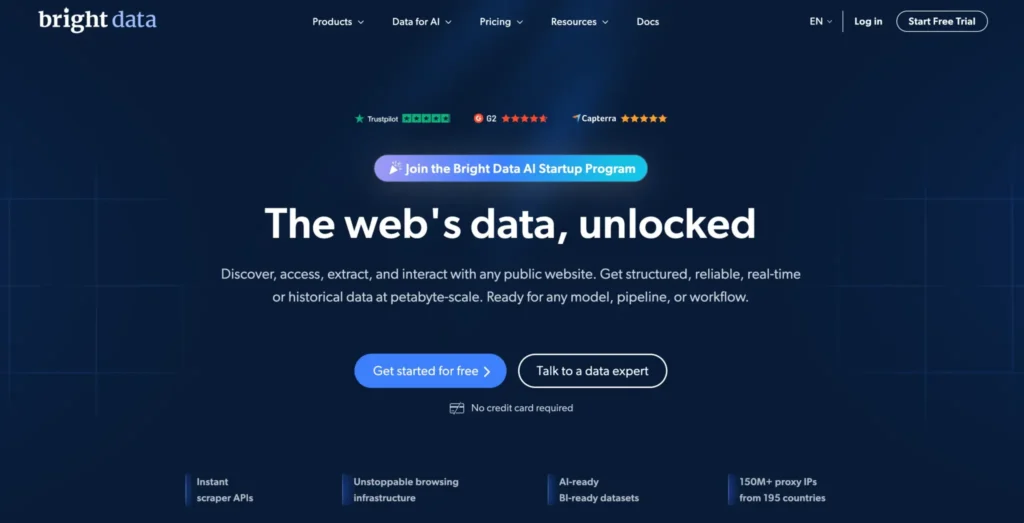
Bright Data is a proxy and web data platform designed for companies that need to collect public web data at scale. It started as Luminati and later rebranded to Bright Data. Today, it is less of a “proxy seller” and more of a full web data infrastructure provider.
That difference matters.
A basic proxy provider gives you IPs. Bright Data gives you IPs, scraping tools, APIs, browser automation support, unlockers, datasets, compliance controls, targeting options, and enterprise-level account management.
For a small blogger checking Google manually, it may feel too heavy. For a SaaS team tracking prices across 30 countries, it can save months of infrastructure work.
Bright Data Pros and Cons
Pros
| Pros | Why It Matters |
| Huge residential IP pool | Better coverage for large scraping and geo-targeted tasks |
| Strong geo-targeting | Useful for country, city, ASN, and carrier-level testing |
| Multiple proxy types | You can match the proxy type to the task |
| Web Unlocker and APIs | Reduces the need to build anti-blocking logic yourself |
| Strong documentation | Helpful for developers and technical teams |
| Enterprise-grade compliance | Important for brands, agencies, and regulated teams |
| Good for scaling | Built for high-volume scraping and automation |
Cons
| Cons | Why It Matters |
| Expensive for beginners | Smaller users may find cheaper tools more practical |
| Setup can feel technical | Not ideal if you want plug-and-play simplicity |
| Too advanced for casual use | Many features may go unused |
| Pricing varies by proxy type | You need to calculate cost based on traffic and use case |
| Some workflows need approval | Compliance checks can slow down quick experiments |
Bright Data Pricing Explained
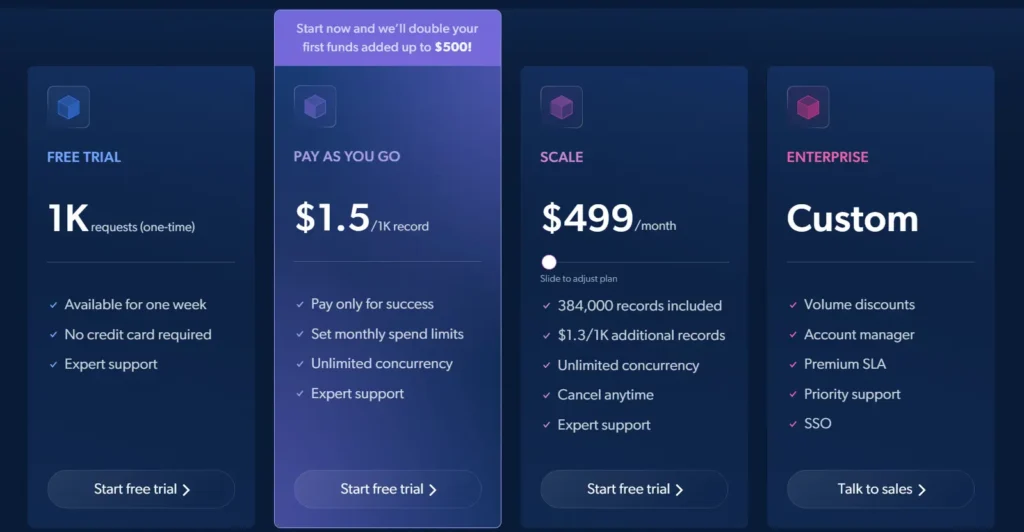
Bright Data pricing depends on the proxy type and traffic volume. Residential proxies currently start around $5.88/GB on the official residential pricing page, while ISP proxies are sold either by IP or bandwidth depending on the plan.
Here is the simple way to think about it:
| Proxy Type | Pricing Style | Best Use Case |
| Residential Proxies | Per GB | Scraping, sneaker data, price monitoring, geo-testing |
| Mobile Proxies | Per GB | App testing, social platforms, mobile SERP tracking |
| ISP Proxies | Per IP or bandwidth | Account-based tasks needing stable IPs |
| Datacenter Proxies | Per IP or bandwidth | Fast, low-cost scraping where trust level is less critical |
| Web Unlocker | Request/API based | Sites with blocking, CAPTCHA, or anti-bot systems |
| Datasets | Custom or package pricing | Teams that want data without building scrapers |
Pro Tip
Do not choose Bright Data only by looking at the lowest price per GB. A cheaper provider with poor success rates can cost more once you include retries, bans, failed requests, and engineering time.
Bright Data Proxy Types Reviewed
1. Residential Proxies
Bright Data’s residential proxies are its flagship product. These IPs come from real residential networks, which makes them harder to detect than datacenter IPs.
They are best for:
| Use Case | Why Residential Works |
| Web scraping | Lower block rate than datacenter IPs |
| Price monitoring | Looks like traffic from real users |
| SERP tracking | Supports location-based search results |
| Ad verification | Helps check how ads appear in different regions |
| Travel fare tracking | Useful for country and city-level comparisons |
Bright Data says its residential network covers 400M+ monthly IPs across 195+ countries. That is massive, especially for teams that need country-level and city-level targeting.
The biggest advantage is control. You can rotate IPs, target specific locations, and manage sessions based on the type of site you are accessing.
2. ISP Proxies
ISP proxies are one of Bright Data’s strongest options for users who need stability.
These proxies combine the trust of residential IPs with the speed and consistency of datacenter-style infrastructure. Bright Data lists 1.3M+ static residential ISP proxies and promotes long sessions, free geo-targeting, and pay-per-IP or bandwidth-based pricing.
ISP proxies are best for:
| Use Case | Why ISP Proxies Help |
| Account management | Same IP can stay active longer |
| Login-based platforms | Reduces suspicious IP changes |
| Market research tools | Stable sessions help avoid interruptions |
| Brand monitoring | Consistent identity across sessions |
| B2B scraping | Better reliability than rotating IPs in some workflows |
Pro Tip
Use ISP proxies when the website expects a consistent user identity. Use rotating residential proxies when you need scale across many requests.
3. Datacenter Proxies
Datacenter proxies are the fastest and usually the cheapest proxy type. Bright Data’s documentation says its datacenter proxy network includes over 1.6 million IPs across 98+ countries.
These are best for simple, high-speed tasks where the target site does not aggressively block datacenter traffic.
Good use cases include:
| Use Case | Fit |
| Basic scraping | Good |
| SEO rank checks | Good if target allows datacenter IPs |
| Bulk data collection | Good for low-protection sites |
| Brand monitoring | Good |
| Sneaker sites or strict eCommerce | Usually not ideal |
Datacenter proxies are not magic. They are easy to detect if the website has strong anti-bot systems. But when they work, they are fast and cost-efficient.
4. Mobile Proxies
Mobile proxies route traffic through mobile carrier networks. These are useful when you need to test mobile-first websites, mobile apps, app store visibility, or mobile SERP results.
They are usually more expensive than residential and datacenter proxies, but they are also harder to block because mobile carriers often share IPs across many real users.
Best for:
| Use Case | Why Mobile Works |
| App testing | Real mobile network behavior |
| Social media research | Mobile IPs look more natural |
| Mobile SERP tracking | Better location and device accuracy |
| Ad verification | Useful for mobile ad placements |
| Fraud detection research | Helps test region and carrier behavior |
Bright Data Feature Breakdown
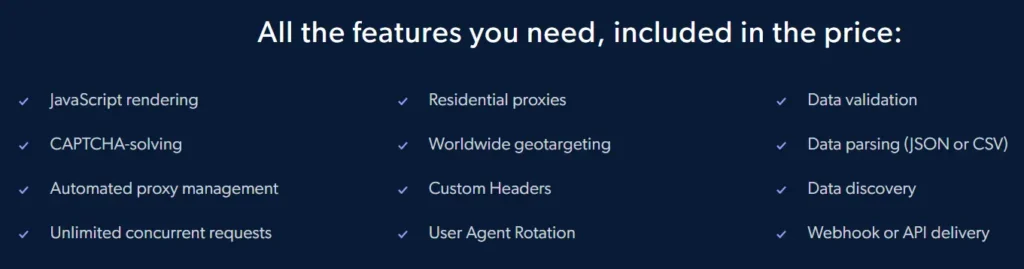
| Feature | Bright Data Rating | Notes |
| Residential proxy scale | 9.8/10 | One of the largest pools available |
| Geo-targeting | 9.7/10 | Country, city, carrier, ASN options |
| Speed | 9/10 | Depends on proxy type and target site |
| Dashboard | 8.5/10 | Powerful but not beginner-simple |
| Documentation | 9.3/10 | Strong for developers |
| Pricing | 7.5/10 | Premium pricing |
| Compliance | 9.5/10 | Stronger than most low-cost providers |
| Beginner friendliness | 7/10 | Better for technical users |
Bright Data vs Similar Proxy Providers
| Provider | Best For | Proxy Pool | Main Strength | Main Weakness |
| Bright Data | Enterprise scraping and web data | 400M+ monthly residential IPs | Scale, tools, targeting | Premium pricing |
| Oxylabs | Enterprise scraping | Large global pool | Strong enterprise support | Expensive |
| Decodo | Mid-market proxy users | Large residential pool | Easier to use | Less advanced tooling |
| IPRoyal | Budget proxy users | Smaller pool | Affordable pricing | Less enterprise depth |
| Webshare | Datacenter and static proxies | Strong static options | Low-cost plans | Limited advanced scraping stack |
| SOAX | Mobile and residential proxies | Large pool | Clean UI and targeting | Can get expensive |
| NetNut | Static residential use | ISP-focused network | Stable sessions | Not always beginner-friendly |
Who Should Use Bright Data?
Bright Data makes the most sense for users who care about success rate, targeting depth, and infrastructure quality more than getting the lowest possible price.
It is a strong fit for:
| User Type | Good Fit? | Reason |
| SEO agencies | Yes | SERP tracking and location testing |
| eCommerce intelligence teams | Yes | Price monitoring and catalog tracking |
| AI data teams | Yes | Large-scale public data collection |
| Ad verification teams | Yes | Geo and device testing |
| Sneaker bot users | Maybe | Powerful but may be overkill |
| Small bloggers | Usually no | Too expensive for basic needs |
| Beginner proxy users | Maybe | Good, but learning curve exists |
Early Verdict
Bright Data is not the proxy provider I would recommend to someone who just wants a few cheap IPs for light browsing.
But for serious proxy work, it is one of the strongest platforms in the market. The network is huge, the targeting options are deep, and the product ecosystem goes far beyond basic proxies.
How to Choose the Right Bright Data Proxy Type
This is where most people get it wrong.
They pick a proxy type based on price instead of matching it to the behavior of the target website. That usually leads to blocks, retries, and wasted bandwidth.
Here’s a clean decision framework you can use.
Step 1: Understand the Target Website
| Website Type | Recommended Proxy |
| High-security eCommerce (Nike, Amazon) | Residential or Mobile |
| Social platforms | Mobile or ISP |
| Travel and ticket platforms | Residential |
| News sites and blogs | Datacenter or Residential |
| B2B dashboards and tools | ISP |
If the website uses aggressive anti-bot detection, skip datacenter proxies entirely.
Step 2: Decide Between Rotation vs Stability
| Need | Best Choice |
| Thousands of requests per minute | Rotating Residential |
| Long login sessions | ISP Proxies |
| Balanced scraping with sessions | Sticky Residential |
| App-level testing | Mobile Proxies |
Step 3: Think in Terms of Cost per Successful Request
Cheap proxies fail more often. That means:
- More retries
- More bandwidth used
- More engineering time
A slightly expensive proxy with a high success rate usually ends up cheaper in real-world usage.
Pro Tip
Start with residential proxies for testing. Once you understand the target site behavior, optimize cost by shifting some traffic to ISP or datacenter where possible.
IP Pools, Rotation Protocols, and Session Control Explained
This is where Bright Data actually separates itself from most providers.
Most proxy services give you IPs.
Bright Data gives you control.
IP Pool Depth
Bright Data’s residential pool is massive. But size alone is not enough.
What matters is:
- Fresh IP availability
- Geo diversity
- ASN and carrier targeting
If you are scraping local pricing or ads, having access to city-level IPs can be the difference between usable data and garbage.
Rotation Protocols
Rotation decides how often your IP changes.
1. Per Request Rotation
- New IP on every request
- Best for large-scale scraping
- Reduces block risk
2. Time-Based Rotation
- IP changes every X minutes
- Good balance between stability and anonymity
3. Sticky Sessions
- Same IP for a session duration
- Ideal for login flows and carts
Session Control
Bright Data allows session-level control using parameters.
Example logic (simplified):
- Same session ID → same IP
- New session ID → new IP
This lets you simulate real user behavior.
Pro Tip
For eCommerce scraping, combine:
- Sticky sessions for cart/login flows
- Rotating IPs for product page scraping
That hybrid approach improves success rate significantly.
Bright Data Core Tools That Change the Game
Bright Data is not just a proxy provider. Its real strength is in the tooling around proxies.
1. Web Unlocker
Web Unlocker handles:
- CAPTCHA solving
- IP rotation
- Header management
- Retry logic
Instead of building your own anti-bot bypass system, you send a request and get a clean response.
Best for:
- Amazon scraping
- Travel fare tracking
- Large marketplaces
2. SERP API
Designed specifically for search engine scraping.
It handles:
- Google SERPs
- Localization
- Device targeting
- Structured output
If you run SEO campaigns or track rankings at scale, this saves time.
3. Scraping APIs
Bright Data offers APIs for:
- E-commerce
- Social media
- Search engines
These APIs return structured data instead of raw HTML.
That means less parsing work.
4. Ready Datasets
Instead of scraping, you can buy pre-collected datasets.
Examples:
- Product pricing
- Reviews
- Company data
Useful for teams that want data without managing infrastructure.
Real-World Use Cases (Where Bright Data Actually Wins)
1. ECommerce Price Intelligence
Track pricing across multiple countries.
Use:
- Residential proxies
- City-level targeting
- Rotating sessions
2. Ad Verification
Check how ads appear in different regions.
Use:
- Mobile proxies
- Carrier targeting
3. SERP Tracking
Track keyword rankings across locations.
Use:
- SERP API
- Residential proxies
4. Travel Fare Monitoring
Airlines and booking sites show dynamic pricing.
Use:
- Residential proxies
- Sticky sessions
5. AI Data Collection
Large language models need training data.
Use:
- Residential proxies
- Web Unlocker
Bright Data Alternatives (When You Should Consider Them)
Bright Data is powerful, but not always the best fit.
Oxylabs
- Strong enterprise competitor
- Similar pricing level
- Great support
SOAX
- Cleaner UI
- Good mobile proxy offering
- Slightly easier onboarding
IPRoyal
- Budget-friendly
- Good for small projects
- Limited advanced tooling
Webshare
- Cheap datacenter proxies
- Good for basic scraping
- Not ideal for high-security targets
NetNut
- Strong ISP proxy network
- Stable sessions
- Less tooling compared to Bright Data
Massive Comparison Table
| Feature | Bright Data | Oxylabs | SOAX | IPRoyal | Webshare | NetNut |
| Residential Pool | 400M+ | Large | Large | Medium | Small | Medium |
| Mobile Proxies | Yes | Yes | Strong | Limited | No | Limited |
| ISP Proxies | Strong | Strong | Moderate | Limited | Yes | Strong |
| Datacenter Proxies | Yes | Yes | Yes | Yes | Strong | Yes |
| Web Unlocker | Yes | Yes | No | No | No | No |
| Scraping APIs | Yes | Yes | Limited | No | No | No |
| Geo Targeting | Advanced | Advanced | Good | Basic | Basic | Good |
| Ease of Use | Moderate | Moderate | Easy | Easy | Easy | Moderate |
| Pricing | Premium | Premium | Mid-high | Low | Low | Mid-high |
| Best For | Enterprise data | Enterprise | Mid-level users | Beginners | Budget scraping | Stable sessions |
Pro Tips (From Real Usage)
- Use datacenter proxies only when the site allows it. Do not force them on protected sites
- Always test with small bandwidth before scaling
- Monitor success rate, not just speed
- Rotate user agents along with IPs
- Avoid hitting the same endpoint too fast even with rotation
- Combine proxies with headless browsers for better results
- Use Web Unlocker for difficult targets instead of building your own system
FAQs (Based on Real Search Queries)
Is Bright Data legal to use?
Yes, if you use it to collect publicly available data and follow local laws and platform terms.
Why is Bright Data so expensive?
Because it offers:
- Larger IP pools
- Better success rates
- Advanced tools
- Enterprise-level infrastructure
Is Bright Data good for beginners?
It can be used by beginners, but it is better suited for intermediate and advanced users due to its complexity.
What is the difference between residential and ISP proxies?
Residential proxies rotate and come from real devices. ISP proxies are static and stay consistent while still appearing residential.
Can Bright Data bypass CAPTCHAs?
Yes, especially with Web Unlocker, which handles CAPTCHA solving automatically.
Is Bright Data better than Oxylabs?
Both are top-tier providers. Bright Data has a broader tool ecosystem, while Oxylabs is often praised for support and stability.
What is the best proxy type for scraping?
Residential proxies are usually the safest choice for scraping high-protection websites.
Final Verdict
Bright Data is not built for casual users. It is built for teams that treat data as an asset.
You get scale, control, and infrastructure that most providers simply cannot match. But you pay for that power, both in money and learning curve.
If your use case involves serious scraping, global targeting, or automation at scale, Bright Data earns its reputation.
If you just need a few IPs for light tasks, there are cheaper and simpler options that will serve you better.