
Webshare is one of those proxy providers that does not try to look flashy. No giant enterprise sales pitch. No confusing maze of products. No “contact sales” wall for every basic plan.
That is exactly why many developers, scrapers, SEO teams, automation users, and small data teams like it.
Webshare keeps the offer simple: datacenter proxies, rotating residential proxies, and static residential proxies. You can start with a free proxy plan, test the dashboard, download proxy lists, use HTTP or SOCKS5, and scale when your use case becomes serious. As of its current pricing page, Webshare lists datacenter proxy servers from around $0.05/IP, residential proxies from $1.40/GB, and static residential proxies from $0.23/IP. Its site also promotes a free plan with 10 proxies and up to 1GB/month.
For buyers, the main question is simple: is Webshare cheap because it is limited, or cheap because it is efficient?
Webshare is not the most advanced proxy ecosystem if you want full scraping APIs, browser automation infrastructure, CAPTCHA solving, or managed enterprise workflows. But if you want affordable proxy access with clean controls, solid protocol support, and flexible plans, it makes a lot of sense.
Webshare Review: Quick Verdict
Webshare is best for users who want budget-friendly proxies with simple setup, especially for SEO tracking, basic scraping, ad verification, price monitoring, account management, market research, and lightweight automation.
It is strongest in three areas:
- Low entry cost
- Simple dashboard
- Flexible proxy options
It is weaker if you need heavy enterprise support, advanced scraping APIs, or premium compliance tooling. TechRadar’s review also noted that Webshare lacks some advanced scraping tools found with larger competitors, although it remains strong for affordability and ease of use.
What Is Webshare?
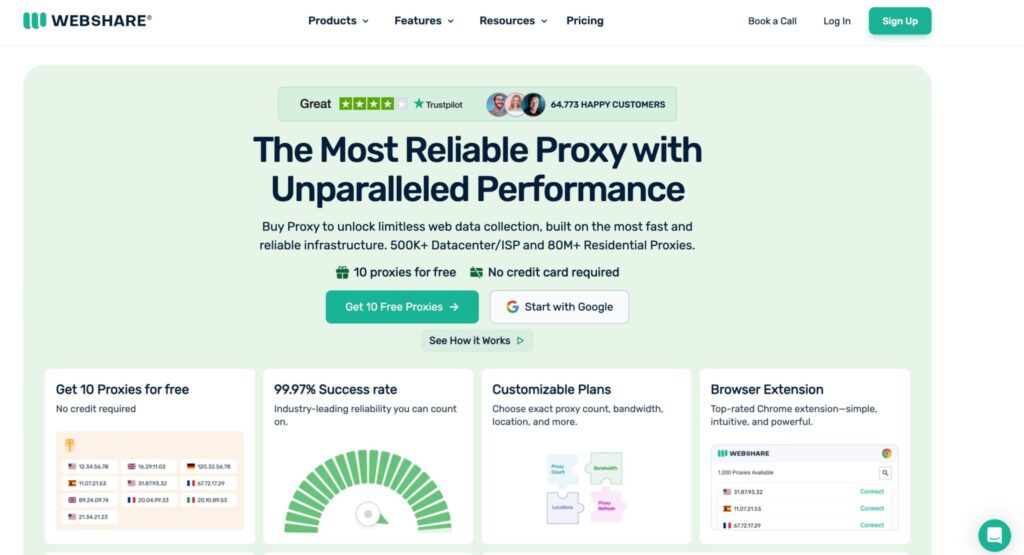
Webshare is a proxy provider offering three main proxy products:
| Webshare Product | Best For | Pricing Style |
| Proxy Servers | Fast, cheap datacenter proxy access | Per IP |
| Rotating Residential Proxies | More natural-looking web requests | Per GB |
| Static Residential Proxies | Stable ISP IPs for sessions and accounts | Per IP |
Webshare says its proxy server product supports HTTP and SOCKS5, and its datacenter proxy page mentions Tier-1 datacenter networks, dedicated bandwidth, and uptime claims around 99.97%.
That matters because many cheap proxy providers look good on pricing but fall apart when you test stability. Webshare’s biggest appeal is that it gives small teams a low-risk way to test proxies without committing to expensive enterprise plans.
Webshare Pricing
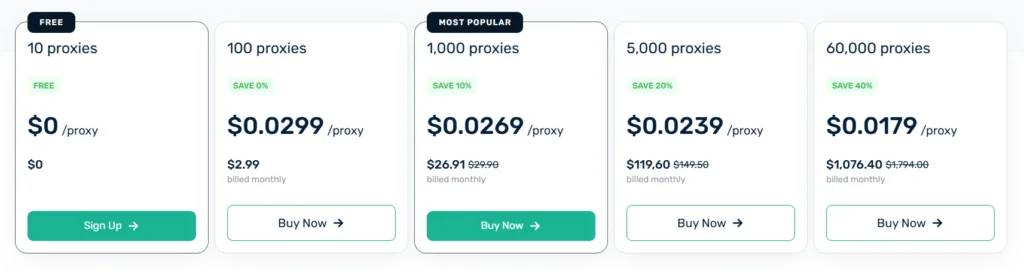
Here is the clean version of Webshare’s current pricing structure.
| Proxy Type | Starting Price | Best Use Case |
| Free Proxy Plan | 10 proxies, up to 1GB/month | Testing, light usage |
| Datacenter Proxy Servers | From around $0.05/IP on pricing page | Fast scraping, SEO checks, bulk requests |
| Rotating Residential Proxies | From around $1.40/GB | Lower block rates, geo-targeted access |
| Static Residential Proxies | From around $0.23/IP | Account sessions, stable IP workflows |
| Private Static Residential | Around $0.53/IP | More controlled static residential usage |
| Dedicated Static Residential | Around $1.47/IP | Exclusive static residential IP needs |
Webshare’s pricing page currently lists residential proxies as an 80M+ residential IP product, with static residential and datacenter options priced separately.
Pro Tip
Start with the free plan only to test the dashboard, authentication, proxy format, and integration flow. Do not judge residential success rates from a tiny free datacenter sample. Free proxies are useful for setup checks, not serious performance testing.
Webshare Proxy Types Explained
1. Datacenter Proxies
Webshare’s datacenter proxies are the cheapest and fastest option. These IPs come from data centers, not home internet connections. That makes them good for speed-heavy work such as:
- SEO rank tracking
- Website monitoring
- Bulk availability checks
- Internal testing
- Basic scraping on tolerant websites
- Ad verification in lower-risk environments
Webshare says its proxy servers support both HTTP and SOCKS5, which gives developers more flexibility depending on the tool or script they use.
The downside is simple: datacenter IPs are easier to detect. If you are scraping strict websites, logging into sensitive accounts, or running long sessions where reputation matters, datacenter proxies may get blocked faster.
2. Rotating Residential Proxies
Rotating residential proxies use IPs associated with real residential networks. Webshare positions this product around a large residential pool, pay-per-bandwidth pricing, and global access. Its pricing page currently lists 80M+ residential IPs and pricing from $1.40/GB.
These are better for:
- Web scraping
- Price monitoring
- SERP scraping
- Market research
- Localized testing
- Ad verification
- Travel fare research
- E-commerce intelligence
The key advantage is rotation. Instead of sending too many requests from one IP, rotating residential proxies spread requests across multiple residential IPs. This can reduce blocks when used responsibly.
3. Static Residential Proxies
Static residential proxies, also called ISP proxies, sit between datacenter and residential proxies. They usually offer the speed and stability of hosted infrastructure while using ISP-assigned IP ranges.
Webshare says its static residential proxies offer speeds up to 1Gbps and are positioned as a faster alternative to standard residential proxies.
These are useful for:
- Account management
- Long sessions
- Social media tools
- E-commerce dashboards
- Ad account checks
- Sneaker or retail monitoring
- Stable login environments
Static residential proxies are often more expensive than datacenter proxies, but they are more trustworthy-looking for many sites.
Webshare Feature Review
Dashboard and Setup
Webshare’s dashboard is one of its biggest selling points. You can create proxy lists, download them, rotate IPs, change authentication, and manage usage without needing a sales rep.
For beginners, this matters. A lot.
Some proxy providers bury everything behind technical docs or force you into enterprise onboarding. Webshare feels more self-serve. That makes it good for solo developers, affiliate marketers, SEO teams, and small businesses that want to move fast.
Protocol Support
Webshare supports common proxy protocols like HTTP and SOCKS5 on its proxy server product.
HTTP is usually enough for browser-based scraping, SEO tools, and web requests. SOCKS5 gives more flexibility for apps, bots, and tools that need lower-level traffic routing.
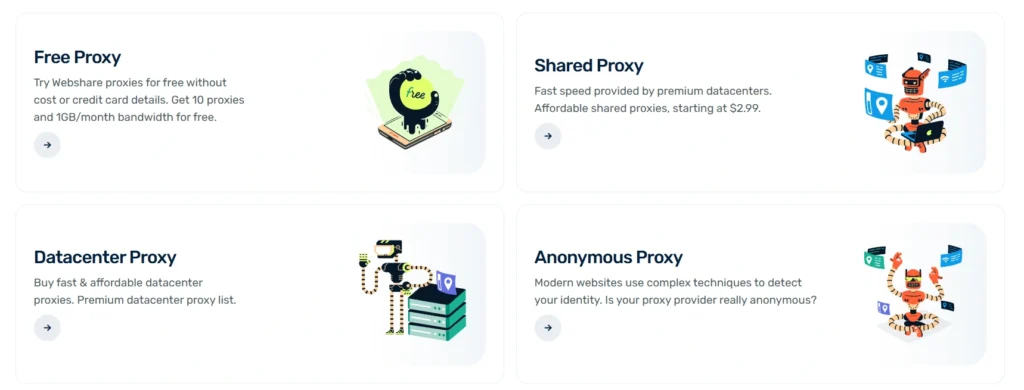
Free Proxy Plan
Webshare offers a free proxy option with 10 proxies and up to 1GB/month, according to its rotating proxy page.
This is great for testing, but do not confuse “free” with “production-ready.” Free proxies are often shared, limited, and not ideal for sensitive workflows.
API Access
Webshare has developer-friendly features and API-focused functionality. A recent Webshare developer article lists API-centric proxy features and current product pricing references, including residential, static residential, and datacenter pricing.
For teams managing thousands of proxies, API access matters more than the dashboard. You can automate list updates, rotate credentials, and manage proxy infrastructure inside your own systems.
Webshare Pros and Cons
| Pros | Cons |
| Affordable pricing for beginners and teams | Not as feature-heavy as enterprise providers |
| Free proxy plan available | Free plan is limited |
| Datacenter, residential, and static residential options | No full scraping API suite like some premium competitors |
| HTTP and SOCKS5 support | Support options may feel basic for enterprise buyers |
| Easy dashboard | Residential bandwidth can still get expensive at scale |
| Good for SEO, scraping, monitoring, and testing | Not ideal for very complex anti-bot environments |
Who Should Use Webshare?
Webshare is a smart fit for:
- SEO agencies that need affordable rank tracking proxies
- Developers building scraping scripts
- Affiliate marketers checking geo-specific landing pages
- E-commerce teams monitoring pricing
- Small SaaS teams testing regional access
- Automation users who want simple proxy lists
- Budget-conscious buyers comparing proxy providers
It is not the best fit for:
- Large enterprises needing managed onboarding
- Teams needing built-in scraping APIs
- Companies requiring premium support SLAs
- Heavy anti-bot scraping operations
- Users who want one-click CAPTCHA handling
Webshare vs Competitors: Quick Comparison
| Provider | Best For | Proxy Types | Starting Appeal |
| Webshare | Affordable self-serve proxies | Datacenter, residential, static residential | Low cost and free plan |
| Bright Data | Enterprise scraping and compliance | Residential, mobile, ISP, datacenter | Advanced tooling |
| Oxylabs | Enterprise data collection | Residential, ISP, datacenter, scraper APIs | Premium infrastructure |
| Decodo | Mid-market proxy users | Residential, mobile, datacenter | Balanced features |
| SOAX | Geo-targeting and clean UI | Residential, mobile, ISP | Flexible targeting |
| IPRoyal | Budget residential proxies | Residential, datacenter, mobile | Low-cost entry |
| NetNut | Stable residential networks | Residential, ISP, mobile | ISP-based routing |
| Smartproxy/Decodo | Scraping and general proxy use | Residential, mobile, datacenter | Ease of use |
Webshare wins when price and simplicity matter. It loses when you need deep enterprise tooling, managed scraping products, or advanced unblocking layers.
Webshare Performance: What to Expect
Performance depends heavily on the proxy type.
Datacenter proxies should feel fast because they are built for speed and volume. Static residential proxies should offer a better balance of trust and speed. Rotating residential proxies should be better for avoiding blocks, but they may be slower because traffic routes through residential networks.
The mistake many buyers make is choosing only by price.
Cheap datacenter proxies may work beautifully on simple websites and fail badly on strict ones. Residential proxies may cost more but save time if they reduce blocks. Static residential proxies may be the best middle option when you need stable sessions.
Pro Tip
Match proxy type to risk level. Use datacenter proxies for low-risk speed tasks, rotating residential proxies for high-block scraping, and static residential proxies for session-based workflows.
How to Choose the Right Webshare Plan
Choosing a proxy plan is not about buying the biggest IP pool. It is about matching four things:
- Traffic volume
- Target website strictness
- Session length
- Geo-targeting needs
If your task only needs speed, datacenter proxies are usually enough. If your task needs trust, go residential. If your task needs one IP to stay stable for longer, use static residential.
For most users, the best testing path is:
- Start with the free proxy plan
- Test datacenter proxies on simple targets
- Upgrade to residential if blocks increase
- Use static residential for logins or session workflows
- Track cost per successful request, not just cost per IP
That last line is important. A proxy that costs less but fails more is not actually cheaper.
Technical Buying Guide: IP Pools, Rotation, and Protocols
A good proxy plan is not just about “more IPs.” A large IP pool helps, but only when the rotation logic, session controls, geo-targeting, and protocol support match your job.
IP Pool Size
Webshare promotes a large residential IP pool, but pool size alone does not guarantee success. What matters more is whether the provider has enough usable IPs in the country, city, or ASN you need.
For example, a buyer scraping US e-commerce prices needs strong US coverage. A buyer checking ads in Germany needs German IP consistency. A buyer managing logins may care more about static IP quality than raw pool size.
Rotation Type
There are three common rotation styles:
| Rotation Type | What It Means | Best For |
| Per request | New IP after each request | Large scraping jobs |
| Timed rotation | IP changes after set time | Balanced scraping |
| Sticky session | Same IP remains for a session | Logins, carts, dashboards |
If your task involves accounts, avoid aggressive rotation. Changing IPs too often during login sessions can trigger security checks.
Protocol Support
Webshare’s HTTP and SOCKS5 support makes it flexible for most tools.
| Protocol | Best For |
| HTTP | Web scraping, SEO tools, browser tasks |
| HTTPS | Secure web traffic |
| SOCKS5 | Apps, bots, custom tools, broader traffic routing |
For basic scraping, HTTP is enough. For advanced automation, SOCKS5 gives more room to work.
Authentication
Most proxy buyers will use either:
Username and password authentication
IP whitelisting
Username and password is easier if your IP keeps changing. IP whitelisting is cleaner for fixed servers, VPS setups, and internal tools.
Best Webshare Use Cases
SEO Rank Tracking
Webshare works well for checking SERPs, local rankings, and keyword positions. For light SEO work, datacenter proxies may be enough. For stricter search environments, residential proxies are safer.
Price Monitoring
E-commerce price monitoring needs stable success rates. Residential proxies are usually the better option because many retail sites block obvious datacenter traffic.
Ad Verification
If you run paid traffic, Webshare can help check landing pages, regional ad visibility, and geo-specific redirects. Use residential proxies when accuracy matters.
Web Scraping
Webshare is a good starting point for scraping projects because the pricing is friendly. Just avoid hammering sites with poor rotation settings. Respect robots.txt, rate limits, and website terms.
Account Management
For account-based tasks, static residential proxies make more sense than rotating residential proxies. They give you a consistent IP identity, which reduces unusual login behavior.
Webshare Alternatives
1. Bright Data
Bright Data is better for enterprise scraping, compliance-heavy workflows, and advanced data collection. It costs more, but the tooling is deeper.
2. Oxylabs
Oxylabs is built for serious data teams. It is stronger for managed scraping, premium residential pools, and enterprise-grade support.
3. Decodo
Decodo is a good middle-ground option for teams that want a polished dashboard, good residential proxies, and easier setup than heavy enterprise platforms.
4. SOAX
SOAX is strong for geo-targeting and clean proxy controls. It is useful for users who need precise country, region, or city targeting.
5. IPRoyal
IPRoyal is another budget-friendly option. It is often compared with Webshare because both appeal to smaller teams and price-sensitive buyers.
6. NetNut
NetNut focuses on stable residential and ISP proxy infrastructure. It can be useful for buyers who care about reliability more than the lowest entry price.
7. Proxy-Seller
Proxy-Seller is popular among users who want private datacenter, ISP, and mobile proxies with simple buying options.
Massive Comparison Table: Webshare vs Other Proxy Providers
| Provider | Best For | Residential Proxies | Datacenter Proxies | ISP/Static Residential | SOCKS5 Support | Free Plan | Buyer Type |
| Webshare | Budget self-serve proxies | Yes | Yes | Yes | Yes | Yes | Beginners, developers, SEO teams |
| Bright Data | Enterprise scraping | Yes | Yes | Yes | Yes | Trial/limited options | Enterprises |
| Oxylabs | Large-scale data collection | Yes | Yes | Yes | Yes | Trial/demo based | Data teams |
| Decodo | Balanced proxy use | Yes | Yes | Yes | Yes | Limited/trial options | Agencies, SMBs |
| SOAX | Geo-targeted scraping | Yes | Limited/varies | Yes | Yes | Trial based | Marketers, researchers |
| IPRoyal | Affordable residential proxies | Yes | Yes | Yes | Yes | Sometimes promo/trial based | Budget buyers |
| NetNut | Stable ISP-based routing | Yes | Yes | Yes | Yes | Trial based | Mid-market teams |
| Proxy-Seller | Private proxies | Yes | Yes | Yes | Yes | No major free plan | Automation users |
Webshare Review: Final Pros and Cons
What I Like
Webshare is affordable, simple, and fast to set up. The dashboard does not feel intimidating, and the free proxy plan makes testing easy. The mix of datacenter, residential, and static residential proxies gives users enough flexibility without turning the buying process into homework.
The pricing is also one of its biggest advantages. For small teams, this can be the difference between testing proxy workflows properly and giving up because the first invoice is too high.
What I Do Not Like
Webshare is not the most complete proxy platform. If you need scraping APIs, browser automation tools, premium support, or advanced anti-block infrastructure, you may outgrow it.
The free plan is useful, but limited. Also, low-cost proxies always require testing. You should not assume one provider will work perfectly across every site, country, and use case.
Is Webshare Worth It?
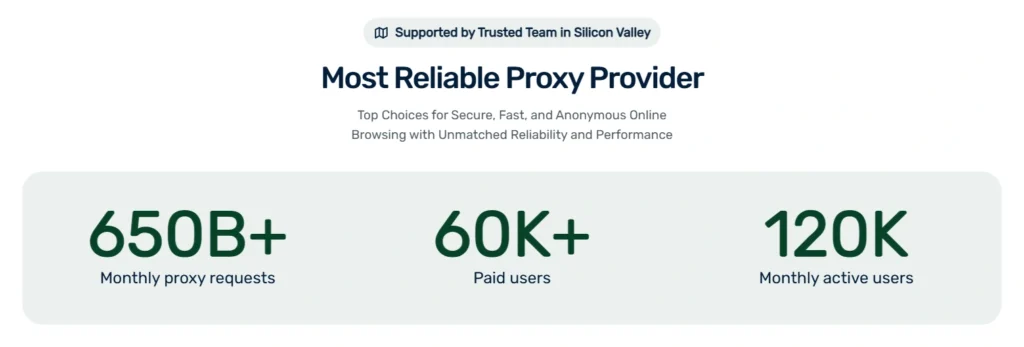
Yes, Webshare is worth it if you want affordable, self-serve proxies for SEO, scraping, monitoring, testing, and automation.
It is especially strong for:
- Small teams
- Developers
- SEO professionals
- Affiliate marketers
- E-commerce researchers
- Budget-conscious proxy buyers
It may not be the best choice if you need enterprise-level scraping infrastructure or fully managed data collection. But for many practical proxy jobs, Webshare gives you enough control, enough proxy variety, and a much lower starting cost than premium providers.
FAQs About Webshare
Is Webshare legit?
Yes, Webshare is a legitimate proxy provider offering datacenter, residential, and static residential proxies. It is widely used by developers, SEO users, automation teams, and small businesses.
Does Webshare offer free proxies?
Yes. Webshare offers a free plan with a small number of proxies and limited monthly bandwidth. It is best for testing, not serious production work.
What is Webshare best used for?
Webshare is best for SEO rank tracking, web scraping, price monitoring, ad verification, automation testing, and geo-specific browsing.
Are Webshare proxies residential?
Webshare offers residential proxies, but it also sells datacenter proxies and static residential proxies. Make sure you select the right product before buying.
Does Webshare support SOCKS5?
Yes, Webshare supports SOCKS5 on its proxy server product, along with HTTP proxy support.
Is Webshare good for scraping?
Webshare can be good for scraping, especially if you choose the correct proxy type. Datacenter proxies work for simple sites, while residential proxies are better for stricter websites.
Is Webshare better than Bright Data?
Webshare is cheaper and easier for beginners. Bright Data is stronger for enterprise scraping, advanced tooling, and large-scale data collection.
Is Webshare better than Oxylabs?
Webshare is better for low-cost proxy access. Oxylabs is better for enterprise buyers that need advanced scraping tools, premium infrastructure, and managed support.
Which Webshare plan should I start with?
Start with the free plan for setup testing. Then choose datacenter proxies for speed, rotating residential proxies for scraping, and static residential proxies for account-based tasks.
Can Webshare proxies be used for SEO?
Yes. Webshare proxies can be used for SERP tracking, local rank checks, competitor research, and geo-based landing page testing.
Final Verdict
Webshare is not trying to be the biggest proxy platform in the market. That is actually its strength.
It gives you affordable proxies, simple setup, useful protocol support, and enough flexibility to handle most everyday proxy tasks. For a developer, SEO agency, affiliate marketer, or small data team, it is one of the easier proxy providers to test without burning a large budget.
Use Webshare if you want a clean, low-cost proxy setup.
Choose a heavier provider like Bright Data or Oxylabs if your work depends on enterprise scraping APIs, managed compliance, or very large-scale data pipelines.