
If you are comparing Webshare vs Storm Proxies, you are probably looking for a proxy provider that is affordable, easy to set up, and reliable enough for scraping, SEO monitoring, ad verification, market research, or basic automation work.
Both providers target budget-conscious users, but they are built very differently. Webshare feels more modern, flexible, and scalable, while Storm Proxies keeps things simple with fixed proxy packages and unlimited bandwidth on many plans.
For most beginners, marketers, and small teams, Webshare is the better overall choice in 2026 because it gives you more proxy types, lower entry pricing, better location coverage, and a cleaner dashboard.
Webshare currently offers datacenter, static residential, and rotating residential proxies, including a free proxy server plan and rotating residential pricing that starts from small bandwidth packages.
Storm Proxies offers private dedicated proxies, backconnect rotating proxies, and residential rotating proxies, with a stronger focus on simple monthly plans and unlimited bandwidth.
Quick Comparison Table: Webshare vs Storm Proxies
| Category | Webshare | Storm Proxies |
|---|---|---|
| Best For | Beginners, SEO users, developers, scrapers, agencies, small businesses | Small users who want simple rotating or dedicated proxy packages |
| Proxy Types | Datacenter, static residential, rotating residential | Private dedicated, backconnect rotating, residential rotating |
| Free Plan | Yes, 10 proxy server IPs are available for free | No standard free plan |
| Residential Pool | 80M plus residential IPs | 20M plus residential rotating IPs on residential plans |
| Datacenter Pricing | Starts with 10 free proxies, paid proxy server plans from $2.99 per month for 100 proxies | Private dedicated proxies start at $10 per month for 5 proxies |
| Residential Pricing | Rotating residential starts at $3.50 per month for 1 GB on monthly pricing | Residential rotating starts at $50 per month for 5 ports |
| Locations | Strong global coverage, including 195 countries for rotating residential proxies | Mainly USA and EU for residential rotating proxies |
| Ease of Use | Modern dashboard, API friendly, beginner friendly | Simple dashboard, but less advanced |
| Support | Help center, documentation, email support | Email support and knowledge base |
| Refund Policy | 48 hour refund window with usage limits | 24 hour refund on smallest packages only |
| Main Weakness | No live chat, some advanced scraping tools missing | Limited locations, fewer modern reporting features |
| Winner | Webshare | Good for specific simple use cases |
Webshare Overview
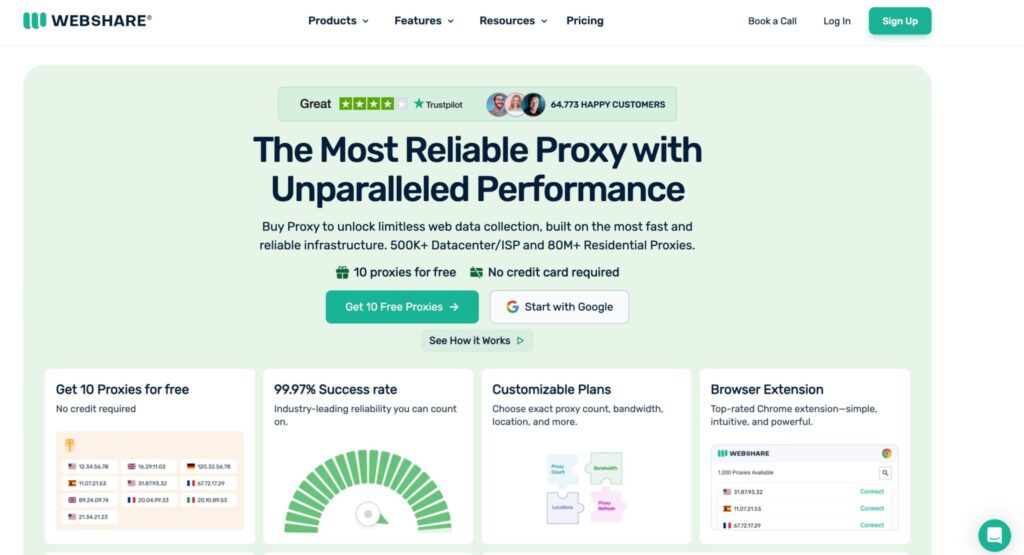
Webshare is a proxy provider built for users who want flexible pricing, multiple proxy types, and a dashboard that does not feel confusing. It works well for beginners, but it also gives developers and technical users enough control through API access, HTTP and SOCKS5 support, location filters, and different proxy categories.
From a Webshare review perspective, the biggest advantage is pricing flexibility. You can start with free proxy servers, move to low-cost datacenter proxies, or choose residential proxies when you need better success rates on stricter websites. Webshare lists 10 free proxy server IPs, a 100 proxy server plan at $2.99 per month, static residential pricing from $6 per month for 20 proxies, and rotating residential pricing from $3.50 per month for 1 GB on monthly billing.
Webshare Features
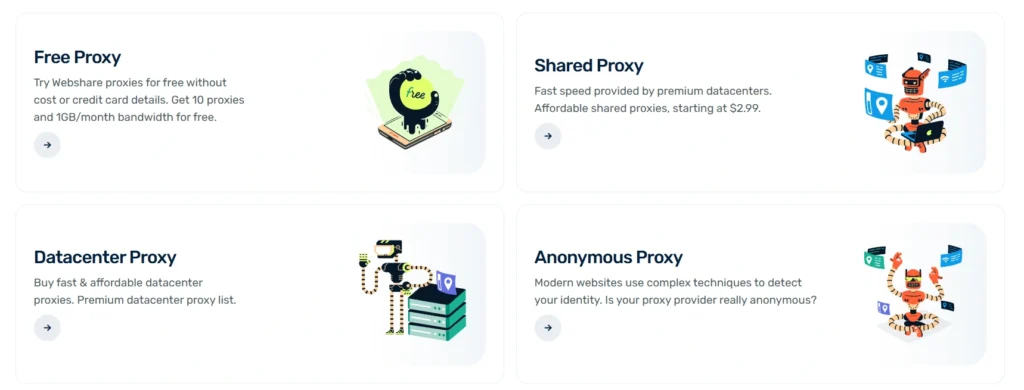
Webshare offers three main proxy products: proxy servers, static residential proxies, and rotating residential proxies. Its homepage also lists 400K plus proxy server IPs with 99.97 percent uptime, while the pricing page lists rotating residential coverage across 195 countries and 80M plus residential IPs.
For someone running an SEO rank tracker, Webshare’s datacenter proxies can be a cost-effective starting point. For someone scraping ecommerce prices from different regions, rotating residential proxies make more sense because they offer stronger location coverage and more natural-looking IPs.
Webshare also supports HTTP and SOCKS5 endpoints, which makes it suitable for common tools, browsers, scripts, crawlers, and custom workflows. For developers, the API access is useful because you can manage proxies without manually logging into the dashboard every time.
Webshare Pros
| Pros | Why It Matters |
|---|---|
| Free starter plan | Good for testing before paying |
| Very low entry pricing | Useful for beginners and small projects |
| Multiple proxy types | Easier to match proxies with different tasks |
| Large residential pool | Better for geo-targeting and scraping |
| Clean dashboard | Easier setup for non-technical users |
| HTTP and SOCKS5 support | Works with many tools and scripts |
| Scales well | Good for small users and growing teams |
Webshare Cons
| Cons | What to Know |
|---|---|
| No live chat support | Email support may feel slow for urgent issues |
| Residential pricing is bandwidth based | Heavy users need to watch GB usage |
| Not a full scraping platform | It provides proxies, not advanced scraping APIs |
| Add-ons can increase cost | Higher concurrency and premium options may cost extra |
Webshare Pricing
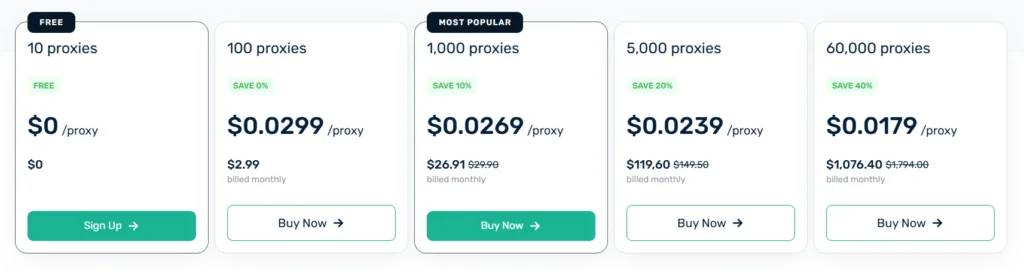
Webshare is stronger than Storm Proxies on entry-level pricing. The free 10 proxy server plan is helpful if you want to test setup, authentication, and dashboard quality before spending money. Paid proxy server pricing starts at $2.99 per month for 100 proxies. Static residential starts at $6 per month for 20 proxies, and rotating residential starts at $3.50 per month for 1 GB on monthly billing.
You can check the latest discount for Webshare on our website. We regularly update working coupon codes for Webshare and Storm Proxies, so it is worth checking before you buy.
Webshare Is Best For
Webshare is best for beginners, SEO agencies, ecommerce researchers, ad verification teams, developers, affiliate marketers, and small businesses that want flexible plans without committing to a large monthly proxy package.
If you only need a few proxies for testing, Webshare is cheaper to start with. If you want residential IPs across different countries, Webshare also gives you more room to grow.
Storm Proxies Overview

Storm Proxies is an older and simpler proxy provider. It is not as modern as Webshare, but it still appeals to users who want fixed monthly packages, unlimited bandwidth, and quick proxy access after payment.
From a Storm Proxies review angle, the platform is easy to understand. You pick a proxy type, pay for a monthly package, and start using it. Storm Proxies offers private dedicated proxies, backconnect rotating proxies, and residential rotating proxies. Its private dedicated proxies start at $10 per month for 5 proxies, while residential rotating proxies start at $50 per month for 5 ports.
Storm Proxies Features
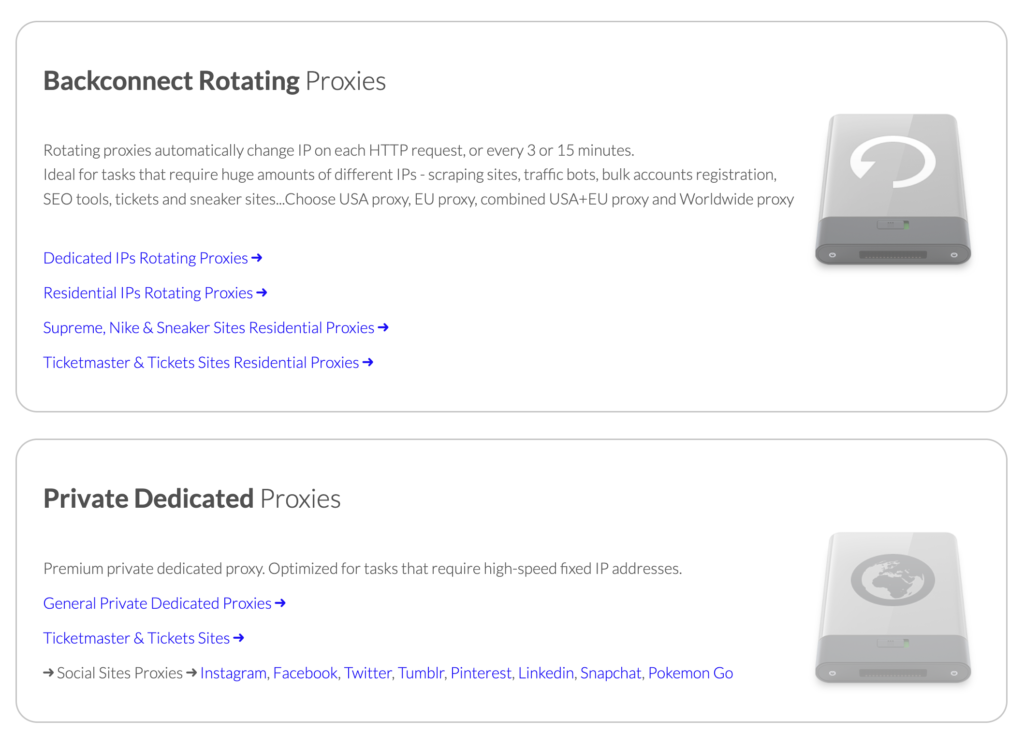
Storm Proxies has three main product groups. Private dedicated proxies are fixed IPs, mostly suitable for tasks where you want stable IP addresses. Backconnect rotating proxies rotate IPs on every HTTP request, every 3 minutes, or every 15 minutes. Residential rotating proxies use a 20M plus residential IP pool and rotate every 5 minutes.
The company’s rotating proxy plans are useful for scraping, SEO tools, market research, ad verification, pricing intelligence, data verification, and bulk account-related tasks. However, its location control is more limited than Webshare. Residential rotating proxies mainly support USA and EU selection inside the member area.
Storm Proxies Pros
| Pros | Why It Matters |
|---|---|
| Simple plans | Easy for beginners to understand |
| Unlimited bandwidth on many plans | Good for users with heavy usage |
| Quick delivery | Access is available after payment |
| Rotating options | Useful for scraping and SEO tools |
| Dedicated proxies available | Helpful when fixed IPs are needed |
| 24 hour refund on smallest packages | Gives limited testing room |
Storm Proxies Cons
| Cons | What to Know |
|---|---|
| No free plan | You need to pay to test properly |
| Higher starting price | Residential starts at $50 per month |
| Limited locations | USA and EU focus may not fit global projects |
| Older interface | Less polished than Webshare |
| Refunds are limited | Only smallest packages qualify |
| No SOCKS proxies | Storm says it only sells HTTP or HTTPS proxies |
Storm Proxies Pricing
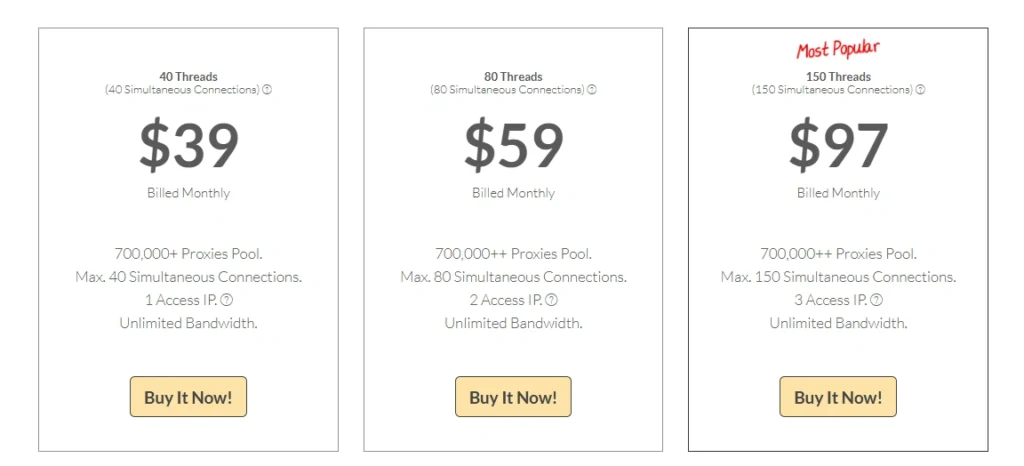
Storm Proxies private dedicated proxies start at $10 per month for 5 proxies. Bigger monthly plans include $20 for 10 proxies, $40 for 20 proxies, $90 for 50 proxies, and $160 for 100 proxies. Its backconnect rotating proxies start at $39 per month for 40 threads, while residential rotating proxies start at $50 per month for 5 ports.
The pricing is not bad if you need unlimited bandwidth and your use case fits their USA or EU-focused setup. But for smaller users, Webshare feels more budget friendly because you can start with free proxies or small residential bandwidth packages.
Storm Proxies Is Best For
Storm Proxies is best for users who want simple monthly proxy access and do not need advanced geo-targeting, detailed usage reports, or a modern dashboard. It can work well for small SEO tool setups, simple scraping, and users who prefer unlimited bandwidth over pay-per-GB pricing.
Feature by Feature Comparison
Pricing
Webshare wins on pricing for most users. You can start with a free plan, then upgrade based on your needs. A beginner can test 10 proxy server IPs for free, buy 100 proxy server IPs for $2.99 per month, or try rotating residential proxies from $3.50 per month for 1 GB.
Storm Proxies is more expensive at the entry level. Its private dedicated proxies start at $10 per month, backconnect rotating proxies start at $39 per month, and residential rotating proxies start at $50 per month.
If your project uses a lot of bandwidth every month, Storm Proxies may look attractive because many plans include unlimited bandwidth. But if you are testing, learning, running small SEO checks, or scraping modest data volumes, Webshare gives you better control over cost.
Winner: Webshare
Ease of Use
Webshare has a cleaner and more modern setup. It is easier to choose proxy type, manage IPs, check usage, and configure authentication. Beginners can start with free proxies and understand the platform before upgrading.
Storm Proxies is simple, but simple does not always mean better. The dashboard is easy enough, but it feels more basic. There is less flexibility, fewer reporting tools, and fewer modern controls compared with Webshare.
Winner: Webshare
Performance and Quality
Webshare gives you more options for matching proxy quality to the job. Datacenter proxies are better for speed and low-cost tasks. Static residential proxies are useful when you need stable residential IPs. Rotating residential proxies are better for websites with stronger anti-bot systems.
Storm Proxies performs well for basic scraping and SEO tasks, especially if your target sites are in the USA or EU. The issue is coverage. Webshare’s residential network is much broader, which matters if you need country-level targeting outside the usual markets.
For example, if you are checking hotel prices in the United States and Europe only, Storm Proxies may be enough. But if you are checking pricing data across India, Germany, Canada, Spain, Brazil, and Australia, Webshare is the safer pick.
Winner: Webshare
Customer Support
Webshare offers help center content, documentation, and email support. A third-party review notes that Webshare has helpful documentation and API guides, but no live chat or phone support.
Storm Proxies also uses email support and a knowledge base. Its official website says support emails are replied to within 24 hours, with 45 percent answered under one hour.
Neither provider is perfect here. Webshare has better documentation and a more modern help experience. Storm Proxies may be fine for simple issues, but advanced users may find the support model limited.
Winner: Webshare, slightly
Refund Policy
Webshare offers a 48 hour refund window, but there are usage limits. Its refund help page says the plan bandwidth must stay below 1 GB for proxy server or static residential plans, below 0.1 GB for rotating residential plans, and the request must be made within 48 hours.
Storm Proxies gives a 24 hour refund on the smallest package of each proxy type. Larger packages are generally not refundable, so users are encouraged to test with the smallest plan first.
Webshare gives a longer refund window, but the usage limits are strict. Storm Proxies gives less time and limits refunds to the smallest packages.
Winner: Webshare
Which One is Better for Beginners?
Webshare is better for beginners.
The biggest reason is the low-risk starting point. A beginner can create an account, test free proxy servers, learn how authentication works, and then upgrade only when needed. That is much better than paying $39 or $50 upfront before knowing whether the provider fits your tools.
For example, suppose you are using proxies for the first time with a rank tracking tool. With Webshare, you can test a small proxy list, check if your software connects properly, and then upgrade to a paid plan. With Storm Proxies, you need to choose a paid package first.
Storm Proxies is not hard to use, but it gives fewer options for slow, careful testing. That makes Webshare the more beginner-friendly choice.
Which One is Better for Advanced Users?
Webshare is also better for most advanced users, especially those who need API control, global residential coverage, SOCKS5 support, flexible scaling, and better pricing control.
A developer building a price monitoring system will likely prefer Webshare because they can choose proxy type by task. They might use datacenter proxies for fast, low-risk pages, static residential proxies for stable sessions, and rotating residential proxies for tougher websites.
Storm Proxies can still work for advanced users who care more about unlimited bandwidth than location depth. If your scraper targets mostly USA or EU websites and consumes a lot of data, Storm Proxies may be worth testing. But for global scraping, Webshare is more flexible.
Real World Use Cases
SEO Rank Tracking
For SEO tools, Webshare is usually the better fit because it offers cheaper entry plans and more location options. A small agency tracking client rankings across different countries will likely get more value from Webshare.
Storm Proxies can work if your SEO checks are mostly USA or EU-based and you want a simple rotating setup.
Ecommerce Price Monitoring
Webshare is stronger for ecommerce monitoring because of its residential coverage and flexible bandwidth plans. If you monitor product pages across several regions, country-level coverage matters.
Storm Proxies can be used for smaller projects where the target websites are not too strict and your locations are limited.
Ad Verification
Webshare is better for ad verification campaigns that require different countries and IP types. You can test ads from more regions and adjust proxy type based on campaign needs.
Storm Proxies can work for basic USA and EU ad checks.
Market Research
If you are collecting public data from different websites, Webshare gives you more room to test, scale, and control spending. Storm Proxies is useful when you want a fixed monthly plan and do not want to think about bandwidth.
Beginner Scraping Projects
For someone learning Python scraping, Webshare is the better starting point. You can begin small, avoid a high monthly bill, and upgrade later.
Storm Proxies is better only if you already know you need unlimited bandwidth and your targets match its network strengths.
Final Verdict: Is Webshare Better Than Storm Proxies?
Yes, Webshare is better than Storm Proxies for most users in 2026.
Storm Proxies is still a decent budget proxy provider for simple USA and EU tasks, especially if you like unlimited bandwidth and fixed monthly packages. It is simple, direct, and useful for basic scraping, SEO tools, and dedicated proxy needs.
But in the full Webshare vs Storm Proxies comparison, Webshare wins because it is easier to start with, cheaper for beginners, stronger for global use, better suited for modern workflows, and more flexible across proxy types. The free proxy option, low-cost datacenter plans, 80M plus residential proxy network, HTTP and SOCKS5 support, and broader country coverage make Webshare the better all-around pick.
If you are ready to buy, you can check the latest discount for Webshare on our website. We also regularly update working coupon codes for Webshare and Storm Proxies, so you can compare both before choosing a plan.
FAQs About Webshare vs Storm Proxies
1. Webshare vs Storm Proxies: which is better overall?
Webshare is better overall because it has more proxy types, lower entry pricing, stronger global coverage, and a more modern dashboard. Storm Proxies is good for simple monthly proxy plans, but Webshare fits more use cases.
2. Is Webshare better than Storm Proxies for beginners?
Yes, Webshare is better for beginners because it offers free proxies and low-cost starter plans. New users can test the platform before spending money, which makes it easier to learn proxy setup without risk.
3. Is Storm Proxies still worth using in 2026?
Storm Proxies is still worth using if you need simple rotating proxies, private dedicated proxies, or unlimited bandwidth for USA and EU-focused tasks. It is not the best choice if you need global targeting or a more modern proxy dashboard.
4. Which provider is cheaper, Webshare or Storm Proxies?
Webshare is cheaper for most small users because it offers a free proxy server plan and paid proxy server plans from $2.99 per month. Storm Proxies has useful plans, but its residential rotating proxies start much higher at $50 per month.
5. Which one is better for scraping?
Webshare is better for most scraping projects because it offers datacenter, static residential, and rotating residential proxies with broader location coverage. Storm Proxies can work well for basic scraping, especially when unlimited bandwidth matters more than global locations.
6. Do Webshare and Storm Proxies offer refund policies?
Yes. Webshare offers a 48 hour refund window with strict usage limits. Storm Proxies offers a 24 hour refund on the smallest package of each proxy type, while larger packages are generally final sale.