
Choosing between Webshare vs Bright Data can feel tricky because both are strong proxy providers, but they are built for different buyers. Webshare is easier to start with, cheaper for small teams, and more beginner friendly. Bright Data is more powerful for enterprise scraping, large data teams, and advanced users who need deep targeting, managed tools, and heavy infrastructure.
My simple take: Webshare is the better choice for most beginners, marketers, small businesses, and budget focused users in 2026. Bright Data is excellent, but it makes more sense when you have complex scraping needs, a bigger monthly budget, and a technical team.
Webshare offers datacenter, static residential, and rotating residential proxies, with a free proxy option and paid plans starting at low monthly prices. Bright Data offers a much larger enterprise grade platform with residential, datacenter, ISP, mobile proxies, web unlocker tools, scraping APIs, and stricter compliance checks. Webshare lists 80M plus residential IPs across 195 countries, while Bright Data promotes 400M plus monthly residential IPs and advanced targeting options.
Quick Comparison Table: Webshare vs Bright Data
| Category | Webshare | Bright Data |
|---|---|---|
| Best For | Beginners, marketers, small scrapers, SEO tools, account management | Enterprises, data teams, AI data pipelines, advanced scraping |
| Proxy Types | Datacenter, static residential, rotating residential | Residential, datacenter, ISP, mobile, scraping APIs |
| Starting Price | Free plan available, proxy server plans start from $2.99 per month | Residential pay as you go listed at $4 per GB during its 50 percent offer |
| Residential Network | 80M plus IPs from 195 countries | 400M plus monthly residential IPs in 195 countries |
| Ease of Use | Very simple dashboard and fast setup | Powerful, but more technical |
| Support | Standard support, help docs, email based support | Standard, premium, and enterprise support options |
| Refund Policy | Refund request possible within 48 hours if usage limits are met | Subscription fees are generally non refundable, with possible exceptions |
| Best Advantage | Affordable and easy to manage | Huge network and enterprise level tools |
| Main Limitation | Fewer advanced scraping products than Bright Data | Higher cost and steeper learning curve |
| Overall Winner | Better for most buyers | Better for advanced enterprise users |
Webshare is the cleaner pick if your main goal is to buy proxies, plug them into tools, and keep costs under control. Bright Data wins when your project depends on scale, compliance workflows, advanced location targeting, and managed scraping infrastructure.
Webshare Overview
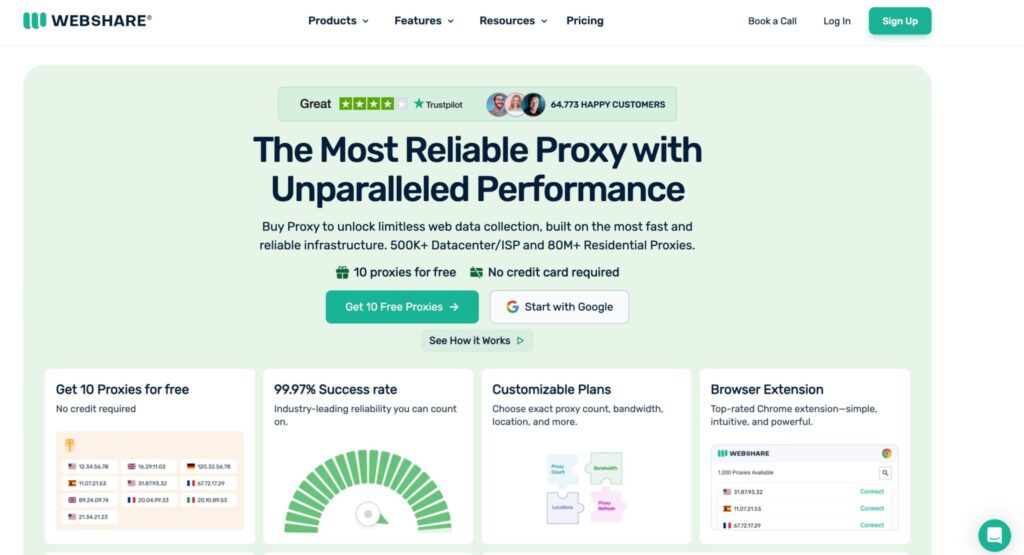
Webshare is a proxy provider built around simplicity, flexible pricing, and practical proxy access. It gives users three main proxy products: proxy servers, static residential proxies, and rotating residential proxies. Its homepage lists proxy servers from $2.99 per month, static residential from $6 per month, and rotating residential from $3.50 per month.
For someone writing a Webshare review, the main thing that stands out is how approachable the platform feels. You do not need to be a scraping engineer to get started. The dashboard lets you manage datacenter and residential proxies, track bandwidth, monitor error rates, and check activity statistics in one place.
Webshare Features
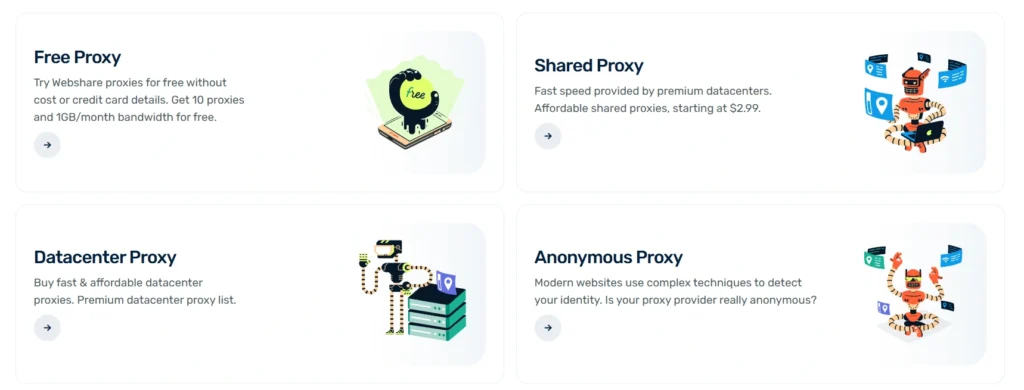
Webshare supports HTTP and SOCKS5 endpoints, which makes it compatible with many scraping tools, SEO platforms, browsers, automation software, and account management workflows. Its proxy server plans mention 100 plus Gbps aggregate network capacity, 50 plus countries, and 99.97 percent uptime.
The platform is especially useful if you need proxies for SEO rank checking, SERP scraping, basic web scraping, ad verification, market research, and social media workflows. A small agency, for example, can start with a lower cost datacenter plan for simple scraping tasks, then move to static residential or rotating residential proxies when websites become stricter.
Webshare Pros
Webshare’s biggest advantage is value for money. You can start small, test the platform, and scale based on your actual usage. It also offers a free proxy option, which is useful for testing before buying. Its proxy server pricing page shows 10 free proxies and 100 proxy server plans from $2.99 per month on monthly billing.
The dashboard is another plus. You can track usage and performance without digging through complicated settings. For beginners, that matters more than having 50 advanced features they may never use.
Webshare also works well for buyers who want predictable proxy counts. If you need 100, 500, or 1,000 static residential proxies, the pricing structure is easier to understand than many enterprise first platforms.
Webshare Cons
Webshare is not as advanced as Bright Data when it comes to managed scraping tools, data APIs, or enterprise workflow support. If you need ready made datasets, scraping APIs, CAPTCHA handling at enterprise scale, or very deep targeting, Bright Data has more options.
Customer support is also more basic compared with Bright Data’s premium and enterprise support setup. For most small users, that is fine. For a mission critical data pipeline, it may not be enough.
Webshare Pricing
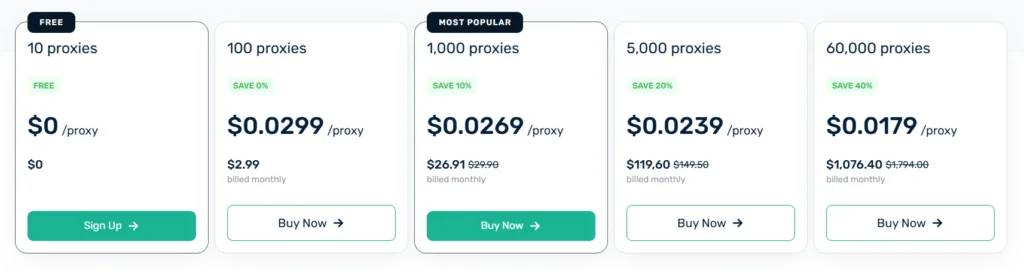
Webshare is one of the more budget friendly choices in this comparison. Its proxy server pricing includes 100 proxies at $2.99 per month on monthly billing, while yearly billing can reduce the effective monthly cost. Static residential plans start at 20 proxies for $6 per month on monthly billing. Rotating residential plans start at 1 GB for $3.50 per month, with lower per GB rates at higher volumes.
For rotating residential proxies, Webshare lists 10 GB at $27.50 per month, 25 GB at $65 per month, 100 GB at $225 per month, and 3,000 GB at $4,200 per month on monthly billing. Yearly billing can reduce the per GB cost, including 10 GB at $1.93 per GB and 100 GB at $1.58 per GB based on the pricing shown.
You can check the latest discount for Webshare on our website. We regularly update working coupon codes for Webshare and Bright Data, so it is worth checking before buying.
Webshare Best For
Webshare is best for beginners, affiliate marketers, SEO teams, small agencies, social media managers, eCommerce researchers, and users who want proxies without a complicated buying process. If you are running small to medium scraping jobs, checking rankings, managing multiple accounts carefully, or testing geo results, Webshare gives you enough power without making the setup feel heavy.
Bright Data Overview
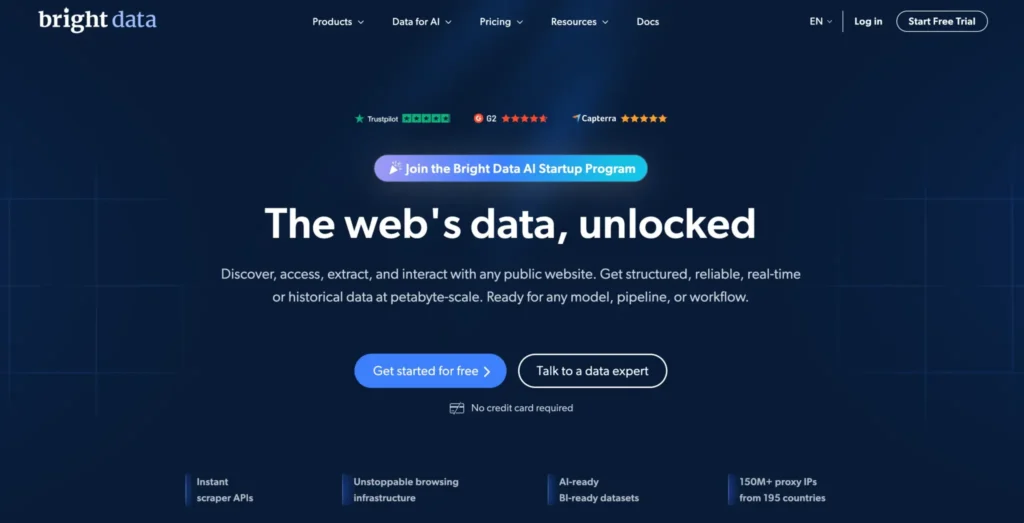
Bright Data is one of the biggest names in the proxy and web data industry. It is not just a proxy seller. It is a full web data platform with residential proxies, ISP proxies, datacenter proxies, mobile proxies, Web Unlocker, scraping APIs, datasets, browser tools, and enterprise support.
A serious Bright Data review has to give credit where it is due. Bright Data has one of the largest proxy networks in the market, with 400M plus monthly residential IPs across 195 countries. Its residential pricing page also mentions country, state, city, and zip code geo targeting.
Bright Data Features
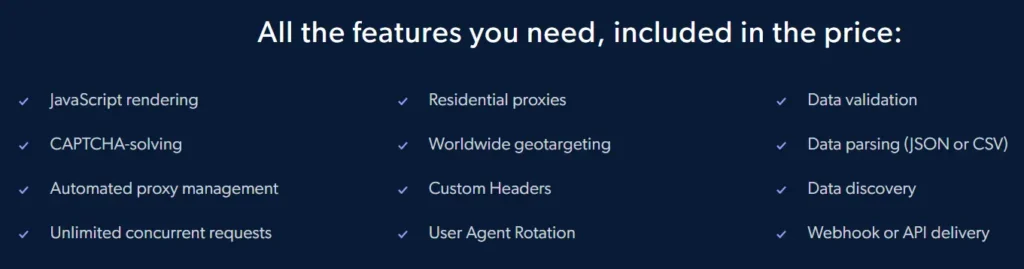
Bright Data is built for demanding projects. Its platform includes proxy infrastructure, integrated Proxy Manager, management APIs, optimized routing, enterprise security, and high network reliability. Bright Data states 99.99 percent uptime and 99.95 percent success rate for its proxy infrastructure.
It also has tools for teams that do not want to build everything from scratch. For example, Bright Data offers Web Scraper API products, scraping functions, browser infrastructure, datasets, and other data products. That makes it more complete than Webshare for enterprise data collection.
Bright Data Pros
Bright Data is stronger for advanced scraping, large scale data collection, and projects that require exact geo targeting. If you need to collect public pricing data across many countries, monitor ad placements, support an AI data pipeline, or run large web intelligence operations, Bright Data has the infrastructure for it.
Its support options are also stronger. Bright Data lists standard support for all plans, plus premium support with 24/7 access, and enterprise support with dedicated technical account manager options.
Bright Data Cons
Bright Data can feel expensive and complex for beginners. Residential proxy pricing starts at $4 per GB on its pay as you go plan during the listed 50 percent offer, while monthly packages start at $499 for 141 GB included.
Its compliance process can also add friction. Bright Data says residential or mobile network use may require a KYC process, which can include a video call and verification of company or personal information. That is good for compliance, but not ideal for users who want quick setup.
Bright Data Pricing
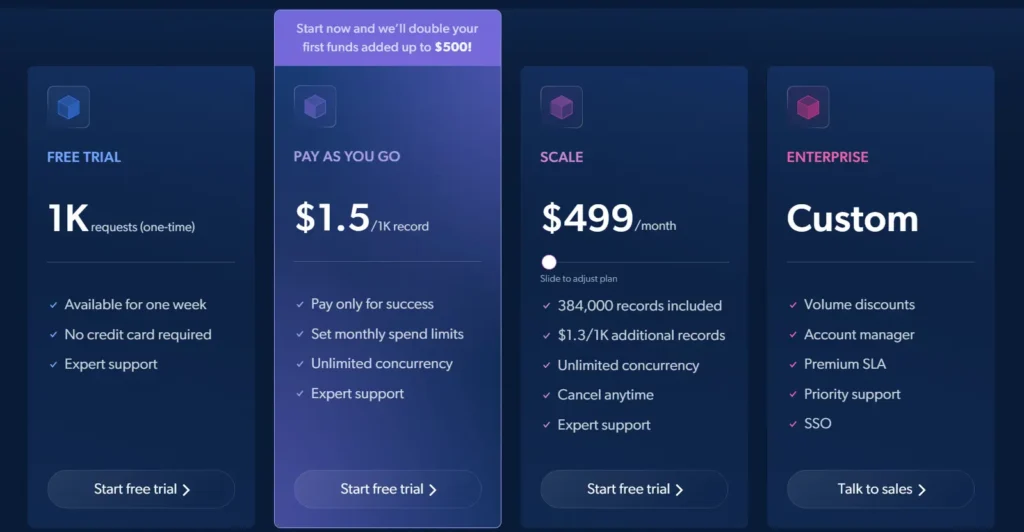
Bright Data’s pricing depends on the proxy type and billing model. Its residential pay as you go price is listed at $4 per GB during the 50 percent offer, with monthly packages such as $499 for 141 GB and $999 for 332 GB. Datacenter shared proxies start at 10 IPs for $14 per month, while datacenter pay by GB starts at $0.60 per GB.
For ISP proxies, Bright Data lists shared plans starting at 10 IPs for $18 per month, dedicated ISP plans starting at 10 IPs for $35 per month, and pay as you go ISP pricing at $8 per GB.
Bright Data is not overpriced for the right user. It is just aimed at bigger projects. If your proxy budget is small, Webshare will usually make more sense.
Bright Data Best For
Bright Data is best for enterprise teams, developers, AI companies, large eCommerce intelligence projects, ad verification companies, market research teams, and businesses that need advanced targeting or managed scraping tools.
Feature by Feature Comparison
Pricing
Webshare wins on pricing for most users. Its entry level plans are lower, easier to understand, and more practical for small workloads. A beginner can test 10 free proxies, buy a low cost datacenter plan, or start rotating residential usage with a small bandwidth plan.
Bright Data is more expensive, especially if you move into monthly commitments, premium support, or high volume residential usage. It is worth the cost when the project demands higher scale and better tooling, but not every user needs that.
Winner: Webshare
Ease of Use
Webshare is easier for beginners. The dashboard is simple, the product lineup is clear, and the pricing page is easier to understand. You can copy your proxy details, add them to your tool, and start testing without spending hours learning the system.
Bright Data has more features, but that also means more settings. Advanced users may love the control. Beginners may feel lost at first.
Winner: Webshare
Performance and Quality
Bright Data has the stronger infrastructure on paper. It has a larger residential IP pool, more location targeting options, and more enterprise tools. For heavy scraping, difficult targets, or global data extraction, Bright Data has an advantage.
Webshare still performs well for common use cases. Its 99.97 percent uptime for proxy servers, HTTP and SOCKS5 support, and residential options make it reliable enough for most small and mid sized projects.
Winner: Bright Data for enterprise performance, Webshare for everyday value
Customer Support
Bright Data wins on support depth. Its premium and enterprise plans include stronger support options, including 24/7 availability for higher tiers. Webshare support is more basic, but enough for users who need standard help with setup, billing, and proxy management.
Winner: Bright Data
Refund Policy
Webshare has a clearer refund path for small users. It allows refund requests within 48 hours if bandwidth and proxy usage limits are met. For example, usage must be under 1 GB for proxy server or static residential plans, under 0.1 GB for rotating residential plans, and under 1,000 proxies used.
Bright Data states that subscription fees are generally non refundable, though exceptions can be made in specific cases.
Winner: Webshare
Which One is Better for Beginners?
Webshare is better for beginners. The setup is lighter, the dashboard is easier, and the pricing is less intimidating. If you are buying proxies for the first time, you probably do not want to start with a complex enterprise platform.
For example, suppose you run a small SEO agency and need proxies for keyword rank tracking, SERP checks, or basic competitor research. Webshare gives you enough flexibility without forcing you into a high monthly spend.
Bright Data can still work for beginners, but it is not the easiest first choice. You may spend more time understanding zones, billing, compliance checks, and advanced proxy settings.
Which One is Better for Advanced Users?
Bright Data is better for advanced users who need scale, targeting, and enterprise data tools. If you have developers, data engineers, or a team running high volume scraping, Bright Data is hard to ignore.
For example, an eCommerce intelligence company tracking prices across thousands of product pages in multiple countries may benefit from Bright Data’s larger network, APIs, targeting, and support structure.
Webshare is still useful for advanced users with cost focused workloads. Many experienced users prefer Webshare when they need affordable proxy pools for cleaner, simpler tasks.
Real World Use Cases
For SEO scraping, Webshare is usually the better value. You can use datacenter proxies for basic rank tracking and switch to residential proxies for tougher SERP tasks.
For social media account management, Webshare’s static residential proxies can be useful because they keep a consistent identity. This helps when accounts need stable IP behavior rather than constant rotation.
For eCommerce price monitoring, both can work. Webshare is good for small stores and moderate tracking. Bright Data is stronger for large eCommerce datasets, frequent crawling, and international pricing intelligence.
For ad verification, Webshare can handle smaller campaigns where you need to check ad placements across locations. Bright Data is better for large advertisers and verification teams that need more targeting depth.
For AI and machine learning data collection, Bright Data has the stronger product ecosystem. Its platform includes web data tools, datasets, and infrastructure made for bigger data operations.
Final Verdict: Is Webshare Better Than Bright Data?
So, is Webshare better than Bright Data? For most beginners, small businesses, marketers, and budget focused proxy buyers, yes, Webshare is the better choice in 2026.
Bright Data is more powerful, but Webshare is easier to use, easier to afford, and more practical for common proxy tasks. It gives you datacenter, static residential, and rotating residential proxies without making the buying process complicated. That is why my recommendation goes to Webshare for most readers comparing Webshare vs Bright Data.
Choose Webshare if you want affordable proxies, a simple dashboard, flexible plans, and a lower risk starting point.
Choose Bright Data if you need enterprise scale, advanced targeting, scraping APIs, premium support, and a larger web data platform.
You can check the latest discount for Webshare on our website. We regularly update working coupon codes for Webshare and Bright Data, so you may be able to save before signing up.
FAQs About Webshare vs Bright Data
1. Is Webshare better than Bright Data for beginners?
Yes, Webshare is better for beginners because it has simpler pricing, easier setup, and lower starting costs. Bright Data is more advanced, but it can feel too complex for first time proxy users.
2. Is Bright Data better than Webshare for enterprise scraping?
Yes, Bright Data is better for enterprise scraping. It has a larger proxy network, advanced targeting, scraping APIs, stronger support options, and more tools for high volume data collection.
3. Which is cheaper, Webshare or Bright Data?
Webshare is generally cheaper for small and mid sized users. It has a free proxy option and low cost starter plans. Bright Data can be cost effective for large teams, but its platform is built more for advanced and enterprise use.
4. Can I use Webshare for SEO scraping?
Yes, Webshare can be used for SEO scraping, SERP checks, rank tracking, market research, and other public web data tasks. For tougher websites, rotating residential proxies may work better than basic datacenter proxies.
5. Does Bright Data have better proxy quality than Webshare?
Bright Data has a larger network and stronger enterprise infrastructure, so it has an edge for complex projects. Webshare still offers solid quality for everyday proxy use, especially when cost and ease of use matter.
6. Where can I find Webshare coupon codes?
You can check our website for the latest Webshare coupon codes and discounts. We regularly update working coupon codes for Webshare and Bright Data so users can compare the current deals before buying.