
The USA is one of the most demanding proxy markets in the world. It is not just about getting a US IP address. A serious setup needs clean IP reputation, state or city targeting, stable sessions, smart rotation, fast response times, and enough pool depth to avoid burning through the same addresses too quickly.
That matters whether you are scraping US SERPs, checking localized ecommerce prices, verifying ads in different states, testing apps, managing approved accounts, collecting public web data, or checking how content appears from New York, Texas, California, Florida, and other high-value locations.
A weak USA proxy provider can look cheap on paper, then quietly cost you more through bans, retries, failed requests, blocked sessions, poor ASN quality, and messy dashboards. A strong provider gives you three things: scale, control, and predictable performance.
Below is a practical buyer’s guide to the 9 best USA proxy providers in 2026, based on proxy type coverage, US targeting options, network size, pricing style, rotation controls, and suitability for professional workflows.
What Makes a Proxy Great for US Operations?
A good USA proxy provider should do more than offer “United States” in a dropdown. For professional use, you need more control.
First, look at IP type. Residential proxies are usually better for scraping, ad verification, market research, and workflows where websites expect normal consumer traffic. Datacenter proxies are faster and cheaper, but easier to detect on strict platforms. ISP proxies sit between both: they use ISP-assigned IPs with more stable sessions, which makes them useful for account-based workflows, app testing, and long-running automation.
Second, check location depth. Country-level targeting is fine for basic tasks, but many US projects need state, city, ZIP code, carrier, or ASN targeting. That is especially true for localized SERP tracking, ad checks, regional pricing, delivery availability, and travel data.
Third, pay attention to rotation logic. “Rotating proxies” can mean many things. Some rotate every request. Some allow sticky sessions for 10 minutes, 30 minutes, or longer. Some let you manually refresh IPs. For scraping, fast rotation can reduce blocks. For account sessions, sticky IPs are usually safer.
Fourth, judge pool quality, not only pool size. A provider claiming millions of IPs is not automatically better. What matters is how many clean, available, high-reputation US IPs you can actually use during your workload. Low-quality IPs create more CAPTCHAs, more 403 errors, and more wasted bandwidth.
Pro Tip: For US scraping, test at least three target states before scaling. A provider can perform well in New York and California but struggle in smaller markets.
9 Best USA Proxy Providers in 2026
#1 — Oxylabs: Best Overall USA Proxy Provider
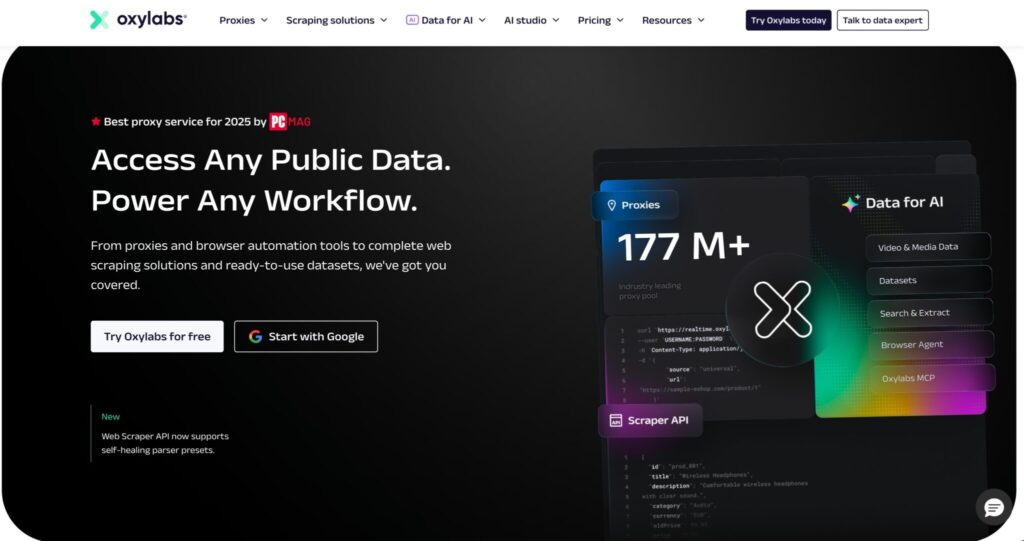
Oxylabs is the strongest all-around choice for teams that need serious US proxy infrastructure without building everything from scratch. It works well for ecommerce intelligence, SERP monitoring, ad verification, travel aggregation, brand monitoring, and large-scale public data collection.
Its biggest advantage is network depth. Oxylabs advertises a residential proxy pool of 175M+ IPs across 195+ countries, along with 2M datacenter IPs, which gives buyers a wide range of proxy types for different tasks.
For US operations, Oxylabs is best when accuracy matters more than the lowest possible price. You get residential proxies for realistic user-like traffic, datacenter proxies for speed-heavy workloads, and ISP proxies for more stable identity-based sessions. The platform also supports automatic rotation, sticky sessions, and advanced filtering, which helps when you need to tune request behavior instead of blindly rotating IPs.
The dashboard is built for technical users, but it is not overly complicated. Developers can integrate it into scraping pipelines, QA systems, analytics tools, or internal monitoring stacks. Bigger teams will also appreciate stronger documentation, account support, and enterprise-grade controls.
Where Oxylabs may not fit is small hobby projects. It is a premium provider, so you should use it when failed requests, downtime, and poor IP quality would cost more than the proxy bill itself.
Best for: Professional scraping, SERP tracking, ad verification, ecommerce monitoring, and enterprise-grade US proxy operations.
Pro Tip: Use Oxylabs residential proxies for strict US targets and datacenter proxies for lighter, speed-focused collection. Mixing both can reduce costs without sacrificing success rate.
#2 — Decodo: Best Value USA Proxy Provider
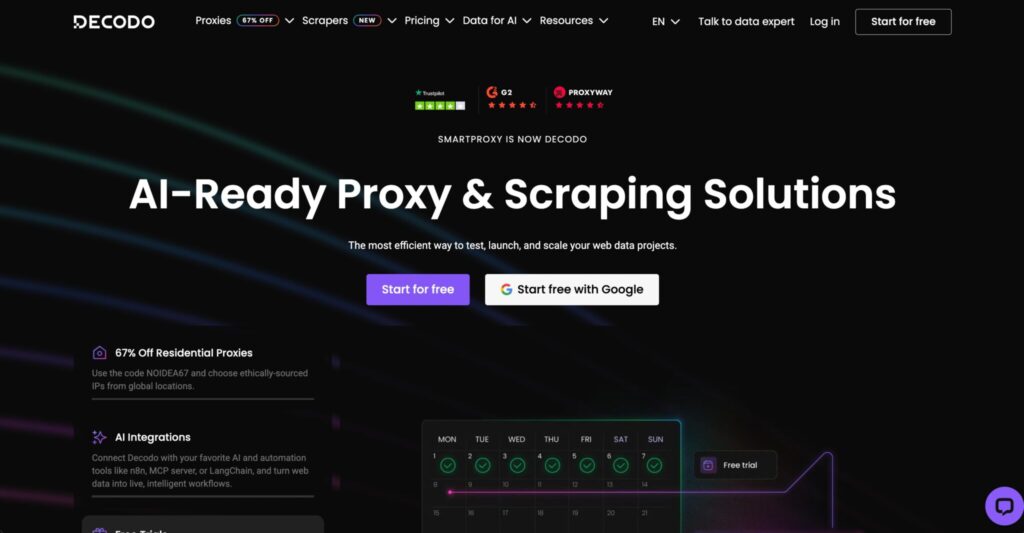
Decodo, formerly Smartproxy, is one of the best value picks for USA proxies because it balances pool size, usability, pricing, and targeting controls. It is easier to operate than many enterprise-heavy platforms while still offering enough depth for serious workloads.
Decodo states that it has 125M+ IPs, 195+ locations, and 99.99% uptime. It also confirms that Smartproxy has officially rebranded to Decodo, which is useful for buyers who still recognize the older brand name.
For US proxy use, Decodo is especially attractive because it supports flexible location selection. Its residential proxy setup guide notes that users can select random IPs, country, city, state, and, for the USA, ZIP code targeting. That ZIP-level control can be valuable for local SEO tracking, ad preview checks, localized shopping flows, and delivery-based research.
Decodo also feels polished for day-to-day use. The dashboard is clean, setup is fast, and the pricing is easier to understand than many premium networks. It is a good fit for marketers, developers, affiliate teams, agencies, and data teams that need reliable US coverage but do not want an enterprise procurement cycle.
The main tradeoff is that Decodo may not offer the same heavy-duty enterprise tooling as Bright Data or Oxylabs. But for many users, that is not a problem. It is fast, practical, and cost-effective.
Best for: Agencies, growth teams, SEO tracking, ad verification, regional research, and mid-volume scraping.
Pro Tip: For US ad checks, test ZIP targeting against city targeting. ZIP targeting can give cleaner local results, but city targeting may provide a larger usable pool.
#3 — Webshare: Best Free USA Proxy Tier
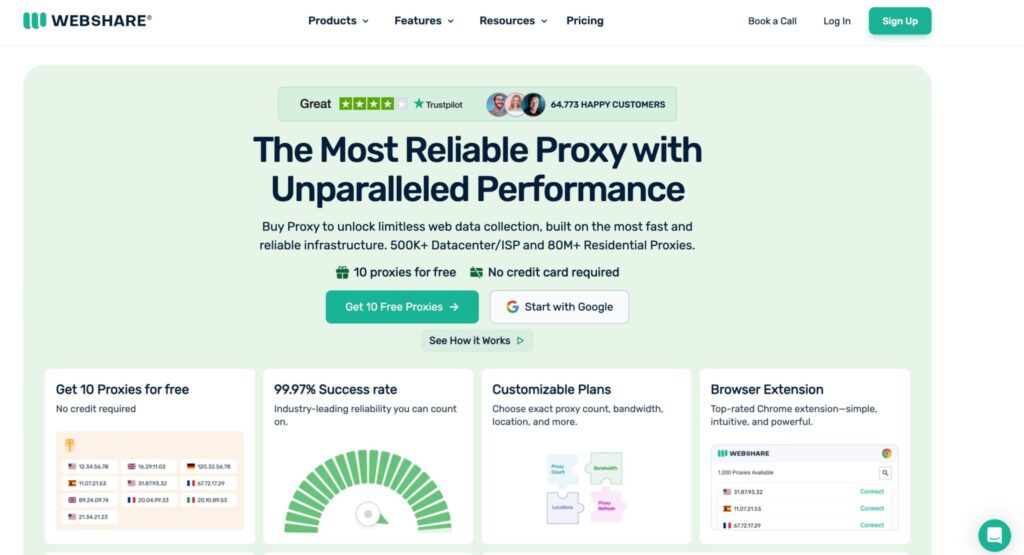
Webshare is one of the easiest providers to recommend for beginners, small teams, and budget-conscious users who want USA proxies without dealing with complex enterprise tools.
It offers three main proxy products: datacenter proxy servers, static residential proxies, and residential proxies. Its official site lists datacenter proxy servers with 400K+ IPs and 99.97% uptime, while static residential plans are positioned around ISP-backed addresses from providers such as Comcast and AT&T.
For US-specific buying, Webshare is particularly interesting because its USA location page lists millions of available United States proxies and very low entry pricing per proxy. That makes it useful for testing, light scraping, research, and low-risk automation where you want affordability before advanced control.
Webshare’s biggest strength is simplicity. You can sign up, generate proxies, configure authentication, and start testing quickly. It also has APIs and a dashboard that does not overwhelm newer users. For users moving from free proxy lists to paid infrastructure, Webshare is a clean upgrade.
The downside is that Webshare is not as advanced as premium scraping platforms. If you need deep compliance workflows, custom enterprise support, built-in scraping APIs, or complex targeting rules, you may outgrow it.
Best for: Beginners, small scraping projects, low-cost US testing, datacenter proxies, and budget-friendly static residential IPs.
Pro Tip: Use Webshare’s free or low-cost setup to benchmark your target sites first. Once you know your block rate and bandwidth usage, decide whether you need a premium residential network.
#4 — Bright Data: Best USA Proxy for Enterprise Data Pipelines
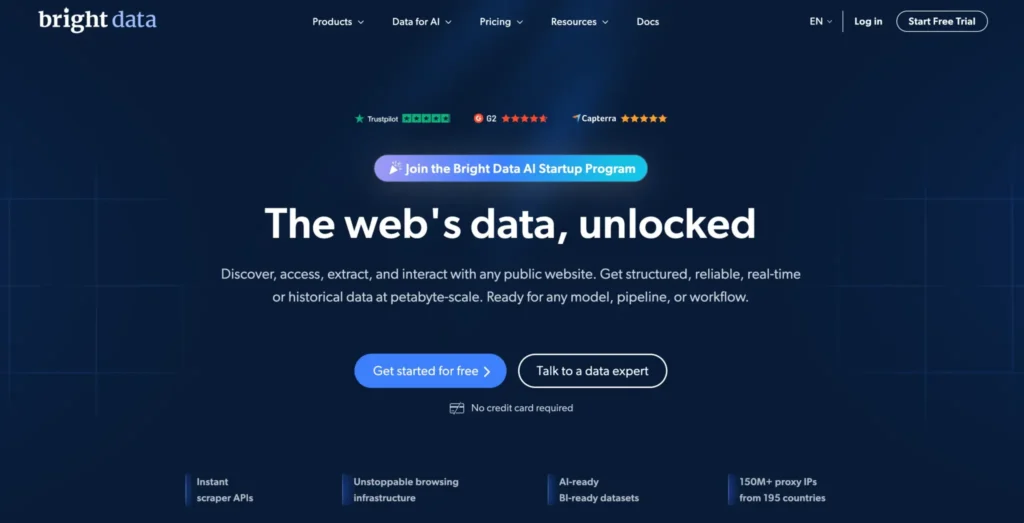
Bright Data is built for companies that treat proxies as part of a larger data collection system. It is not just a proxy provider. It also offers scraping tools, APIs, datasets, and workflow products for teams that need structured, repeatable data operations.
Bright Data advertises 400M+ monthly residential IPs across 195 countries, with targeting options that include country, city, state, ZIP code, and ASN level. It also offers datacenter proxies across 98 global locations, with the USA listed among the countries with the most datacenter IPs.
For USA proxy users, Bright Data is one of the strongest options when precision matters. State and ZIP targeting can help with local ad verification, retail pricing checks, search result tracking, and regional content testing. ASN-level targeting is also useful when you need to understand how content behaves across different network types.
Bright Data is best for larger teams because the platform has more moving parts. You can use proxies directly, but you can also layer in Web Unlocker, scraping APIs, browser automation, datasets, and compliance controls. That makes it powerful, but it also means the learning curve is higher.
Pricing can feel expensive if you only need a small amount of bandwidth. But if you are running mission-critical data pipelines, the extra tooling may justify the cost.
Best for: Enterprise scraping, public web data pipelines, ad intelligence, SERP intelligence, pricing data, and teams needing advanced targeting.
Pro Tip: Use Bright Data when your project needs more than raw IPs. If your team needs scraping APIs, browser workflows, and data delivery options, it can reduce engineering overhead.
#5 — SOAX: Best USA Proxy for Clean IP Quality
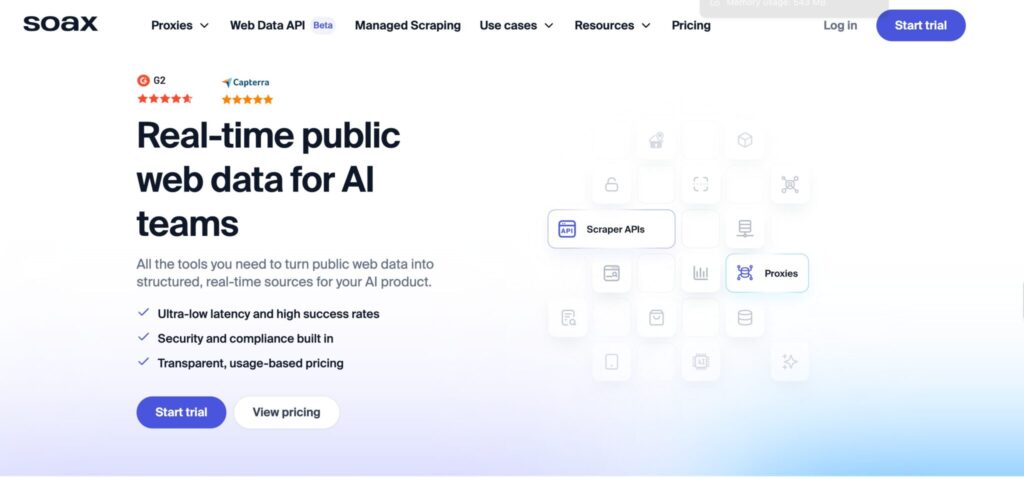
SOAX is a strong choice for buyers who care about clean IP reputation, flexible protocols, and advanced targeting without moving into a fully enterprise-heavy platform.
SOAX lists 155M+ residential IPs across 195 locations and supports HTTP(S), SOCKS5, and UDP/QUIC protocols. It also promotes unlimited concurrent sessions, 99.9% network uptime, API access, and advanced targeting. Its broader site also mentions over 191M ethically sourced IPs across proxy products, with 195+ geolocations.
For US operations, SOAX works well when you need a balance of control and usability. The protocol support is a real advantage. HTTP(S) is enough for most web scraping and browsing tasks, but SOCKS5 can be useful for broader app-level traffic. UDP/QUIC support may matter for newer web protocols and certain automation environments.
SOAX is also a good option for projects where you want cleaner traffic behavior. That includes ad verification, app testing, brand protection, marketplace research, social media monitoring, and localized browsing.
It is not always the cheapest option, but it sits in a good middle ground. You get strong targeting and quality controls without the full complexity of Bright Data.
Best for: Clean residential IPs, ad verification, localized testing, app workflows, and users who need HTTP(S), SOCKS5, and newer protocol support.
Pro Tip: If your target site behaves differently over HTTP/2, QUIC, or mobile-style sessions, test SOAX against a basic HTTP-only provider before making a larger buying decision.
#6 — DataImpulse: Best Budget USA Proxy Provider
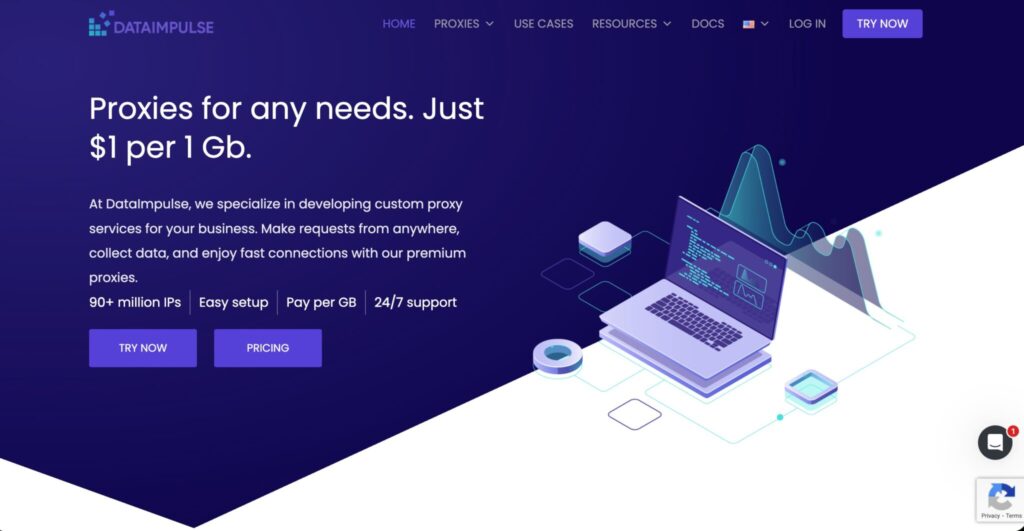
DataImpulse has become popular with buyers who want low-cost residential proxies without completely sacrificing quality. It is especially appealing for teams that run volume-sensitive tasks and need predictable bandwidth pricing.
The provider advertises pricing from $1 per GB, a 90M+ IP pool, easy setup, pay-per-GB billing, and 24/7 support. Its location-focused page says DataImpulse offers residential, mobile, and datacenter IPs from 195 countries, with country, region, city, ASN, and ZIP targeting options.
That combination makes DataImpulse very attractive for USA proxy buyers who need scale on a tighter budget. If you are scraping public pages, checking US SERPs, monitoring prices, or running QA checks, the low per-GB pricing can make testing much easier.
The key tradeoff is that budget providers need more careful testing. You should check success rates, speed, and block rates across your exact US targets before committing to larger usage. Cheap bandwidth is only useful if it produces clean results.
Still, DataImpulse is one of the strongest budget picks in this list because it offers practical targeting options and simple pricing.
Best for: Budget scraping, SERP checks, price monitoring, testing, and teams that need affordable US residential bandwidth.
Pro Tip: Start with your hardest target first. If DataImpulse performs well there, easier targets will usually be more cost-efficient.
#7 — NodeMaven: Best USA Proxy for Account Management
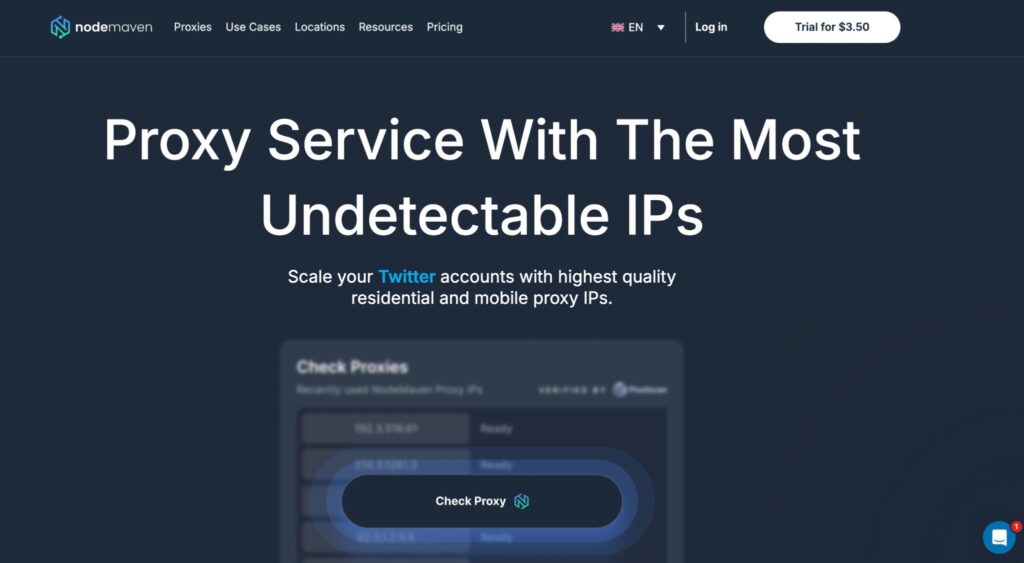
NodeMaven is built around IP quality, filtering, and account-safe workflows. It is a strong fit for users who need cleaner sessions rather than the biggest possible proxy pool.
NodeMaven states that its residential proxy pool includes 30M+ premium IPs across 190+ countries, and it positions ISP proxies as a mix of residential reputation and datacenter speed for long-running automation and account management. Its pricing page says residential proxies start from $2.20 per GB on monthly plans and include access to both residential and mobile proxy pools, traffic rollover, and cashback on used bandwidth.
For USA proxy buyers, NodeMaven is especially useful when the workflow involves profiles, logins, sessions, and consistency. That can include authorized social media management, ecommerce account testing, marketplace research, browser profile tools, and ad verification accounts.
The pool is smaller than the huge networks, but that is not always bad. NodeMaven’s value is in filtering and quality control. For account-based workflows, a smaller clean pool can outperform a massive noisy pool.
It may not be the first pick for huge scraping volumes, but it is one of the better choices when reputation and stability matter more than raw scale.
Best for: Account management, browser profiles, sticky sessions, social workflows, ecommerce accounts, and quality-focused US proxy use.
Pro Tip: Do not rotate too aggressively for account workflows. A stable ISP or high-quality residential session is usually safer than changing IPs too often.
#8 — ProxyEmpire: Best USA Proxy for Rollover-Based US Operations
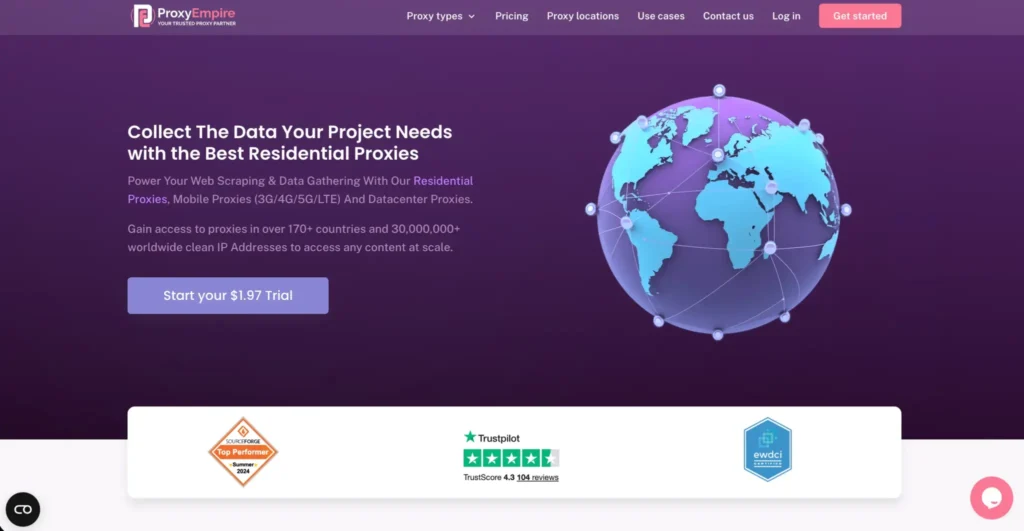
ProxyEmpire is a practical choice for buyers who dislike losing unused bandwidth. Its rollover-friendly model makes it attractive for teams with uneven usage patterns.
The provider’s site lists 30M+ clean IPs, 99.9% uptime, 24/7 support, datacenter proxies, and unlimited residential proxy plans starting from $200. ProxyEmpire also promotes static residential proxies with HTTP/SOCKS5 support, ethical sourcing, uptime claims, and unlimited bandwidth rollover.
For USA operations, ProxyEmpire is a good fit if your traffic spikes during campaigns, launches, reporting cycles, or batch research windows. Instead of forcing you to consume bandwidth every month or lose it, rollover can make budgeting easier.
ProxyEmpire also supports common use cases like ecommerce research, SEO, data collection, and account workflows. Its strength is flexibility rather than being the absolute biggest or most enterprise-heavy network.
The main thing to watch is plan selection. Make sure you understand the difference between rotating residential, static residential, mobile, and datacenter options before buying. Each product fits a different use case.
Best for: Irregular US workloads, rollover bandwidth, campaign-based research, ecommerce monitoring, and buyers who want flexible proxy budgeting.
Pro Tip: Rollover bandwidth is useful when your projects are seasonal. It is less important if your scraping volume is steady every day.
#9 — ProxyCheap: Best Budget USA Proxy Provider
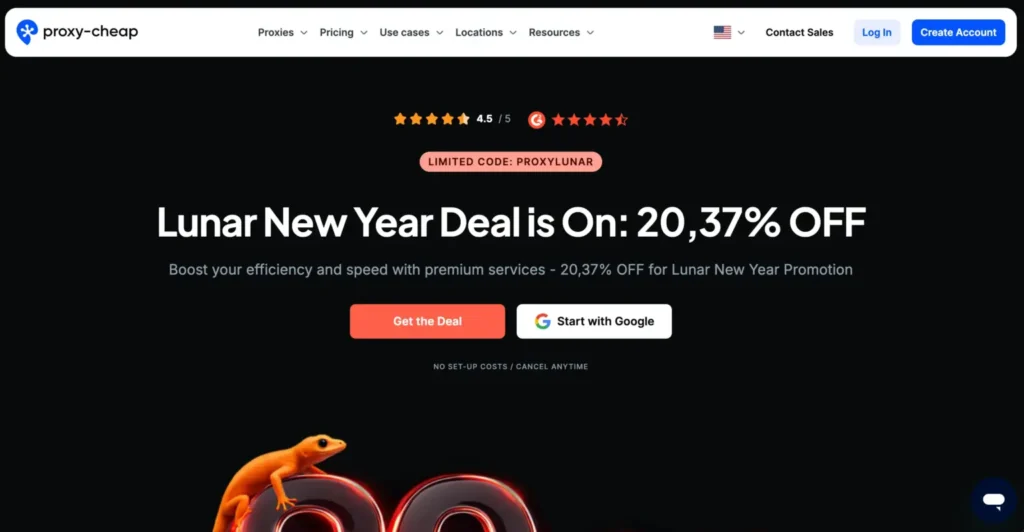
ProxyCheap is a budget-friendly provider for users who need affordable USA proxies across several proxy types. It is not the most premium name on this list, but it gives buyers low entry costs and a wide product range.
ProxyCheap’s official site lists static residential, rotating residential, datacenter IPv4, datacenter IPv6, static mobile, and other proxy options. Its listed starting points include rotating residential from $4.99 per GB, datacenter IPv4 pricing per proxy, and static residential pricing per month. The same page also highlights locations such as US proxies, UK proxies, Germany proxies, Canada proxies, and other country options.
For US proxy buyers, ProxyCheap is best for lighter workflows, testing, browsing, simple automation, and budget-sensitive campaigns. It is also useful when you want to compare different proxy types without committing to a premium provider.
The dashboard includes usage analytics, which helps users track data consumption and avoid surprises. That matters because proxy costs can rise quickly when scripts are poorly configured or retry logic is too aggressive.
The tradeoff is that lower-cost providers often require more hands-on testing. You should benchmark speed, block rate, and IP consistency before using it for important campaigns.
Best for: Budget US proxies, light automation, testing, browsing, and users who want multiple proxy types at low entry prices.
Pro Tip: Use ProxyCheap for early experiments, then move mission-critical workloads to a premium provider if success rate becomes more important than cost.
Quick Comparison — Best USA Proxy Providers
| Provider | Best For | Main Proxy Types | US Targeting Strength | Starting Price Style | Rotation/Session Fit | Best Buyer Profile |
|---|---|---|---|---|---|---|
| Oxylabs | Best overall USA proxy provider | Residential, datacenter, ISP, scraping tools | Strong country and advanced targeting options | Premium, bandwidth-based and plan-based | Rotating and sticky sessions | Data teams, agencies, enterprises |
| Decodo | Best value USA proxy provider | Residential, static residential, mobile, datacenter | Strong USA targeting, including ZIP targeting | Flexible plans and pay-as-you-go | Rotating and sticky sessions | Marketers, SEOs, mid-size teams |
| Webshare | Best free USA proxy tier | Datacenter, static residential, residential | Strong USA availability, simple setup | Free/low-cost entry options | Good for basic rotation and static use | Beginners, small teams, testers |
| Bright Data | Best enterprise data pipeline option | Residential, datacenter, ISP, mobile, scraping APIs | Very strong state, city, ZIP, ASN targeting | Premium platform pricing | Advanced routing and rotation | Enterprises and data engineering teams |
| SOAX | Best for clean IP quality | Residential, mobile, ISP-style options | Strong global and US coverage | Bandwidth-based plans | Flexible sessions and protocol support | QA teams, ad verification, data teams |
| DataImpulse | Best low-cost bandwidth | Residential, mobile, datacenter | Country, city, ASN, ZIP targeting | From low per-GB pricing | Good for scalable budget scraping | Price-sensitive scrapers and SEOs |
| NodeMaven | Best for account management | Residential, mobile, ISP | Quality-focused US access | Per-GB monthly and pay-as-you-go | Strong for sticky/account sessions | Account managers and browser profile users |
| ProxyEmpire | Best rollover model | Residential, static residential, mobile, datacenter | Good location targeting | Rollover and plan-based pricing | Good for uneven usage | Seasonal campaigns and research teams |
| ProxyCheap | Best low-cost mixed proxy stack | Residential, static residential, mobile, datacenter | US and other country options | Low monthly and per-GB entry pricing | Basic rotating and static use | Budget users and light automation teams |
How to Choose the Best USA Proxy Provider
Match the Proxy Type to the Job
Do not buy residential proxies just because they sound premium. Choose based on workload.
Use residential proxies for scraping public web pages, localized research, SERP tracking, ad verification, price monitoring, and tasks where consumer-like traffic matters.
Use datacenter proxies for speed-heavy tasks on less protected sites. They are usually cheaper and faster, but they can trigger blocks on strict platforms.
Use ISP proxies when you need a stable identity for longer sessions. They are helpful for account management, checkout testing, QA, browser profiles, and workflows where constant IP rotation looks suspicious.
Use mobile proxies only when the target experience depends on mobile carriers or mobile app behavior. They are usually more expensive, so use them when mobile identity actually matters.
Check US Location Depth
For broad scraping, country-level USA targeting may be enough. For serious work, look for state, city, ZIP, ASN, and carrier controls.
A national US proxy pool might show generic results. A New York proxy, Dallas proxy, Miami proxy, or Los Angeles proxy can show different ads, prices, SERPs, inventory, and delivery options.
Understand Rotation Rules
For scraping, rotating every request can work well. For login-based workflows, it can create risk. Sticky sessions are often better for account stability.
A good provider should let you choose between fast rotation and longer sessions. The right setup depends on your target.
Test Before Scaling
Never judge a proxy provider only by its homepage claims. Run a small test using your actual target sites, actual request volume, and actual locations.
Track:
| Metric | Why It Matters |
|---|---|
| Success rate | Shows how often requests complete without blocks |
| CAPTCHA rate | Reveals IP reputation issues |
| Average response time | Impacts scraping speed and cost |
| Retry rate | A high retry rate wastes bandwidth |
| Location accuracy | Confirms whether US targeting works properly |
| Session stability | Important for logins and longer workflows |
Watch Bandwidth Waste
Residential proxies usually charge by bandwidth. Bad code can burn through data quickly.
Avoid loading unnecessary images, scripts, videos, fonts, and heavy assets unless your task requires full-page rendering. For scraping, collect only what you need. For browser automation, block unnecessary resources where safe.
Review Compliance and Use Rules
Using US proxies is not automatically illegal, but your use case matters. Public web scraping has legal nuance in the United States, especially around authorization, terms of service, privacy, and technical access controls. The hiQ v. LinkedIn litigation is often discussed in relation to publicly available data and the CFAA, but it does not create a blanket permission slip for every scraping activity.
For commercial projects, avoid collecting sensitive personal data, bypassing logins, ignoring cease-and-desist notices, or violating platform terms. Businesses should also consider privacy and data security obligations, especially when handling consumer information.
FAQs: Best USA Proxy Providers 2026
Why do I need a USA proxy?
You need a USA proxy when your project requires a US-based IP address. Common use cases include US SERP tracking, ad verification, localized ecommerce research, app testing, streaming QA, price monitoring, travel fare checks, and public web data collection.
A USA proxy helps you see how websites behave for US users. This matters because search results, ads, prices, content, inventory, and offers can change by location.
What is the best US proxy type?
The best US proxy type depends on your use case.
For scraping and market research, residential proxies are usually the safest choice. For speed and low cost, datacenter proxies work well on less protected websites. For account management and stable sessions, ISP proxies are often better. For carrier-specific testing, mobile proxies make sense.
Most professional teams use more than one proxy type.
Which provider has the most US IPs?
Bright Data and Oxylabs are the strongest providers if you care about massive network scale. Bright Data advertises 400M+ monthly residential IPs globally, while Oxylabs advertises 175M+ residential proxies globally.
That said, the “most IPs” does not always mean the “best result.” For US projects, usable clean IPs, targeting accuracy, speed, and success rate matter more than headline pool size.
Is using US proxies legal?
Using US proxies is legal for many normal business tasks, such as security testing, ad verification, SEO tracking, QA, privacy protection, and collecting publicly available data in compliant ways.
Problems can arise if proxies are used to bypass access controls, scrape restricted data, violate terms, commit fraud, spam platforms, or collect sensitive information improperly. Treat proxies as infrastructure, not a shortcut around rules.
Are USA residential proxies better than datacenter proxies?
USA residential proxies are better for strict websites because they come from real consumer-style networks. They usually look more natural than datacenter IPs.
Datacenter proxies are better when speed and cost matter more than stealth. They are useful for simple tasks, but they are easier for websites to detect.
Can I use USA proxies for streaming?
You can use USA proxies for legitimate testing, content QA, localization checks, and verifying how streaming pages or apps behave from US locations. You should follow the terms of the platform you are testing.
For streaming-related workflows, ISP or residential proxies usually perform better than cheap datacenter proxies because they look more like normal home connections.
What is the cheapest USA proxy provider?
DataImpulse, Webshare, and ProxyCheap are the strongest budget options in this list. DataImpulse is attractive for low per-GB residential pricing, Webshare is good for free or low-cost testing, and ProxyCheap is useful for affordable mixed proxy types.
The cheapest provider is not always the lowest-cost option overall. If a cheap proxy creates too many failed requests, your real cost goes up.
How many USA proxies do I need?
For light browsing or testing, a small proxy package may be enough. For scraping, the answer depends on request volume, target difficulty, rotation rules, and how many US locations you need.
Start small. Measure success rate, bandwidth usage, and block rate. Then scale based on real numbers instead of guessing.
What should I test before buying a large proxy plan?
Test location accuracy, speed, CAPTCHA rate, sticky session stability, supported protocols, dashboard controls, API quality, and support response time.
Also test your real target websites. Generic speed tests are useful, but they do not tell you how the proxies will perform against your actual workload.
Conclusion | Best USA Proxy Providers 2026
The best USA proxy provider depends on what you are trying to do.
Choose Oxylabs if you want the strongest all-around US proxy infrastructure for professional scraping and data collection. Choose Decodo if you want the best balance of price, usability, and US targeting. Choose Webshare if you need a simple, affordable starting point with a free-friendly setup.
For enterprise data pipelines, Bright Data is hard to beat. For clean IP quality and flexible protocols, SOAX is a strong pick. For budget residential bandwidth, DataImpulse gives excellent value. For account-focused workflows, NodeMaven deserves attention. For rollover-based usage, ProxyEmpire is useful. For low-cost mixed proxy needs, ProxyCheap is a practical option.
For most serious US operations, the smartest setup is not one provider forever. Start with your main use case, test two or three providers against your real targets, then keep the one with the best success rate, cleanest IPs, and most predictable cost.