
IPv6 proxies used to feel like a niche pick for technical teams. Now they are becoming part of serious proxy planning, especially for SaaS testing, web scraping, ad verification, SEO monitoring, automation QA, and large-scale data collection.
The reason is simple. IPv4 space is tight, expensive, and heavily reused. IPv6 has a far larger address space, which gives proxy providers more room to build cleaner pools, better subnet variety, and cheaper high-volume access. That does not mean IPv6 is automatically better for every task. It is not. Many websites still run primarily on IPv4, some anti-bot systems treat IPv6 traffic differently, and several proxy providers still offer IPv6 only in specific products.
So the smart way to buy IPv6 proxies in 2026 is not to ask, “Who has the biggest pool?” Ask better questions:
- Can I force IPv6 routing?
- Does the target website support IPv6?
- Are sessions sticky or rotating?
- Is the product residential, datacenter, ISP, or mobile?
- Can I control country, ASN, city, carrier, or protocol?
- Does the provider clearly document IPv6 support?
That last point matters more than most buyers think. Some proxy brands market IPv6 broadly, while their help docs say only certain products support it. Others offer IPv6 datacenter proxies but not residential IPv6. A few popular proxy companies still operate mainly on IPv4.
For reference, Google’s IPv6 adoption data showed total IPv6 usage around 45.36% on May 11, 2026, which proves adoption is strong but still not universal. That is why the best IPv6 proxy setup is usually part of a dual-stack strategy, not a total replacement for IPv4.
Why IPv6 Proxies Are Increasingly Important for SaaS
SaaS companies care about IPv6 for three practical reasons: testing, scale, and future compatibility.
First, testing. If your product serves global users, your QA team needs to know how dashboards, checkout pages, login flows, APIs, and mobile web experiences behave for IPv6 users. You cannot properly test IPv6 behavior using only IPv4 infrastructure.
Second, scale. IPv6 has a far larger address space than IPv4, which makes it attractive for high-volume proxy operations where fresh routing, clean sessions, and subnet diversity matter. Bright Data describes IPv6 residential proxies as using 128-bit addresses with more available IPs, while keeping setup similar to IPv4.
Third, future compatibility. As more ISPs, mobile networks, cloud environments, and enterprise systems move toward IPv6, SaaS teams need infrastructure that can handle both protocols. Ignoring IPv6 today is like ignoring mobile responsiveness ten years ago. You may survive for a while, but your testing blind spots will grow.
That said, IPv6 has one hard limitation: not every target supports it. If a website, app endpoint, or ad platform does not accept IPv6 traffic properly, an IPv6 proxy will not magically solve the problem. SOAX also notes that many websites and online services still do not fully support IPv6 traffic, which limits practical use in some cases.
9 Best IPv6 Proxy Providers in 2026
#1: Oxylabs: Best IPv6 Proxy for Enterprise Web Operations
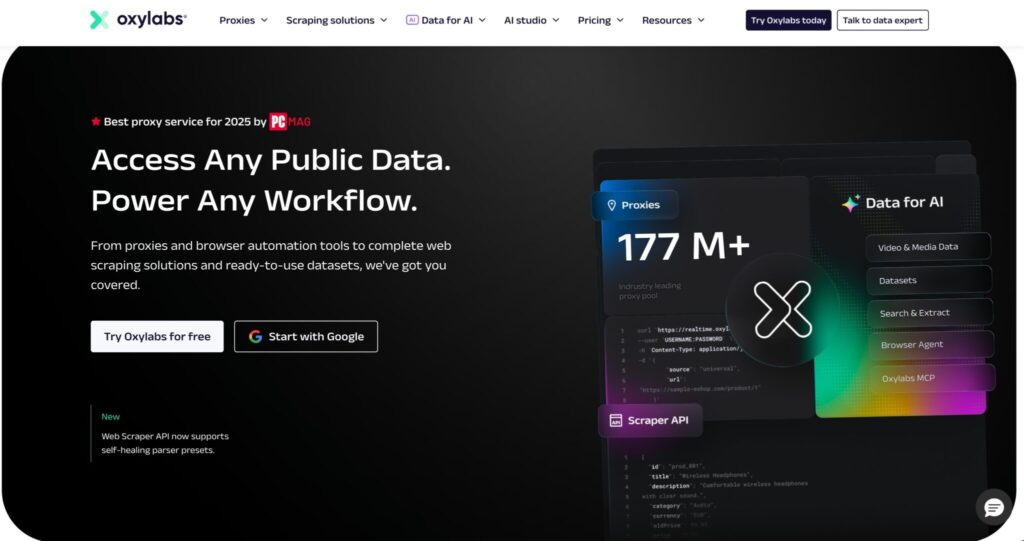
Oxylabs is the strongest pick for enterprise teams that want documented IPv6 support, high uptime, large-scale residential infrastructure, and managed support.
Its IPv6 proxy page clearly positions the product as rotating residential IPv6 proxies. Oxylabs says its IPv6 proxies come from a 175M+ residential IP pool, offer around 99.95% success rates, support unlimited concurrent sessions, and provide a single backconnect entry for accessing a rotating pool.
That makes Oxylabs especially useful for large web operations where stability matters more than saving a few dollars. Think market intelligence, SERP monitoring, retail price tracking, fraud detection research, travel fare aggregation, and large-scale public web data collection.
The setup is also cleaner than many cheaper IPv6 vendors. A single backconnect gateway lets teams manage sessions without manually handling long proxy lists. For a technical team, that saves time. For an enterprise team, it reduces operational mess.
Pricing is not bargain-bin cheap. Oxylabs lists residential IPv6 plans starting with 5GB at $6/GB, 20GB at $5/GB, and 125GB at $4/GB, with IPv4/IPv6 selection included in the listed plan details.
Best for: Enterprises, serious scraping teams, SaaS QA teams, and businesses that need reliable IPv6 residential routing.
Pro Tip: Use Oxylabs when failure costs more than the proxy bill. If your crawler feeds pricing, compliance, or analytics workflows, reliability is worth paying for.
#2: Decodo: Best Value IPv6 Proxy Access
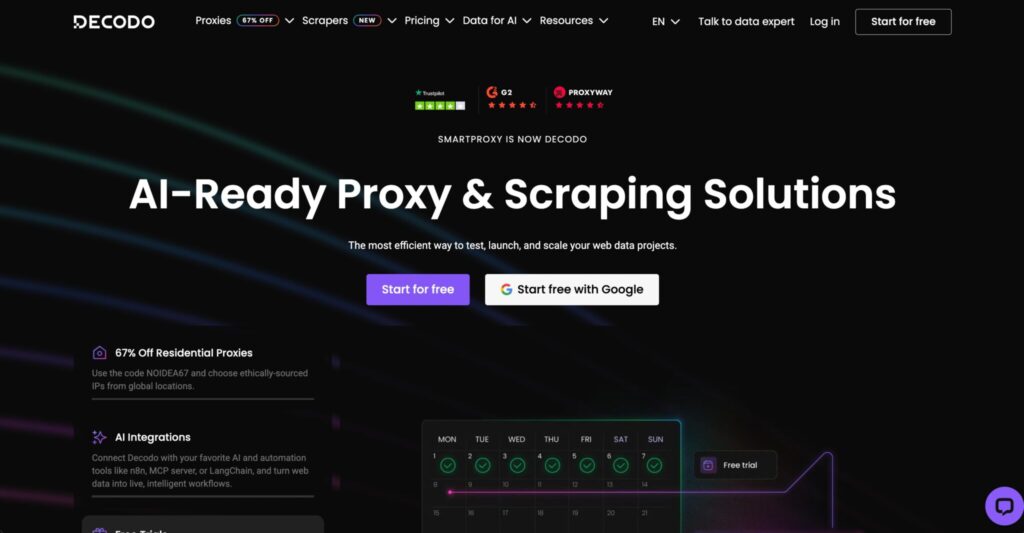
Decodo, formerly Smartproxy, is one of the best choices for buyers who want strong residential proxy coverage without going straight into enterprise pricing.
The important IPv6 detail is in Decodo’s documentation. Its residential proxy pool has both IPv4 and IPv6 addresses by default, and users can specify the IP version by adding the ipv variable, such as ipv-4 or ipv-6, in the proxy username or whitelisted IP setup.
That level of control is valuable. It means you can run IPv4 and IPv6 testing from the same general provider instead of building two separate vendor stacks.
Decodo’s homepage also highlights 125M+ IPs, 195+ locations, 99.99% uptime, and residential proxies from 115M+ ethically sourced IPs. For SaaS teams, agencies, and scraping teams that want flexibility, this is a strong middle ground.
One small caveat: Decodo’s docs say IPv6 IP addresses are not supported for whitelisted IP authentication, so username/password authentication may be the cleaner route for IPv6 work.
Best for: Teams that want strong residential IPv6 access, good value, and easy switching between IPv4 and IPv6.
Pro Tip: Build separate proxy usernames for IPv4 and IPv6 tests. It keeps reporting clean and helps you compare success rates by protocol.
#3: Webshare: Best Free Proxy Option, But Not a True IPv6 Pick
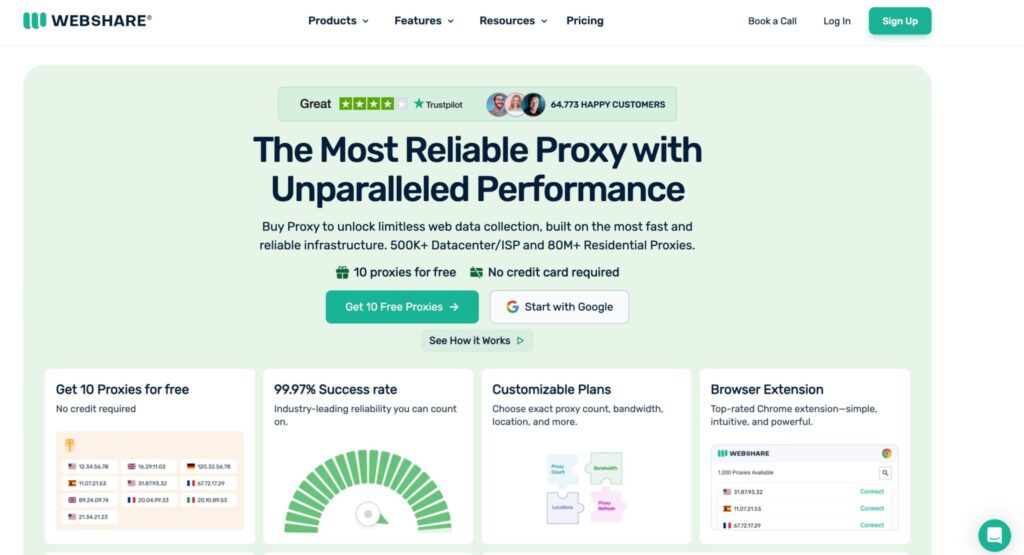
Webshare is a popular budget-friendly proxy provider, especially for users who want a free plan, simple dashboard, and affordable datacenter proxies. Its main proxy page lists proxy servers, static residential proxies, and residential proxies, with proxy server plans starting at $2.99/month and a “Start Free” option.
But here is the accuracy note: Webshare’s own help center says all Webshare proxies currently use IPv4 addressing technology.
So why include Webshare in an IPv6 guide? Because many buyers looking for “free IPv6 proxies” also compare Webshare due to its free proxy offering. It is useful as a free proxy testing option, but it should not be treated as a true IPv6 provider unless Webshare updates its product support.
For basic testing, scraping experiments, or learning how proxy authentication works, Webshare can still be useful. For serious IPv6 QA, skip it or contact support before buying.
Best for: Free proxy testing, beginner proxy workflows, and low-cost IPv4 proxy experiments.
Pro Tip: Do not put Webshare in your IPv6 stack unless you have written confirmation that your chosen plan supports IPv6.
#4: Bright Data: Most Scalable IPv6 Proxy Infrastructure
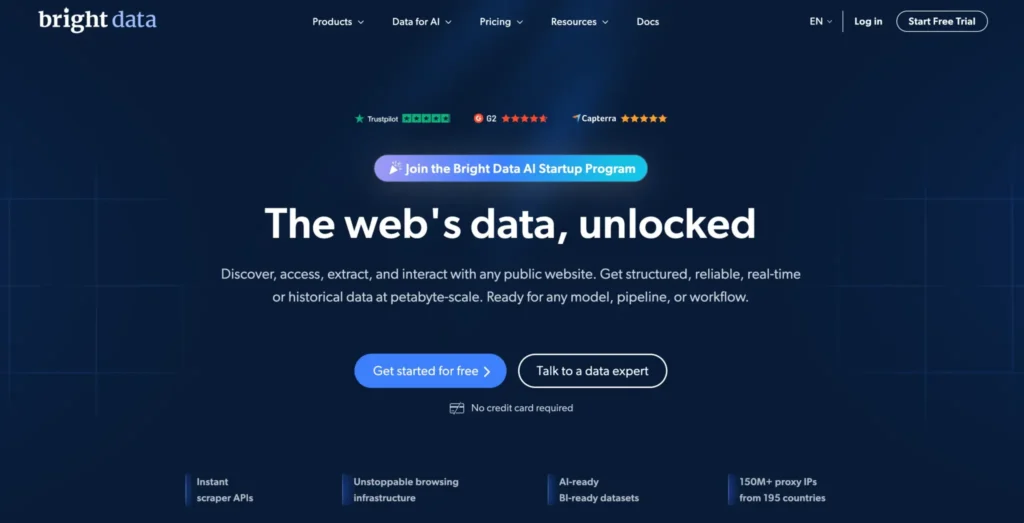
Bright Data is a strong pick for teams that want advanced proxy infrastructure, enterprise controls, and the ability to switch between IPv4 and IPv6 zones.
Bright Data’s IPv6 proxy FAQ says users can switch a zone between IPv4 and IPv6 inside the same account, and the chosen protocol version applies to all proxies assigned to that zone. It also says credentials and setup steps remain identical for IPv4 and IPv6 residential proxies.
That makes Bright Data attractive for teams already running proxy zones at scale. You do not need to rebuild your integration just to test IPv6. You can change the zone configuration and keep the host, port, username, and password structure familiar.
The trade-off is targeting. Bright Data notes that some targeting options, including gIP, ASN, ZIP code, explicit IP, mobile carrier, and operating system targeting, are not supported on IPv6 zones.
So Bright Data is excellent for scalable IPv6 residential routing, but buyers should not assume every IPv4 targeting feature carries over.
Best for: Enterprise proxy teams, data operations teams, and companies already using zone-based proxy management.
Pro Tip: Before switching a live workflow to IPv6, clone the zone and test success rate, block rate, latency, and targeting accuracy separately.
#5: SOAX: Best IPv6 Proxy with Multi-Protocol Support
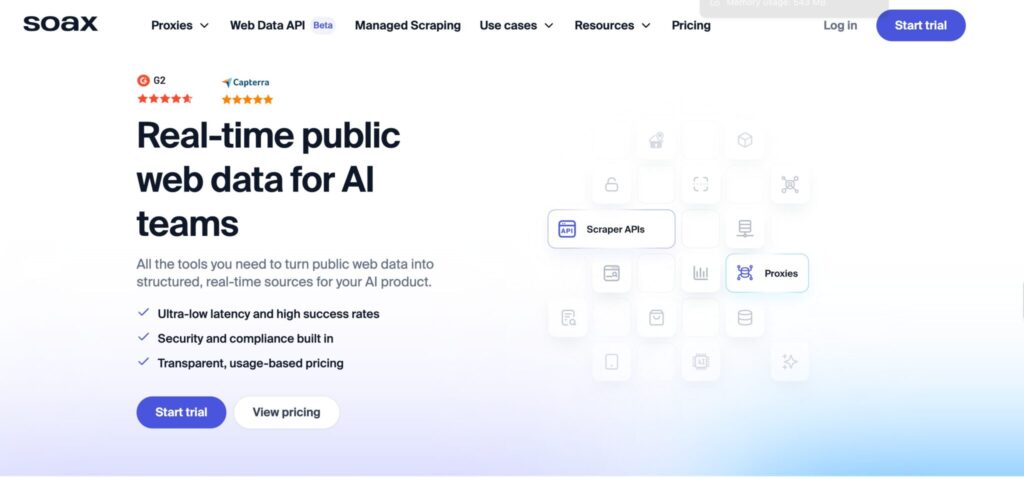
SOAX is a strong proxy platform for teams that want flexible rotation, residential and mobile pools, standard protocol support, and clean dashboard controls.
SOAX’s help center states that it offers mostly IPv4, with some IPv6 options available. That wording matters. SOAX should not be treated as a pure IPv6-first provider, but it can be considered if you want a broader proxy platform with partial IPv6 support.
Its pricing page says SOAX proxies are compatible with tools that support SOCKS5 and HTTP(S), and it offers rotation on each new request or at selected intervals. The maximum refresh window is up to one hour for residential and mobile proxies, and up to 24 hours for datacenter and ISP proxies.
That makes SOAX useful for mixed workflows where you need protocol flexibility, controlled rotation, and large proxy pools. It is less ideal if your only priority is cheap, dedicated IPv6 datacenter proxies.
Best for: Teams that want multi-protocol support, mixed proxy types, and controlled rotation.
Pro Tip: Ask SOAX support which exact product and country combinations support IPv6 before committing budget.
#6: IPRoyal: Best IPv6 Proxy with Non-Expiring Credits
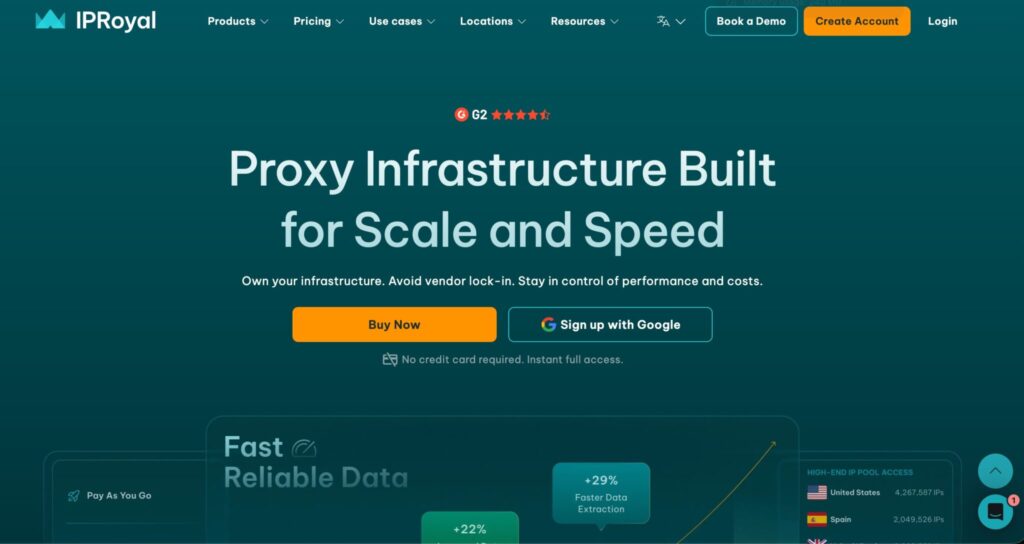
IPRoyal is often discussed in budget proxy conversations because of its flexible residential pricing and non-expiring traffic model. Its IPv6 proxy page is titled around residential rotating IPv6 proxies, with pricing from $2.45/GB shown in search results.
However, there is an important conflict. IPRoyal’s help article from April 2023 says all proxies are IPv4 and that it does not sell IPv6 proxies.
Because of that, I would treat IPRoyal as a “verify before buying” option for IPv6. If you are interested in IPRoyal because of budget-friendly residential access or non-expiring traffic, contact support and ask whether IPv6 is available on the exact plan you want.
Best for: Budget-conscious buyers who are willing to verify IPv6 availability directly before purchase.
Pro Tip: Save the support reply before buying. If a provider’s sales page and help center conflict, written confirmation protects you later.
#7: Proxy-Cheap: Most Affordable IPv6 Proxy Provider

Proxy-Cheap is one of the clearest budget providers for IPv6 options. Its homepage lists Static Residential IPv6, Rotating Residential IPv6, and Datacenter IPv6 products. It also lists Datacenter IPv6 pricing starting around $0.20 per proxy, with discounted pricing shown lower on the page.
For buyers who want cheap IPv6 access, this is the obvious attraction. Proxy-Cheap also lists support for HTTP, HTTPS, and SOCKS proxy protocols, plus country targeting and browser proxy tools.
The trade-off is that budget providers usually require more testing. You need to check subnet quality, target compatibility, replacement policy, abuse history, and real-world response time. Cheap IPv6 can be excellent for simple automation, but it may struggle on strict targets.
Best for: Budget IPv6 testing, social tools, basic automation, and low-cost datacenter IPv6 access.
Pro Tip: Start with a small batch from different locations. Test against your actual target before buying thousands of IPs.
#8: Rayobyte: Best IPv6 Proxy for Dedicated Dual-Stack Operations
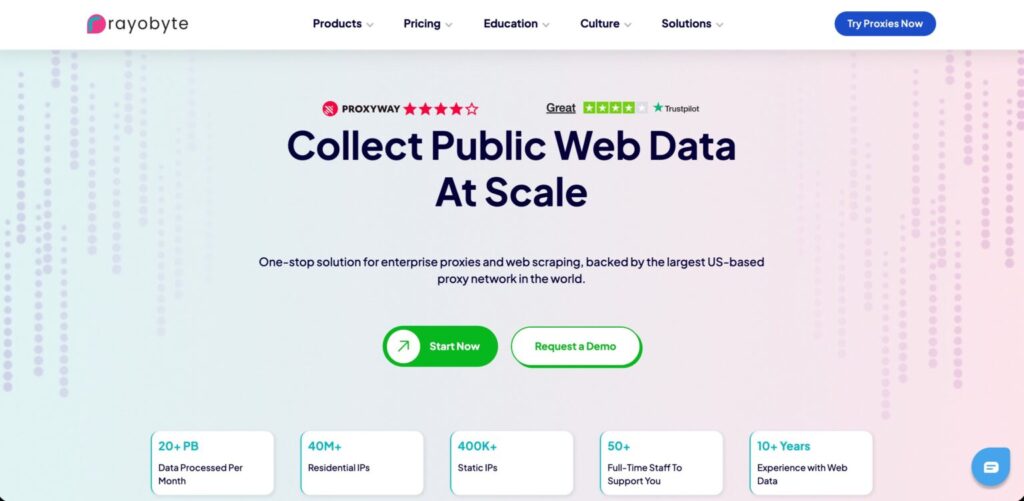
Rayobyte is a strong fit for buyers who want dedicated IPv6 proxies from a provider that has been around the proxy market for years.
Rayobyte’s pricing page lists Dedicated IPv6 at $0.20/IP, and its support docs state that Rayobyte IPv6 proxies use a different authorization structure compared with standard IPv4 static proxies.
Its support materials also say IPv6 proxies use a single IP during configuration, with real IPs tunneled through port 4444. That is useful for teams that want a simpler connection structure instead of handling every IPv6 endpoint manually.
Rayobyte’s IPv6 positioning is more datacenter and dedicated focused than broad residential IPv6. So this is not the same type of product as Oxylabs or Bright Data. It is better for buyers who want dedicated IPv6 inventory, predictable pricing, and static-style operations.
Best for: Dedicated IPv6 use cases, dual-stack teams, and buyers who want affordable per-IP pricing.
Pro Tip: Confirm the authorization method before implementation. IPv6 proxy authentication can differ from IPv4, and that can break scripts if your dev team assumes both work the same way.
#9: DataImpulse: Best Budget IPv6 Proxy
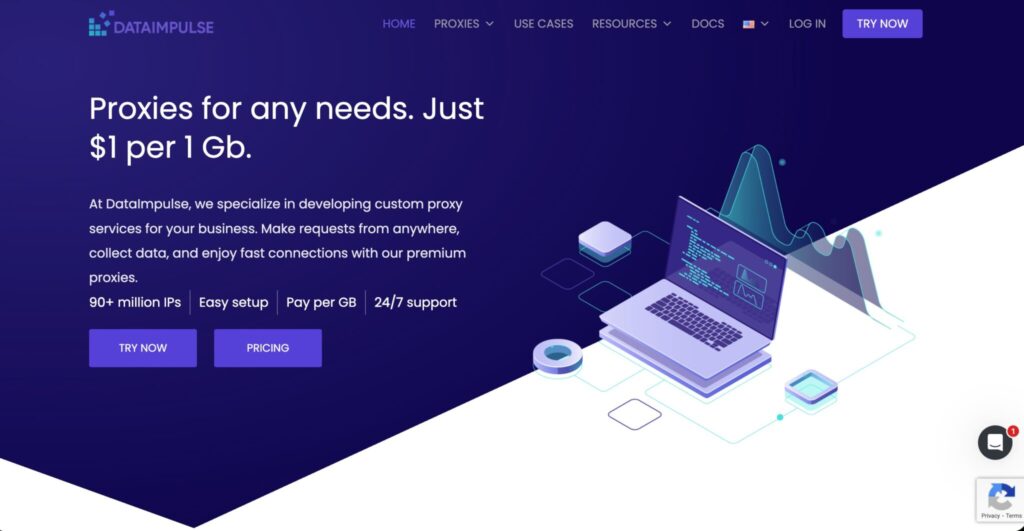
DataImpulse is a compelling budget proxy provider, especially for teams that want low-cost residential traffic and non-expiring credits. Its residential proxy page lists 90M+ residential IPs, 195+ countries, HTTP(S)/SOCKS5 support, rotating sessions, sticky sessions, API access, and pricing from $1/GB.
The catch is that DataImpulse’s public residential page does not position the product as a dedicated IPv6 proxy product in the same direct way Oxylabs, Bright Data, Proxy-Cheap, or Rayobyte do. DataImpulse does publish IPv4 vs IPv6 educational content, but buyers should verify IPv6 routing availability before treating it as a pure IPv6 solution.
That said, DataImpulse is still worth considering for budget-sensitive teams building broader proxy workflows. If IPv6 is available in your account or region, its pricing can be attractive for testing, monitoring, and moderate-scale automation.
Best for: Budget residential proxy traffic, pay-as-you-go teams, and users who want non-expiring credits.
Pro Tip: Use DataImpulse for cost-efficient experiments, but confirm IPv6 support directly before including it in an IPv6-specific procurement shortlist.
How to Choose the Best IPv6 Proxy Provider in 2026
A good IPv6 proxy provider is not just the one with the cheapest IPs. It is the one that matches your target, traffic pattern, technical stack, and risk tolerance.
1. Check whether your target supports IPv6
This is the first test. Many buyers skip it and waste money. Run DNS checks, review AAAA records, and test connection success from an IPv6 environment. If the target does not support IPv6, you need IPv4 or a dual-stack fallback.
2. Choose the right proxy type
Residential IPv6 proxies are better for websites that expect real user behavior. Datacenter IPv6 proxies are cheaper and faster, but they may be easier to flag. ISP IPv6 proxies can sit between the two if available. Mobile IPv6 can be powerful but is usually more expensive and harder to source reliably.
3. Understand rotation rules
For scraping, rotating IPs can reduce repeated request patterns. For account sessions, checkout testing, dashboards, or SaaS login flows, sticky sessions are usually safer. SOAX, for example, supports rotation on each request or at intervals, depending on proxy type.
4. Inspect subnet quality
IPv6 gives providers massive address space, but that does not automatically mean clean reputation. Ask whether IPs are dedicated, shared, recycled, or newly assigned. For datacenter IPv6, subnet reputation matters a lot.
5. Verify protocol support
For browser automation, HTTP(S) may be enough. For apps, bots, custom scripts, or non-browser traffic, SOCKS5 support can be useful. Proxy-Cheap and SOAX both publicly mention HTTP(S) and SOCKS-related support in their materials.
6. Ask about targeting limits
IPv6 support often comes with fewer targeting options than IPv4. Bright Data, for example, says some targeting options are not supported on IPv6 residential zones. If you need ZIP, ASN, OS, or carrier-level control, confirm before buying.
7. Test before scaling
Buy the smallest plan possible. Test success rate, response time, ban rate, CAPTCHA rate, session stability, and target compatibility. IPv6 proxy performance is highly use-case dependent.
Best IPv6 Proxy Providers in 2026: Quick Comparison Table
| Provider | Best For | IPv6 Support Confidence | Proxy Type Strength | Rotation Options | Starting Price Signal | Main Caution |
|---|---|---|---|---|---|---|
| Oxylabs | Enterprise IPv6 residential operations | High | Residential IPv6 | Rotating, backconnect | From $6/GB on starter IPv6 plan | Premium pricing |
| Decodo | Best value IPv6 residential access | High | Residential pool with IPv4/IPv6 control | Rotating and sticky options | Residential pricing varies by plan | IPv6 not supported for whitelisted IP auth |
| Webshare | Free proxy testing | Low for IPv6 | Datacenter and residential IPv4 products | Product dependent | Free/start low-cost plans | Official docs say proxies use IPv4 |
| Bright Data | Scalable IPv6 infrastructure | High | Residential IPv6 zones | Zone-based routing | Same billing rate as IPv4 traffic | Some targeting options unavailable on IPv6 |
| SOAX | Multi-protocol proxy workflows | Medium | Residential, mobile, ISP, datacenter | Per request or timed rotation | Plan based | Mostly IPv4, only some IPv6 options |
| IPRoyal | Budget buyers who verify first | Unclear | Residential proxy ecosystem | Product dependent | IPv6 page references $2.45/GB | Official docs conflict on IPv6 availability |
| Proxy-Cheap | Affordable IPv6 proxies | High | Static residential IPv6, rotating IPv6, datacenter IPv6 | Product dependent | Datacenter IPv6 from around $0.20/IP | Quality needs target-level testing |
| Rayobyte | Dedicated IPv6 operations | High | Dedicated IPv6 | Static-style, port-based setup | Dedicated IPv6 around $0.20/IP | Authorization differs from IPv4 |
| DataImpulse | Budget residential traffic | Medium to low for dedicated IPv6 | Residential pool | Rotating and sticky sessions | From $1/GB | Confirm IPv6 availability before buying |
FAQs: Best IPv6 Proxy Providers in 2026
What is an IPv6 proxy?
An IPv6 proxy is a proxy server that routes your connection through an IPv6 address instead of an IPv4 address. It works as an intermediary between your device, script, browser, or application and the target website.
The main benefit is address scale. IPv6 uses a much larger address format than IPv4, which gives networks far more available IP space. For proxy users, that can mean better scalability and lower costs, depending on the provider.
Are IPv6 proxies better than IPv4?
IPv6 proxies are better for some use cases, but not all.
They are useful for IPv6 compatibility testing, large-scale SaaS QA, automation experiments, and targets that support IPv6 properly. They can also be cheaper than IPv4 proxies because IPv6 address supply is much larger.
IPv4 proxies are still better when the target does not support IPv6 or when provider-level IPv6 targeting is limited. The safest setup for serious teams is dual-stack: use IPv4 and IPv6, then compare results.
Can IPv6 proxies bypass geo-restrictions?
They can help with location-based access if the provider offers proper geo-targeting and the target supports IPv6. But IPv6 does not automatically bypass every restriction.
Geo-restriction depends on IP geolocation databases, target-side rules, account signals, browser fingerprint, DNS behavior, cookies, and traffic patterns. A clean IPv6 proxy is only one piece of the setup.
Why are IPv6 proxies cheaper than IPv4?
IPv6 proxies are often cheaper because IPv6 has a much larger address space. IPv4 addresses are limited, heavily reused, and expensive to acquire. IPv6 gives providers more room to allocate addresses at lower cost.
That said, cheap does not always mean better. Poorly managed IPv6 subnets can still get flagged, blocked, or misclassified.
Do all websites support IPv6?
No. IPv6 adoption is growing, but it is not universal. Google’s own IPv6 adoption tracker showed global IPv6 usage around the mid-40% range in May 2026, which means a large part of the internet still depends on IPv4.
Before buying IPv6 proxies, test your target website or endpoint. If it does not support IPv6, buy IPv4 or use a provider that supports both.
What is the best free IPv6 proxy provider?
There is no free IPv6 provider I would recommend for serious business use. Free proxies are often slow, unstable, shared, abused, or unsafe.
Webshare is a good free proxy testing option, but its own help page says its proxies currently use IPv4, not IPv6. For real IPv6 work, start with a small paid plan from Oxylabs, Decodo, Proxy-Cheap, Bright Data, or Rayobyte.
Which IPv6 proxy provider is best for scraping?
Oxylabs is the strongest enterprise pick for residential IPv6 scraping because it offers documented residential IPv6 proxies, a large pool, single backconnect entry, 99.9% uptime claims, and unlimited concurrent sessions.
For lower budgets, Proxy-Cheap and Rayobyte are worth testing. For broader residential workflows with IPv6 selection, Decodo is a strong value option.
Which IPv6 proxy provider is best for SaaS testing?
Bright Data, Decodo, and Oxylabs are the strongest picks for SaaS testing because they offer cleaner infrastructure, documentation, and IPv4/IPv6 control.
For SaaS QA, do not just test whether the page loads. Test login, checkout, API calls, dashboard rendering, localization, analytics tracking, and fraud detection behavior across IPv4 and IPv6.
Conclusion: Best IPv6 Proxy Providers in 2026
The best IPv6 proxy provider depends on what you are actually doing.
Choose Oxylabs if you want the strongest enterprise IPv6 residential setup. Choose Decodo if you want good value, residential IPv6 control, and easier day-to-day management. Choose Bright Data if you already work with advanced proxy zones and need scalable IPv6 infrastructure. Choose Proxy-Cheap or Rayobyte if you want affordable dedicated or datacenter IPv6 options. Use SOAX when you need broader proxy flexibility with some IPv6 availability.
Be careful with Webshare, IPRoyal, and DataImpulse for IPv6-specific buying decisions. They may be useful proxy providers, but their IPv6 positioning needs verification before purchase.
The smartest 2026 setup is not “IPv6 only.” It is a tested, dual-stack proxy strategy where IPv4 and IPv6 both have a role. IPv6 gives you scale, cleaner address availability, and future-readiness. IPv4 still gives you universal compatibility. Use both wisely, test with your real targets, and let performance data choose the winner.