
HTTPS proxies are no longer just a “nice to have” for developers or scraping teams. They are now part of the basic infrastructure stack for ad verification, SEO tracking, market research, price monitoring, brand protection, fraud checks, travel fare tracking, social listening, and localized web testing.
The reason is simple: websites are stricter now. More platforms check IP reputation, TLS behavior, request patterns, session consistency, browser fingerprints, location signals, and proxy quality before deciding whether to serve the page, block the session, or throw a CAPTCHA in your face.
A good HTTPS proxy helps route web traffic through another IP while supporting encrypted HTTPS connections. That matters when you are testing websites, collecting public data, checking localized content, or running automated workflows that need stability, speed, and privacy. A poor proxy does the opposite. It leaks signals, triggers blocks, wastes bandwidth, and makes your team wonder why the “cheap” option became expensive by Friday.
This guide breaks down the best HTTPS proxy providers in 2026, including enterprise-grade networks, budget-friendly options, free proxy tiers, and providers with strong rotation or rollover models.
Why HTTPS Proxies Matter More Than Ever in 2026
An HTTPS proxy acts as an intermediary between your device, script, browser, crawler, or app and the destination website. When configured properly, it supports HTTPS traffic so your connection to the target can remain encrypted while your visible IP address changes.
That does not mean the proxy magically removes every security risk. HTTPS proxies are not the same as full VPN protection, and they do not “fix” bad automation, aggressive scraping, or poor compliance practices. What they do well is give you better control over IP location, session routing, request distribution, and access consistency.
For professional users, HTTPS proxy quality usually comes down to five things:
- IP reputation: Clean, real, low-abuse IPs work better than recycled, overused proxy pools.
- Rotation logic: Good rotation lets you change IPs per request, per time interval, or through sticky sessions.
- Geo-targeting: Country, state, city, ASN, and ISP targeting matter for localized testing and regional data.
- Protocol support: HTTP(S), SOCKS5, and newer protocol support can affect compatibility and performance.
- Operational tooling: Dashboards, APIs, usage logs, proxy testers, allowlists, and session controls save time.
For HTTPS-specific use cases, you also need to think about TLS fingerprinting. Websites can look at more than your IP. They can inspect how your client negotiates TLS, how your browser behaves, which headers you send, how fast requests arrive, and whether your pattern looks human or automated. The proxy alone is not the full answer, but a better proxy gives you a cleaner base to work from.
Quick Comparison Table: Best HTTPS Proxy Providers in 2026
| Provider | Best For | Proxy Strength | HTTPS Support Fit | Standout Detail | Watch Out For |
|---|---|---|---|---|---|
| Oxylabs | Enterprise-scale web operations | Huge residential pool, strong geo coverage, advanced scraping stack | Excellent for large HTTPS workflows | Oxylabs lists 175M+ residential IPs across 195+ countries with proxy rotation and a stated 99.95% residential proxy success rate. | Premium pricing compared with budget tools |
| Decodo | Value plus performance | Large IP pool, fast setup, strong uptime claims | Great for teams that need scale without enterprise friction | Decodo lists 125M+ IPs, 195+ locations, 99.99% uptime, and residential proxies from $2/GB. | Advanced users may still prefer Oxylabs or Bright Data for deeper enterprise tooling |
| Webshare | Free and low-cost HTTPS proxy testing | Datacenter, static residential, and residential proxies | Good for testing, light scraping, and budget projects | Webshare offers proxy servers from $2.99/month and a start-free option. | Not as advanced as premium scraping platforms |
| Bright Data | Full proxy management and complex workflows | Very large network, advanced targeting, datasets, scraping tools | Excellent for sophisticated data teams | Bright Data lists 400M+ monthly ethical residential IPs from 195 countries and advanced geo targeting. | Can feel expensive or complex for beginners |
| SOAX | Multi-protocol proxy workflows | HTTP(S), SOCKS5, UDP, QUIC, sticky and rotating sessions | Strong fit for flexible HTTPS and SOCKS5 usage | SOAX includes HTTP(S), SOCKS5, UDP, QUIC, city/ISP targeting, customizable refresh rate, and unlimited proxy connections. | Smaller teams should watch bandwidth costs |
| IPRoyal | Never-expiring traffic | Pay-as-you-go residential proxies | Good for irregular HTTPS workloads | IPRoyal says residential traffic never expires and starts at $7/GB, with lower bulk rates. | Not always the most advanced enterprise option |
| Proxy-Cheap | Affordable standard operations | Residential and static residential options | Good for basic HTTPS proxy needs | Proxy-Cheap lists 50M+ residential IPs and highlights rotating IPs, geo-targeting, and real residential routing. | Quality can vary by use case, so test before scaling |
| ProxyEmpire | Rollover bandwidth and flexible proxy types | Residential, mobile, datacenter, static, unlimited plans | Strong for mixed HTTPS workflows | ProxyEmpire lists 30M+ clean IPs, 99.9% uptime, HTTP, HTTPS, SOCKS5, and HTTP/2 support. | Pricing pages can include promos, so verify live rates |
| DataImpulse | Budget HTTPS proxy usage | Low-cost pay-per-GB proxy access | Good for budget testing and volume-sensitive use | DataImpulse promotes 90M+ IPs, pay-per-GB pricing, $1 per GB, and 24/7 support. | Best for cost-conscious users, not necessarily complex enterprise workflows |
9 Best HTTPS Proxy Providers in 2026
#1: Oxylabs: Best HTTPS Proxy for Large-Scale Web Operations
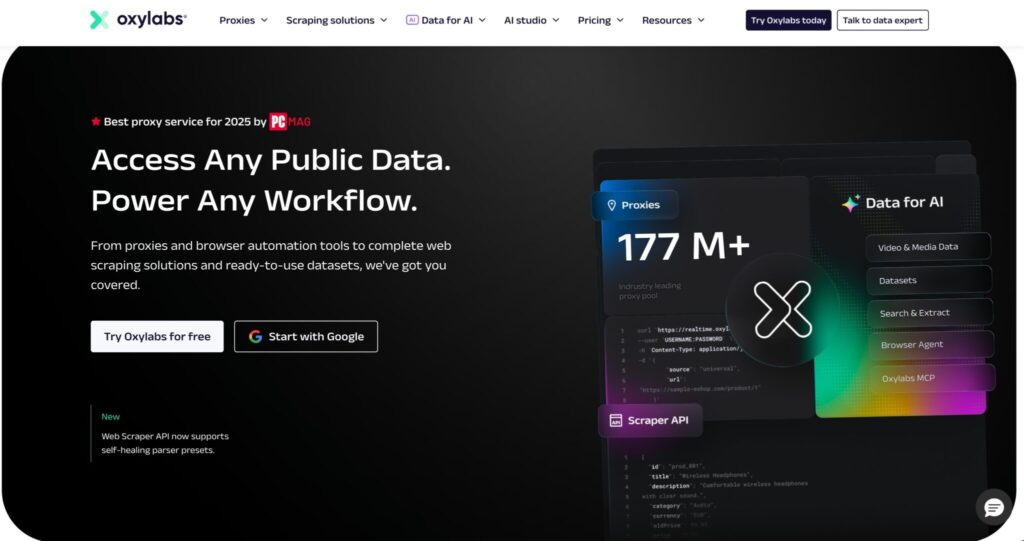
Oxylabs is the provider I would put near the top for serious web operations where failure is expensive. If you are running ad verification, large-scale SERP monitoring, travel fare collection, eCommerce price tracking, cybersecurity checks, or brand protection workflows, you need more than a pile of IPs. You need stable routing, clean pools, clear documentation, and enough infrastructure behind the scenes to keep projects moving.
Oxylabs fits that profile well. Its residential proxy network is built for large public data collection projects, and the company lists 175M+ residential IPs across 195+ countries. It also highlights IP rotation, geo-targeting, automatic scaling, advanced filters, and a stated 99.95% residential proxy success rate.
For HTTPS proxy use, the big advantage is reliability at scale. You can run higher-volume workflows without constantly fighting poor IP quality, weak session handling, or limited targeting. Oxylabs is also a better fit when you need enterprise support, account management, scraping infrastructure, or compliance-conscious sourcing.
The tradeoff is cost. Oxylabs is not the cheapest provider on this list, and it is not trying to be. It is better for businesses that care more about success rate, stability, and operational control than saving a few dollars per GB.
Pro-Tip: Use Oxylabs when the project has revenue attached to it. If missed data, blocked checks, or failed campaigns cost you money, premium infrastructure usually pays for itself.
#2: Decodo: Best Value HTTPS Proxy with Anti-Detection
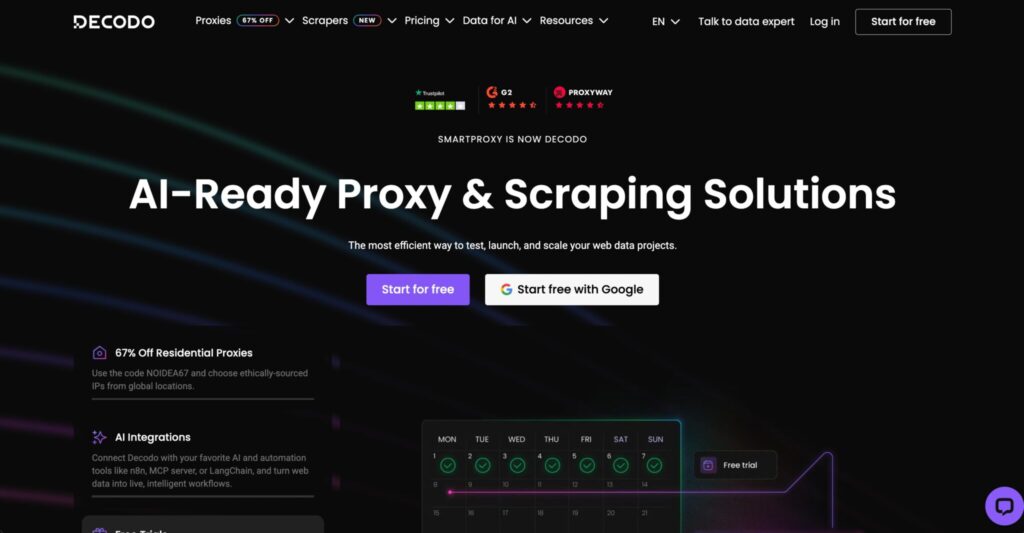
Decodo, formerly Smartproxy, is one of the strongest value picks in the HTTPS proxy market. It gives you a large IP pool, simple setup, fast onboarding, and better pricing accessibility than many enterprise-first providers. For agencies, SEO teams, growth marketers, and data teams, that balance matters.
Decodo lists 125M+ IPs, 195+ locations, 99.99% uptime, and residential proxies from $2/GB. It also positions itself around AI-ready proxy and scraping solutions, with tools for web data projects and scraping workflows.
Where Decodo works especially well is the middle ground. It is not a tiny budget proxy seller, but it also does not feel as heavy as some enterprise platforms. You can use it for localized SERP tracking, ad checks, market research, sneaker or retail monitoring, public data scraping, competitor tracking, and social media intelligence.
For HTTPS proxy users, Decodo’s appeal comes from ease and scale. The dashboard is approachable, proxy setup is straightforward, and the network size gives you room to grow. It is a practical choice if you want strong performance without building an overly complex proxy management system from day one.
Pro-Tip: Decodo is a smart starting point when you need real scale but still want simple billing, fast setup, and less enterprise overhead.
#3: Webshare: Best Free HTTPS Proxy Tier
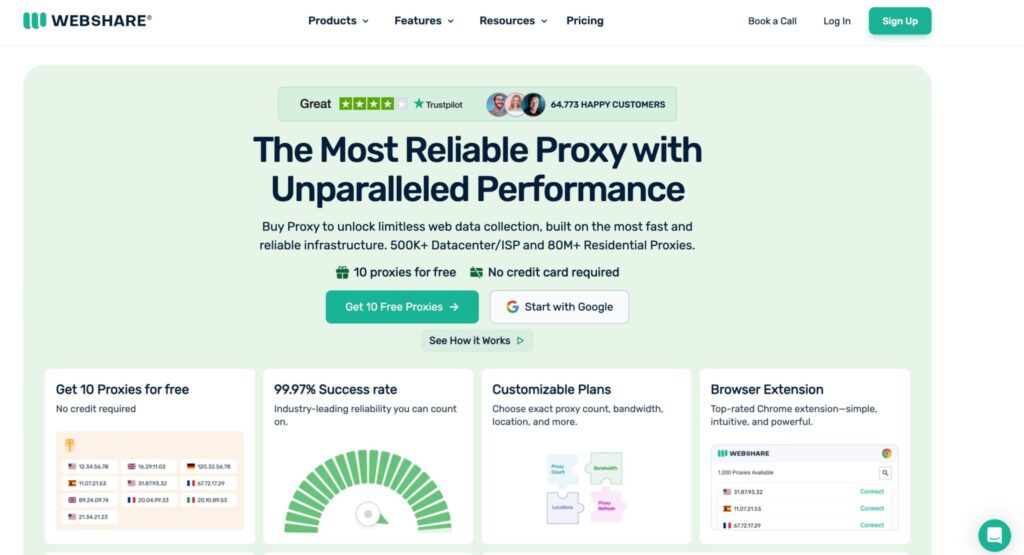
Webshare is the practical choice for users who want to test proxies without committing to a high monthly bill. It is popular with developers, small teams, solo operators, and budget-conscious marketers because it keeps the experience simple.
Webshare offers three main proxy categories: Proxy Server, Static Residential, and Residential Proxy. Its proxy server product is listed from $2.99/month with a start-free option, while static residential starts from $6/month.
For HTTPS proxy use, Webshare works well when your needs are modest or experimental. You might use it to test a script, run small SEO checks, manage lightweight browsing workflows, or validate whether a proxy setup works before moving to a more expensive provider.
Its biggest strength is accessibility. You can start small, learn the basics, and only scale when the use case proves itself. For many beginners, that is better than jumping straight into a complex enterprise tool with advanced settings they do not need yet.
The limitation is depth. Webshare is not the strongest choice for heavy anti-bot environments, advanced scraping orchestration, or complex enterprise workflows. It is better as a clean, affordable proxy platform than as a full data collection stack.
Pro-Tip: Use Webshare to validate workflows cheaply. Once your project needs higher success rates, deeper geo-targeting, or complex session logic, upgrade to a stronger residential or enterprise provider.
#4: Bright Data: Most Comprehensive HTTPS Proxy Management
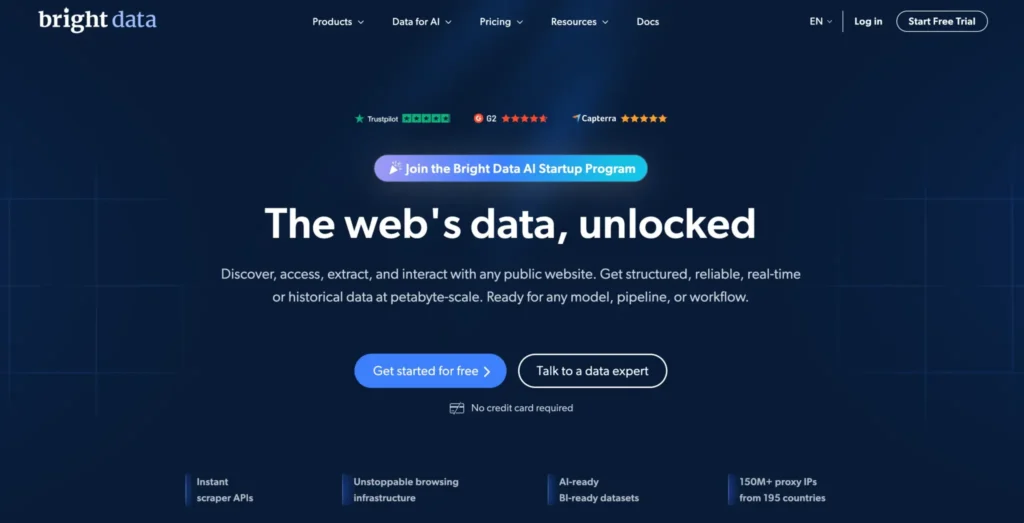
Bright Data is one of the most complete proxy and web data platforms available. It is not just a proxy vendor. It offers proxy networks, scraping tools, datasets, targeting controls, and infrastructure for serious data operations.
Bright Data lists 400M+ monthly ethical residential IPs from 195 countries, sticky and rotating sessions, a stated 99.95% success rate, free geo-location targeting, and advanced targeting by country, city, ZIP code, carrier, and ASN.
For HTTPS proxy use, Bright Data is a strong pick when you need control. If your team needs precise targeting, custom routing, proxy management tools, or broader web data infrastructure, Bright Data gives you more knobs to turn than most competitors.
It is particularly useful for enterprise market intelligence, ad verification, brand monitoring, pricing intelligence, travel data, financial research, and eCommerce tracking. The network depth and targeting options make it easier to test web experiences from specific regions or user environments.
The downside is that Bright Data can feel complex. Beginners may find the dashboard, pricing, compliance checks, and product range more involved than lighter proxy tools. But for advanced teams, that complexity is also the reason it is powerful.
Pro-Tip: Choose Bright Data when targeting precision matters more than simplicity. If you need ZIP, ASN, carrier, or city-level testing, it belongs on your shortlist.
#5: SOAX: Best HTTPS Proxy with Multi-Protocol Support
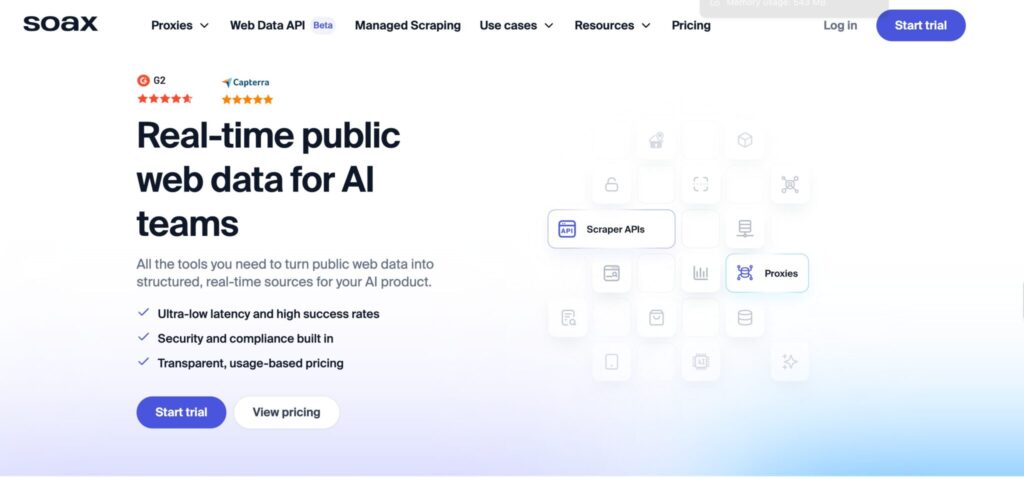
SOAX stands out because it is not limited to basic HTTP(S) traffic. It supports HTTP(S), SOCKS5, UDP, and QUIC protocols, along with sticky and rotating sessions, country, region, city, and ISP targeting, customizable IP refresh rates, unlimited proxy connections, and 24/7 multi-channel support.
That makes SOAX useful for teams with mixed technical needs. Maybe you are running HTTPS requests through Python. Maybe another workflow needs SOCKS5. Maybe your infrastructure team is testing newer protocol behavior. SOAX gives you more flexibility under one roof.
For HTTPS proxy buyers, SOAX is especially attractive when session behavior matters. Sticky sessions help when you need to maintain continuity, while rotating sessions help distribute requests and reduce blocks. The customizable refresh rate is useful because not every task needs the same rotation pattern.
SOAX is also a good fit for localized testing. City and ISP targeting can help when you need to check how websites behave in specific regions, not just broad country-level views.
The pricing can add up if you run high-volume projects without monitoring usage. That is true for most bandwidth-based residential proxy providers, but it matters more when teams run always-on jobs.
Pro-Tip: Use SOAX when you need protocol flexibility and controlled rotation. Do not rotate blindly. Match the refresh rate to the target website’s tolerance and your session requirements.
#6: IPRoyal: Best HTTPS Proxy with Never-Expiring Traffic
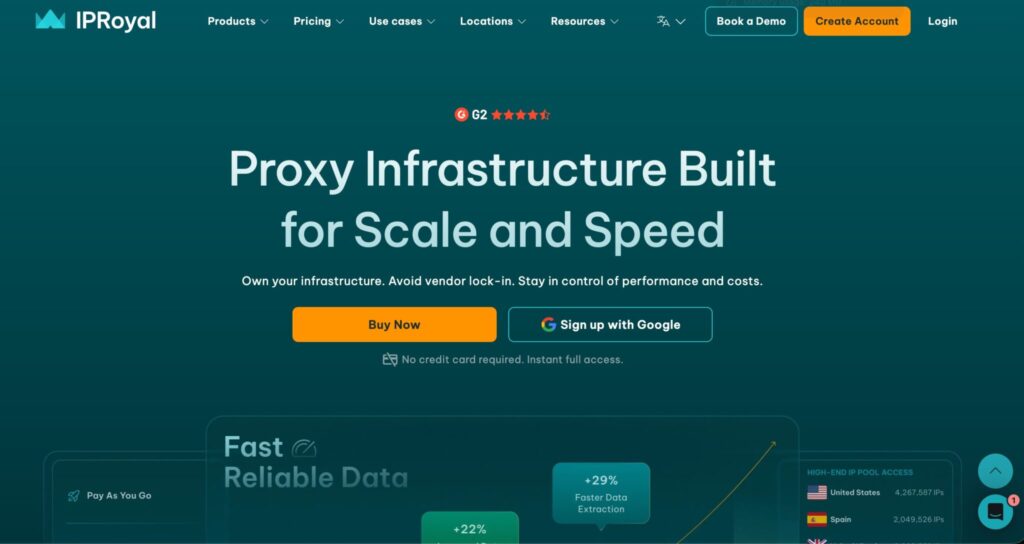
IPRoyal is a strong pick for buyers who hate wasting bandwidth. Many proxy plans follow the usual monthly model: use your traffic now or lose value later. IPRoyal’s biggest hook is different. Its residential proxy traffic never expires, which makes it useful for irregular workflows, small agencies, freelancers, and testing-heavy projects.
IPRoyal lists pay-as-you-go residential pricing starting at $7/GB, with bulk rates dropping lower, and states that purchased traffic never expires. It also offers access to 32M+ IPs in 195+ countries in its residential plans.
For HTTPS proxy users, that pricing model is practical. You may not need proxies every day. Maybe you run audits once a week, test campaigns before launch, scrape a few competitor pages, or verify localized landing pages only when ads go live. Never-expiring traffic removes the pressure to consume bandwidth just because the billing period is ending.
IPRoyal also offers static residential options, which can help when you need a consistent identity for longer sessions. That said, rotating residential proxies are usually better for broader scraping or data collection, while static residential proxies suit login-sensitive or continuity-based workflows.
Pro-Tip: IPRoyal is ideal when usage is unpredictable. Buy traffic, test slowly, and avoid the “use it before renewal” trap.
#7: Proxy-Cheap: Best Affordable HTTPS Proxy for Standard Operations

Proxy-Cheap is built for users who want functional proxy access at a lower price point. It covers residential, static residential, mobile, and datacenter-style needs, but its biggest appeal is affordability.
Proxy-Cheap’s residential proxy page lists 50M+ residential IPs, real residential routing, rotating IPs, large IP pool access, and geo-targeting options.
For HTTPS proxy use, Proxy-Cheap is best suited for standard tasks: browsing through another location, basic scraping, lightweight automation, account separation, localized checks, and general privacy workflows. It is not the first provider I would choose for demanding enterprise ad verification or high-volume anti-bot scraping, but it can work well when budget is a top concern.
The important thing with affordable proxy providers is testing. Do not judge only by the headline price. Test target compatibility, success rate, speed, session stability, and support response before buying larger packages. Cheap proxies can be useful, but only when they work on your real targets.
Proxy-Cheap also offers static residential proxies, which can help when you need a stable IP instead of frequent rotation.
Pro-Tip: Start with a small package and test your actual targets. Proxy quality is use-case-specific, and a proxy that works well on one website may fail quickly on another.
#8: ProxyEmpire: Best HTTPS Proxy with Rollover Bandwidth
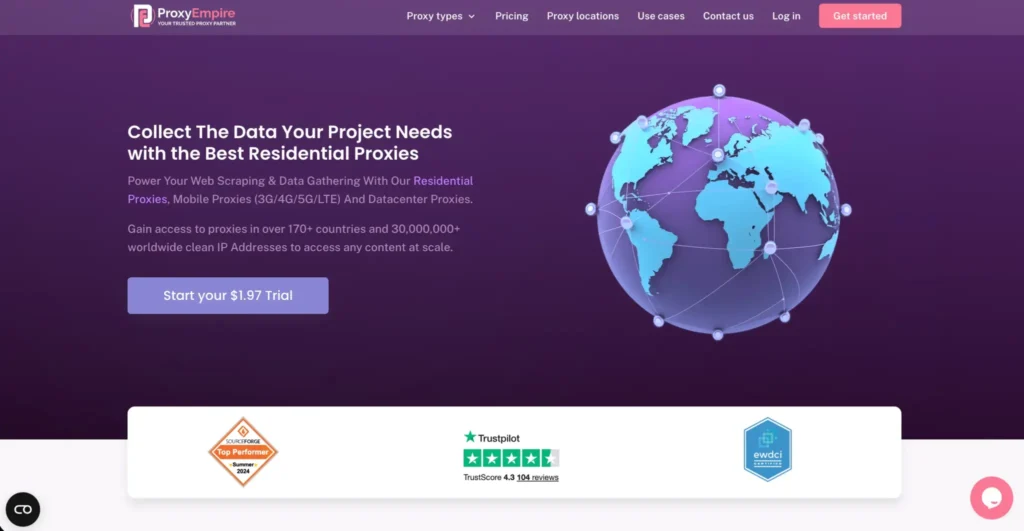
ProxyEmpire is a strong option for buyers who want several proxy types under one provider. It offers rotating residential, static residential, unlimited residential, mobile, dedicated mobile, and datacenter proxies. That makes it useful when your team has mixed needs and does not want separate vendors for every project.
ProxyEmpire lists 30M+ clean IPs, 99.9% uptime, 24/7 support, and support for HTTP, HTTPS, SOCKS5, and HTTP/2. Its pricing table also shows rotating residential plans, pay-as-you-go options, static residential plans, mobile plans, datacenter plans, and custom high-volume tiers.
The provider is often discussed for rollover bandwidth, which is useful when you do not want unused data to disappear at the end of a billing cycle. That model works well for agencies, researchers, and teams with seasonal or campaign-based proxy usage.
For HTTPS workflows, ProxyEmpire is useful for scraping, localized browsing, ad verification, account management, and price monitoring. Its HTTP/2 support can also matter for more modern web workflows, although success still depends on your client setup and target behavior.
The main caution is to verify live pricing before publishing or purchasing. Proxy providers often run promos, and displayed rates may change.
Pro-Tip: ProxyEmpire is worth testing if you want bandwidth flexibility and several proxy types in one dashboard.
#9: DataImpulse: Best Budget HTTPS Proxy
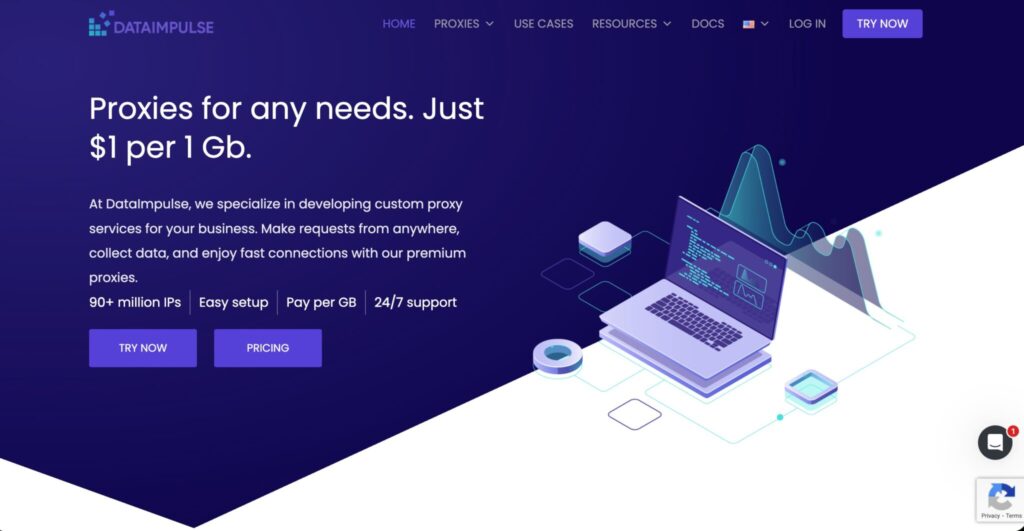
DataImpulse is the budget-friendly pick for users who care most about price per GB. It positions itself around simple, low-cost proxy access with pay-per-GB billing.
DataImpulse promotes proxies at $1 per GB, 90M+ IPs, easy setup, pay-per-GB access, fast connections, and 24/7 support.
For HTTPS proxy users, DataImpulse can be useful for testing, small scraping jobs, light automation, basic market research, and cost-sensitive projects where premium enterprise features are not required. If your workflow is simple and your targets are not aggressively protected, the low price can be attractive.
The risk with budget proxy providers is always consistency. Lower pricing is great, but success rate, IP cleanliness, targeting accuracy, and session stability matter more once the task becomes business-critical. If your project involves paid ad verification, large-scale eCommerce monitoring, or compliance-sensitive data work, run proper tests before depending on it.
DataImpulse earns its place because many buyers do not need enterprise platforms. Sometimes they need affordable bandwidth, easy setup, and enough coverage to get routine work done.
Pro-Tip: DataImpulse is best as a budget workhorse. Use it for simpler jobs, then reserve premium providers for targets where success rate matters most.
How to Choose the Best HTTPS Proxy Provider
Choosing an HTTPS proxy provider is not about picking the biggest IP pool on the page. Big numbers help, but they do not guarantee success. What matters is how clean, diverse, stable, and controllable that pool is for your exact use case.
1. Look Beyond IP Pool Size
A provider may advertise tens or hundreds of millions of IPs, but raw pool size is only one part of the story. You need to ask:
- Are the IPs residential, datacenter, ISP, or mobile?
- Are they ethically sourced?
- Are they overused on your target websites?
- Can you target by country, city, ASN, ISP, or ZIP code?
- Can you hold the same IP when needed?
For ad verification and localized SERP tracking, location accuracy matters. For scraping, rotation and success rate matter. For account-related workflows, stable sessions matter more than maximum pool size.
2. Understand Rotation Protocols
Rotation is one of the biggest buying factors. HTTPS proxy providers usually offer a few models:
- Per-request rotation: New IP for each request. Good for large scraping jobs.
- Timed rotation: IP changes every few minutes. Good for controlled browsing or crawling.
- Sticky sessions: Same IP stays active for a set period. Good for carts, logins, forms, and multi-step flows.
- Static residential or ISP proxies: Same IP for longer periods. Good for consistency.
Bad rotation creates problems. Rotate too often and sessions break. Rotate too slowly and websites may rate-limit or block the IP. The best setup depends on your workflow.
3. Match Proxy Type to Use Case
Not every HTTPS proxy type is right for every job.
Residential proxies are best for websites that block datacenter traffic quickly. They look more like real users because the IPs come from residential ISPs.
Datacenter proxies are faster and cheaper, but easier to detect. They work well for low-risk tasks, bulk checks, and targets that are not strict.
ISP proxies combine datacenter-like stability with ISP-issued legitimacy. They are useful when you need a stable IP with better trust than typical datacenter addresses.
Mobile proxies are best for mobile-specific testing, social platforms, app traffic, and scenarios where carrier IPs matter.
4. Check Protocol Support
For HTTPS proxy workflows, HTTP(S) support is essential. SOCKS5 is useful when you need broader app-level compatibility. QUIC or HTTP/2 support can matter for modern traffic patterns, but your client software must also support it properly.
At minimum, check whether the provider supports:
- HTTP
- HTTPS
- SOCKS5
- IP allowlisting
- Username and password authentication
- API-based credential management
- Sticky sessions
- Rotation controls
5. Test Before Scaling
Never buy a huge proxy plan before testing. A provider can look excellent on paper and still perform poorly on your target websites. Test with your real setup, real headers, real request volume, and real target locations.
Track these metrics:
- Success rate
- CAPTCHA frequency
- Block rate
- Average response time
- Failed connection rate
- Session stability
- Location accuracy
- Cost per successful request
The cheapest proxy is rarely the cheapest if half the requests fail.
FAQs: Best HTTPS Proxy Providers in 2026
What is an HTTPS proxy?
An HTTPS proxy is a proxy server that supports HTTPS traffic between your client and the destination website. It routes your request through another IP address while allowing encrypted HTTPS communication with the target site. For users, it helps with privacy, geo-testing, public data collection, ad verification, SEO monitoring, and localized browsing.
What’s the difference between HTTP and HTTPS proxies?
An HTTP proxy handles regular web traffic, while an HTTPS proxy supports encrypted HTTPS connections, often through the CONNECT method. In simple terms, HTTPS proxy support is necessary when you are visiting secure websites that use HTTPS, which is most of the modern web.
Do HTTPS proxies protect my data in transit?
HTTPS protects the connection between your client and the destination website when configured correctly. The proxy routes the traffic, but it does not automatically make every workflow private or secure. You still need trusted providers, proper configuration, safe authentication, and clean client behavior.
Can HTTPS proxies bypass SSL certificate errors?
No, a good HTTPS proxy should not be treated as a tool for bypassing SSL certificate errors. Certificate errors usually mean something is wrong with the connection, certificate chain, domain, or local configuration. Fix the cause instead of ignoring the warning.
What is TLS fingerprinting, and how does it affect HTTPS proxy detection?
TLS fingerprinting is a technique websites use to identify clients based on how they negotiate encrypted connections. Even with a clean proxy IP, your browser, library, TLS settings, headers, and request behavior can reveal automation. That is why serious proxy workflows need more than IP rotation. They need realistic browser behavior, clean sessions, sensible pacing, and proper TLS handling.
Are HTTPS proxies legal?
HTTPS proxies are legal in most places when used for legitimate purposes such as privacy, testing, market research, ad verification, SEO monitoring, and public data collection. The issue is not the proxy itself. The issue is how it is used. Always respect laws, platform terms, robots rules where applicable, and data protection requirements.
Which HTTPS proxy type is best for scraping?
Residential proxies are usually better for difficult targets because they look closer to normal user traffic. Datacenter proxies are cheaper and faster, but easier to detect. ISP proxies are useful when you need stable sessions. Mobile proxies are best when the target heavily trusts carrier traffic or when testing mobile-specific experiences.
Which HTTPS proxy provider is best for beginners?
Webshare, Decodo, IPRoyal, and DataImpulse are easier starting points for most beginners. Webshare is good for low-cost testing, Decodo is strong for value and scale, IPRoyal is useful for never-expiring traffic, and DataImpulse is attractive for budget projects.
Which HTTPS proxy provider is best for enterprise teams?
Oxylabs and Bright Data are the strongest enterprise choices. Oxylabs is excellent for large-scale web operations and high-success workflows. Bright Data is ideal for teams that need deep targeting, advanced proxy management, datasets, and broader web data infrastructure.
Conclusion: Best HTTPS Proxy Providers in 2026
The best HTTPS proxy provider depends on what you are trying to do.
If you need enterprise-grade reliability, start with Oxylabs or Bright Data. If you want the best balance of price, scale, and usability, Decodo is one of the strongest picks. If you need a free or low-cost starting point, Webshare is easy to test.
For multi-protocol flexibility, SOAX deserves attention. For traffic that does not expire, IPRoyal is hard to ignore. For affordable standard proxy work, Proxy-Cheap can make sense. For rollover bandwidth and mixed proxy types, ProxyEmpire is useful. For tight budgets, DataImpulse gives you a low-cost way to get started.
My practical advice: do not buy based only on IP pool size. Buy based on success rate, target compatibility, location accuracy, session control, and cost per successful request. That is the number that actually matters.