
Best Taiwan Proxy Providers in 2026 Taiwan is not the first location most proxy buyers think about. The usual shortlist starts with the United States, the United Kingdom, Germany, India, or Japan. But that is exactly why Taiwan proxies can be valuable.
If you are tracking Taiwanese SERPs, checking localized ads, testing apps, researching eCommerce prices, scraping public data from Taiwan-based sites, or auditing regional user experience, using a random global proxy pool is not enough. You need IPs that actually resolve in Taiwan, preferably with clean ASN diversity, stable sessions, solid rotation controls, and enough bandwidth to run without constantly fighting CAPTCHAs.
The tricky part? “Taiwan proxy” can mean very different things depending on the provider. Some companies offer true Taiwan residential IPs. Some offer datacenter IPs in Taiwan. Some include Taiwan in a wider Asia pool. Some publish exact Taiwan inventory, while others only show broader global coverage. That matters because a proxy that works for simple browsing may fail badly when you run structured scraping, ad verification, or account-based workflows.
This buyer’s guide breaks down the best Taiwan proxy providers based on IP coverage, proxy types, rotation controls, pricing, usability, and real business fit.
Quick Verdict: Best Taiwan Proxy Providers by Use Case
| Use Case | Best Pick | Why |
|---|---|---|
| Enterprise scraping and compliance-heavy projects | Bright Data | Huge global residential network, strong targeting, advanced controls |
| Large-scale data collection | Oxylabs | Taiwan residential and datacenter options with strong enterprise tooling |
| Balanced price, performance, and ease of use | Decodo | 125M+ IPs, Taiwan support, flexible proxy types, beginner-friendly dashboard |
| Precise filtering and clean residential traffic | SOAX | Publishes Taiwan pool size and offers strong targeting controls |
| Budget Taiwan residential proxies | IPRoyal | Lower entry pricing and clear Taiwan proxy inventory |
| Cheap datacenter-style Taiwan proxy access | Webshare | Large Taiwan proxy list and low-cost plans |
| High-volume teams | NetNut | 85M+ global IPs and Taiwan-specific plans |
| Ethical public data collection | Rayobyte | Strong residential and datacenter mix with transparent pricing |
| Flexible Taiwan residential proxy testing | Infatica | Taiwan page lists 50,000+ local IPs and pay-as-you-go pricing |
| Static ISP and mixed proxy setups | Proxy-Seller | Useful for static ISP workflows, SOCKS5 support, and broad country coverage |
Massive Comparison Table: Best Taiwan Proxy Providers
| Provider | Best For | Taiwan Availability | Proxy Types | Rotation and Session Control | Starting Price Snapshot | Main Strength | Main Limitation |
|---|---|---|---|---|---|---|---|
| Bright Data | Enterprise scraping, ad verification, SERP tracking | Taiwan location page available | Residential, ISP, datacenter, mobile | Advanced rotation, sticky sessions, geo and ASN targeting | Residential PAYG shown at $8/GB, with promotional $4/GB pricing on location plans | Very large network with 400M+ residential proxy IPs | More complex and expensive for small users |
| Oxylabs | Large-scale business data collection | Taiwan residential and datacenter proxy page available | Residential, datacenter, dedicated, mobile, ISP | Automatic rotation, precise location targeting | Residential proxies from $8/GB | Strong enterprise-grade infrastructure and 99.95% average uptime claim | Not the cheapest option for small tests |
| Decodo | Balanced Taiwan proxy use | Taiwan proxy page available | Residential, mobile, datacenter, ISP | Rotating and sticky sessions, city-level targeting | Residential proxies listed from $1.5/GB on location page and $2/GB on homepage | Easy dashboard, 125M+ IPs, 195+ locations | Some pricing varies by product and plan type |
| SOAX | Location-sensitive residential use | Taiwan page lists 48,360 IPs | Residential, mobile, US datacenter, Web Data API | Filtering and rotation controls | Starter at $3.60/GB, 25GB included, $90 monthly | Good targeting for regional testing | Entry plan may be too large for very small users |
| IPRoyal | Budget residential and ISP proxies | Taiwan page lists 126,199 proxies | Residential, datacenter, ISP, mobile | Rotating residential, sticky options, city/state targeting | Residential from $1.75/GB, ISP from $2.40/proxy | Strong price-to-coverage ratio | Support and tooling may feel lighter than enterprise providers |
| Webshare | Cheap Taiwan proxy lists | Taiwan page lists 489,672 proxies | Datacenter, rotating residential, static residential | Dashboard-based proxy list management | Datacenter from $0.0179/proxy, rotating residential from $1.40/GB | Very affordable for developers and bulk testing | Less suitable for complex enterprise compliance workflows |
| NetNut | High-volume teams | Taiwan proxy page available | Rotating residential | Unlimited connections across packages | 28GB plan at $99 monthly, $3.53/GB | Strong pool size, 85M+ global IPs | Minimum monthly plan is higher than casual users need |
| Rayobyte | Ethical scraping and mixed proxy use | Taiwan proxy page available | Rotating residential, dedicated datacenter | API access and geo-targeting | Taiwan page lists residential from $3/GB and datacenter from $2.50/IP | Good mix of residential and datacenter options | Smaller global footprint than the largest enterprise players |
| Infatica | Flexible Taiwan residential projects | Taiwan page lists 50,000+ Taiwan IPs | Residential, private, rotating | Rotation time selection, login/password and IP whitelist auth | PAYG at $4/GB, 25GB at $96 | Clear Taiwan city coverage and flexible pricing | Interface and product fit may require testing before scaling |
| Proxy-Seller | Static ISP and mixed proxy workflows | Taiwan listed under ISP locations | Residential, ISP, datacenter, mobile | Time-based, per-request, sticky rotation | Residential plans advertised with 20M+ IPs and quote-style plans | SOCKS5 support, ISP targeting, multiple rotation modes | Taiwan residential inventory is less clearly published than ISP availability |
What Makes a Good Taiwan Proxy Provider?
A good Taiwan proxy provider should not just give you an IP with “TW” attached to it. It should give you predictable access, clean routing, usable speed, and enough controls to match your workflow.
For example, a marketer checking Taiwanese Google search results needs different proxy behavior than a data engineer scraping public marketplace listings. The marketer may care about city-level accuracy, browser fingerprint consistency, and sticky sessions. The engineer may care more about rotation speed, request success rate, concurrency, and bandwidth cost.
The best Taiwan proxy services usually perform well in five areas:
- Real Taiwan IP coverage: The provider should clearly support Taiwan as a target location.
- Proxy type depth: Residential, mobile, ISP, and datacenter proxies each solve different problems.
- Rotation flexibility: Per-request rotation is useful for bulk scraping, while sticky sessions are better for logins, carts, dashboards, and testing flows.
- Protocol support: HTTP(S) is enough for many web tasks, but SOCKS5 gives more flexibility for apps and non-browser traffic.
- Transparent pricing: You should know whether you are paying per GB, per IP, per port, or per month.
Pro Tip: Before buying a large Taiwan proxy plan, ask the provider for a trial or small paid test. Run the proxies against your actual target sites, not just generic IP-checker tools.
1. Bright Data: Best Taiwan Proxy Provider for Enterprise Teams
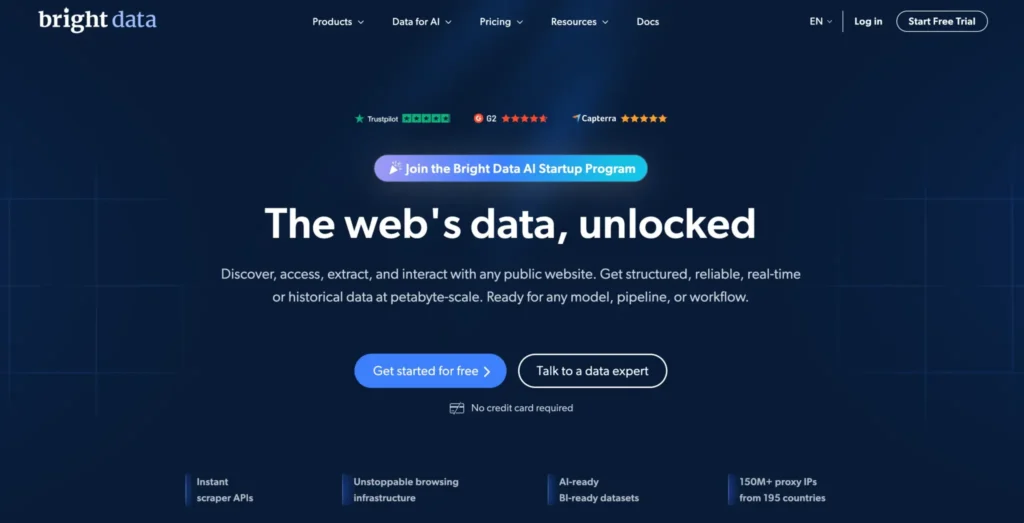
Bright Data is the heavy-duty option in this list. It is built for teams that need scale, governance, advanced targeting, and stronger operational controls. If your project involves ad verification, localized SERP tracking, price intelligence, brand monitoring, or structured public web data collection, Bright Data is usually one of the first names to test.
The company publishes a Taiwan proxy location page and gives users access to residential proxies for testing through a free trial. Its broader network claims more than 400M residential proxy IPs, with targeting across countries, cities, carriers, and ASNs. That level of granularity is useful when Taiwan alone is not enough and you need to compare Taiwan traffic against Japan, Hong Kong, Singapore, or South Korea.
Bright Data’s pricing is not aimed at hobby users. The location pricing page shows residential proxy pay-as-you-go at $8/GB, with a promotional $4/GB price shown at the time checked. Larger monthly plans reduce per-GB cost, but the platform makes the most sense when proxy quality and compliance tooling matter more than the lowest bill.
Why Choose Bright Data?
Bright Data is best when you need control. You can build proxy zones, manage permissions, tune sessions, use proxy manager tools, and run more structured data workflows. It is not the fastest setup if you only want ten Taiwan IPs for a small one-off task, but for professional use, the infrastructure is hard to ignore.
Bright Data Pros
- Very large residential network
- Taiwan location support
- Strong targeting options
- Good fit for ad verification, SEO monitoring, and price intelligence
- Enterprise-grade controls and support
Bright Data Cons
- Can feel complex for beginners
- Pricing is higher than budget providers
- Overkill for light browsing or basic testing
Pro Tip: Use Bright Data when failed requests are more expensive than proxy bandwidth. If your team loses hours fixing bans, CAPTCHAs, and dirty IPs, the higher cost can make sense.
2. Oxylabs: Best for Large-Scale Taiwan Data Collection
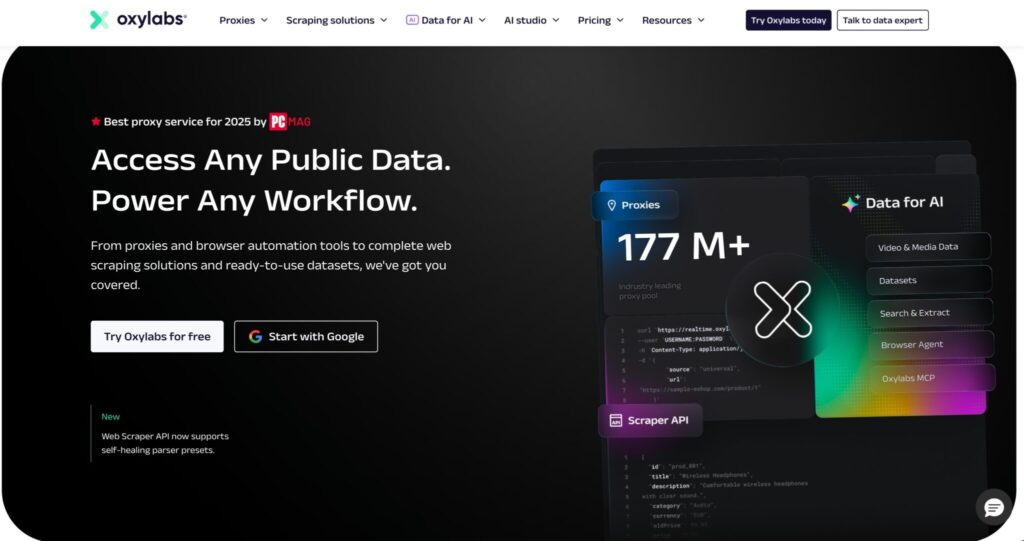
Oxylabs is another premium provider built for business-grade data collection. Its Taiwan page specifically mentions residential and datacenter proxies in Taiwan, which gives it a clear advantage over providers that only claim broad global coverage. Oxylabs also describes common use cases such as market research, brand protection, travel fare aggregation, ad verification, SEO monitoring, and price monitoring.
The broader Oxylabs location page lists residential proxies from $8/GB, automatic residential proxy rotation, precise location targeting, and an average uptime claim of 99.95%. It also lists datacenter and dedicated proxy options for teams that need speed and cost efficiency more than residential legitimacy.
Why Choose Oxylabs?
Pick Oxylabs when you care about uptime, account management, stable infrastructure, and support quality. It is especially good for teams running ongoing data operations rather than casual scraping. The provider’s tooling is made for companies that need repeatable output, not just a random pool of IPs.
Oxylabs Pros
- Taiwan residential and datacenter proxy support
- Strong enterprise reputation
- Automatic rotation
- Good for public web data collection at scale
- Solid documentation and support
Oxylabs Cons
- Premium pricing
- Some advanced features may require sales contact
- Better for teams than solo buyers
Pro Tip: If you are scraping Taiwanese eCommerce, test both residential and datacenter proxies. Datacenter IPs may be cheaper and faster on less protected sites, while residential IPs usually perform better on stricter targets.
3. Decodo: Best Balance of Ease, Price, and Taiwan Coverage
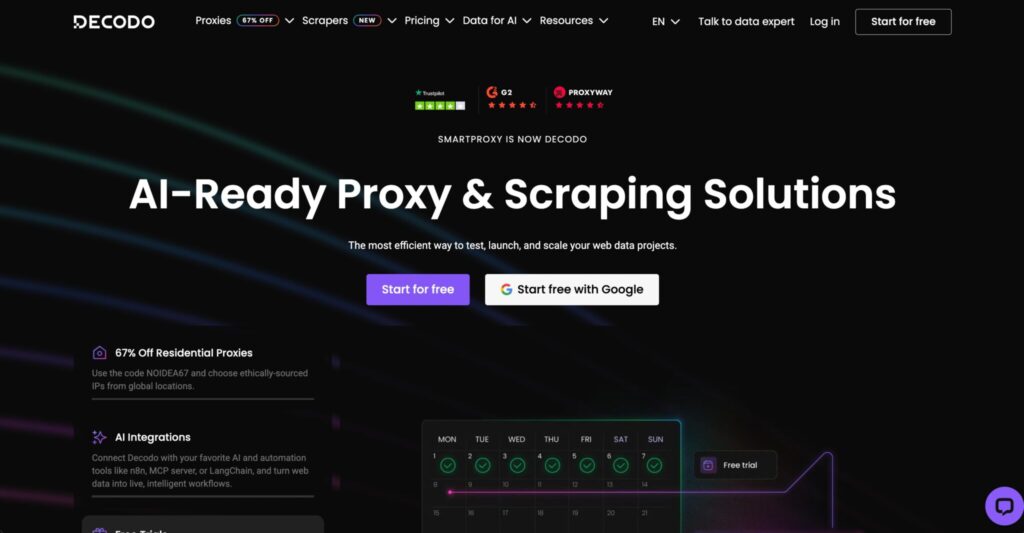
Decodo, formerly Smartproxy, is one of the most balanced proxy providers for buyers who want strong infrastructure without the heavier feel of enterprise-first platforms. Its Taiwan page lists residential and mobile proxies, 195+ locations, city-level targeting, sub-second response claims, and a pay-as-you-go option.
Decodo’s location page lists residential proxies from $1.5/GB, static residential proxies from $0.27/IP, mobile proxies from $2.25/GB, and datacenter proxies from $0.022/IP. Its homepage also references 125M+ IPs, 195+ locations, and 99.99% uptime.
Why Choose Decodo?
Decodo is a strong choice for SEO teams, affiliate marketers, app testers, and data teams that want a clean dashboard and flexible proxy types. It is easier to start with than Bright Data or Oxylabs, but still strong enough for serious workloads.
Decodo Pros
- Taiwan proxy page available
- Residential and mobile proxy options
- Easy dashboard
- Good pricing flexibility
- Useful for SEO, ad checks, and market research
Decodo Cons
- Product pricing can vary across pages and proxy types
- Enterprise buyers may still prefer Bright Data or Oxylabs
- You should test Taiwan-specific success rates before scaling
Pro Tip: Decodo is a good first paid test for Taiwan proxies. It gives enough control to run serious experiments without making the setup feel like a full engineering project.
4. SOAX: Best for Clean Filtering and Taiwan Residential Targeting
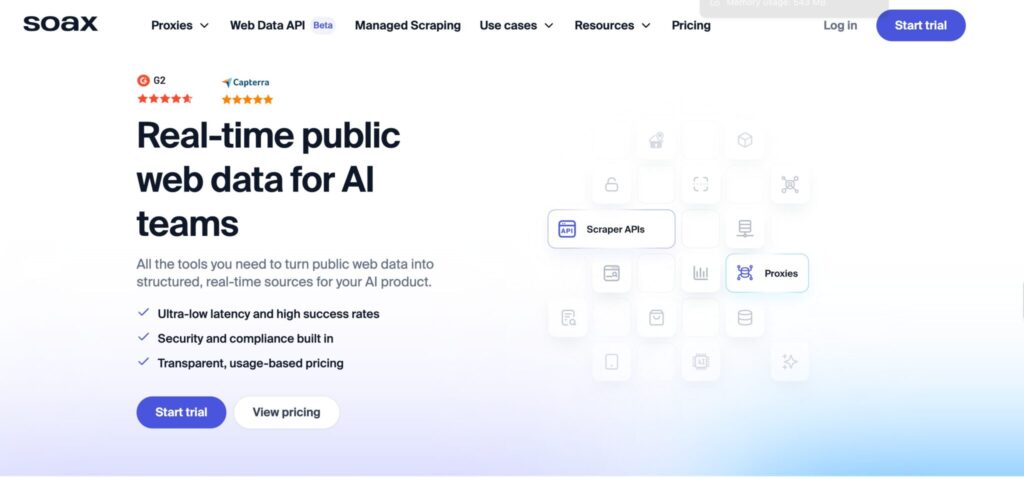
SOAX is a strong pick for buyers who want location-focused residential proxies with clear pool visibility. Its Taiwan page lists 48,360 IPs available and shows bundled access to residential proxies, mobile proxies, US datacenter proxies, and Web Data API. The Starter plan shown on the Taiwan page is $3.60/GB with 25GB included, billed at $90 monthly.
SOAX is often preferred by users who care about filtering, precise targeting, and clean user-like traffic. That makes it useful for ad verification, localized site testing, SERP checks, and structured scraping where IP quality matters more than simply getting the lowest per-GB price.
Why Choose SOAX?
SOAX sits in the middle of the market. It is not as cheap as Webshare or IPRoyal, but it gives a stronger sense of control. If you are testing Taiwanese websites and need clean residential IPs with rotation options, SOAX deserves a serious look.
SOAX Pros
- Taiwan page publishes IP count
- Good targeting controls
- Useful for ad verification and regional testing
- Residential and mobile options
- Clean dashboard experience
SOAX Cons
- Starter plan may be too large for tiny projects
- Not the cheapest provider
- Datacenter availability is more limited compared with some competitors
Pro Tip: SOAX is worth testing when your target website reacts badly to cheap datacenter IPs but you do not want to jump straight to enterprise pricing.
5. IPRoyal: Best Budget-Friendly Taiwan Residential Proxy Provider
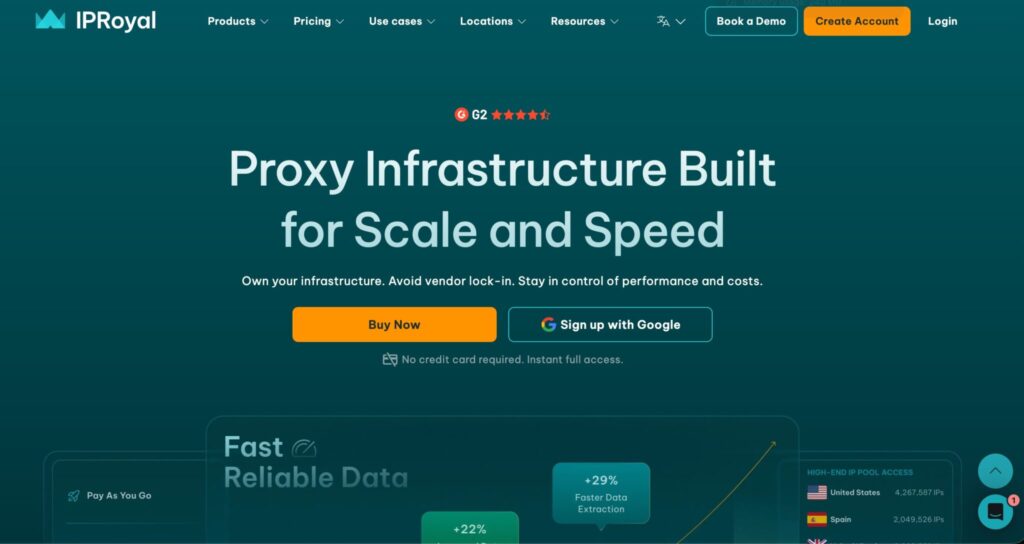
IPRoyal has become popular because it offers lower-cost proxy plans without hiding too much behind sales calls. Its Taiwan page lists 126,199 Taiwan proxies for use cases such as market analysis, price comparison, ad verification, and competitor monitoring.
Pricing is also attractive. IPRoyal lists residential proxies from $1.75/GB, datacenter proxies from $1.39/proxy, ISP proxies from $2.40/proxy, and mobile proxies from $117/month. The company also states that its rotating proxy setup supports SOCKS5, unlimited data, traffic that never expires, and city/state targeting.
Why Choose IPRoyal?
Choose IPRoyal if you want Taiwan residential proxies at a reasonable cost and do not need heavy enterprise tooling. It is especially useful for SEO freelancers, small agencies, affiliate marketers, researchers, and lightweight automation users.
IPRoyal Pros
- Clear Taiwan proxy inventory
- Good starting price for residential traffic
- Multiple proxy types
- SOCKS5 support
- Traffic never expires on residential plans
IPRoyal Cons
- May require more hands-on testing for demanding targets
- Support and analytics are not as deep as premium enterprise tools
- IP quality can vary by pool and use case
Pro Tip: IPRoyal is a strong value pick, but test multiple Taiwan IP samples before committing. Budget-friendly does not always mean lower quality, but pool variance matters.
6. Webshare: Best Cheap Taiwan Proxy Provider for Developers
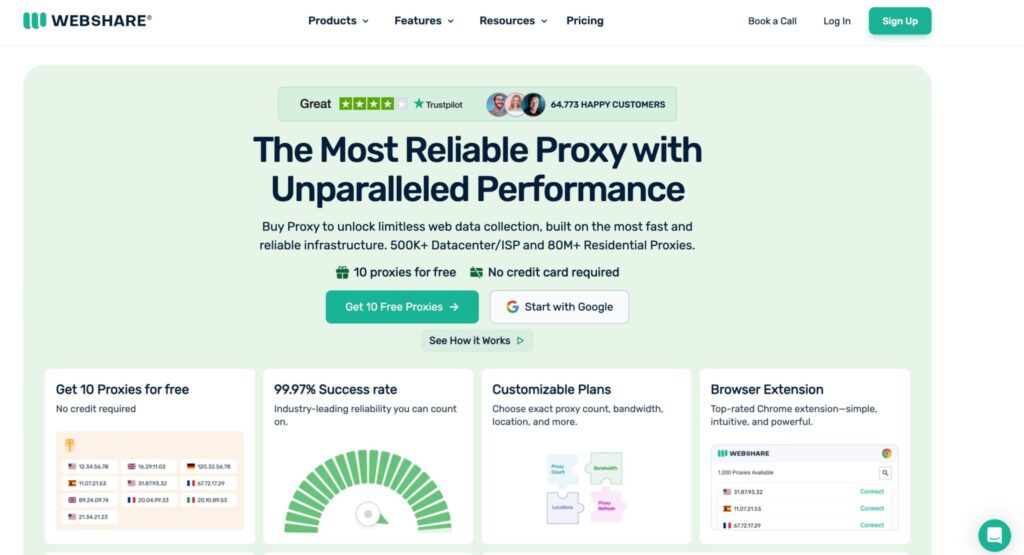
Webshare is one of the easiest providers to recommend for low-cost proxy testing. Its Taiwan page lists 489,672 proxies available in Taiwan and shows several product types, including proxy servers, rotating residential, static residential, private, and dedicated options.
The same Taiwan page lists datacenter-style proxy pricing from $0.0179/proxy and rotating residential pricing from $1.40/GB. It also claims 80M+ ethically sourced residential IPs and 99.7% uptime for rotating residential proxies.
Why Choose Webshare?
Webshare is practical. Developers like it because setup is quick, pricing is visible, and the dashboard is straightforward. If you are building scripts, testing Taiwan localization, or running low-risk data checks, Webshare can be a very cost-effective starting point.
Webshare Pros
- Large listed Taiwan proxy inventory
- Very low entry pricing
- Good dashboard and API usability
- Residential and datacenter options
- Good for developers and budget testing
Webshare Cons
- Not ideal for very sensitive or compliance-heavy workflows
- Cheap datacenter proxies may face more blocks
- Advanced targeting is not as deep as premium providers
Pro Tip: Use Webshare datacenter proxies for speed tests and simple tasks. Use rotating residential when the target site is stricter or when the traffic needs to look more like a local user.
7. NetNut: Best for High-Volume Taiwan Proxy Buyers
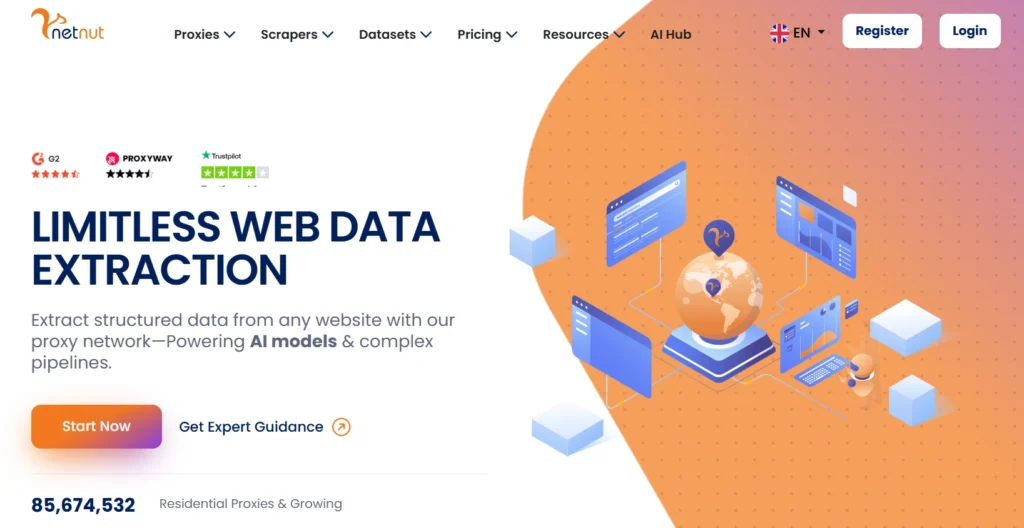
NetNut is built for buyers who need scale. Its homepage says it provides over 85M IPs worldwide, while its Taiwan proxy page lists rotating residential proxy pricing from $99 monthly for 28GB at $3.53/GB. Larger plans reduce the per-GB rate, with annual billing discounts also shown.
NetNut’s model is better suited to teams with predictable volume. If you only need 1GB for testing, the minimum plan may feel high. But if you need ongoing Taiwan traffic for data collection, monitoring, or regional automation, the higher starting point becomes less of an issue.
Why Choose NetNut?
NetNut is a good fit when you need many concurrent sessions and consistent monthly usage. It is less attractive for one-off experiments, but stronger for teams that know they will use the bandwidth.
NetNut Pros
- Large global residential network
- Taiwan-specific page and pricing
- Unlimited connections across packages
- Good for high-volume use
- Strong business data collection positioning
NetNut Cons
- $99 monthly entry point is not ideal for casual users
- Less flexible for very small tests
- Interface and setup may suit technical teams more than beginners
Pro Tip: NetNut makes more sense after you already know your Taiwan proxy workload. Use a cheaper test provider first if you are still validating target behavior.
8. Rayobyte: Best for Ethical Scraping and Mixed Proxy Needs
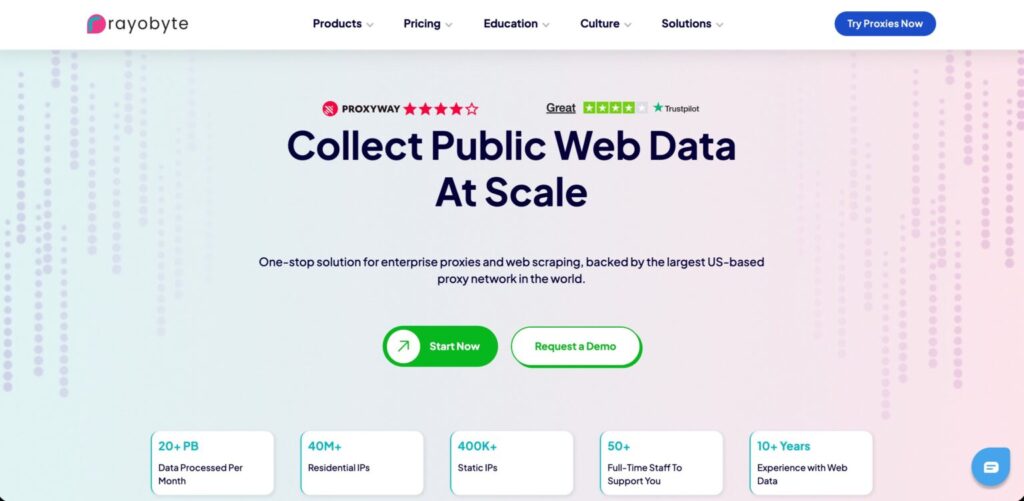
Rayobyte publishes a Taiwan proxy page with rotating residential proxies starting from $3/GB per month and dedicated datacenter proxies starting from $2.50/IP per month. It also mentions API access and coverage across 100+ countries.
The provider is often a good match for teams that want a clear, business-friendly proxy partner without going fully enterprise. It also offers residential proxy pricing that scales by traffic, with broader residential plans starting at $3.50/GB for 1GB to 49GB on its pricing page.
Why Choose Rayobyte?
Rayobyte is useful when you want both residential and datacenter choices. For Taiwan workflows, that means you can test cheaper datacenter proxies first, then move to rotating residential if blocks become an issue.
Rayobyte Pros
- Taiwan proxy page available
- Residential and datacenter options
- Transparent starting prices
- API access
- Good for public data collection workflows
Rayobyte Cons
- Residential pricing is not the lowest
- Some use cases may need sales guidance
- Smaller network than the biggest enterprise providers
Pro Tip: Rayobyte is a smart choice for mixed workloads. Use datacenter IPs for high-speed, low-friction targets and residential IPs for tougher sites.
9. Infatica: Best for Flexible Taiwan Residential Proxy Testing
Infatica has one of the clearer Taiwan proxy pages in this category. It lists more than 50,000 Taiwan IP addresses and mentions city coverage such as Taipei, Kaohsiung City, Taichung, Tainan City, Hsinchu, Taoyuan, Keelung, and Hualien City. It also supports HTTP/SOCKS proxies, IP rotation, unlimited concurrent sessions, and residential ISP routing.
Pricing is fairly flexible. The Taiwan page lists pay-as-you-go at $4/GB, 25GB at $96, 100GB at $360, 241GB at $700, 500GB at $1,350, and 1,000GB at $2,600. It also mentions login/password and IP whitelist authentication, rotation time selection, country/city/ZIP targeting, and 99.9% uptime.
Why Choose Infatica?
Infatica is worth testing if you need Taiwan residential proxies and want more location clarity than many mid-market providers offer. Its pricing is not the cheapest, but the Taiwan-specific details are useful.
Infatica Pros
- 50,000+ Taiwan IPs listed
- Taiwan city coverage shown
- PAYG option
- SOCKS support
- Rotation time selection
Infatica Cons
- PAYG is pricier than some budget rivals
- Best results depend on target site testing
- Some users may prefer a simpler dashboard
Pro Tip: Infatica is a good option when city-level Taiwan testing matters. If your campaign needs Taipei-specific checks, ask support to confirm current targeting accuracy before buying a larger plan.
10. Proxy-Seller: Best for Static ISP and SOCKS5 Taiwan Workflows
Proxy-Seller is useful for buyers who want static ISP proxies, SOCKS5 support, and mixed proxy products. Its residential proxy page states that it offers 20M+ residential IPs across 220+ countries and regions, with country, region, city, and ISP selection. It also lists three rotation modes: time-based, per-request, and sticky mode.
For Taiwan specifically, its ISP proxy page lists Taiwan among supported ISP locations. That makes Proxy-Seller a stronger candidate for static Taiwan ISP workflows than for users who need a clearly published Taiwan residential pool size.
Why Choose Proxy-Seller?
Choose Proxy-Seller if your workflow needs static identities, SOCKS5, and predictable IP behavior. It can work well for tools that need the same IP for longer periods instead of constantly rotating.
Proxy-Seller Pros
- Taiwan listed for ISP proxies
- SOCKS5 and HTTP(S) support
- Sticky, per-request, and time-based rotation
- ISP and residential products
- Good for static identity workflows
Proxy-Seller Cons
- Taiwan residential inventory is not as clearly published as some competitors
- Some plans may require support or manager contact
- Not as beginner-friendly as Webshare or Decodo
Pro Tip: Proxy-Seller is best when you need stable Taiwan ISP identity. For heavy scraping, compare it against residential providers before scaling.
How to Choose the Best Taiwan Proxy Provider
Choosing Taiwan proxies is not about picking the biggest provider name. It is about matching proxy type, pool quality, session behavior, and price to your actual job.
Step 1: Pick the Right Proxy Type
Residential proxies are best when the target website is sensitive to datacenter IPs. They route through IPs associated with real residential networks, which can look more natural to many websites.
Datacenter proxies are best for speed and cost. They work well for low-protection sites, simple browsing, bulk testing, and tasks where price matters more than user-like IP reputation.
ISP proxies sit between residential and datacenter proxies. They are usually static, fast, and associated with internet service providers. Use them when you need a stable Taiwan identity.
Mobile proxies are best for mobile app testing, social media checks, mobile ad verification, and workflows where carrier-level traffic matters.
Step 2: Check Taiwan Pool Size, but Do Not Worship It
A provider with 500,000 listed Taiwan IPs is not automatically better than one with 50,000. Pool quality matters more than the headline number.
Look at:
- How many IPs are actually online
- Whether IPs repeat too often
- ASN diversity
- City accuracy
- Ban rate on your target site
- CAPTCHA frequency
- Average response time
- Success rate under concurrency
Pro Tip: Ask for a small sample and test 100 to 500 requests against your real target. A proxy that looks clean on an IP checker may still fail under load.
Step 3: Understand Rotation Protocols
Rotation can make or break a Taiwan proxy setup.
Per-request rotation gives you a new IP for every request. This is useful for large scraping jobs, but it can break session-based flows.
Sticky sessions keep the same IP for a set time. Use this for logins, carts, dashboards, social platforms, and account management.
Time-based rotation changes the IP after a set interval, such as 1 minute, 10 minutes, or 30 minutes. This is useful when you need a balance between identity consistency and block avoidance.
For Taiwan proxies, sticky sessions often work better for ad verification and app testing, while per-request rotation is better for large public data collection.
Step 4: Check Protocol Support
Most web scraping and browsing tasks work fine with HTTP(S). But SOCKS5 is useful when you need broader app-level support or non-browser traffic.
If your stack includes tools like Puppeteer, Playwright, GoLogin, Multilogin, AdsPower, custom Python scripts, or mobile testing environments, confirm compatibility before buying.
Step 5: Test Before Scaling
A proper proxy test should include:
- 50 to 100 IPs or enough traffic for a real sample
- Your actual target domains
- Several concurrency levels
- At least 24 hours of testing
- Success rate tracking
- CAPTCHA and block tracking
- Response time tracking
- ASN and city accuracy checks
Do not choose based on homepage claims alone. Proxy performance is target-specific.
Best Taiwan Proxy Provider by Buyer Type
Best for Enterprises: Bright Data or Oxylabs
Both are strong for serious commercial use. Pick Bright Data if you want deep targeting and platform controls. Pick Oxylabs if your focus is enterprise data collection with strong account support.
Best for Agencies: Decodo or SOAX
Decodo is easier to use and flexible. SOAX is strong when filtering and clean residential traffic matter more.
Best for Budget Buyers: IPRoyal or Webshare
IPRoyal gives strong value for residential traffic. Webshare is excellent for low-cost testing and developer-friendly proxy access.
Best for High-Volume Users: NetNut
NetNut’s pricing structure makes more sense when you already know you need recurring bandwidth.
Best for Static Sessions: Proxy-Seller or IPRoyal ISP
Use static ISP proxies when your task needs a stable Taiwan identity rather than constant rotation.
FAQs About Taiwan Proxy Providers
1. What is a Taiwan proxy?
A Taiwan proxy is a proxy server or proxy IP that routes your connection through Taiwan. To websites, apps, and platforms, your request appears to come from a Taiwan-based IP address instead of your real location.
2. Are Taiwan proxies legal?
Taiwan proxies are legal when used for lawful purposes such as privacy, ad verification, SEO monitoring, app testing, market research, and public data collection. The risk usually comes from how proxies are used. Avoid credential abuse, spam, fraud, unauthorized access, or violating a platform’s rules.
3. Which Taiwan proxy type is best for web scraping?
Residential proxies are usually the safest choice for stricter sites because they look more like real local users. Datacenter proxies can work well for less protected websites and are cheaper. For serious scraping, test both and compare success rate, speed, and block frequency.
4. Are free Taiwan proxies safe?
Free proxies are risky. Many are slow, overloaded, unstable, or poorly secured. Some may log traffic or inject ads. For business work, paid private proxies are safer because you get authentication, support, usage controls, and more predictable performance.
5. Should I use rotating or sticky Taiwan proxies?
Use rotating proxies for large-scale scraping and public data collection. Use sticky sessions when the workflow needs identity consistency, such as login flows, shopping carts, dashboards, app testing, and ad verification.
6. How much do Taiwan proxies cost?
Pricing varies by provider and proxy type. Budget residential providers may start around $1.40 to $1.75/GB, while premium providers may start around $4 to $8/GB. Datacenter proxies are usually cheaper per IP, while mobile and ISP proxies can cost more depending on location and plan.
7. Which provider has the largest listed Taiwan proxy pool?
Among the providers checked, Webshare lists 489,672 Taiwan proxies, IPRoyal lists 126,199 Taiwan proxies, SOAX lists 48,360 Taiwan IPs, and Infatica lists over 50,000 Taiwan IP addresses. Pool size changes over time, so test availability before buying.
8. Are Taiwan mobile proxies worth it?
Taiwan mobile proxies are worth it if you are testing mobile apps, mobile ads, carrier-specific content, or social media workflows. For standard scraping or SEO checks, residential or ISP proxies are usually more cost-effective.
9. What is the best Taiwan proxy provider overall?
For enterprise use, Bright Data and Oxylabs are the strongest picks. For most agencies and SEO users, Decodo or SOAX offer a better balance. For budget users, IPRoyal and Webshare are easier to justify. The best choice depends on your target sites, bandwidth needs, and required session control.
Final Verdict: Which Taiwan Proxy Provider Should You Choose?
If you want the safest premium choice, start with Bright Data or Oxylabs. Both are built for professional data teams that need strong infrastructure, support, and controls.
If you want a more balanced option, Decodo is probably the easiest recommendation. It offers strong global coverage, Taiwan support, good usability, and pricing that feels more approachable than the enterprise-only platforms.
If price matters most, test IPRoyal and Webshare first. IPRoyal is better for low-cost residential traffic, while Webshare is great for cheap Taiwan proxy lists and developer testing.
If your project depends on filtering, clean rotation, and location precision, SOAX and Infatica are worth testing. If you already know you need larger recurring volume, NetNut becomes more attractive. For static Taiwan identity, Proxy-Seller and ISP-style plans can make sense.
The smart move is simple: shortlist two or three providers, buy the smallest useful test plan, and run them against your real target. Taiwan proxy performance is not theoretical. The provider that wins on your actual target site is the one you should scale.