
Best Vietnam Proxy Providers
Vietnam is one of those proxy locations that looks simple from the outside, but gets tricky once you start using it at scale.
A few random Vietnam IPs may work for checking a local landing page or opening a Vietnamese search result. But if you are scraping local ecommerce listings, testing ads in Hanoi and Ho Chi Minh City, monitoring SERPs, checking localized pricing, or running account based workflows, the quality of the proxy network matters a lot.
The problem is that most providers advertise “Vietnam proxies,” but not all Vietnam proxy pools behave the same way. Some have real residential IPs. Some only offer datacenter IPs. Some rotate aggressively. Some let you hold sticky sessions. Some have strong targeting, while others only let you select the country.
So, this guide is built for buyers who want practical answers. Not a random list. Not a copy paste roundup.
Below, I’ll break down the best Vietnam proxy providers based on pool strength, proxy types, rotation control, targeting options, pricing style, and the kind of user each provider fits best.
Quick Verdict: Best Vietnam Proxy Providers
| Rank | Provider | Best For | Vietnam Proxy Types | Key Strength | Pricing Style | Best Buyer Fit |
|---|---|---|---|---|---|---|
| 1 | Oxylabs | Enterprise scraping and ad verification | Residential, datacenter | Huge Vietnam pool and strong reliability | Premium usage based | Teams that need scale |
| 2 | Bright Data | Advanced targeting and compliance focused data collection | Residential, mobile, ISP, datacenter | Full proxy stack with strong tooling | Premium usage based | Agencies, enterprises, data teams |
| 3 | Decodo | Best balance of price, usability, and performance | Residential | City targeting, sticky sessions, easy setup | Mid range | SMBs, SEO teams, developers |
| 4 | Webshare | Budget Vietnam proxies | Residential, proxy servers depending on plan | Low cost, simple dashboard | Cheap self serve plans | Solo users and small teams |
| 5 | IPRoyal | Affordable residential proxies with flexible sessions | Residential, datacenter | Good price, browser tools, sticky sessions | Budget to mid range | Marketers and small scrapers |
| 6 | DataImpulse | Cheap residential traffic | Residential, premium residential, mobile, datacenter | Low starting price and rotation control | Very budget friendly | High volume buyers watching cost |
| 7 | NetNut | Stable business grade residential proxies | Residential, mobile, static residential, datacenter | Direct ISP style network positioning | Business focused | Larger scraping teams |
| 8 | ProxyEmpire | Targeting depth and flexible residential use | Residential, mobile, static residential | City, region, ISP targeting | Mid range | Market research and local testing |
| 9 | Infatica | Flexible mixed proxy stack | Residential, mobile, ISP, datacenter | Multiple proxy products and paid trial options | Mid range | Teams needing flexible proxy types |
What Are Vietnam Proxies?
Vietnam proxies route your internet requests through IP addresses based in Vietnam. To a website, app, search engine, or ad platform, your traffic appears to come from a Vietnamese user instead of your actual location.
That matters when the content changes by country, city, carrier, or user type.
For example, a travel site may show different prices to users in Vietnam. A marketplace may rank sellers differently for Vietnamese visitors. A search engine may return different results for “best laptop deals” in Ho Chi Minh City compared with Singapore or India. A brand may want to verify whether its ads appear correctly in Hanoi.
Vietnam proxies help with:
- Local SEO tracking
- Ad verification
- Ecommerce price monitoring
- Travel fare aggregation
- App localization testing
- Social media research
- Public web scraping
- Competitor research
- Fraud detection testing
- Market research in Vietnamese search results
The key is choosing the right type of Vietnam proxy.
Residential proxies come from real user devices and home internet connections. Datacenter proxies come from hosting infrastructure and are usually faster, cheaper, and easier to detect. Oxylabs explains the same basic distinction: residential IPs originate from real home internet networks, while datacenter IPs come from physical or cloud data centers.
For sensitive or heavily protected targets, residential proxies usually perform better. For speed focused tasks on less protected sites, datacenter proxies can still make sense.
Detailed Reviews of the Best Vietnam Proxy Providers
1. Oxylabs: Best Vietnam Proxy Provider for Enterprise Scraping
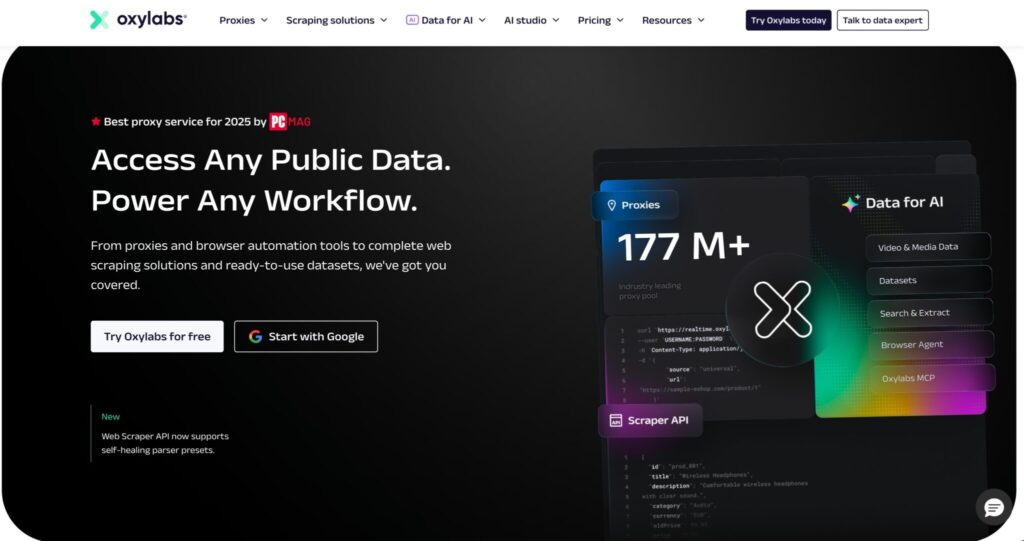
Oxylabs is one of the safest picks if your main concern is scale. Its Vietnam proxy page lists 6,448,186 IPs, which is a strong signal for teams that need more than a tiny local pool. Oxylabs also offers Vietnam residential and datacenter proxies, with residential pricing listed from $8 per GB and success rates of up to 99.95% on its Vietnam location page.
The real reason to choose Oxylabs is not just the number of IPs. It is the full enterprise setup around the network. You get rotating residential proxies, datacenter options, scraping tools, analytics, and support that fits larger data collection workflows.
For Vietnam, Oxylabs makes sense when you are scraping local ecommerce sites, monitoring review platforms, running ad verification, or collecting market data where failed requests cost money.
Pros
- Large Vietnam IP pool
- Residential and datacenter options
- Good for high volume scraping
- Strong infrastructure for enterprise teams
- Useful for ad verification, travel, reviews, and cybersecurity use cases
Cons
- More expensive than budget providers
- May be too much for small one off projects
- Best value appears when you use it seriously, not casually
Pro Tip
Use Oxylabs when failure rate matters more than saving a few dollars per GB. If your crawler is collecting business critical data from Vietnamese websites, cheap proxies can become expensive very quickly through retries, bans, and incomplete data.
2. Bright Data: Best for Advanced Vietnam Targeting and Proxy Variety
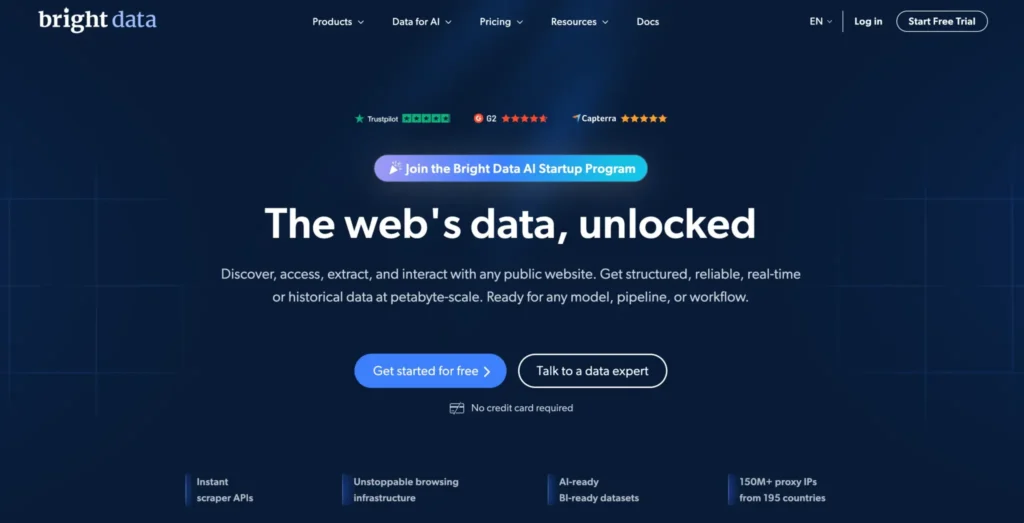
Bright Data is the provider I would look at when a basic Vietnam residential proxy is not enough. Its Vietnam page says users can rotate between four Vietnamese proxy types: residential, mobile, ISP, and datacenter. That mix is valuable because different tasks need different IP behavior.
For example, residential proxies are useful for scraping and local browsing. Mobile proxies can help with mobile first platforms and app testing. ISP proxies are better when you need a stable IP that still looks closer to a real user network. Datacenter proxies are better when speed and cost matter more than stealth.
Bright Data also advertises a very large global residential network and advanced targeting options across countries, cities, carriers, and ASNs. Its broader proxy location page says it offers residential proxies in 195 countries, datacenter proxies in 98 countries, and ISP proxies in 35 countries.
This is not the simplest provider for a beginner, and it is not usually the cheapest. But for serious teams, Bright Data gives more control than most competitors.
Pros
- Residential, mobile, ISP, and datacenter options for Vietnam
- Strong targeting controls
- Large global network
- Good for advanced scraping and market research
- Strong tooling beyond raw proxies
Cons
- Premium pricing
- More complex setup than beginner friendly platforms
- Some small users may find the dashboard and compliance flow heavier than needed
Pro Tip
If you need to test how a Vietnamese mobile user sees an app, ad, or mobile site, do not default to datacenter proxies. Use mobile or residential Vietnam IPs where possible because the traffic pattern looks closer to a normal user.
3. Decodo: Best Value Vietnam Proxy Provider for Most Teams
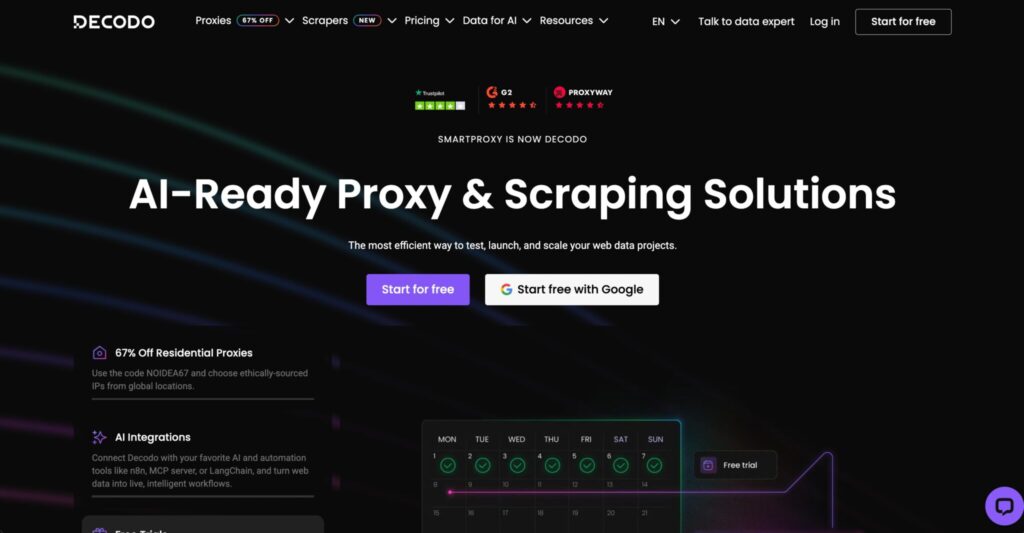
Decodo, formerly Smartproxy, sits in the sweet spot between enterprise grade providers and budget proxy sellers. Its Vietnam proxy page mentions city targeting, unlimited connections, HTTP(S) and SOCKS5 support, rotating and sticky sessions, and a global pool of 125M+ rotating IPs across 195 locations. The same page also lists 99.99% uptime and sub second average response claims.
That makes Decodo a strong choice for SEO teams, affiliate marketers, local SERP trackers, developers, QA testers, and data teams that need reliable Vietnam IPs without jumping straight into enterprise pricing.
The dashboard is easier to use than many premium platforms. You can generate endpoints, select locations, manage sessions, and plug the proxies into scraping tools, browsers, or automation stacks.
Pros
- Strong balance of price and performance
- Vietnam city targeting
- Sticky and rotating session options
- HTTP(S) and SOCKS5 support
- Good interface for non enterprise users
Cons
- Not as enterprise heavy as Oxylabs or Bright Data
- Power users may want deeper infrastructure controls
- Pricing can still climb with larger traffic volumes
Pro Tip
For most Vietnam SEO tracking or ecommerce monitoring projects, start with Decodo before moving to a more expensive provider. If your success rate is healthy and the session controls fit your stack, you may not need to overpay.
4. Webshare: Best Budget Vietnam Proxy Provider
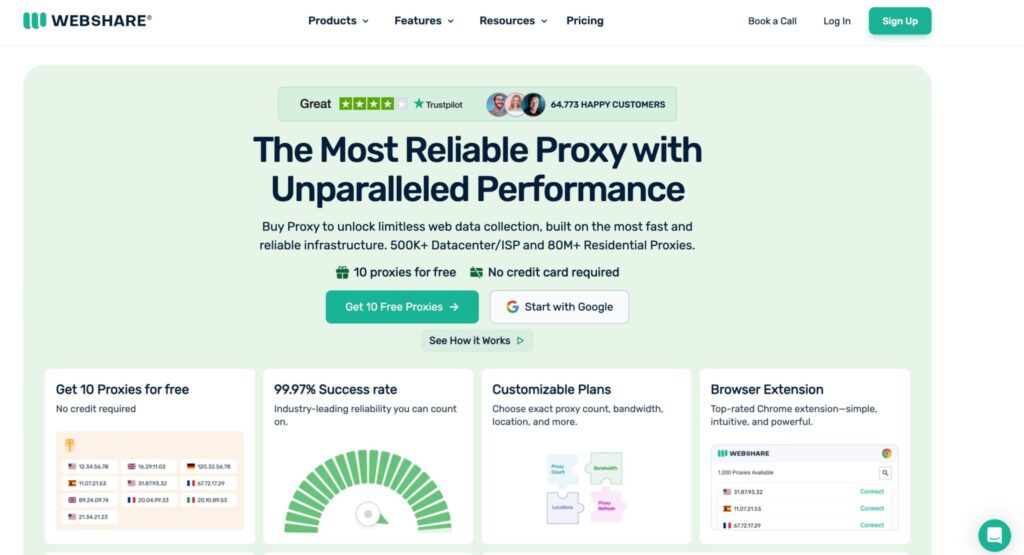
Webshare is a smart pick if you want affordable Vietnam proxies with a clean self service setup. Its Vietnam page lists 410,806 online IPs in Vietnam and pricing from $0.029 per proxy, with Vietnam residential proxy pricing shown from $7 per month for 1 GB.
That is attractive for smaller projects, testing, browser based workflows, and users who want a cheaper way to access Vietnamese IPs.
Webshare is not as feature rich as Bright Data, Oxylabs, or Decodo. You should not expect the same level of advanced scraping APIs, enterprise support, or deep targeting logic. But for basic Vietnam access and lightweight workloads, the value is hard to ignore.
Pros
- Very affordable
- Simple dashboard
- Good for small projects and testing
- Free starting option is useful for evaluation
- Large listed Vietnam proxy count for the price range
Cons
- Less advanced than premium providers
- Support and scraping tools are more limited
- Not ideal for heavily protected targets
Pro Tip
Use Webshare for first stage validation. If you only need to confirm that your Vietnamese landing pages, search results, or localized content render correctly, it may do the job without burning budget.
5. IPRoyal: Best Affordable Vietnam Residential Proxy Option
IPRoyal is popular with users who want residential proxies without enterprise pricing. Its Vietnam location page lists more than 460,172 unique IPs and mentions 99.9% uptime, plus browser proxy managers and a proxy tester.
The broader IPRoyal site lists residential proxies from $1.75 per GB, a 32M+ proxy pool, and ISP proxies from $2 per proxy.
IPRoyal is especially useful for marketers, small scraping teams, social research, ad checks, and users who need sticky sessions without paying premium enterprise rates. Its non expiring residential bandwidth model is also a draw for users who do not consume traffic at a predictable pace.
Pros
- Affordable residential proxy pricing
- Good Vietnam IP count
- Sticky and rotating session support
- Browser tools are useful for manual work
- Good fit for small and mid sized users
Cons
- Smaller global pool than the largest enterprise providers
- Not always the first choice for very difficult targets
- Support experience can vary depending on use case and plan
Pro Tip
If your workload includes logins, dashboards, or repeated visits, test sticky sessions before scaling. A Vietnam proxy that changes too often can break workflows that expect a consistent user session.
6. DataImpulse: Best Cheap Vietnam Residential Proxies
DataImpulse is one of the strongest budget picks for residential traffic. Its Vietnam residential proxy page mentions real IPs, 99.9% uptime, city level targeting, rotation by time interval or per new request, API access, and sticky sessions up to 30 minutes. It also lists a competitive price of $1 per 1 GB.
Its broader location pricing page shows residential proxies from $1 per GB, mobile proxies from $2 per GB, datacenter proxies from $0.5 per GB, and premium residential proxies from $5 per GB.
This is a good option for teams that want to test Vietnam data collection without committing to a large monthly contract. It also works well for high volume users who care deeply about cost per GB.
Pros
- Very low residential pricing
- Rotation by request or time interval
- Sticky sessions up to 30 minutes
- City targeting
- API access
Cons
- Not as mature as older premium providers
- Quality can vary by target and traffic pattern
- Enterprise support depth may not match top tier networks
Pro Tip
With cheap residential providers, always run a small test against your real Vietnamese targets. Do not judge only by price. Measure success rate, response time, CAPTCHA frequency, and ban rate across at least a few thousand requests.
7. NetNut: Best for Business Grade Residential Proxy Stability
NetNut is a business focused proxy provider with a strong reputation around residential and ISP style proxy networks. Its site lists 85M+ residential IPs across 195+ countries, plus mobile, static residential, and datacenter proxy options.
Its Vietnam proxy page is positioned around local access, market research, security, and residential IP routing.
NetNut is a good fit when you want a more stable business grade provider but do not necessarily need the heavier tooling of Bright Data. It is especially relevant for teams scraping at scale, verifying localized experiences, or running recurring data pipelines.
Pros
- Strong business focused proxy positioning
- Large global residential pool
- Residential, mobile, static residential, and datacenter options
- Useful for recurring scraping workflows
- Good fit for teams that want stable infrastructure
Cons
- Vietnam specific pool size is not as clearly presented as Oxylabs or Webshare
- Less beginner friendly than some self serve platforms
- Pricing may be better suited to business buyers than hobby users
Pro Tip
NetNut is worth testing when latency and session stability are more important than having the absolute cheapest bandwidth. That matters for scraping workflows where retries can quietly destroy your real cost per successful request.
8. ProxyEmpire: Best for Targeting Flexibility
ProxyEmpire is a good option for users who care about targeting. Its homepage says it offers 30M+ ethically sourced rotating residential proxies with targeting by country, region, city, ISP, and mobile carrier. It also supports HTTP, HTTPS, and SOCKS5.
That targeting depth is useful for Vietnam because not every project needs a generic Vietnam IP. Sometimes you want Ho Chi Minh City. Sometimes Hanoi. Sometimes you need a specific ISP type. Sometimes you are testing how a mobile audience sees localized content.
ProxyEmpire also offers static residential and mobile proxy options, which helps when workflows require either stable sessions or mobile style access.
Pros
- Strong targeting options
- Residential, static residential, and mobile proxy choices
- HTTP, HTTPS, and SOCKS5 support
- Good for market research and localized testing
- Useful for teams that need more than country level targeting
Cons
- Smaller pool than the biggest enterprise providers
- Not always the cheapest
- Best value depends on how much you use targeting
Pro Tip
Do not pay for granular targeting unless you actually need it. If country level Vietnam access is enough, a cheaper provider may work. If your results differ by city or ISP, ProxyEmpire becomes much more useful.
9. Infatica: Best Flexible Vietnam Proxy Stack
Infatica is another solid option for buyers who want flexibility. Its Vietnam page positions the service around residential IP based Vietnam access, while its main site lists multiple products, including static ISP IPs, mobile IPs, shared datacenter IPs, and dedicated datacenter IPs.
Infatica’s pricing page lists residential pay as you go at $4 per GB, with larger bandwidth plans reducing the per GB rate.
That puts Infatica in the mid range. It is not the cheapest option here, but it gives a useful mix of proxy types for businesses that may need residential traffic today and mobile or ISP style proxies later.
Pros
- Residential, mobile, ISP, and datacenter products
- Pay as you go residential option
- Flexible plans for different project sizes
- Useful for businesses that need mixed proxy types
- Good fit for testing before scaling
Cons
- Residential pricing is higher than budget providers
- Vietnam specific numbers are less transparent
- Interface and product selection may take some time for beginners
Pro Tip
Infatica is worth considering if you need multiple proxy types under one account. If you only need the cheapest Vietnam residential traffic, DataImpulse or IPRoyal may be more cost efficient.
How to Choose the Best Vietnam Proxy Provider
1. Match Proxy Type to the Job
Do not buy proxies based only on country availability.
Use residential Vietnam proxies for scraping, SERP tracking, ad verification, localized browsing, and platforms that block datacenter traffic.
Use datacenter Vietnam proxies for faster, cheaper access to less protected websites.
Use ISP proxies when you need stable long sessions with better trust than regular datacenter IPs.
Use mobile proxies when your target behaves differently for mobile carrier traffic, app testing, or mobile first platforms.
2. Check the Vietnam IP Pool, Not Just Global Pool Size
A provider may advertise 100M+ global IPs, but that does not mean it has deep Vietnam coverage. Vietnam specific pool size matters because a shallow pool can lead to repeated IP reuse, higher block rates, and poor rotation quality.
Oxylabs and Webshare are more transparent here, listing Vietnam specific pool numbers. Oxylabs lists 6.4M+ Vietnam IPs, while Webshare lists 410K+ online Vietnam IPs.
3. Understand Rotation Protocols
Rotation is where many proxy buyers make mistakes.
Per request rotation changes the IP after every request. This is useful for large scraping jobs where each request is independent.
Sticky sessions keep the same IP for a fixed time. This is useful for logins, carts, dashboards, forms, and workflows where the website expects the same visitor to continue.
Time based rotation changes the IP every few minutes. This can work well for crawling category pages, price monitoring, or search results.
Custom rotation gives you more control, but it also requires better setup.
For Vietnam projects, I usually prefer sticky sessions for account based tasks and per request rotation for public page scraping.
4. Look at Targeting Depth
Country level targeting is enough for simple Vietnam access.
City level targeting is better for local SEO, ads, and market research.
ISP or ASN targeting is useful when testing network specific behavior.
Carrier targeting matters for mobile proxy work.
Decodo, Bright Data, ProxyEmpire, and DataImpulse are good options when targeting depth matters.
5. Measure Real Cost Per Successful Request
A proxy that costs $1 per GB is not always cheaper than a proxy that costs $8 per GB.
Here is why.
If the cheaper proxy gets blocked often, your crawler sends more retries. More retries consume more bandwidth, more compute, and more time. You may also get incomplete data.
So, test:
- Success rate
- CAPTCHA frequency
- Average response time
- Timeout rate
- Ban rate
- Cost per 1,000 successful pages
- Sticky session stability
- Target specific performance
This is the only way to compare Vietnam proxy providers fairly.
6. Avoid Free Vietnam Proxies for Business Work
Free proxy lists look tempting, especially when you only need a quick Vietnam IP. But free proxies are usually slow, unstable, overused, and risky. They may disappear mid session. They may leak data. They may already be blocked by your target sites.
Use free proxies only for harmless testing. Do not use them for logins, business data, client work, ad verification, or serious scraping.
Best Vietnam Proxy Provider by Use Case
| Use Case | Best Pick | Why |
|---|---|---|
| Enterprise scraping | Oxylabs | Strong Vietnam pool and business grade reliability |
| Advanced targeting | Bright Data | Multiple Vietnam proxy types and deep controls |
| Best value for most teams | Decodo | Strong features without extreme complexity |
| Cheapest testing | Webshare | Low entry cost and simple setup |
| Budget residential proxies | IPRoyal | Affordable traffic and flexible sessions |
| Low cost high volume traffic | DataImpulse | Very low per GB pricing |
| Stable business proxy workflows | NetNut | Strong residential network positioning |
| City and ISP targeting | ProxyEmpire | Targeting flexibility |
| Mixed proxy types | Infatica | Residential, mobile, ISP, and datacenter options |
FAQs About Vietnam Proxy Providers
1. What is the best Vietnam proxy provider overall?
Oxylabs is the best overall pick for enterprise grade Vietnam proxies because it lists a large Vietnam IP pool and supports residential and datacenter options. For most smaller teams, Decodo may be the better value because it offers strong targeting, sticky sessions, and easier setup.
2. Are Vietnam residential proxies better than datacenter proxies?
For most scraping, SEO, ad verification, and local testing tasks, yes. Residential proxies look like traffic from real internet users, so they are usually harder to detect. Datacenter proxies are faster and cheaper, but they are easier for websites to flag.
3. Which provider has the cheapest Vietnam proxies?
Webshare and DataImpulse are two of the strongest budget options. Webshare lists Vietnam proxy pricing from $0.029 per proxy, while DataImpulse lists residential proxy traffic from $1 per GB.
4. Can I use Vietnam proxies for Google search results?
Yes, but use residential proxies if accuracy matters. Search results can vary by country, city, language, device, and account state. For SERP tracking, city level targeting and clean residential IPs usually produce better local signals than generic datacenter IPs.
5. Do Vietnam proxies support SOCKS5?
Many major providers support SOCKS5, but not always on every product. Decodo and ProxyEmpire both mention SOCKS5 support on their pages.
6. Are Vietnam proxies legal?
Buying and using proxies is generally legal, but what you do with them matters. Use proxies for lawful tasks like public web data collection, ad verification, testing, and market research. Do not use proxies for account abuse, fraud, hacking, bypassing private access controls, or violating platform rules.
7. What is the difference between rotating and sticky Vietnam proxies?
Rotating proxies change IPs automatically, often after every request or after a set time. Sticky proxies keep the same IP for a session. Use rotating proxies for large public scraping jobs. Use sticky proxies for logins, carts, dashboards, and workflows that need continuity.
8. Which Vietnam proxy provider is best for beginners?
Webshare is easiest for basic budget use. Decodo is better if you want a beginner friendly platform with more serious scraping features. IPRoyal is also a good option if you want affordable residential proxies and simple tools.
9. Which provider should I choose for ad verification in Vietnam?
Oxylabs, Bright Data, Decodo, and NetNut are the strongest choices for ad verification. They offer better reliability, cleaner IP options, and stronger targeting than most cheap proxy providers.
Final Verdict: Which Vietnam Proxy Provider Should You Choose?
Choose Oxylabs if you need the strongest Vietnam proxy setup for enterprise scraping, review monitoring, ad verification, or high volume public data collection.
Choose Bright Data if you need advanced controls, multiple proxy types, and deeper targeting for complex Vietnam workflows.
Choose Decodo if you want the best balance of usability, price, and reliable Vietnam residential proxies.
Choose Webshare if you need cheap Vietnam proxies for testing, lightweight browsing, or small projects.
Choose IPRoyal if you want affordable residential proxies with useful sticky session options.
Choose DataImpulse if your main goal is low cost residential traffic and you are comfortable testing quality before scaling.
Choose ProxyEmpire if city, ISP, or carrier targeting is central to your Vietnam research.
The safest buying approach is simple: shortlist two providers, test them against your real Vietnamese targets, and track success rate, speed, CAPTCHA frequency, and cost per successful request. Proxy quality is not universal. A provider that works beautifully for local SERP tracking may struggle on ecommerce scraping, and the reverse can also happen.
For most professional buyers, I would start with Decodo for balanced value, test Oxylabs if scale matters, and keep Webshare or DataImpulse as budget alternatives for less sensitive workloads.