
Amazon is not a simple website to work with.
It has localized storefronts, dynamic pricing, third party sellers, sponsored placements, buy box changes, regional availability, delivery estimates, review visibility, and product pages that can look different depending on where the visitor is browsing from. That is why serious ecommerce teams, pricing analysts, affiliate marketers, SEO teams, and marketplace researchers often look for reliable proxies for Amazon related workflows.
But here is the catch.
A cheap proxy list is usually worse than no proxy at all. Amazon is sensitive to low quality traffic, abused IPs, messy request patterns, and suspicious automation. If you are collecting public marketplace intelligence, checking ad placements, validating regional product visibility, monitoring your own listings, or testing localized experiences, the quality of your proxy network matters more than the headline price.
This guide focuses on legitimate Amazon use cases, not account abuse, fake reviews, checkout automation, credential attacks, or bypassing platform rules. For product data, Amazon’s official Product Advertising API gives approved Associates access to Amazon product information, and the Selling Partner API helps sellers programmatically access their own business data such as orders, shipments, payments, and listings.
What Are Amazon Proxies?
Amazon proxies are proxy servers used to route internet requests through different IP addresses when accessing Amazon pages, tools, or public marketplace data from different regions.
For example, a brand may want to check whether a product appears differently in the US, UK, India, Germany, or Canada. A pricing team may need to monitor public price changes across local Amazon marketplaces. An advertiser may want to verify if sponsored listings appear correctly in a target city or country.
The proxy itself does not magically make bad automation safe. It simply changes the network path and visible IP address. The real difference comes from proxy type, IP reputation, session control, location accuracy, request discipline, and compliance.
Best Proxies For Amazon: Quick Comparison Table
| Provider | Best For | Proxy Types | Publicly Claimed Pool Size | Rotation Control | Location Targeting | Pricing Style | Best Fit |
|---|---|---|---|---|---|---|---|
| Bright Data | Enterprise Amazon research | Residential, ISP, datacenter, mobile | 400M+ monthly residential IPs | Advanced sticky and rotating sessions | Country, city, ZIP, ASN | Premium, bandwidth based | Large teams needing control |
| Oxylabs | Scalable data collection | Residential, ISP, datacenter, mobile | 175M+ residential IPs | Auto rotation, sticky sessions | 195 locations, city and ZIP level options | Premium, volume based | Enterprise scraping and analytics |
| Decodo | Balanced value and usability | Residential, ISP, mobile, datacenter | 125M+ IPs | Sticky and rotating sessions | 195 locations | Usage based | Mid size teams and agencies |
| SOAX | Precise geo targeting | Residential, mobile, datacenter, ISP | 155M+ residential IPs | Flexible rotation | 195+ locations | Bandwidth based | Localized Amazon checks |
| NetNut | Stable ISP backed traffic | Residential, mobile, datacenter, static residential | 85M+ residential IPs | Rotating and static options | 195+ countries | Business focused | High volume monitoring |
| IPRoyal | Budget friendly residential proxies | Residential, ISP, datacenter, mobile | 32M+ residential IPs based on third party review data | Session TTL control | Country, state, city options | Pay as you go and plans | Smaller teams |
| Webshare | Affordable static and rotating proxies | Datacenter, residential, static residential | 80M+ residential IPs | Rotating and static options | Global coverage | Low cost plans | Budget testing and light workflows |
| Rayobyte | Ethical sourcing and US focused reliability | Residential, ISP, datacenter | 40M+ residential IPs | Sticky sessions | City, region, country | Plan based | Agencies needing reliable support |
| ProxyEmpire | Flexible smaller pool with rollover style value | Residential, static residential, mobile | 9.3M advertised residential IPs per Proxyway review | Rotating and static options | Country, region, city, ISP | Bandwidth based | Niche geo targeting |
1. Bright Data
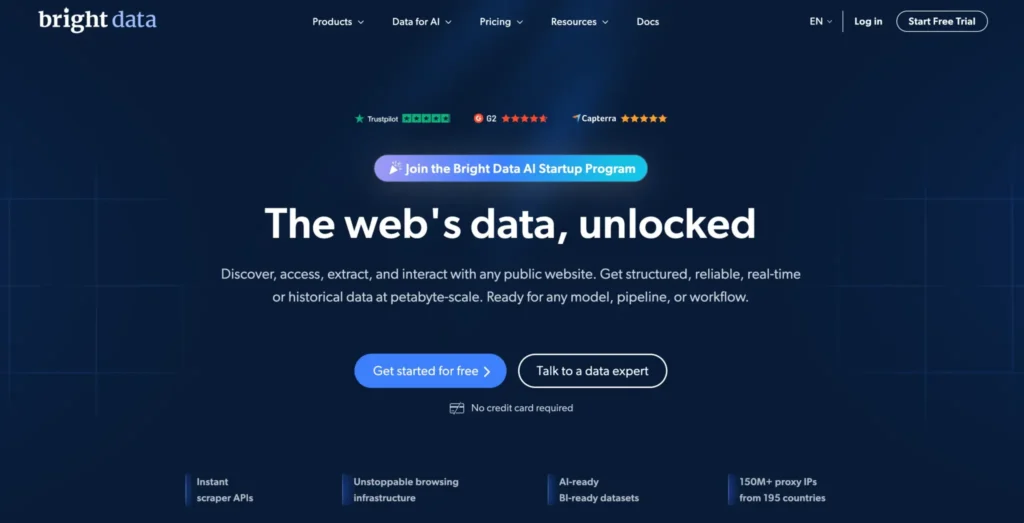
Bright Data is the heavyweight option for teams that need more than a proxy subscription. It offers residential proxies, ISP proxies, mobile proxies, datacenter proxies, scraping tools, datasets, and developer focused controls. Its residential proxy product claims access to 400M+ monthly IPs across 195 countries, with targeting options that include country, city, ZIP code, carrier, and ASN.
For Amazon research, Bright Data makes sense when you need scale, compliance controls, and detailed routing logic. A small affiliate site checking a few product pages probably does not need this level of infrastructure. A marketplace intelligence team tracking thousands of ASINs across several countries might.
The biggest strength is control. You can build workflows around sticky sessions, rotating sessions, precise geo targeting, and proxy manager features. That matters for Amazon because product visibility and pricing can vary heavily by location, delivery region, and browsing environment.
The downside is cost and complexity. Bright Data is not the easiest place for beginners to start. You get a lot of power, but you also need a clear workflow, clean data collection logic, and someone who understands proxy configuration.
Pro Tip: Use Bright Data when your Amazon workflow is tied to business critical intelligence, such as pricing, catalog monitoring, competitive analysis, or international marketplace research. Do not pay premium prices if you only need occasional manual checks.
2. Oxylabs
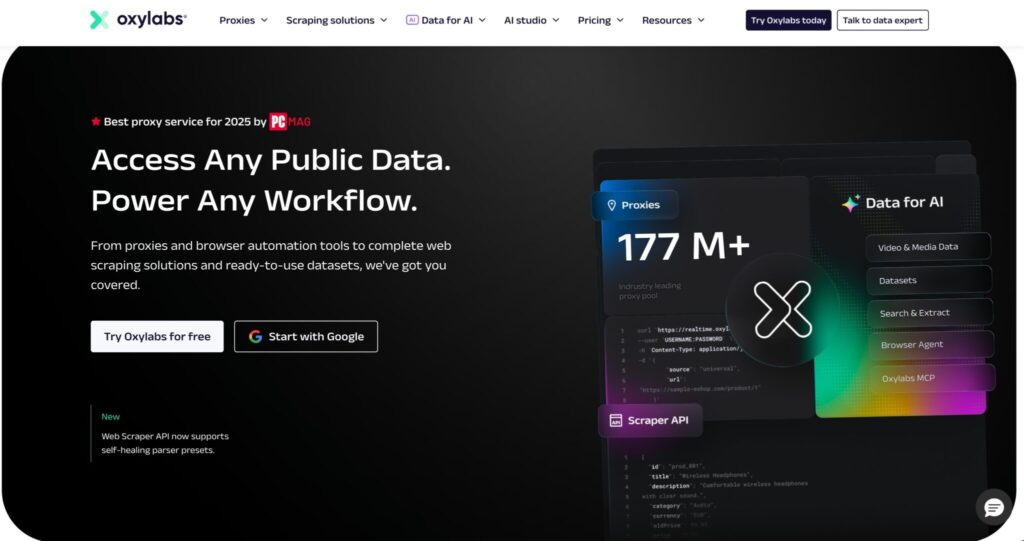
Oxylabs is another enterprise grade provider with strong infrastructure and a clear focus on public web data collection. Its residential proxy network claims 175M+ IPs across 195 countries, with city level targeting and support for SOCKS5 on residential proxies.
For Amazon use cases, Oxylabs is a strong fit when reliability matters more than squeezing every penny out of the bandwidth bill. It is commonly used by teams that need structured data pipelines, not just browser level testing.
Oxylabs also offers scraping tools, including Web Scraper API and Web Unblocker products, which may be useful for companies that want a managed data collection stack instead of building everything manually. That said, you still need to make sure your use case follows Amazon’s terms, robots guidance, and applicable laws.
The platform is polished, but it can feel too much for a solo operator or a small niche publisher. If you are running a lightweight Amazon affiliate site and only need occasional localization checks, Oxylabs may be more than you need.
Pro Tip: Oxylabs is best for teams that already know their target Amazon marketplaces, request volume, and data fields. Go in with a defined plan, or you may overbuy.
3. Decodo
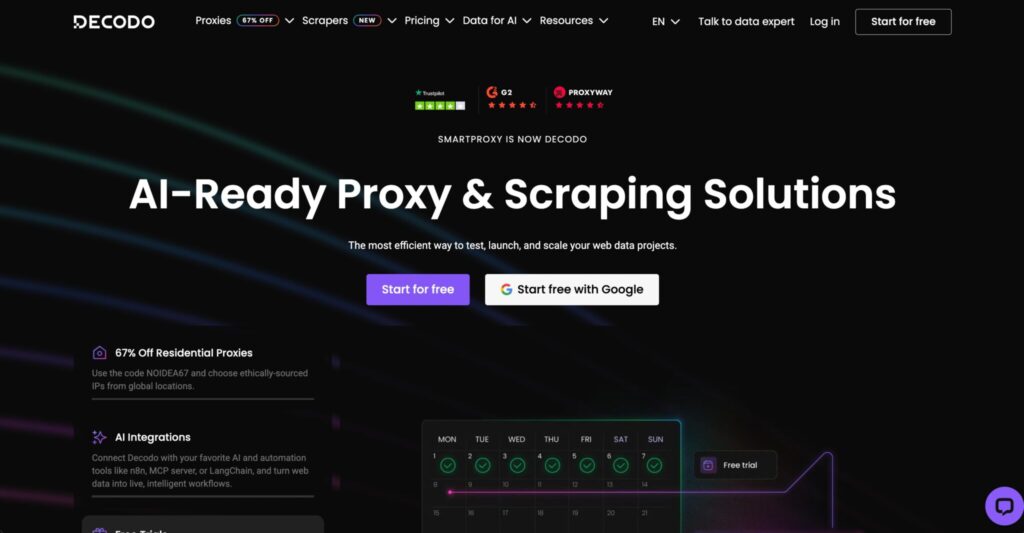
Decodo, formerly Smartproxy, has become one of the most practical middle ground options in the proxy market. The company says Smartproxy officially rebranded to Decodo, and its official site now promotes access to 125M+ IPs.
For Amazon workflows, Decodo works well for agencies, affiliate teams, SEO professionals, and ecommerce operators who want strong residential coverage without enterprise level complexity. Its residential pricing page lists plans starting from $2 per GB, with smaller packages available for testing.
The dashboard is usually easier to work with than heavier enterprise platforms. You can use rotating sessions for broad public page checks or sticky sessions when you need continuity across a short browsing flow. That combination is useful for checking product listings, comparing localized search results, and testing regional content.
The main tradeoff is that Decodo sits in a competitive middle market. It is not as deeply customizable as Bright Data in every scenario, and it may not match Oxylabs for very large enterprise workflows. But for most serious users, it offers one of the cleanest balances between cost, usability, and performance.
Pro Tip: Start with residential proxies for Amazon product page checks. Use ISP proxies only when you need longer session stability, such as repeated manual QA from the same region.
4. SOAX
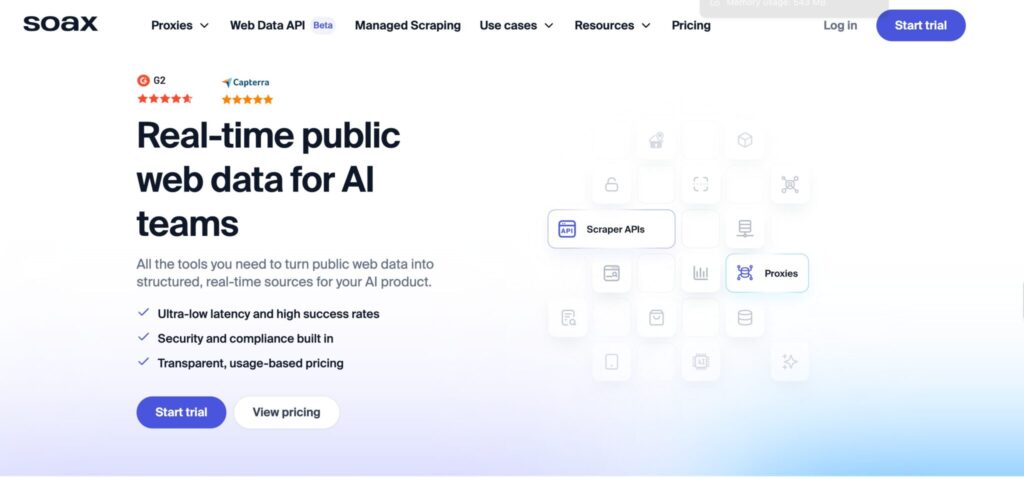
SOAX is a strong choice when location precision matters. Its proxy pages claim 191M+ total proxy servers, 155M+ residential IPs, 195+ geolocations, flexible targeting, and high success rate claims.
That makes SOAX especially useful for Amazon localization checks. If your team needs to see what a shopper sees in a specific region, city, or country, location quality is more important than raw IP count.
SOAX also gives users control over rotation and session behavior. This matters because not every Amazon task needs the same proxy pattern. A single product page availability check may work fine with rotation. A multi page browsing session may need a sticky IP for consistency.
SOAX is not always the cheapest provider, but it is practical for users who care about clean geo targeting and flexible session setup. For Amazon marketplace research across different regions, that can be a better value than buying a huge pool you barely use.
Pro Tip: When testing Amazon pages by location, document your proxy country, city, device type, browser language, and delivery ZIP code separately. Proxy location is only one part of what Amazon may use to shape the page.
5. NetNut
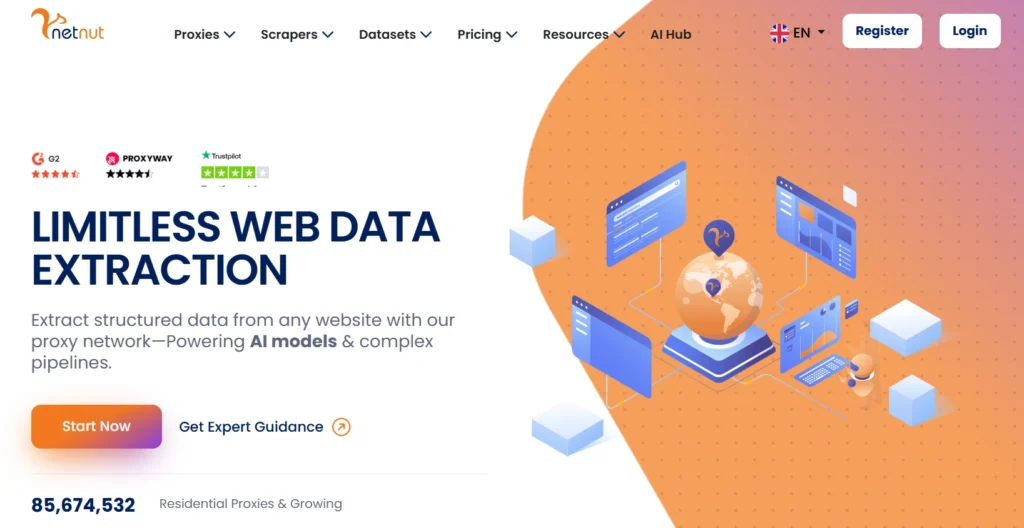
NetNut positions itself around high quality residential, rotating residential, mobile, datacenter, and static residential proxies. Its official pages mention 85M+ residential IP addresses across 195+ countries.
For Amazon, NetNut is attractive for users who want scale with relatively stable routing. Its static residential and rotating residential options give teams room to build different workflows. Static residential proxies can be useful for longer monitoring sessions, while rotating residential proxies are better for broader public data collection.
NetNut often appeals to business users rather than casual proxy buyers. If your Amazon workflow is part of a larger pricing intelligence, retail analytics, or ecommerce monitoring system, it deserves a serious look.
The drawback is that NetNut may feel less beginner friendly than cheaper self serve tools. You should understand bandwidth usage, concurrent sessions, geo targeting, and data collection limits before committing to a larger plan.
Pro Tip: If your Amazon project runs daily, focus on consistency before speed. A slightly slower proxy setup that returns cleaner results is better than a fast one that produces gaps, blocks, or noisy data.
6. IPRoyal
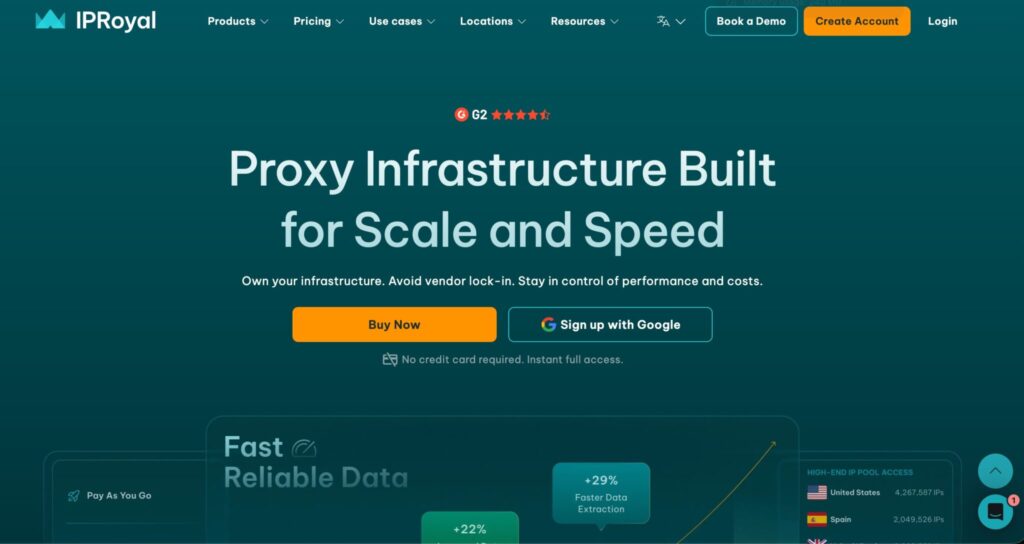
IPRoyal is a budget friendly provider with residential, ISP, datacenter, and mobile proxies. Its quick start guide shows controls for location selection, rotation type, and session TTL, which are useful basics for Amazon testing workflows.
For Amazon related research, IPRoyal is best for smaller teams, solo marketers, and testers who want a low barrier to entry. It may not have the same enterprise depth as Bright Data or Oxylabs, but it gives users enough control to handle basic price checks, regional visibility checks, and manual QA.
The value is strongest when your volume is modest. If you need to monitor a huge catalog every hour, you will probably want a larger provider with stronger infrastructure and support. But if you need affordable residential access for controlled workflows, IPRoyal can be a sensible starting point.
The key is to avoid treating budget proxies like unlimited infrastructure. Monitor bandwidth, error rates, and IP quality. If results become inconsistent, test another provider before blaming your scraper, browser, or data pipeline.
Pro Tip: For small Amazon projects, test a sample of ASINs first. Measure page load success, response consistency, and regional accuracy before buying more bandwidth.
7. Webshare
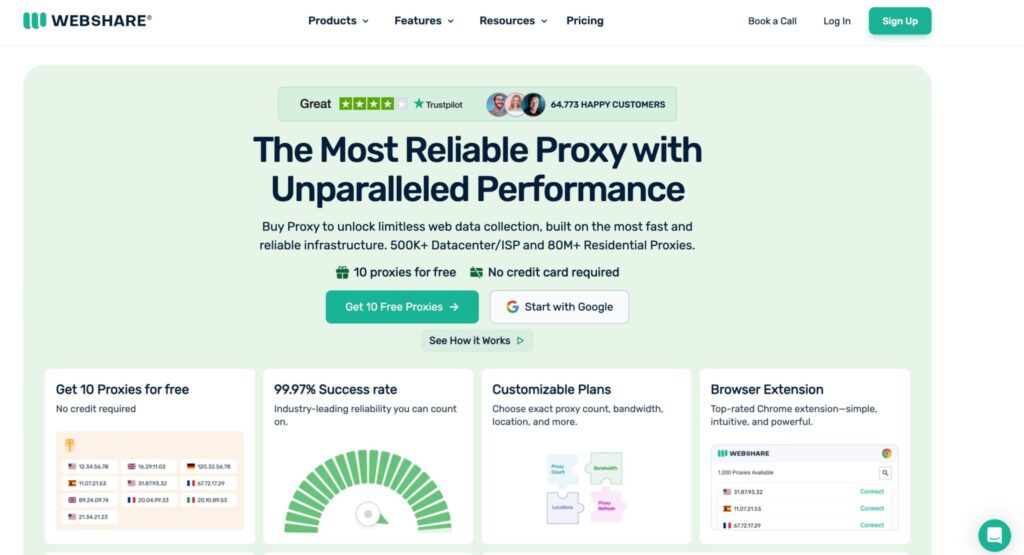
Webshare is popular because it keeps pricing approachable and setup simple. Its official site lists proxy servers, static residential proxies, and residential proxies, including datacenter proxy servers with 400K+ IPs and 99.97% uptime, plus static residential options from ISPs such as Comcast and AT&T.
For Amazon, Webshare is a good option for budget testing, light QA, and small scale monitoring. Its static residential proxies are especially interesting when you want a consistent IP rather than a new one on each request.
Webshare’s rotating residential product page claims 80M+ residential IPs and pricing starting at $1.4 per GB. That is competitive, especially for users who need to keep costs low.
The tradeoff is that Webshare is not as feature rich as Bright Data, Oxylabs, or Decodo. If you need advanced scraping APIs, deep compliance workflows, or hands on enterprise support, you may outgrow it.
Pro Tip: Webshare is best used as a controlled test environment. Keep your workflows small, compare output against a browser session, and upgrade only when you have proof that the data quality is good.
8. Rayobyte
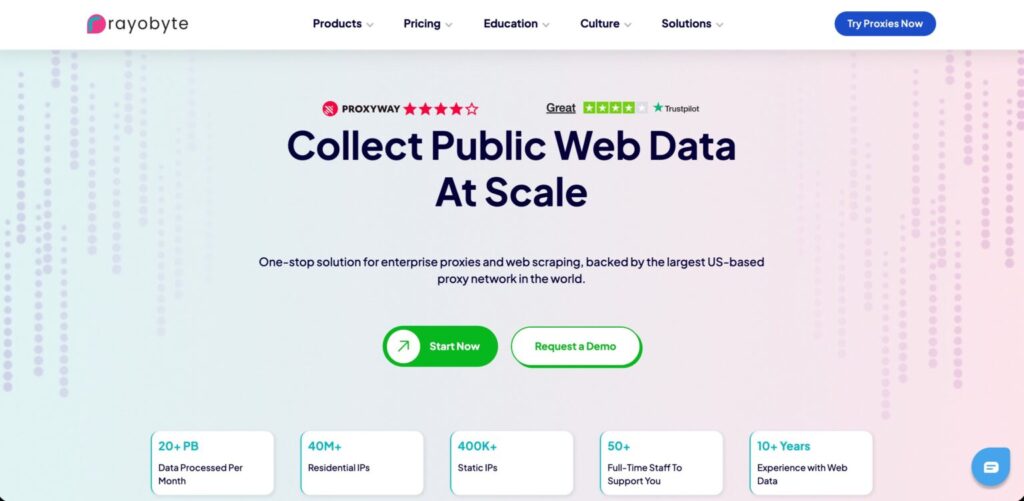
Rayobyte is a long running proxy provider with residential, ISP, and datacenter options. Its residential proxy page claims 40M+ ethically sourced residential proxies, free geo targeting by city, region, or country, sticky sessions, and unlimited threads and sessions.
For Amazon use cases, Rayobyte is a solid pick for users who care about support, ethical sourcing, and predictable service. It may not always be the flashiest provider in comparison tables, but it has a strong presence among agencies and technical users who prefer stability over hype.
Rayobyte can work well for Amazon page checks, competitive monitoring, and research workflows where you need a combination of residential and ISP style access. Sticky sessions are useful when you need a stable browsing identity for a short research session.
The main limitation is that Rayobyte may not be the first choice for users who need the largest global IP pool or the most advanced scraping platform. It is better viewed as a reliable operational provider than an all in one data platform.
Pro Tip: If your Amazon monitoring setup involves multiple markets, ask support about location depth before buying. Country level access is not the same as strong city level coverage.
9. ProxyEmpire
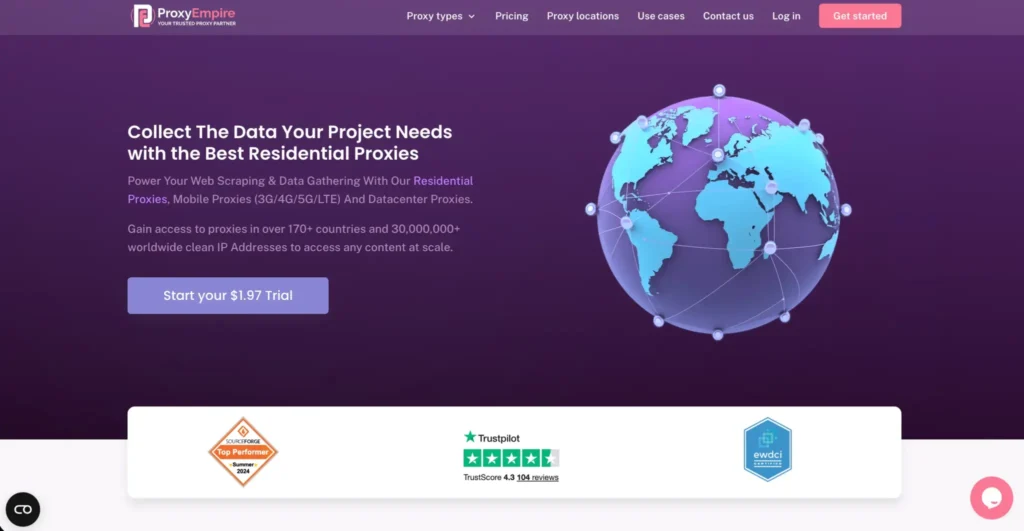
ProxyEmpire is a flexible option for residential, static residential, and mobile proxies. Its homepage promotes residential proxies from $0.75 and describes them as real residential IP addresses sourced from local home networks.
ProxyEmpire is not the largest provider on this list. Proxyway’s 2025 review reported an advertised residential pool of 9.3 million IPs across 170+ countries, with filters for country, region, state, city, and ISP.
That smaller size is not automatically a deal breaker. For Amazon research, a smaller but well targeted pool can still be useful if your needs are specific. For example, if you care about a limited set of countries or regional product checks, targeting flexibility may matter more than raw scale.
ProxyEmpire is worth considering for users who want flexible packages, rollover style value, and more niche geo filters. It may not be my first pick for very large Amazon intelligence systems, but it can be a practical choice for focused projects.
Pro Tip: Smaller pools need more careful testing. Run a trial against your actual target Amazon regions before committing to a larger plan.
How to Choose the Best Amazon Proxy Provider
1. Start With the Use Case
Do not buy proxies before defining the job.
For Amazon, common legitimate use cases include:
- Checking public product availability by region
- Monitoring price changes for your own market research
- Verifying sponsored ad visibility in target locations
- Testing localized storefront experiences
- Comparing seller visibility across marketplaces
- Auditing your own listings from different geographies
- Researching public catalog trends at a reasonable scale
Avoid using proxies for fake reviews, mass account creation, checkout manipulation, credential attacks, review scraping against rules, or bypassing account restrictions.
2. Pick the Right Proxy Type
Residential proxies are usually the best starting point for Amazon research because they use IPs associated with consumer ISPs. They are useful for localized page checks and public marketplace monitoring.
ISP proxies, also called static residential proxies, are better when you need a stable IP for longer sessions. They combine some datacenter style speed with residential style ISP assignment.
Datacenter proxies are fast and cheap, but they are often easier to classify as automated traffic. They can still work for non sensitive testing, but they are not the first choice for Amazon research.
Mobile proxies are expensive but useful for mobile specific testing, app related checks, and cases where cellular network visibility matters.
3. Look Beyond IP Pool Size
A provider claiming 100M+ IPs is not automatically better than a provider with 40M IPs.
For Amazon, ask these questions:
- Does the provider have strong coverage in your target Amazon marketplaces?
- Can it target country, city, state, or ZIP code where needed?
- Does it support sticky sessions?
- Can you control rotation timing?
- Are the IPs ethically sourced?
- Does the dashboard show usage clearly?
- Is support responsive when a region performs poorly?
A huge pool with weak targeting is not ideal. A smaller pool with clean location accuracy may produce better results.
4. Understand Rotation Protocols
Rotation controls how often your proxy IP changes.
For Amazon workflows, there are two common patterns:
Rotating per request: Useful for broad public checks where each request is independent.
Sticky sessions: Useful when one research session needs continuity, such as browsing search results, opening product pages, and comparing delivery estimates.
Do not rotate randomly in the middle of a session unless your workflow is built for it. Sudden IP changes can create inconsistent results and poor data quality.
5. Track Data Quality, Not Just Success Rate
Many proxy buyers only look at whether a request returns a page. That is too shallow.
For Amazon research, track:
- Correct marketplace loaded
- Correct language and currency
- Correct delivery region
- Product page completeness
- Price visibility
- Seller box visibility
- Sponsored placement visibility
- CAPTCHA or challenge frequency
- Response time
- Error rate by country and proxy type
A page that loads with the wrong region is still bad data.
6. Respect APIs, Robots Guidance, and Platform Terms
Amazon provides official interfaces for approved use cases, including Product Advertising API for Associates and SP API for sellers.
Also, robots.txt is designed to tell crawlers which URLs they may access, mainly to avoid overloading sites. It is not a security system, but it is still a key access signal that responsible crawlers should respect.
The safest Amazon proxy strategy is not “hide better.” It is “collect less, collect cleanly, collect only what you are allowed to collect, and use official APIs where possible.”
Best Overall Picks
Best Overall: Bright Data
Choose Bright Data if you need enterprise controls, huge residential coverage, deep targeting, and a broader data collection platform.
Best Enterprise Alternative: Oxylabs
Choose Oxylabs if you want premium infrastructure, strong residential scale, and scraping tools built for serious data teams.
Best Balance: Decodo
Choose Decodo if you want reliable residential proxies, easier setup, and pricing that makes sense for agencies and mid size teams.
Best For Geo Targeting: SOAX
Choose SOAX if your Amazon workflow depends on accurate country, city, or regional checks.
Best Budget Option: Webshare
Choose Webshare if you want affordable proxies for light Amazon testing, small QA tasks, and basic monitoring.
FAQs About Amazon Proxies
1. What are the best proxies for Amazon?
The best proxies for Amazon are high quality residential or ISP proxies with clean IP reputation, stable sessions, strong geo targeting, and clear bandwidth controls. Bright Data, Oxylabs, Decodo, SOAX, NetNut, Webshare, Rayobyte, IPRoyal, and ProxyEmpire are all worth comparing depending on budget and scale.
2. Are residential proxies better for Amazon?
Yes, residential proxies are usually better for Amazon research because they use IP addresses associated with real internet service providers. They are more suitable for regional product checks, public page monitoring, and localized browsing than basic datacenter proxies.
3. Should I use rotating or sticky proxies for Amazon?
Use rotating proxies when each request is independent, such as checking many public product pages separately. Use sticky proxies when you need session continuity, such as browsing search results and then opening product pages from the same location.
4. Can I scrape Amazon with proxies?
You should be careful. Amazon has its own terms, and approved users should consider official options like Product Advertising API or Selling Partner API depending on the use case. Proxies should not be used to bypass restrictions, overload systems, or collect data you are not allowed to access.
5. What is the cheapest Amazon proxy provider?
Webshare, IPRoyal, and ProxyEmpire are usually among the more budget friendly options. The cheapest provider is not always the best choice, though. For Amazon, poor IP quality can create bad data, blocked sessions, and wasted time.
6. Are datacenter proxies good for Amazon?
Datacenter proxies can be useful for light testing and non sensitive workflows, but they are generally not the best choice for Amazon marketplace research. Residential and ISP proxies usually provide better location realism and session reliability.
7. Which proxy type is best for Amazon price monitoring?
Residential proxies are best for broad price monitoring across regions. ISP proxies are better for longer, stable sessions. If you are an Amazon Associate or seller, check whether Amazon’s official APIs can provide the data you need before using browser based collection.
8. How many proxies do I need for Amazon?
It depends on your request volume, target marketplaces, refresh frequency, and session style. A small affiliate or SEO team may only need a few GB of residential traffic per month. A serious ecommerce intelligence operation may need a much larger plan with multiple regions and strong session controls.
9. What should I avoid when buying Amazon proxies?
Avoid free proxy lists, unclear sourcing, no refund policy, weak location controls, no sticky sessions, and providers that cannot explain how their residential IPs are sourced. Also avoid any provider or workflow that promotes fake reviews, account abuse, checkout manipulation, or rule breaking.
Final Verdict: Which Amazon Proxy Provider Should You Choose?
For most professional Amazon research workflows, I would shortlist Bright Data, Oxylabs, Decodo, and SOAX first.
Bright Data is the strongest all around enterprise option. Oxylabs is excellent for large scale public data collection. Decodo gives the best balance for agencies and growing teams. SOAX is a strong pick when geo targeting is the main priority.
If budget matters more, Webshare and IPRoyal are easier starting points. If you want stable support and ethical sourcing, Rayobyte deserves a look. If you need flexible targeting with smaller scale, ProxyEmpire can make sense.
The real answer depends on your Amazon workflow. For price intelligence, choose scale and reliability. For ad verification, choose geo accuracy. For product page QA, choose sticky sessions. For casual testing, start small and measure the quality before expanding.
A good Amazon proxy setup should give you cleaner market visibility, not a shortcut around rules. That distinction matters. It protects your data, your accounts, and your business.