
Mobile carrier proxies sit in that expensive-but-useful corner of the proxy market.
You usually do not buy them because they are cheap. You buy them because your target environment behaves differently when traffic comes from a real mobile network.
That matters for mobile ad verification, app testing, localized SERP tracking, social platform QA, travel pricing checks, ecommerce monitoring, and mobile-first data collection.
A datacenter proxy can be fast, but it often looks like infrastructure. A residential proxy can look like a home user, but it may not show the same mobile-only experience. A mobile carrier proxy routes traffic through 3G, 4G, LTE, or 5G carrier networks, which makes the traffic look closer to what a real smartphone user would generate.
Here is the catch: not all “mobile proxies” are equal. Some providers sell access to large rotating mobile pools. Some sell dedicated SIM-based connections. Some give you carrier-level targeting. Others only give you country-level access.
Some allow sticky sessions for 10, 30, or 60 minutes. Others rotate so aggressively that your workflow breaks halfway through checkout, login, or app testing.
This guide cuts through that mess.
Quick Verdict: Best Mobile Carrier Proxy Providers
| Rank | Provider | Best For | Mobile Pool / Coverage | Rotation Options | Protocols | Starting Price Snapshot | Main Limitation |
|---|---|---|---|---|---|---|---|
| 1 | Oxylabs | Enterprise-grade mobile proxy coverage | 20M+ mobile IPs across 140+ countries | Auto rotation, geo and ASN targeting | HTTP(S), SOCKS5 support through proxy stack | Mobile plans shown from $7.50/GB on starter tiers | Higher cost for smaller users |
| 2 | Decodo | Best balance of price, scale, and usability | 10M+ mobile IPs across 160+ locations and 700+ carriers | Rotating and sticky sessions, up to 24 hours on some setups | HTTP(S), SOCKS5 | From $2.25/GB on mobile plans | Not as enterprise-heavy as Oxylabs |
| 3 | SOAX | Granular targeting and flexible sessions | 33M+ mobile IPs across 195+ locations | Per-request rotation or sticky sessions up to 60 minutes | HTTP(S), SOCKS5 | Plans shown from $3.60/GB | Starter plan has monthly commitment |
| 4 | NetNut | Business use cases needing stable mobile routing | 5M+ mobile IPs across 100+ countries | Auto-rotating mobile IPs | HTTP(S), SOCKS5 across proxy products | Custom and sales-led pricing | Less transparent pricing |
| 5 | IPRoyal | Budget-friendly dedicated and rotating mobile proxies | Premium carrier IPs worldwide | Custom rotation, rotating and dedicated options | HTTP(S), SOCKS5 | Dedicated mobile pricing starts from around $10.11 for 24 hours | Smaller ecosystem than top enterprise vendors |
| 6 | ProxyEmpire | Rotating mobile data with rollover-style plans | 4M+ mobile IPs across 170+ countries | Per-request and sticky-style workflows | HTTP, HTTPS, SOCKS5 | Rotating mobile pricing shown from $4.50/GB PAYG | Marketing claims need careful plan verification |
| 7 | Proxy-Seller | Dedicated/shared mobile proxies by carrier | Real 4G/5G carrier proxies | Timer and on-demand rotation | Common proxy protocols | From $10/IP | Better for specific locations than huge global pools |
| 8 | HydraProxy | US-focused 4G/5G mobile proxies | USA 4G/5G proxies | Multiple IP rotations | HTTPS, SOCKS | Flexible billing | Limited global coverage |
| 9 | Bright Data | Existing enterprise customers and advanced proxy stack | 7M+ mobile IPs listed historically | Full session and geo controls | Broad proxy stack | Mobile pay-as-you-go listed around $8.40/GB in older location pages | Bright Data docs say mobile proxies are sunset for new customers as of April 2026 |
What Are Mobile Carrier Proxies?
Mobile carrier proxies route your traffic through IP addresses assigned by mobile operators. Instead of appearing as a datacenter server or a home broadband user, your request appears to come from a mobile network such as 3G, 4G, LTE, or 5G.
That difference matters because mobile IPs often sit behind carrier-grade NAT, also called CGNAT. Many real users may share a pool of carrier IPs, and IP changes can happen naturally as devices reconnect, switch towers, or move between network states. For legitimate testing and data access, that makes mobile carrier proxies useful when you need to see how a mobile user would experience a website, app, ad, or search result.
SOAX explains mobile proxies as forward proxies using IP addresses assigned by mobile internet service providers and notes that they route traffic through mobile networks like 3G, 4G, or 5G. It also highlights common use cases such as ad verification, market research, price comparison, and mobile-specific data collection.
When Should You Use Mobile Carrier Proxies?
Use mobile carrier proxies when the mobile network itself matters.
That includes mobile ad verification, app QA, geo-specific mobile browsing, SEO rank tracking from mobile networks, sneaker or ecommerce monitoring, travel fare checks, account quality testing, social platform research, and competitor monitoring where mobile results differ from desktop results.
Do not use them just because they sound stronger. They are expensive compared with datacenter proxies and often slower than static ISP proxies.
If your target site accepts datacenter IPs, a mobile proxy may be overkill. If you need long, stable account sessions, a static ISP proxy may be better. If you need massive public web data collection from tough mobile-first targets, mobile carrier proxies start making sense.
8 Best Mobile Carrier Proxy Providers Reviewed
1. Oxylabs: Best Overall for Enterprise Mobile Proxy Coverage
Oxylabs is the strongest pick if you need serious mobile proxy scale, advanced targeting, and a setup that can support large commercial workflows.
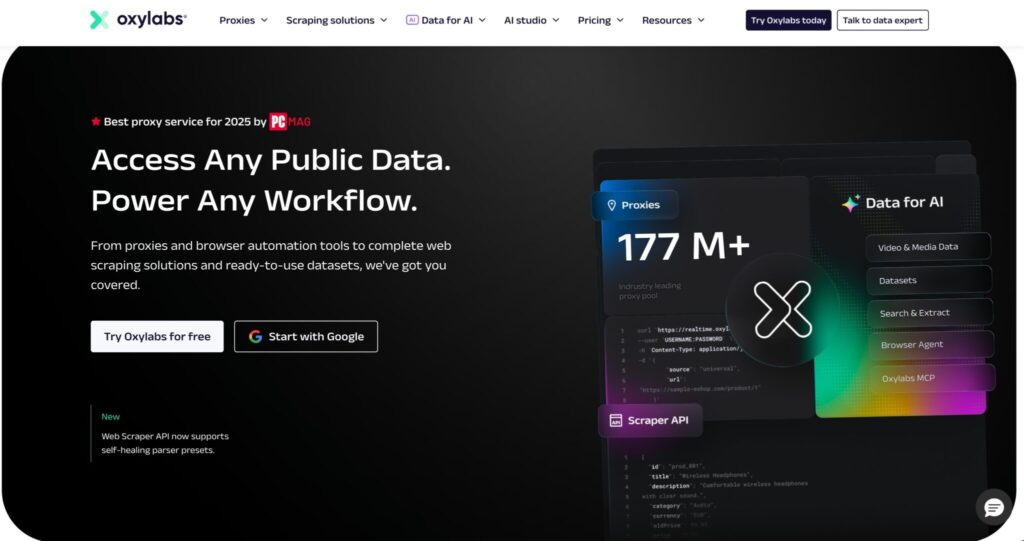
Its mobile proxy product lists 20M+ mobile IPs, 140+ countries, 99.9% uptime, and targeting by continent, country, state, city, coordinates, and ASN.
That ASN targeting is important. If you are testing how a page behaves on a specific carrier or mobile network segment, country targeting alone is not enough. You may need to know whether the request comes through a particular mobile operator or region. Oxylabs gives you that level of control, which makes it a better fit for professional ad verification, regional content testing, and mobile-focused market intelligence.
The interface is also built for teams. You get documentation, account support, and a more enterprise-style experience than many smaller mobile proxy shops. That matters if your proxy setup is part of a larger data operation rather than a one-off browser task.
Pro Tip: Use Oxylabs when targeting precision matters more than the lowest price. If you only need a few mobile IPs for light account testing, this may be more tool than you need.
2. Decodo: Best Value Mobile Proxy Provider for Most Users
Decodo, formerly Smartproxy, has become one of the most practical choices in the mobile proxy space. It gives you 10M+ mobile IPs across 160+ locations and 700+ carriers, with real 3G, 4G, and 5G mobile IPs.
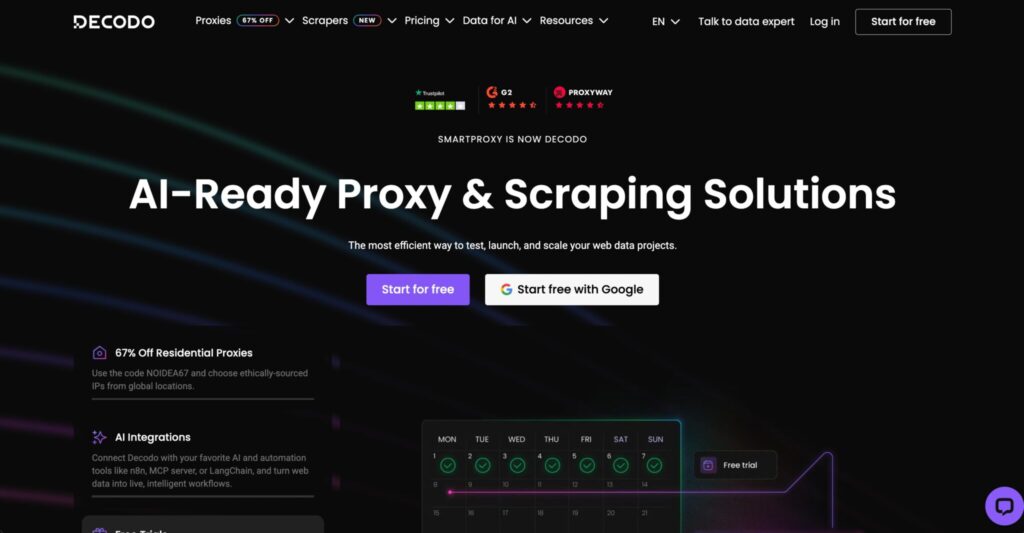
The big advantage is balance. Decodo feels easier to start with than some enterprise-first providers, but it still has enough depth for technical users. You can target locations, filter by carrier or ASN, and use rotating or sticky sessions depending on your workflow. Its pricing page lists mobile proxy plans starting from $2.25/GB, with smaller regular plans available for users who do not want a giant monthly contract.
For SEO monitoring, app testing, ecommerce checks, and mobile web scraping, Decodo is a clean middle-ground option. It is not the cheapest unknown vendor, and it is not the heaviest enterprise vendor either. That is exactly why it works well for many teams.
Pro Tip: If you are testing mobile proxies for the first time, Decodo is one of the safer starting points because it combines a large enough pool, carrier targeting, and beginner-friendly setup.
3. SOAX: Best for Granular Targeting and Session Control
SOAX is a strong option for users who care about location accuracy, flexible sessions, and mobile proxy customization.
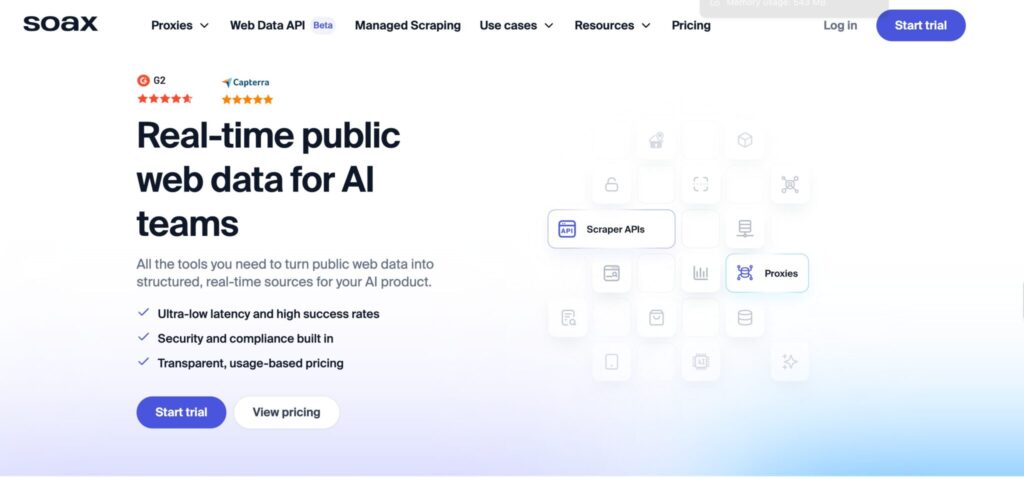
Its mobile proxy page lists 33M+ mobile proxies across 195 locations and supports 3G, 4G, 5G, and LTE.
The session controls are one of its stronger selling points. SOAX says users can rotate IPs on every request or keep the same IP for up to 60 minutes. That makes it useful for workflows where you need a balance between rotation and continuity. For example, scraping a public mobile page may work best with per-request rotation, while testing a mobile checkout flow may need a sticky session long enough to complete the journey.
SOAX pricing is now bundled across proxy types and its Web Data API, with starter pricing listed at $3.60/GB for 25 GB.
Pro Tip: SOAX is a good pick when you need to test several session lengths. Start with shorter sticky windows, then increase only when the target workflow requires it.
4. IPRoyal: Best Budget-Friendly Mobile Proxy Option
IPRoyal is a strong pick for users who want affordable mobile proxies without a complicated enterprise process.
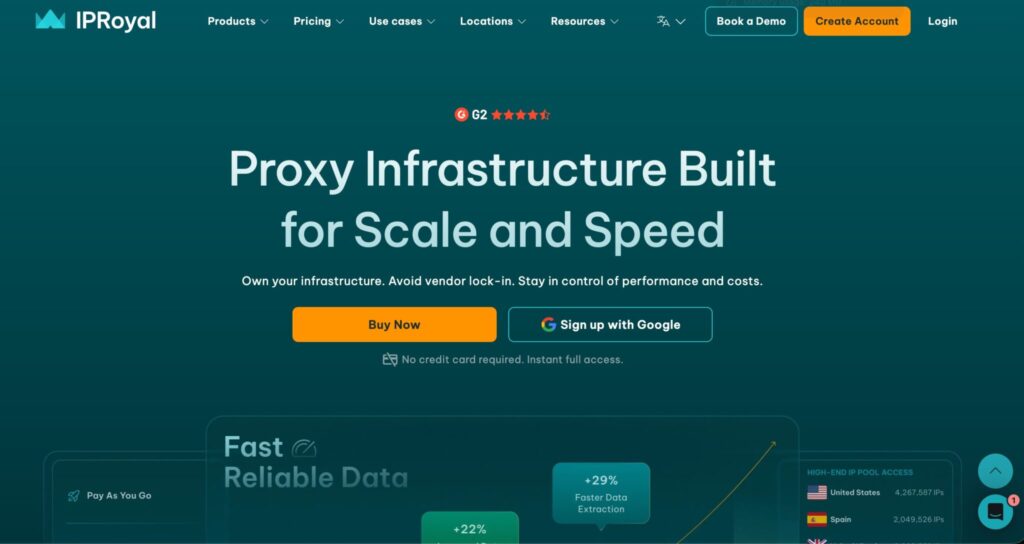
Its mobile proxy page lists 5G, 4G, 3G, and LTE support, dedicated and rotating IPs, HTTP(S) and SOCKS5 protocols, customizable rotation, 99% uptime, and 24-hour test plans.
IPRoyal also offers dedicated mobile proxies and rotating mobile proxies. Its docs say dedicated mobile proxies include unlimited traffic and sessions, while rotating mobile proxies are billed per GB consumed with no session restrictions.
This makes IPRoyal attractive for users who want a dedicated mobile setup for social media management, local testing, SEO research, or smaller automation workflows. It does not have the same huge public enterprise image as Oxylabs or Bright Data, but it is easier to approach for smaller buyers.
Pro Tip: Use IPRoyal if you want dedicated mobile IP control without paying enterprise-level minimums.
5. ProxyEmpire: Best for Rotating Mobile Data Plans
ProxyEmpire is worth considering if you want rotating mobile proxies with flexible pricing.
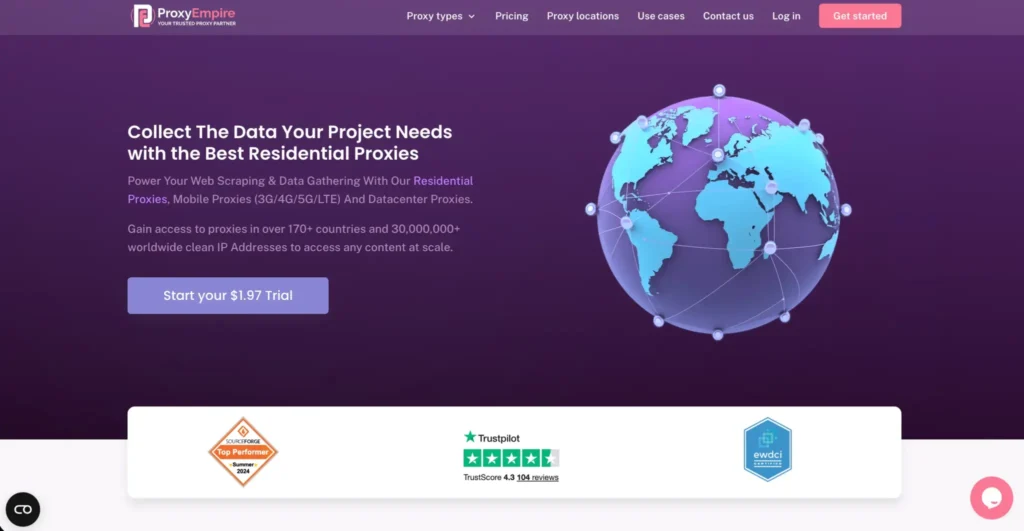
Its rotating mobile proxy page claims 4M+ ethically sourced 3G, 4G, 5G, and LTE mobile IPs in 170+ countries, with carrier-level targeting, HTTP/HTTPS/SOCKS5 support, and 99.8% uptime.
Its pricing table shows rotating mobile plans starting at $4.50/GB on pay-as-you-go, with larger mobile packages reducing the per-GB rate.
ProxyEmpire also sells dedicated 4G and 5G mobile proxies with unlimited bandwidth and location control. The dedicated mobile page lists coverage in the United States, Israel, Austria, the United Kingdom, and more than 50 US locations.
Pro Tip: ProxyEmpire is better when you know whether you need rotating mobile data or dedicated mobile ports. Do not buy before confirming which product matches your workflow.
6. Proxy-Seller: Best for Dedicated and Shared Carrier Proxy Packages
Proxy-Seller is a practical option for buyers who want a clear mobile proxy package rather than a huge enterprise pool.
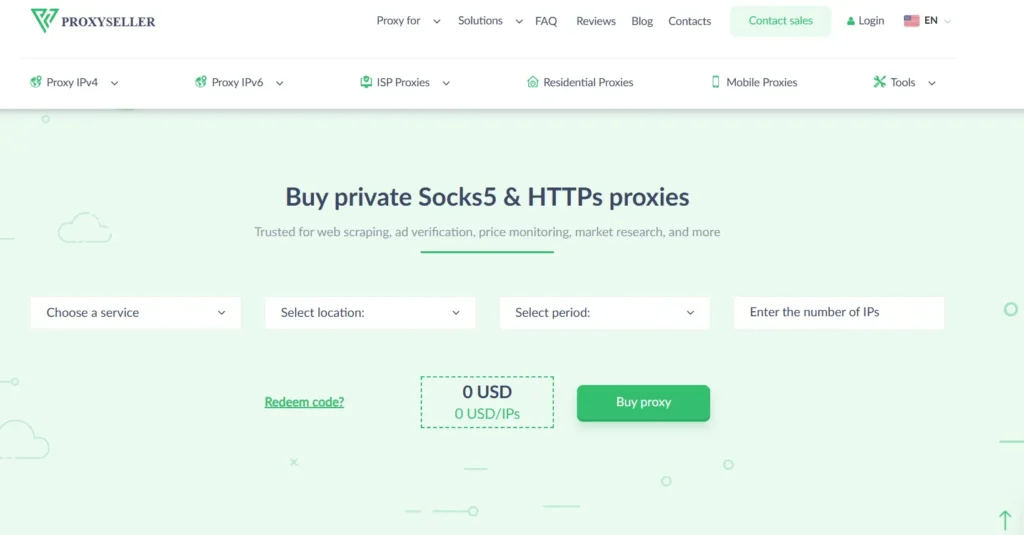
Its mobile proxy page says it offers rotating mobile proxies from real 4G and 5G carriers, with dedicated or shared pools and IP rotation by timer or on demand. It also lists mobile proxies from $10/IP.
This setup works well for location-specific tasks, account testing, and controlled browser workflows. It is less about massive data collection and more about having a mobile carrier route you can manage.
The main thing to check is speed. Some shared mobile plans may have lower bandwidth or speed limits depending on the location and package. That is not always a problem, but it matters if you plan to run heavy scraping or multi-threaded workflows.
Pro Tip: Ask whether your selected location uses dedicated hardware, shared pool access, or carrier rotation before buying. The product name alone does not tell the full story.
7. HydraProxy: Best for US 4G and 5G Mobile Proxies
HydraProxy is more specialized than the bigger providers. Its mobile proxy page focuses on USA 4G and 5G mobile proxies with unlimited bandwidth, ISP and geo-targeted IPs, flexible billing, multiple IP rotations, and HTTPS/SOCKS support.
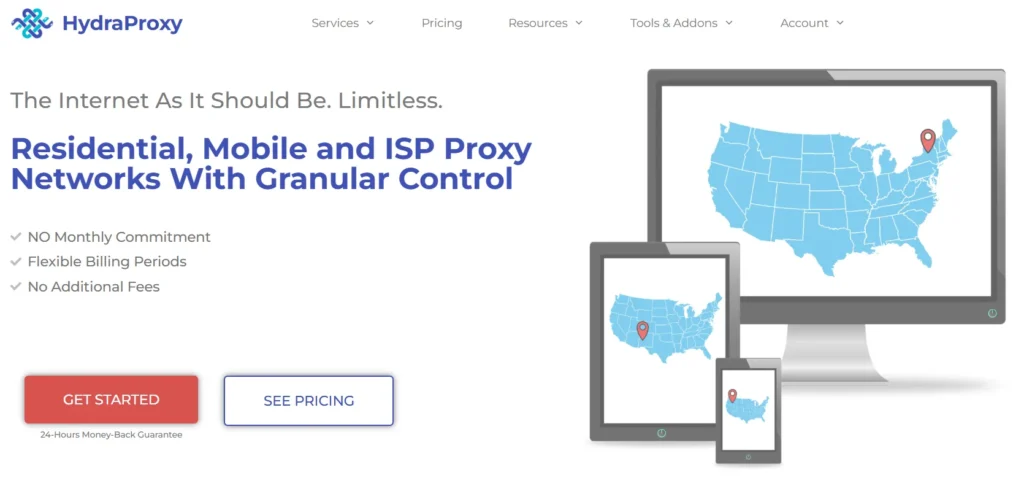
That makes it useful if your target market is mainly the United States. You do not have to pay for a large worldwide pool if your work only needs US mobile carrier traffic.
The tradeoff is obvious: HydraProxy is not the first choice for global coverage. If you need 50 countries, ASN filtering, or enterprise support, look at Oxylabs, Decodo, SOAX, or NetNut instead.
Pro Tip: HydraProxy is best for US-only campaigns, not global mobile intelligence.
8. Bright Data: Best for Existing Enterprise Customers, Not New Mobile Buyers
Bright Data has historically been one of the biggest names in proxy infrastructure.
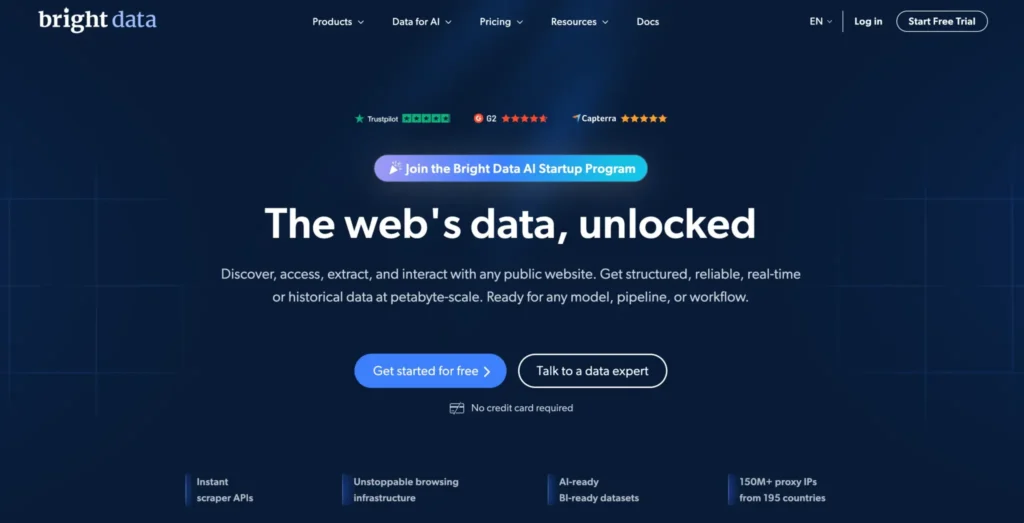
Older Bright Data location pages list 7M+ mobile IPs across 195 countries and describe the network as a real-peer 3G/4G mobile IP network.
But there is an important update. Bright Data’s own documentation says mobile proxies are being sunset for new customers and that, as of April 2026, the Bright Data Mobile Proxy network is no longer available to new signups.
That changes the recommendation. Bright Data can still matter if you already have access or you are using its broader proxy and data platform, but I would not list it as the best fresh purchase for new mobile proxy buyers in 2026.
Pro Tip: If you are a new customer, confirm availability before building any mobile proxy workflow around Bright Data.
How to Choose the Best Mobile Carrier Proxy Provider
1. Check the Real Mobile IP Pool, Not Just the Total Proxy Pool
Some providers advertise huge total IP numbers, but those may include residential, datacenter, ISP, and mobile IPs together. For mobile carrier proxies, you need to know the actual mobile pool size.
A 100M+ total proxy pool does not help if the mobile network is tiny or limited to a few countries. Look for mobile-specific numbers, carrier access, and city-level availability.
2. Look at Carrier and ASN Targeting
Country targeting is useful, but mobile carrier proxies become much more powerful when you can target by carrier or ASN. This matters for ad verification, telecom-specific testing, localized mobile results, and app behavior checks.
Oxylabs and Decodo both highlight ASN or carrier-level filtering in their mobile proxy products.
3. Match Rotation Type to the Task
There are three common rotation styles:
| Rotation Type | Best For | Risk |
|---|---|---|
| Per-request rotation | Public data scraping, rank checks, price monitoring | Can break login or checkout flows |
| Timed rotation | General automation, browsing, light testing | Wrong timing can interrupt sessions |
| Sticky sessions | App QA, account testing, multi-step flows | Too-sticky sessions reduce IP freshness |
If you are scraping public listings, per-request rotation may work well. If you are testing a mobile checkout funnel, you need sticky sessions. If you are running account workflows, you need stable sessions and careful pacing.
4. Check Protocol Support
Most technical users should look for HTTP(S) and SOCKS5 support. HTTP(S) works for most web scraping and browser-based tasks. SOCKS5 gives more flexibility for apps, browsers, and tools that need broader traffic handling.
IPRoyal, ProxyEmpire, and several others mention HTTP(S) and SOCKS5 support in their mobile proxy products.
5. Understand Pricing: Per GB vs Per Port vs Dedicated Device
Mobile carrier proxies usually follow one of these models:
| Pricing Model | How It Works | Best For |
|---|---|---|
| Per GB | Pay for data usage | Scraping, monitoring, variable workloads |
| Per IP / per port | Pay for access to a mobile proxy endpoint | Account workflows, testing, browser tasks |
| Dedicated mobile device | You get a more controlled mobile connection | Long-term mobile testing and sensitive workflows |
| Enterprise custom | Sales-led plan based on scale | Large teams and recurring data operations |
The cheapest plan is not always cheaper in practice. A low per-GB rate can become expensive if your scraper downloads heavy pages, images, scripts, or app assets. For browser automation, bandwidth can disappear fast.
6. Ask About Source Quality and Compliance
Mobile proxies can be sourced in different ways. Good providers should be clear about ethical sourcing, consent, network quality, and acceptable use. Avoid shady providers that refuse to explain how their mobile IPs are obtained.
For business use, this matters. Poor sourcing can create legal, reputational, and operational risk.
7. Test Before Scaling
Never buy a large mobile proxy plan before testing your exact target workflow. Mobile proxies vary by country, carrier, session length, time of day, and target website.
Run a small test first. Check:
- Success rate
- CAPTCHA frequency
- Speed
- IP rotation behavior
- Session stability
- Geo accuracy
- Carrier match
- Cost per successful request
Mobile Carrier Proxies vs Residential Proxies vs ISP Proxies
| Proxy Type | Best For | Strength | Weakness |
|---|---|---|---|
| Mobile carrier proxies | Mobile ad verification, app testing, mobile-first targets | Real carrier IP footprint | Expensive, sometimes slower |
| Residential proxies | General web scraping, price monitoring, SEO checks | Large real-user pools | Less mobile-specific |
| ISP proxies | Long sessions, accounts, stable browsing | Static residential-like trust with speed | Less natural rotation |
| Datacenter proxies | Fast scraping on easy targets | Cheap and fast | Easier to detect |
Mobile carrier proxies are not “better” in every situation. They are better when the mobile network identity matters.
Common Mistakes to Avoid
Buying Based on Pool Size Alone
A large pool sounds impressive, but targeting, quality, and rotation control matter more. A smaller but cleaner mobile pool in your target country can beat a giant pool with weak location accuracy.
Using Per-Request Rotation for Login Flows
If your IP changes during login, checkout, or account verification, you can trigger security checks. Use sticky sessions for multi-step workflows.
Ignoring Bandwidth Consumption
Mobile proxy bandwidth can get expensive. Browser automation loads scripts, images, fonts, tracking pixels, and API calls. Use request blocking where allowed and keep workflows lean.
Choosing 5G Only Because It Sounds Faster
5G can be fast, but 4G/LTE is often more widely available and stable across regions. For many proxy workflows, session consistency matters more than peak speed.
Skipping Terms of Service Review
Use proxies only for lawful, permitted activity. Respect websites’ terms, robots policies where applicable, privacy rules, and data rights. A good proxy setup should reduce operational friction, not create compliance problems.
Best Mobile Carrier Proxy by Use Case
| Use Case | Best Provider Picks | Why |
|---|---|---|
| Enterprise mobile data collection | Oxylabs, NetNut, SOAX | Scale, targeting, account support |
| Best value for most teams | Decodo, SOAX, IPRoyal | Good balance of pool size, price, usability |
| Mobile ad verification | Oxylabs, SOAX, Decodo | Geo, ASN, and carrier targeting |
| App testing | IPRoyal, Proxy-Seller, HydraProxy | Dedicated or controllable mobile sessions |
| SEO mobile rank tracking | Decodo, SOAX, Oxylabs | Location accuracy and rotation options |
| US-only mobile workflows | HydraProxy, Proxy-Seller, ProxyEmpire | Focused US carrier options |
| Smaller budget testing | IPRoyal, Decodo, ProxyEmpire | Lower entry points than enterprise vendors |
Final Verdict: Which Mobile Carrier Proxy Should You Choose?
If you want the strongest enterprise-grade mobile proxy provider, Oxylabs is the safest top pick. It has a large mobile IP pool, advanced targeting, and serious infrastructure.
If you want the best balance of price, usability, and mobile carrier coverage, Decodo is the most practical choice for many users.
If you need granular targeting and flexible sticky session control, SOAX deserves a close look.
If you want business-grade support and stable mobile access, NetNut is a strong option.
If you are budget-conscious or need dedicated mobile proxies, IPRoyal and Proxy-Seller are easier to approach.
For US-focused mobile work, HydraProxy can make sense. For rotating mobile plans with rollover-style pricing, ProxyEmpire is worth testing.
The smart move is simple: shortlist two providers, run the same workflow on both, measure cost per successful action, and then scale the winner. Mobile proxies are too expensive to choose based on marketing claims alone.
Quick links:
- 9. Best Geo IP Proxies
- 9. Best Mobile Carrier Proxies
- 9. Best Carrier Proxies
- 9 Best Proxies For News Scraping
FAQs About Mobile Carrier Proxies
1. What is a mobile carrier proxy?
A mobile carrier proxy routes your internet traffic through an IP address assigned by a mobile network operator. This makes your request appear as if it comes from a real mobile network such as 3G, 4G, LTE, or 5G.
2. Are mobile carrier proxies better than residential proxies?
They are better for mobile-specific tasks, but not for everything. Use mobile carrier proxies for app testing, mobile ad verification, mobile SERP tracking, and tough mobile-first websites. Use residential proxies for broader web scraping and general market research.
3. Are 5G proxies better than 4G proxies?
Not always. 5G can offer faster speeds and lower latency in some locations, but 4G/LTE is often more stable and widely available. For most proxy workflows, clean IPs, session control, and targeting accuracy matter more than the network label.
4. What is a sticky session in mobile proxies?
A sticky session lets you keep the same mobile IP for a set period. This is useful for login flows, app testing, checkout testing, and any task where changing IPs mid-session could cause errors.
5. What is per-request rotation?
Per-request rotation changes the IP address with every new request or connection. It is useful for collecting public data at scale, but it can break workflows that need continuity.
6. Why are mobile proxies expensive?
Mobile proxies rely on real mobile carrier networks, SIM infrastructure, mobile devices, or carrier-grade routing. That infrastructure is harder to source and maintain than datacenter proxies, so the pricing is higher.
7. Can I use mobile carrier proxies for web scraping?
Yes, mobile carrier proxies can be used for lawful public web data collection, especially when the target shows different content to mobile users. You should still respect site terms, applicable laws, and data privacy rules.
8. Which provider is best for beginners?
Decodo and IPRoyal are easier starting points for many users. Decodo offers a strong mix of scale and usability, while IPRoyal is approachable for smaller mobile proxy setups.
9. Which provider has the largest mobile proxy pool?
Among the providers reviewed here, SOAX lists 33M+ mobile proxies, while Oxylabs lists 20M+ mobile IPs and Decodo lists 10M+ mobile IPs. Always verify current pool numbers before purchase because proxy inventories change often.