
Real device mobile proxies are not the cheap “proxy list” stuff floating around forums. They are a different class of infrastructure.
A proper mobile proxy routes your traffic through mobile carrier networks, usually 3G, 4G LTE, or 5G, so the request looks closer to traffic from a normal smartphone user. Some providers use large peer-based mobile IP pools. Others give you access to dedicated phones, SIM cards, modems, or carrier-connected devices. That distinction matters a lot.
If you are doing mobile ad verification, app QA, SERP tracking, market research, localized pricing checks, or compliant public web data collection, real device mobile proxies can give you cleaner mobile signals than datacenter or even standard residential proxies. They are also expensive, slower than datacenter proxies, and easy to overbuy if you do not understand rotation, sticky sessions, carrier targeting, and bandwidth pricing.
A good mobile proxy setup is not just about “more IPs.” It is about the right IP pool, the right rotation behavior, clean carrier routing, stable sessions, and a provider that can keep the network healthy without selling you noisy, abused inventory.
Below is a practical, field-style breakdown of the best real device mobile proxy providers worth considering in 2026.
Quick Comparison Table: Best Real Device Mobile Proxy Providers
| Provider | Best For | Mobile Pool / Coverage | Rotation Options | Protocols | Pricing Snapshot | Main Strength | Main Trade-Off |
|---|---|---|---|---|---|---|---|
| Oxylabs | Enterprise public data collection | 20M+ mobile IPs, 140+ countries | Rotating, geo and ASN targeting | Common proxy protocols, SOCKS5 support across proxy products | From $7.50/GB on Starter mobile plan | Huge pool, strong targeting | Can be overkill for small users |
| Bright Data | Compliance-heavy teams and advanced tooling | 7M+ mobile IPs in docs | Session and geo controls | HTTP(S), SOCKS5 support across proxy networks | Pay-as-you-go and committed plans vary | Mature dashboard, APIs, compliance | Premium pricing, stricter onboarding |
| SOAX | Precise geo targeting | 33M+ mobile proxies, 195 locations | Rotating and controlled sessions | HTTP(S), SOCKS5 commonly supported | Plans start around $3.60/GB across proxy types | Strong location coverage | Interface can feel technical at scale |
| Decodo | Value and ease of use | 10M+ mobile IPs, 160+ locations, 700+ carriers | Rotating and sticky sessions | HTTP(S), SOCKS5 | Mobile plans shown from $2.25/GB on current promo pages | Good balance of cost and features | Not as enterprise-heavy as Bright Data or Oxylabs |
| NetNut | Stable business use cases | 5M+ mobile IPs, 100+ countries | Auto-rotation | Common proxy protocols | Annual mobile pricing shown from $6.46/GB | Reliable network positioning | Less granular public detail than some rivals |
| IPRoyal | Dedicated mobile access and smaller teams | Premium carrier mobile IPs, broad coverage | Custom rotation, manual and auto options | HTTP(S), SOCKS5 | Dedicated plans from around $10.11/day or $130/month | Affordable entry for dedicated-style use | Smaller ecosystem than top enterprise platforms |
| Proxy-Seller | Budget dedicated/shared mobile proxies | Real 4G/5G carrier proxies | Timer and on-demand rotation | HTTP(S), SOCKS5 | From around $10/IP | Simple buying flow | Smaller platform depth |
| Rayobyte | High-volume rotating mobile scraping | 3G/4G rotating mobile proxies | Rotating only | Common proxy protocols | From $250/month, $1.25/GB Professional | Bulk bandwidth economics | Less flexible for sticky account workflows |
| AirProxy | Dedicated SIM-card mobile proxies | Dedicated SIM card per proxy | Custom rotation, unlimited rotations | Common browser/app proxy setup | €67/proxy/30 days | True dedicated SIM style | Limited compared with giant global pools |
| ProxyEmpire | Dedicated mobile proxies with unlimited bandwidth positioning | Dedicated 4G/5G devices in select countries and 50+ US locations | Reset on demand or persistent | HTTP/SOCKS5 | Trial and custom style pricing | Strong for dedicated mobile infrastructure | Coverage is narrower than global pool providers |
What Counts as a “Real Device” Mobile Proxy?
A real device mobile proxy should use mobile carrier IP space, not a datacenter IP dressed up with mobile branding. The best setups usually fall into two categories.
First, large rotating mobile pools. These are networks of mobile IPs connected to smartphones, tablets, carrier networks, or opt-in peer devices. They work well when you need scale, location coverage, and lots of IP rotation.
Second, dedicated device or SIM-based proxies. These are closer to renting access to a physical modem, phone, or SIM-connected device. They are better when you need session stability, account-level consistency, manual IP resets, and less sharing.
SOAX describes mobile proxies as using IPv4 or IPv6 addresses from real mobile devices such as smartphones and tablets, while Decodo explains that mobile proxies route traffic through carrier networks like 3G, 4G, and 5G rather than home broadband connections.
The practical difference is simple. If your workflow needs thousands of mobile IPs across countries, use a large rotating pool. If your workflow needs one stable, clean, mobile identity for a specific location, consider a dedicated SIM or dedicated mobile proxy.
1. Oxylabs: Best Real Device Mobile Proxy Provider for Enterprise Scale
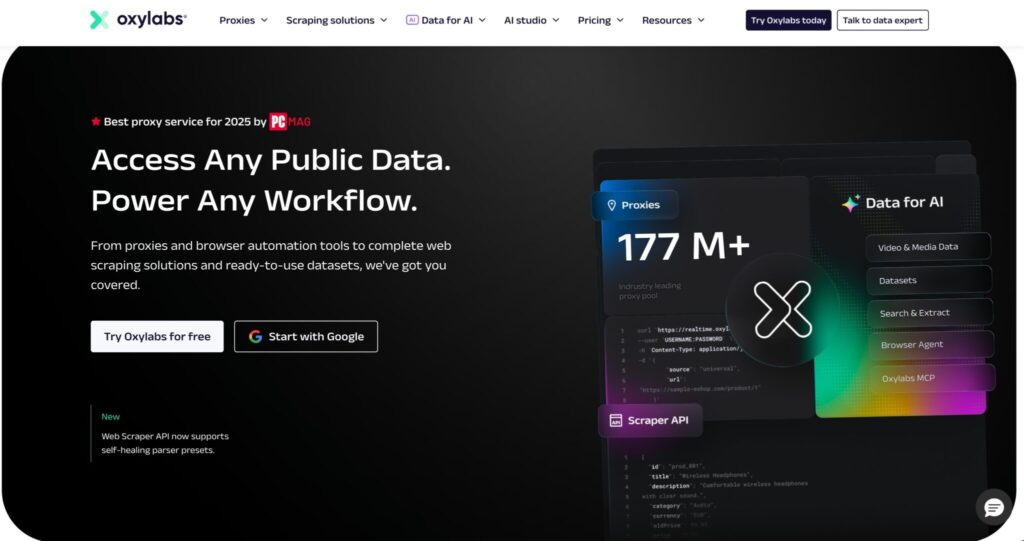
Oxylabs is one of the strongest choices when you need scale, targeting depth, and predictable infrastructure. Its mobile proxy page lists 20M+ mobile IPs, 140+ countries, 99.9% uptime, and filtering by continent, country, state, city, coordinates, and ASN. That makes it a serious option for teams running public data collection, ad verification, SERP tracking, and market intelligence across multiple regions.
The big reason to pick Oxylabs is control. You are not just buying random mobile IPs. You can narrow by geo and network parameters, which helps when a project depends on seeing the web from a specific mobile market. For example, a mobile ad verification team may need to check whether an offer appears correctly from a certain city and carrier range. A generic rotating pool would be too loose for that.
Pricing is bandwidth-based. The official mobile pricing page shows Starter at 4GB for $30, which works out to $7.50/GB, with larger plans lowering the per-GB rate.
Pro-Tip: Use Oxylabs when location precision matters more than the cheapest possible GB rate. It is built for teams that know exactly where they need traffic to originate.
2. Bright Data: Best for Compliance, Controls, and Advanced Proxy Infrastructure
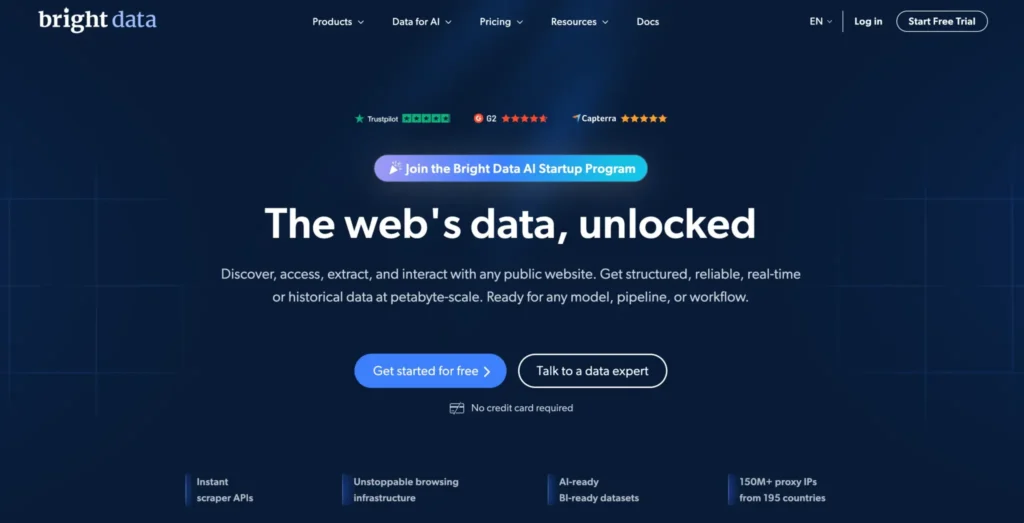
Bright Data is a premium provider with one of the most mature proxy ecosystems in the market. Its docs list a mobile proxy network with 7 million mobile IPs worldwide, and its broader platform includes proxy management, web access APIs, datasets, and compliance controls.
Bright Data is not the simplest choice for a beginner. It has stricter onboarding, more configuration choices, and a platform that is clearly aimed at business users, developers, and data teams. But that is also the point. If you need compliance workflows, team permissions, proxy zone management, APIs, and deeper routing controls, Bright Data gives you more room to build a serious stack.
It is especially useful for companies that need to document how proxy traffic is sourced and governed. That matters in finance, ad verification, brand protection, research, and large-scale public data collection.
The trade-off is cost and setup friction. If you only need one mobile proxy for browser testing, Bright Data may feel heavier than necessary. If you need a policy-aware proxy infrastructure across multiple teams, it is one of the most complete options.
Pro-Tip: Bright Data is strongest when proxies are only one part of your data operation. If you also need APIs, datasets, proxy manager tools, and compliance processes, it earns its premium.
3. SOAX: Best for Geo-Targeted Mobile Proxy Campaigns
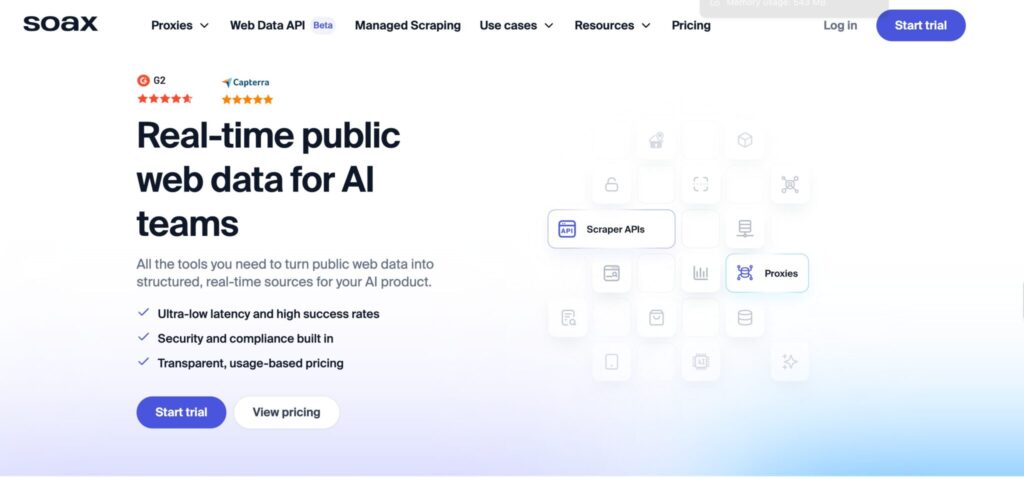
SOAX is a strong fit when you care about location coverage, filtering, and clean mobile routing. Its mobile proxy page advertises 33+ million mobile proxies across 195 locations, covering 3G, 4G, 5G, and LTE options. Its broader pricing page also shows proxy plans starting at $3.60/GB, with credits usable across multiple proxy types.
The key appeal is flexibility. SOAX works well for teams that need to test mobile views in different markets, run localized checks, verify ad placements, or collect public data with a mobile footprint. It also positions its network as ethically sourced, which is becoming more important as buyers move away from shady proxy resellers.
SOAX is not just for technical users, but it does reward teams that understand session design. If you rotate too aggressively, you can break logins or multi-step flows. If you keep the same IP too long, you may lose the benefit of distribution. SOAX gives you room to tune that balance.
Pro-Tip: For mobile SERP tracking and localized QA, start with sticky sessions instead of per-request rotation. You want a stable enough session to complete the flow, not a new identity every few seconds.
4. Decodo: Best Balance of Price, Usability, and Mobile Coverage
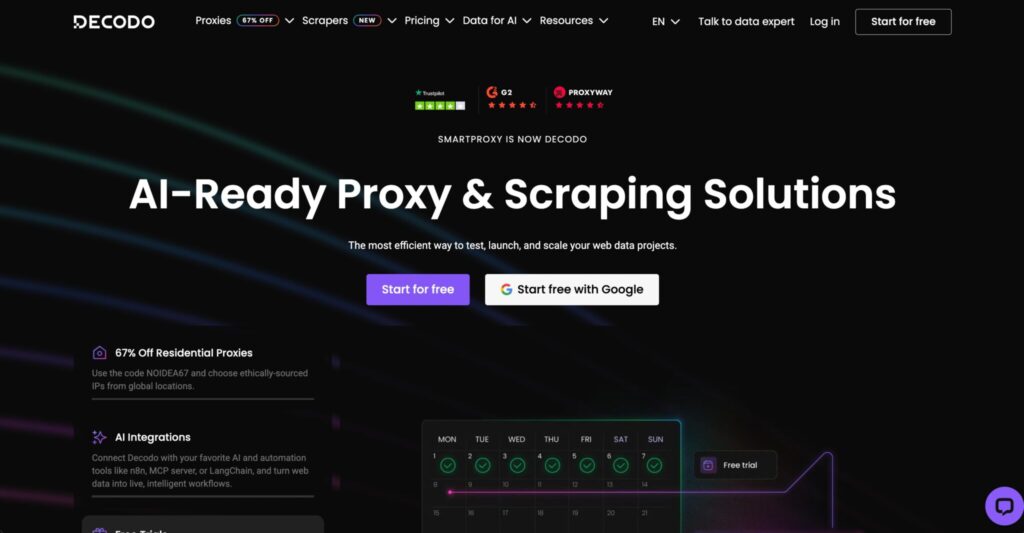
Decodo, formerly known as Smartproxy, is one of the easier providers to recommend for buyers who want serious features without jumping straight into enterprise complexity. Its mobile proxy page lists 10M+ 3G, 4G, and 5G mobile IPs, 160+ locations, and 700+ carriers. It also mentions city and carrier-level targeting, rotating or sticky behavior, and mobile use cases like app testing, data collection, and campaign checks.
Pricing is one of the sharper selling points. Current promo pricing on the mobile proxy page shows plans starting from $2.25/GB, although regular pricing and discounts can change.
Decodo is a good pick for teams that want a user-friendly dashboard, enough targeting options, and a lower starting cost than many enterprise networks. It is also a sensible choice for marketers and QA teams who are new to mobile proxies but need something more trustworthy than low-end reseller proxies.
The main limitation is that Decodo may not offer the same depth of enterprise governance and custom infrastructure as Bright Data or Oxylabs. But for many users, that is not a problem. It keeps the setup cleaner.
Pro-Tip: Decodo is a strong first paid test provider. Use it to validate your workflow, estimate GB consumption, and identify which countries or carriers actually matter before moving to larger contracts.
5. NetNut: Best for Stable Business-Grade Mobile Proxy Use
NetNut’s mobile proxy page lists 5M+ mobile IPs across 100+ countries, 3G/4G/5G/LTE mobile proxy servers, and 99.9% mobile success rates. It also describes real phone and mobile device IPs with auto-rotation for continuous data collection.
NetNut is a good option for business teams that want a reliable mobile proxy network without needing to tune every little technical detail. It fits use cases like ad verification, market research, competitive monitoring, and data collection from a mobile-user perspective.
Pricing on its mobile proxy page shows annual-billing rates starting around $6.46/GB for a 13GB plan, with lower per-GB pricing at higher usage levels.
NetNut’s main strength is stability. It is not always the flashiest provider in terms of public-facing feature pages, but it has a strong reputation in the proxy industry and clear business use positioning.
Pro-Tip: NetNut makes sense when you need predictable mobile proxy access for ongoing workflows rather than one-off testing.
6. IPRoyal: Best for Dedicated Mobile Proxies and Smaller Teams
IPRoyal is attractive because it gives buyers a more accessible way into mobile proxies. Its quick-start guide says IPRoyal Mobile Proxies use premium mobile carriers, support HTTP/HTTPS and SOCKS5, offer country, state, and city-level geo-targeting, and include custom rotation options. Its product page also mentions 5G/4G/3G/LTE support, dedicated and rotating IPs, and 24-hour test plans.
The pricing structure is friendly for testing. IPRoyal shows mobile proxy pricing starting at $10.11/day for 24 hours and $130/month for 30 days on dedicated plans.
This makes IPRoyal useful for freelancers, small agencies, QA testers, and social media or app testing teams that need real mobile behavior without committing to a large bandwidth package. It also supports SOCKS5, which is useful for tools that need more than standard HTTP(S) proxy support.
The trade-off is that IPRoyal does not have the same massive platform depth as Oxylabs or Bright Data. But for many lean teams, that is a fair exchange for lower friction and simpler buying.
Pro-Tip: Use IPRoyal when you need a dedicated-style mobile proxy for controlled tasks, not when you need millions of rotating IPs for large distributed crawling.
7. Proxy-Seller: Best Budget-Friendly Mobile Proxy Option
Proxy-Seller is a practical choice if you want a straightforward mobile proxy buying experience. Its mobile proxy page lists rotating 5G/4G/LTE proxies from real carriers, dedicated or shared pools, and IP rotation by timer or on demand. It also advertises pricing from $10/IP.
The appeal is simplicity. You choose a location, buy the proxy, and use it. This is not the same as managing a large enterprise proxy network, but not everyone needs that. For smaller workflows, testing, app checks, and basic mobile browsing scenarios, Proxy-Seller can be cost-effective.
The main thing to watch is pool quality and location availability. Lower-cost mobile proxies can vary more by region, carrier, and user load. Always test before buying a long plan.
Pro-Tip: Ask support about whether the mobile proxy is shared or dedicated before purchasing. Shared mobile proxies can be cheaper, but they may be noisier.
8. Rayobyte: Best for High-Volume Rotating Mobile Data Collection
Rayobyte’s mobile proxy product is built around rotating mobile IPs. Its page states that it currently offers rotating mobile proxies only, assigning a unique mobile IP to each connection. It also lists 3G and 4G as supported mobile generations and shows mobile pricing starting at $250/month for the Professional plan at $1.25/GB.
That makes Rayobyte interesting for high-volume public data collection where rotation matters more than long sticky sessions. If your workflow sends many independent requests and does not need the same IP across a long browser session, Rayobyte’s model can make economic sense.
It is less ideal for account-heavy workflows where you need one identity to stay stable. Since the product is positioned around rotating mobile proxies, you should match it with jobs that benefit from regular IP changes.
Pro-Tip: Rayobyte is better for request-based scraping than login-based workflows. If a task needs continuity, confirm session behavior before buying.
9. AirProxy: Best Dedicated SIM-Based Mobile Proxy for Browser Workflows
AirProxy is a more specialized option. Its official site lists €67 per proxy for 30 days, unlimited bandwidth, a dedicated SIM card, limitless IP rotations, custom rotation time, and instant delivery. It also offers a 72-hour trial for €9.90.
This is the type of provider you look at when you want a dedicated mobile setup rather than a giant rotating pool. A dedicated SIM-card style proxy is useful for browser-based workflows, mobile QA, ad checks, and cases where you want more control over one mobile identity.
AirProxy is not the right fit if you need 50 countries overnight. It is best when you value dedicated access, clean routing, and predictable behavior over massive IP volume.
Pro-Tip: For antidetect browser workflows or mobile page testing, dedicated SIM-style proxies often feel more stable than massive rotating pools.
10. ProxyEmpire: Best for Dedicated Mobile Infrastructure with Unlimited Bandwidth Positioning
ProxyEmpire’s dedicated mobile proxy page positions its service around physical devices, unlimited bandwidth, full IP control, persistent or reset-on-demand behavior, HTTP/SOCKS5 support, and coverage in select countries plus 50+ US locations.
This makes ProxyEmpire a useful option for users who want dedicated mobile infrastructure and more control than a shared rotating pool. It is especially relevant for US-focused workflows where city-level availability and dedicated devices matter.
The main limitation is that dedicated mobile infrastructure is usually narrower in coverage than huge peer-based pools. If you need broad global reach, Oxylabs, SOAX, Decodo, or Bright Data may be a better fit. If you need durable mobile access in a smaller set of locations, ProxyEmpire is worth testing.
Pro-Tip: Dedicated mobile providers are often judged less by “IP count” and more by device quality, carrier quality, reset reliability, and support speed.
How to Choose the Best Real Device Mobile Proxy Provider
1. Start With the Use Case, Not the Provider
The wrong buying process starts like this: “Which provider has the most IPs?”
The better question is: “What mobile behavior do I need to simulate?”
For ad verification, you need geo and carrier accuracy. For app QA, you may need stable sessions and mobile network realism. For SERP tracking, rotation and location coverage matter. For browser-based workflows, dedicated SIM or sticky sessions may matter more than raw pool size.
A 20M IP pool is useless if it cannot hold a session long enough to complete your workflow. A dedicated SIM proxy is also useless if you need 80 countries.
2. Understand Rotation Types Before You Buy
Rotation is where many users waste money.
Per-request rotation changes the IP on each request. It is good for large independent request loads, but bad for multi-step journeys.
Time-based rotation changes the IP every set interval, such as 5, 10, or 30 minutes. It is useful when you need balance.
Sticky sessions keep the same IP for a session window. They are better for login flows, cart checks, dashboards, and anything that expects identity continuity.
On-demand rotation lets you manually or programmatically reset the IP. This is common with dedicated mobile proxies and SIM-based providers.
A sticky session means the user keeps the same IP address for a set period instead of changing it after every request, which helps with session persistence.
3. Check Carrier and ASN Targeting
Country targeting is not always enough. Mobile experiences often vary by carrier, ASN, city, device type, and network generation.
For example, a mobile offer may appear on one carrier but not another. A local SERP may shift between city-level mobile IPs. A fraud detection system may treat mobile carrier IPs differently from residential broadband.
Providers like Oxylabs highlight ASN and fine-grained geographic targeting, while Decodo mentions carrier-level targeting across hundreds of carriers.
4. Do Not Ignore Bandwidth Pricing
Mobile proxies can become expensive fast. A browser session with images, scripts, video previews, and tracking pixels can burn far more data than a simple HTTP request.
Before buying a large plan, run a small test and measure:
- Average MB per task
- Success rate
- Time per completed session
- IP rotation frequency
- Cost per successful result
That final number matters more than cost per GB.
5. Check Protocol Support
HTTP and HTTPS are enough for many browser and scraping tasks. SOCKS5 matters when your software requires broader traffic handling or non-browser tools.
IPRoyal clearly lists HTTP/HTTPS and SOCKS5 support for mobile proxies. ProxyEmpire also lists HTTP/SOCKS5 support for its dedicated mobile proxies.
6. Ask About Sourcing and Acceptable Use
Real device mobile proxies are powerful, so good providers usually have stricter rules. That is a good sign. Avoid providers that cannot explain how they source traffic, how abuse is handled, or what use cases are prohibited.
For business use, choose providers that talk openly about compliance, opt-in sourcing, and acceptable use. It protects your project and reduces the risk of unstable inventory.
Best Real Device Mobile Proxy by Use Case
| Use Case | Best Provider Shortlist | Why |
|---|---|---|
| Enterprise public data collection | Oxylabs, Bright Data, SOAX | Large pools, controls, support, compliance |
| Mobile ad verification | Oxylabs, SOAX, Decodo, NetNut | Geo, carrier, and session control |
| App QA and mobile web testing | Decodo, IPRoyal, AirProxy | Easier setup, sticky or dedicated options |
| Dedicated mobile browser workflows | AirProxy, IPRoyal, ProxyEmpire | SIM-style or dedicated mobile access |
| High-volume rotating requests | Rayobyte, Oxylabs, SOAX | Rotation-first models and bulk plans |
| Budget testing | IPRoyal, Proxy-Seller, Decodo | Lower entry points |
| US-focused dedicated mobile locations | ProxyEmpire, AirProxy, IPRoyal | Stronger dedicated-device positioning |
My Practical Ranking
If I had to rank these for most professional buyers, I would group them like this.
Best overall enterprise pick: Oxylabs
It has scale, targeting, and serious infrastructure.
Best premium infrastructure platform: Bright Data
Choose it when compliance, APIs, and platform maturity matter.
Best geo-targeting specialist: SOAX
Strong for location-sensitive mobile workflows.
Best value pick: Decodo
Good mix of price, usability, coverage, and features.
Best smaller-team dedicated option: IPRoyal
Accessible pricing and useful protocol support.
Best dedicated SIM-style proxy: AirProxy
Good when you want dedicated mobile behavior over raw pool size.
Best high-volume rotating option: Rayobyte
Useful for request-heavy jobs where sticky identity is not needed.
FAQs: Best Real Device Mobile Proxies
1. What are real device mobile proxies?
Real device mobile proxies route traffic through IPs associated with mobile devices, SIM cards, modems, or carrier mobile networks. They make requests appear closer to normal mobile-user traffic than datacenter proxies.
2. Are mobile proxies better than residential proxies?
They are better for mobile-specific workflows, such as mobile ad verification, app testing, carrier-based testing, and mobile SERP checks. Residential proxies are usually cheaper and often better for broad web scraping where mobile identity is not required.
3. What is the difference between rotating and sticky mobile proxies?
Rotating mobile proxies change IPs frequently, either per request or by time interval. Sticky mobile proxies keep the same IP for a set period. Use rotation for scale and sticky sessions for workflows that need continuity.
4. Are dedicated mobile proxies worth it?
Yes, when you need stable identity, manual IP resets, dedicated SIM access, or browser-based workflows. They cost more per proxy but can be more predictable than shared rotating pools.
5. Which provider has the largest mobile proxy pool?
Among the providers covered here, SOAX advertises 33M+ mobile proxies, while Oxylabs lists 20M+ mobile IPs. Bigger is not always better, though. Targeting, session quality, and success rate matter more than headline pool size.
6. Do mobile proxies support SOCKS5?
Some do. IPRoyal lists HTTP/HTTPS and SOCKS5 support for mobile proxies, and ProxyEmpire lists HTTP/SOCKS5 support for dedicated mobile proxies. Always confirm before buying because protocol support can vary by plan.
7. Why are mobile proxies expensive?
Mobile proxies rely on scarce carrier IP space, real devices, SIM infrastructure, peer networks, or mobile bandwidth. They are harder to maintain than datacenter proxies, and mobile bandwidth costs more.
8. Can I use mobile proxies for app testing?
Yes. Mobile proxies are commonly used for testing mobile websites, app flows, localized content, ad placements, and carrier-specific experiences. Choose sticky or dedicated sessions if the app flow requires login or continuity.
9. What should I test before buying a large mobile proxy plan?
Test speed, session stability, IP reputation, rotation behavior, location accuracy, protocol support, and cost per successful task. A cheap plan with poor success rate is not actually cheap.
10. Which real device mobile proxy provider should I choose first?
For enterprise work, start with Oxylabs or Bright Data. For geo-targeted mobile testing, try SOAX or Decodo. For dedicated mobile access, test IPRoyal, AirProxy, or ProxyEmpire. For high-volume rotating traffic, look at Rayobyte or Oxylabs.
Final Verdict: Which Real Device Mobile Proxy Provider Is Best?
For most serious teams, Oxylabs is the strongest all-around pick because it combines a large mobile IP pool, strong targeting, and enterprise-grade reliability. Bright Data is the better choice if your team needs heavier compliance controls, APIs, proxy management, and a broader data platform. SOAX is excellent for geo-targeted mobile work, while Decodo gives the best mix of price and usability for many growing teams.
For dedicated mobile setups, I would look at IPRoyal, AirProxy, or ProxyEmpire. These are better when you need stable mobile behavior from a smaller number of devices or locations. For high-volume rotating mobile requests, Rayobyte deserves a look, especially if sticky sessions are not central to your workflow.
The main rule is simple: do not buy real device mobile proxies just because they sound powerful. Buy them when your project truly needs mobile carrier trust, mobile geo behavior, session control, or app-level testing accuracy. That is where they justify the higher cost.