
A bad mobile proxy does not usually fail loudly. It fails in annoying little ways.
One session drops halfway through a login. Another rotates IPs right after you warm up an account. A third claims to be “mobile,” but the target site treats it like recycled datacenter traffic. If you are running ad verification, mobile testing, account workflows, price monitoring, or mobile-first data collection, that kind of instability burns time fast.
That is why static mobile proxies are so attractive. You want the trust signal of a mobile carrier IP, but you also want the session stability of a fixed identity. The catch is that “static mobile proxy” is not always a literal fixed mobile IP.
Most mobile networks use carrier-grade infrastructure where IPs can change naturally, so many providers sell static-like access through dedicated mobile devices, sticky sessions, reserved carrier gateways, or controlled rotation windows. Sticky sessions keep the same IP for a set period, while rotating sessions change IPs more frequently.
So, the real question is not “Which provider has the biggest mobile proxy pool?” It is: Which provider gives you enough mobile IP trust, enough session control, and enough rotation flexibility for your use case?
Below is a tested-style buyer’s guide to the best static mobile proxy providers worth shortlisting.
Quick Verdict: Best Static Mobile Proxy Providers
| Rank | Provider | Best For | Mobile IP Pool / Coverage | Static-Like Control | Rotation Options | Good Fit |
|---|---|---|---|---|---|---|
| 1 | Proxy-Seller | Dedicated mobile proxy setups | Real 4G/5G carrier proxies | Dedicated or shared pools | Timer or on-demand rotation | Account workflows, ad checks |
| 2 | HydraProxy | US fixed carrier-style mobile proxies | USA 4G/5G mobile proxies | Fixed or multi-carrier options | Multiple IP rotations | US testing, social workflows |
| 3 | IPRoyal | Budget-friendly dedicated mobile access | 4.5M+ mobile IPs claimed | Dedicated and shared plans | Dashboard-based custom rotation | Smaller teams, daily testing |
| 4 | Oxylabs | Enterprise mobile proxy scale | 20M+ mobile IPs, 140+ countries | Sticky use through large pool controls | Geo and ASN targeting | Enterprise scraping, QA |
| 5 | SOAX | Precise sticky sessions | 33M+ mobile IPs, 195+ geos | Session ID based stickiness | Sticky and rotating | Geo testing, ad verification |
| 6 | Decodo | Balanced mobile proxy network | 10M+ mobile IPs, 700+ carriers | Sticky or automatic rotation | Country, ASN, city targeting | Data teams, developers |
| 7 | NetNut | Broad country coverage | 5M+ mobile IPs, 100+ countries | Sticky sessions available | Rotating and sticky | Regional data collection |
| 8 | Proxyrack | Flexible global mobile pool | 1.4M+ mobile IPs, 70+ countries | Sticky sessions | Rotation and geo targeting | Smaller scraping teams |
| 9 | ProxyEmpire | Dedicated 4G/5G mobile devices | Dedicated mobile proxies in select markets | Dedicated device access | Full IP rotation | Dedicated mobile workflows |
| 10 | LimeProxies | Simple dedicated mobile IP pricing | 3M+ carrier IPs, 30+ countries | Dedicated mobile IP plans | Sticky or rotating sessions | Entry-level static-like use |
What Is a Static Mobile Proxy?
A static mobile proxy routes traffic through a mobile carrier IP while trying to keep that IP stable for longer than a normal rotating proxy would.
Traditional rotating mobile proxies change IPs often. That is useful for large-scale scraping or tasks where you want fresh IPs. Static mobile proxies, or sticky mobile proxies, are better when your workflow needs continuity. Think login sessions, profile management, cart testing, mobile ad verification, app QA, or multi-step forms.
Here is the practical difference:
| Proxy Type | IP Behavior | Best For | Main Risk |
|---|---|---|---|
| Rotating mobile proxy | IP changes per request or interval | High-volume data collection | Can break sessions |
| Sticky mobile proxy | Same IP for a set session length | Login workflows, ad checks | Can get tracked if abused |
| Dedicated mobile proxy | Reserved device, port, or carrier route | Long-running workflows | Higher cost |
| Static ISP proxy | Fixed residential ISP IP, not mobile | Stable accounts and automation | Not a mobile carrier signal |
Pro Tip: If a provider claims “static mobile IP forever,” ask how the IP is assigned. A dedicated mobile device or sticky mobile gateway is realistic. A truly permanent mobile carrier IP is much less common than a static ISP proxy.
Detailed Reviews of the Best Static Mobile Proxy Providers
1. Proxy-Seller: Best Overall for Dedicated Static-Like Mobile Proxies
Proxy-Seller is one of the stronger choices if your main need is dedicated mobile proxy access with controlled rotation. Its mobile proxy product uses real 4G and 5G carrier connections and lets users choose dedicated or shared pools, with rotation controlled by timer or on demand.
That matters because static mobile workflows rarely need a proxy that never changes. They need a proxy that changes only when you tell it to. Proxy-Seller fits that pattern well. You can hold a session long enough for account activity, then rotate when the session becomes stale or when a workflow requires a fresh mobile IP.
It is especially useful for social media management, ad verification, sneaker-style workflows, mobile testing, and regional content checks. The main appeal is simplicity. You are not dealing with a giant enterprise dashboard just to run a few dedicated mobile ports.
The trade-off is that Proxy-Seller may not offer the same enterprise-scale targeting depth as Oxylabs or SOAX. If you need coordinate-level targeting, ASN filtering, large compliance workflows, and custom data pipelines, bigger providers may be better. But for buyers who want practical static-like mobile proxies without overcomplicating setup, Proxy-Seller is easy to shortlist.
Pro Tip: Use on-demand rotation instead of aggressive timed rotation for login-heavy workflows. A stable mobile session usually beats a fresh IP every few minutes.
2. HydraProxy: Best for US Fixed and Dedicated Carrier Proxy Workflows
HydraProxy is a strong pick for users focused on the United States. Its mobile proxy product offers USA 4G and 5G mobile proxies, unlimited bandwidth, geo-targeting, HTTPS/SOCKS support, and fixed or multi-carrier IP rotation across carriers such as AT&T, T-Mobile, and Verizon.
This makes HydraProxy useful when you need mobile-like stability in specific US states or carrier environments. For example, an ad verification team checking mobile ads in the US may care more about state-level accuracy and carrier behavior than a huge international pool.
HydraProxy also keeps the offer fairly straightforward. It is not trying to be a full data platform. It is built for buyers who want carrier proxy access that feels operationally simple.
The downside is coverage. If your work spans many countries, HydraProxy may feel limited compared with SOAX, Oxylabs, Decodo, or NetNut. It is a better fit for US-heavy mobile workflows than global scraping programs.
Best for: US mobile testing, carrier-specific QA, state-level mobile workflows, social account operations.
3. IPRoyal: Best Budget-Friendly Dedicated Mobile Proxy Option
IPRoyal is attractive because it blends dedicated mobile proxy plans with flexible pricing. Its mobile proxies support shared and dedicated plans, custom IP rotation from the dashboard, unlimited traffic on rotating mobile proxies, and dedicated mobile plans with access to its mobile pool.
For smaller teams, this is useful. You may not need a huge enterprise contract just to test mobile pages, verify ads, or manage a small number of accounts. IPRoyal’s mobile proxy setup gives you enough control to run static-like sessions while keeping costs more manageable.
The dashboard-based rotation is also helpful. You can tune IP behavior based on what the target workflow needs instead of accepting a fixed rotation schedule.
The limitation is that budget-friendly proxy services can vary by location and workload. A plan that works well for light account management may not be ideal for heavy scraping or strict enterprise compliance. Test before scaling.
Pro Tip: Start with a small paid test and check IP reputation, session length, carrier accuracy, and speed during your actual workflow. Proxy quality looks different in the dashboard than it does inside a real browser session.
4. Oxylabs: Best Enterprise Mobile Proxy Network
Oxylabs is built for scale. Its mobile proxy network lists 20M+ mobile IPs across 140+ countries, with targeting by continent, country, state, city, coordinates, and ASN. It also lists 99.9% uptime and a large mobile pool designed for high-volume use.
For static mobile use, Oxylabs is not the cheapest or simplest option. Its strength is enterprise control. If you need mobile IPs for ad verification, public data collection, market intelligence, app testing, or large geo-targeted projects, Oxylabs gives you the targeting depth that smaller mobile proxy sellers often lack.
The ASN targeting is especially useful. Carrier-level accuracy matters when you are testing mobile experiences that vary by network. A generic “US mobile IP” is not always enough.
The downside is cost and complexity. If you just need five dedicated mobile ports for account work, Oxylabs may feel like too much. But for serious teams with compliance, scale, and targeting requirements, it belongs near the top.
Best for: Enterprise teams, data operations, geo-sensitive testing, public web data collection, mobile ad verification.
5. SOAX: Best for Sticky Session Control
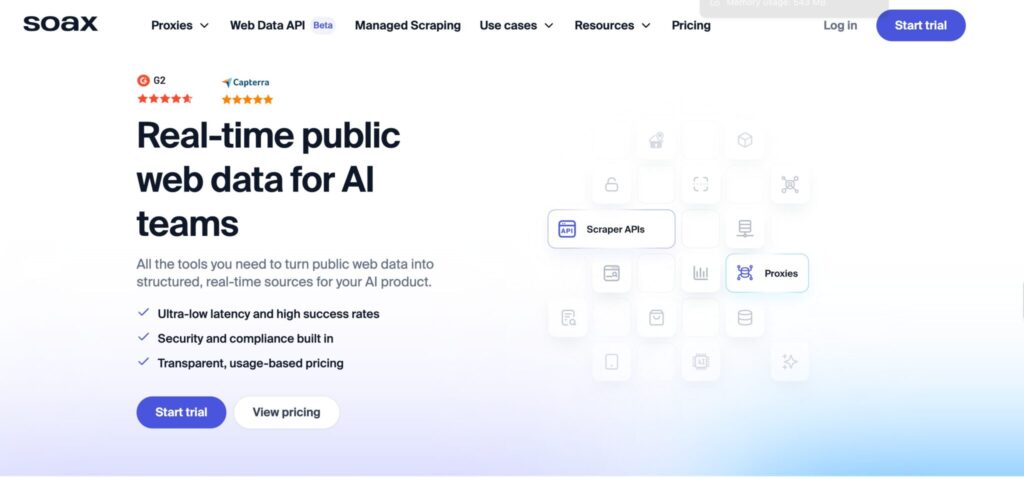
SOAX is one of the best choices when session control matters. Its mobile proxy product claims over 33 million 5G, 4G, 3G, and LTE mobile proxies, 195+ geos, city-level targeting, sticky and rotating sessions, and a listed 99.95% success rate.
The reason SOAX stands out for static mobile buyers is its sticky session logic. Its help documentation explains how users can maintain the same IP by using a session ID and session length, while new IPs are returned when those parameters are not used.
That is exactly what many buyers mean when they ask for static mobile proxies. They do not always need a permanent IP. They need predictable session persistence.
SOAX is particularly useful for mobile ad verification, localized testing, SERP checks, app QA, and workflows where you need to hold one mobile identity long enough to complete a sequence.
The only caution is setup. Session strings, country codes, session IDs, and endpoint behavior require attention. If your team is technical, this is fine. If not, choose a provider with a simpler dashboard.
Pro Tip: Use different session IDs for parallel tasks. Reusing one sticky session across unrelated workflows can create behavior patterns that look unnatural.
6. Decodo: Best Balance of Scale, Usability, and Carrier Targeting
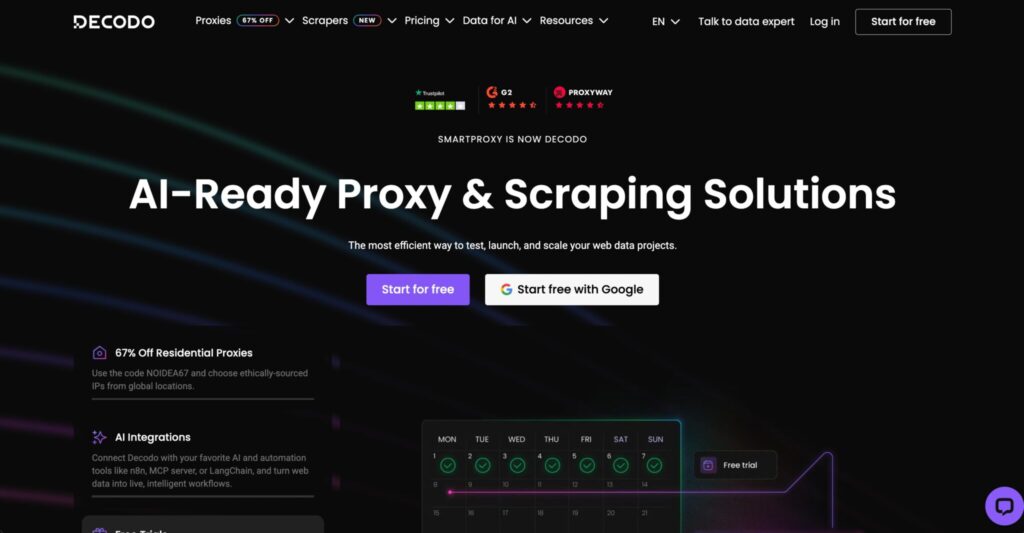
Decodo, formerly Smartproxy, is a good middle ground between enterprise-heavy providers and smaller dedicated proxy sellers. Its mobile proxy page lists 10M+ mobile IPs from 700+ mobile carriers, with city, ASN, and country-level targeting. It also supports automatic rotation or sticky behavior.
This makes Decodo useful for teams that want solid mobile coverage without going fully enterprise. The carrier count is a meaningful advantage for mobile-specific work because carrier identity can affect what content, ads, or restrictions a user sees.
It is also developer-friendly. Decodo highlights integration with common programming languages, which helps if your workflow connects through scripts, automation tools, or internal dashboards.
For static mobile use, Decodo works best when you treat it as a controlled mobile session provider rather than a fixed-IP leasing service. Use sticky sessions for continuity, and rotate when the task calls for it.
Best for: Data teams, QA teams, ad verification, mobile SERP checks, developers who need flexible integration.
7. NetNut: Best for Broad Country Coverage
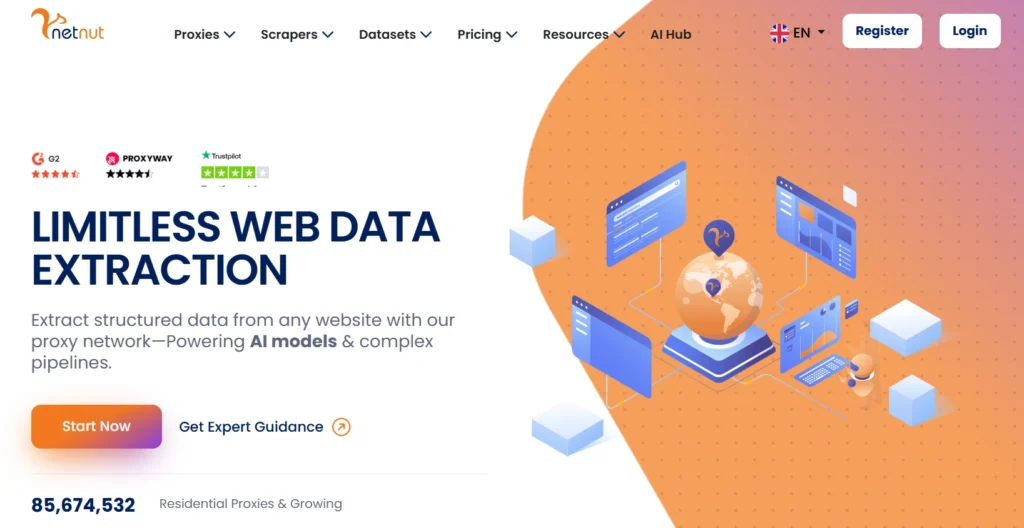
NetNut’s mobile proxy product lists over 5 million mobile carrier IPs from more than 100 countries, supporting LTE, 3G, 4G, and 5G proxy connections.
The value here is coverage. If your campaigns, tests, or data collection projects span many countries, NetNut gives you a wide mobile proxy footprint without forcing you into a tiny set of locations.
NetNut is also known more broadly for its proxy infrastructure across residential, static residential, datacenter, and mobile proxies. That can help if you need different proxy types under one provider.
For static mobile users, the main question is how much session control you need. NetNut’s mobile proxies can work well for regional access and longer workflows, but buyers should test how sticky sessions behave in their exact environment.
Pro Tip: Do not compare NetNut’s mobile proxies only by pool size. Test country accuracy, carrier consistency, and how long the same IP can realistically stay active.
8. Proxyrack: Best Flexible Option for Smaller Teams
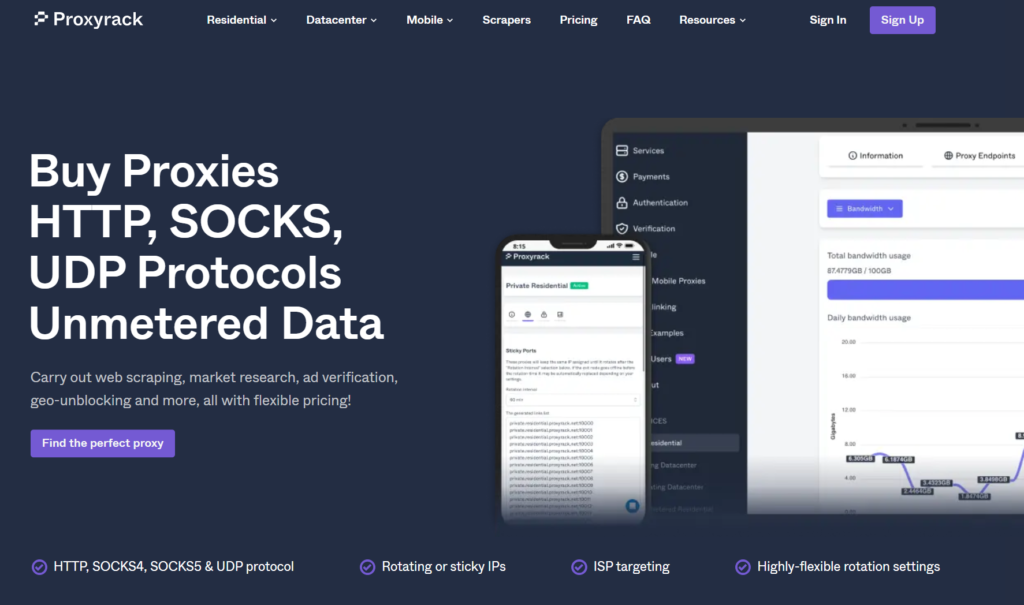
Proxyrack offers a mobile proxy pool with more than 1.4 million unique mobile IPs across 70+ countries, along with IP rotation, sticky sessions, and geo-location targeting.
This is a practical option for smaller teams that want flexible mobile proxies without getting locked into enterprise pricing. The pool is not as large as Oxylabs, SOAX, or Decodo, but it gives enough control for many mid-level tasks.
Proxyrack’s sticky session support makes it relevant for static-like workflows. You can maintain a session for a period, then rotate when needed. This is useful for market research, ad verification, web scraping, and mobile browsing tasks.
The main drawback is that advanced buyers may want deeper targeting, richer analytics, or more granular session rules. Still, for the price-sensitive buyer who needs mobile proxy flexibility, Proxyrack deserves attention.
Best for: Small teams, testing workflows, moderate scraping, global mobile access on a tighter budget.
9. ProxyEmpire: Best for Dedicated Mobile Device Access
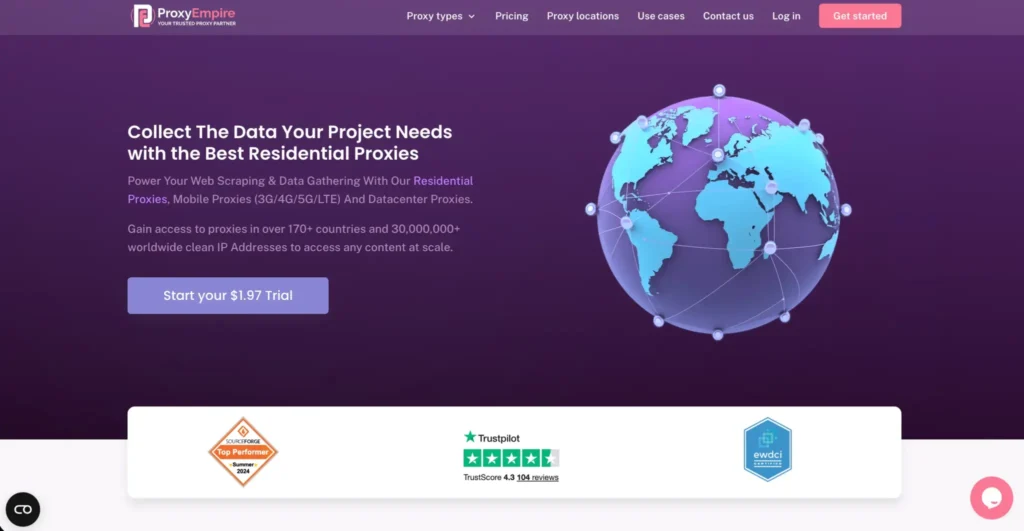
ProxyEmpire offers dedicated mobile proxies with 4G and 5G speeds, unlimited bandwidth, concurrent connections, and multiple geographic locations.
This makes it a good option for buyers who want dedicated mobile infrastructure rather than just access to a rotating shared pool. Dedicated mobile proxies are often closer to what people imagine when they search for static mobile proxies. You get a more stable setup and more control over when IP rotation happens.
ProxyEmpire is especially interesting for teams that want dedicated devices for account operations, localized research, and mobile web workflows that need persistent identity.
The limitation is geographic coverage. Depending on the location you need, availability may be narrower than large proxy networks. Check the exact city, country, and carrier options before committing.
Pro Tip: Dedicated mobile proxies are not automatically safer. If you abuse one IP with too many accounts or repetitive actions, its reputation can still degrade.
10. LimeProxies: Best Simple Dedicated Mobile IP Entry Point
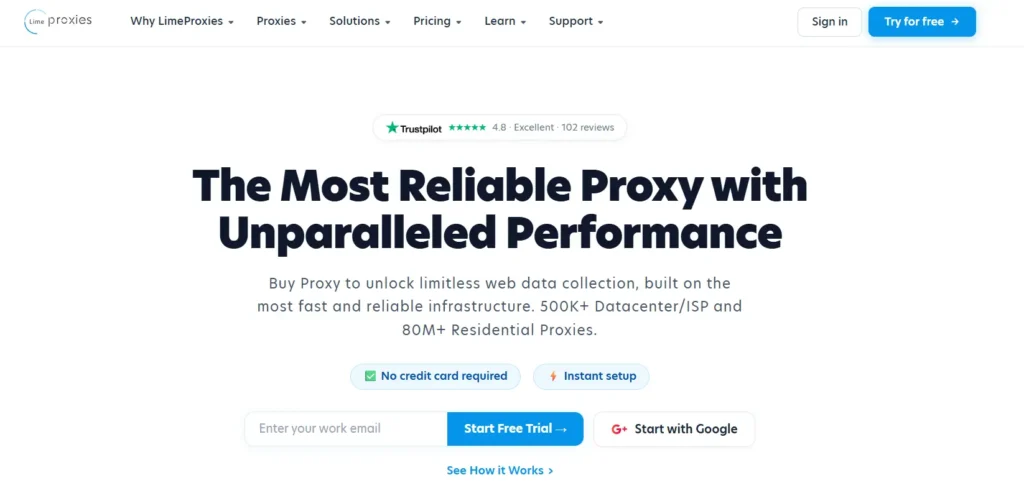
LimeProxies offers mobile proxies using 4G and 5G carrier IPs, with 3M+ real carrier IPs, 30+ countries, automatic rotation, sticky sessions, and dedicated mobile IP plans.
Its pricing is easy to understand compared with many providers in this category. The page lists dedicated mobile IP features, 4G/5G carrier networks, sticky or rotating sessions, and unlimited bandwidth on higher plans.
This makes LimeProxies a good option for users who want a clear entry point into static-like mobile proxy usage. It is not necessarily the deepest enterprise solution, but it offers the core ingredients: real carrier IPs, sticky sessions, rotation control, and dedicated access.
The main caution is that bold marketing claims around trust and ban resistance should always be tested. Mobile proxies are strong, but no proxy is magic. Your browser fingerprint, cookies, behavior, target platform, and account history still matter.
How to Choose the Best Static Mobile Proxy
1. Start With the Use Case, Not the Provider
Static mobile proxies are not one-size-fits-all.
For account management, choose dedicated mobile proxies or long sticky sessions. For ad verification, choose accurate geo-targeting and carrier targeting. For scraping public mobile pages, choose a larger rotating pool with optional sticky sessions. For app testing, choose real 4G/5G mobile carrier routing in your target country.
If your task needs one stable identity, do not buy a high-rotation plan just because it has a huge IP pool. If your task needs volume, do not overpay for dedicated ports when rotating mobile IPs would work better.
2. Understand IP Pool Quality
Pool size matters, but pool quality matters more.
A provider with 30 million mobile IPs sounds impressive. But if your use case needs stable US carrier sessions, a smaller provider with dedicated US mobile ports may perform better. Look at:
- Country coverage
- City or state targeting
- Carrier or ASN targeting
- Real mobile carrier routing
- Sticky session duration
- IP freshness
- Abuse controls
- Authentication methods
- Support for HTTPS and SOCKS5
Pro Tip: Ask whether the provider owns, leases, partners, or crowdsources its mobile infrastructure. You do not need every backend detail, but vague answers are a warning sign.
3. Check Rotation Protocols Carefully
Rotation is where many buyers make the wrong decision.
Static mobile does not mean “never rotate.” It means “rotate with control.” The best providers let you choose between:
- Per-request rotation
- Timed rotation
- Sticky sessions
- On-demand rotation
- Session ID based rotation
- Dedicated device reset
- Carrier-specific rotation
For login workflows, use sticky sessions or dedicated proxies. For data collection, use timed or per-request rotation. For ad verification, use sticky sessions long enough to view and document the ad experience.
4. Test Session Stability
Before buying a large plan, test these items:
- Does the IP stay the same for the promised session length?
- Does the session survive browser restarts?
- Does the IP change unexpectedly?
- Does the provider return the same carrier and region?
- Does the target site trigger extra verification?
- Does latency stay usable?
- Does the proxy support your browser, scraper, or automation stack?
A proxy that looks fine in an IP checker can still fail in a real workflow.
5. Match Proxy Type to Risk Level
Use static mobile proxies when the target platform is mobile-first or sensitive to IP reputation. Use static ISP proxies when you need long-term fixed identity but do not need mobile carrier routing. Use datacenter proxies when speed and cost matter more than trust.
Mobile proxies are expensive because the infrastructure is harder to maintain. Paying for them only makes sense when the trust signal actually helps.
Common Mistakes When Buying Static Mobile Proxies
Buying “Static” Without Asking About Session Length
Some providers use “static” as a loose marketing term. Ask how long the IP remains stable and what triggers rotation.
Ignoring Browser Fingerprints
A mobile carrier IP will not save a bad fingerprint. If your browser fingerprint screams automation, the IP alone will not carry the session.
Using One IP for Too Many Accounts
Even with CGNAT, too much repeated activity from one proxy can look suspicious. Spread workflows naturally.
Choosing the Biggest Pool by Default
Large pools are great for scale. Dedicated workflows often need consistency more than size.
Skipping a Paid Test
Do not judge proxies only from website claims. Test them on your target platform before scaling.
FAQs About Static Mobile Proxies
1. Are static mobile proxies really static?
Usually, not in the same way as static ISP proxies. Most static mobile proxies are dedicated mobile routes, sticky sessions, or controlled rotation setups. The IP can stay stable for a session, but mobile carrier networks may still rotate addresses under some conditions.
2. What is the difference between sticky and static mobile proxies?
A sticky mobile proxy keeps the same IP for a defined session length. A static proxy suggests a longer-lasting fixed IP. In mobile proxy marketing, many “static” offers are actually sticky or dedicated mobile proxies.
3. Are static mobile proxies better than rotating mobile proxies?
They are better for tasks that need continuity, such as logins, account workflows, cart testing, app testing, and ad verification. Rotating mobile proxies are better for high-volume data collection where fresh IPs matter more than session stability.
4. Can I use static mobile proxies for social media?
Yes, many buyers use mobile proxies for social media workflows because mobile carrier IPs resemble normal smartphone traffic. Still, you must keep behavior natural, avoid spam, and respect platform rules.
5. Which provider is best for US static mobile proxies?
HydraProxy is strong for US-focused fixed and carrier-style mobile proxy workflows. Proxy-Seller and IPRoyal are also worth testing if you need dedicated mobile proxy control.
6. Which provider has the largest mobile proxy pool?
SOAX lists 33M+ mobile proxies, Oxylabs lists 20M+ mobile IPs, Decodo lists 10M+ mobile IPs, and NetNut lists 5M+ mobile IPs. Pool size should be checked against your actual country, carrier, and session requirements.
7. Do static mobile proxies support SOCKS5?
Some providers support SOCKS5, but not all plans include it. HydraProxy lists HTTPS/SOCKS support, while other providers may vary by product type and endpoint.
8. Are static mobile proxies faster than datacenter proxies?
Usually no. Datacenter proxies are generally faster and cheaper. Mobile proxies are chosen for trust and mobile carrier identity, not raw speed.
9. How many accounts should I run per static mobile proxy?
There is no universal safe number. It depends on the platform, account age, cookies, fingerprint, behavior, and proxy reputation. For sensitive workflows, start conservatively and scale only after testing.
Final Verdict: Which Static Mobile Proxy Should You Choose?
If you want the best overall static-like mobile proxy setup, start with Proxy-Seller. It offers dedicated mobile access, real carrier routing, and practical rotation control without the heavy enterprise feel.
Choose HydraProxy if your work is US-focused and you need fixed or carrier-specific mobile proxy behavior. Pick IPRoyal if you want a more budget-friendly dedicated mobile option. Go with Oxylabs or SOAX if your priority is scale, precise geo-targeting, and enterprise-grade control. Decodo is the best middle-ground choice for teams that want strong mobile coverage, carrier targeting, and easier usability.
The smartest approach is simple: shortlist two providers, run the same workflow on both, and compare session stability, IP reputation, speed, carrier accuracy, and support quality. Static mobile proxies are too expensive to choose from marketing copy alone.