
Most proxy buyers start with the wrong question.
They ask, “Which provider has the biggest IP pool?” That sounds smart until the target site starts treating traffic from one ISP differently than another. A country filter may put you in the United States. A city filter may put you in New York. But ASN targeting lets you go one layer deeper and choose the network behind the IP.
That matters.
For ad verification, telecom testing, SEO monitoring, localized app checks, price intelligence, fraud analysis, and network-specific testing, ASN targeting can be the difference between “this works in theory” and “this actually matches what a real user sees.”
An ASN, or Autonomous System Number, identifies a network operated by an ISP, carrier, hosting company, university, enterprise, or other internet operator. When a proxy provider supports ASN targeting, you can route traffic through IPs associated with a specific network instead of only choosing a country or city.
The catch? Not every proxy provider supports it properly. Some only offer ISP-level filtering. Some support ASN only on residential proxies. Some allow ASN targeting but do not let you combine it with city or ZIP targeting. Others bury the feature inside advanced settings or enterprise plans.
Below is a practical buyer’s guide to the best ASN targeting proxies, written for people who care about real technical usefulness, not just big marketing numbers.
Quick Picks: Best ASN Targeting Proxy Providers
| Provider | Best For | ASN Targeting Strength | Proxy Types | Starting Price Snapshot | Main Limitation |
|---|---|---|---|---|---|
| Bright Data | Enterprise-grade ASN targeting | Excellent | Residential, mobile, ISP, datacenter | Residential PAYG shown from around $4/GB on current promo pricing | Can feel complex for smaller teams |
| Oxylabs | Developer-heavy teams and large scraping workflows | Excellent | Residential, ISP, mobile, datacenter | Residential plans start at $6/GB for 5GB | Premium pricing at scale |
| Decodo | Best balance of price, UI, and ASN control | Very strong | Residential, mobile, ISP, datacenter | Residential starts from $2/GB on larger plans | ASN cannot always be mixed with other precise filters |
| SOAX | Clean dashboard with flexible targeting | Strong | Residential, mobile, datacenter | Residential plans from around $3.60/GB on bundled plans | Precise targeting can shrink available pool |
| DataImpulse | Budget-friendly ASN filtering | Strong on premium residential | Residential, premium residential, mobile, datacenter | Residential from $1/GB, premium residential from $5/GB | ASN targeting is tied to premium or extra targeting |
| ProxyEmpire | Rollover bandwidth and ASN/ISP targeting | Strong | Residential, mobile, datacenter | Trial pricing available | Public docs can be more marketing-heavy than technical |
| Webshare | Static and replacement-based ASN control | Good | Residential, static residential, datacenter | Rotating residential shown from $3.50/month | Better for controlled lists than deep dynamic ASN routing |
| Evomi | Technical users wanting expert settings | Strong | Core residential, premium residential | Core residential listed from $0.49/GB | ASN is an extra feature and may increase bandwidth usage |
| Massive | Developers needing API-style ASN routing | Strong | Residential, ISP | Custom or account-based | Smaller public footprint than older proxy brands |
Bright Data’s documentation confirms proxy exit targeting across country, city, state, ASN, and ZIP parameters, while its pricing page also lists free ASN-level targeting as a customer feature. Oxylabs publishes residential proxy ASN targeting documentation and lists residential proxy plans starting at $6/GB on its public pricing page. Decodo’s residential proxy page and help documentation confirm ASN-level targeting, including the limitation that ASN targeting cannot always be combined with city, state, continent, or ZIP targeting.
What Are ASN Targeting Proxies?
ASN targeting proxies let you choose proxy IPs from a specific network operator.
A normal geo-targeted residential proxy may let you choose:
- Country: United States
- State: California
- City: Los Angeles
ASN targeting goes deeper:
- Country: United States
- ASN: AS7018, AT&T
- ASN: AS7922, Comcast
- ASN: AS21928, T-Mobile USA
- ASN: AS15169, Google
- ASN: AS16509, Amazon AWS
That does not mean every provider will support every ASN. It depends on the IP pool, proxy type, region, available peers, user consent model, and real-time availability.
This is why ASN targeting is most useful when you need network-level realism. If your goal is to see how a streaming app, ad platform, search engine, marketplace, or fraud system behaves for users on a specific carrier or ISP, country-level targeting is too broad.
Common Use Cases for ASN Targeting
ASN targeting is useful for:
- Ad verification by carrier or ISP
- Local SEO checks where network routing affects SERP behavior
- App testing on mobile carrier networks
- Telecom and CDN testing
- Price monitoring where sites treat networks differently
- Anti-fraud research
- Network reputation testing
- Marketplace monitoring
- QA for location-sensitive content
Pro Tip
Do not use ASN targeting for every request by default. It narrows your proxy pool. Start broad, measure success, then apply ASN filters only where the target behavior actually changes by network.
1. Bright Data: Best Overall ASN Targeting Proxy Provider
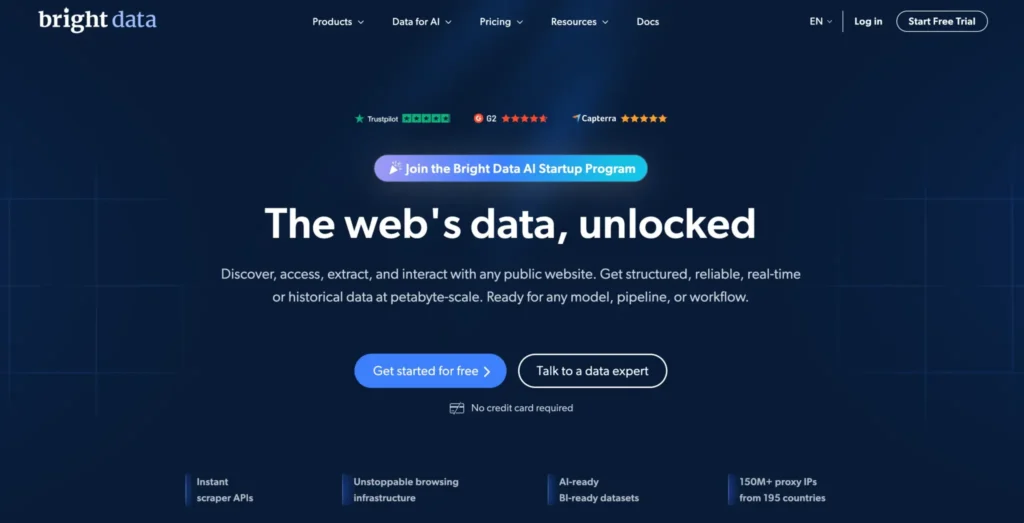
Bright Data is one of the strongest choices if ASN targeting is a core requirement, not just a nice bonus. It offers a large residential network, advanced geo controls, Proxy Manager, API support, session control, and strong documentation.
Its documentation says Bright Data proxy exits can be targeted across 195 countries by country, city, state, ASN, or ZIP code through username parameters. Its pricing page currently describes 400M+ rotating residential IPs in 195 countries and lists free country, city, ZIP, and ASN-level targeting among customer-favorite features.
Bright Data is best for teams that need more than a proxy list. You get network control, usage reporting, routing options, compliance controls, and a wider data collection ecosystem.
For ASN targeting, the biggest advantage is maturity. Bright Data is not just selling “residential proxies.” It gives technical users enough control to build repeatable routing logic.
Where Bright Data Works Best
Bright Data is strong for enterprise scraping, ad verification, brand monitoring, price intelligence, SEO checks, and applications where you need clean routing rules across regions and network types.
Its residential network is the obvious choice for ASN targeting, but its mobile and ISP products can also matter if you want carrier-level or fixed residential network behavior.
What I Like
Bright Data is reliable when you need granular targeting and large-scale infrastructure. It gives you strong control over sessions, proxy zones, routing, and authentication. The documentation is also better than most providers in this space.
What Could Be Better
It may feel heavy if you only need a few GB of ASN-filtered traffic. Smaller teams may find the dashboard, pricing, zone setup, and feature depth a bit much at first.
Best For
Enterprise teams, serious scraping operations, ad verification platforms, and technical teams that need deep control.
2. Oxylabs: Best for Developers and Large-Scale ASN Targeting
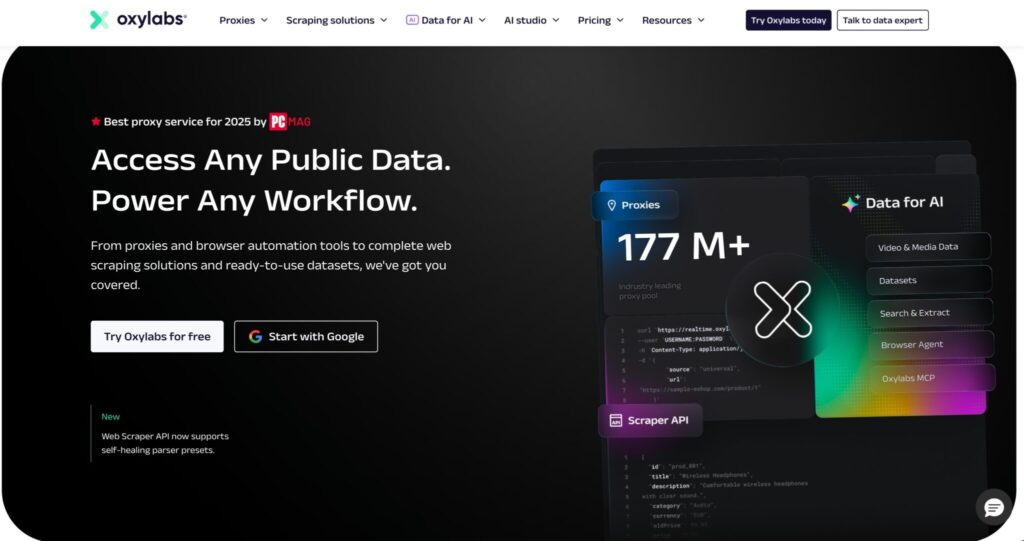
Oxylabs is another premium provider with strong ASN targeting support. Its official developer documentation states that residential proxies support targeting by ASN number, allowing users to choose proxies from specific carriers. Oxylabs also lists 175M+ residential IPs, global coverage across 195 locations, sticky sessions, HTTP/HTTPS/HTTP3/SOCKS5 protocols, and flexible rotation options on its residential pricing page.
The real strength of Oxylabs is its developer-friendly setup. If your team works with Python, Scrapy, Playwright, Puppeteer, or internal scraping pipelines, Oxylabs feels clean and predictable.
ASN targeting is especially useful when you need to test how a target responds to specific ISPs or mobile-like network paths. For web scraping, ASN targeting can help reduce mismatch between your browser fingerprint, location, and IP network.
Where Oxylabs Works Best
Oxylabs works well for large data collection, market research, SERP tracking, price intelligence, cybersecurity research, and enterprise proxy operations.
It is also a good pick when your team wants clear documentation and predictable account support.
What I Like
Oxylabs gives technical users plenty of control without making setup unnecessarily messy. The proxy network is large, sessions are flexible, and the documentation is detailed enough for production use.
What Could Be Better
Oxylabs is not the cheapest option. If you are testing a small ASN-specific workflow, the starting cost may feel higher than budget-first providers.
Best For
Engineering teams, enterprise scraping, and buyers who need reliable ASN targeting with professional support.
3. Decodo: Best Balanced ASN Targeting Provider
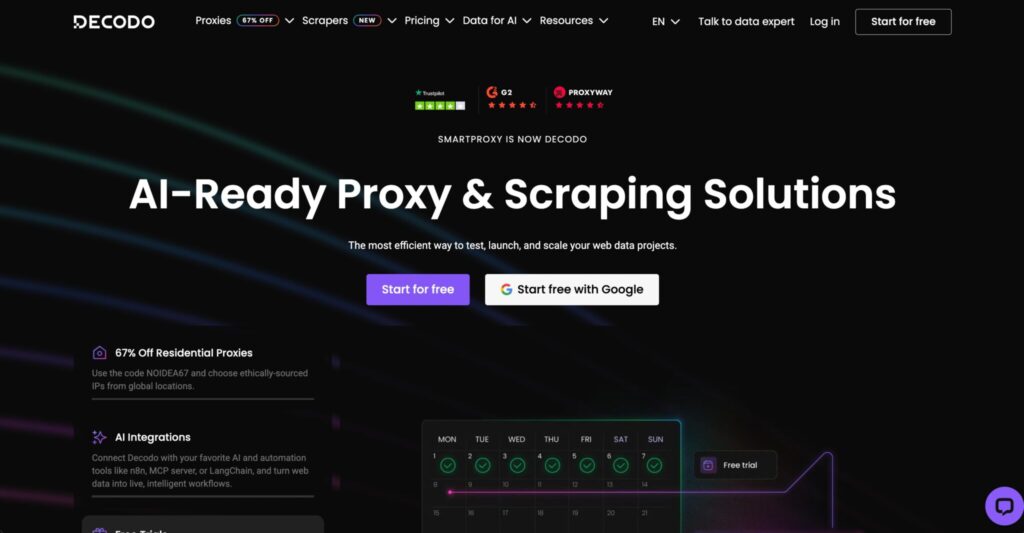
Decodo, formerly Smartproxy, has become one of the more attractive options for buyers who want strong proxy features without enterprise-level complexity.
Its residential proxy page says plans include 115M+ ethically sourced IPs, HTTP(S) and SOCKS5 support, rotating and sticky session options, and continent, country, state, city, ZIP code, and ASN-level targeting. The help documentation says users can specify ASN after selecting a country, but must choose between ASN targeting and city, state, continent, or ZIP targeting because these options cannot be used together.
That limitation is important. Decodo is powerful, but you need to plan your targeting logic. If you want “AT&T in New York City,” you may not always be able to combine those filters in the same way you expect. For many use cases, ASN plus country is enough. For hyper-local testing, verify before scaling.
Where Decodo Works Best
Decodo is great for SEO monitoring, public web data collection, ecommerce checks, ad verification, and teams that want a clean dashboard with practical pricing.
It also supports sticky and rotating sessions, which makes it useful for workflows where login consistency or request diversity matters.
What I Like
Decodo has a strong balance of price, usability, pool size, and targeting. It is easier to start with than some enterprise-first platforms.
What Could Be Better
The targeting combinations need attention. ASN targeting is useful, but the inability to mix it with certain precise geo filters can be a problem for very specific testing.
Best For
Agencies, growth teams, SEO teams, and developers who want ASN targeting without a steep learning curve.
4. SOAX: Best for Clean UI and Flexible ISP/ASN Targeting
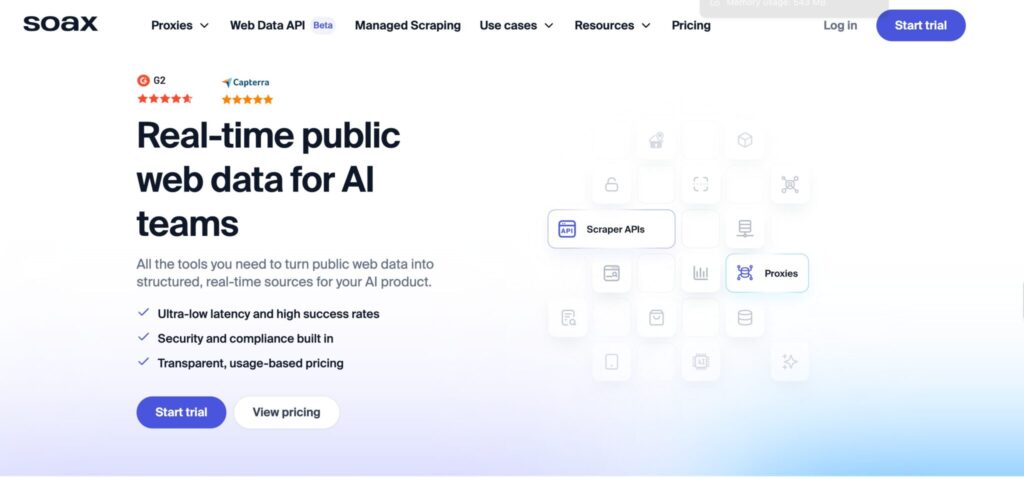
SOAX is a strong mid-market choice with an easy dashboard and practical targeting controls. Its residential proxy page lists 155M+ residential proxies worldwide, HTTP(S) and SOCKS5 support, sticky and rotating sessions, and targeting by region, city, or ASN. SOAX’s help center also explains that precise targeting lets users filter by country, region, city, ISP, or carrier, while warning that more specific targeting can reduce the available IP pool.
That warning is not a small detail. ASN targeting almost always reduces pool size. SOAX is upfront about the tradeoff, which is useful for buyers who care about reliability.
SOAX is especially interesting for teams that need a blend of residential and mobile-style targeting. If you care about carriers, ISPs, and localized testing, SOAX gives you good control without forcing you into a fully enterprise setup.
Where SOAX Works Best
SOAX works well for ad verification, market research, SEO monitoring, social platform testing, and app QA.
Its interface is one of its strengths. You can generate proxies, set targeting options, and work with rotating or sticky sessions without needing a long onboarding process.
What I Like
SOAX keeps targeting practical. You can control geography and provider-level filters while still using a clean dashboard.
What Could Be Better
If you target a very specific ASN in a smaller country, availability may drop. That is true for most providers, but SOAX users should test pool depth before committing to heavy usage.
Best For
Teams that want flexible targeting, clean setup, and strong residential proxy coverage.
5. DataImpulse: Best Budget-Friendly ASN Targeting Option
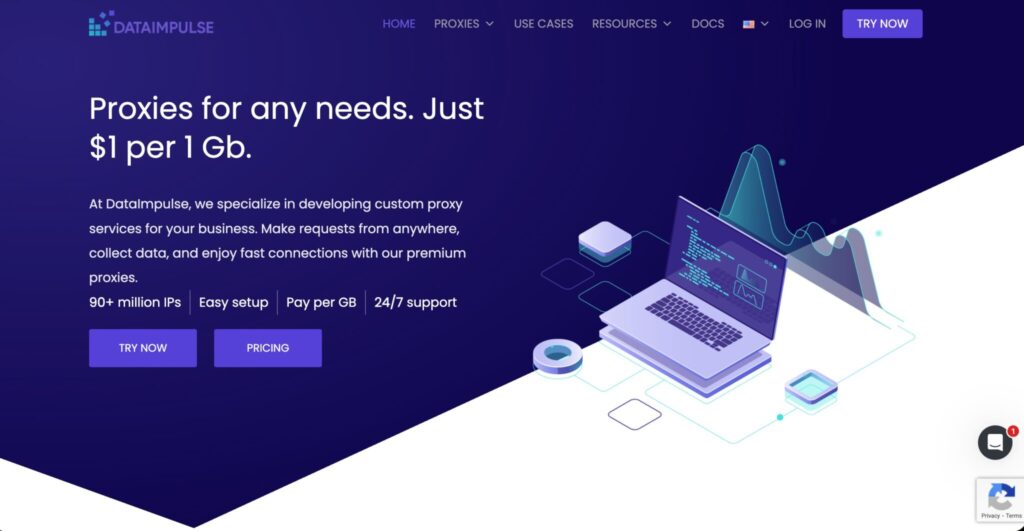
DataImpulse is attractive because of its pricing. The company lists residential proxies from $1/GB, mobile proxies from $2/GB, datacenter proxies from $0.5/GB, and premium residential proxies from $5/GB. Its location page says users can set filters like state, city, ZIP, and ASN, but country targeting is included in all prices while state, city, ASN, and ZIP targeting are included for premium residential proxies or available as extra advanced options.
That makes DataImpulse a smart option for buyers who want to test ASN targeting without committing to a premium enterprise provider. But you need to understand the pricing split. The cheapest residential traffic does not automatically mean full advanced targeting.
Where DataImpulse Works Best
DataImpulse fits budget-conscious scraping, SEO checks, public data collection, and early-stage testing.
It is also useful if your team wants pay-as-you-go simplicity and does not want monthly minimums.
What I Like
The pricing is clear enough, and the ability to use advanced targeting on premium residential plans gives buyers a lower-cost path into ASN testing.
What Could Be Better
If ASN targeting is your main feature, do not compare only the $1/GB residential price. Look at premium residential pricing and any added targeting costs.
Best For
Startups, solo operators, lean SEO teams, and buyers testing ASN-specific workflows on a budget.
6. ProxyEmpire: Best for Rollover Bandwidth and ASN/ISP Targeting
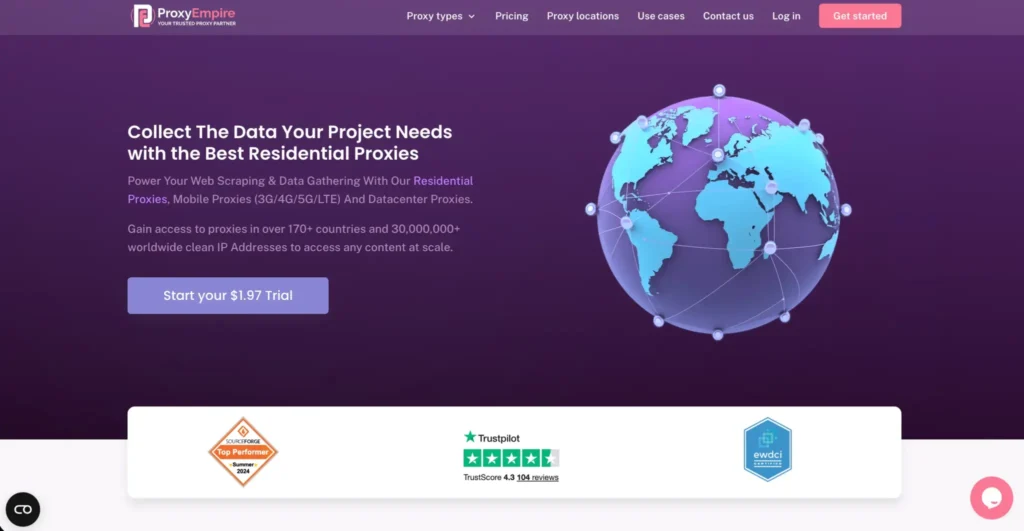
ProxyEmpire positions itself around flexible targeting, rollover bandwidth, and unlimited concurrent sessions. Its public pages mention residential proxies with country, city, ISP, and ASN targeting, along with 30M+ residential IPs in 170+ countries.
ProxyEmpire is worth considering if you hate losing unused bandwidth at the end of the month. For proxy buyers running uneven campaigns, rollover data can matter. One month you test. Next month you scale. A rigid bandwidth expiry model can waste money.
Where ProxyEmpire Works Best
ProxyEmpire is good for scraping, price monitoring, ad verification, and users who need flexible targeting without overcomplicated procurement.
What I Like
Rollover bandwidth is a practical feature. The ASN and ISP targeting pitch also makes sense for buyers doing network-specific testing.
What Could Be Better
Some of ProxyEmpire’s public material feels more promotional than deeply technical. Before using it for production ASN targeting, ask support for exact ASN availability, endpoint format, and targeting combinations.
Best For
Teams that want flexible bandwidth, ASN/ISP filters, and simple residential proxy access.
7. Webshare: Best for Static Proxy Lists and ASN-Based Replacement Control
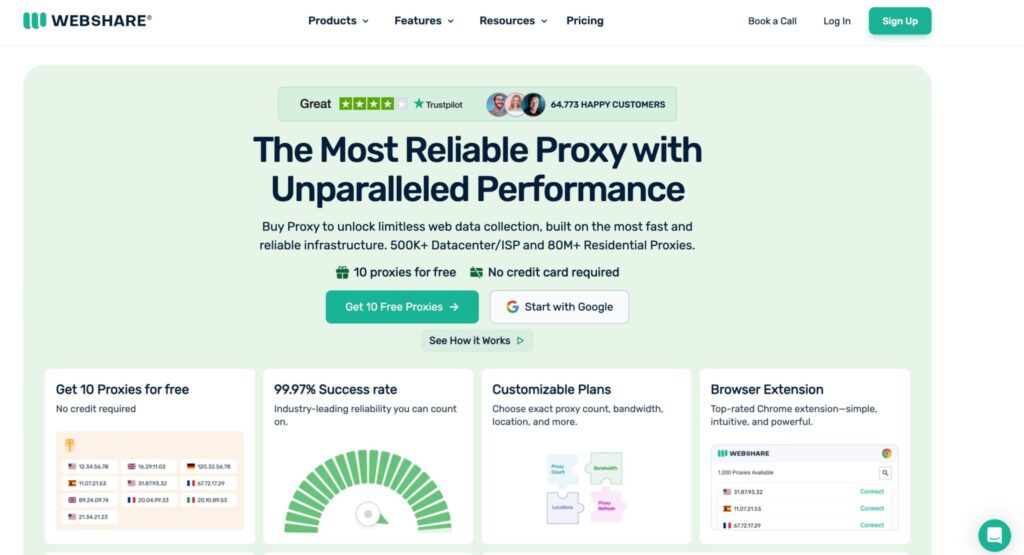
Webshare is not the first provider I would choose for deep dynamic ASN routing, but it deserves a place here because of how it handles ASN-based replacement and static proxy list control.
Webshare’s help center says users can replace proxies using broader criteria such as ASN, IP range, or country, and can also choose new proxies from a specific ASN, IP range, or country. Its main site lists 80M+ global IPs across 195 countries, residential, static residential, and datacenter products, plus customizable plans and API docs.
That makes Webshare useful when you want more control over a purchased proxy list. For example, if a batch of static residential IPs underperforms, ASN-based replacement can help you clean up your pool.
Where Webshare Works Best
Webshare works well for buyers who prefer static lists, predictable billing, replacement controls, and self-serve setup.
It is especially useful for account management, testing, and cases where you want to keep a curated proxy list rather than constantly rotating through a giant backconnect pool.
What I Like
The self-serve setup is easy. Webshare is also more approachable for small teams than enterprise-heavy platforms.
What Could Be Better
ASN targeting is more list-management oriented than full dynamic ASN routing. If you need “route every request through this ASN now,” verify the workflow before buying.
Best For
Small teams, static residential users, and buyers who want ASN-based control over replacement and list quality.
8. Evomi: Best for Technical ASN Expert Settings
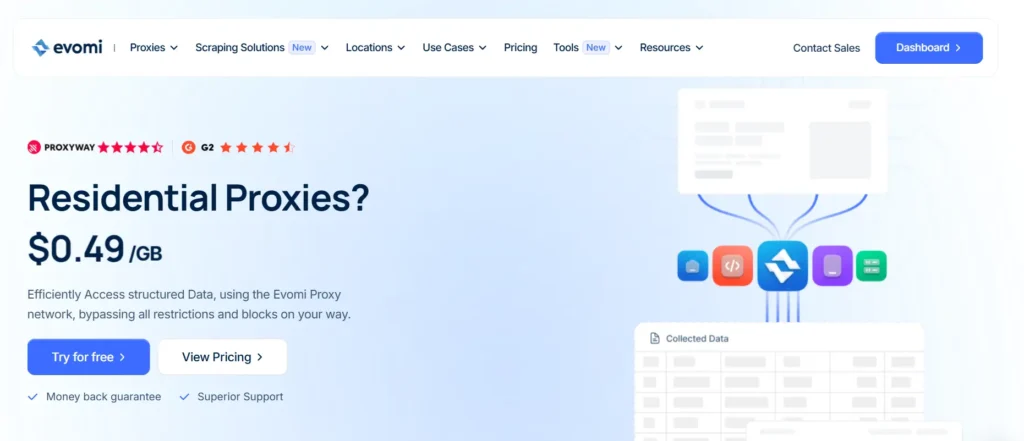
Evomi is a strong technical option for users who like working directly with proxy parameters. Its documentation says Core Residential Proxies support ASN targeting through expert settings, where users append an ASN parameter to the proxy password. The same page notes that ASN targeting is an extra feature and may increase bandwidth consumption. Evomi’s FAQ lists Core Residential Proxies from $0.49/GB and Premium Residential Proxies from $2.20/GB.
This is not the most mainstream provider on the list, but the technical clarity is useful. If you want parameter-level control and lower starting prices, Evomi is worth testing.
Where Evomi Works Best
Evomi is good for developers, automation teams, and buyers who are comfortable configuring advanced parameters.
Its ASN feature is better suited for technical users than beginners.
What I Like
The documentation is direct. It explains how ASN targeting works, how to combine it with other filters, and where extra bandwidth usage may apply.
What Could Be Better
Because ASN is an expert setting, non-technical users may need help setting it up correctly.
Best For
Developers, technical marketers, and proxy users who want low-cost ASN control with direct parameters.
How to Choose the Best ASN Targeting Proxy Provider
ASN targeting sounds simple. Pick a network. Send traffic. Done.
Real-world proxy buying is messier.
Here is how to choose properly.
1. Check Whether ASN Targeting Is Real or Just “ISP Targeting”
Some providers say “ISP targeting” but do not expose numeric ASN selection. ISP targeting lets you choose something like Comcast, Verizon, or AT&T. ASN targeting usually lets you use a specific Autonomous System Number.
Both can be useful. They are not always the same.
If you need exact network routing, ask these questions:
- Can I enter a specific ASN number?
- Is ASN targeting available on residential, mobile, ISP, or all proxy types?
- Can I combine ASN with country?
- Can I combine ASN with city, state, or ZIP?
- Does ASN targeting cost extra?
- What happens if no IP is available for the ASN?
- Can I view ASN in logs or session reports?
Pro Tip
Ask support for two sample endpoints before buying: one rotating ASN-targeted endpoint and one sticky ASN-targeted endpoint. If they cannot provide that clearly, expect friction later.
2. Understand Pool Shrinkage
Every targeting filter reduces the pool.
- Country targeting gives you a large pool.
- City targeting gives you a smaller pool.
- ASN targeting gives you a network-specific pool.
- ASN plus city gives you an even smaller pool, if the provider allows it at all.
This matters because small pools create repeat IPs, higher block rates, slower response times, and fewer available sessions.
SOAX’s help center directly warns that more specific targeting may reduce the available IP pool. That is not a SOAX-only issue. It is how proxy networks work.
3. Match Proxy Type to the Use Case
ASN targeting behaves differently across proxy types.
Residential Proxies
Best for public web scraping, ecommerce checks, localized content, SEO monitoring, and general network realism.
Mobile Proxies
Best for app testing, mobile ad verification, carrier testing, and platforms that heavily trust mobile carrier traffic.
ISP Proxies
Best for stable sessions, account management, low-latency workflows, and situations where you need residential-looking IPs but do not want constant rotation.
Datacenter Proxies
Usually weaker for ASN targeting if the goal is real-user behavior. They are fast and cheap, but cloud ASN traffic is easier to identify.
4. Choose the Right Rotation Protocol
ASN targeting without proper rotation control is incomplete.
You need to decide how long each IP should stay active.
Per-Request Rotation
Every request gets a new IP, or at least attempts to. This is useful for large scraping jobs where session continuity does not matter.
Best for:
- Search result scraping
- Product page crawling
- Public listing extraction
- Large-scale price checks
Sticky Sessions
A sticky session keeps the same IP for a set time. This is useful when the target expects a stable user journey.
Best for:
- Login flows
- Cart testing
- Ad preview sessions
- App QA
- Multi-step forms
Custom TTL Rotation
Some providers let you set session length, such as 5 minutes, 10 minutes, 30 minutes, or longer. This gives you a cleaner balance between stability and diversity.
Best for:
- Marketplace monitoring
- Semi-persistent browsing
- Account warmups
- Localized SERP tracking
Pro Tip
For ASN targeting, sticky sessions often work better than per-request rotation when the pool is small. Per-request rotation can burn through the same limited ASN pool too quickly.
5. Verify ASN Accuracy Yourself
Do not blindly trust dashboard labels.
Run test requests and verify:
- IP address
- ASN number
- ISP name
- Country
- Region
- City
- Latency
- Target success rate
- Error codes
- Repeat IP frequency
Use more than one IP intelligence source because ASN and geo databases do not always agree.
A proxy may show one ISP in one database and a different network owner in another. That does not automatically mean the proxy is bad. It means you should test against the same data sources your target likely uses.
6. Watch the Protocol Support
For most scraping workflows, HTTP and HTTPS are enough.
SOCKS5 matters when you use tools that need lower-level protocol support, browser automation, apps, or non-standard traffic flows. Some providers now mention HTTP/3, UDP, or QUIC support, but do not buy based on protocol names alone. Buy based on your actual toolchain.
For example:
- Scrapy usually works fine with HTTP/HTTPS.
- Browser automation may benefit from stable HTTP(S) proxies.
- App testing may need SOCKS5 or mobile proxies.
- Advanced network testing may need more flexible protocol support.
7. Calculate Cost by Successful Request, Not Cost per GB
Cheap proxy traffic can become expensive if half your requests fail.
Track:
- Cost per GB
- Success rate
- Average response size
- Timeout rate
- Retry rate
- CAPTCHA rate
- Block rate
- Time spent debugging
A $5/GB provider with a 90% success rate can beat a $1/GB provider with a 25% success rate. ASN targeting makes this even more important because the pool is narrower.
ASN Targeting Proxy Buying Checklist
Before you buy, confirm:
- Does the provider support numeric ASN targeting?
- Is ASN targeting available on residential proxies?
- Is it also available on mobile proxies?
- Can ASN be combined with country?
- Can ASN be combined with city, state, or ZIP?
- Does targeting cost extra?
- Does the provider offer sticky sessions?
- Can you control rotation by request or duration?
- Are HTTP(S) and SOCKS5 supported?
- Can you test before committing?
- Is there a dashboard or API for proxy generation?
- Can you export logs by ASN, country, or session?
- Is the provider clear about ethical sourcing?
- Are there usage restrictions for sensitive targets?
Best ASN Targeting Proxy Provider by Use Case
| Use Case | Best Provider Choice |
|---|---|
| Enterprise ad verification | Bright Data or Oxylabs |
| Developer-led scraping | Oxylabs or Massive |
| Best balance of usability and targeting | Decodo |
| Clean dashboard and flexible filtering | SOAX |
| Budget ASN testing | DataImpulse |
| Rollover bandwidth | ProxyEmpire |
| Static proxy list control | Webshare |
| Technical parameter-based ASN routing | Evomi |
| Mobile carrier-level testing | Decodo, SOAX, Bright Data, or Oxylabs |
FAQs About ASN Targeting Proxies
1. What is ASN targeting in proxies?
ASN targeting lets you choose proxy IPs from a specific internet network, such as an ISP, mobile carrier, or network operator. Instead of only choosing a country or city, you route traffic through IPs associated with a chosen Autonomous System Number.
2. Why use ASN targeting instead of country targeting?
Country targeting only controls location. ASN targeting controls the network behind the IP. This matters when websites, ad platforms, apps, or security systems behave differently depending on whether traffic comes from Comcast, AT&T, T-Mobile, Verizon, or another network.
3. Are ASN targeting proxies legal?
Proxies are not illegal by default. What matters is how you use them. ASN targeting is commonly used for ad verification, public data collection, localization testing, network QA, and market research. Avoid scraping private data, bypassing authentication, committing fraud, or violating platform rules.
4. Which proxy type is best for ASN targeting?
Residential proxies are usually the best starting point because they come from real ISP-assigned IP ranges. Mobile proxies are better when you need carrier-level mobile behavior. ISP proxies are useful when you need stable, long-running sessions.
5. Can I target both city and ASN at the same time?
Sometimes, but not always. Some providers allow ASN plus country but do not allow ASN plus city, ZIP, or state. Decodo’s documentation, for example, says users must choose between ASN targeting and city, state, continent, or ZIP targeting in certain residential proxy setups.
6. Does ASN targeting reduce proxy pool size?
Yes. The more specific your targeting, the smaller the available pool becomes. A country-level pool may contain millions of IPs, while a specific ASN inside that country may have far fewer available exits.
7. Is ASN targeting better for avoiding blocks?
It can help, but it is not magic. ASN targeting helps align your proxy traffic with realistic network behavior. Blocks still depend on request rate, browser fingerprint, cookies, headers, target rules, IP reputation, and session behavior.
8. Should I use rotating or sticky ASN proxies?
Use rotating sessions for large-scale public crawling where each request can stand alone. Use sticky sessions when you need a stable identity for several minutes, such as testing ads, browsing multi-step flows, or checking app behavior.
9. Which ASN targeting proxy is best overall?
Bright Data is the strongest overall pick for enterprise-grade ASN targeting. Oxylabs is excellent for developer-heavy teams. Decodo gives the best balance of price, usability, and ASN control for most buyers.
10. What is the cheapest ASN targeting proxy provider?
DataImpulse and Evomi are among the more budget-friendly options, but check whether ASN targeting is included in the exact plan you buy. DataImpulse ties advanced targeting like ASN and ZIP to premium residential or extra targeting options, while Evomi lists ASN as an expert feature that may increase bandwidth usage.
Final Verdict: Which ASN Targeting Proxy Should You Choose?
If you want the strongest all-around ASN targeting proxy provider, choose Bright Data. It has the scale, documentation, routing controls, and enterprise-grade setup serious teams need.
If your team is technical and wants clean developer documentation, choose Oxylabs.
If you want strong ASN targeting without feeling buried in enterprise complexity, choose Decodo.
If you want a clean dashboard and flexible ISP, carrier, and ASN-style targeting, choose SOAX.
If you want to test ASN targeting on a tighter budget, choose DataImpulse or Evomi.
For static lists and replacement-based ASN control, Webshare is practical. For API-first routing and developer workflows, Massive is worth a serious look.
The smartest move is simple: shortlist two providers, run the same ASN-targeted test across both, and compare success rate, repeat IPs, latency, block rate, and cost per successful request. Proxy buying is not about the biggest pool on paper. It is about the network path that performs best against your real target.