
Best Supreme Proxy Providers.
Supreme drops are unforgiving. One weak proxy batch, one overloaded IP pool, one bad location match, and your setup can fall apart before checkout even starts.
The best Supreme proxy provider is not always the one with the biggest IP pool. What matters is cleaner IP reputation, fast response time, stable sessions, smart rotation, and enough location control to match the drop region.
This guide compares 9 strong proxy providers for Supreme related use cases in 2026, including residential proxies, ISP proxies, datacenter proxies, pricing style, rotation control, and who each provider is best for.
What Supreme’s Anti Bot System Is Looking For
Supreme, like most high demand retail sites, looks for traffic patterns that do not behave like normal shoppers. That can include repeated requests from the same IP, sudden checkout spikes, mismatched locations, suspicious session behavior, and traffic coming from known datacenter ranges.
That is why proxy quality matters. A cheap proxy with bad history can hurt your setup more than no proxy at all.
For Supreme, the most practical proxy types are:
| Proxy Type | Best Use | Risk Level |
| Residential proxies | General drop activity, testing, browsing, account sessions | Lower if clean |
| ISP proxies | Faster sessions with residential like trust | Medium to low |
| Mobile proxies | High trust, expensive, slower at scale | Low but costly |
| Datacenter proxies | Speed testing, lightweight tasks | Higher on protected sites |
Pro Tip: Do not judge proxies only by pool size. A smaller, cleaner pool often performs better than a huge pool full of abused IPs.
9 Best Supreme Proxy Providers in 2026
1. Decodo: Best Value for Consistent Copping
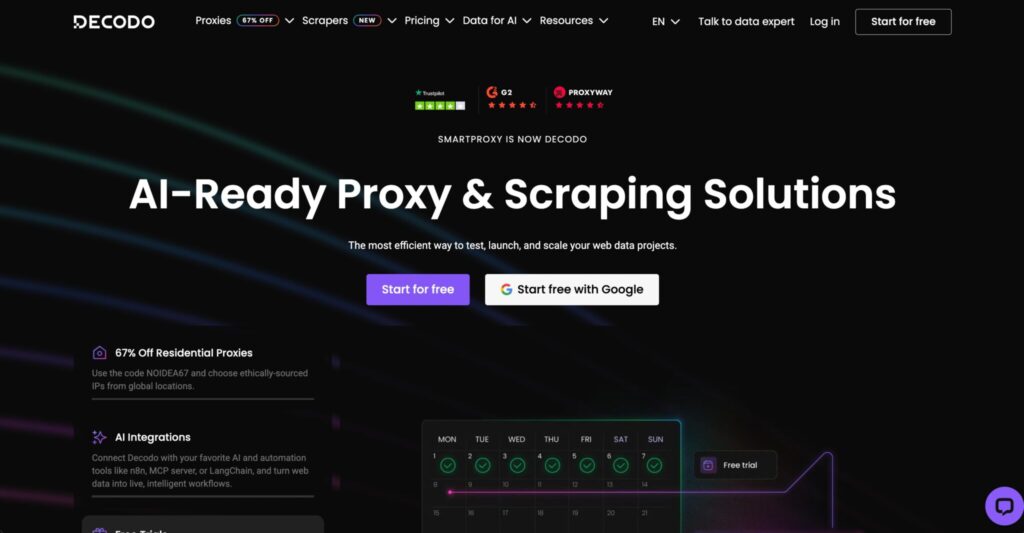
Decodo, formerly Smartproxy, is one of the strongest picks for users who want a balance of price, usability, and large scale residential coverage. The company advertises 125M plus IPs, 195 plus locations, 99.99% uptime, and fast average speeds.
For Supreme related use cases, Decodo makes sense because it is easy to set up, offers rotating and sticky sessions, and gives enough geo targeting flexibility for US, UK, EU, and other regional drops.
It is not the most premium provider on this list, but that is part of the appeal. You get strong infrastructure without jumping straight into enterprise level pricing.
Best for: Users who want dependable residential proxies without overpaying.
Pros
| Pros | Details |
| Large proxy pool | 125M plus IPs across many locations |
| Beginner friendly | Clean dashboard and simple setup |
| Good speed | Suitable for fast retail environments |
| Flexible plans | Monthly, annual, and pay as you go options |
Cons
| Cons | Details |
| Not the cheapest | Budget users may prefer Webshare or DataImpulse |
| Shared pool risk | Performance depends on IP freshness and use case |
Pro Tip: Use sticky sessions for account consistency and rotating sessions for broader testing. Mixing both without planning can create messy session behavior.
2. Webshare: Best Budget Pick for Entry Level Coppers
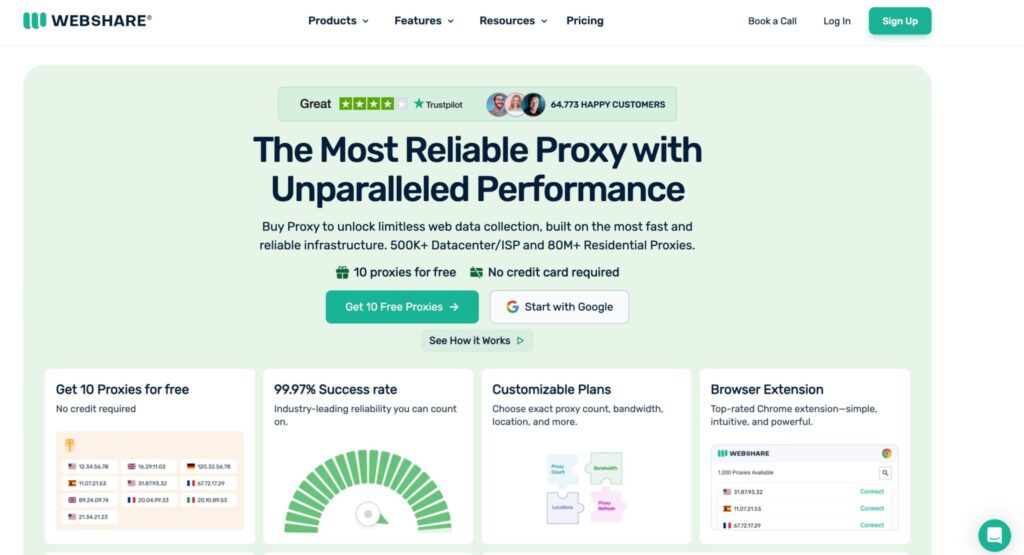
Webshare is a strong budget option. It offers datacenter, static residential, and rotating residential proxies, with residential pricing listed from $1.40 per GB and datacenter proxies starting from $0.05 per IP.
The main reason Webshare earns a place here is affordability. New users can test proxy workflows without spending enterprise money. It also has a simple dashboard and API access, which makes it attractive for users who want quick setup.
For Supreme drops, Webshare is better as a budget testing option than a premium high stakes setup. Its datacenter proxies are cheap and fast, but residential or static residential options are safer for retail environments.
Best for: Beginners and budget conscious users.
Pros
| Pros | Details |
| Very affordable | Low starting prices |
| Free proxy option | Useful for basic testing |
| Multiple proxy types | Residential, static residential, datacenter |
| Simple dashboard | Easy for non technical users |
Cons
| Cons | Details |
| Support is limited | Not as hands on as premium providers |
| Datacenter risk | Cheap datacenter IPs may struggle on protected sites |
Pro Tip: Do not use the cheapest datacenter proxies for your most important checkout sessions. Save them for testing speed, connectivity, and bot configuration.
3. Oxylabs: Best Overall for Supreme Drops
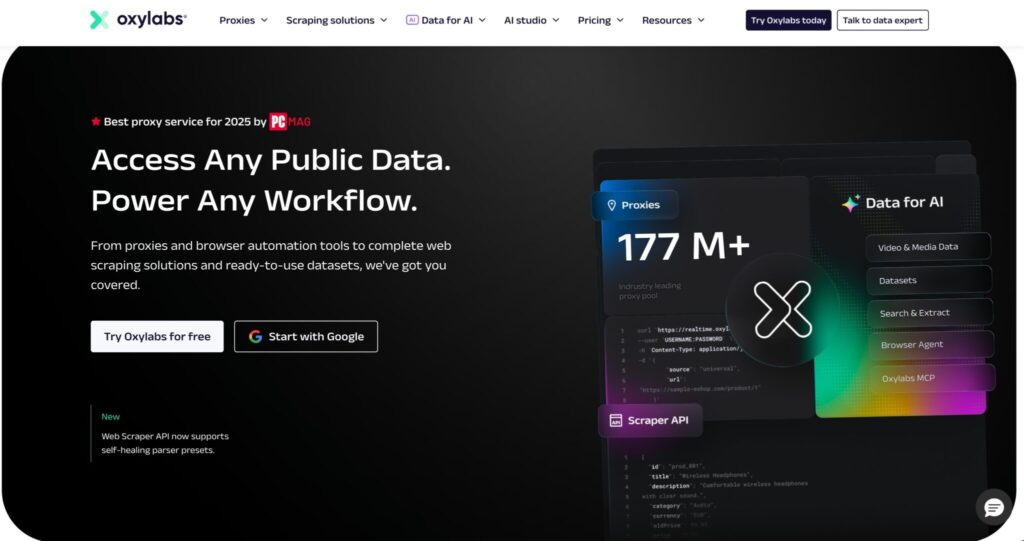
Oxylabs is one of the most trusted names in the proxy market. Its residential proxy pool is listed at 175M plus IPs, with city level targeting and SOCKS5 support.
For serious Supreme users, Oxylabs is attractive because of its scale, infrastructure quality, and business grade reliability. It is not the cheapest provider, but it is built for users who care about performance consistency more than saving a few dollars.
Pricing for residential proxies starts at $6 per GB on the starter plan, with lower per GB pricing on higher tiers.
Best for: Users who want premium reliability and large scale coverage.
Pros
| Pros | Details |
| Huge IP pool | 175M plus residential IPs |
| Strong targeting | Country, city, and location controls |
| SOCKS5 support | Useful for flexible bot setups |
| Enterprise grade | Better support and infrastructure |
Cons
| Cons | Details |
| Higher cost | Not ideal for casual users |
| More business focused | May feel too advanced for beginners |
Pro Tip: Oxylabs is best when you already know your traffic needs. If you are still experimenting, start smaller before committing to higher volume plans.
4. Bright Data: Best for Speed During Supreme Drops
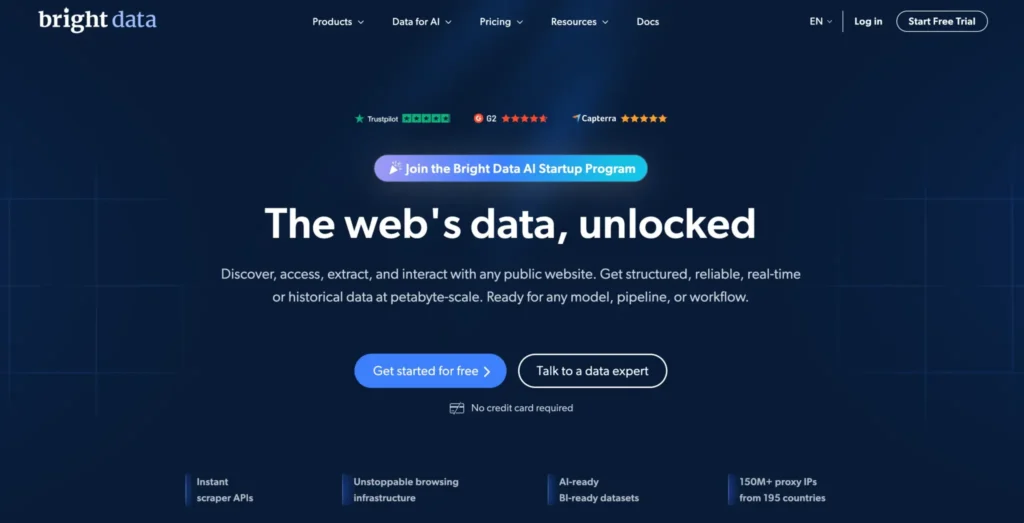
Bright Data is a premium provider with one of the largest proxy networks in the industry. Its residential proxy page lists 400M plus monthly ethical residential IPs across 195 countries, sticky and rotating sessions, around 0.7 second response time, and a 99.95% success rate claim.
This is the provider for users who want advanced controls, clean infrastructure, and strong targeting. Bright Data is not cheap, and beginners may find it complex. But for advanced users, the control is excellent.
Residential proxy pricing starts from $5.88 per GB according to its pricing page.
Best for: Advanced users who need speed, targeting, and premium control.
Pros
| Pros | Details |
| Massive network | 400M plus monthly residential IPs |
| Strong targeting | Country and location level options |
| Fast response claims | Built for performance heavy tasks |
| Good compliance focus | Stronger sourcing and usage controls |
Cons
| Cons | Details |
| Expensive | Not ideal for small budgets |
| Learning curve | Dashboard can feel complex |
Pro Tip: Bright Data is powerful, but do not buy it just because it is famous. It makes sense when you need premium targeting and have enough volume to justify the cost.
5. NodeMaven: Best Balance for Sneaker Bots
NodeMaven is a newer style provider focused heavily on IP quality filtering. It advertises 30M plus residential IPs, 250K mobile IPs, 99.54% average success rate, 95% clean IP rate, less than 0.6 second average speed, sticky sessions up to 7 days, traffic rollover, and city and ISP targeting.
That clean IP angle makes it interesting for Supreme and sneaker related use cases. Instead of only bragging about pool size, NodeMaven focuses on filtering low quality IPs before users receive them.
Best for: Users who care about clean IPs and stable sessions.
Pros
| Pros | Details |
| IP filtering | Focuses on cleaner proxy quality |
| Sticky sessions | Up to 7 days |
| Traffic rollover | Useful for irregular drop schedules |
| Good targeting | Country, city, and ISP options |
Cons
| Cons | Details |
| Smaller pool | Not as massive as Bright Data or Oxylabs |
| Less established | Newer reputation compared with older providers |
Pro Tip: Clean IP rate can matter more than total IP count. For retail tasks, reputation beats raw volume.
6. DataImpulse: Best for One Time Drop Testing
DataImpulse is one of the cheapest residential proxy providers on this list. It advertises 90M plus residential IPs, 195 country coverage, and pricing starting from $1 per GB.
This makes it useful for one time drop testing, small scale experiments, or users who want to understand proxy behavior before spending more on premium providers.
Do not expect the same support, polish, or advanced controls you get from Oxylabs or Bright Data. But for cost per GB, DataImpulse is hard to ignore.
Best for: Low budget testing and occasional use.
Pros
| Pros | Details |
| Very cheap | Starts around $1 per GB |
| Large pool | 90M plus residential IPs |
| Pay as you go | Good for one time testing |
| Global coverage | 195 countries listed |
Cons
| Cons | Details |
| Less premium support | Not ideal for mission critical setups |
| Quality may vary | Test before scaling |
Pro Tip: Buy a small amount first and test latency, session stability, and location matching before using it for any serious drop workflow.
7. SOAX: Best for Ethically Sourced Clean Proxy Pool
SOAX is a strong option for users who care about clean sourcing, flexible targeting, and a more polished residential proxy experience. Its residential proxy page lists 155M plus IPs in 195 plus locations, and current pricing starts at $3.60 per GB on the starter plan with 25 GB included.
SOAX is not the cheapest provider, but it sits in a comfortable middle ground. It gives better structure than bargain providers while staying more approachable than some enterprise tools.
Best for: Users who want clean residential proxies with strong targeting.
Pros
| Pros | Details |
| Large pool | 155M plus residential IPs |
| Good geo coverage | 195 plus locations |
| Trial available | 3 day 400MB trial for $1.99 |
| Clean positioning | Strong focus on ethical proxy access |
Cons
| Cons | Details |
| Minimum monthly cost | Starter plan may be high for casual users |
| Not the fastest budget option | Better for quality than pure cheap volume |
Pro Tip: SOAX is a good choice when you want fewer surprises. It is better suited for planned use than random last minute testing.
8. IPRoyal: Best Budget Friendly Option with Non Expiring Traffic
IPRoyal is popular with smaller users because it keeps pricing flexible and offers residential, ISP, mobile, and datacenter proxies. Independent reviews note that IPRoyal has more than 32M residential proxies and flexible pay as you go options.
Its non expiring residential traffic model is one of the biggest reasons people consider it. If you only run occasional drops, unused traffic not disappearing at the end of the month can save money.
Best for: Occasional users who do not want monthly traffic waste.
Pros
| Pros | Details |
| Flexible pricing | Good for smaller users |
| Non expiring traffic | Useful for irregular drop schedules |
| Multiple proxy types | Residential, ISP, mobile, datacenter |
| Easy dashboard | Beginner friendly |
Cons
| Cons | Details |
| Smaller pool than leaders | Less scale than Oxylabs or Bright Data |
| Performance varies | Needs testing by location |
Pro Tip: IPRoyal is a smart pick if you do not run drops every week. Non expiring traffic is useful when your usage pattern is uneven.
9. ProxyEmpire: Best for Unlimited Data Rollover on Drop Days
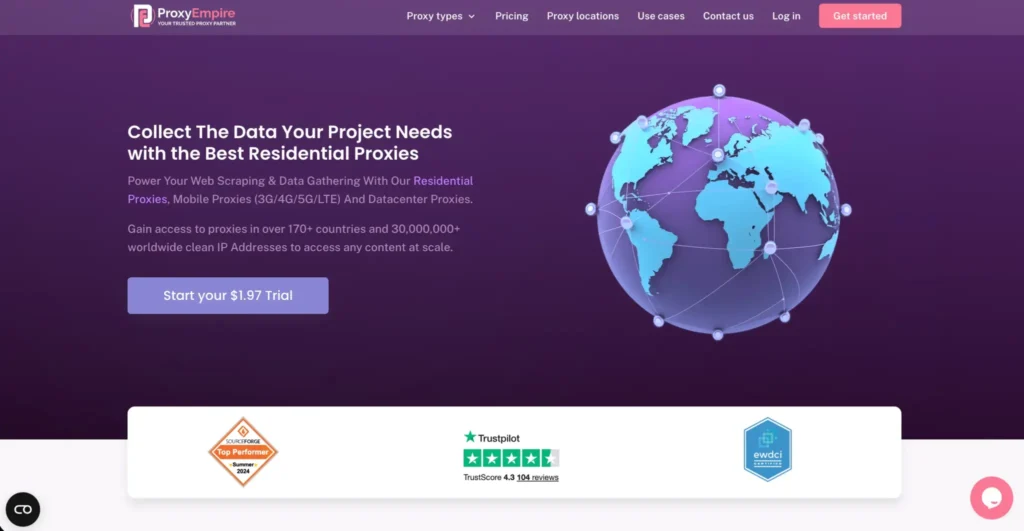
ProxyEmpire is another flexible proxy provider with residential, static residential, mobile, and datacenter options. Its pricing page mentions a $1.97 trial, rotating residential proxies, static residential proxies, rotating mobile proxies, and rotating datacenter proxies.
A recent HostAdvice review highlights unlimited monthly data rollover, 30M plus residential IPs, 170 plus countries, 0.6 second published response time, and support for HTTP, HTTPS, SOCKS5, and HTTP/2.
For Supreme users, the rollover angle is useful. Drop schedules are not always predictable, and unused bandwidth can otherwise become wasted spend.
Best for: Users who want traffic rollover and flexible proxy types.
Pros
| Pros | Details |
| Data rollover | Good for uneven usage |
| Multiple protocols | HTTP, HTTPS, SOCKS5, HTTP/2 |
| Flexible proxy types | Residential, mobile, datacenter |
| Trial available | Low cost test option |
Cons
| Cons | Details |
| Smaller pool | Not as large as top enterprise providers |
| Third party performance varies | Test before scaling |
Pro Tip: ProxyEmpire is best when you want a backup provider. Rollover makes it practical to keep traffic ready without feeling forced to burn it.
Best Supreme Proxy Providers 2026: Quick Comparison Table
| Rank | Provider | Best For | Proxy Types | Starting Price Style | Key Strength |
| 1 | Decodo | Best value | Residential, datacenter, ISP, mobile | Pay as you go and plans | Balance of price and scale |
| 2 | Webshare | Budget users | Residential, static residential, datacenter | From $1.40 per GB residential | Low cost testing |
| 3 | Oxylabs | Overall premium use | Residential, ISP, datacenter, mobile | From $6 per GB residential | Enterprise reliability |
| 4 | Bright Data | Speed and targeting | Residential, ISP, mobile, datacenter | From $5.88 per GB residential | Huge network and control |
| 5 | NodeMaven | Clean IP filtering | Residential, mobile, ISP | Trial and plans | IP quality filtering |
| 6 | DataImpulse | One time testing | Residential, mobile, datacenter | From $1 per GB | Cheap residential traffic |
| 7 | SOAX | Ethical clean pool | Residential, mobile, datacenter | From $3.60 per GB | Strong targeting |
| 8 | IPRoyal | Occasional users | Residential, ISP, mobile, datacenter | Flexible pay as you go | Non expiring traffic |
| 9 | ProxyEmpire | Rollover users | Residential, static, mobile, datacenter | Trial and plans | Unlimited data rollover |
How to Choose the Best Supreme Proxy Provider
Check IP Pool Quality Before IP Pool Size
A provider with 400M IPs sounds impressive, but the real question is how many of those IPs are clean, fast, and available in the locations you need.
Look for:
| Factor | Why It Matters |
| Clean IP reputation | Reduces failed sessions |
| Low latency | Helps during fast drop windows |
| Location targeting | Matches regional storefronts |
| Sticky session support | Keeps browsing and checkout behavior consistent |
| Protocol support | Gives more flexibility across tools |
Understand Rotation Protocols
Rotation decides how often your IP changes.
| Rotation Type | Best Use |
| Per request rotation | Testing, data collection, broad browsing |
| Sticky sessions | Account login, cart, checkout style flows |
| Manual rotation | Controlled testing |
| Time based rotation | Balanced browsing behavior |
For Supreme related work, sticky sessions are usually more practical than aggressive rotation. Constant IP changes during the same session can look unnatural and may break the user journey.
Match Proxy Location to Drop Region
If the drop is US based, use US proxies. If it is UK based, use UK proxies. That sounds obvious, but many users ignore it and then wonder why performance drops.
A strong provider should offer country targeting at minimum. City or ISP targeting is even better.
Test Before Scaling
Never buy a huge proxy package without testing.
Run a small test first and check:
| Test Area | What to Watch |
| Speed | Response time under load |
| Stability | Session drops or disconnects |
| Location accuracy | Correct country and region |
| IP reputation | Blocks, errors, or failed sessions |
| Cost per successful session | Real value, not just cheap pricing |
Use More Than One Provider
Experienced users rarely depend on one provider. A better setup usually includes:
| Provider Role | Example |
| Main residential provider | Decodo, Oxylabs, SOAX |
| Budget testing provider | Webshare, DataImpulse |
| Backup provider | ProxyEmpire, IPRoyal |
| Premium fallback | Bright Data, NodeMaven |
This protects you if one provider has a weak batch, overloaded pool, or location issue on drop day.
FAQs: Best Supreme Proxy Providers 2026
What type of proxy is best for Supreme?
Residential and ISP proxies are usually the best fit. Residential proxies offer better trust because they come from real consumer networks, while ISP proxies can provide stronger speed and session stability.
How many Supreme proxies do I need for a drop?
It depends on how many tasks or sessions you are running. A small user may only need a limited batch, while larger setups need more IP diversity. The safer rule is simple: do not overload too many sessions on the same IP.
Do Supreme proxies need to be in the same country as the drop?
Yes, location matching helps. If you are targeting a US drop, use US proxies. For UK or EU drops, use proxies from the same region where possible.
Can I reuse Supreme proxies across multiple drops?
Yes, but only if they remain clean and stable. Reusing a good sticky or ISP proxy can work well, but abused or flagged proxies should be replaced.
Are datacenter proxies still viable for Supreme?
They can be useful for testing and speed checks, but residential and ISP proxies are usually safer for protected retail environments. Datacenter IPs are easier to identify.
What is the best Supreme bot to pair with these proxies?
The proxy should match your workflow, not the other way around. Look for a tool that supports sticky sessions, HTTP, HTTPS, and SOCKS5 where needed, and always follow the website’s rules and applicable laws.
Which provider is best for beginners?
Webshare, Decodo, and IPRoyal are the easiest starting points. Webshare is the cheapest, Decodo is more balanced, and IPRoyal is useful if you want non expiring traffic.
Which provider is best for serious users?
Oxylabs, Bright Data, SOAX, and NodeMaven are stronger choices for users who care about cleaner pools, targeting, support, and consistent performance.
Conclusion: Best Supreme Proxy Providers 2026
The best Supreme proxy provider depends on your budget and how serious your setup is.
If you want the best balance, Decodo is the safest all round pick. If you want premium infrastructure, Oxylabs and Bright Data are stronger. If you are testing on a tight budget, Webshare and DataImpulse make sense. If you want cleaner IP filtering, NodeMaven deserves attention. For rollover and irregular drop schedules, IPRoyal and ProxyEmpire are practical options.
My simple recommendation: start with Decodo or Webshare for testing, keep a backup from IPRoyal or ProxyEmpire, and move to Oxylabs, Bright Data, SOAX, or NodeMaven when your setup needs more consistency.