
Public data collection looks simple from the outside. You point a scraper at a page, collect product prices, job listings, reviews, SERP results, or market signals, and move the data into your system.
Then reality steps in.
Pages load differently by location. Requests get throttled. IPs hit limits. JavaScript hides the real content. Some websites return partial results, while others show completely different data depending on where the request comes from. That is where proxies become part of the infrastructure, not just a small technical add-on.
The best proxies for public data collection help you collect publicly available information with better consistency, wider geo-coverage, fewer interruptions, and cleaner request routing. The right choice depends on your scale, target websites, budget, and compliance standards.
This guide breaks down the top proxy providers for public data collection, what each one does best, and how to choose based on IP pools, rotation logic, sticky sessions, targeting, and scraping workflow needs.
Quick Comparison Table: Best Proxies For Public Data Collection
| Provider | Best For | Proxy Types | Rotation Options | Geo-Targeting | Public Data Collection Strength | Best Fit |
|---|---|---|---|---|---|---|
| Bright Data | Enterprise-grade public data projects | Residential, ISP, datacenter, mobile | Advanced rotating and sticky sessions | Country, city, carrier, ASN | Very strong | Large teams and complex workflows |
| Oxylabs | Structured scraping and large-scale extraction | Residential, datacenter, ISP, mobile | Rotating and session-based | Country and city targeting | Very strong | Data teams and enterprise scraping |
| Decodo | Balanced price, usability, and coverage | Residential, ISP, mobile, datacenter | Rotating and sticky sessions | Broad global targeting | Strong | Agencies, SEO teams, SMBs |
| SOAX | Geo-sensitive data collection | Residential, mobile, ISP, datacenter | Flexible rotation and sticky control | Country, city, region, ISP | Strong | Market research and localized scraping |
| NetNut | Stable residential and ISP-style access | Residential, mobile, static residential | Rotating and static options | Global targeting | Strong | Teams needing stable sessions |
| IPRoyal | Budget-friendly public data collection | Residential, datacenter, ISP, mobile | Rotating and sticky sessions | Country and city options | Good | Freelancers and smaller teams |
| Webshare | Low-cost proxy infrastructure | Datacenter, static residential, rotating residential | Basic rotation options | Country-level targeting | Good | Developers and budget scrapers |
| Rayobyte | US-focused public data workflows | Residential, ISP, datacenter | Rotating and static options | Strong US coverage | Good | US market research and price tracking |
| ProxyEmpire | Flexible bandwidth and niche targeting | Residential, mobile, datacenter | Rotating and sticky sessions | Country, city, ISP | Good | Smaller data teams needing control |
1. Bright Data
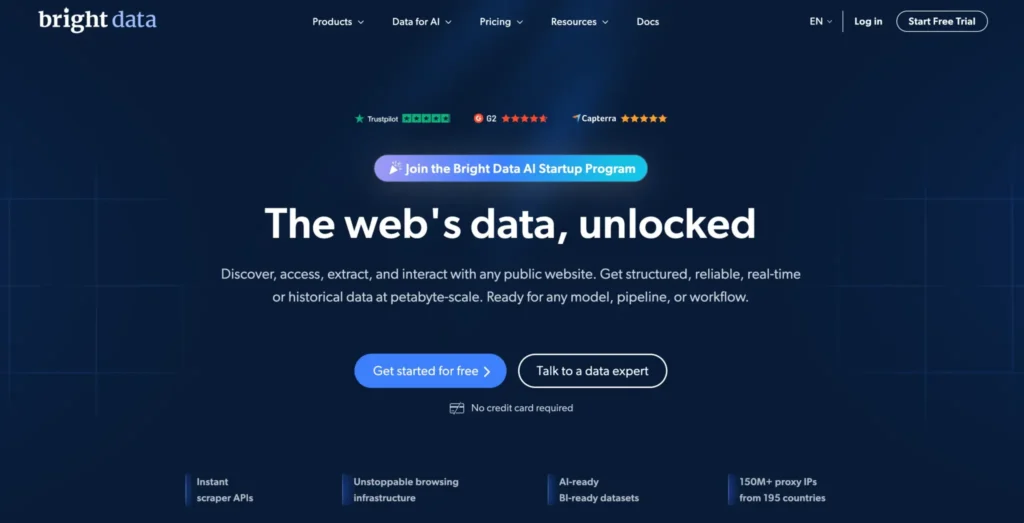
Bright Data is one of the most complete proxy and web data platforms for serious public data collection. It is not just a proxy seller. It is closer to a full data infrastructure provider, with proxy networks, scraping tools, unblockers, browser automation, SERP APIs, and ready-made datasets.
For public data collection, Bright Data works well when your project involves multiple target types. Think product intelligence, pricing, travel data, real estate listings, search results, reviews, public business listings, and other data-heavy workflows.
Its biggest strength is control. You can use residential proxies for harder targets, datacenter proxies for speed, ISP proxies for stable sessions, and mobile proxies when mobile-specific data matters. The platform also supports advanced targeting, which is useful when your data changes by country, city, carrier, or ASN.
Bright Data is best for teams that already know data collection is a core business function. If you only need a few thousand requests per month, it may feel like more platform than you need. But if you care about scale, success rates, compliance tools, and automation, it deserves a top spot.
Pro-Tip: Use Bright Data when failed requests cost more than proxy fees. For enterprise scraping, reliability often matters more than the cheapest price per GB.
2. Oxylabs
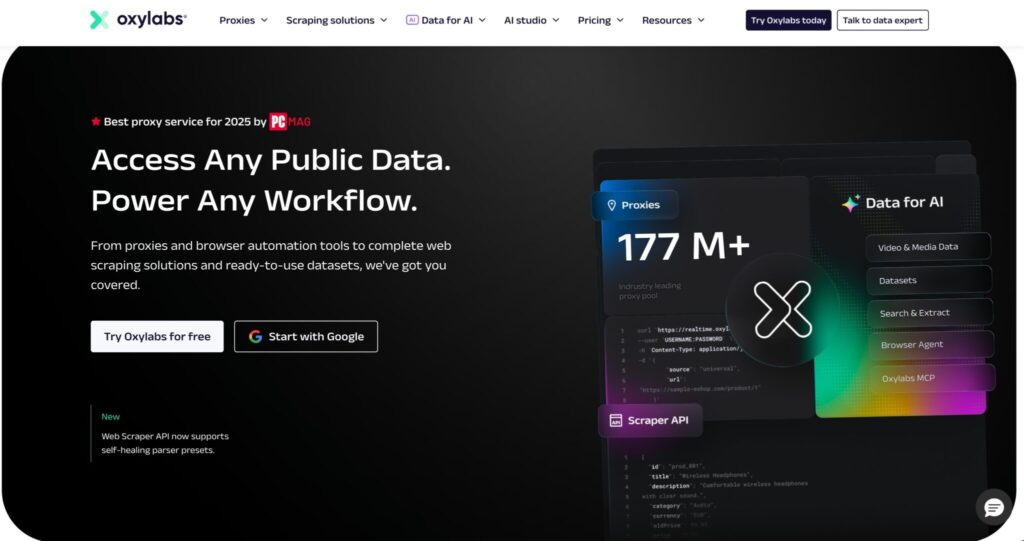
Oxylabs is another premium option built for businesses that collect public data at scale. It has a strong reputation among data teams because it combines large proxy pools with scraping APIs and enterprise-level support.
The main advantage of Oxylabs is that it gives you more than raw IP access. Its Web Scraper API can handle complex extraction workflows where you would otherwise need to manage headers, retries, rendering, and proxy routing yourself. That matters if your team wants data output rather than endless scraper maintenance.
For public data collection, Oxylabs is especially useful for eCommerce monitoring, travel pricing, SERP tracking, brand protection, market research, and large-scale competitive intelligence. Residential proxies help with harder websites, while datacenter proxies work well for high-speed, lower-risk targets.
Oxylabs is not the cheapest provider, and that is fine. It is built for serious users who need consistency, account management, documentation, and scale.
Pro-Tip: If your scraping team spends too much time fixing blocked requests, test Oxylabs’ scraper products before adding more raw proxies. Sometimes the managed API route saves more time.
3. Decodo
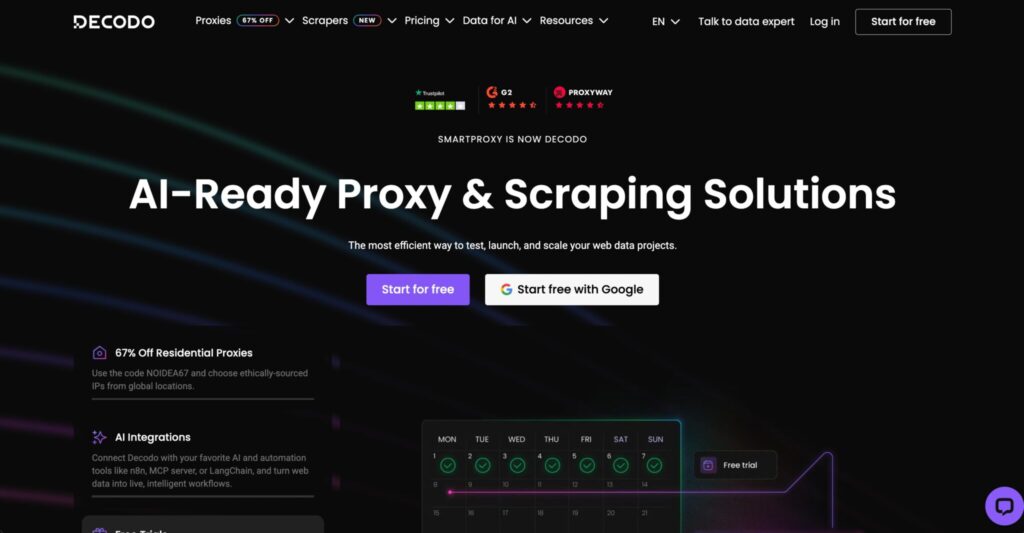
Decodo, formerly Smartproxy, sits in a sweet spot between enterprise platforms and budget proxy providers. It offers strong residential coverage, scraping APIs, datacenter proxies, ISP proxies, and mobile proxies, but the dashboard still feels friendly enough for smaller teams.
This makes Decodo a smart pick for SEO agencies, affiliate teams, lead intelligence companies, pricing analysts, and mid-sized businesses that need public data without building everything from scratch.
Its residential proxies are useful for collecting public information across different regions, while sticky sessions help when you need the same IP for a short workflow. Rotating sessions work better for large request volumes where every request does not need identity continuity.
Decodo’s main appeal is usability. You do not need a full engineering department to get started, but you still get enough power for serious data work.
Pro-Tip: Decodo is a strong first paid proxy provider if you are moving away from unstable cheap proxies and want cleaner rotation, better dashboards, and support.
4. SOAX
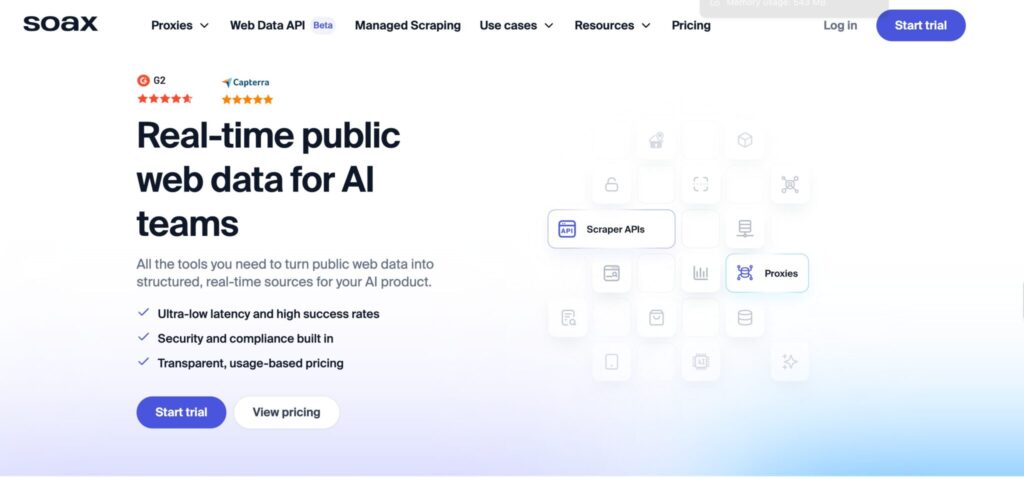
SOAX is a strong choice for public data collection where geo-accuracy matters. If you need to see how prices, search results, ads, product availability, or content changes across cities, regions, or ISPs, SOAX gives you useful targeting controls.
Its residential proxy network is built for scraping public web data at scale, and the platform also offers mobile, ISP, and datacenter options. That gives you flexibility depending on the target. For example, residential proxies are often better for eCommerce and market research, while datacenter proxies may work for lighter, high-volume targets.
SOAX also appeals to users who want clean session control. You can rotate IPs when needed or hold a session when the workflow requires consistency.
The provider is a good fit for businesses collecting public data from location-sensitive sources, such as local pricing pages, regional marketplaces, travel results, and localized search pages.
Pro-Tip: Use SOAX when the location of the IP is part of the data quality. Cheap proxies with weak geo accuracy can corrupt your dataset.
5. NetNut
NetNut is known for residential and static residential proxy access that focuses on speed, stability, and scale. It is a good option when your public data collection workflow needs reliable sessions rather than constant IP switching.
For example, some websites behave better when a session stays stable for several steps. That may include browsing category pages, opening product pages, collecting localized pricing, or checking availability across regions. In those cases, static residential or sticky residential-style sessions can be more useful than aggressive rotation.
NetNut is also suitable for ad verification, price monitoring, SERP checks, and market intelligence. It may not feel as beginner-friendly as Webshare or IPRoyal, but it offers a stronger setup for teams that need dependable infrastructure.
The pricing can feel higher than budget tools, so it makes the most sense when stability matters.
Pro-Tip: Do not rotate IPs too often just because you can. For some data collection workflows, stable sessions produce cleaner results than rapid rotation.
6. IPRoyal
IPRoyal is a practical choice for smaller teams, freelancers, and businesses that need residential proxies without enterprise-level pricing. It supports rotating and sticky sessions, which makes it flexible for basic public data collection tasks.
The platform is useful for SEO monitoring, SERP checks, price tracking, localized browsing, and small-to-medium scraping projects. It is not as advanced as Bright Data or Oxylabs when it comes to managed scraping tools, but it gives users enough control to build their own workflows.
IPRoyal’s strongest appeal is affordability. If you are testing a new data collection project and do not want to commit to a large monthly contract, it can be a sensible starting point.
The trade-off is that you may need to handle more of the scraping logic yourself, including retries, headers, parsing, rendering, and error handling.
Pro-Tip: IPRoyal is best when your team has basic technical skills and wants to control costs while testing public data collection ideas.
7. Webshare
Webshare is one of the most approachable proxy providers for developers and budget-conscious teams. It offers datacenter proxies, static residential proxies, and rotating residential proxies, with simple plans and a clean dashboard.
For public data collection, Webshare works best on projects where targets are not extremely hostile to automation. It is useful for testing, lightweight scraping, SEO tools, monitoring public pages, and running smaller data pipelines.
Its datacenter proxies are affordable and fast, but they are easier for websites to detect compared to residential proxies. Static residential options can help when you need a better trust profile while keeping costs controlled.
Webshare is not a full scraping platform like Bright Data or Oxylabs. You still need your own scraper, parser, retry logic, and compliance process. But for teams that want clean proxy access at a lower cost, it is a solid pick.
Pro-Tip: Start with Webshare datacenter proxies for easy public targets, then move to residential only where block rates justify the extra cost.
8. Rayobyte
Rayobyte is a good fit for businesses focused on ethical public web data collection, especially in the US market. It offers residential, datacenter, ISP, and scraping-related solutions, with a strong emphasis on public data workflows.
Its infrastructure can support price monitoring, review collection, marketplace tracking, SEO research, and other business intelligence use cases. Rayobyte is especially interesting if your targets are US-heavy and you want a provider with experience in web scraping operations.
Rayobyte may not always have the same global brand recognition as Bright Data or Oxylabs, but it is a practical provider for teams that care about support, reliable infrastructure, and US-based coverage.
Pro-Tip: Rayobyte is worth testing if your project depends heavily on US websites, US SERPs, US marketplaces, or localized American pricing data.
9. ProxyEmpire
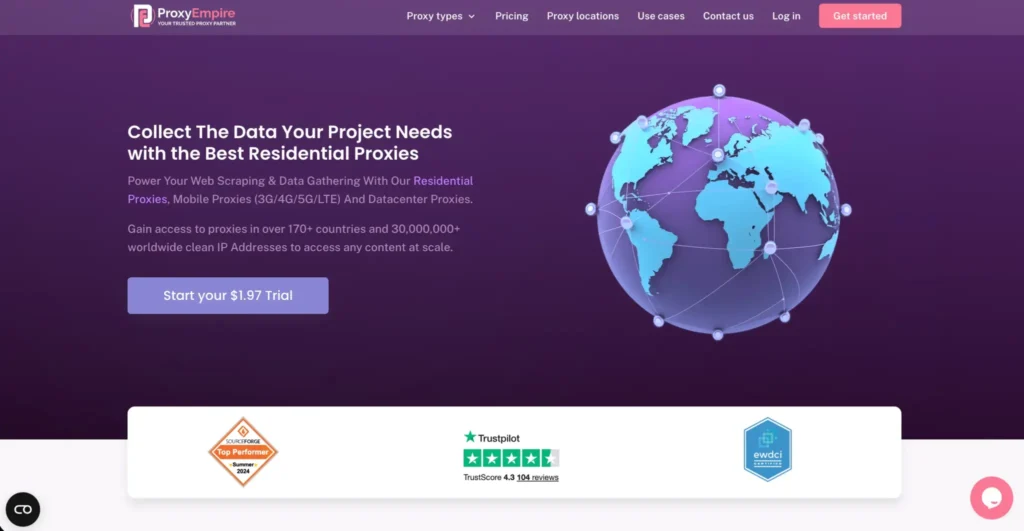
ProxyEmpire is a flexible proxy provider that gives users access to residential, mobile, and datacenter proxies with targeting controls. It is often considered by smaller data teams that need control over location, session type, and bandwidth without jumping straight into enterprise pricing.
For public data collection, ProxyEmpire can support market research, competitor tracking, SEO monitoring, ad verification, and localized browsing. Sticky sessions are useful when your scraper needs continuity, while rotating sessions help spread request load across a wider IP pool.
Its biggest strength is flexibility. You can shape your setup based on budget, country needs, and project size. The main drawback is that larger teams may still prefer providers with deeper scraping APIs, enterprise support, and broader automation tools.
Pro-Tip: ProxyEmpire is a good test option when you need niche geo-targeting but are not ready for a full enterprise contract.
How To Choose The Best Proxy For Public Data Collection
Start With The Type Of Public Data You Need
Not all public data collection projects need the same proxy setup. Product pricing, SERP tracking, business listings, real estate pages, travel rates, news monitoring, and review tracking all behave differently.
If the website is simple and does not block heavily, datacenter proxies may be enough. If the site is sensitive, localized, or rate-limited, residential proxies usually perform better. If the workflow requires account-like session stability, ISP or sticky residential proxies may be the better choice.
Check The IP Pool Quality, Not Just The Size
Large IP pools sound impressive, but quality matters more. A huge pool with poor reputation, weak geo-accuracy, or recycled blocked IPs will still hurt your success rate.
Look at three things: IP diversity, location accuracy, and replacement quality. A good provider should give you clean IPs across the regions you actually need, not just a big number on the homepage.
Understand Rotation Protocols
Rotation decides how often your proxy IP changes. For public data collection, there are three common patterns.
Per-request rotation changes the IP on every request. This is useful for high-volume scraping where each request stands alone.
Sticky sessions keep the same IP for a set time. This works better when a workflow includes multiple steps, such as opening a category page, clicking pagination, and collecting product details.
Manual rotation gives your system control over when to refresh the IP. This is useful for advanced teams that want custom retry logic.
The mistake many beginners make is rotating too aggressively. That can make behavior look unnatural and break sessions.
Match Proxy Type To Target Difficulty
Datacenter proxies are fast and cheap, but easier to detect. Residential proxies look more natural because they come from consumer-style networks. ISP proxies combine datacenter-like speed with residential-style trust. Mobile proxies are useful when the target shows mobile-specific results or requires carrier-level testing.
A smart setup often uses a mix. Do not pay for premium residential traffic when datacenter proxies work fine. Save the expensive proxy types for difficult targets.
Review Compliance And Data Ethics
Public data collection should stay focused on publicly available information. Avoid private accounts, personal data misuse, login-protected areas, payment walls, and anything that violates laws or contractual restrictions.
You should also respect rate limits where practical, avoid collecting sensitive personal information, and maintain a clear internal policy for data storage and usage.
Good proxy infrastructure helps with access and reliability. It does not remove your responsibility to collect data responsibly.
Best Proxy Setup By Use Case
| Use Case | Recommended Proxy Type | Best Providers |
|---|---|---|
| SERP tracking | Residential or ISP | Bright Data, Oxylabs, Decodo, SOAX |
| Price monitoring | Residential, ISP, datacenter mix | Oxylabs, SOAX, NetNut, Rayobyte |
| Real estate data | Residential proxies | Bright Data, Oxylabs, Decodo |
| Public business listings | Residential or datacenter | Webshare, IPRoyal, Decodo |
| Travel fare tracking | Residential with geo-targeting | SOAX, Oxylabs, Bright Data |
| News monitoring | Datacenter or residential | Webshare, Rayobyte, IPRoyal |
| Large enterprise data pipelines | Managed scraping API plus proxies | Bright Data, Oxylabs |
FAQs
What are the best proxies for public data collection?
Bright Data and Oxylabs are best for enterprise-grade public data collection. Decodo and SOAX offer a strong balance of performance and usability. Webshare and IPRoyal are better for smaller budgets and testing.
Are residential proxies better for public data collection?
Residential proxies are better for difficult or location-sensitive targets because they use real residential IPs. For simple public pages, datacenter proxies may be enough and usually cost less.
What is proxy rotation?
Proxy rotation means changing the IP address used for requests. It can happen per request, after a set time, or manually based on your scraper’s logic.
Should I use rotating or sticky proxies?
Use rotating proxies for large request volumes where each request is independent. Use sticky proxies when your workflow needs the same IP across multiple steps.
Are datacenter proxies good for scraping public data?
Yes, datacenter proxies can work well for simple public websites, monitoring tasks, and high-speed collection. They are less effective on websites with strict anti-abuse systems.
Which proxy provider is best for beginners?
Webshare, IPRoyal, and Decodo are beginner-friendly options. They have cleaner dashboards, easier setup, and lower entry costs than most enterprise platforms.
Which proxy provider is best for enterprise teams?
Bright Data and Oxylabs are the strongest choices for enterprise teams because they offer large proxy networks, scraping APIs, automation tools, and stronger support.
How many proxies do I need for public data collection?
It depends on request volume, target limits, location needs, and session structure. A small monitoring project may need very few proxies, while a large market intelligence system may require rotating residential pools across multiple regions.
Is public data collection legal?
Public data collection can be legal when done responsibly, but laws, terms of service, and privacy rules vary by region and website. Avoid private data, login-protected content, sensitive personal information, and aggressive collection patterns.
Final Verdict
The best proxy for public data collection depends on your workflow.
Choose Bright Data if you need the most complete data infrastructure. Choose Oxylabs if structured scraping and enterprise support matter. Pick Decodo if you want a strong balance between usability and power. Use SOAX when geo-targeting accuracy is important. Choose NetNut for stable sessions, IPRoyal for affordable residential access, Webshare for low-cost proxy infrastructure, Rayobyte for US-focused data collection, and ProxyEmpire for flexible niche targeting.
For most professional teams, the smartest path is not choosing the biggest proxy pool. It is choosing the provider that matches your target websites, rotation needs, location accuracy, and compliance standards. That is what keeps your public data collection reliable, clean, and worth the spend.