
Ecommerce intelligence sounds simple until you actually try to collect clean data at scale. One product page shows a different price in California than it does in Texas.
A marketplace changes ranking positions every few hours. A competitor runs a flash deal for logged-out users, while another shows location-based shipping estimates. If your team relies on one browser, one IP, and one location, you are seeing a tiny slice of the market.
That is where proxies become a serious business tool. For ecommerce intelligence, the goal is not “scraping for the sake of scraping.”
The goal is to monitor public prices, availability, rankings, reviews, seller behavior, ads, shipping changes, and regional catalog differences without a distorted view.
The best proxy setup gives you clean IP reputation, flexible geo-targeting, and rotation control. Cheap proxies can work for small checks, but serious ecommerce monitoring needs residential, ISP, mobile, or managed scraping infrastructure. Below is a practical guide for teams that care about accuracy, uptime, and clean data.
Quick Comparison Table
| Proxy Provider | Best For | Main Proxy Types | Rotation Control | Geo-Targeting | Ecommerce Fit |
|---|---|---|---|---|---|
| Bright Data | Enterprise ecommerce intelligence | Residential, ISP, datacenter, mobile | Rotating and sticky sessions | Country, city, carrier, ASN | Excellent for large teams |
| Oxylabs | Large-scale marketplace tracking | Residential, ISP, datacenter, mobile | Automatic and session-based rotation | Country, city, ASN | Excellent for heavy scraping |
| Decodo | Balanced price and usability | Residential, ISP, mobile, datacenter | Flexible sessions | Country and city | Strong for growing teams |
| SOAX | Granular targeting | Residential, mobile, ISP, datacenter | Rotating and sticky | Country, city, ISP, ASN | Strong for regional checks |
| NetNut | Stable enterprise access | Residential, ISP, mobile, datacenter | Rotating residential options | Global location targeting | Good for high-volume monitoring |
| Webshare | Budget-friendly proxy control | Residential, static residential, datacenter | Rotating endpoints | Country and city | Good for lean teams |
| IPRoyal | Affordable ecommerce testing | Residential, ISP, datacenter, mobile | Rotating and sticky sessions | 195+ locations | Good for smaller projects |
| Rayobyte | US-focused data collection | Residential, datacenter, ISP | Session control | Geo-targeting available | Good for US retail tracking |
| Infatica | Scraping API plus proxies | Residential, mobile, datacenter | Managed and proxy-level options | Global targeting | Good for API-led workflows |
1. Bright Data
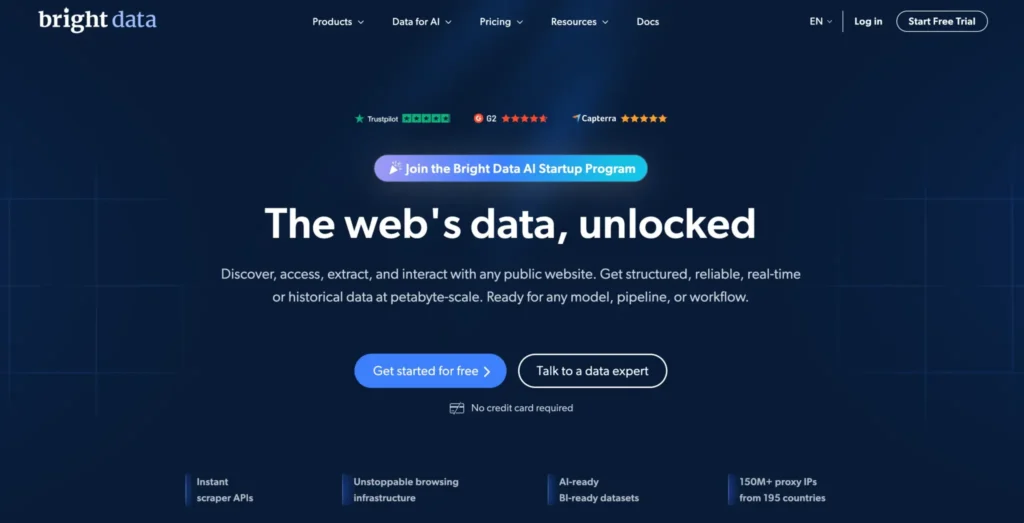
Bright Data is one of the most complete options for ecommerce intelligence teams that need scale, compliance controls, and deep targeting. Its residential network is large, and the platform also gives you ISP, mobile, and datacenter proxies, which matters when different ecommerce targets behave differently.
For ecommerce use cases, Bright Data works well for price monitoring, stock tracking, marketplace ranking checks, review intelligence, and regional testing. The real advantage is control. You can run rotating sessions for large crawling jobs or sticky sessions when you need a consistent cart, shipping estimate, or localized browsing path.
It is not the cheapest option, and small teams may find the setup heavy. But if your project involves multiple countries, many categories, and strict data quality rules, Bright Data feels built for that environment.
Pro-Tip: Use residential IPs for sensitive marketplace pages, ISP proxies for longer sessions, and datacenter proxies only for low-risk pages like static category lists.
2. Oxylabs
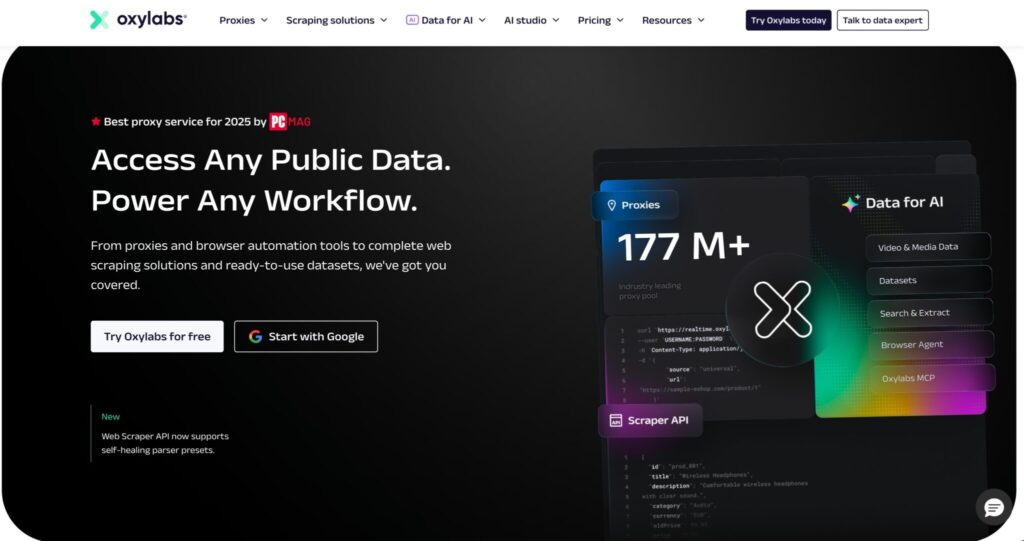
Oxylabs is another enterprise-grade choice, especially strong for large-scale ecommerce scraping and public data collection. It offers a large residential pool, datacenter proxies, ISP proxies, mobile proxies, and scraping tools that reduce the engineering burden.
Oxylabs is useful when your team tracks thousands of SKUs, seller pages, or category positions across regions. Its rotating residential proxies are built for heavy request volumes, while its Web Unblocker and scraper APIs can help teams that do not want to maintain every piece of crawling infrastructure themselves.
Oxylabs is best for businesses that already know the value of their data pipeline. If you are testing a small side project, it may feel expensive. For daily competitive pricing across marketplaces, the reliability can justify the spend.
Pro-Tip: Match rotation frequency to page type. Product listing pages can rotate often. Cart, delivery, and session-based pages usually need sticky sessions.
3. Decodo
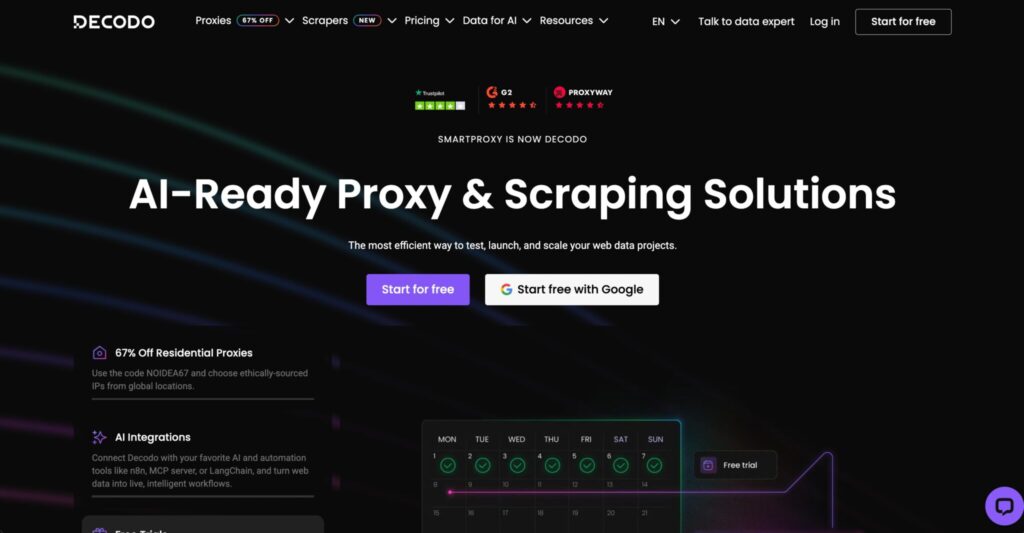
Decodo, formerly known as Smartproxy, sits in a sweet spot between enterprise power and day-to-day usability. It offers residential, ISP, mobile, and datacenter proxies, along with scraping APIs for teams that want faster deployment.
Decodo works well for price tracking, availability checks, catalog monitoring, and localized browsing tests. The dashboard is easier to work with than many enterprise-heavy platforms, and the pricing structure is usually more approachable for mid-sized teams.
Its strength is balance. You get enough scale for serious data collection, but you do not need a full engineering department to start. That makes it a good pick for agencies, affiliate teams, SaaS tools, and ecommerce analysts.
Pro-Tip: Start with residential proxies for testing. Once you identify easier targets, move those requests to datacenter or ISP proxies to control costs.
4. SOAX
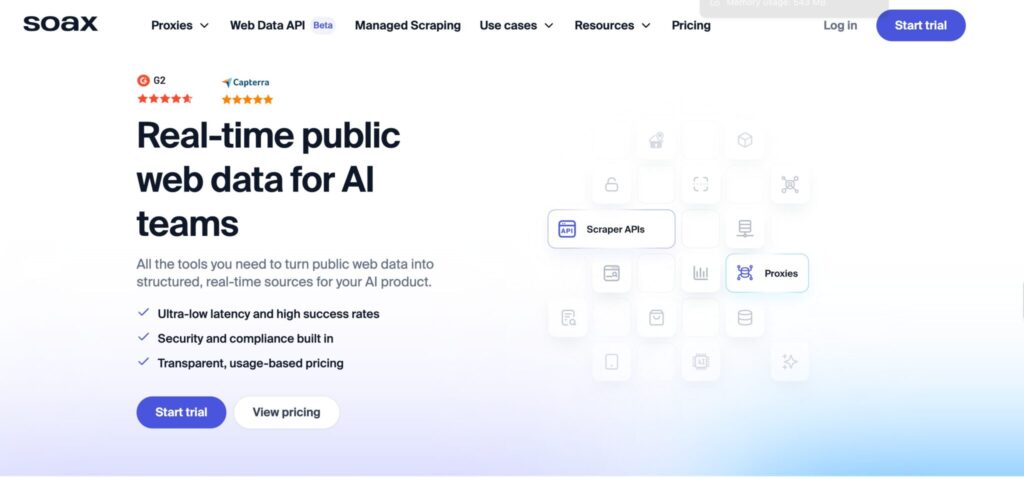
SOAX is a strong option when geo-targeting precision matters. A store may show different prices, shipping times, taxes, product availability, or promotional banners based on city, ISP, or device profile. SOAX gives teams granular controls that help capture those differences more accurately.
It offers residential, mobile, ISP, and datacenter proxies, with support for rotating and sticky sessions. For competitive intelligence, that means you can test how a product page looks in different markets without relying on guesswork.
SOAX is useful for regional ecommerce audits, ad verification, localized product research, and marketplace monitoring. The learning curve is reasonable, though users still need to understand session handling, headers, and request pacing to get the best results.
Pro-Tip: Do not compare prices from different locations unless your proxy targeting, language settings, currency, and delivery assumptions are consistent.
5. NetNut
NetNut is built for teams that want stable, large-scale proxy infrastructure without too much tinkering. Its residential and ISP-style access can be useful for ecommerce monitoring where consistency matters as much as rotation.
For ecommerce intelligence, NetNut fits use cases like price comparison, SERP-to-product tracking, marketplace catalog checks, and seller intelligence. It is a practical option for companies that need recurring jobs and predictable performance.
The platform leans more toward business users than hobbyists. That is not a bad thing. Ecommerce data collection often becomes messy when teams outgrow cheap proxy lists but have not yet built a reliable infrastructure stack. NetNut can fill that gap with cleaner routing and business-grade support.
Pro-Tip: Track success rate by domain, not just overall. One marketplace may perform well while another quietly burns your bandwidth with soft blocks.
6. Webshare
Webshare is a good fit for users who want proxy control without enterprise complexity. It offers residential, static residential, and datacenter proxies, with a dashboard that makes it easy to manage endpoints, authentication, and usage.
Webshare works best for lean teams handling product monitoring, regional checks, and competitor page tracking at moderate scale. It may not offer the same advanced scraping layer as Bright Data or Oxylabs, but it gives strong value when your team already has its own scraper.
The main appeal is cost control. If you know what you are doing technically, Webshare can be a clean way to run ecommerce monitoring without paying for features you will not use.
Pro-Tip: Use static residential or ISP-style proxies when you need session stability, such as checking checkout flows or shipping estimates.
7. IPRoyal
IPRoyal is often attractive for smaller teams because it keeps pricing approachable while still offering residential, ISP, datacenter, and mobile proxy options. It can support price checks, local catalog testing, product research, ad checks, and competitor monitoring.
The platform is not as enterprise-heavy as Bright Data or Oxylabs, but that can be a plus. Some teams do not need a huge stack. They need clean residential IPs, basic rotation control, and enough location coverage to validate public ecommerce data.
IPRoyal is a sensible starting point for affiliates, small agencies, and ecommerce operators who want to monitor specific competitors without committing to a large monthly contract.
Pro-Tip: Test a few target domains before scaling. Low price per GB means little if your target produces too many retries.
8. Rayobyte
Rayobyte has a strong reputation in public web data collection, with residential, datacenter, and ISP options. It is particularly interesting for teams focused on US ecommerce data, pricing research, product feeds, and marketplace visibility.
Rayobyte can support steady monitoring jobs where data quality and support matter. It may not always be the first name people mention for global scraping scale, but it is a practical option for businesses that want a transparent provider and reliable infrastructure.
Rayobyte is a good fit if your team collects data from retail sites, compares prices, or monitors product changes and wants provider support that understands scraping workflows.
Pro-Tip: If most of your targets are US retailers, ask about US pool quality instead of only looking at total global IP count.
9. Infatica
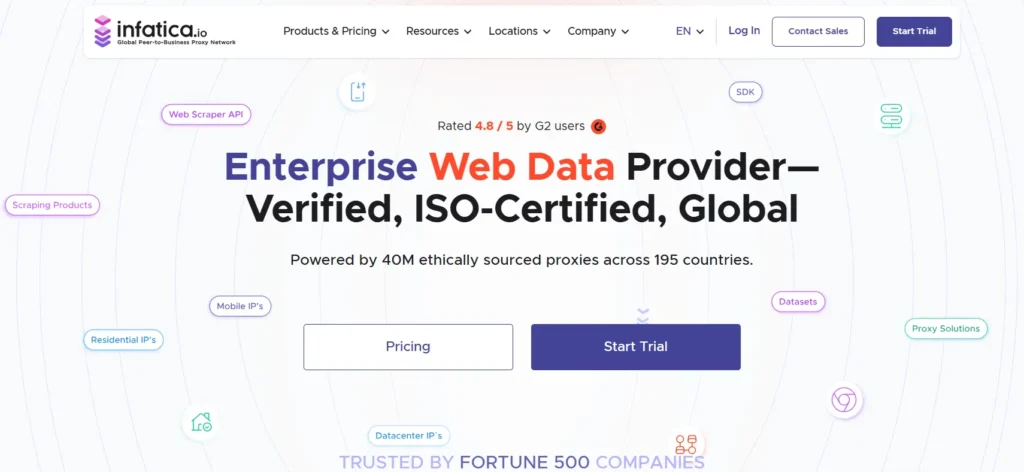
Infatica combines proxy infrastructure with scraping API options, which helps teams collect ecommerce data without building every workflow from scratch. It offers residential proxies, mobile proxies, datacenter proxies, and ecommerce scraping tools.
For ecommerce intelligence, Infatica can help with product data extraction, pricing intelligence, catalog checks, and regional availability monitoring. The API route helps when your team wants structured output rather than raw HTML.
It is a strong option for data teams that care about automation and would rather spend time analyzing product data than constantly fixing scrapers.
Pro-Tip: Managed scraping APIs can cost more per request, but they may save money if they reduce retries, engineering hours, and parser maintenance.
How To Choose Proxies For Ecommerce Intelligence
Start With The Target, Not The Provider
The best proxy depends on the site you are monitoring. A simple product page may work with datacenter proxies. A marketplace with dynamic pricing, bot checks, and geo-specific content may need residential or mobile IPs. Checkout, shipping, and availability flows often need sticky sessions because the site expects one user journey, not a new IP every request.
Understand IP Pool Quality
Do not judge a proxy provider only by pool size. A large pool with poor reputation can still fail. Look for clean sourcing, strong geo coverage, low block rates, and enough IP diversity in your target regions. Ecommerce intelligence is about accurate data, so a smaller high-quality pool can beat a huge recycled pool.
Use Rotation Carefully
Rotation is not always better. Fast rotation helps when crawling many public product pages. Sticky sessions help when a target needs continuity. For example, checking a price page may work with frequent rotation, but checking cart behavior or delivery estimates may break if the IP changes too soon.
Check Protocol Support
Most ecommerce scraping stacks use HTTP or HTTPS proxies. SOCKS5 can be useful for broader traffic routing, browser automation, or non-standard tools. Make sure your provider supports your crawler, browser automation stack, anti-detect browser, or data pipeline before buying a large plan.
Watch Bandwidth And Retry Costs
Ecommerce pages can be heavy. Images, scripts, variants, tracking tags, and dynamic content can burn bandwidth fast if your crawler is not configured correctly. Blocked requests also cost money. A cheap plan can become expensive if your success rate is poor.
Prioritize Compliance
Only collect public data, respect site terms where required, avoid personal data, and do not use proxies to access private accounts or restricted systems. Good ecommerce intelligence should help with pricing, assortment, availability, and market research without crossing ethical lines.
FAQs
What are the best proxies for ecommerce intelligence?
Residential proxies are usually the safest starting point because they look closer to normal user traffic. ISP proxies are better for stable sessions, while datacenter proxies can work for low-risk public pages.
Are rotating proxies good for ecommerce scraping?
Yes, but only when used correctly. Rotating proxies help with large product and category crawls. Sticky sessions are better for carts, delivery estimates, and multi-step browsing.
Do I need residential or datacenter proxies?
Use residential proxies for harder targets and location-sensitive data. Use datacenter proxies for easier pages, internal testing, or high-speed checks where blocks are less common.
Which proxy provider is best for large ecommerce teams?
Bright Data and Oxylabs are strong enterprise choices. Decodo, SOAX, and NetNut are also solid depending on your budget, target sites, and geo-targeting needs.
How many proxies do I need?
It depends on request volume, target sensitivity, location coverage, and rotation rules. Start small, measure success rate, then scale by domain and region instead of guessing.
Can proxies show local ecommerce prices?
Yes. Proxies can help you view public pages from different locations, but you must also control currency, language, cookies, delivery ZIP code, and device settings.
Are ecommerce proxies legal?
Proxies themselves are legal tools. The risk depends on how you use them. Stay with public data, avoid protected systems, follow applicable laws, and build a clear compliance process.
What is the biggest mistake buyers make?
They buy the cheapest proxy plan and blame the provider when the data is messy. Ecommerce intelligence needs the right mix of proxy type, rotation logic, user-agent handling, pacing, and parsing quality.