
Product intelligence is not just about checking a competitor’s price once a week. Serious teams track product titles, stock status, shipping changes, seller rankings, promotions, reviews, marketplace placement, and regional pricing shifts across hundreds or thousands of URLs.
That sounds simple until the data pipeline starts breaking.
Retail sites change layouts. Marketplaces show different prices by country or city. Some pages throttle repeated requests. Some show CAPTCHAs. Some silently return incomplete data. If your proxy layer is weak, your product intelligence dashboard becomes a guessing machine.
The right proxy setup helps you collect public product data more consistently, across locations, devices, and marketplaces. The wrong one burns bandwidth, triggers blocks, and gives your pricing team stale information.
This guide breaks down the best proxies for product intelligence, with a focus on IP pools, rotation, session control, targeting, scraping reliability, and real-world buyer fit.
Quick Comparison Table: Best Proxies For Product Intelligence
| Provider | Best For | Proxy Types | IP Pool Strength | Rotation Control | Geo-Targeting | Scraping Tools | Best Use Case |
|---|---|---|---|---|---|---|---|
| Bright Data | Enterprise-grade product intelligence | Residential, ISP, datacenter, mobile | Very large global pool | Advanced rotating and sticky sessions | Country, city, ZIP, ASN | Strong scraping APIs and datasets | Large retail tracking, marketplace monitoring, pricing intelligence |
| Oxylabs | Enterprise scraping at scale | Residential, datacenter, ISP, mobile | Massive enterprise pool | Strong session management | Global targeting | Web Scraper API, Web Unblocker | Large-scale ecommerce and catalog monitoring |
| Decodo | Balanced speed, usability, and scale | Residential, ISP, mobile, datacenter | Large global network | Rotating and sticky sessions | 195+ locations | Scraping APIs, unblocker tools | Mid-market product tracking teams |
| NetNut | Stable high-volume data collection | Residential, mobile, datacenter | Strong residential coverage | Rotating and static options | Country and city targeting | Data collection tools | High-volume price and availability tracking |
| SOAX | Granular geo-targeted ecommerce data | Residential, mobile, ISP, datacenter | Broad clean network | Flexible rotation and sticky sessions | Country, city, ISP | Web Data API | Localized product and marketplace intelligence |
| IPRoyal | Affordable residential proxy testing | Residential, ISP, datacenter, mobile | Moderate global pool | Rotating and sticky sessions | Country and city targeting | No major built-in scraping API | Small teams testing product data workflows |
| Webshare | Budget-friendly proxy infrastructure | Residential, ISP, datacenter | Strong for cost-focused users | Easy rotating setup | Broad global coverage | Limited scraping stack | Scrapers that already have custom parsing logic |
| Rayobyte | Ecommerce-focused managed support | Residential, datacenter, ISP | Solid mixed proxy network | Static and rotating options | Country-based targeting | Scraping APIs | Teams that need support around ecommerce data |
| DataImpulse | Low-cost, high-volume experiments | Residential, mobile, datacenter | Large pool for budget users | Rotating sessions | Broad location coverage | Basic setup | Early-stage product monitoring and price checks |
1. Bright Data
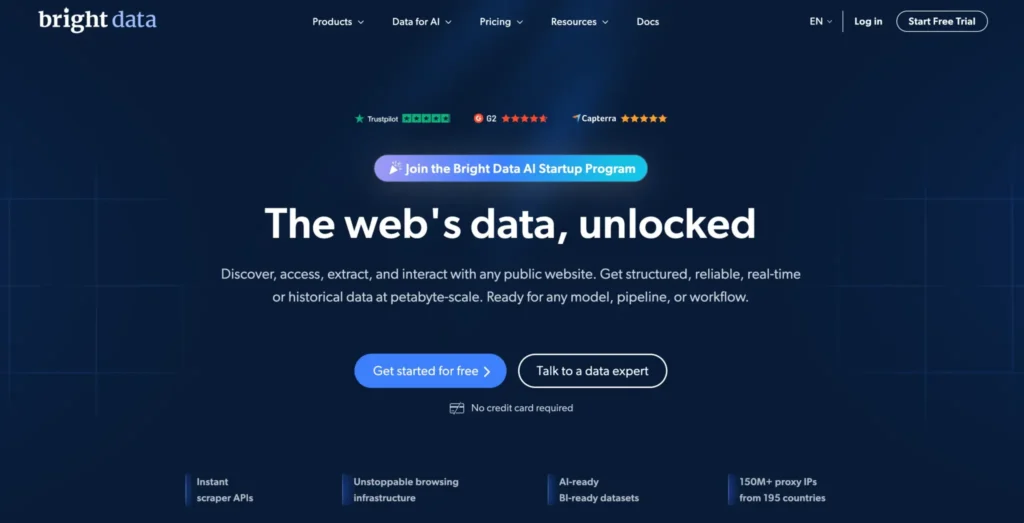
Bright Data is one of the strongest options for serious product intelligence teams that need scale, flexibility, and advanced targeting. It is not the cheapest option, but it gives you the kind of control that matters when you are tracking thousands of product pages across different markets.
For product intelligence, Bright Data works well when you need to compare prices by region, monitor marketplace sellers, track product availability, or collect public review data. The platform supports residential, mobile, ISP, and datacenter proxies, so you can match the proxy type to the target website.
Residential proxies are useful for marketplace and ecommerce pages with stronger bot filters. ISP proxies are better when you need stable sessions and speed. Datacenter proxies can work for lower-risk sources where cost matters more than stealth.
Pro Tip: Use sticky residential sessions when tracking cart-level pricing, delivery estimates, or localized inventory. Rotating every request can break session continuity and return inconsistent results.
Bright Data is best for enterprise teams with technical resources. Smaller users may find the dashboard and pricing model a bit heavy, but for large data operations, it is one of the most complete choices.
2. Oxylabs
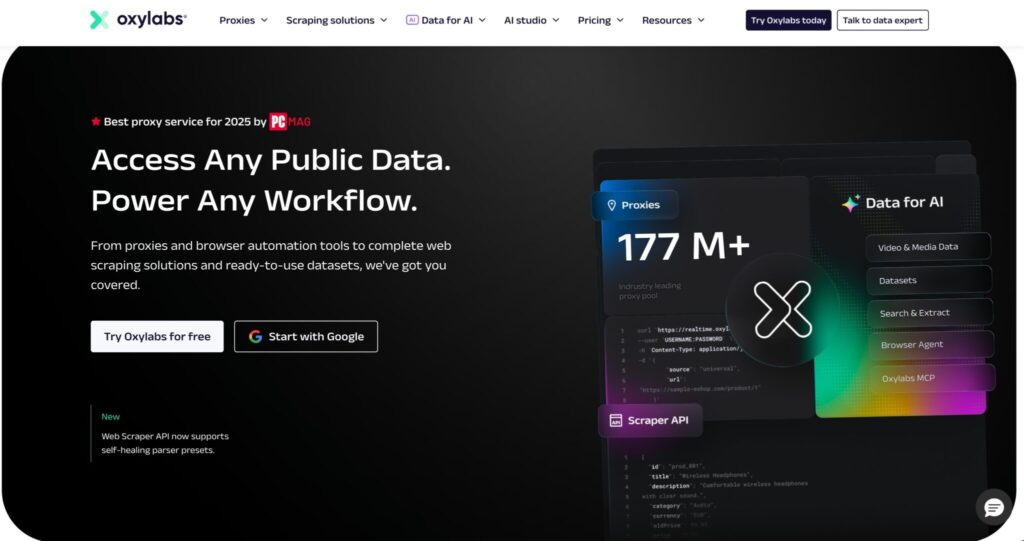
Oxylabs is built for teams that treat web data collection as business infrastructure. If your product intelligence project includes large-scale price monitoring, category tracking, marketplace scraping, or seller intelligence, Oxylabs deserves a close look.
Its biggest advantage is reliability at scale. The platform offers residential and datacenter proxies, along with scraping tools that reduce the burden on your engineering team. For ecommerce teams, that matters because product pages are often messy. Prices may load dynamically. Availability can depend on region. Some details appear only after scripts run.
Oxylabs also offers tools like Web Scraper API and Web Unblocker, which are helpful when basic proxy rotation is not enough. Instead of manually handling headers, retries, browser rendering, and block logic, teams can push more of that complexity into the provider’s scraping layer.
Oxylabs is not the most beginner-friendly platform, and pricing usually makes more sense for serious users. But if your company depends on accurate product data, it brings the depth you want.
Pro Tip: Use Oxylabs for high-value targets where failed requests cost more than proxy bandwidth.
3. Decodo
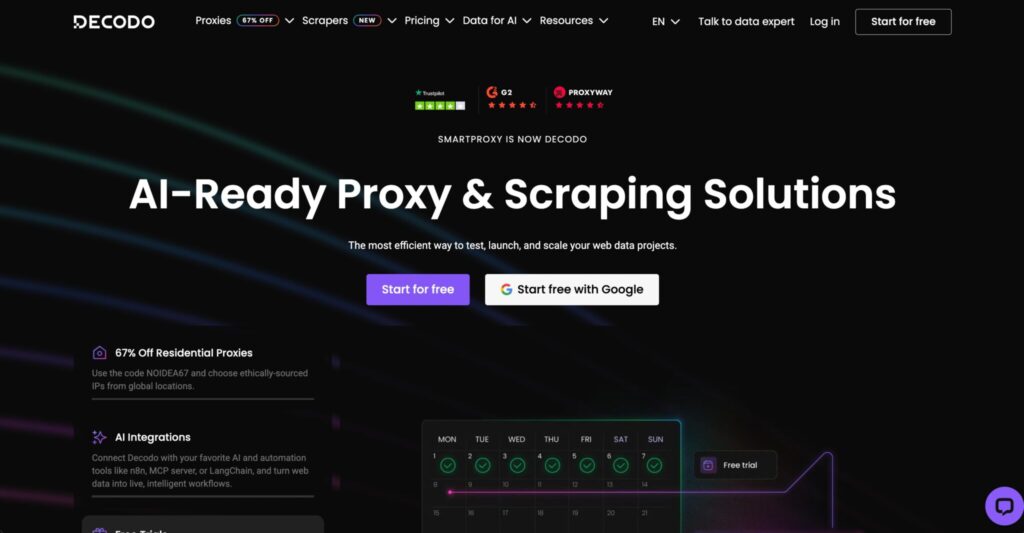
Decodo, formerly Smartproxy, is one of the most balanced proxy providers for product intelligence. It sits between enterprise-heavy platforms and budget proxy services, making it a strong choice for growing ecommerce intelligence teams.
The provider offers residential, ISP, mobile, and datacenter proxies, plus scraping APIs and site unblocker tools. That combination is useful if your team wants flexibility without building every part of the scraping stack from scratch.
For product intelligence, Decodo is a good fit for tracking competitor prices, monitoring product listings, checking availability, scraping marketplace search results, and testing regional page differences. Its dashboard is generally easier to work with than some enterprise platforms, which helps smaller teams move faster.
The main benefit is usability. You get a large proxy network, practical controls, and developer-friendly options without feeling like you need a dedicated infrastructure team just to configure sessions.
Pro Tip: Start with residential proxies for marketplace targets, then test ISP proxies for pages where stable sessions and speed matter more.
4. NetNut
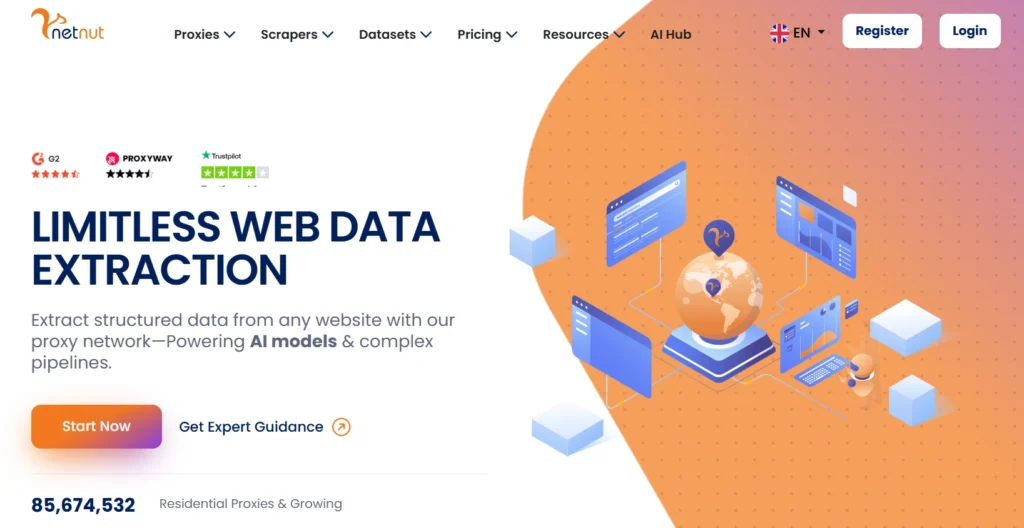
NetNut is a strong option for high-volume product intelligence workflows where stability matters. It is often used for web scraping, ad verification, market research, and ecommerce data collection.
The key appeal is its residential proxy network and direct connectivity model. In practice, that can help with speed and consistency when running repeated product checks across many URLs. If you are monitoring fast-changing ecommerce data, such as price drops, flash sales, stock changes, or seller movement, stable performance matters a lot.
NetNut works best for teams that already know what data they need and want dependable infrastructure to collect it. It may not be the first pick for a beginner testing a few URLs, but it makes sense for mature scraping workflows.
Its rotating residential proxies are useful for broad product page discovery. Static or sticky sessions are better for tasks that need continuity, such as checking checkout-region behavior or delivery availability.
Pro Tip: For product intelligence, do not rotate too aggressively. Many failed scraping setups rotate every request when a 5 to 15-minute sticky session would produce cleaner data.
5. SOAX
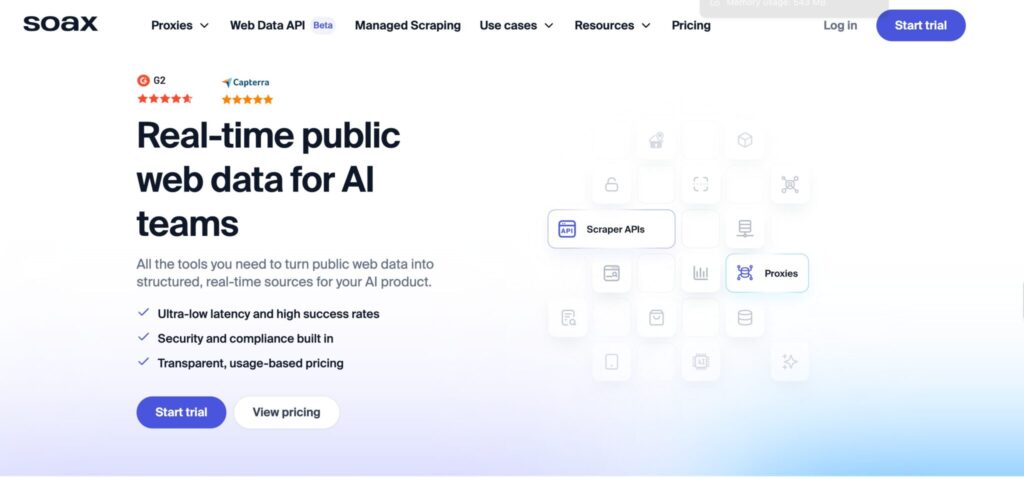
SOAX is a very practical option for product intelligence because of its strong geo-targeting and ecommerce-oriented positioning. If you need to see how prices, stock, shipping, or product availability change across countries, cities, or ISPs, SOAX is worth considering.
It supports residential, mobile, ISP, and datacenter proxies, along with web data tools. That makes it useful for teams collecting public ecommerce data from marketplaces, retail sites, and regional storefronts.
SOAX stands out when location accuracy matters. Product intelligence is often local. A product may be available in one city but not another. A marketplace seller may rank differently by country. Shipping dates may change based on postcode or region. In these cases, a generic proxy pool is not enough.
SOAX is also a good option for teams that want cleaner control without jumping straight into the most expensive enterprise platforms.
Pro Tip: Build separate proxy profiles by market. For example, use one pool for US pricing, another for UK listings, and another for EU marketplace pages. Mixing locations can pollute your data.
6. IPRoyal
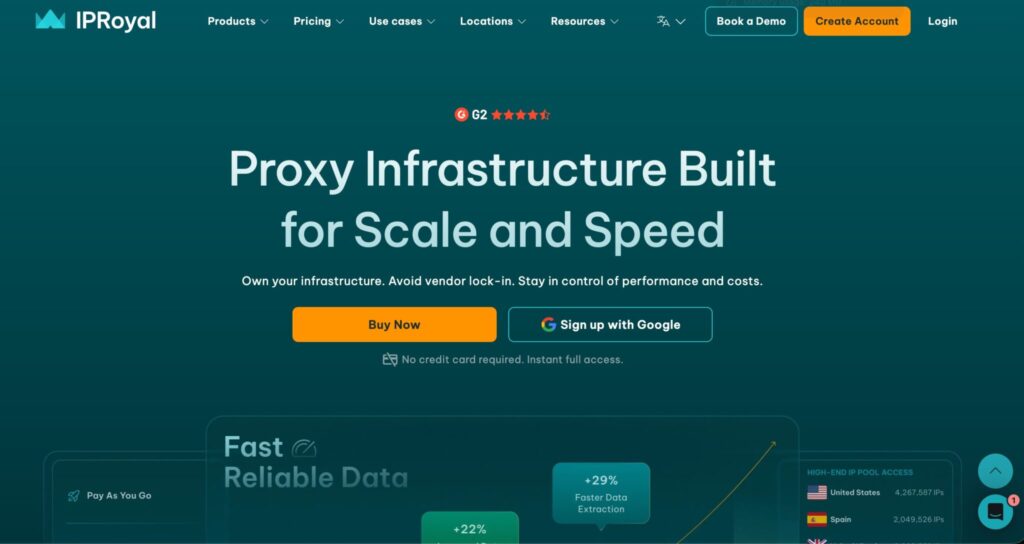
IPRoyal is a good choice for smaller teams, affiliate researchers, ecommerce analysts, and developers who want affordable residential proxies without overcomplicating the setup.
It offers residential, ISP, datacenter, and mobile proxies. For product intelligence, the residential proxy pool is the most relevant because it helps access public ecommerce pages from different locations with fewer blocks than basic datacenter IPs.
IPRoyal does not offer the same level of advanced scraping APIs as Bright Data or Oxylabs, so it is better for teams that already have their own scraper, parser, and retry logic. If your setup is custom-coded and you mainly need proxy access, it can be a cost-effective fit.
The trade-off is that you may need more hands-on tuning. You will need to manage request rates, retries, headers, and session behavior carefully.
Pro Tip: IPRoyal is a sensible starting point for validating a product intelligence idea before committing to a larger enterprise contract.
7. Webshare
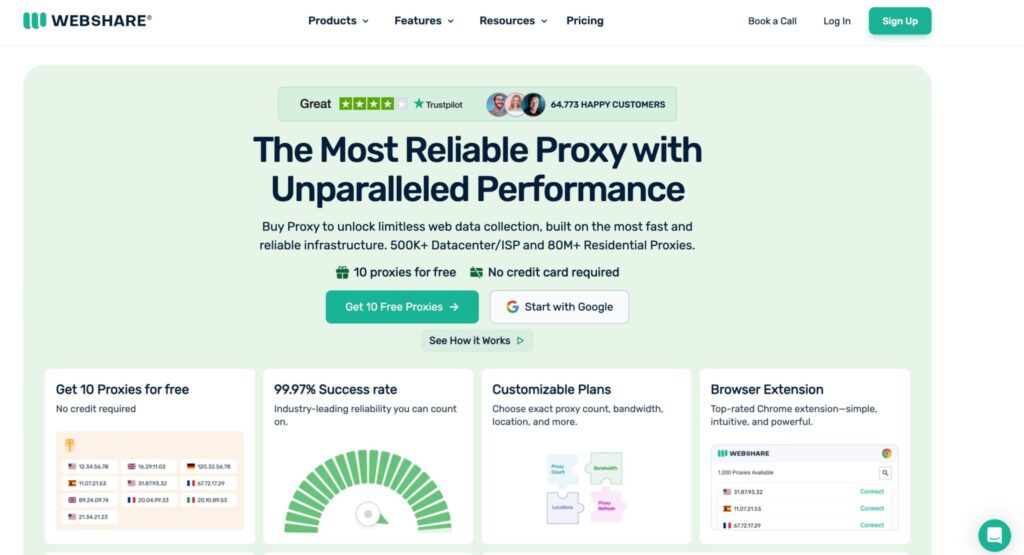
Webshare is best for teams that care about budget, simplicity, and control. It offers datacenter, residential, and ISP proxies, with a straightforward setup and transparent pricing structure.
For product intelligence, Webshare can work well when your scraper is already mature. If your team has built custom crawling logic, deduplication, parsing, and monitoring, Webshare gives you a practical proxy layer without forcing you into a larger scraping platform.
Datacenter proxies can be useful for low-protection ecommerce sources, product feeds, public category pages, and basic availability checks. Residential and ISP proxies are better for tougher retail websites.
Webshare is not as advanced as providers that bundle full scraping APIs, but that is also part of the appeal. You use it when you want proxy infrastructure, not a full managed data product.
Pro Tip: Use datacenter proxies first for low-risk targets. Move to residential or ISP only when blocks, bad data, or location accuracy become a problem.
8. Rayobyte
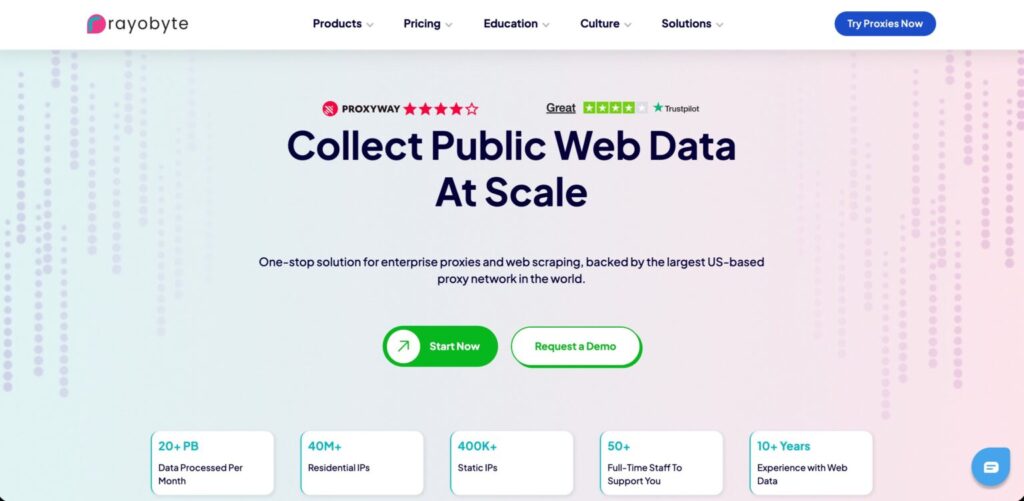
Rayobyte is a strong pick for ecommerce data teams that want proxy infrastructure plus hands-on support. Its messaging is clearly aligned with ecommerce use cases like price, promotion, ranking, product, and review data.
That makes it relevant for product intelligence teams that do not just need IPs. They need help making the whole collection workflow more stable.
Rayobyte offers different proxy types and scraping APIs, so it can support both technical and semi-managed workflows. It is especially useful when you are collecting data from retail websites that change often or require more careful tuning.
The provider may not always be the cheapest choice, but its ecommerce focus makes it worth testing if your team wants guidance, not just a proxy list.
Pro Tip: Ask support about your exact target types before buying. A good proxy provider should help you choose between residential, ISP, and datacenter setups based on the websites you monitor.
9. DataImpulse
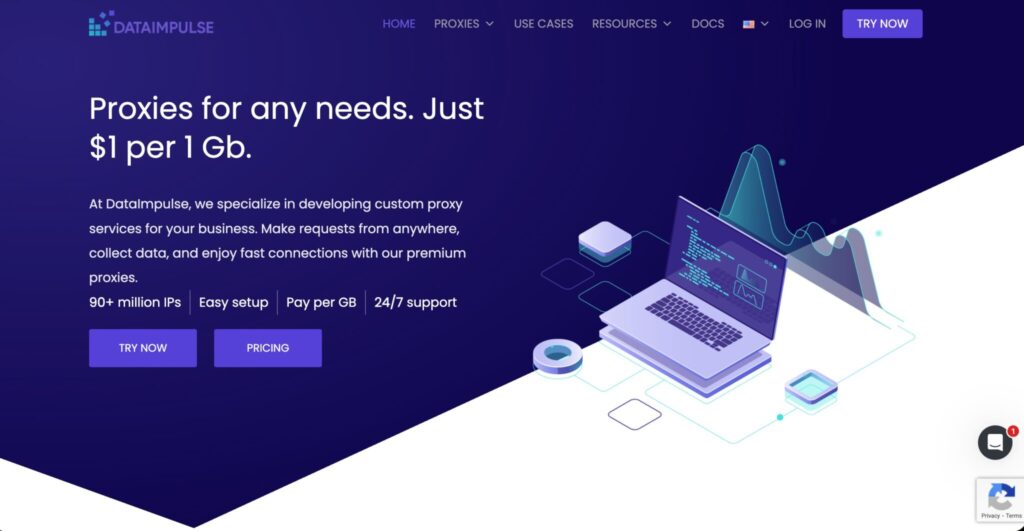
DataImpulse is an interesting option for teams that want affordable proxy bandwidth for product intelligence experiments. It is not as feature-heavy as the big enterprise providers, but it can be useful when you need to test lots of URLs without burning through a large budget.
For early-stage product intelligence, that matters. You may not know which targets are worth tracking yet. You may need to validate data quality, pricing changes, category behavior, or stock patterns before building a full system.
DataImpulse can work well for price comparison, public product monitoring, and basic scraping tasks where cost control is important. However, for highly protected marketplaces or complex JavaScript-heavy pages, you may still need a more advanced scraping API or browser rendering layer.
Pro Tip: Use DataImpulse for discovery and testing, then move your highest-value targets to a premium provider if accuracy becomes business-critical.
How To Choose Proxies For Product Intelligence
Start With The Data You Actually Need
Before picking a provider, define the data points you want. Product title, price, discount, seller, stock status, shipping date, review count, rating, marketplace rank, and variant availability all behave differently.
A simple price field may be easy to collect. Local delivery availability may need sticky sessions and accurate geo-targeting. Marketplace ranking may require clean residential IPs and careful rate control.
Match Proxy Type To Target Difficulty
Datacenter proxies are fast and affordable, but easier to detect. Use them for simple public pages, APIs, and low-risk sources.
Residential proxies are better for retail websites and marketplaces because requests appear closer to real consumer traffic.
ISP proxies combine residential trust with better speed and stability. They work well for repeat monitoring.
Mobile proxies are useful for mobile-first pricing, app-like behavior, and regions where mobile traffic gets different results.
Understand Rotation Protocols
Rotation controls how often your IP changes. For product intelligence, faster rotation is not always better.
Use rotating sessions for broad crawling, search result collection, and category discovery. Use sticky sessions for cart checks, regional pricing, login-free personalization, and multi-step product flows.
The best setup often combines both. Rotate between product URLs, but keep sessions stable for location-sensitive checks.
Check Geo-Targeting Depth
Country targeting is not enough for serious ecommerce intelligence. City, state, ZIP, ASN, and ISP targeting can matter when prices or inventory vary locally.
If your business monitors retail chains, grocery delivery, travel products, or marketplace availability, geo-targeting quality becomes one of the most important buying factors.
Look Beyond IP Pool Size
A huge IP pool sounds impressive, but quality matters more than headline numbers. Ask these questions:
- Does the provider support sticky sessions?
- Can you target the exact regions you need?
- Are residential IPs ethically sourced?
- Can the provider handle your request volume?
- Does support understand ecommerce scraping?
- Do you get useful logs, analytics, and error visibility?
A smaller clean pool can outperform a massive noisy pool.
Test With Real Product URLs
Never choose proxies based only on marketing claims. Build a test set with real URLs from your target websites. Include product pages, category pages, search pages, out-of-stock pages, variant pages, and regional pages.
Measure success rate, response time, block rate, CAPTCHA frequency, data accuracy, and cost per successful page.
Pro Tip: Cost per GB is not the real metric. Cost per clean product record is what matters.
Best Overall Picks
For enterprise product intelligence, Bright Data and Oxylabs are the strongest choices. They offer scale, advanced controls, scraping tools, and better support for complex targets.
For growing teams, Decodo and SOAX offer a strong balance of usability, proxy variety, and ecommerce-friendly features.
For budget-conscious users, IPRoyal, Webshare, and DataImpulse are practical options, especially if you already have your own scraping stack.
For ecommerce-specific support, Rayobyte is worth testing because its positioning aligns closely with product, price, promotion, ranking, and review data.
FAQs
What are product intelligence proxies?
Product intelligence proxies help businesses collect public ecommerce and marketplace data from different locations without relying on a single IP address. They are commonly used for price monitoring, stock tracking, review analysis, marketplace ranking checks, and competitor catalog research.
Are residential proxies better for product intelligence?
Residential proxies are usually better for tougher ecommerce targets because they use real consumer-like IP addresses. Datacenter proxies are faster and cheaper, but they are more likely to be flagged on protected retail sites.
What is the best proxy type for price monitoring?
For basic price checks, datacenter proxies may work. For regional pricing, marketplace data, or retail sites with stronger protection, residential or ISP proxies are usually better. ISP proxies are often a strong middle ground because they offer trust and stable performance.
How often should I rotate proxies?
It depends on the target. For broad crawling, rotate frequently. For location-sensitive checks or multi-step sessions, use sticky sessions. Rotating too often can create inconsistent data, especially when websites personalize results by session.
Do proxies guarantee accurate product data?
No. Proxies only solve part of the problem. You still need good parsers, retry logic, browser rendering when needed, duplicate handling, and validation rules. A good proxy reduces blocks, but it does not fix poor data engineering.
Can I use free proxies for product intelligence?
Free proxies are not suitable for serious product intelligence. They are slow, unstable, often abused, and risky for business data workflows. Paid residential, ISP, or datacenter proxies are far more reliable.
What is the most important metric when testing proxies?
The most useful metric is cost per successful clean record. A cheap proxy that fails often can be more expensive than a premium proxy with higher success rates.
Which provider is best for beginners?
Decodo, IPRoyal, and Webshare are easier starting points. Decodo is better if you want scraping tools and scale. IPRoyal and Webshare are better if you want lower-cost proxy access and can manage more of the setup yourself.
Which provider is best for large enterprises?
Bright Data and Oxylabs are the strongest enterprise choices. They offer large networks, advanced targeting, scraping infrastructure, and support for complex data collection workflows.
Final Buying Advice
If product intelligence is central to your pricing, merchandising, or competitive strategy, do not buy proxies only by price. Buy based on clean data output.
A proxy provider should help you answer business questions faster. Are competitors dropping prices? Which sellers are gaining visibility? Which products are out of stock? Which regions show different delivery estimates? Which categories are becoming more aggressive?
For that kind of work, Bright Data and Oxylabs are the safest premium picks. Decodo and SOAX are excellent balanced choices. NetNut works well for high-volume stability. IPRoyal, Webshare, and DataImpulse are useful for lean teams and testing. Rayobyte is a smart option when ecommerce support matters.
The best proxy is not the one with the biggest IP pool. It is the one that gives you accurate, repeatable product data at a cost your team can justify.