
Best Proxies For Search Engine Crawling.
Search engine crawling sounds simple until your rank tracker, SERP parser, keyword monitor, or competitive intelligence bot starts returning empty pages, captchas, inconsistent locations, or blocked requests. That is where proxies become more than a technical add-on. They become the layer that decides whether your search data is clean, repeatable, and useful.
For SEO teams, affiliate marketers, agencies, SaaS platforms, and data companies, the goal is not just “getting around blocks.” The smarter goal is collecting public search data in a stable, compliant, and scalable way.
You need location accuracy, healthy IP rotation, session control, strong uptime, good documentation, and pricing that does not punish you for growth.
Below is a practical buyer’s guide to the best proxies and SERP scraping solutions for search engine crawling, with a focus on real use cases: rank tracking, keyword monitoring, local SERP checks, AI overview monitoring, competitor visibility, and large-scale search result collection.
Quick Comparison Table: Best Proxies For Search Engine Crawling
| Provider | Best For | Proxy Types | SERP API Available | Geo Targeting | Rotation Control | Best Fit |
|---|---|---|---|---|---|---|
| Bright Data | Enterprise SERP crawling | Residential, ISP, datacenter, mobile | Yes | Very strong | Advanced | Large SEO platforms |
| Oxylabs | Reliable large-scale crawling | Residential, datacenter, ISP, mobile | Yes | Very strong | Advanced | Agencies and data teams |
| Decodo | Value-focused SERP scraping | Residential, mobile, ISP, datacenter | Yes | Strong | Flexible | Mid-size SEO tools |
| NetNut | Fast SERP API workflows | Residential, datacenter, ISP | Yes | Strong | Good | Teams wanting API simplicity |
| SOAX | Precise geo-targeted crawling | Residential, mobile, datacenter | Yes | Strong | Good | Local SEO monitoring |
| ScraperAPI | Google SERP collection | Managed scraping API | Yes | Good | Managed | Developers who want less setup |
| SerpApi | Structured search data | Managed SERP API | Yes | Strong | Managed | Teams needing parsed data |
| Webshare | Budget proxy crawling | Datacenter, static residential, rotating residential | No full SERP API focus | Good | Moderate | Cost-conscious crawlers |
| IPRoyal | Affordable residential crawling | Residential, datacenter, ISP, mobile | No dedicated SERP API focus | Good | Moderate | Smaller SEO operations |
1. Bright Data
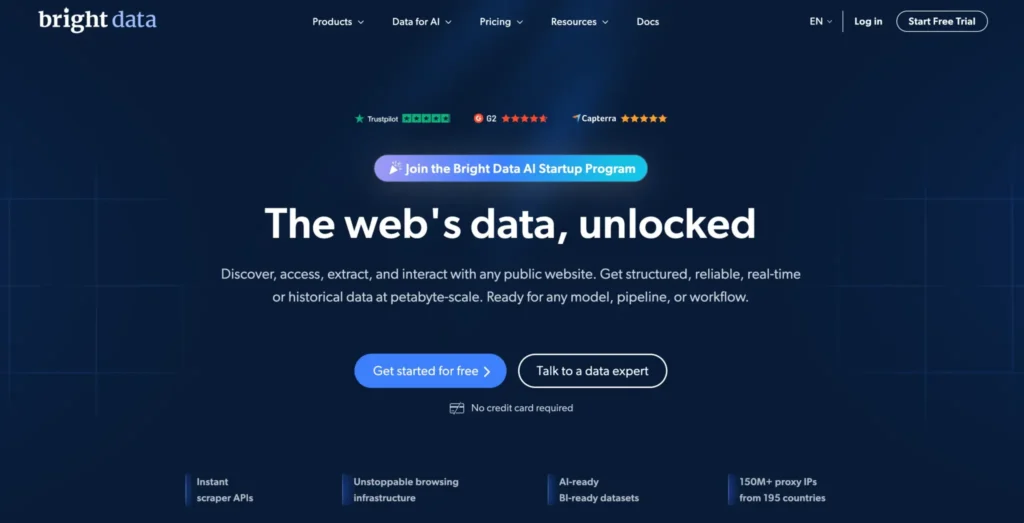
Bright Data is one of the strongest names in search engine crawling because it gives you both raw proxy infrastructure and managed SERP tools. That matters when your team has mixed needs. Developers may want direct proxy access, while SEO analysts may prefer a SERP API that handles proxy rotation, parsing, and delivery.
For search engine crawling, Bright Data works best when you care about location-level accuracy, large request volume, and reliable infrastructure. If you are tracking keywords across many cities, devices, or languages, the ability to target locations cleanly becomes a major advantage.
The platform is not the cheapest option, but it is built for serious crawling operations. You can use residential proxies for harder targets, datacenter proxies for speed-focused workflows, and SERP API for structured search results.
Pro-Tip: Use Bright Data’s SERP API when you need clean output fast. Use its proxy network directly only when your crawling stack already has strong parsing, retry handling, and request logic.
2. Oxylabs
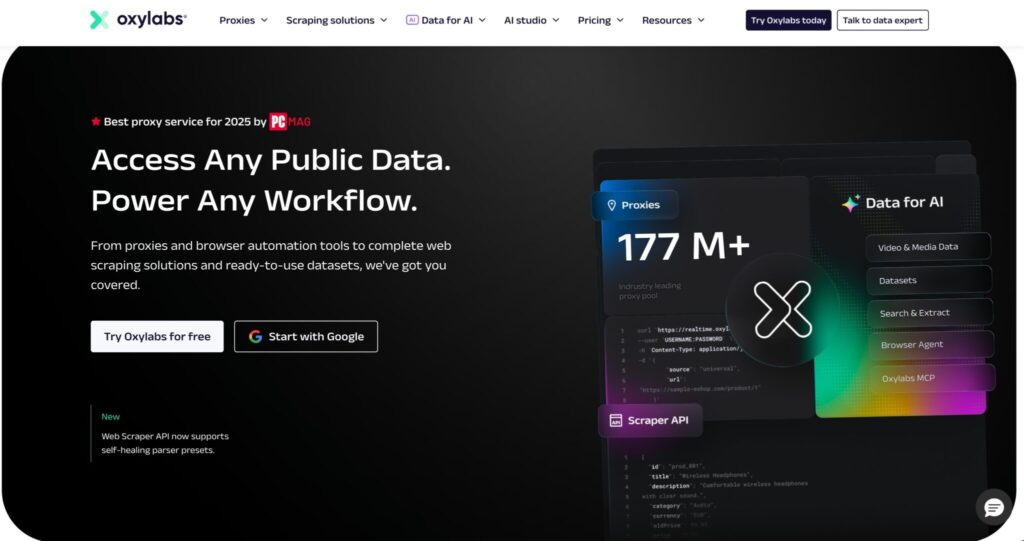
Oxylabs is a strong pick for SEO teams, market intelligence platforms, and companies that need dependable data pipelines. Its SERP Scraper API is especially useful for collecting search engine results without spending weeks building your own proxy orchestration layer.
The provider suits teams that want high performance but also care about compliance, account support, and documentation. Oxylabs is commonly used for larger scraping operations because it combines residential proxies, datacenter proxies, and scraping APIs under one roof.
For search engine crawling, Oxylabs shines in rank tracking, competitor monitoring, paid search checks, and localized SERP analysis. It is also useful when you want to collect results from different search surfaces, not only classic blue-link results.
Pro-Tip: If your crawler fails mostly because of block rates, test Oxylabs SERP Scraper API before buying raw proxies. Managed SERP APIs often reduce engineering time.
3. Decodo
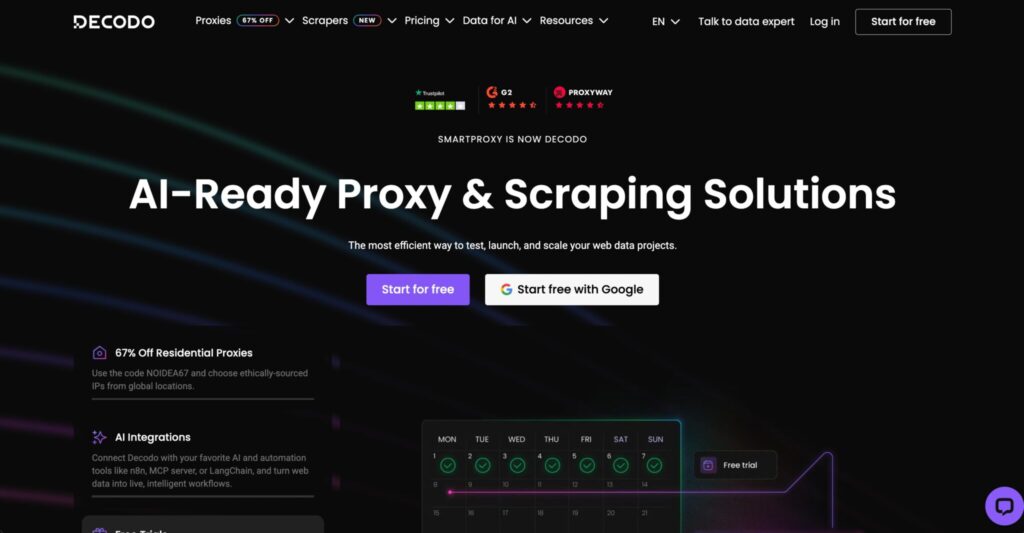
Decodo, formerly known as Smartproxy, is a practical option for teams that want a balance between price, proxy quality, and ease of use. It offers SERP scraping tools along with a broad proxy network, making it suitable for SEO agencies, affiliate teams, and small SaaS products.
The platform is easier to approach than some enterprise-heavy providers. That matters if your team does not have a large data engineering department. You can start with managed scraping, then move to raw proxies as your needs become more technical.
For search engine crawling, Decodo works well for keyword checks, local SERP monitoring, brand visibility tracking, and competitor research. Its main advantage is value. You get solid infrastructure without immediately stepping into heavy enterprise contracts.
Pro-Tip: Decodo is a good testing ground if you are building a new SERP workflow and need to validate costs before scaling.
4. NetNut
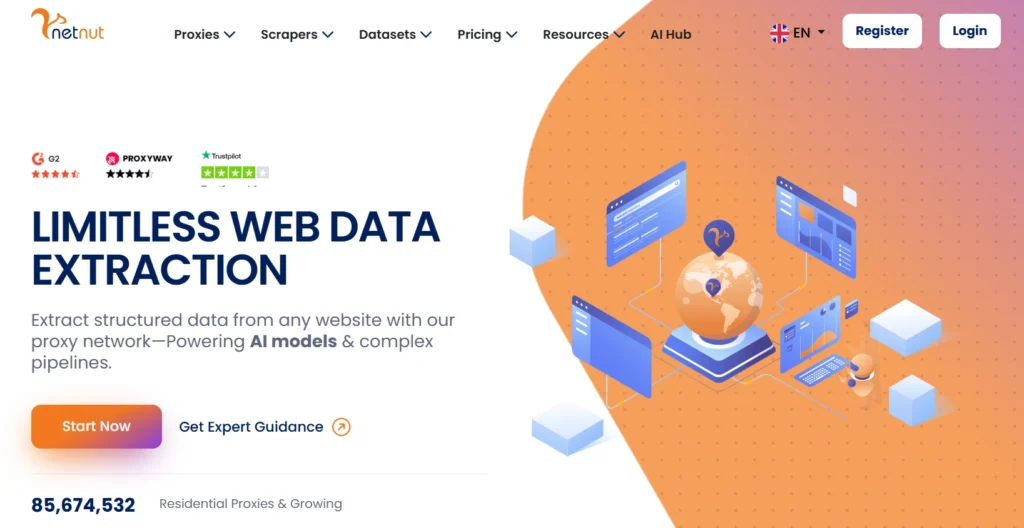
NetNut is worth considering if you want a SERP Scraper API with simple billing and a direct focus on search engine result extraction. It is especially useful for teams that want to collect Google results, track SEO changes, and monitor search visibility without managing proxy pools manually.
Its value comes from removing technical friction. Instead of choosing proxy types, managing rotation intervals, and building retry systems yourself, you can work through an API designed for SERP data.
For search engine crawling, NetNut fits teams that care about delivery speed, successful requests, and clean data access. It may not be the first choice for teams that want deep manual proxy configuration, but it is a strong fit for API-first workflows.
Pro-Tip: NetNut is better for teams that want usable SERP data, not teams that want to experiment with every proxy-level setting.
5. SOAX
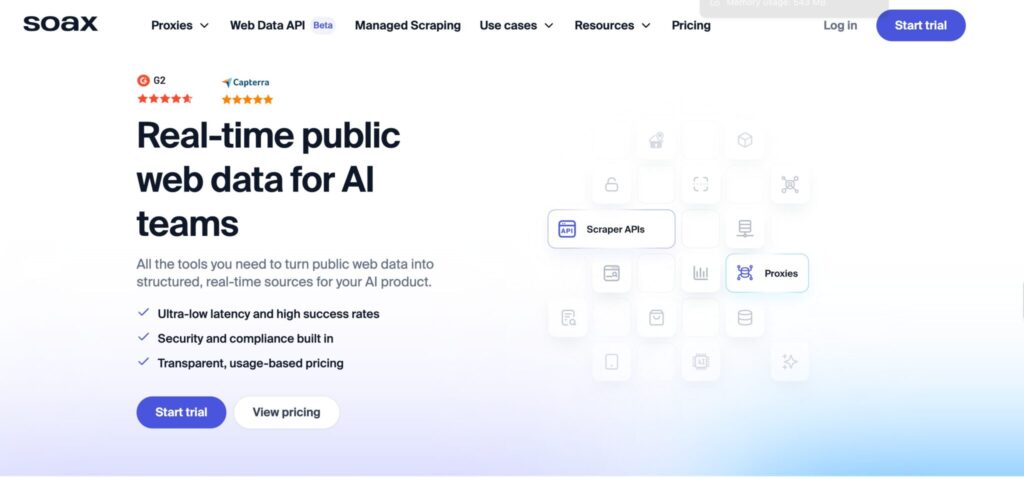
SOAX is a strong choice when geo-targeting accuracy is the core requirement. Search results can change by country, city, language, device, and even neighborhood intent. If your work involves local SEO, map pack monitoring, or regional keyword tracking, this level of targeting matters.
SOAX offers residential, mobile, and datacenter proxies, plus search-related scraping solutions. Its rotating proxy setup is useful for crawling search engines at scale while reducing repeated requests from the same IP identity.
For search engine crawling, SOAX works well for local agencies, SaaS tools that track regional search visibility, and teams running international SERP research.
Pro-Tip: Do not only test SOAX on national keywords. Test city-level and language-specific SERPs because that is where geo-targeting quality becomes obvious.
6. ScraperAPI
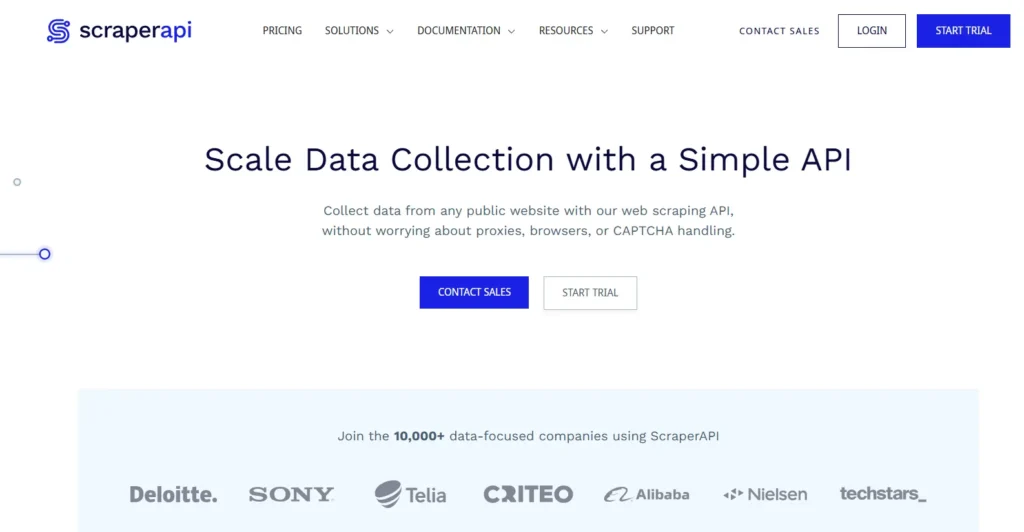
ScraperAPI is a good fit for developers who want search data without building proxy management from scratch. It handles many of the boring but necessary parts of crawling, such as retries, proxy rotation, and response delivery.
For search engine crawling, its Google Search Scraper can help teams collect SERP data in structured formats. This is useful when your team wants output that can be pushed into dashboards, ranking tools, or internal reports.
ScraperAPI is especially useful for startups and lean SEO teams because the setup is straightforward. You do not need to design a full proxy system before getting usable data.
Pro-Tip: ScraperAPI is better for speed of deployment than deep proxy customization. Pick it when shipping the workflow matters more than owning every technical layer.
7. SerpApi
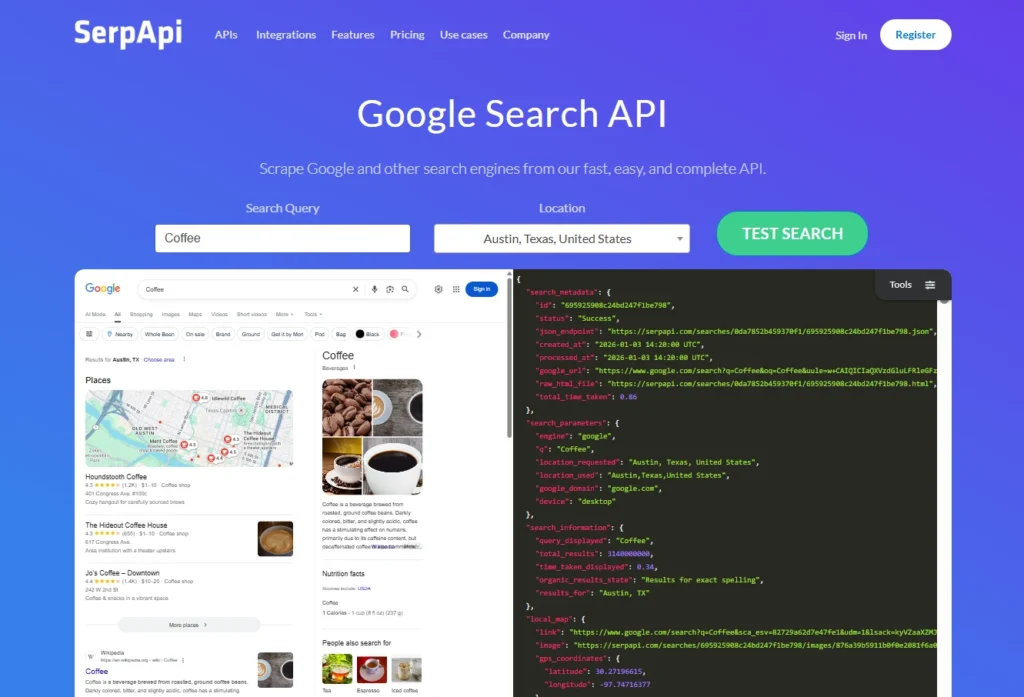
SerpApi is not a traditional proxy provider. It is a search engine results API. That makes it one of the cleanest options if your main goal is structured SERP data rather than proxy infrastructure.
It handles proxies, captchas, parsing, and structured output. For many SEO teams, that is exactly what they need. You send a query with parameters, and the API returns organized search result data.
For search engine crawling, SerpApi is useful for keyword rank tracking, featured snippet monitoring, local results, shopping results, news results, and other SERP features. It is especially good when you want clean JSON instead of raw HTML.
Pro-Tip: Choose SerpApi when your team values data structure and speed over proxy ownership. It can save a lot of cleanup work.
8. Webshare
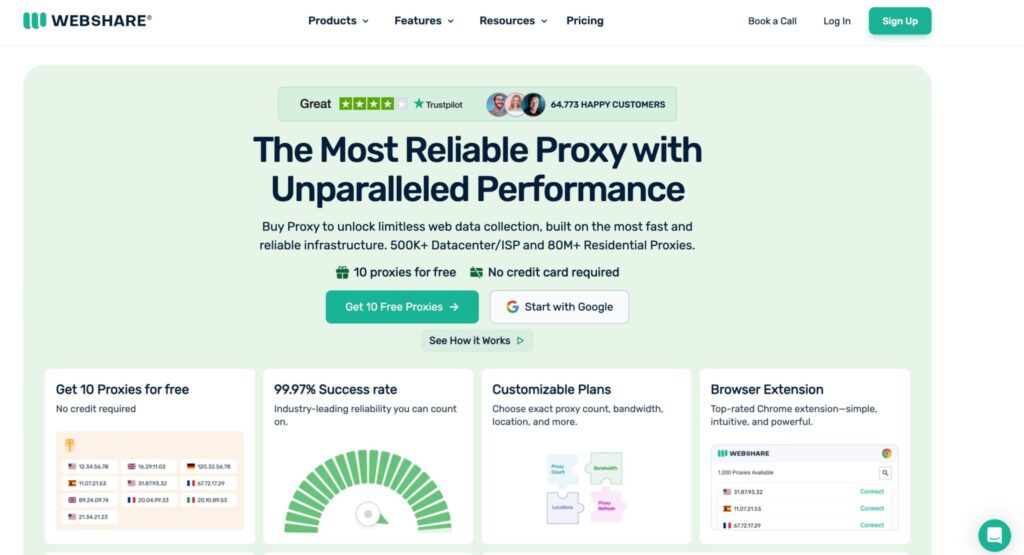
Webshare is a budget-friendly proxy provider that works well for teams with simpler crawling needs. It offers datacenter, static residential, and rotating residential proxies, which gives you flexibility depending on your search crawling workload.
For high-speed, low-cost checks, datacenter proxies can be useful. For more sensitive crawling, residential or static residential proxies are better. Webshare is not as full-stack as Bright Data or Oxylabs, but it can be effective when your team already has a crawler, parser, and retry logic.
For search engine crawling, Webshare is best for cost-conscious users who need proxy access rather than a managed SERP API.
Pro-Tip: Start with small batches and measure error rates by search engine, country, and request frequency before scaling.
9. IPRoyal
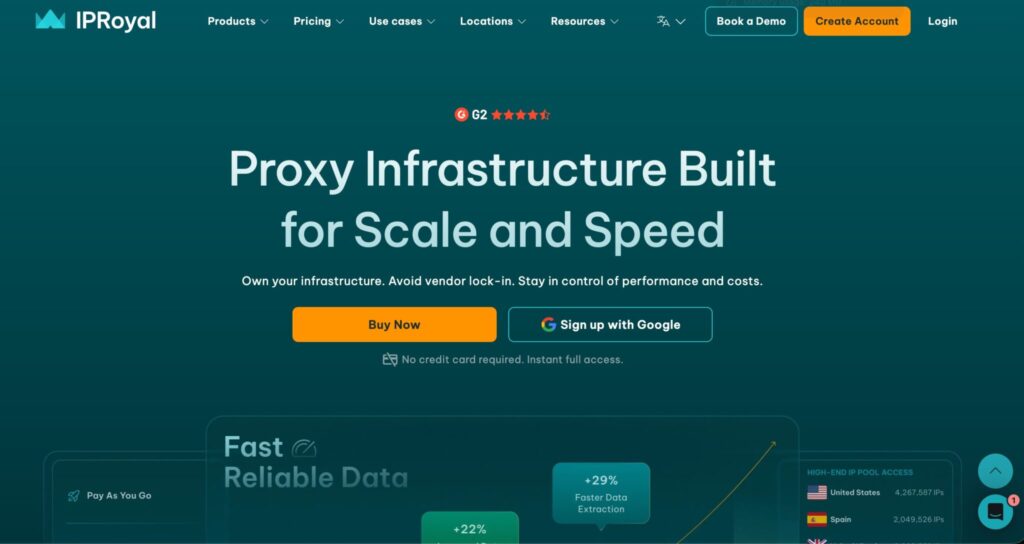
IPRoyal is a good entry-level to mid-range option for teams that need affordable residential proxies for SEO monitoring and search crawling. It does not have the same managed SERP focus as some API-first providers, but it can work well if your own system handles crawling logic.
Its residential proxies are useful for localized checks, competitor tracking, and lightweight search monitoring. The platform is also approachable for smaller teams that do not want enterprise pricing.
For search engine crawling, IPRoyal is best when budget matters and you are comfortable managing more of the technical stack yourself.
Pro-Tip: Use IPRoyal for controlled SEO tasks, not chaotic high-volume crawling. Smaller providers often perform best when request logic is careful.
How To Choose Proxies For Search Engine Crawling
1. Choose The Right Proxy Type
Residential proxies are usually better for search engine crawling because they use real ISP-based IPs. They look more natural than datacenter IPs and are useful for localized SERP checks.
Datacenter proxies are faster and cheaper, but they are easier to detect when used aggressively. They can still work for lower-risk tasks or when speed matters more than deep location accuracy.
ISP proxies sit between the two. They offer more stability than rotating residential proxies while still carrying ISP-level trust signals.
Mobile proxies are useful for mobile SERP testing, but they are usually more expensive.
2. Look Beyond IP Pool Size
A huge IP pool sounds impressive, but quality matters more than the raw number. For search engine crawling, you need clean IPs, real geographic spread, stable sessions, and low failure rates.
Ask these questions before buying:
- Can I target country, city, or ZIP-level locations?
- Can I control session duration?
- Are failed requests charged?
- Can I use sticky sessions?
- Does the provider support high concurrency?
- Is there a SERP-specific API?
3. Understand Rotation Protocols
Rotation is the heartbeat of search engine crawling. Rotate too aggressively, and your results may become inconsistent. Rotate too slowly, and you may hit rate limits.
For rank tracking, sticky sessions can be useful because they keep location and identity consistent. For large-scale keyword discovery, rotating sessions may work better because they spread requests across more IPs.
The best setup often uses both: sticky sessions for accuracy, rotating sessions for volume.
4. Match Proxy Choice To Your Use Case
If you are building a rank tracker, use SERP APIs or residential proxies with precise geo-targeting. If you are checking thousands of keywords daily, use managed APIs to reduce maintenance. If you are collecting local search data, prioritize city-level targeting. If you are testing ads or mobile rankings, include mobile proxies.
Do not buy the biggest plan first. Run a small test with your exact keywords, target countries, devices, and frequency.
5. Respect Rules And Rate Limits
Search engine crawling should be handled carefully. Respect robots.txt where relevant, follow applicable laws, review platform terms, and avoid aggressive request patterns. Good proxy use is not about hammering systems. It is about collecting public data responsibly, with stable infrastructure and reasonable pacing.
Final Buying Advice
For enterprise-grade SERP crawling, Bright Data and Oxylabs are the safest high-end picks. For balanced pricing and performance, Decodo is a strong middle option. For managed SERP workflows, NetNut, ScraperAPI, and SerpApi reduce engineering work. For budget proxy access, Webshare and IPRoyal make sense if you already have a capable crawler. For local SEO and geo-sensitive work, SOAX deserves serious testing.
The best proxy is not the one with the loudest homepage. It is the one that gives you accurate search results, stable sessions, clean locations, fair pricing, and fewer engineering headaches.
FAQs
What are the best proxies for search engine crawling?
Residential proxies and SERP APIs are usually best. Residential proxies help with location accuracy, while SERP APIs handle proxy rotation, parsing, and retries for you.
Are datacenter proxies good for search engine crawling?
They can work for simple or low-volume tasks, but residential and ISP proxies are usually more reliable for localized and repeated search result collection.
What is the difference between proxies and SERP APIs?
Proxies give you IP infrastructure. SERP APIs give you finished search data. If you want control, use proxies. If you want speed and clean output, use a SERP API.
How often should I rotate proxies?
It depends on the task. Rank tracking may need sticky sessions, while large-scale keyword crawling may need frequent rotation. Test both before scaling.
Do I need residential proxies for local SEO tracking?
Yes, they are often the better choice because search results vary by location. City-level targeting can be very useful for local SEO campaigns.
Which proxy provider is best for beginners?
ScraperAPI, SerpApi, NetNut, and Decodo are easier for beginners because they reduce manual proxy management.
Which provider is best for enterprise SERP crawling?
Bright Data and Oxylabs are strong enterprise options because they offer large proxy networks, SERP APIs, advanced targeting, and better support for complex workflows.