
Best Proxies for Web Archiving.
Web archiving sounds simple until you try doing it at scale.
One page becomes ten thousand. A clean HTML capture turns into JavaScript rendering, regional redirects, bot checks, cookie banners, CDN rules, and rate limits. If you are archiving news pages, ecommerce pages, government notices, legal evidence, competitor pages, or historical web snapshots, your proxy setup can decide whether your archive is complete or full of holes.
The best proxies for web archiving are not always the cheapest or the largest. You need stable access, clean IP reputation, smart rotation, location targeting, predictable sessions, and enough control to avoid hammering target sites. A good setup should help you collect public pages responsibly, preserve regional versions, and reduce failed captures.
Below is a practical guide to the best proxy providers for web archiving, based on real-world needs like IP pool quality, session control, protocol support, geotargeting, uptime, and scalability.
Quick Comparison Table: Best Proxies for Web Archiving
| Provider | Best For | Proxy Types | Rotation Control | Geo Targeting | Best Web Archiving Use Case |
|---|---|---|---|---|---|
| Bright Data | Enterprise archiving | Residential, ISP, datacenter, mobile | Advanced | Country, city, ASN, ZIP | Large public web archives with strict targeting |
| Oxylabs | High-volume crawling | Residential, ISP, datacenter, mobile | Advanced | Country, state, city, ASN | Scalable capture pipelines and institutional projects |
| Decodo | Balanced price and usability | Residential, ISP, datacenter, mobile | Flexible | Country, city | Mid-size archives and recurring crawls |
| SOAX | Clean geo-targeted sessions | Residential, mobile, ISP, datacenter | Sticky and rotating | Country, city, carrier | Regional snapshots and mobile-first pages |
| NetNut | Stable ISP-style routing | Residential, ISP, mobile, datacenter | Strong | Global targeting | Long sessions and consistent archive capture |
| IPRoyal | Budget-friendly archiving | Residential, datacenter, ISP, mobile | Sticky and random | Country, state, city | Smaller archives and flexible testing |
| Webshare | Affordable static proxies | Datacenter, residential, static residential | Basic to moderate | Global | Static page archiving and low-cost crawls |
| Rayobyte | Ethical proxy operations | Residential, ISP, datacenter | Rotating and static | Global | Compliance-minded public data archiving |
| ProxyEmpire | Niche geo coverage | Residential, mobile, datacenter | Rotating and sticky | Country, region, city | Archiving country-specific web pages |
1. Bright Data: Best Overall for Enterprise Web Archiving
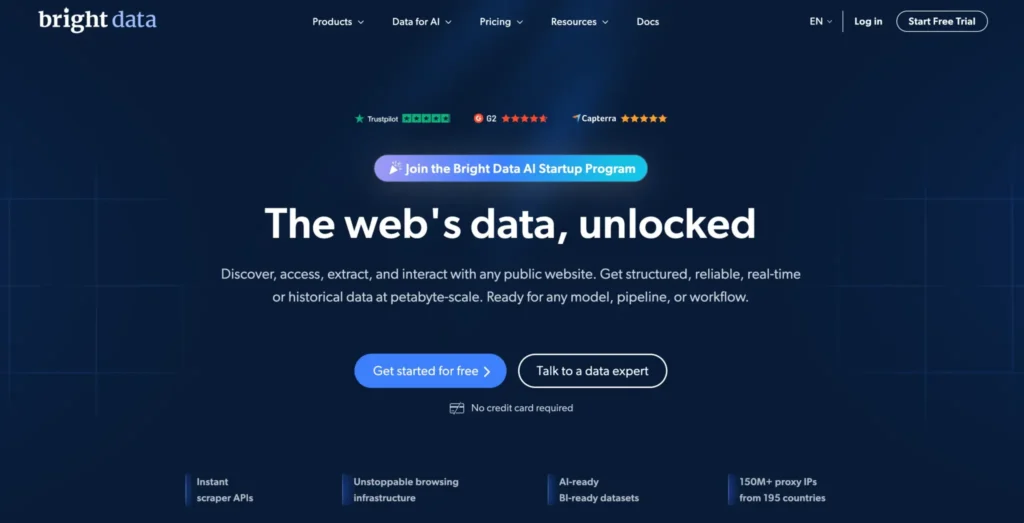
Bright Data is one of the strongest options if web archiving is a serious operation, not a side project. It gives you access to residential, ISP, datacenter, and mobile proxies, which means you can build different crawling routes for different targets.
For web archiving, that flexibility matters. Some sites load fine through datacenter IPs. Others need residential or ISP proxies to avoid aggressive blocks. If you are preserving pages across multiple countries, Bright Data’s granular location targeting is one of its biggest advantages.
Its rotation controls are also strong. You can rotate IPs per request, keep sticky sessions, or use static ISP proxies when a page sequence requires the same identity for multiple steps. That helps when archiving paginated content, session-based pages, or localized websites that change after the first request.
Pro Tip: Use ISP proxies for important pages that need stability, and residential rotating proxies for broader discovery crawls.
The downside is cost and complexity. Bright Data is powerful, but it may feel heavy for small teams. It suits universities, legal research teams, monitoring companies, enterprise SEO teams, and public data operations.
2. Oxylabs: Best for High-Volume Archive Crawling
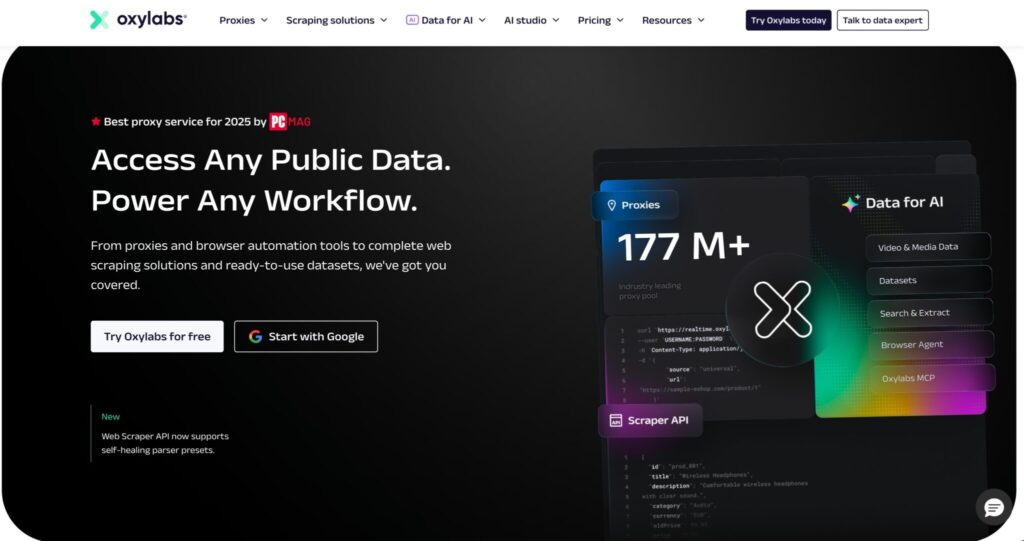
Oxylabs is built for scale. If you need to archive millions of pages, crawl public websites repeatedly, or build a serious capture pipeline, it deserves a close look.
Its residential proxy pool is large, and it also offers datacenter, ISP, and mobile proxies. For archiving, this allows a smart mixed setup. You can send lightweight pages through datacenter proxies, use ISP proxies for stable sessions, and reserve residential proxies for harder targets.
Oxylabs also works well for teams that need strong documentation, account support, and enterprise-grade infrastructure. That matters when your archiving system has to run every day without constant manual fixes.
Rotation is flexible enough for most professional use cases. You can rotate aggressively for large discovery crawls or keep longer sessions when the site structure requires continuity.
Pro Tip: For web archiving, do not rotate on every single request by default. Some sites behave more naturally when assets, pagination, and HTML pages come from the same session for a short window.
Oxylabs is not the cheapest option, but it is one of the safer choices for large-scale web archiving teams that care about uptime, scale, and reliability.
3. Decodo: Best Balance of Features and Usability
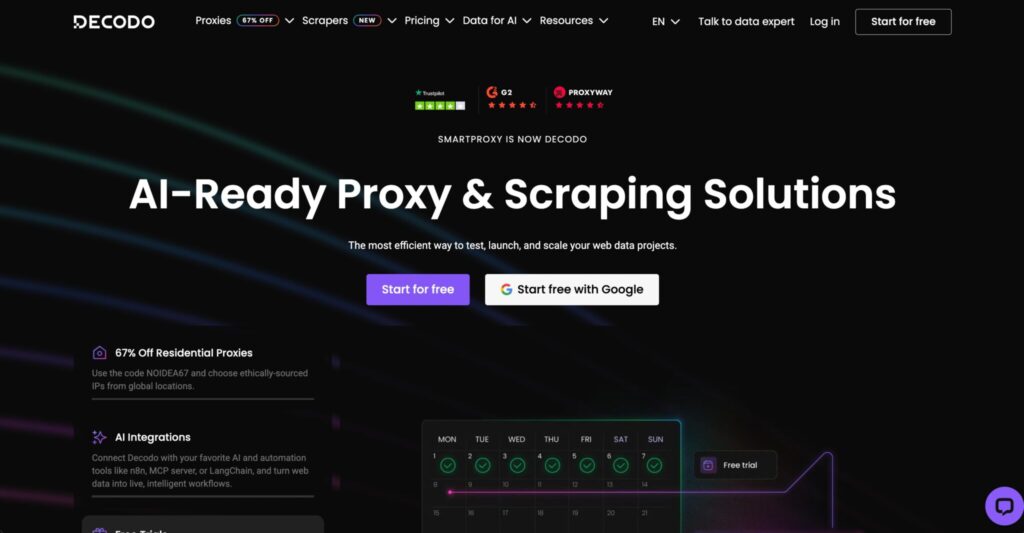
Decodo, formerly known as Smartproxy, is a strong middle-ground provider. It is easier to use than many enterprise-heavy platforms, yet still offers enough depth for serious crawling and archiving.
For web archiving, Decodo works well when you need residential proxies, static residential proxies, datacenter proxies, and scraping infrastructure without dealing with an overly complex dashboard. It is a good fit for agencies, SEO teams, content intelligence teams, and smaller research groups.
Its biggest strength is usability. Proxy setup is simple, documentation is clear, and rotation options are flexible enough for most archive workflows. You can use rotating residential proxies for broad crawls and static residential proxies when you want a consistent identity.
Pro Tip: If your archive tool saves screenshots, test Decodo with headless browsers before committing. Screenshot capture is heavier than HTML capture and needs better session stability.
Decodo may not offer the same enterprise depth as Bright Data or Oxylabs, but for many teams, that is actually a benefit. It is practical, approachable, and capable.
4. SOAX: Best for Geo-Specific Web Archiving
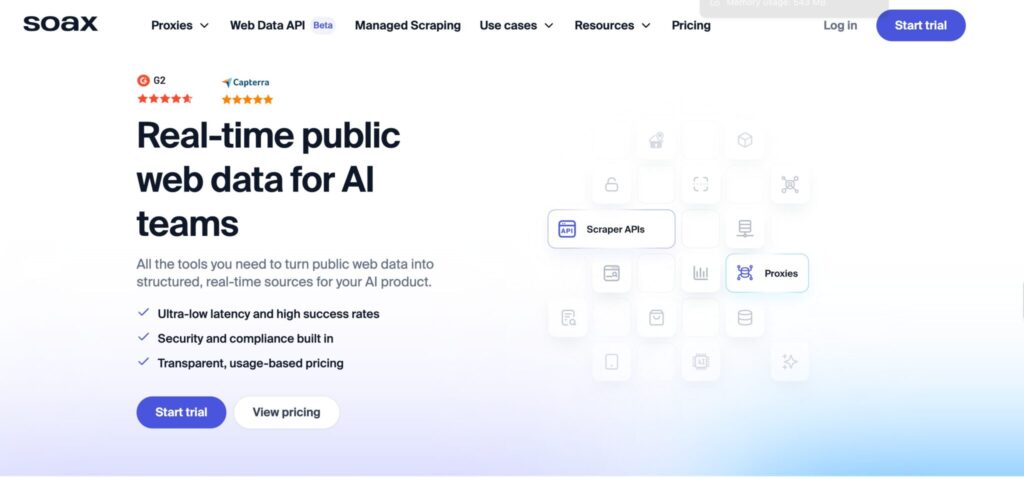
SOAX is a strong choice when location accuracy matters. If you are archiving websites that show different content based on country, city, carrier, or device context, SOAX gives you useful controls.
This is especially valuable for news archives, pricing archives, travel pages, local service pages, classified sites, and mobile-first websites. A page seen from London may not match the same page seen from Delhi, New York, or Sydney. SOAX helps capture those differences.
SOAX supports automatic IP rotation and sticky sessions, which is useful for archiving multi-page flows. You can keep a session long enough to capture a page and its related assets, then rotate before moving to a new domain or region.
Pro Tip: For local web archives, save the proxy location metadata with each captured page. It makes your archive more useful later because you know where the page version came from.
SOAX is not always the cheapest, but its clean targeting and session controls make it a reliable option for location-sensitive archive projects.
5. NetNut: Best for Stable Long Sessions
NetNut has a different appeal. Its infrastructure is known for direct ISP-style connectivity and stable proxy sessions. For web archiving, that can be more valuable than having the flashiest dashboard.
Longer session stability matters when you are capturing websites that require several requests to complete a page: HTML, CSS, images, scripts, embedded content, pagination, and sometimes consent pages. If the IP changes too frequently, the capture can break or produce inconsistent results.
NetNut is a good fit for businesses that need steady archive jobs, recurring monitoring, and fewer random disconnects. Its static residential and rotating residential options give teams room to build different workflows.
Pro Tip: Use NetNut-style stable sessions when archiving pages for evidence, compliance, or change tracking, where consistency matters more than raw crawl speed.
It may be overkill for hobby projects, but for professional archiving workflows, NetNut is a reliable option.
6. IPRoyal: Best Budget-Friendly Proxy for Smaller Archives
IPRoyal is a good choice if you are building a smaller archive, testing a new crawler, or working with a limited budget. It offers residential, datacenter, ISP, and mobile proxies, with flexible purchasing options.
For web archiving, IPRoyal’s sticky and random rotation options are useful. Random rotation can help with broad crawling, while sticky sessions help when capturing page sequences. You can use it for monitoring public pages, collecting regional content, or archiving low-to-medium volume websites.
The main advantage is cost flexibility. You do not need to start with a large enterprise contract. That makes IPRoyal attractive for freelancers, small agencies, niche researchers, and developers building prototype archive systems.
Pro Tip: Start with a smaller plan and test success rates per domain. A cheap proxy becomes expensive if too many captures fail and need retries.
IPRoyal is not as polished as the top enterprise providers, but it offers solid value for controlled web archiving projects.
7. Webshare: Best for Affordable Static and Datacenter Proxy Use
Webshare is a practical provider for teams that want affordable static proxies, datacenter proxies, and residential options. It is especially useful for archiving websites that do not aggressively block datacenter traffic.
Not every web archive needs residential IPs. Many static websites, documentation pages, public directories, blogs, and basic ecommerce pages can be archived through datacenter or static residential proxies. In those cases, Webshare can help keep costs low.
Its static residential proxies are useful when you want consistent IPs without paying premium enterprise rates. The dashboard is simple, and the service is easy to configure.
Pro Tip: Use Webshare for low-risk, high-volume static page capture, but keep a residential backup provider for domains with stricter bot defenses.
Webshare is not the best fit for complex antibot-heavy targets, but it is a smart budget layer in a multi-provider archiving stack.
8. Rayobyte: Best for Compliance-Minded Archiving Teams
Rayobyte is often a good fit for teams that care about ethical public data collection and transparent proxy operations. It offers residential, ISP, datacenter, and scraping API options.
For web archiving, Rayobyte is useful when you want a provider that supports public data collection without pushing you into overly aggressive crawling behavior. Its rotating ISP and residential options can work well for recurring archive jobs.
Rayobyte is also worth considering for teams that archive public pages for market research, brand monitoring, pricing records, or compliance documentation.
Pro Tip: Build crawl limits by domain, not only by proxy pool. Responsible throttling protects your archive quality and reduces blocks.
Rayobyte may not always match the giant IP pools of Bright Data or Oxylabs, but it has a practical, professional feel that suits long-term projects.
9. ProxyEmpire: Best for Niche Geo Coverage
ProxyEmpire is useful when you need access to specific countries or regions that are not always well-covered by cheaper providers. It offers residential, mobile, datacenter, and rotating proxy options.
For web archiving, this is helpful when your target pages vary heavily by country. Local news, retail listings, travel pages, marketplaces, and government-facing content can all change based on visitor location.
ProxyEmpire also supports sticky sessions, which helps when capturing pages that depend on cookies, language preferences, or regional redirects.
Pro Tip: For country-specific archives, run the same URL through multiple locations and compare the output. You may find different prices, headlines, availability, or legal disclaimers.
ProxyEmpire is more niche than some larger names, but it can be valuable when location diversity is the main requirement.
How to Choose the Best Proxy for Web Archiving
1. Match Proxy Type to Page Difficulty
Use datacenter proxies for simple public pages. Use ISP proxies for stable, repeated access. Use residential proxies for stricter websites. Use mobile proxies only when the mobile version matters or the site treats mobile traffic differently.
Do not use premium residential bandwidth for every URL. That burns budget fast.
2. Look at IP Pool Quality, Not Just Pool Size
A provider claiming millions of IPs is not automatically better. You need clean IPs, good uptime, diverse ASNs, and low reuse across abusive traffic. For archiving, a smaller clean pool can outperform a huge noisy pool.
3. Control Rotation Carefully
Rotation is not always better. For discovery crawling, rotating per request can work. For page capture, screenshots, and multi-step flows, sticky sessions often produce cleaner archives.
A good rule: rotate between pages, not always inside the same page capture.
4. Save Metadata With Every Capture
A serious archive should store URL, timestamp, proxy country, proxy type, HTTP status, final redirected URL, content hash, screenshot path, and capture method. Without metadata, your archive becomes harder to verify later.
5. Respect Public Data Boundaries
Good web archiving should avoid private data, logins, sensitive systems, and aggressive request rates. Follow site rules where required, throttle requests, and use proxies to improve access reliability, not to abuse infrastructure.
Best Overall Recommendation
For enterprise web archiving, Bright Data and Oxylabs are the strongest choices. For mid-size teams, Decodo and SOAX give a strong mix of usability, targeting, and control. For stable long sessions, NetNut is excellent. For budget-conscious projects, IPRoyal and Webshare make sense. For compliance-focused or niche geo projects, Rayobyte and ProxyEmpire deserve attention.
The smartest setup is often a mixed proxy stack: datacenter proxies for easy pages, ISP proxies for stable sessions, and residential proxies for difficult or region-sensitive captures.
FAQs About Proxies for Web Archiving
1. What type of proxy is best for web archiving?
ISP proxies are often the best starting point because they combine speed and stability. Residential proxies are better for stricter websites, while datacenter proxies work well for simple public pages.
2. Do I need rotating proxies for web archiving?
Yes, but rotation should be controlled. Rotate between pages or domains, not always during a single page capture. Sticky sessions usually create cleaner archives.
3. Are residential proxies better than datacenter proxies?
Residential proxies are harder to block, but they cost more. Datacenter proxies are faster and cheaper. For most archive systems, using both is smarter than choosing only one.
4. Can proxies help capture geo-specific page versions?
Yes. Proxies let you archive pages from different countries, cities, or networks. This is useful for news, ecommerce, travel, legal notices, and localized content.
5. What is a sticky session in proxy usage?
A sticky session keeps the same IP address for a set period. It helps when archiving pages that need cookies, assets, pagination, or multiple requests from one identity.
6. How many proxies do I need for web archiving?
It depends on crawl size, target difficulty, and capture frequency. A small archive may need only a few static proxies. A large archive may need rotating residential or ISP pools with thousands of available IPs.
7. Are proxies legal for web archiving?
Proxies are legal tools, but how you use them matters. Archive public pages responsibly, avoid private areas, respect applicable laws, and do not overload websites.
8. Should I use one proxy provider or multiple providers?
For serious archiving, multiple providers are safer. If one network struggles with a target, you can route traffic through another provider instead of losing captures.
9. What proxy protocol is best for web archiving?
HTTP and HTTPS proxies are enough for most web archiving. SOCKS5 can be useful for broader traffic handling, but most crawlers and headless browsers work well with HTTP-based proxies.