
Best Proxies For Identity Protection.
Your identity does not leak online in one dramatic moment. It usually leaks in small pieces: your IP address, browser fingerprint, location, login pattern, DNS behavior, and the way the same session keeps showing up across websites.
A good proxy will not solve all of that alone, but the right proxy setup can reduce exposure, separate online identities, and make your traffic look less tied to your real network.
For identity protection, I care about four things before anything else: clean IPs, session control, protocol support, and provider trust. A huge IP pool sounds impressive, but it means little if the IPs are abused, slow, or randomly drop during login flows.
Rotation is useful, but not when it changes mid-checkout or while managing an account. Datacenter proxies are fast, but residential and ISP proxies usually look more natural.
Below is a practical buyer’s guide built for privacy-focused browsing, account separation, OSINT work, ad verification, brand monitoring, and secure research.
Quick Comparison Table
| Provider | Best For | Proxy Types | IP Pool | Rotation Control | Protocols | Identity Protection Verdict |
|---|---|---|---|---|---|---|
| Bright Data | Enterprise identity separation | Residential, mobile, ISP, datacenter | Very large global pool | Advanced sticky and rotating rules | HTTP/S, SOCKS5 | Best for deep controls |
| Oxylabs | Premium secure research | Residential, mobile, ISP, datacenter | 175M+ residential IPs | Rotating and sticky sessions | HTTP/S, SOCKS5 | Strong for high-volume privacy work |
| Decodo | Balanced privacy and usability | Residential, mobile, ISP, datacenter | 125M+ IPs | Rotating plus sticky sessions | HTTP/S, SOCKS5 | Best mid-market pick |
| SOAX | Geo-specific identity protection | Residential, mobile, ISP, datacenter | Large global network | Automatic rotation and sticky sessions | HTTP/S, SOCKS5 | Great for location-sensitive use |
| IPRoyal | Affordable private browsing | Residential, mobile, ISP, datacenter | Large residential pool | Rotation and session TTL controls | HTTP/S, SOCKS5 | Good for smaller teams |
| Webshare | Budget proxy isolation | Residential, static residential, datacenter | 80M+ residential IPs | Static and rotating options | HTTP/S, SOCKS5 | Best low-cost entry point |
| NetNut | Stable business traffic | Residential, ISP, mobile, datacenter | Large ISP-backed network | Rotating and sticky IP sessions | HTTP/S, SOCKS5 | Strong for consistent sessions |
| Rayobyte | Ethical, controlled proxy use | Residential, ISP, datacenter | Mid-size network | Sticky sessions available | HTTP/S, SOCKS5 | Good for compliant workflows |
1. Bright Data: Best for Advanced Identity Segmentation
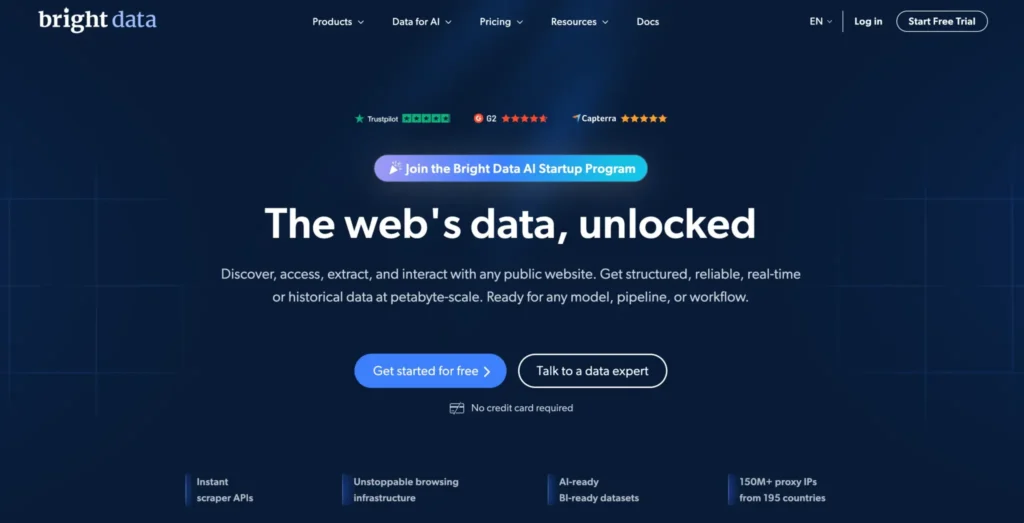
Bright Data is the provider I would choose when identity protection needs to be more than “hide my IP.” It gives you granular control over geography, proxy type, rotation, session duration, and routing behavior.
That matters when you are separating research identities across regions, testing how websites behave in different locations, or keeping business browsing away from your real network.
The main strength is control. You can use rotating residential proxies when you want a new IP frequently, or sticky sessions when you need the same IP to stay stable during a login, dashboard check, or multi-step workflow. Bright Data also supports residential, mobile, ISP, and datacenter proxies, so you can match the proxy type to the risk level.
The downside is complexity. Beginners may find the dashboard and configuration options more than they need. Pricing can also feel heavy if you only want occasional private browsing.
Pro-Tip: Use residential or ISP proxies for account-based workflows. Use datacenter proxies only when speed matters more than looking like a normal home user.
2. Oxylabs: Best Premium Proxy Network for Secure Research
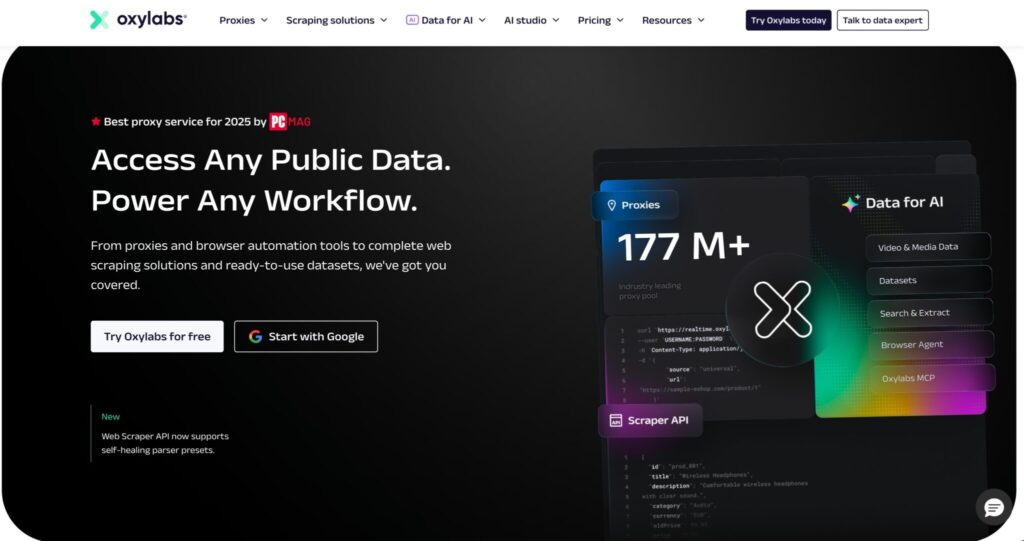
Oxylabs is built for teams that need reliability, scale, and clean infrastructure. Its residential proxy pool is one of the biggest in the market, and its sticky session support is useful for identity protection because not every privacy workflow should rotate aggressively.
If you are checking region-specific content, running brand protection tasks, monitoring fraud signals, or doing market research, Oxylabs gives you strong coverage without needing too much manual tuning. Its SOCKS5 support also helps when you need proxy compatibility outside simple browser traffic.
What I like most is the balance between power and polish. Oxylabs feels enterprise-ready, but not messy. The dashboard, documentation, and support make it easier to deploy compared with some advanced providers.
The trade-off is cost. If your main need is light private browsing, Oxylabs may be more than required. For high-stakes identity protection, though, the premium makes sense.
Pro-Tip: For sensitive research, avoid switching IPs every request. A stable sticky session often looks more natural than chaotic rotation.
3. Decodo: Best Overall Balance for Privacy Teams
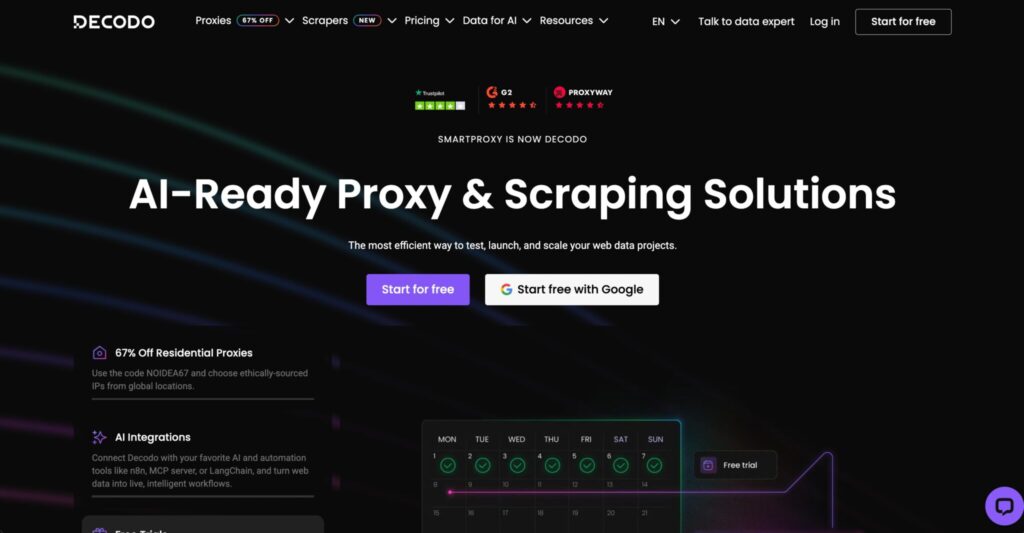
Decodo, formerly Smartproxy, is one of the easiest recommendations for identity protection because it sits between premium enterprise tools and cheap proxy lists. You get a large IP pool, clean dashboard, residential and mobile options, and enough session control for serious work.
The real advantage is usability. You do not need to be a network engineer to set up rotating or sticky sessions. That makes Decodo useful for affiliate teams, SEO researchers, ad verification teams, and privacy-focused operators who want control without losing half a day inside documentation.
For identity protection, Decodo works well when you need separate browser profiles, different regional identities, and stable account access. Its sticky sessions are useful for logins, while rotating sessions are better for broad research.
The weakness is that it may not offer the same fine-grained enterprise routing depth as Bright Data. Still, for most professional users, it is the cleaner pick.
Pro-Tip: Pair Decodo with an anti-detect browser only if you understand browser fingerprints. A proxy changes your IP, not your canvas, fonts, timezone, or WebRTC leaks.
4. SOAX: Best for Location-Specific Identity Protection
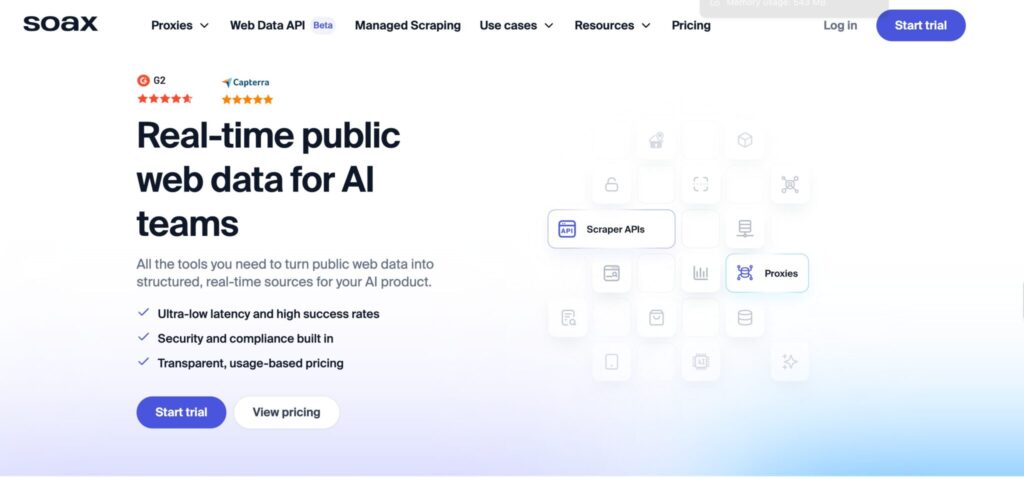
SOAX is strong when location accuracy matters. If your identity protection workflow depends on appearing from a specific country, city, mobile carrier, or ISP-like environment, SOAX deserves a close look.
Its residential proxies support automatic rotation and sticky sessions, which gives you flexibility. You can rotate for broad checks, then lock a session when a website expects continuity. The provider also leans into ethical sourcing and compliance, which matters when you are choosing proxies for business use rather than gray-market shortcuts.
SOAX is especially useful for ad verification, localized browsing, fraud research, and checking how platforms behave across regions. The interface is also approachable enough for smaller teams.
The limitation is that it may not be the cheapest option at scale. Also, like most residential proxy tools, performance can vary based on the chosen region.
Pro-Tip: When testing identity from a specific location, match IP location, browser timezone, language, and system region. A New York IP with an India timezone is a sloppy footprint.
5. IPRoyal: Best Affordable Residential Proxy Pick
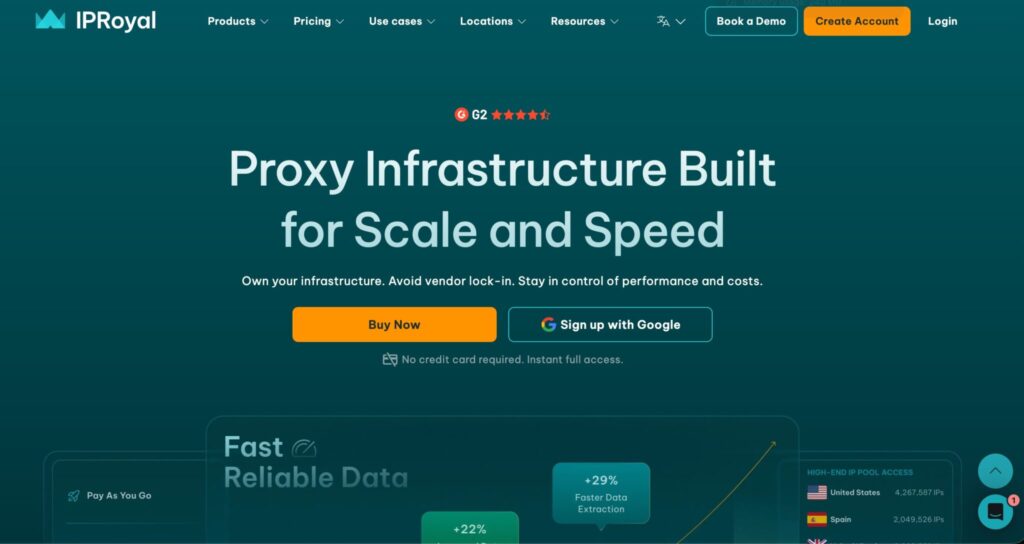
IPRoyal is a practical choice for users who want residential proxy identity protection without enterprise pricing. It gives you location selection, rotation control, session TTL options, and SOCKS5 support, which is enough for many privacy browsing and account separation tasks.
I like IPRoyal for freelancers, smaller affiliate teams, and researchers who need flexible traffic without committing to a large contract. Its dashboard is simple, and the setup flow is not intimidating.
For identity protection, the high-end pool option is worth checking because speed and responsiveness matter. A slow or unstable proxy can trigger more security checks than a clean, consistent connection.
The main weakness is that it may not match Bright Data or Oxylabs for enterprise controls, pool depth, or support maturity. But for the price, it is one of the more accessible options.
Pro-Tip: Start with a small plan and test the exact countries you need. A provider can be excellent globally and still weak in one specific location.
6. Webshare: Best Budget Option for Proxy Isolation
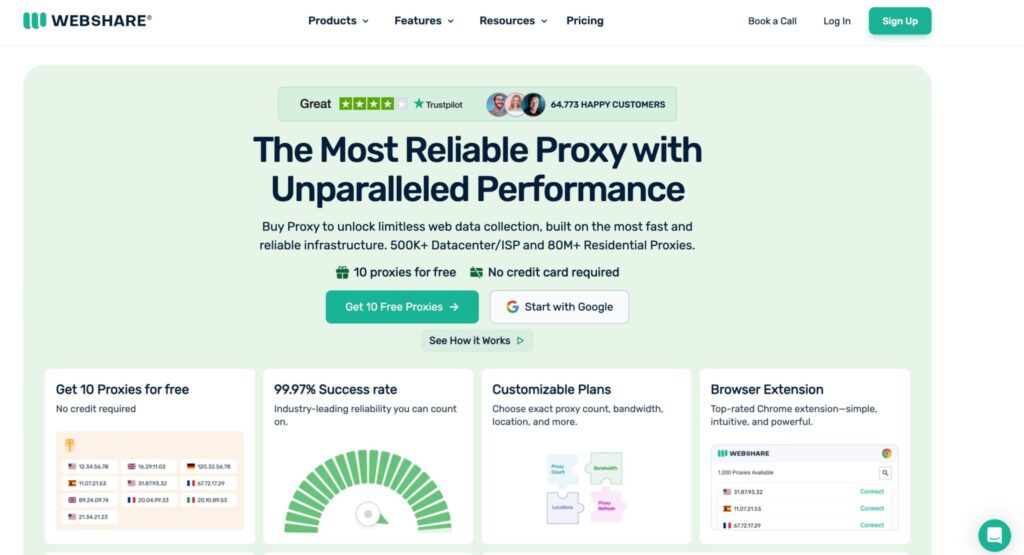
Webshare is the low-cost pick for users who want basic identity separation without a complicated buying process. It offers residential, static residential, and datacenter proxies, with SOCKS5 available on proxy plans. That makes it flexible enough for private browsing, testing, and lightweight research.
Its biggest strength is pricing. Webshare is easy to start with, and the free or low-cost tiers make it attractive for testing. Static residential proxies can be useful when you need a consistent identity, while rotating residential proxies help when you need broader separation.
The trade-off is support depth and advanced tooling. Webshare does not feel as rich as Bright Data, Oxylabs, or Decodo if you need scraping APIs, enterprise compliance layers, or advanced rotation logic.
For identity protection on a budget, though, it can do the job if you configure it carefully.
Pro-Tip: Avoid free public proxy lists for identity protection. They are often slow, abused, logged, or unsafe.
7. NetNut: Best for Stable Business Sessions
NetNut is a strong option when you need stability more than constant IP switching. Its network is known for ISP-backed infrastructure and business-oriented proxy products. For identity protection, this is useful because some workflows need consistency, not endless rotation.
Rotating residential proxies are helpful for research, but sticky sessions are better for dashboards, logins, and account management. NetNut fits that kind of use well. It is also a good choice for companies that want proxy infrastructure for monitoring, verification, and secure access without relying only on peer-to-peer residential pools.
The downside is that it may feel more business-focused than beginner-friendly. Smaller users may prefer Decodo, Webshare, or IPRoyal for easier setup.
Pro-Tip: Use ISP or static residential proxies for accounts you care about. They are often faster and more stable than rotating peer residential IPs.
8. Rayobyte: Best for Ethical, Controlled Proxy Use
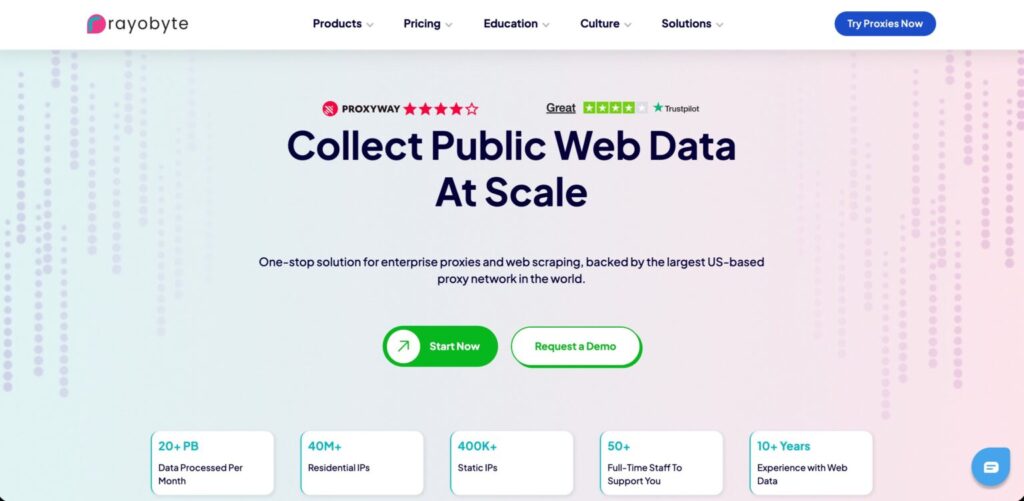
Rayobyte is a good fit for users who care about transparent proxy sourcing, controlled usage, and practical support. It offers residential, datacenter, and ISP options, with sticky session features for workflows that need identity continuity.
For identity protection, Rayobyte works best when you want fewer surprises. It may not have the biggest pool on this list, but it gives you a more controlled setup for long-term browsing, research, and testing. Its rotating ISP products are also useful when you want a blend of speed and trust.
The main limitation is scale. If you need huge global pools or advanced enterprise targeting, Bright Data, Oxylabs, SOAX, or Decodo will likely be stronger.
Pro-Tip: Do not judge proxies only by pool size. A smaller clean pool can beat a massive noisy pool if your goal is stable identity protection.
How to Choose Proxies for Identity Protection
Start with the Threat Model
Ask what you are protecting against. If you only want websites to stop seeing your home IP, a simple residential or ISP proxy may be enough. If you manage multiple work identities, test ads, or run research in sensitive markets, you need stronger controls.
A proxy does not replace good browser hygiene. Disable WebRTC leaks, separate cookies, use different browser profiles, and keep timezone, language, and location aligned.
Choose the Right IP Type
Residential proxies are best when you need to look like a normal user. ISP proxies are better when you need speed and stability while still appearing residential. Mobile proxies are useful when platforms trust mobile carrier traffic more. Datacenter proxies are fast and cheap, but easier to flag.
For identity protection, residential and ISP proxies are usually the safest starting point.
Understand IP Pool Quality
A big IP pool gives you diversity, but quality matters more. Look for clean IP reputation, country depth, city targeting, uptime, and replacement behavior. If a provider has millions of IPs but your target country only has weak coverage, the headline number will not help.
Rotation Protocols Matter
Rotating per request is useful for broad collection and testing. Rotating every few minutes is better for casual research. Sticky sessions are best for logins, carts, dashboards, and multi-step flows.
The rule is simple: rotate when you need separation, stay sticky when the website expects continuity.
Check Protocol Support
HTTP and HTTPS proxies are fine for browser traffic and web tools. SOCKS5 is more flexible because it can support more application types. For identity protection, HTTPS and SOCKS5 support are both worth having.
Match the Full Identity Stack
Your IP is only one signal. Browser fingerprint, cookies, DNS, timezone, device language, screen size, and login behavior all matter. A proxy setup looks weak when these signals conflict.
FAQs
1. Are proxies good for identity protection?
Yes, proxies can help protect identity by hiding your real IP address and separating traffic across different IPs. They work best when combined with clean browser profiles, secure DNS, and careful session management.
2. Is a proxy better than a VPN for identity protection?
A VPN encrypts the full tunnel more easily, while a proxy gives better identity routing and session control. For simple privacy, use a VPN. For account separation, geo-testing, and multi-profile workflows, proxies are usually more flexible.
3. Do proxies encrypt traffic?
Not always. HTTPS proxies can protect web traffic between your browser and the destination site, but proxies are not automatically the same as VPN encryption. Always check protocol support and use HTTPS websites.
4. Which proxy type is safest?
Residential and ISP proxies are usually safest for natural-looking browsing. Mobile proxies can be useful for mobile-first platforms. Datacenter proxies are fast, but they are easier to detect.
5. Should I use rotating or sticky proxies?
Use rotating proxies for broad research and separation. Use sticky proxies when you need one stable identity for a session, such as logging in, checking dashboards, or completing multi-step actions.
6. Can free proxies protect my identity?
I would not trust free public proxies for identity protection. Many are slow, abused, poorly maintained, or potentially logged. Use a reputable paid provider.
What is the best proxy for identity protection overall?
For enterprise control, Bright Data is the strongest. For premium secure research, Oxylabs is excellent. For most teams wanting power without complexity, Decodo is the best overall balance.
Final Buying Advice
The best proxy for identity protection is not always the largest or cheapest provider. It is the one that lets you control how your identity appears online without creating weird signals.
Choose Bright Data if you need enterprise controls. Choose Oxylabs if you want premium scale. Choose Decodo if you want the best mix of power and usability. Choose SOAX for geo-specific identity work.
Choose IPRoyal or Webshare if budget matters. Choose NetNut or Rayobyte when stable, controlled sessions are more important than constant rotation.
A proxy should make your traffic look cleaner, not louder. Pick the provider that gives you control over pool quality, rotation timing, sticky sessions, and protocol choice. That is where real identity protection starts.