
Best Proxies For Viral Content Monitoring
Viral content moves fast. A meme can start on TikTok, jump to X, get discussed on Reddit, appear in Google Discover, and land in brand reports before most teams even open their dashboards.
That is why serious content teams, social listening companies, PR agencies, SEO teams, and trend researchers need clean, stable proxy infrastructure.
If you monitor public trends from one office IP, you will hit rate limits, see biased geo results, or miss region-specific content completely. Worse, your data may look clean on paper but be full of blind spots.
The right proxy setup helps you check what users see in different cities, countries, devices, and platforms. It also helps you run large-scale public data checks without burning one IP address into the ground.
This guide breaks down the best proxies for viral content monitoring, with a focus on IP pools, rotation quality, session control, geo-targeting, and real-world usability.
What Makes a Proxy Good for Viral Content Monitoring?
Viral monitoring is not the same as basic web scraping. You are usually checking fast-changing pages, hashtag feeds, creator profiles, search results, comments, public posts, trending videos, and regional content rankings.
A good proxy for this job should offer:
- Large residential or mobile IP pools
- Country, city, and sometimes ASN targeting
- Rotating and sticky sessions
- HTTP, HTTPS, and SOCKS5 support
- Clean IP reputation
- Fast response times during peak traffic
- Easy API or dashboard control
- Clear compliance policies
For viral content monitoring, residential proxies are usually the safest default. Mobile proxies are better for mobile-first platforms where user behavior and ranking can differ by device. Datacenter proxies are useful for lower-risk targets, news monitoring, and high-speed checks where authenticity matters less.
Quick Comparison Table: Best Proxies For Viral Content Monitoring
| Provider | Best For | Proxy Types | IP Pool Strength | Rotation Control | Starting Price Snapshot | Best Use Case |
|---|---|---|---|---|---|---|
| Bright Data | Enterprise monitoring | Residential, mobile, ISP, datacenter | Very large global pool | Advanced rotation and APIs | Residential from around $5.88 per GB | Large social listening and SERP monitoring |
| Oxylabs | High-scale data teams | Residential, mobile, ISP, datacenter | 175M plus residential IPs | Sticky and rotating sessions | Residential plans from per GB pricing | Global trend tracking and public data extraction |
| Decodo | Balanced value | Residential, mobile, static, datacenter | Strong mid-market pool | Easy session settings | Residential from around $2 per GB on larger plans | Agencies and content intelligence teams |
| SOAX | Geo-specific tracking | Residential, mobile, ISP, datacenter | Broad global coverage | Flexible rotation | Plans from $90 monthly | City-level trend and ad visibility checks |
| NetNut | Stable business monitoring | Residential, mobile, datacenter | 200 plus country coverage | Rotating and sticky options | Custom and plan-based pricing | Always-on monitoring workflows |
| IPRoyal | Budget-conscious teams | Residential, datacenter, ISP, mobile | 32M plus residential IPs | Simple rotation | Residential from $7 per GB at small volume | Small teams and lightweight monitoring |
| Webshare | Affordable scale | Residential, static residential, datacenter | 80M plus residential IPs | Dashboard and API control | Residential from low monthly entry plans | Budget scraping and content checks |
| Rayobyte | Transparent pricing | Residential, ISP, datacenter | Smaller but practical pool | Flexible sessions | Residential from around $3.50 per GB | SEO teams and public web monitoring |
1. Bright Data
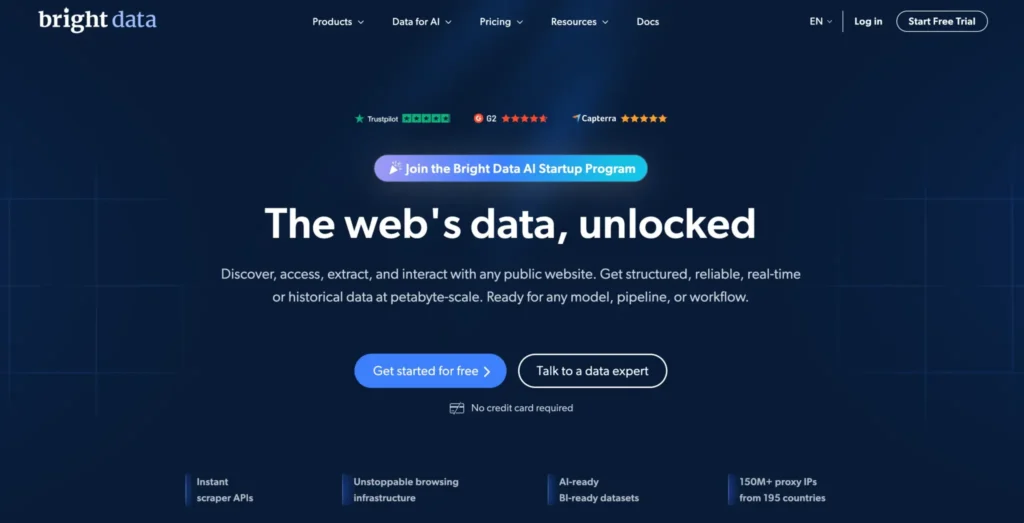
Bright Data is one of the strongest choices for companies that treat viral content monitoring as a serious data operation. It offers residential, mobile, ISP, and datacenter proxies, plus tools like Web Unlocker and scraping APIs.
For viral monitoring, Bright Data works well when you need to check public content across several regions and platforms. You can monitor search results, public social pages, marketplace mentions, news surfaces, and creator pages with strong geo-control.
The biggest advantage is control. You can fine-tune targeting, manage rotation logic, and plug the network into custom monitoring pipelines. If your team tracks viral topics across multiple countries, this matters a lot.
The downside is cost and complexity. Bright Data is not the friendliest option for a beginner who just wants to monitor a few hashtags. It is better suited for agencies, SaaS platforms, research teams, and brands with proper data budgets.
Pro-Tip: Use Bright Data when you need both proxies and higher-level data collection tools. If you only need basic rotating IPs, it may be more power than you need.
Best For
Enterprise social listening, SERP trend monitoring, public web intelligence, and brand reputation tracking.
2. Oxylabs
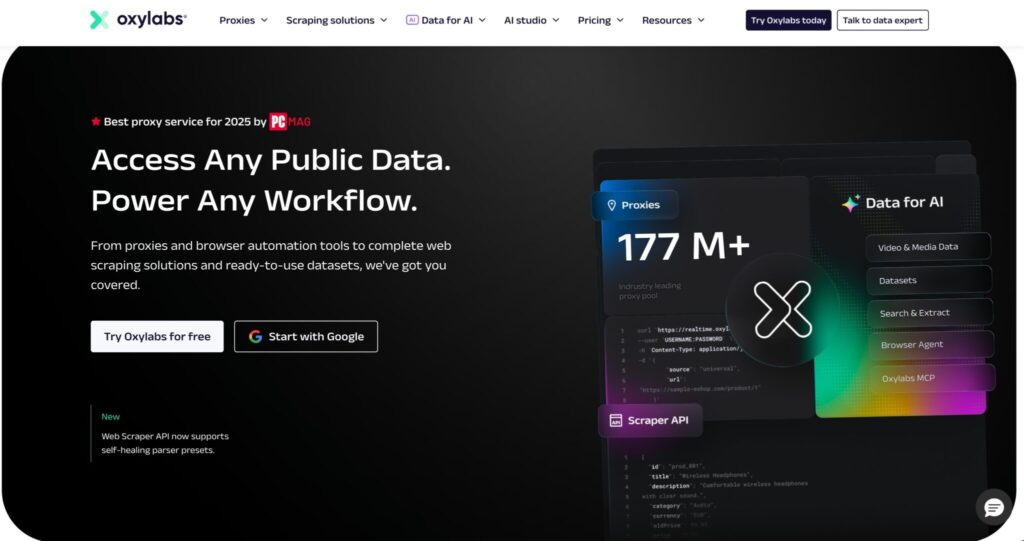
Oxylabs is another premium provider built for scale. Its residential network is large, and it supports sticky sessions, country targeting, and SOCKS5 on supported products. That makes it useful when you need reliable access to public pages that change based on region or user footprint.
For viral content monitoring, Oxylabs is especially strong when your team tracks high-volume public data from search engines, news platforms, ecommerce trend pages, and social web surfaces. It also has web scraping tools for teams that prefer managed extraction over raw proxy handling.
The network is known for business-grade reliability. If your monitoring tool runs every few minutes and downtime hurts your reporting, Oxylabs is a safer bet than cheap shared proxy pools.
Pricing is not the lowest. Still, you are paying for quality, pool depth, support, documentation, and fewer headaches during scaling.
Pro-Tip: For platforms with aggressive rate limits, test sticky residential sessions first. Rotating on every request can look noisy if the target expects normal user behavior.
Best For
Enterprise monitoring, search intelligence, public trend tracking, and large-scale data collection.
3. Decodo
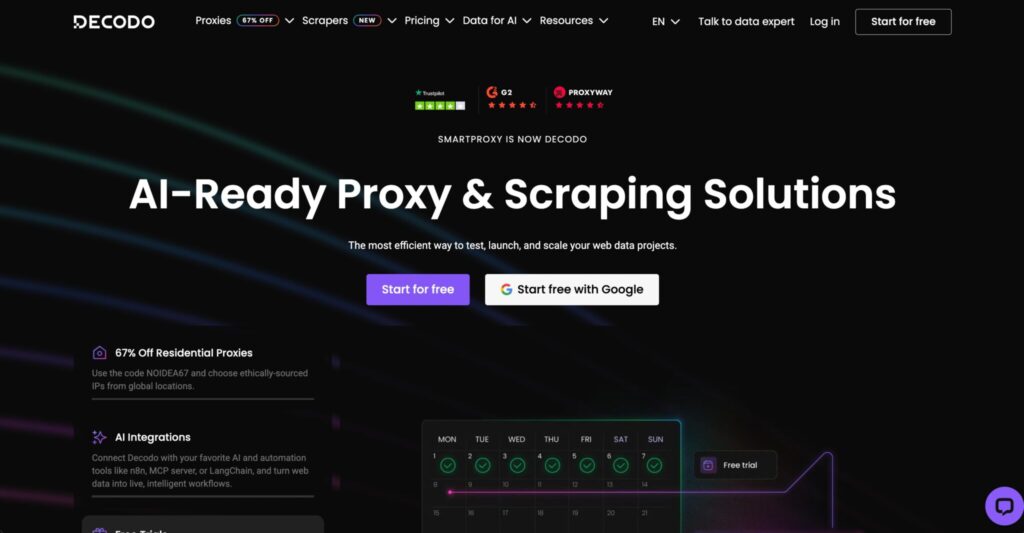
Decodo, formerly Smartproxy, is a strong middle-ground choice. It gives you residential, mobile, static residential, and datacenter proxies without the heavy enterprise feel of some larger providers.
For viral content monitoring, Decodo is useful for agencies and SEO teams that need reliable geo-targeted access but do not want a complex setup. The dashboard is clean, integrations are straightforward, and pricing is easier to digest for growing teams.
The residential proxy pricing can be very competitive at higher volumes, and the platform supports practical rotation settings. You can use it for monitoring hashtag pages, public profiles, regional SERPs, social mentions, and competitor content visibility.
It may not offer the same advanced enterprise tooling as Bright Data or Oxylabs, but it covers most day-to-day monitoring needs well.
Pro-Tip: Decodo is a good fit when you want to test multiple monitoring workflows before committing to a larger enterprise setup.
Best For
Agencies, affiliate teams, SEO researchers, and content monitoring tools with moderate traffic needs.
4. SOAX
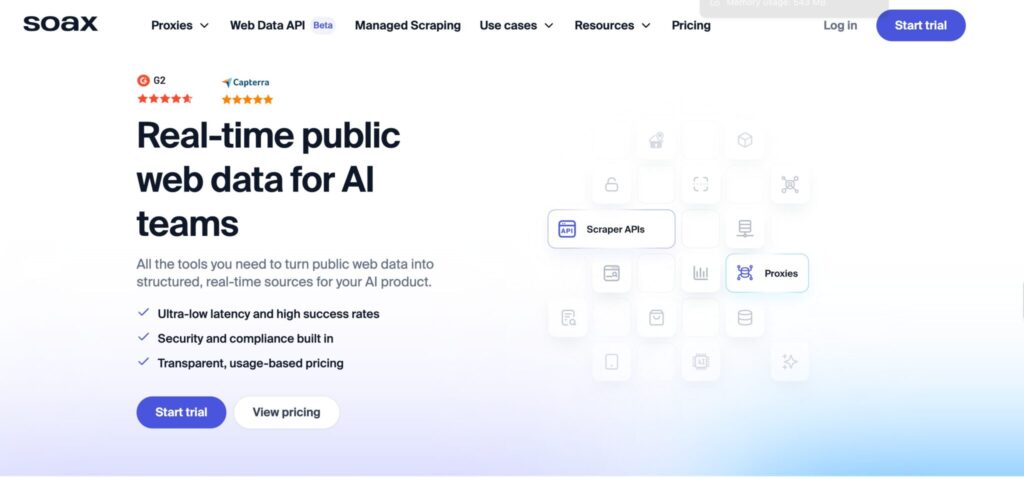
SOAX is a good option when geo-targeting matters. Viral content is often local before it becomes global. A trend may explode in Brazil, India, the US, or the UK before wider audiences notice it. SOAX helps with that kind of regional visibility.
It offers residential, mobile, ISP, and datacenter access under flexible plans. That makes testing easier because you can try different proxy types against different public targets without rebuilding your setup every time.
SOAX is also attractive for teams that want clean dashboards, practical onboarding, and strong support. For viral content monitoring, this helps when your workflow includes multiple regions, frequent session changes, and platform-specific rules.
Its pricing starts higher than some low-cost providers, but the flexibility can be worth it if you monitor several platforms and countries.
Pro-Tip: Use mobile proxies for mobile-first platforms and residential proxies for broader web monitoring. Do not use one proxy type for every target.
Best For
Geo-specific trend tracking, public social monitoring, ad visibility checks, and regional content research.
5. NetNut
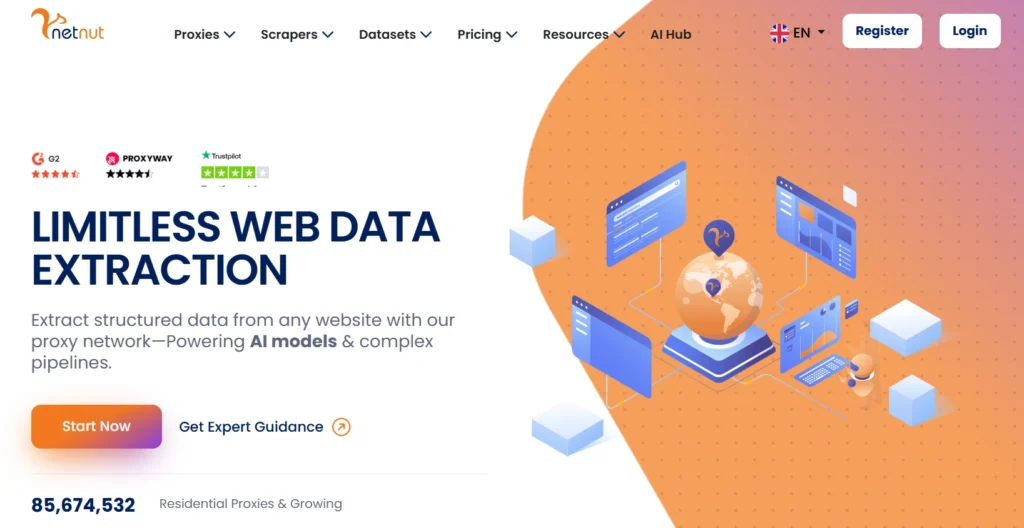
NetNut focuses on business-grade proxy access with broad country coverage. It offers residential and mobile proxies, including mobile IPs across 3G, 4G, 5G, and LTE networks.
For viral content monitoring, NetNut works well when stability matters more than the lowest possible price. Its residential network is suitable for public data monitoring, while mobile proxies are helpful when checking mobile-first experiences.
A strong point is its business positioning. NetNut is not just built for casual proxy users. It is aimed at companies that need predictable access, account support, and scalable workflows.
The tradeoff is that some pricing details may require a closer look or sales contact depending on the plan. Smaller teams may prefer a fully self-serve provider first.
Pro-Tip: NetNut can be a smart pick if your monitoring system runs daily and you need fewer random disruptions from weak IP quality.
Best For
Business monitoring, regional public data checks, and stable long-running workflows.
6. IPRoyal

IPRoyal is one of the more budget-friendly names in the proxy market. It offers residential proxies with non-expiring traffic, which is useful if your monitoring volume changes month to month.
For viral content monitoring, this is valuable. Some months you may run heavy tracking around product launches, elections, sports events, entertainment releases, or seasonal campaigns. Other months, usage may be lighter. Non-expiring traffic gives you more breathing room.
IPRoyal has a smaller pool than the top enterprise providers, but it is practical for small teams, freelancers, and early-stage monitoring projects. It supports common use cases like public scraping, research, and automation.
It is not the best choice if you need massive enterprise-level concurrency, but it is a strong starting point for cost control.
Pro-Tip: Start with IPRoyal if your monitoring project is still being validated. Upgrade later if you need deeper geo coverage or higher request volume.
Best For
Small teams, budget testing, lightweight social monitoring, and low-volume trend research.
7. Webshare
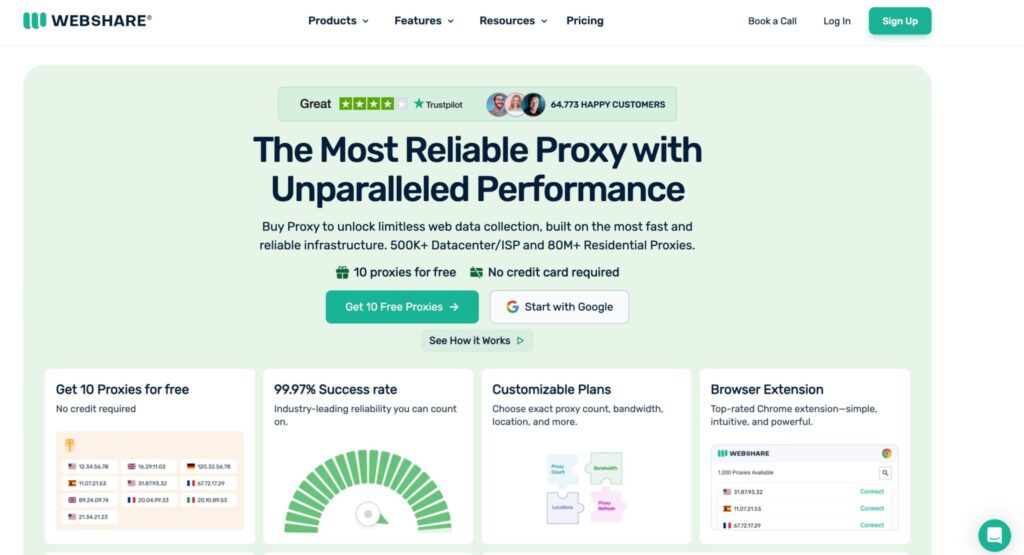
Webshare is popular with users who want affordable proxies, a simple dashboard, and flexible plans. It offers rotating residential proxies, static residential proxies, and datacenter proxies.
For viral content monitoring, Webshare makes sense when you need affordable scale for lower-risk sources. It can help monitor public pages, content rankings, mentions, and search visibility without jumping into enterprise pricing.
The residential pool is large, and the pricing can be attractive for teams that need to run many basic checks. It also offers free proxy access for testing, which is useful before building a larger workflow.
The limitation is that Webshare is less focused on advanced scraping APIs and managed data extraction compared with Bright Data or Oxylabs. You may need more technical setup on your side.
Pro-Tip: Use Webshare for broad discovery checks, then move sensitive or block-prone targets to premium residential or mobile networks.
Best For
Budget monitoring, technical users, public page checks, and high-volume low-complexity workflows.
8. Rayobyte
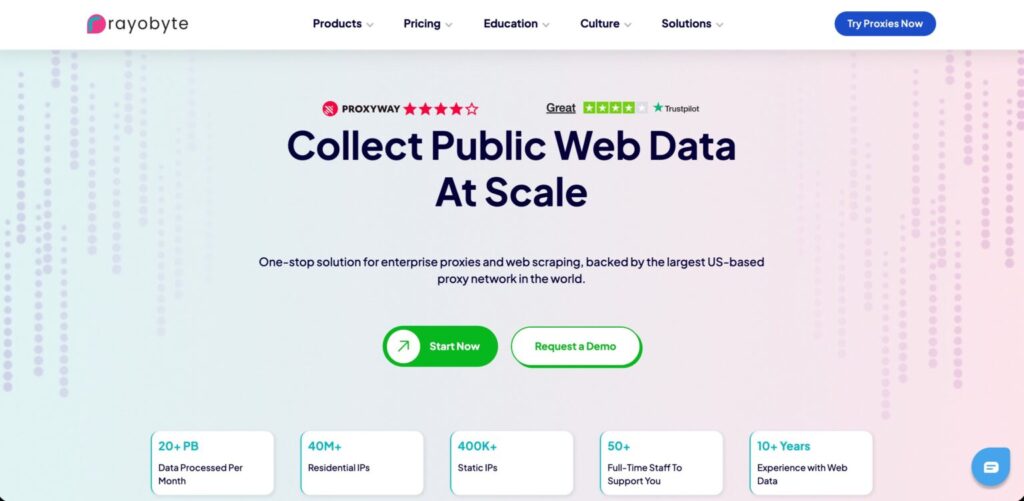
Rayobyte is a practical provider with transparent pricing and multiple proxy categories, including residential, ISP, and datacenter proxies.
For viral content monitoring, Rayobyte is useful when your workflow includes public web monitoring, SEO tracking, brand mention checks, and competitor page checks. Its residential pricing is easy to understand, and the platform is approachable for teams that do not want a bloated enterprise system.
Rayobyte may not be the first pick for huge global social intelligence platforms, but it is a reliable option for marketers, SEO teams, and developers who need clean proxy access at reasonable rates.
Its datacenter and ISP options can also help when you need speed and stability for less protected public sources.
Pro-Tip: Mix Rayobyte datacenter proxies for simple page checks with residential proxies for targets that personalize content by location.
Best For
SEO teams, public web monitoring, smaller scraping operations, and budget-conscious technical users.
How To Choose Proxies For Viral Content Monitoring
1. Match Proxy Type To Platform Behavior
Do not buy proxies blindly. Match the proxy type to the target.
Residential proxies are best for general public web monitoring because they look like normal home connections. Mobile proxies are better for TikTok-style mobile environments, app-like public pages, and region-sensitive feeds. ISP proxies are useful when you need stable sessions with a residential-like footprint. Datacenter proxies are fast and cheap but easier to detect on strict platforms.
A smart setup uses more than one proxy type.
2. Check IP Pool Size, But Do Not Worship It
A huge IP pool sounds impressive, but quality matters more than raw numbers. For viral content monitoring, you need clean IPs in the countries and cities that matter to your campaigns.
Ask these questions:
- Does the provider cover your target countries?
- Can you choose city-level locations?
- Are IPs shared or dedicated?
- How often do IPs rotate?
- Can you hold the same IP when needed?
- Does the provider support your required protocol?
A smaller clean pool can beat a massive noisy pool.
3. Understand Rotation Protocols
Rotation is where many teams make mistakes. Rotating every request may work for some scraping jobs, but viral monitoring often needs realistic sessions.
There are three common patterns:
Per-request rotation: A new IP is used for every request. Good for broad crawling, not always ideal for session-based pages.
Sticky sessions: The same IP stays active for a set time. Better for checking feeds, scrolling behavior, and multi-step monitoring.
Manual rotation: You control when the IP changes. Useful for debugging and controlled experiments.
For viral content monitoring, sticky sessions are often the safest default.
4. Look For Geo Accuracy
Viral trends are local. If you track “trending near me” style results, country-only targeting may not be enough. City-level targeting can reveal content differences between New York, Los Angeles, London, Mumbai, Sydney, and Toronto.
If your business sells globally, geo accuracy is not optional. It is the difference between real insight and pretty charts.
5. Test Speed During Peak Hours
Proxy speed can look fine during a short test and fall apart under load. Test during the same hours your monitoring tool will run.
Check:
- Response time
- Success rate
- Ban rate
- CAPTCHA rate
- Cost per successful request
- Data accuracy by location
The cheapest proxy is not cheap if half your requests fail.
6. Review Compliance Standards
Only monitor public data, respect platform rules, avoid collecting private information, and use rate limits that do not abuse target servers. A good provider should have clear acceptable-use rules, KYC checks, and responsible sourcing policies.
This matters for brand safety. Your monitoring stack should protect your company, not create a legal mess.
Best Overall Picks
For enterprise teams, Bright Data and Oxylabs are the strongest choices. They offer scale, advanced controls, and mature infrastructure.
For agencies and growing content intelligence teams, Decodo and SOAX offer a better balance of price, usability, and targeting.
For small teams, IPRoyal, Webshare, and Rayobyte are practical starting points. They keep costs manageable while still offering enough power for serious monitoring.
NetNut fits teams that want business-grade stability and strong mobile or residential coverage without building everything from scratch.
FAQs
1. What are the best proxies for viral content monitoring?
Bright Data, Oxylabs, Decodo, SOAX, NetNut, IPRoyal, Webshare, and Rayobyte are strong options. The best choice depends on your budget, target platforms, geo needs, and request volume.
2. Are residential proxies better for social monitoring?
Yes, residential proxies are usually better for social and public content monitoring because they look closer to normal user traffic. They are also useful for geo-specific checks.
3. When should I use mobile proxies?
Use mobile proxies when monitoring mobile-first platforms, app-like public pages, or content that changes heavily based on mobile carrier and location.
4. Are datacenter proxies good for viral tracking?
Datacenter proxies can work for news sites, public search pages, and low-risk monitoring. They are fast and affordable, but not ideal for strict social platforms.
5. What is sticky session rotation?
Sticky session rotation keeps the same IP for a set time. This is useful when a platform expects session continuity or when you need to view content like a normal user.
6. How many proxies do I need?
It depends on request volume, target difficulty, and geo coverage. A small team may start with a few GB of residential traffic. A large platform may need hundreds or thousands of GB per month.
7. Can proxies help track trends by country?
Yes. Geo-targeted proxies let you view public content from different countries or cities. This helps identify regional trends before they go global.
8. Is viral content monitoring legal?
Monitoring public data can be legitimate, but you still need to follow laws, platform rules, privacy standards, and responsible data practices. Avoid private data, account abuse, and aggressive request patterns.
Final Recommendation
If you are building a serious viral content monitoring system, do not choose proxies only by price. Choose based on IP quality, geo accuracy, rotation control, success rate, and support.
Bright Data and Oxylabs are best for enterprise scale. Decodo and SOAX are excellent for agencies and mid-sized teams. IPRoyal, Webshare, and Rayobyte are good starting points for budget-conscious projects. NetNut is a strong fit when you want stable business-grade monitoring with residential and mobile coverage.
The best setup is usually mixed: residential proxies for broad monitoring, mobile proxies for mobile-first platforms, ISP proxies for stable sessions, and datacenter proxies for fast low-risk checks. That mix gives you better coverage, cleaner data, and fewer blind spots when the next trend starts moving.