
Best Proxies For Online Gaming.
Lag does not care how expensive your keyboard is. You can have a high-refresh monitor, a wired mouse, and a fiber connection, but if your route to the game server is messy, the match still feels broken. That is where gaming proxies enter the conversation.
A good proxy for online gaming is not just about “changing your IP.” It is about routing, session stability, location control, and keeping your connection predictable.
Some gamers use proxies to access regional servers. Developers use them to test matchmaking and in-game stores across countries. Gaming communities use them for managing servers, scraping public stats, or running location-based QA without flying a team across the world.
The catch? The wrong proxy can make your ping worse.
This buyer’s guide breaks down the best proxies for online gaming, what each provider is good at, how to compare IP pools, and which rotation settings actually make sense for gaming workloads.
Quick Answer: Best Gaming Proxy Providers
For most gaming-related use cases, static ISP proxies and SOCKS5 datacenter proxies are the safest starting points. ISP proxies give you residential-like trust with better stability, while datacenter proxies can be fast and affordable if the game platform does not block them aggressively.
Here are the top picks:
- Best overall: Decodo
- Best enterprise option: Oxylabs
- Best advanced targeting: Bright Data
- Best budget-friendly option: IPRoyal
- Best for beginners: Webshare
- Best for mobile game testing: SOAX
- Best for large-scale traffic: NetNut
- Best US-focused infrastructure: Rayobyte
- Best flexible residential pool: ProxyEmpire
- Best low-cost pay-as-you-go option: DataImpulse
Best Proxies For Online Gaming: Comparison Table
| Provider | Best For | Proxy Types | SOCKS5 Support | IP Pool Strength | Rotation Control | Gaming Fit | Starting Style |
|---|---|---|---|---|---|---|---|
| Decodo | Balanced gaming and testing | Residential, ISP, mobile, datacenter | Yes | Very large global pool | Rotating and sticky sessions | Strong for account testing, regional access, and game QA | GB-based plans |
| Oxylabs | Enterprise gaming teams | Residential, mobile, ISP, datacenter | Yes | Massive global network | Strong session control | Best for studios, data teams, and large QA workflows | Premium plans |
| Bright Data | Advanced targeting | Residential, ISP, mobile, datacenter | Yes | One of the deepest pools | Highly configurable | Great for location testing and strict targeting | Usage-based |
| IPRoyal | Budget gaming proxies | Residential, ISP, mobile, datacenter | Yes | Solid global coverage | Flexible sessions | Good for individual users and small teams | Pay-as-you-go |
| Webshare | Simple setup | Residential, ISP, datacenter | Yes | Broad coverage | Basic to moderate controls | Good for beginners and lightweight use | Free and paid plans |
| SOAX | Mobile and location testing | Residential, mobile, ISP, datacenter | Yes | Strong mobile and geo coverage | Sticky and rotating options | Useful for mobile game QA | GB-based credits |
| NetNut | High-volume tasks | Residential, mobile, ISP, datacenter | Yes | Strong enterprise pool | Rotating and static options | Best for scale and stability | Custom plans |
| Rayobyte | US-heavy use cases | Residential, datacenter, ISP | Yes | Strong US network | Static and rotating options | Good for server tools and US game testing | Custom pricing |
| ProxyEmpire | Flexible targeting | Residential, mobile, datacenter | Yes | 30M+ clean IPs claimed | Rotation and geo filters | Good for region testing and multi-market QA | Trial plus usage plans |
| DataImpulse | Low-cost testing | Residential, mobile, datacenter | Yes | Large low-cost pool | Rotating sessions | Best for experiments and non-critical workloads | Pay per GB |
1. Decodo: Best Overall Gaming Proxy Provider
Decodo, formerly Smartproxy, is one of the cleanest choices for gaming-related proxy work because it balances scale, usability, and session control. You get residential, ISP, mobile, and datacenter options, which means you can match the proxy type to the job instead of forcing one setup into every gaming scenario.
For live gaming, static ISP proxies are usually the better fit because they keep one identity for longer sessions. For game store checks, launcher testing, price localization, or regional matchmaking QA, Decodo’s residential pool gives you more location flexibility.
The dashboard is also beginner-friendly. That matters because proxy setup can get messy fast when you are switching between launchers, browsers, emulators, and testing tools.
Pro-Tip: Use sticky residential sessions for game account dashboards, but avoid aggressive rotation during live sessions. Changing IPs mid-session can trigger security checks or disconnects.
2. Oxylabs: Best For Enterprise Gaming Teams
Oxylabs is built for scale. If you are running a gaming studio, analytics company, esports data platform, or QA team, Oxylabs gives you the kind of infrastructure that feels more professional than plug-and-play.
Its residential pool is huge, and it also offers mobile, ISP, and datacenter proxies. That mix is useful for gaming companies because each game environment behaves differently.
A mobile game marketplace test may need mobile IPs. A PC launcher test may only need stable ISP proxies. A public stats collection workflow may work fine on datacenter proxies if rate limits are reasonable.
The main downside is cost. Oxylabs is not the cheapest provider, and casual gamers may find it too much. But for teams that care about uptime, documentation, support, and compliance, it is a strong choice.
Pro-Tip: If your team tests multiple regions, build proxy profiles by country and platform. Keep mobile proxies for mobile app flows and ISP proxies for account/session testing.
3. Bright Data: Best For Advanced Geo Targeting
Bright Data is the heavyweight option. It is powerful, highly configurable, and designed for users who know exactly what they need. If your gaming use case requires city-level targeting, ISP targeting, carrier testing, or detailed session rules, Bright Data deserves a serious look.
For online gaming, Bright Data makes sense when precision matters more than simplicity. Think regional game pricing checks, localized event testing, anti-fraud QA, ad verification around gaming campaigns, or country-specific access testing.
It is not the easiest option for beginners. The dashboard and product stack can feel big because Bright Data does far more than basic proxies. But that depth is also the reason advanced users like it.
Pro-Tip: Do not pay for advanced targeting if you only need a nearby fast IP. For simple gaming routes, a cheaper ISP or datacenter proxy may perform just as well.
4. IPRoyal: Best Budget-Friendly Gaming Proxy
IPRoyal is a practical pick for gamers and smaller teams that want residential, ISP, datacenter, and mobile proxies without enterprise-level pricing pressure. It gives you enough flexibility to test different proxy types before committing to a larger monthly setup.
For gaming, IPRoyal’s ISP proxies are useful when you need a stable IP with better trust than a normal datacenter proxy. Residential proxies are better for regional checks and less predictable platforms. Datacenter proxies can work for game server tools, forums, public APIs, and non-sensitive workflows.
The biggest appeal is value. You may not get the deepest enterprise tooling, but you get a straightforward setup and enough control for most gaming proxy needs.
Pro-Tip: Start with one region and one proxy type. Test ping, packet stability, login behavior, and session duration before scaling to multiple locations.
5. Webshare: Best For Beginners
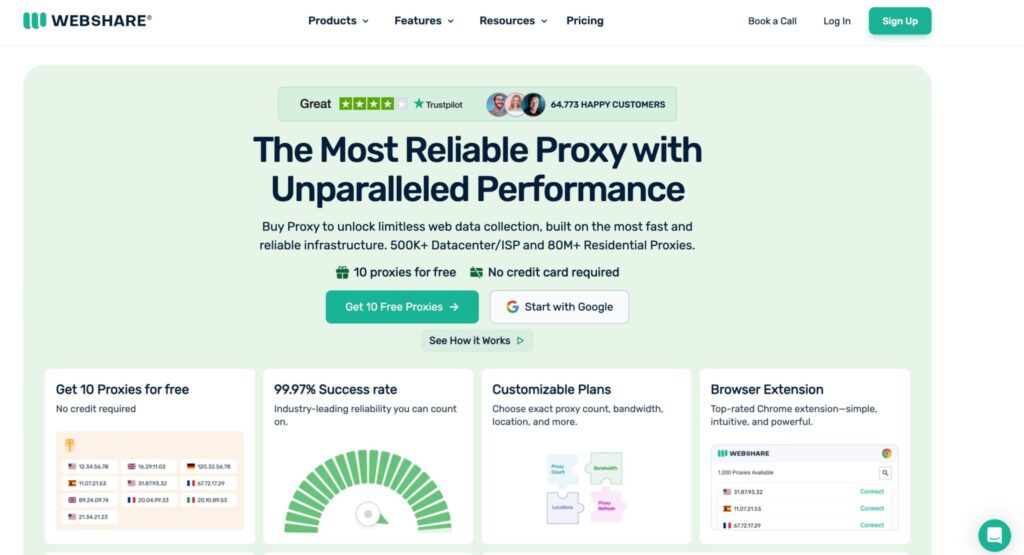
Webshare is a strong starting point because it keeps setup simple. You can start small, test free proxies, and move into paid datacenter, ISP, or residential plans once you know what works.
For gaming, Webshare is best suited for browser-based game portals, launchers, server admin panels, testing tools, and lightweight region checks. Its static residential and datacenter proxy options are useful when you want a stable identity without dealing with complex rotation logic.
Webshare may not be the first pick for advanced mobile gaming QA or high-touch enterprise support, but it is one of the easiest providers to understand. That counts for a lot if you are new to proxies.
Pro-Tip: Avoid free proxies for serious gaming sessions. Use them only for basic testing. For stable play or account access, paid private or ISP proxies are much safer.
6. SOAX: Best For Mobile Game Testing
SOAX is a strong option when your gaming use case touches mobile networks. Mobile games behave differently from PC games because app stores, ad networks, carrier routing, and device environments all influence what users see.
SOAX offers residential, mobile, ISP, and datacenter proxies under a flexible credit-based model. That makes it easier to test different proxy types without buying separate plans for every workload.
For mobile gaming QA, mobile proxies can help simulate real cellular users from specific markets. They are not always the fastest option, but they are useful when authenticity matters more than raw speed.
Pro-Tip: Use mobile proxies for mobile app testing, not competitive live gameplay. Mobile routes can be more trusted, but latency may fluctuate more than ISP or datacenter proxies.
7. NetNut: Best For High-Volume Gaming Workloads
NetNut is a good fit for businesses that need stable proxy performance at volume. It offers residential, rotating residential, static residential, mobile, and datacenter proxies, which gives teams enough room to build different workflows around one provider.
For gaming, NetNut is more suitable for structured operations than casual play. Examples include regional game intelligence, public game marketplace tracking, server availability checks, multiplayer infrastructure monitoring, and testing localized content at scale.
The platform leans toward business users, so beginners may find it less casual than Webshare or IPRoyal. But if your traffic volume is high, NetNut’s infrastructure can be worth it.
Pro-Tip: For automated gaming data tasks, separate your rotating proxy pool from your static login pool. Mixing both creates unstable sessions.
8. Rayobyte: Best For US-Centric Gaming Infrastructure
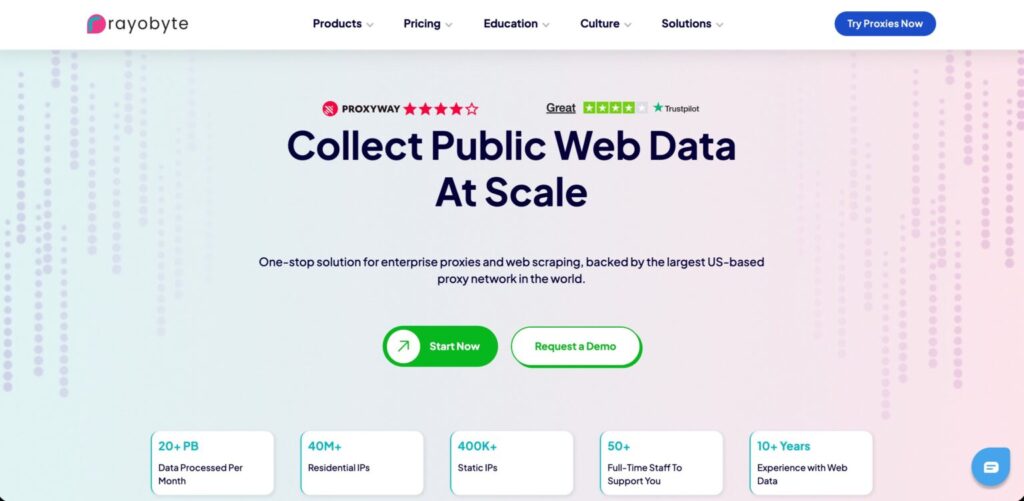
Rayobyte has a strong reputation around US-based proxy infrastructure. If your gaming work focuses heavily on North American servers, US marketplaces, game launchers, or esports tools, Rayobyte can be a practical choice.
Its datacenter proxies are especially relevant for speed-focused workloads. Datacenter IPs are usually cheaper and faster than residential IPs, but they can be easier to detect. That makes them better for non-login tasks, public data, server checks, and admin tools rather than sensitive game account sessions.
Rayobyte also offers residential and ISP-style options, giving teams more flexibility when datacenter proxies are not enough.
Pro-Tip: Use Rayobyte datacenter proxies for speed tests and server monitoring. Switch to ISP proxies when login trust and session continuity matter.
9. ProxyEmpire: Best For Flexible Regional Testing
ProxyEmpire focuses on residential, mobile, and datacenter proxies with wide country coverage and flexible targeting. It is useful for teams testing game access, localized promotions, regional pricing, and market-specific launcher behavior.
Its residential and mobile products are the most relevant for gaming. They allow testers to appear from different countries and network types, which helps when checking how a game store, ad campaign, or launch event appears across markets.
ProxyEmpire also supports rollover-style bandwidth on some plans, which is helpful if your testing volume is uneven.
Pro-Tip: Build a small test matrix with country, proxy type, game platform, and login result. This helps you spot whether failures come from the proxy or the platform.
10. DataImpulse: Best Low-Cost Pay-As-You-Go Option
DataImpulse is attractive because of its low-cost pay-per-GB model. If you are testing gaming proxy workflows and do not want to spend big upfront, it is a useful provider to try.
It works best for experimentation, public data access, light QA, and regional checks. For serious live gameplay, you should test carefully because cheap residential pools can vary in latency and stability depending on the region.
Still, the pricing model is easy to understand. You buy traffic, run your tests, and scale only if the results are good.
Pro-Tip: Track cost per successful session, not just cost per GB. A cheap proxy becomes expensive if it causes failed logins, disconnects, or repeated retries.
How To Choose The Best Proxy For Online Gaming
Start With The Real Use Case
Do you want lower ping, regional access, mobile game testing, server monitoring, or public gaming data collection? Each use case needs a different proxy type.
For live gaming, choose static ISP proxies or fast SOCKS5 datacenter proxies close to the game server. For game QA and regional checks, use residential proxies with sticky sessions. For mobile game testing, use mobile proxies from the target country or carrier.
Check The IP Pool Quality
A big IP pool sounds impressive, but quality matters more than size. Look for:
- Real location coverage
- Fresh IP availability
- ISP or carrier-level options
- Low abuse history
- Clean authentication controls
- Stable session handling
For gaming, a smaller clean pool can outperform a huge noisy pool.
Understand Rotation Protocols
Rotation is useful, but not always for gaming. If your IP changes while you are logged into a game account, the platform may ask for verification or end the session.
Use this rule:
- Static IP: Best for live play and long sessions
- Sticky session: Best for login-based dashboards and game stores
- Rotating IP: Best for public data, testing, and non-login workflows
- Mobile rotation: Best for app testing and carrier simulation
Prioritize SOCKS5 When Possible
SOCKS5 is usually better for gaming-related setups because it is more flexible than HTTP proxies. HTTP proxies work well for browsers, web dashboards, and launchers, but SOCKS5 is better suited for broader app traffic.
That said, not every game client supports proxy configuration. In some cases, a VPN or router-level setup may be easier.
Test Ping The Right Way
Do not buy a proxy only because the provider says it is fast. Test it against your actual game server region. A proxy in Singapore may be great for one title and terrible for another if the game server route goes somewhere else.
Test:
- Ping
- Jitter
- Packet loss
- Login success
- Match stability
- Download speed
- Session duration
FAQs About Gaming Proxies
1. Can proxies reduce ping in online games?
Yes, but only in the right situation. A proxy can reduce ping if it gives your traffic a better route to the game server. If the proxy adds a longer route, your ping will increase.
2. Are proxies better than VPNs for gaming?
Proxies can be faster because they usually do not encrypt all traffic like VPNs. VPNs are easier for full-device protection, while proxies are better when you need app-specific routing or IP control.
3. What is the best proxy type for live gaming?
Static ISP proxies are usually the best choice for live gaming because they combine stability, speed, and better trust than normal datacenter IPs.
4. Are rotating proxies good for gaming?
Not for live gameplay. Rotating proxies are better for testing, public data collection, and regional checks. For gaming sessions, use static or sticky IPs.
5. Do gaming proxies work with Steam, PlayStation, or Xbox?
They can work for web access, launchers, stores, and network routing, but support depends on the platform, device, and setup method. Consoles usually need router-level configuration.
6. Can I use free proxies for online gaming?
You can test with free proxies, but they are not recommended for serious gaming. Free proxies are often slow, crowded, unstable, and risky for account security.
7. What is the safest proxy protocol for gaming?
SOCKS5 is the most flexible option for gaming-related traffic. HTTP and HTTPS proxies are better for browsers and launchers, not full game traffic.
8. Can proxies get a gaming account banned?
A proxy itself does not automatically cause a ban, but suspicious IP changes, account sharing patterns, region abuse, or violation of game rules can trigger restrictions. Always follow the platform’s terms.
9. Which proxy provider is best for beginners?
Webshare and IPRoyal are good beginner options because they are easier to set up and do not require enterprise-level buying decisions.
Final Verdict
The best proxy for online gaming depends on what you are trying to fix. If your goal is stable live gameplay, start with a static ISP proxy near the game server.
If you are testing regional game stores, matchmaking, or public gaming data, use residential proxies with sticky sessions. If you are running mobile game QA, choose mobile proxies from SOAX, Oxylabs, Bright Data, or ProxyEmpire.
Decodo is the best all-around choice for most users because it balances price, pool size, usability, and proxy variety. Oxylabs and Bright Data are better for enterprise teams.
IPRoyal and Webshare make more sense for smaller budgets. DataImpulse is useful when you want to test cheaply before scaling.
Do not chase the biggest IP pool blindly. For gaming, the winning setup is simple: clean IPs, low jitter, stable sessions, SOCKS5 support, and a server location that actuallyimproves your route.