
Best Proxies For Matchmaking.
Matchmaking platforms are not easy environments for proxies. Whether you are testing dating apps, running regional QA checks, verifying localized ads, monitoring fraud signals, or managing approved business accounts, the wrong proxy can make your setup look unstable within minutes.
Matchmaking systems care about location consistency, IP reputation, device behavior, session history, and network type. A cheap datacenter proxy may load pages quickly, but it can also create trust issues when the platform expects a normal residential or mobile connection.
On the other side, a premium mobile proxy can look highly natural, but it may be expensive if your team is running high-volume checks.
The best proxies for matchmaking are not just “private” or “fast.” They need clean IP pools, smart rotation controls, sticky sessions, strong geo-targeting, and enough stability to keep sessions from breaking during login, profile review, messaging flow tests, payment checks, or location-based feature testing.
This guide focuses on legitimate use cases only. Do not use proxies to create fake profiles, evade bans, scrape private user data, spam users, or violate platform rules. For professional teams, proxies should support compliance, testing, security, and research, not abuse.
Quick Comparison Table: Best Matchmaking Proxy Providers
| Provider | Best For | Proxy Types | Rotation Control | Sticky Sessions | Geo Targeting | Protocols | Strength | Watch Out For |
|---|---|---|---|---|---|---|---|---|
| Bright Data | Enterprise QA and research | Residential, mobile, ISP, datacenter | Advanced | Yes | Country, city, ASN, carrier | HTTP, HTTPS, SOCKS5 | Huge pool and controls | Higher cost |
| Oxylabs | Enterprise-scale testing | Residential, mobile, ISP, datacenter | Advanced | Yes | Global, city, state, country | HTTP, HTTPS, SOCKS5 | Strong reliability | Better for larger budgets |
| Decodo | Balanced value | Residential, mobile, ISP, datacenter | Rotating and sticky | Up to long sessions | 195+ locations | HTTP, HTTPS, SOCKS5 | Easy dashboard | Heavy users need careful spend control |
| SOAX | Mobile-heavy workflows | Residential, mobile, ISP, datacenter | Flexible | Custom lengths | Country, city, ISP, ASN | HTTP, HTTPS, SOCKS5, UDP/QUIC | Strong mobile targeting | Smaller users may need testing first |
| NetNut | Stable business use | Residential, static ISP, mobile | Rotating and sticky | Yes | 195+ countries | HTTP, HTTPS, SOCKS5 | ISP stability | Pricing can climb |
| IPRoyal | Budget-conscious teams | Residential, mobile, ISP, datacenter | Manual and auto options | Yes | Country, state, city, carrier | HTTP, HTTPS, SOCKS5 | Affordable entry | Smaller pool than top enterprise brands |
| Webshare | Affordable static and rotating | Residential, ISP, datacenter | Basic to moderate | Available by product | Wide country coverage | HTTP, SOCKS5 options | Low-cost testing | Fewer advanced tools |
| Rayobyte | Rotating ISP setups | Residential, ISP, datacenter, mobile | Soft and hard sticky options | Yes | Country, city, state | HTTP(S) | Strong sticky control | Interface less polished than newer tools |
1. Bright Data: Best Overall for Enterprise Matchmaking Testing
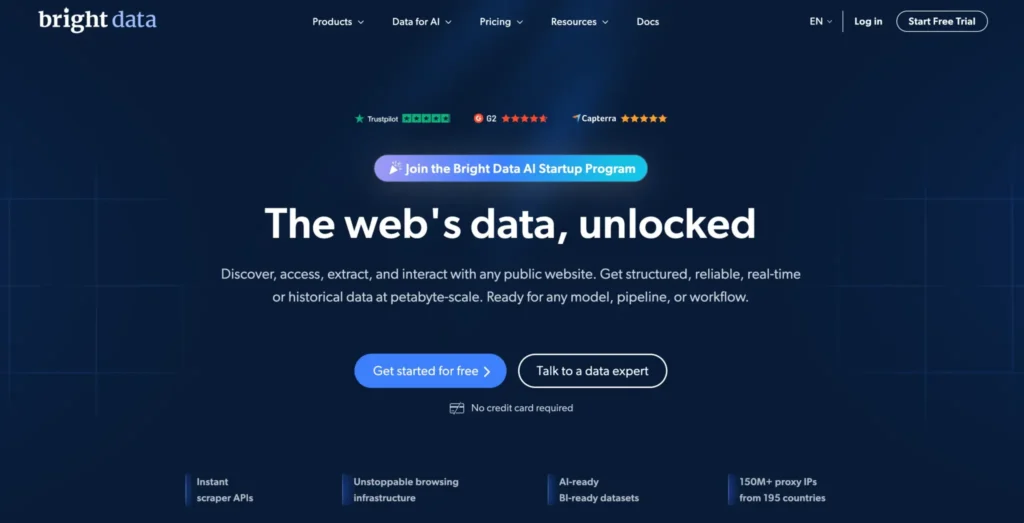
Bright Data is the heavyweight option for teams that need serious control. If your matchmaking work involves app QA, location testing, fraud monitoring, search visibility checks, or market research across many regions, Bright Data gives you the deepest toolkit.
Its biggest advantage is network variety. You can use residential proxies when you need normal household IP behavior, mobile proxies when testing carrier-based experiences, ISP proxies when you need long sessions with better stability, and datacenter proxies for low-risk, speed-heavy tasks.
For matchmaking platforms, the session controls matter a lot. You can rotate IPs frequently for broad regional checks or hold a sticky session when testing login flows, onboarding, profile editing, or payment screens. This reduces the chance of a session suddenly looking suspicious because the IP changed halfway through.
Bright Data is not the cheapest provider. It is best for companies that care more about reliability, compliance tools, targeting precision, and scale than saving a few dollars per GB.
Pro-Tip: Use ISP proxies for long dashboard sessions and residential or mobile proxies for user-location simulations. Do not mix random countries inside the same account workflow.
2. Oxylabs: Best for Large Teams and High-Success Workflows
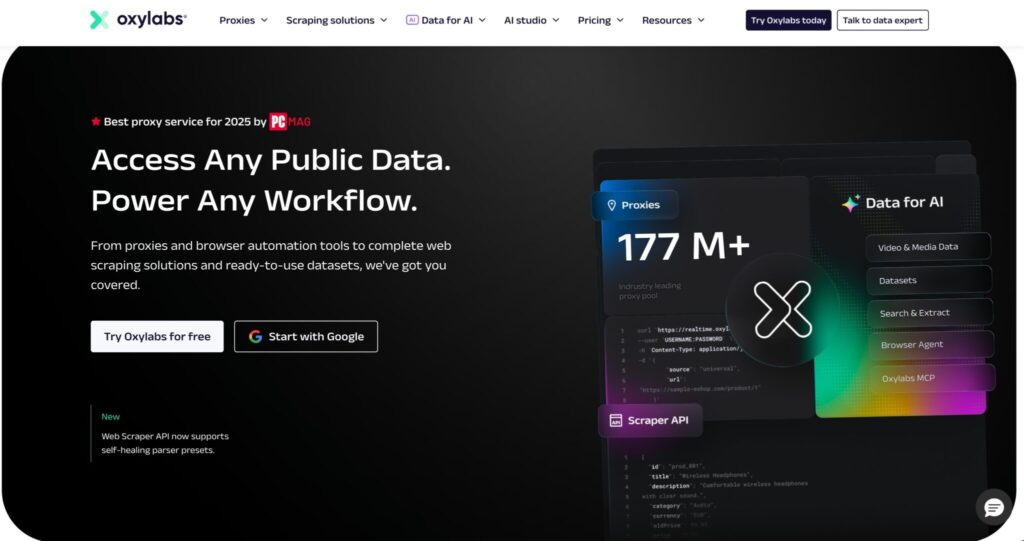
Oxylabs is another enterprise-grade provider built for serious data and testing operations. It has a large residential network, mobile proxies, ISP proxies, and datacenter options, which makes it suitable for different matchmaking use cases.
The strength of Oxylabs is consistency. If your team is checking localized onboarding flows in multiple markets, validating app behavior by city, or testing how matchmaking results vary by region, Oxylabs gives you the infrastructure to run those workflows without constantly fighting bad IP quality.
Sticky sessions are especially useful here. Matchmaking products often involve multi-step journeys. A user may open the app, verify location, browse profiles, update preferences, and test messaging. If your proxy rotates too aggressively, that journey can break. Oxylabs lets you keep sessions stable where needed.
The provider is more suitable for agencies, research teams, and mature companies than hobby users. If your workflow is small and occasional, you may not need this level of infrastructure.
Pro-Tip: For controlled QA, assign one proxy profile per test account and avoid switching proxy types during the same test cycle.
3. Decodo: Best Balance of Usability, Price, and Performance
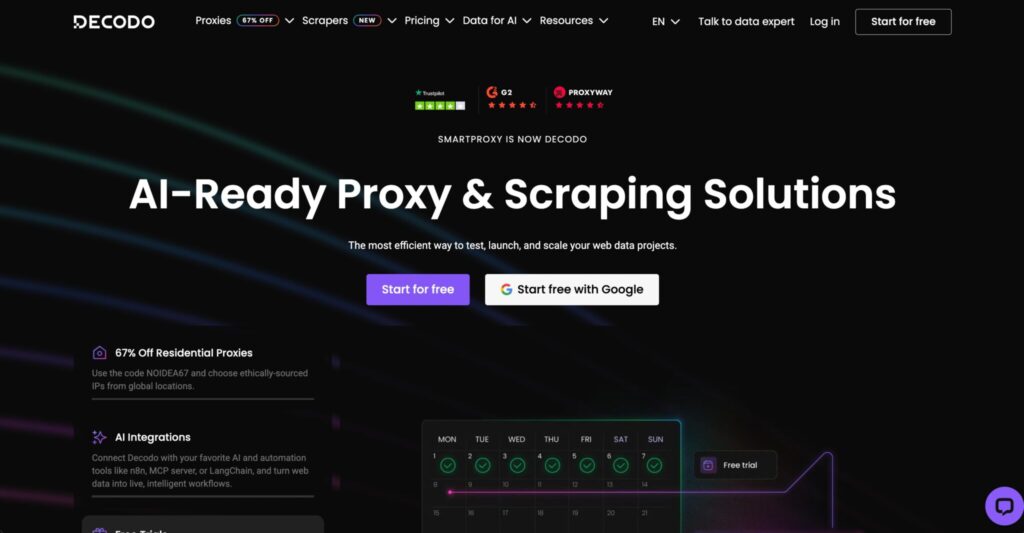
Decodo, formerly Smartproxy, is a strong middle-ground choice. It is easier to use than many enterprise proxy platforms, but still powerful enough for professional matchmaking workflows.
The dashboard is beginner-friendly, which helps if your team includes marketers, QA testers, or operations people who are not network engineers. You can choose rotating or sticky sessions, set locations, and integrate proxies with browsers, automation tools, or internal testing systems.
For matchmaking use cases, Decodo works well for regional testing, approved account management, ad verification, and localization checks. Residential proxies are a safe default when you want a natural-looking connection. ISP proxies are better when session stability matters more than broad rotation.
Decodo also has mobile options, which can be valuable because many matchmaking platforms are mobile-first. If the app experience is different on carrier networks, mobile proxies give a more realistic testing layer.
Pro-Tip: Start with sticky residential sessions for login and onboarding tests. Use rotating residential sessions only for broad, non-login checks.
4. SOAX: Best for Mobile and Geo-Targeted Matchmaking Workflows
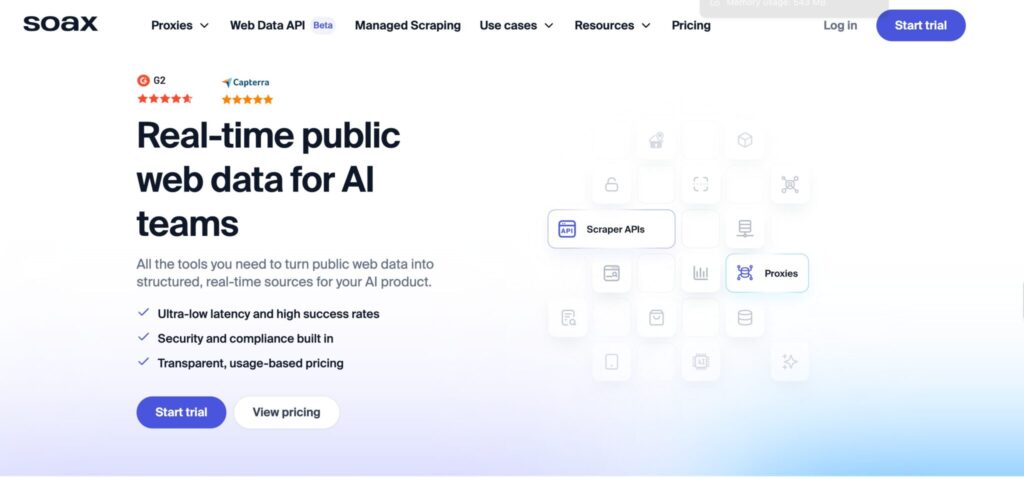
SOAX is one of the better choices when mobile IP behavior matters. Matchmaking platforms are often built around smartphones, GPS-style location logic, app sessions, and carrier patterns. That makes mobile proxies useful for realistic testing.
SOAX offers residential and mobile proxies with strong geo-targeting controls. You can filter by country, city, ISP, and ASN, depending on the product and plan. That matters when testing city-specific discovery, regional pricing, localized onboarding, or ad placements.
The ability to rotate on request or keep a session active for a set period is useful. For example, you may want a stable IP while testing a full signup journey, then rotate before checking another region or user segment.
SOAX is also a good fit for teams that want flexibility without jumping straight into a heavy enterprise contract. Still, test latency and success rates in your target countries before scaling.
Pro-Tip: For matchmaking apps, mobile proxies often perform better than residential proxies in mobile-only flows, but they cost more. Use them where realism actually matters.
5. NetNut: Best for Stable ISP-Backed Sessions
NetNut is a good fit when long, stable sessions are more important than constant IP changes. Its static residential or ISP-style proxies are useful for workflows where sudden rotation creates more problems than benefits.
This makes NetNut suitable for admin dashboards, fraud review workflows, location checks, customer support testing, and internal research where the same IP should stay consistent. Rotating residential proxies are available too, but NetNut’s value is strongest when stability is the goal.
For matchmaking operations, this matters because trust systems often watch for unusual changes. If an account logs in from one city, then another region, then another network type, it can create friction. A clean static or sticky setup is often safer for compliant account workflows.
NetNut may not be the cheapest option, but it is practical for teams that want reliable business-grade proxy infrastructure.
Pro-Tip: Use static ISP proxies for internal tools and sticky residential sessions for testing consumer-facing flows.
6. IPRoyal: Best Affordable Option for Smaller Teams
IPRoyal is a practical choice for small agencies, solo operators, and teams that need quality proxies without enterprise pricing. It offers residential, ISP, mobile, and datacenter proxies, giving enough flexibility for most matchmaking-related tasks.
The mobile proxy option is especially useful for app testing because it supports real carrier-style connections and rotation controls. For teams testing location-based discovery or mobile signup flows, that can be a useful upgrade over basic residential proxies.
IPRoyal’s main appeal is cost control. You can start smaller, test specific countries, and scale based on actual success rates. This is helpful when you are not yet sure which proxy type performs best for your matchmaking workflow.
The trade-off is that IPRoyal may not provide the same depth of enterprise tooling, targeting, or compliance infrastructure as Bright Data or Oxylabs. For many small teams, that is acceptable.
Pro-Tip: Use IPRoyal to validate your workflow before moving to a more expensive provider. Measure login success, latency, and session drops by country.
7. Webshare: Best Low-Cost Testing Option
Webshare is a strong budget-friendly proxy provider, especially for teams that need simple residential, ISP, or datacenter proxies without a complicated setup.
It is useful for early-stage testing, basic geo-checks, and low-risk workflows where you do not need advanced enterprise controls. Webshare’s dashboard is clean, pricing is approachable, and it works well for users who want to test proxy behavior before committing to a larger provider.
For matchmaking use cases, Webshare is best used carefully. Datacenter proxies may be fine for basic page loading, content checks, or non-login testing, but they are usually not the best choice for sensitive account workflows. Residential or ISP options are safer when platform trust matters.
Webshare is not the strongest provider for advanced mobile testing or deep targeting, but it gives good value for basic proxy needs.
Pro-Tip: Avoid using cheap datacenter proxies for account-based matchmaking workflows. Use them for speed tests, landing pages, and public checks only.
8. Rayobyte: Best for Sticky ISP and Rotating Control
Rayobyte is a solid pick for teams that care about sticky sessions and ISP-style stability. Its rotating ISP proxies and residential proxies offer control options that can be useful for matchmaking QA and research workflows.
One useful feature is the ability to choose between softer sticky behavior and harder session locking, depending on the product. That gives teams more control over whether they want a proxy to stay consistent as long as available or hold for a fixed duration.
Rayobyte is especially practical for workflows where you need repeatable testing. For example, you can run the same onboarding or regional discovery test multiple times without unpredictable IP movement ruining the comparison.
The platform may not feel as sleek as some newer proxy dashboards, but it has strong fundamentals.
Pro-Tip: Use hard sticky sessions for full journey testing. Use rotating pools only when the test does not depend on account continuity.
How to Choose the Best Proxy for Matchmaking
Start With the Use Case
A proxy for public landing page checks is not the same as a proxy for mobile app QA. For public data, datacenter or rotating residential proxies may be enough. For account workflows, use residential, ISP, or mobile proxies. For mobile-first matchmaking apps, mobile proxies often provide the most realistic network pattern.
Choose the Right IP Pool
Residential proxies are the safest default for natural user behavior. ISP proxies are better for long sessions because they combine residential credibility with datacenter-like stability. Mobile proxies are best for smartphone-heavy platforms, but they are usually more expensive. Datacenter proxies are fast and cheap, but easier to detect.
Understand Rotation Protocols
Rotation should match the task. Rotate per request for broad, non-login checks. Use sticky sessions for login, onboarding, messaging tests, payment checks, and account review. For matchmaking, aggressive rotation can hurt more than help because platforms expect location and network consistency.
Check Geo-Targeting Depth
Country targeting is basic. City, state, ASN, and carrier targeting are more useful for matchmaking platforms because location shapes discovery, profile visibility, pricing, and local user experience.
Test IP Reputation
Before scaling, test a small sample. Track login success, verification triggers, latency, blocked requests, and session drops. A cheaper proxy that fails 30% of the time costs more than a premium proxy that works cleanly.
Match Proxies With Device Fingerprints
A proxy alone will not create a believable environment. Time zone, language, browser fingerprint, device type, cookies, and location signals should match the proxy region. A Mumbai IP with a New York time zone and German browser language looks messy.
FAQs: Best Proxies For Matchmaking
1. What are matchmaking proxies?
Matchmaking proxies are proxies used for legitimate testing, localization, fraud checks, ad verification, and approved account operations on dating or matchmaking platforms. They help teams view platforms from different regions or network types.
2. Are residential proxies good for matchmaking platforms?
Yes. Residential proxies are usually a strong default because they use ISP-assigned IPs and look closer to normal user traffic than datacenter proxies.
3. Are mobile proxies better than residential proxies?
For mobile-first dating and matchmaking apps, mobile proxies can be better because they route traffic through carrier networks. They are more realistic but often more expensive.
4. Should I use rotating or sticky proxies?
Use sticky proxies for login sessions, onboarding, profile testing, and messaging flow checks. Use rotating proxies for public, non-account-based checks across many regions.
5. Can I use datacenter proxies for matchmaking?
You can use datacenter proxies for basic public testing, speed checks, and landing pages. They are not ideal for sensitive account workflows because platforms can detect datacenter ranges more easily.
6. What is the best proxy type for location testing?
Residential and mobile proxies with city-level targeting are best for location testing. Carrier targeting is useful when testing mobile app behavior.
7. How many proxies do I need?
Start small. Test 5 to 20 proxies per target market, measure success, then scale. The right number depends on accounts, regions, testing frequency, and session length.
8. Is it safe to use free proxies?
No. Free proxies are risky, unstable, often abused, and may expose sensitive data. For matchmaking work, use reputable paid providers with clear sourcing and support.
Final Recommendation
For enterprise matchmaking QA, Bright Data and Oxylabs are the strongest choices. For balanced price and usability, Decodo and SOAX are excellent. For stable ISP sessions, NetNut and Rayobyte are worth testing. For smaller budgets, IPRoyal and Webshare give a lower-cost starting point.
The winning setup is rarely one provider for everything. A serious matchmaking workflow may use ISP proxies for account stability, residential proxies for regional testing, mobile proxies for app realism, and datacenter proxies for simple public checks. Keep the setup consistent, document every test, and choose proxies based on trust, not just price.