
Best Geo IP Proxies.
Geo IP proxies sound simple until real work starts.
You do not just need “a US proxy.” You may need a Dallas residential IP from a clean ISP range, a London mobile IP for ad checks, a Mumbai city-level session for local SERP tracking, or a static ISP proxy that keeps the same identity long enough to finish a checkout flow. That is where weak proxy providers fall apart.
It is the one that gives you accurate locations, clean IP reputation, predictable rotation, enough session control, and support that understands routing instead of sending canned replies.
This guide is for SEO teams, ad verification companies, pricing intelligence teams, ecommerce operators, QA engineers, and agencies handling regional research.
What Are Geo IP Proxies?
Geo IP proxies route your connection through IP addresses tied to locations. That can mean country, state, city, ZIP code, ASN, ISP, or mobile carrier targeting.
The location matters because many websites change content by region. Search results, ads, prices, inventory, shipping rules, language, taxes, and app behavior can all vary based on IP location.
Residential proxies use IPs assigned by real internet service providers. They are usually the safest choice for location-sensitive research.
ISP proxies, also called static residential proxies, combine datacenter-style speed with ISP-issued IP reputation. They are useful when you need stable sessions.
Mobile proxies route through mobile carrier networks. They are strong for mobile ad verification, app testing, and social platform QA.
Datacenter proxies are fast and cheap, but easier to detect on tougher targets. Use them for low-risk workloads, not fragile geo research.
Pro-Tip: Match proxy to job. Do not burn expensive residential bandwidth on basic uptime checks, and do not expect cheap datacenter IPs to behave like real local users.
Quick Verdict: Best Geo IP Proxy Providers
Bright Data is best for enterprise-grade geo controls. Oxylabs is best for large-scale scraping and city-level data projects. Decodo is best for teams that want strong coverage without enterprise complexity. SOAX is excellent for precise filtering and clean session control. NetNut is strong for stable high-volume routing. IPRoyal is a smart budget pick. Webshare is ideal for low-cost residential testing. Rayobyte works well for transparent pricing. DataImpulse is a value pick for country-level coverage.
Massive Comparison Table: Best Geo IP Proxies
| Provider | Best For | Approx. IP Pool | Geo Targeting | Rotation Control | Protocols | Starting Price Signal | Main Weak Spot |
|---|---|---|---|---|---|---|---|
| Bright Data | Enterprise geo targeting | 400M+ residential IPs | Country, city, ZIP, ASN, carrier | Per request, sticky, long sessions | HTTP, HTTPS, SOCKS5 | Premium per GB | Expensive for beginners |
| Oxylabs | Large-scale data teams | 175M+ residential IPs | Country, city, state, ZIP, ASN filters | Rotating, sticky up to 24h | HTTP, HTTPS, SOCKS5 | Premium per GB | More enterprise than hobbyist |
| Decodo | Balanced price and usability | 125M+ IPs | 195+ locations, city options | Rotating, sticky sessions | HTTP, HTTPS, SOCKS5 | From about $2/GB | Advanced controls vary by product |
| SOAX | Precise filtering | Large residential and mobile pool | Country, city, region, ISP/ASN | Flexible rotation and sticky sessions | HTTP, HTTPS, SOCKS5 | Mid-range per GB | Smaller ecosystem |
| NetNut | Stable high-volume scraping | 85M+ rotating residential IPs | Global, country and local options | Per session rotation | HTTP, HTTPS, SOCKS5 | Quote and plan-based | KYC and trial limits |
| IPRoyal | Budget geo buyers | 32M+ residential IPs | Country, state, city | Rotating, sticky options | HTTP, HTTPS, SOCKS5 | From about $1.75/GB | Smaller pool than top giants |
| Webshare | Affordable testing | 80M+ residential IPs | Country and city targeting | Rotating residential endpoints | HTTP, SOCKS5 | From about $1.40/GB | Limited premium support |
| Rayobyte | Transparent pay-as-you-go | Residential and ISP pool | Geo targeting included | Concurrent sessions, rotation | HTTP, HTTPS, SOCKS5 | From about $3.50/GB | Less granular targeting |
| DataImpulse | Low-cost geo research | 90M+ residential IPs | Country, city, ZIP, ASN on premium | Rotating and sticky | HTTP, HTTPS, SOCKS5 | From about $1/GB | Fine targeting can cost extra |
1. Bright Data: Best Overall for Enterprise Geo Accuracy
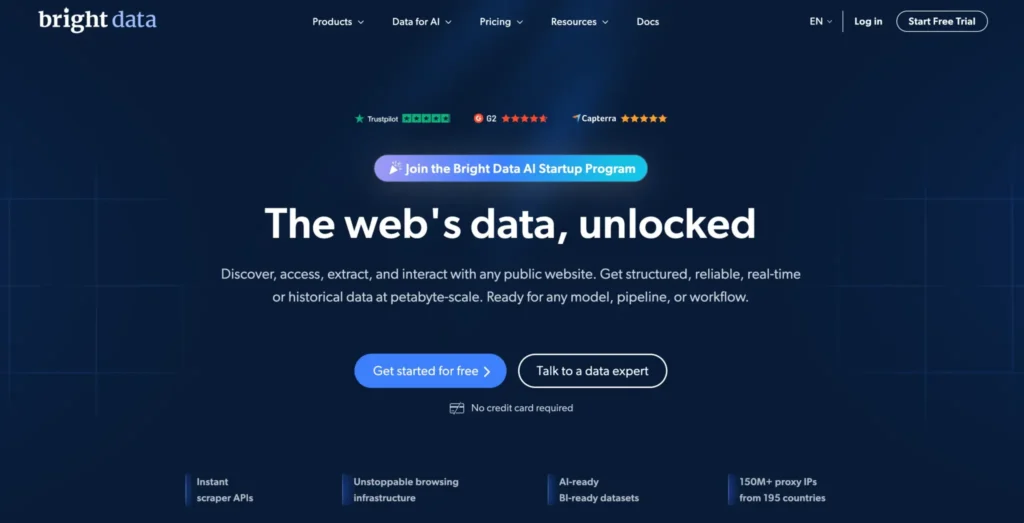
Bright Data is the provider I would shortlist first when location accuracy is the main buying factor and budget is not tight. Its real advantage is control. You can target by country, city, ZIP code, ASN, carrier, and proxy type, then tune rotation rules for different workflows.
That matters for ad verification, SERP tracking, marketplace monitoring, and fraud research. A weak provider may tell you it has “New York proxies,” but the IP may resolve outside the city or change too often. Bright Data gives serious teams the filters needed to build repeatable pipelines.
The interface is powerful, but beginners should expect a learning curve around zones, permissions, and proxy manager setup.
Pro-Tip: Use Bright Data when bad geo data is more expensive than proxy bandwidth. If one wrong location ruins a client report, pay for better controls.
2. Oxylabs: Best for Large Data Collection Teams
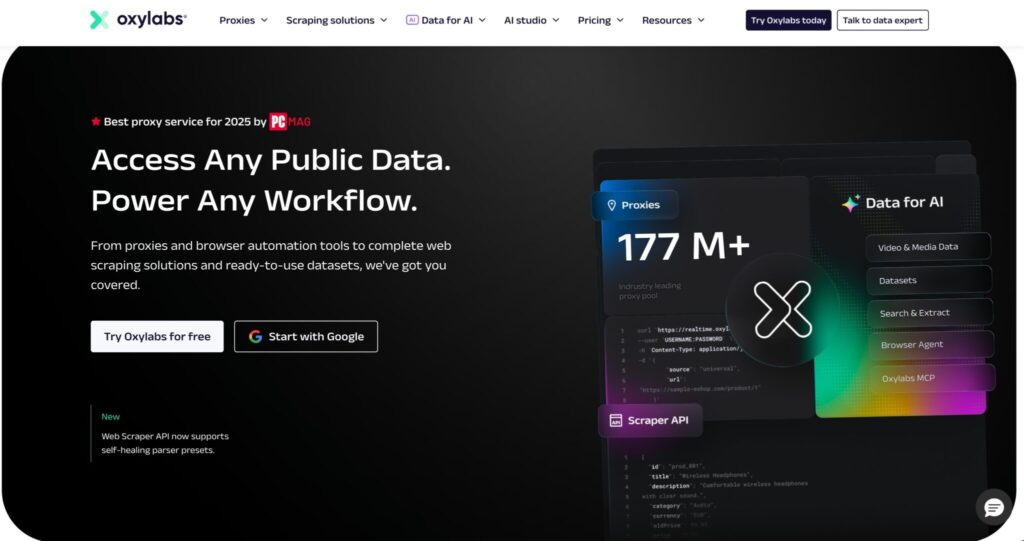
Oxylabs is built for companies that scrape, monitor, and verify at scale. Its residential network is large, its geo coverage is deep, and its sticky session handling is strong enough for workflows that cannot rotate every request.
Oxylabs fits price intelligence, travel fare aggregation, brand monitoring, and SEO platforms that need reliable city-level output.
The downside is cost and complexity. Smaller teams may not use enough of the platform to justify the spend. For serious data operations, though, Oxylabs is one of the safest names on the list.
3. Decodo: Best Balance of Coverage, Price, and Ease
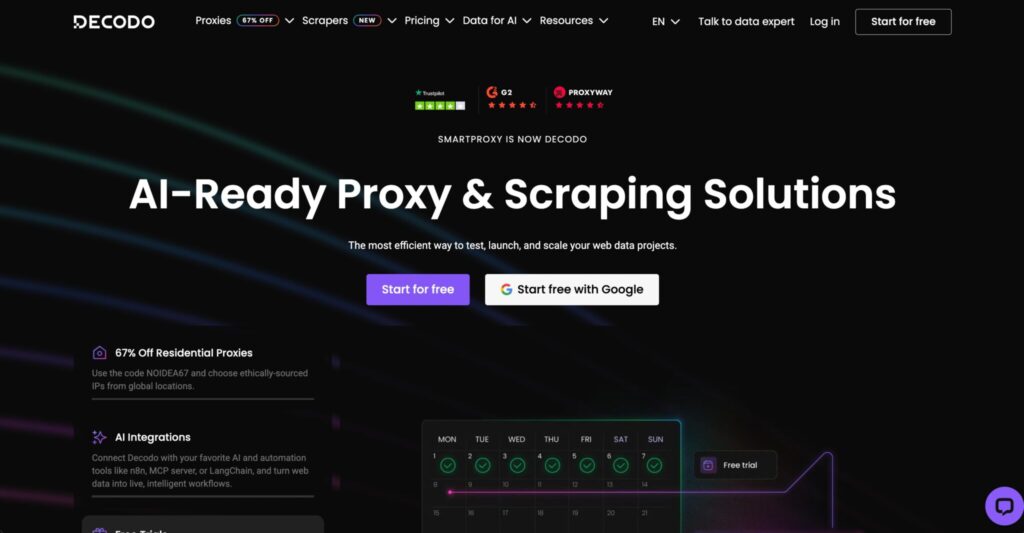
Decodo, formerly Smartproxy, sits in the sweet spot. It has enough IP volume for demanding work, a cleaner dashboard than many legacy providers, and pricing that feels more approachable than the enterprise giants.
For agencies, affiliate SEO teams, ecommerce researchers, and growth teams, Decodo is often the practical choice. Setup does not require a network engineer.
It is not always as granular as Bright Data for ZIP, ASN, or advanced policy workflows, but for most geo campaigns, it is easier to live with.
4. SOAX: Best for Clean Targeting and Session Control
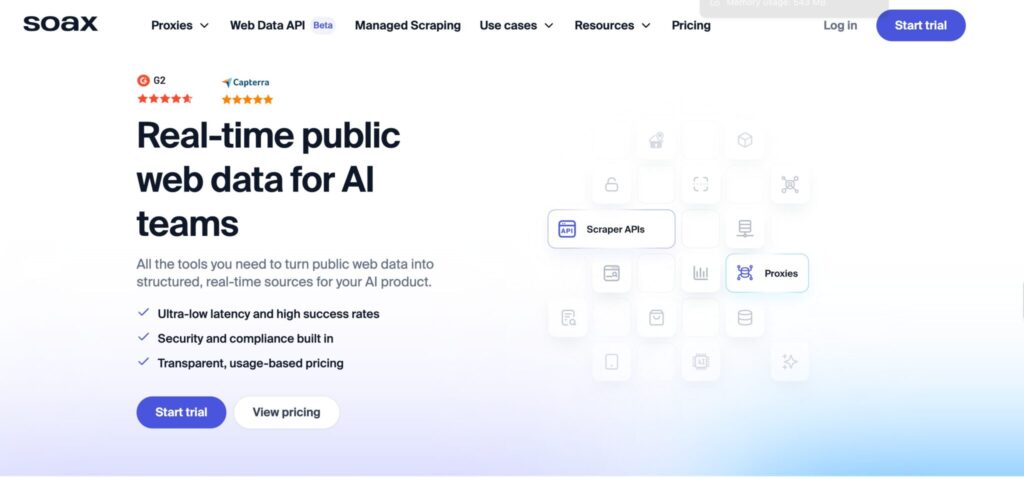
SOAX is popular with users who want precise geo filters without feeling buried under enterprise tooling. It offers residential, mobile, ISP, and datacenter options, with targeting that can go into country, city, region, and ISP or ASN depending on the product.
The clean session control is the appeal. You can build regional crawlers, test localized offers, verify ads, and run QA checks while keeping sessions stable enough to behave naturally.
SOAX also puts more emphasis on compliance and controlled access than many budget providers.
5. NetNut: Best for Stable High-Volume Routing
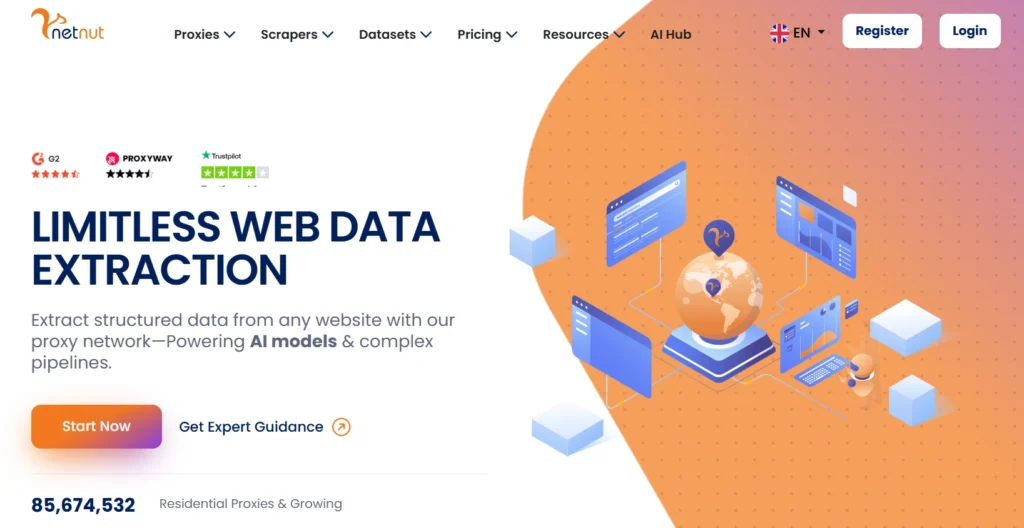
NetNut focuses on stable, scalable routing and uses an architecture designed to reduce peer instability. That can matter when you are running large jobs where random disconnects kill efficiency.
For SEO monitoring, market research, price comparison, and ad verification, NetNut is a serious contender. It is worth testing when your current residential provider has too many failed connections or unstable sessions.
NetNut works better for business users than casual buyers because trials can require company verification.
6. IPRoyal: Best Budget Geo IP Proxy Provider
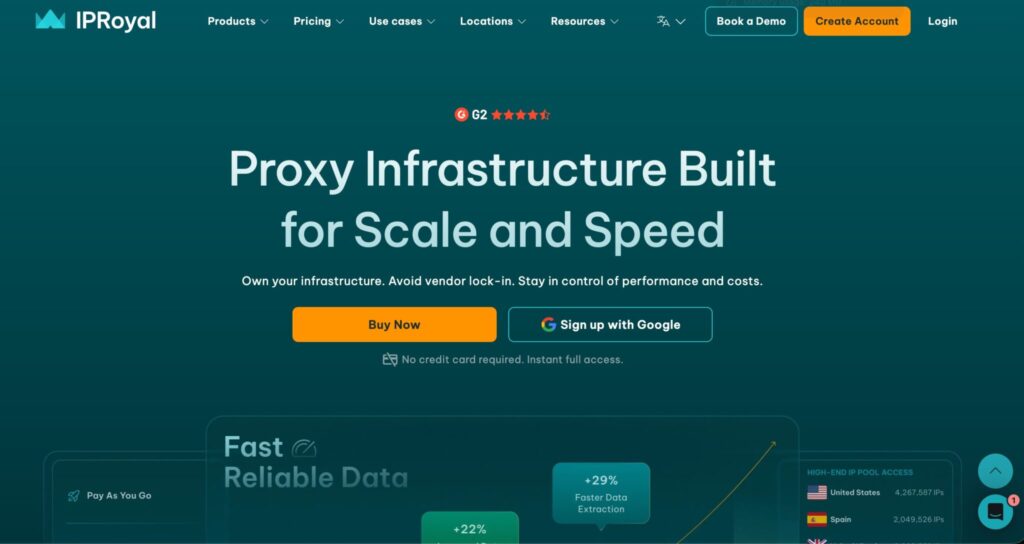
IPRoyal is not the biggest network here, but it is one of the most attractive options for cost-conscious buyers. Residential pricing is low, traffic can be managed flexibly, and the dashboard is simple enough for non-technical users.
The provider supports country, state, and city-level targeting, which is enough for many SEO, review monitoring, and market research tasks.
Do not expect the same depth of filtering as Bright Data. For small to midsize projects, IPRoyal often gives you enough accuracy at a much better entry price.
7. Webshare: Best Low-Cost Residential Testing Option
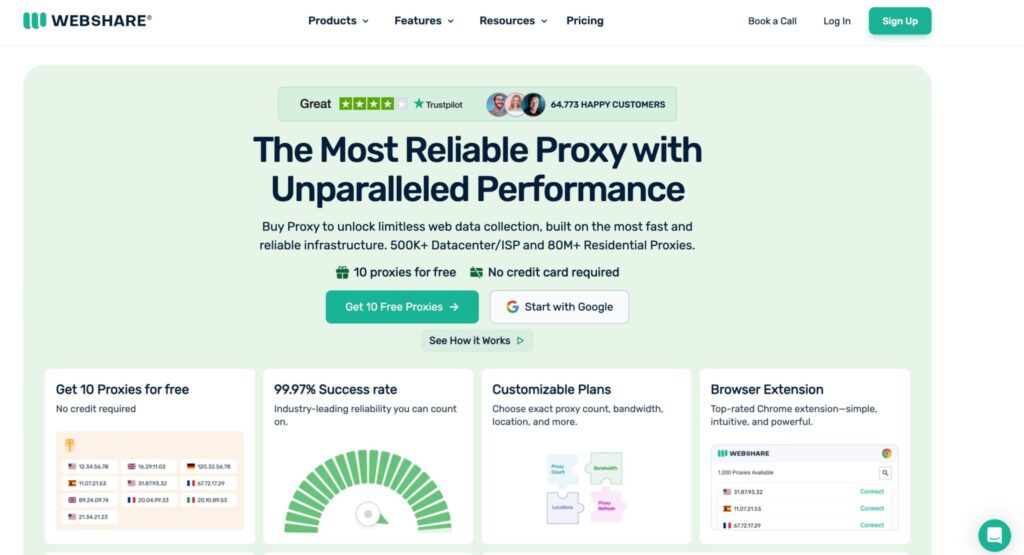
Webshare is a good pick when you want to test geo-targeted residential proxies without committing to a large contract. The pricing is aggressive, the IP pool is large, and country plus city targeting is available.
This makes Webshare useful for early projects, QA checks, SEO experiments, and developers testing scripts before moving to a bigger provider.
The compromise is support depth and advanced tooling. Webshare is affordable and practical, but it is not the place I would start for complex enterprise compliance workflows.
8. Rayobyte: Best for Transparent Pricing and Support
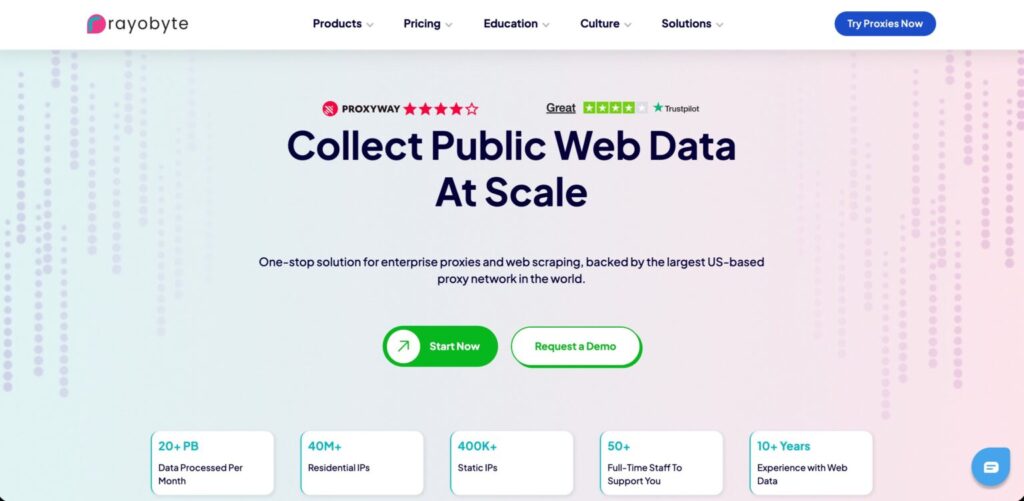
Rayobyte is often overlooked, but it has a clear value proposition: simple pay-as-you-go pricing, 24/7 support, concurrent sessions, and geo-targeting included in residential plans.
It fits buyers who hate vague enterprise pricing and want to know the bill before testing. Rayobyte also sells datacenter and ISP proxies.
It is not the most granular provider for deep ZIP or ASN campaigns, but for mainstream geo-targeted scraping and monitoring, it is a reliable middle-ground option.
9. DataImpulse: Best Value for Country-Level Geo Research
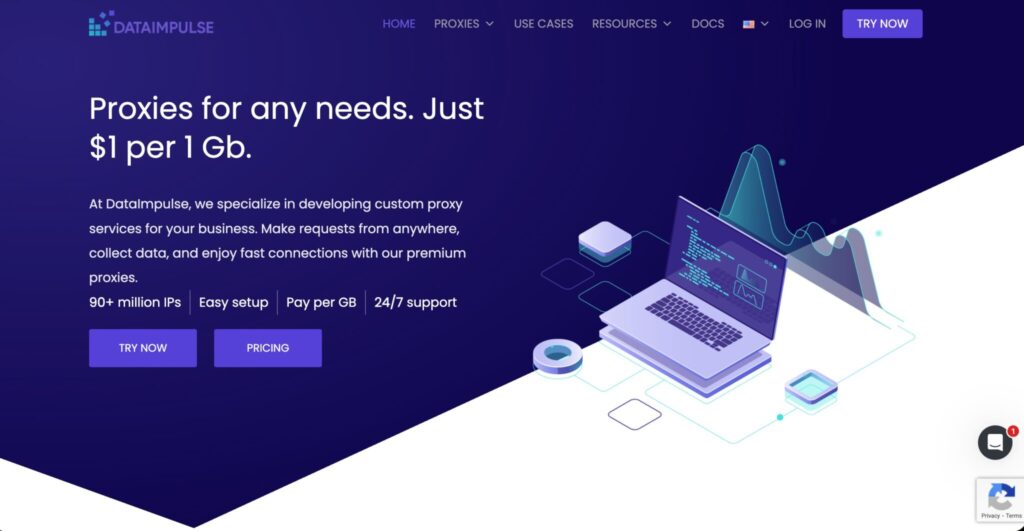
DataImpulse is interesting because of its low per-GB entry pricing and non-expiring traffic model. That works well for teams with uneven usage, such as agencies that run heavy crawls one week and almost nothing the next.
Country targeting is usually the main strength. More precise targeting such as city, ZIP, or ASN may require premium residential options or paid add-ons, so read the plan details carefully before buying.
For price checks, SERP sampling, and broad market research, DataImpulse can be a cheap way to get started.
How to Choose the Best Geo IP Proxy
Check Location Depth, Not Just Country Count
“195 countries” is not enough. Ask what the provider supports at each tier: country, state, city, ZIP, ASN, ISP, and carrier. For ad verification, ZIP and carrier can matter. For SEO, city and device environment may be enough.
Test IP Accuracy Before Scaling
Run sample IPs through multiple IP intelligence databases. Some databases disagree, so look for patterns. If half your “Los Angeles” proxies resolve elsewhere, your reports will be messy.
Understand Rotation Rules
Per-request rotation is best for large scraping jobs. Sticky sessions are better for logins, carts, forms, app QA, and any workflow where the target expects one user to keep one identity.
Match Session Length to Behavior
A 30-second session may work for SERP scraping. A 10 to 30-minute sticky session is better for ecommerce browsing. A 24-hour sticky option can help account-based workflows, but use it carefully and stay within platform rules.
Watch the Real Cost per Successful Request
Cheap proxies are not cheap if they fail often. Track success rate, retry rate, CAPTCHA rate, timeout rate, and bandwidth waste. The best proxy is usually the one with the lowest cost per clean result.
Review Compliance and Sourcing
Residential proxies should be ethically sourced with user consent, strong abuse controls, and clear KYC where needed. Avoid suspiciously cheap providers that cannot explain sourcing. Risky IPs can hurt your brand and your clients.
FAQs About Geo IP Proxies
1. What is the best geo IP proxy provider?
Bright Data is best for enterprise precision. Oxylabs is best for large-scale data work. Decodo is the best balanced choice for most teams. IPRoyal and Webshare are better for budget testing.
2. Are residential proxies better for geo targeting?
Usually, yes. Residential IPs are tied to real ISP locations, which makes them more reliable for localized search, ads, pricing, and marketplace testing than most datacenter proxies.
3. What is the difference between rotating and sticky geo proxies?
Rotating proxies change IPs automatically, often every request or session. Sticky proxies keep the same IP for a set time. Use rotating for scale and sticky for workflows that need continuity.
4. Can I target proxies by city or ZIP code?
Yes, but not every provider includes it on every plan. Bright Data, Oxylabs, SOAX, DataImpulse, and ProxyEmpire offer deeper targeting options, though ZIP-level access may cost more or require premium plans.
5. Are geo IP proxies legal?
Proxies are legal tools, but usage matters. Use them for compliant research, QA, ad verification, SEO monitoring, and public data collection. Do not use them to break laws, bypass account rules, or access private systems.
6. Which geo proxy type is fastest?
Datacenter proxies are usually fastest, ISP proxies are the best speed-to-trust compromise, residential proxies are more realistic, and mobile proxies are strongest when testing mobile networks or carrier-specific behavior.
7. How many geo proxies do I need?
It depends on concurrency and target difficulty. A small SEO tracker may need modest bandwidth and sticky city sessions. A price intelligence platform may need millions of requests, smart rotation, retries, and multiple providers.
8. What should I test before buying a large plan?
Test location accuracy, success rate, response time, sticky stability, ban rate, support quality, API usability, and billing transparency. Run the test on your real target websites, not just a generic IP checker.
Final Buying Advice
For serious enterprise geo targeting, start with Bright Data or Oxylabs. For a strong everyday stack, test Decodo and SOAX. For stable high-volume routing, include NetNut. For affordable campaigns, compare IPRoyal, Webshare, Rayobyte, DataImpulse, and ProxyEmpire.
The smartest buyers do not choose one provider forever. They test two or three against the same workload, measure clean results, and keep a backup network ready. Geo proxy performance changes by country, target site, time of day, and IP pool quality.
Buy based on proof, not promises.