
Best Location-Based Proxies.
Location-based proxies look simple from the outside. Pick a country, send traffic, get local results. Easy, right?
The moment you need city-level SERPs, ad checks in specific states, app testing from mobile carriers, or price monitoring across regions, the difference between a decent proxy network and a serious one becomes obvious.
Some providers advertise “global coverage,” but only have deep pools in the US and Western Europe. Others give you granular filters, but the pool gets thin once you select a smaller city, ISP, ASN, or ZIP code.
This guide focuses on practical location accuracy, not just big IP numbers. The best location-based proxies should give you enough clean IPs in your markets, flexible rotation, predictable sessions, usable dashboards, and support that understands geo-targeted scraping.
What Are Location-Based Proxies?
Location-based proxies route your requests through IP addresses tied to specific countries, regions, cities, carriers, ASNs, or ZIP codes. Instead of appearing as one generic server, your traffic looks like it is coming from a real user in a chosen location.
They are useful for SEO monitoring, localized price scraping, ad verification, retail intelligence, travel fare tracking, social platform QA, fraud research, brand protection, and testing websites that behave differently by geography.
The key is precision. Country targeting is enough for broad scraping. State or city targeting is better for local search, ads, and regional pricing. ZIP, carrier, and ASN targeting are for operators who need to reproduce what users in a very specific network see.
Quick Verdict: Best Location-Based Proxy Providers
If you need the deepest targeting controls, start with Bright Data or Oxylabs. If you want strong performance without enterprise friction, Decodo and SOAX are easier to operate. If budget matters, Webshare, IPRoyal, and DataImpulse are better entry points. NetNut is worth considering for stable ISP-style sessions, while Rayobyte is a practical pick for straightforward geo campaigns.
Massive Comparison Table: Best Location-Based Proxies
| Provider | Best For | Proxy Types | Geo Targeting Depth | Rotation Options | Protocols | Main Strength | Watch Out For |
|---|---|---|---|---|---|---|---|
| Bright Data | Enterprise geo accuracy | Residential, ISP, mobile, datacenter | Country, state, city, ZIP, ASN | Per request, sticky, advanced rules | HTTP, HTTPS, SOCKS5, QUIC on selected products | Huge pool and deep controls | Complex for beginners |
| Oxylabs | Large-scale data teams | Residential, mobile, ISP, datacenter | Country, city, state, ZIP, coordinates, ASN | Rotating and sticky | HTTP, HTTPS, SOCKS5 | Clean enterprise workflow | Premium pricing |
| Decodo | Balanced performance | Residential, mobile, ISP, datacenter | Country, state, city, ZIP | Rotating, sticky | HTTP, HTTPS, SOCKS5 | Easy dashboard and strong pool | Rebrand may confuse older users |
| SOAX | Precise mobile and ISP targeting | Residential, mobile, ISP, datacenter | Country, region, city, ISP/carrier | Flexible rotation, sticky | HTTP, HTTPS, SOCKS5, UDP/QUIC on some products | Granular filters | Test smaller cities first |
| NetNut | Stable ISP-style sessions | Residential, mobile, static residential | Country and city options by product | Rotating and static | HTTP, HTTPS, SOCKS5 | Direct ISP connectivity | Pricing can feel heavy |
| Webshare | Affordable geo testing | Residential, static residential, datacenter | Country and city | Rotating and static | HTTP, SOCKS5 | Low-cost setup | Fewer advanced tools |
| IPRoyal | Budget-conscious users | Residential, ISP, mobile, datacenter | Country, state, city | Rotating and sticky | HTTP, HTTPS, SOCKS5 | Flexible usage | Pool depth varies |
| DataImpulse | Low-cost localized scraping | Residential, mobile, datacenter | Country; premium city, ZIP, ASN | Rotating | HTTP, HTTPS, SOCKS5 | Strong value per GB | Advanced targeting may cost extra |
| Rayobyte | Focused geo campaigns | Residential, ISP, datacenter | Country, region, city | Sticky and rotating | HTTP, HTTPS, SOCKS5 | Simple setup | Smaller pool than giants |
1. Bright Data
Bright Data is the provider I would shortlist first for difficult geo-targeting work. It is built for teams that need more than “United States” or “Germany” in a dropdown. You can target by country, city, state, ZIP code, ASN, and other location filters across a very large residential network.
That depth matters when you are checking local SERPs, testing ad placement in a specific metro, or collecting prices that change by ZIP code. It also gives you proxy management, scraping APIs, and compliance controls for production work.
The downside is the learning curve. Bright Data is powerful, but not light. A solo operator may find the dashboard, product range, and pricing structure heavier than needed.
Pro-Tip: Use Bright Data when the cost of bad location data is higher than the proxy bill, such as ad fraud checks, marketplace intelligence, and enterprise SERP monitoring.
2. Oxylabs
Oxylabs is another top-tier option for data teams that care about predictable operations. Its residential proxy setup supports country, city, state, ZIP code, coordinate-level targeting, and ASN targeting.
That makes Oxylabs a strong fit for enterprise scraping, travel aggregation, ecommerce monitoring, and search intelligence.
Oxylabs is not the cheapest route. But for high-volume teams, the mix of precise targeting, documentation, support, and infrastructure reliability can justify the spend.
Pro-Tip: If you need city targeting plus ASN targeting, test both filters together before buying a large plan. Fine filters can shrink any proxy pool.
3. Decodo
Decodo, formerly Smartproxy, is one of the most practical choices for buyers who want strong location coverage without feeling trapped inside an enterprise platform. Its residential proxy product includes a large IP pool, unlimited concurrent sessions, and geo-targeting at country, state, city, and ZIP code level.
The biggest advantage is usability. You can create endpoints, manage sessions, and integrate with common tools without spending days in documentation.
It is a good default pick if you need reliable location-based proxies but do not need every advanced enterprise control.
Pro-Tip: Decodo is especially useful for multi-city SEO tracking, review monitoring, and ecommerce checks where you need repeatable local snapshots.
4. SOAX
SOAX is strong when location precision and network-type filtering matter. Its geo-targeting setup allows filtering by country, region, city, and ISP or carrier. That makes it a serious candidate for ad verification, social app testing, mobile testing, and localized market research.
SOAX also supports residential and mobile proxies, which helps when platforms behave differently for mobile carrier traffic.
The main advice is to test your exact locations first. Like every provider, performance can vary depending on the city, carrier, and target website.
Pro-Tip: For ad verification, do not only test country-level traffic. Use city plus ISP filters where possible to catch local delivery differences.
5. NetNut
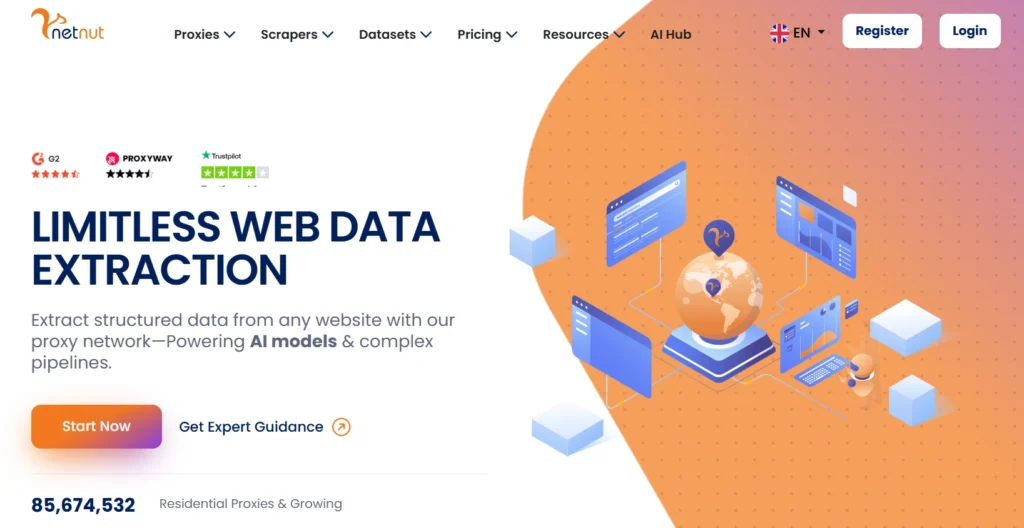
NetNut is best known for direct ISP connectivity and stable residential-style proxy infrastructure. Its one-hop ISP approach can help with stability, speed, and long-lived sessions.
That makes it useful for account-based workflows, price monitoring, and tasks where you do not want the IP changing every few seconds. If you need static residential or ISP-style proxies tied to real networks, NetNut can be cleaner than a purely rotating residential pool.
It may not be the most beginner-friendly provider, and buyers should confirm city-level availability before committing.
Pro-Tip: Choose NetNut when session stability is more important than maximum IP variety.
6. Webshare
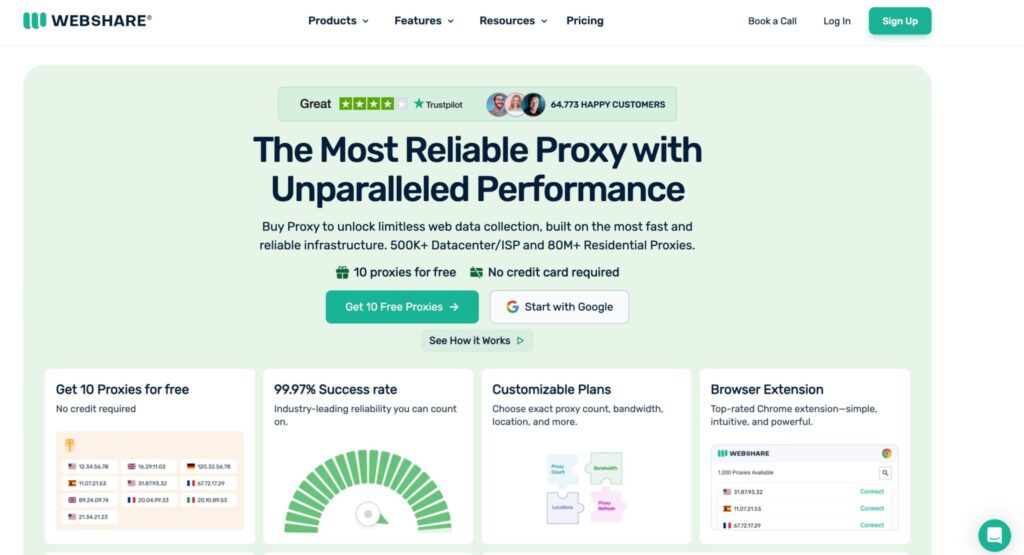
Webshare is a strong budget-friendly option for users who want access to location-based residential proxies without paying enterprise prices. Its rotating residential product advertises country and city-level targeting, with a simple dashboard and support for HTTP and SOCKS5 endpoints.
It is not trying to be Bright Data. That is fine. Webshare works well for small teams, QA testers, affiliate researchers, and developers who need affordable location testing.
The trade-off is depth. You get less advanced tooling than enterprise platforms, and support options are more limited.
Pro-Tip: Webshare is a good first test provider before moving to a premium network. Validate your location needs cheaply, then scale where success rates justify it.
7. IPRoyal
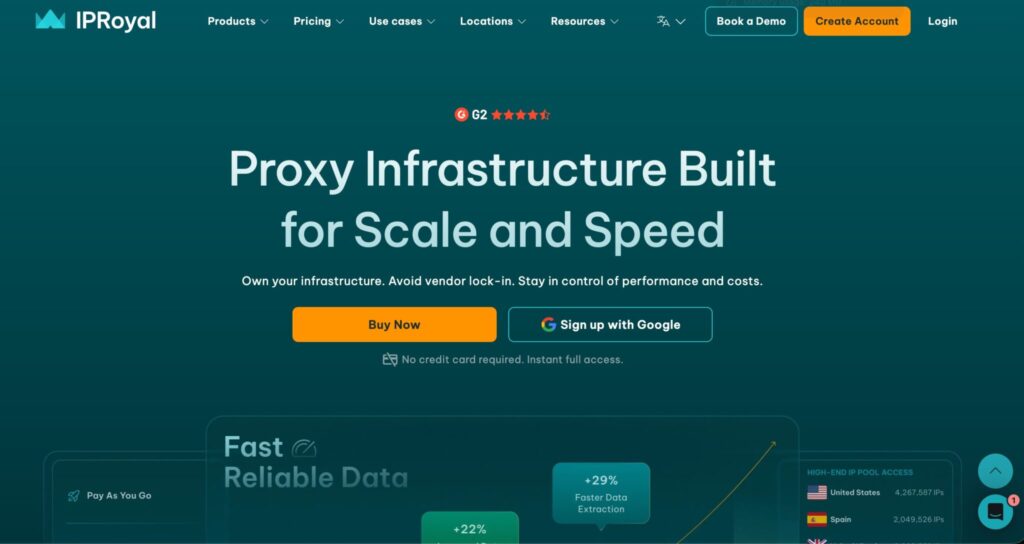
IPRoyal is a practical choice for buyers who want flexible residential proxies, sticky sessions, and geo-targeting without a large upfront commitment. It supports precise geo-targeting, rotating sessions, and sticky sessions, making it suitable for localized scraping, social testing, SERP checks, and smaller automation workloads.
The appeal is cost control. You can start smaller, test performance, and scale only after you know your target locations work.
IPRoyal’s limitation is that it does not have the same enterprise ecosystem as Bright Data or Oxylabs.
Pro-Tip: Use sticky sessions when logging into accounts or walking through multi-step flows. Use rotating sessions for public data scraping.
8. DataImpulse
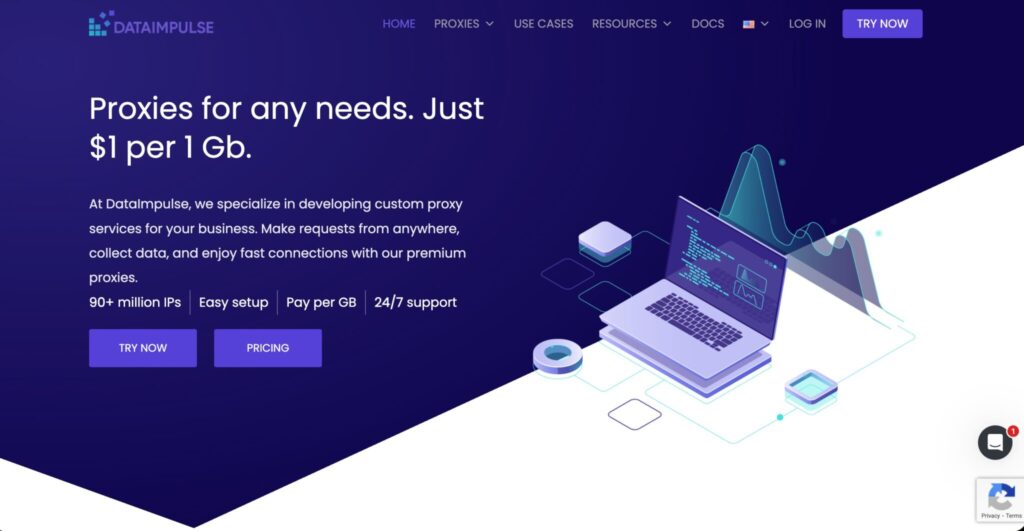
DataImpulse is interesting for buyers who care about price per GB. Its location pages describe country-level targeting as included, while city, state, ZIP, and ASN targeting are available with premium residential options.
That pricing model makes sense for irregular scraping calendars, audits, launches, and monthly reports.
It is not the obvious first choice for mission-critical enterprise monitoring, but it can be excellent value for price comparison, regional content checks, and local SERP sampling.
Pro-Tip: Keep DataImpulse for broad country or selected city scraping, but compare success rates against a premium provider before relying on it for strict compliance reports.
9. Rayobyte
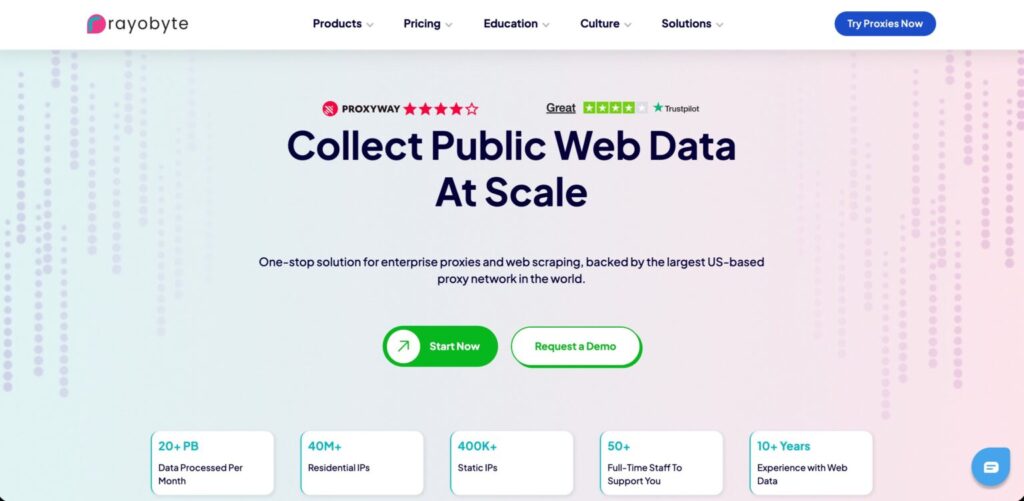
Rayobyte offers residential proxies with geo-targeting by city, region, or country, plus sticky sessions and generous session controls on its residential product. It is not the biggest network here, but it is simple and direct.
That simplicity is the selling point. Some teams just need a reliable way to pull local pages, test regional content, and rotate residential IPs.
Confirm target locations and replacement policies before scaling.
Pro-Tip: Use Rayobyte for focused campaigns, not massive global crawling. Smaller pools can work well when your market list is specific.
How to Choose Location-Based Proxies
Check Real IP Pool Depth, Not Headline Pool Size
A provider may advertise 100 million IPs, but that does not mean it has enough live IPs in Phoenix, Manchester, Pune, or São Paulo when you run requests. Ask for availability in your target countries, cities, ZIP codes, carriers, and ASNs.
For serious work, test success rate by location. Track response codes, CAPTCHA rate, latency, and how often the proxy returns the wrong local version.
Match Proxy Type to the Job
Residential proxies are best for websites that expect consumer traffic. Mobile proxies are better for app testing, social flows, and carrier-specific checks. ISP proxies are good when you need speed and session stability. Datacenter proxies are cheap and fast, but they fail more often on sensitive consumer websites.
Do not overpay for residential traffic if datacenter IPs work. Do not use datacenter IPs where the target clearly expects local residential users.
Understand Rotation Protocols
Rotation controls how often your IP changes. Per-request rotation gives every request a fresh IP and works well for public scraping. Sticky sessions keep the same IP for a fixed period, which helps with carts, logins, forms, and multi-page sessions.
Some providers let you rotate by time, session ID, gateway, or API call. For ecommerce scraping, short sticky sessions often work well. For SERP tracking, per-request rotation can be cleaner.
Test Location Accuracy
Do not trust the dashboard blindly. Send test requests to location-check endpoints, local search pages, ad previews, and your actual target websites. Compare language, currency, inventory, shipping messages, ads, and local rankings.
A proxy can be technically located in a city but still produce results from a broader region. That matters for local SEO and ad verification.
Review Ethics and Compliance
Use proxies for lawful, permission-aware, public-data workflows. Avoid credential abuse, spam, platform manipulation, and bypassing access controls. Also check whether the provider explains IP sourcing clearly.
FAQs About Location-Based Proxies
1. What are the best location-based proxies overall?
Bright Data and Oxylabs are best for enterprise-grade targeting. Decodo and SOAX are best for balanced usability and precision. Webshare, IPRoyal, and DataImpulse are better for budget-conscious users.
2. Are residential proxies better for geo-targeting?
Usually, yes. Residential IPs look like real consumer traffic, so they are more reliable for localized SERPs, ecommerce pricing, ad checks, and region-specific content.
3. What is city-level proxy targeting?
City-level targeting lets you choose IPs associated with a specific city. It is useful for local SEO, ad verification, delivery checks, and marketplace research.
4. What is ASN targeting?
ASN targeting lets you choose IPs from a specific network or carrier. It is helpful when websites, ads, or apps behave differently by ISP or mobile carrier.
5. Should I use rotating or sticky sessions?
Use rotating sessions for broad public scraping. Use sticky sessions for logins, carts, forms, account testing, or any workflow where the same user session must stay consistent.
6. Can proxies guarantee exact ZIP code results?
No provider can guarantee perfect ZIP accuracy every time. ZIP targeting can improve precision, but websites may still use cookies, GPS, account data, browser signals, or shipping addresses.
7. Which proxy type is fastest?
Datacenter proxies are usually fastest, ISP proxies often balance speed with trust, and residential or mobile proxies may be slower because traffic routes through real networks.
8. How do I test a location-based proxy provider?
Pick 5 to 10 target locations, run the same requests across each provider, and compare success rate, latency, CAPTCHA rate, local content accuracy, and cost per successful request.
Final Buying Advice
The best location-based proxy is not the one with the biggest homepage number. It is the one with enough clean IPs in your exact markets, the right rotation controls, and consistent local results on your target websites.
For enterprise precision, choose Bright Data or Oxylabs. For strong day-to-day usability, choose Decodo or SOAX. For affordable testing, start with Webshare, IPRoyal, or DataImpulse. For stable ISP-style sessions, look at NetNut or Rayobyte.
Buy small first. Test real targets. Measure cost per successful request. That is how professionals choose proxies without wasting money.