
Targeting Proxies
Best Region Targeting Proxies.
Region targeting sounds simple until your scraper, ad audit, or QA workflow starts pulling results from the wrong place. A proxy can say “United States” and still miss the state, metro, carrier, or ISP footprint your project needs. That matters. Google results change by city. Retail prices shift by ZIP code.
Ads appear in one region and disappear in another. Fraud teams treat a broadband IP in Dallas very differently from a recycled datacenter IP parked in another state.
The best region targeting proxies are not just big IP pools. They combine clean residential or ISP IPs, accurate geo filters, session control, usable APIs, and pricing that does not punish testing. Below are the providers worth shortlisting if you need country, state, city, ZIP, ASN, or ISP-level control.
Quick Picks
Bright Data is the best overall for deep geo controls. Oxylabs is best for enterprise scraping teams. Decodo is the strongest balance of usability and targeting. SOAX is excellent for clean residential and mobile coverage. NetNut is strong when speed and ISP-backed routing matter. Webshare is good for affordable city targeting.
IPRoyal fits smaller teams that want flexible traffic. Rayobyte is useful for ethical residential sourcing and simple city or region filters. DataImpulse is the budget pick for pay-as-you-go traffic. Proxy-Seller is good when you need residential, ISP, mobile, and datacenter options under one roof.
Massive Comparison Table
| Provider | Best For | IP Pool | Targeting Depth | Rotation Control | Protocols | Pricing Style | Main Weakness |
|---|---|---|---|---|---|---|---|
| Bright Data | Enterprise geo precision | 400M+ monthly IPs | Country, state, city, ZIP, ASN | Rotating, sticky, advanced rules | HTTP, HTTPS, SOCKS5 | Premium, usage-based | Can feel complex |
| Oxylabs | Large-scale public data | 175M+ IPs | Country, state, city, ZIP, coordinates, ASN | Rotating and sticky | HTTP, HTTPS, SOCKS5 | Business tiers | Higher entry cost |
| Decodo | Best mid-market balance | 125M+ IPs | Country, state, city, ZIP, ASN | Per request or sticky sessions | HTTP, HTTPS, SOCKS5 | PAYG and plans | Advanced filters need setup |
| SOAX | Clean residential/mobile targeting | 155M+ residential IPs | Country, state, city, ASN/ISP | Auto rotation and sticky | HTTP, HTTPS, SOCKS5 | Monthly and trial | Not the cheapest starter |
| NetNut | Fast ISP-backed routing | 85M+ IPs | Country and selected regional filters | Rotating and sticky | HTTP, HTTPS, SOCKS5 | Business-focused | Less beginner-friendly |
| Webshare | Affordable city targeting | 80M+ residential IPs | Country and city | Custom rotation windows | HTTP, SOCKS5 | Low-cost plans | Limited managed help |
| IPRoyal | Flexible small-team buying | 32M+ IPs | Country, state, city | Rotation and long sticky sessions | HTTP, HTTPS, SOCKS5 | PAYG, no expiry traffic | Smaller pool |
| Rayobyte | Ethical residential scraping | 40M+ IPs | Country, region, city | Sticky up to 60 minutes | HTTP, HTTPS | Usage-based | Fewer advanced tools |
| DataImpulse | Budget PAYG projects | 90M+ IPs | Country, premium city/ZIP/ASN | Rotating and sticky | HTTP, HTTPS, SOCKS5 | $/GB PAYG | Premium targeting costs more |
| Proxy-Seller | Mixed proxy stack | 20M+ residential IPs | Country, region, city, ISP | Flexible rotation | HTTPS, SOCKS5 | Individual and custom | Less enterprise tooling |
Detailed Reviews
1. Bright Data
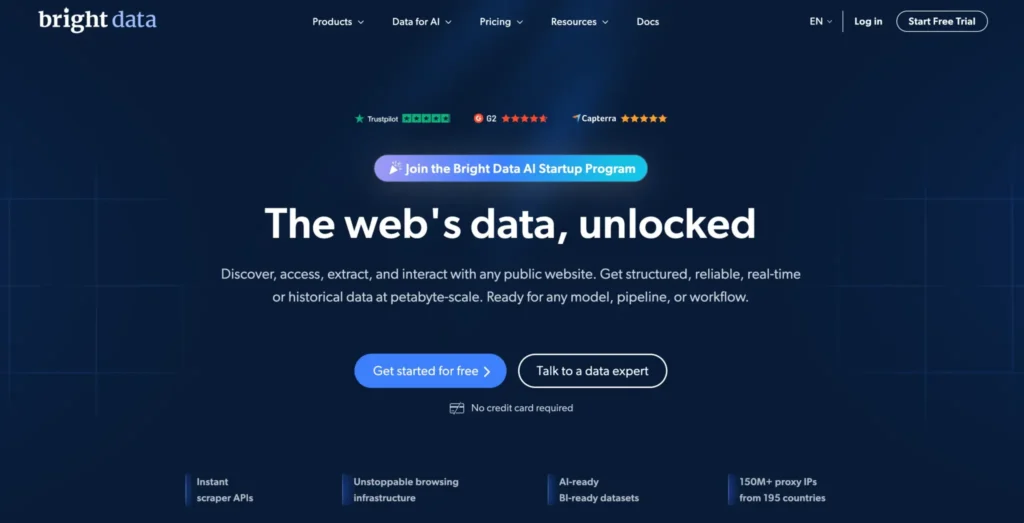
Bright Data is the provider I would test first when region targeting cannot be “close enough.” Its residential network supports country, state, city, ZIP, and ASN filters, which is exactly what ad verification, SERP tracking, and marketplace monitoring teams need.
The platform is powerful, but that power comes with a learning curve. You can control targeting and sessions through username parameters, APIs, and dashboard settings. That is great for engineers, less great for a solo operator who wants five clean city proxies in ten minutes.
Pro-Tip: Use Bright Data when your workflow needs repeatable regional accuracy across hundreds of locations. Do not buy it only because the pool is huge. Buy it because your team will use the control layer.
2. Oxylabs
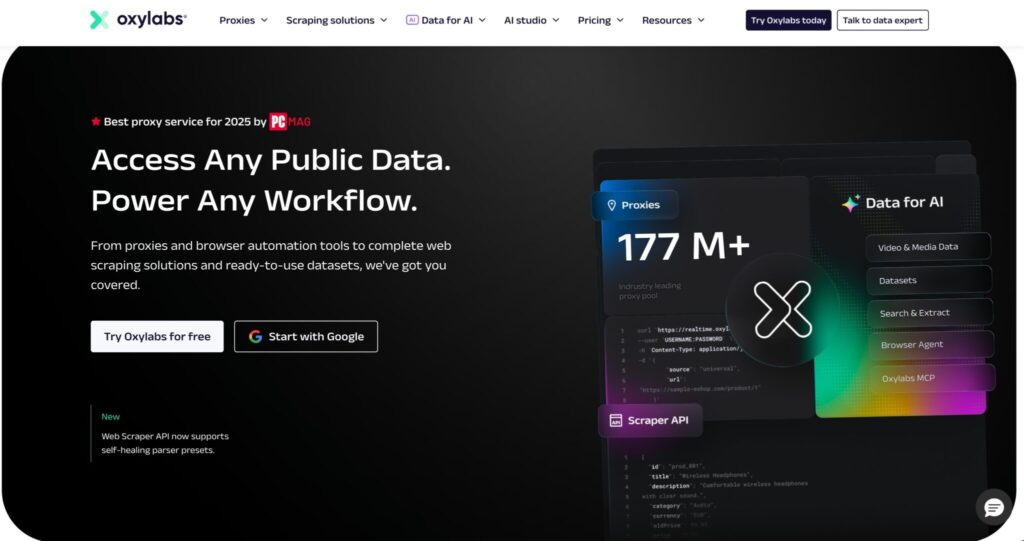
Oxylabs is built for teams that scrape at scale and need stable infrastructure more than bargain pricing. Its residential proxies support country, state, city, ZIP, coordinate, and ASN targeting. Coordinate-level targeting is especially useful for localized testing where city targeting is still too broad.
Oxylabs also gives you scraping APIs and unblocker products, so it works well when proxies are only one part of a larger data pipeline. The trade-off is cost. Small teams may find the entry point heavy unless they already know their traffic needs.
Pro-Tip: If your target website is hard to access, test Oxylabs with its Web Unblocker or scraping APIs before building your own retry logic from scratch.
3. Decodo
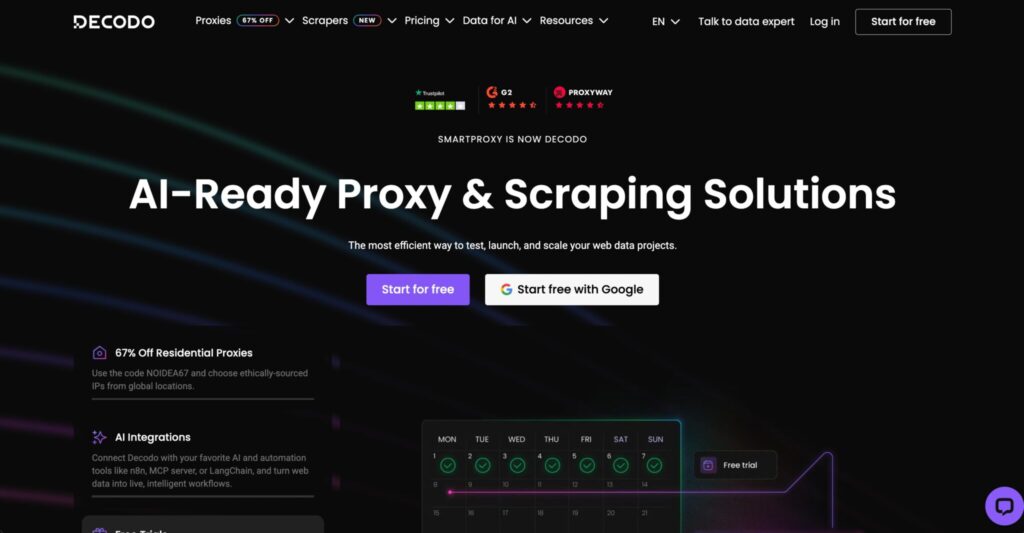
Decodo, formerly Smartproxy, is one of the cleanest choices for buyers who want strong targeting without an enterprise procurement process. You get country, state, city, ZIP, ASN, and continent parameters, plus session controls from a single backconnect endpoint.
The interface is friendly, documentation is solid, and the pool is large enough for most SERP, ecommerce, travel, and ad verification jobs. It also supports sticky sessions when you need a cart, login, or search path to stay on the same IP.
Pro-Tip: Decodo is a smart first test for agencies. Start with city targeting, then move to ZIP or ASN only where the target actually responds differently.
4. SOAX
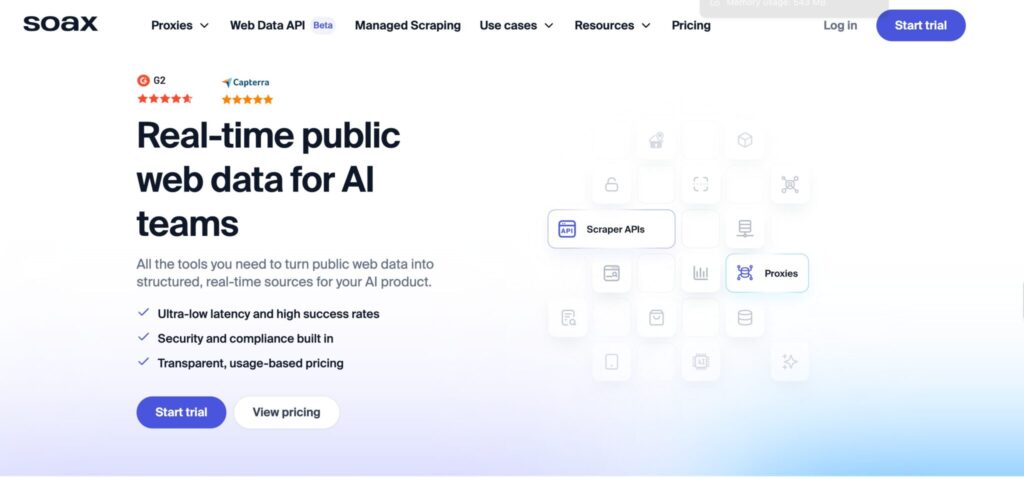
SOAX is strong for teams that care about proxy sourcing, mobile options, and clean regional controls. It offers residential, mobile, ISP, and datacenter products, with automatic rotation, sticky sessions, and city-level targeting.
Where SOAX stands out is its mix of residential and mobile coverage. Mobile proxies are not needed for every project, but they can matter for app testing, mobile ad checks, social platforms, and carrier-sensitive flows.
Pro-Tip: Use residential proxies for most regional scraping. Switch to mobile only when the target behaves differently on carrier IPs or mobile-first environments.
5. NetNut
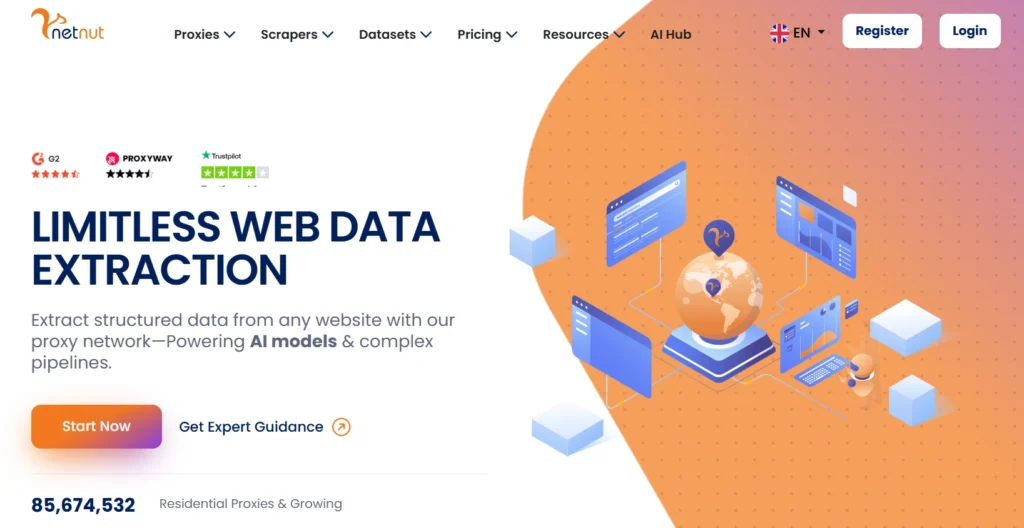
NetNut focuses on speed and stability through ISP-connected infrastructure. Its rotating residential product gives access to a large global pool, and its static residential options are useful when you need the same trusted IP over a longer workflow.
The service is a good fit for price monitoring, SEO tools, brand protection, and larger scraping systems. It is less ideal for beginners who need hand-holding, cheap trials, or a very simple dashboard.
Pro-Tip: Test NetNut for latency-sensitive jobs. A smaller but faster working pool often beats a giant pool that burns time on retries.
6. Webshare
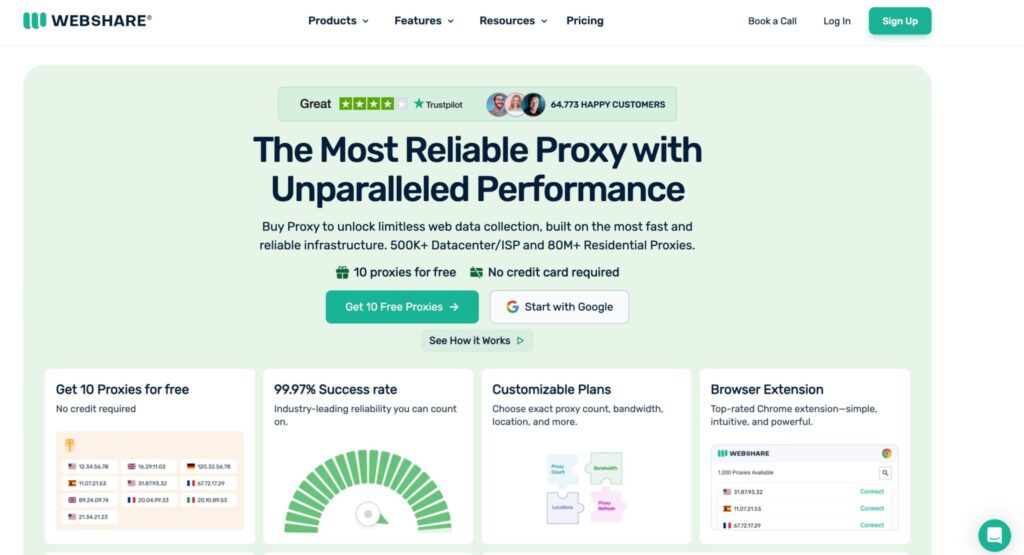
Webshare is the practical budget option. It offers residential proxies with country and city-level targeting, HTTP and SOCKS5 support, and pricing that is easier to justify for smaller projects.
It does not have the same deep tooling as Bright Data or Oxylabs. That is not always a problem. For basic regional SEO checks, ecommerce snapshots, or local page testing, Webshare can be enough.
Pro-Tip: Webshare is best when you already have your scraper and only need reliable proxy endpoints. Do not expect a full managed data collection platform.
7. IPRoyal
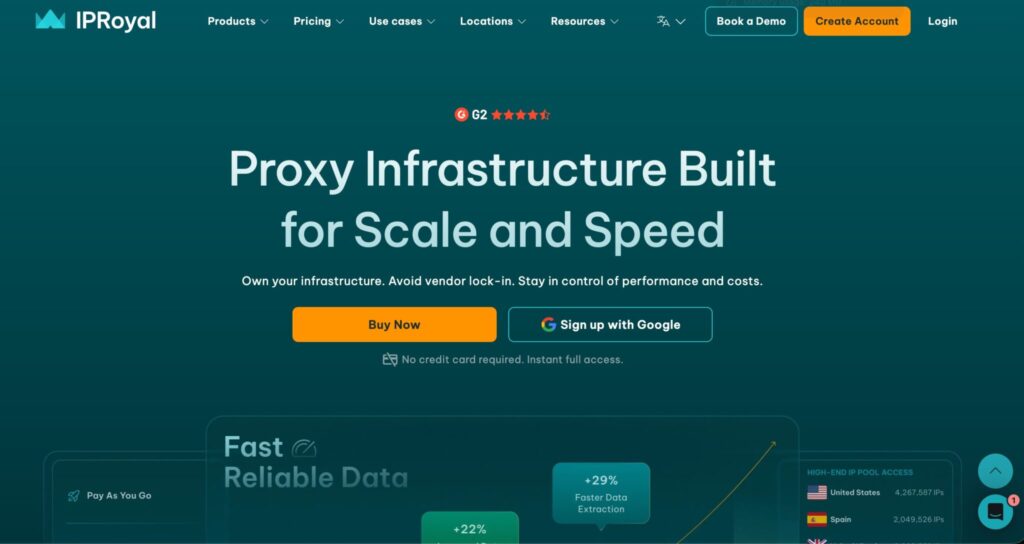
IPRoyal is popular because it keeps buying simple. Residential traffic can be purchased on demand, traffic does not expire, and the service supports rotating or sticky sessions. Its pool is smaller than the biggest enterprise players, but still broad enough for many small and mid-sized teams.
The standout feature is long sticky session support, which helps account workflows and multi-step journeys. The weaker side is advanced enterprise tooling. If you need complex compliance workflows or managed unblockers, look elsewhere.
Pro-Tip: IPRoyal works well for bursty projects. Buy traffic, run the campaign, pause, and come back later without wasting unused bandwidth.
8. Rayobyte
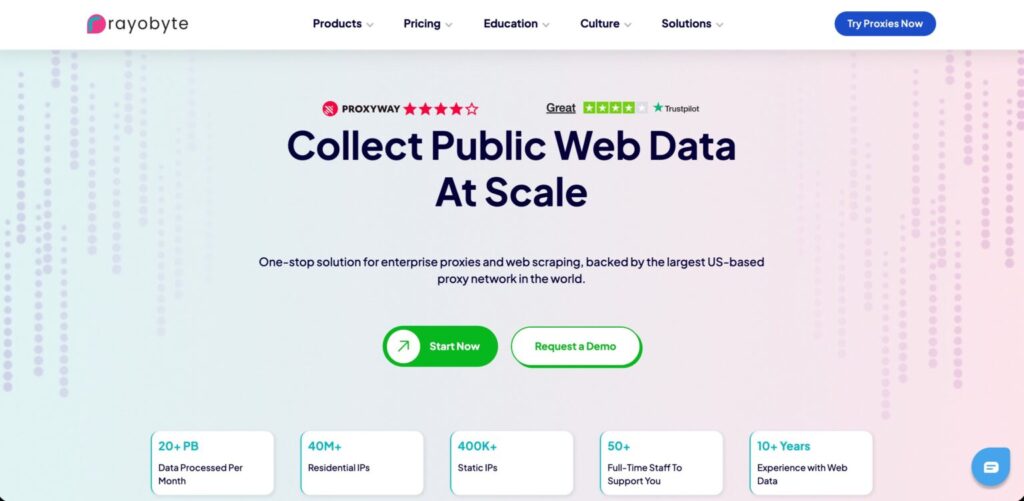
Rayobyte is a solid choice for teams that want residential proxies with clear ethical sourcing language and simple geo-targeting by country, region, or city. Sticky sessions up to 60 minutes are useful for workflows that need continuity without holding an IP all day.
It is not the flashiest platform, but that is part of the appeal. For straightforward web scraping, localized testing, and ad checks, Rayobyte gives you enough control without burying you in settings.
Pro-Tip: Use Rayobyte when your project needs city or region targeting, but not advanced ASN, coordinate, or ZIP logic.
9. DataImpulse
DataImpulse is interesting because of its pay-as-you-go pricing and low entry cost. Country targeting is included, while state, city, ZIP, and ASN targeting are positioned more toward premium residential plans.
That makes it a strong fit for teams testing a new market or running one-off regional jobs. The key is to calculate the real cost of advanced targeting before assuming it is the cheapest option for every use case.
Pro-Tip: DataImpulse is great for validation. Use it to prove which regions matter, then upgrade only the routes that produce business value.
10. Proxy-Seller
Proxy-Seller offers residential proxies with country, region, city, and ISP selection, plus other proxy types like datacenter, ISP, and mobile. That makes it useful for teams that want one vendor for different traffic profiles.
Its biggest strength is flexibility. Its weakness is that it does not feel as mature as Bright Data or Oxylabs for enterprise-scale proxy orchestration, reporting, and managed scraping.
Pro-Tip: Pick Proxy-Seller if your team switches between residential, ISP, and mobile proxies often and wants simpler billing.
How to Choose Region Targeting Proxies
Check the Real Targeting Layer
Country targeting is basic. Region targeting usually means state, province, city, ZIP or postcode, ASN, ISP, or mobile carrier. Ask the provider which layers are included in the base price and which require premium pools.
Match IP Type to the Job
Residential proxies are best for local SERPs, ecommerce, ad checks, travel fares, and websites with strict anti-bot filters. ISP proxies are better for stable sessions and speed. Mobile proxies are useful when the site treats carrier traffic differently. Datacenter proxies are cheapest, but easier to flag.
Test Pool Quality, Not Just Pool Size
A 100M IP pool means little if your target burns half the exits. Run a small test across your top regions. Track success rate, CAPTCHA rate, timeout rate, median response time, and how often the location resolves correctly.
Understand Rotation Protocols
Per-request rotation changes IP every request. It is useful for large-scale crawling. Sticky sessions keep the same IP for a set time, often 1 minute to several hours. Use sticky sessions for logins, carts, forms, pagination, and anything that stores state.
Watch Concurrency Limits
Unlimited concurrency sounds attractive, but your real limit is target tolerance, bandwidth, and IP freshness. Start slow. Increase request volume gradually. A cleaner pattern beats aggressive scraping every time.
Verify Location Accuracy
Use an IP lookup endpoint before sending production traffic. Compare the proxy’s claimed location against multiple IP databases. Some databases disagree, so build a tolerance rule instead of assuming one database is perfect.
Review Compliance
Good providers explain sourcing, acceptable use, KYC, and prohibited activities. Avoid anonymous “cheap unlimited residential” networks with no sourcing details. They can create legal, security, and reputation risk.
FAQs
1. What are region targeting proxies?
Region targeting proxies let you route traffic through IPs tied to specific locations, such as a country, state, city, ZIP code, ASN, ISP, or mobile carrier. They are used for localized testing, scraping, SEO tracking, and ad verification.
2. Are residential proxies better for region targeting?
Usually, yes. Residential IPs look like real household connections, so they tend to work better on websites that personalize content by location or block datacenter traffic.
3. Do I need city or ZIP targeting?
Use city targeting for local SERPs, ads, and ecommerce checks. Use ZIP targeting only when results vary inside the same city, such as delivery pricing, store inventory, local insurance, or hyperlocal ads.
4. What is ASN targeting?
ASN targeting routes traffic through a specific network operator or ISP. It helps when the target behaves differently for Comcast, Verizon, Vodafone, Airtel, Jio, or other networks.
5. What rotation setting should I use?
Use rotating IPs for broad crawling. Use sticky sessions for anything with login, checkout, pagination, forms, or profile consistency. The wrong rotation setting can break sessions and raise bot signals.
6. Are cheap region targeting proxies worth it?
Sometimes. Cheap proxies are fine for light testing and soft targets. For serious scraping, ad verification, or compliance-heavy work, clean sourcing and success rate matter more than the lowest price per GB.
7. Which provider is best overall?
Bright Data is the most complete for deep targeting. Oxylabs is best for enterprise data teams. Decodo is the best balanced choice for most agencies and mid-market buyers. DataImpulse and Webshare are better budget tests.
Final Buying Advice
Do not buy region targeting proxies from the pricing page alone. Build a shortlist of three providers, pick five locations that matter to your project, and run the same test on each one.
Include one easy region, one smaller city, one high-value metro, one region outside your main country, and one location where your target site is known to be strict.
The winner is not always the cheapest or the largest. The winner is the provider that gives you the highest successful requests per dollar after retries, failed sessions, wrong-location exits, and support delays are counted. For most teams, that means starting with Decodo, SOAX, or Webshare for practical tests, then moving to Bright Data or Oxylabs when accuracy, scale, and controls become more important than raw price.