
Best ISP Targeting Proxies.
ISP targeting proxies sit in the sweet spot between datacenter speed and residential trust. That is why serious operators use them for account management, ad verification, SEO tracking, marketplace monitoring, sneaker automation, brand protection, and scraping jobs where a rotating residential pool feels too unstable.
Here is the catch: not every “ISP proxy” is built the same. Some providers sell clean, dedicated static residential IPs from premium ASNs. Others bundle cheap shared IPs that look good in a dashboard but burn quickly on tougher targets. The difference shows up when logins start failing, sessions reset, or your crawler gets rate-limited after the first few thousand requests.
This guide cuts through the noise and focuses on what actually matters: ISP coverage, IP reputation, rotation control, bandwidth rules, targeting depth, session stability, and support quality.
What Are ISP Targeting Proxies?
ISP proxies, often called static residential proxies, are IP addresses registered to internet service providers but hosted on stable server infrastructure. In plain English, they look more like residential traffic than datacenter proxies, while behaving more like datacenter proxies in speed and uptime.
That makes them useful when you need a consistent identity. Think one account, one IP. One region, one ISP. One long session that should not suddenly rotate in the middle of checkout, login, search tracking, or data extraction.
ISP targeting means the provider lets you choose the country, state, city, ASN, or internet provider behind the IP. The deeper the targeting, the easier it is to test local results, verify ads, monitor regional pricing, or keep platform behavior consistent.
Pro-Tip: Do not buy ISP proxies only because they are “residential.” Ask whether the IP is dedicated, shared, static, rotating, or replaced after abuse reports. Those details matter more than the label.
Best ISP Targeting Proxy Providers
1. Bright Data
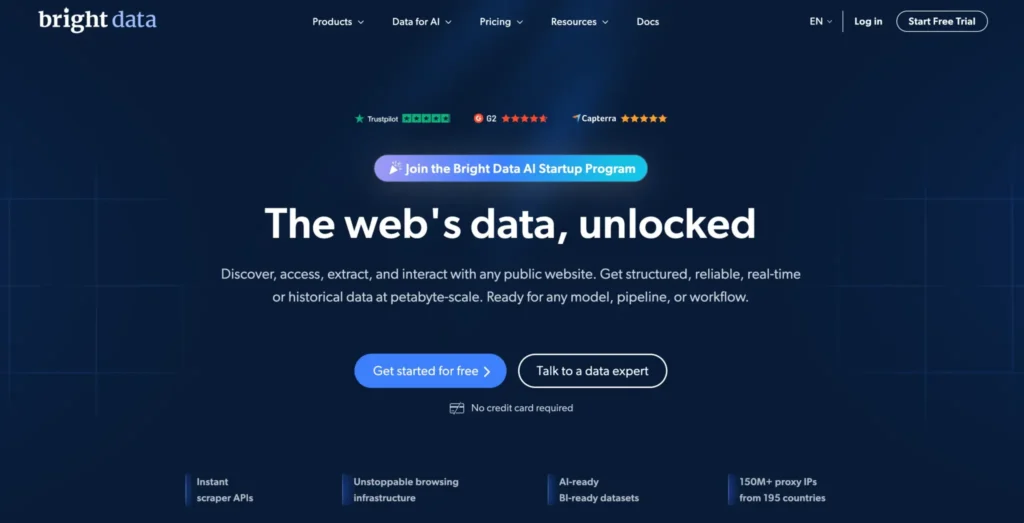
Bright Data is the enterprise pick for teams that need granular targeting, strong compliance controls, and infrastructure that can handle messy data operations. Its ISP proxy product is built for static residential sessions, with a large pool, strong uptime claims, and advanced routing options.
The dashboard is powerful but not the simplest. Beginners may feel boxed in by compliance checks and configuration steps. Larger teams will appreciate that structure because it reduces random mistakes and gives managers better control.
Bright Data is best for ad verification, SEO intelligence, fraud monitoring, large scraping pipelines, and teams that need country, city, ASN, and carrier-level precision.
Pro-Tip: Use Bright Data when failure is expensive. If a blocked IP costs your team hours of engineering time, the higher price can make sense.
2. Oxylabs
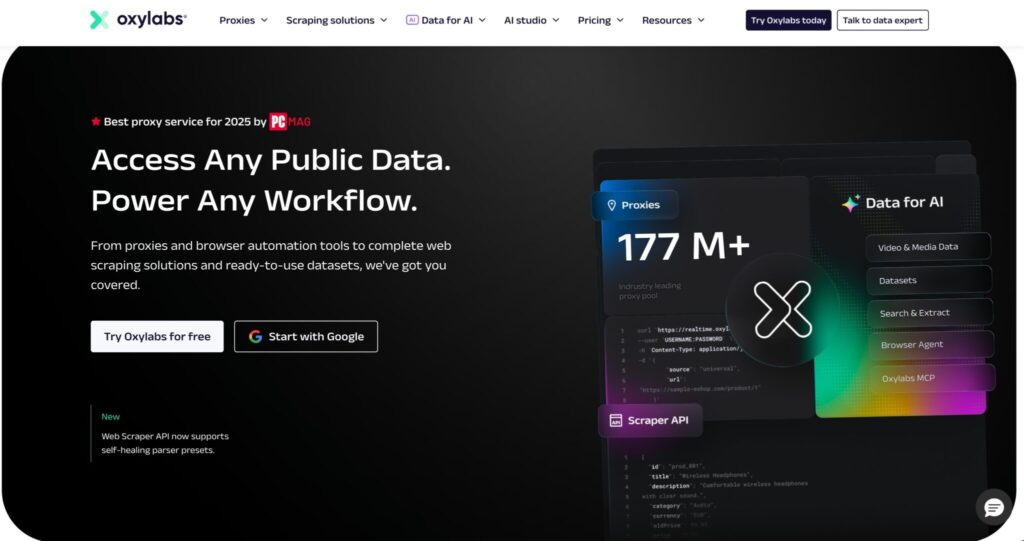
Oxylabs is built for enterprise scraping and high-volume workloads. Its ISP proxies offer static residential credibility with long session duration, premium ASN options, and solid stability for difficult targets.
The platform is cleaner than many enterprise tools, and support is usually a major selling point. Oxylabs also gives you room to combine proxies with scraping APIs when raw proxy management becomes too heavy.
It is not the cheapest choice. Small users may find the plans more than they need. For data teams, price monitoring companies, cybersecurity analysts, and SERP tracking operations, Oxylabs is one of the safest bets.
3. NetNut
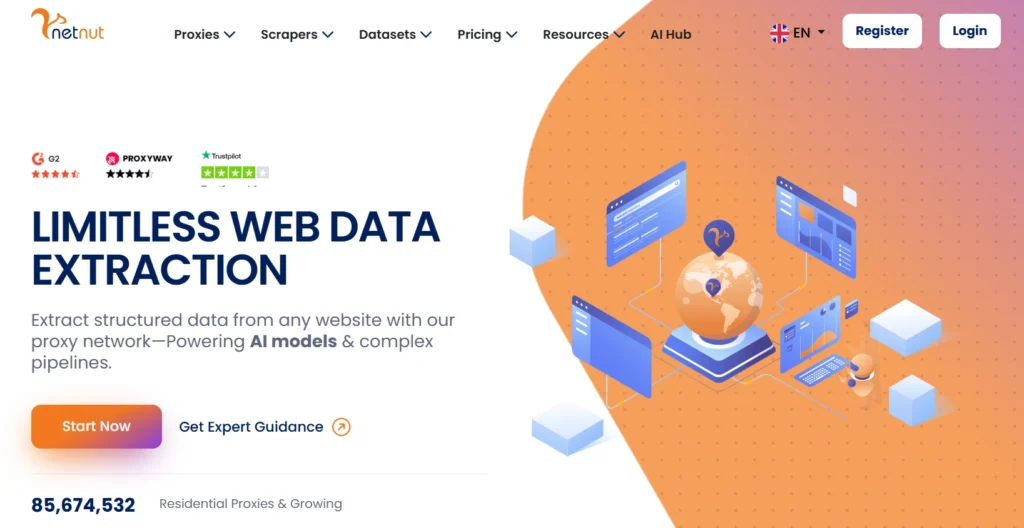
NetNut takes a direct-connect approach, which is attractive for users who care about speed, low latency, and persistent availability. Its static residential proxies are positioned around one-hop ISP connectivity, helping reduce the instability that comes with peer residential networks.
NetNut is strong for data collection, price intelligence, brand monitoring, and workflows where dropped sessions are painful. The product feels business-focused, so casual users may find it less flexible than cheaper self-serve platforms.
The main reason to choose NetNut is reliability. If you want fewer moving pieces and a cleaner path between your system and the target site, it deserves a serious look.
4. Decodo
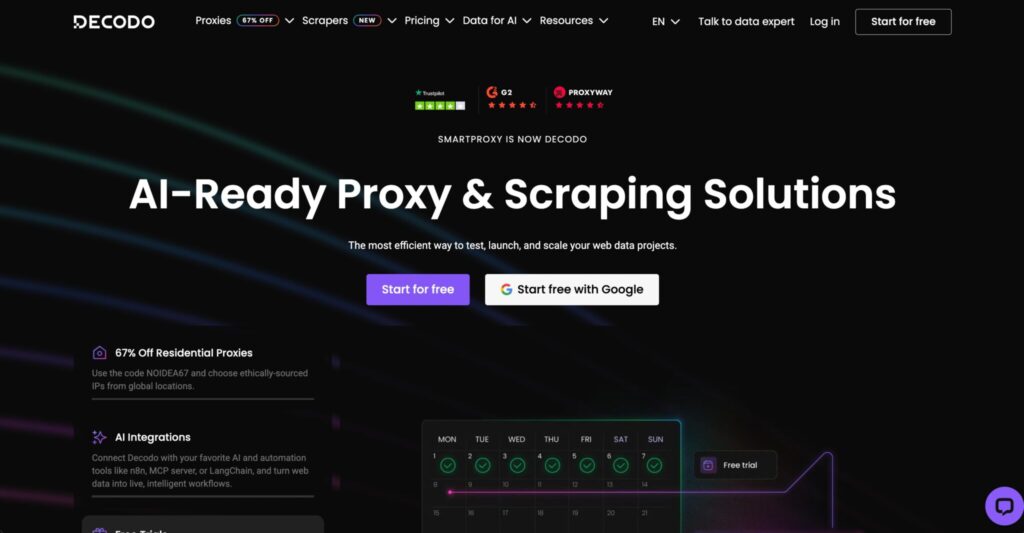
Decodo, formerly Smartproxy, is a practical middle-ground option. It offers ISP proxies for stable sessions, residential credibility, and traffic-heavy workflows without the heavy enterprise feel of Bright Data or Oxylabs.
The interface is easy to work with, documentation is clear, and the provider has broad location coverage. That makes Decodo a strong pick for agencies, SEO teams, ecommerce monitoring, QA testing, and mid-sized scraping projects.
It may not offer the same depth of enterprise customization as Bright Data, but many users do not need that. They need clean setup, reliable sessions, and fair scalability. Decodo fits that profile well.
5. SOAX
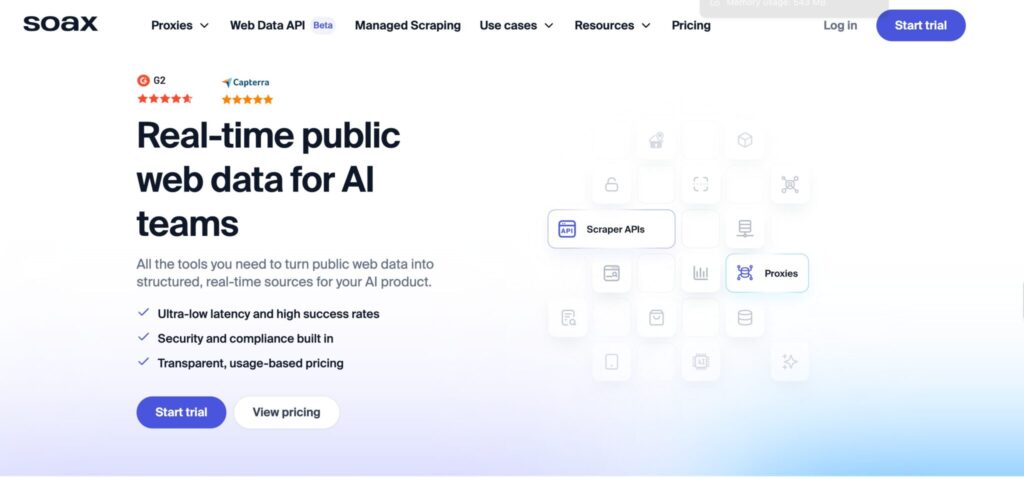
SOAX is best known for precise geo-targeting and flexible proxy controls. It supports country, region, city, and ISP targeting, along with sticky and rotating sessions. That combination makes it useful when your operation needs both regional accuracy and adaptable rotation behavior.
SOAX works well for localized testing, ad verification, SERP checks, social research, and market monitoring. It is especially attractive for users who want detailed targeting without jumping straight into expensive enterprise contracts.
The trade-off is that SOAX can require more hands-on tuning. Start with smaller batches, test response quality by region, and scale only after you see stable success rates.
6. IPRoyal
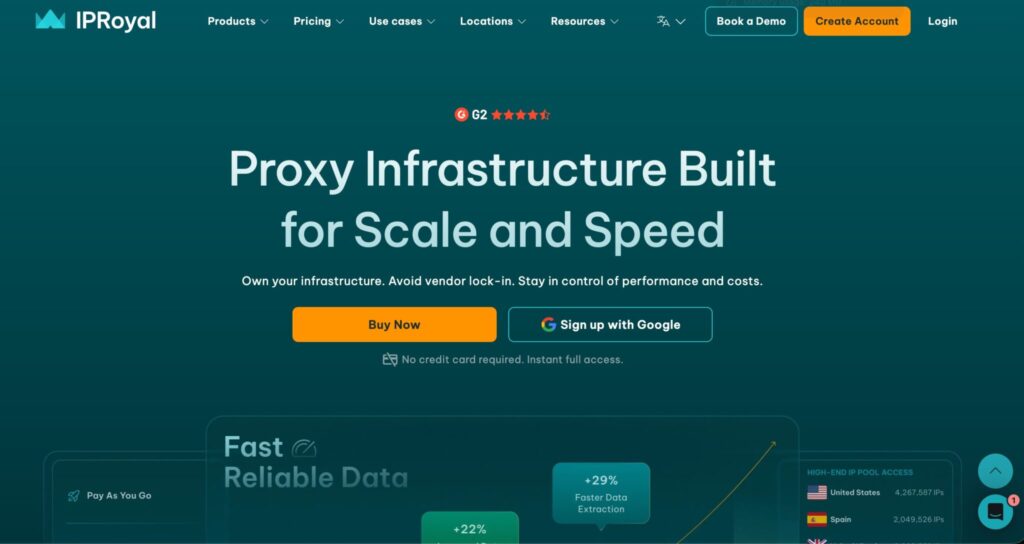
IPRoyal is a strong value pick for buyers who want static residential proxies without enterprise pricing. Its ISP product focuses on dedicated IPs, unlimited bandwidth on many plans, and practical location targeting.
The biggest appeal is simplicity. You can get started quickly, assign IPs to accounts, and keep sessions consistent. That makes it useful for account management, ecommerce automation, ad checks, and smaller scraping jobs.
Do not expect the same tooling depth as Oxylabs or Bright Data. IPRoyal is better for lean teams that want clean, affordable ISP access and do not need layers of advanced data infrastructure.
7. Rayobyte
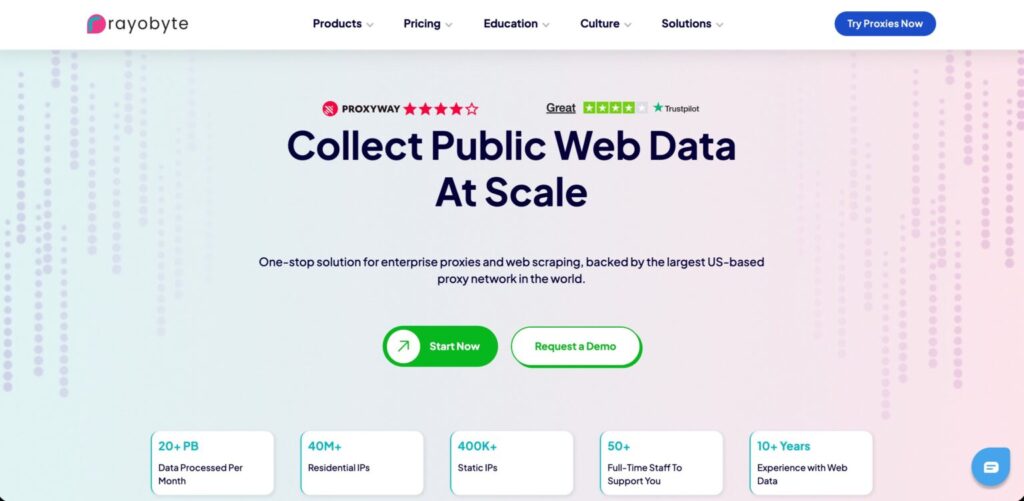
Rayobyte is a good fit for users who want static ISP proxies with clear bandwidth rules, strong uptime positioning, and datacenter-like speed. Its ISP offering emphasizes real ISP-assigned IPs, multiple ASNs, high-speed connections, and unlimited bandwidth options.
This makes Rayobyte useful for sneaker tools, retail monitoring, SEO software, and scraping workflows that need fixed identity plus strong throughput. It also has a reputation for being more transparent than many low-cost proxy sellers.
The key limitation is pool depth compared with the largest providers. For niche locations or very specific ISP targeting, check availability before committing.
8. Webshare
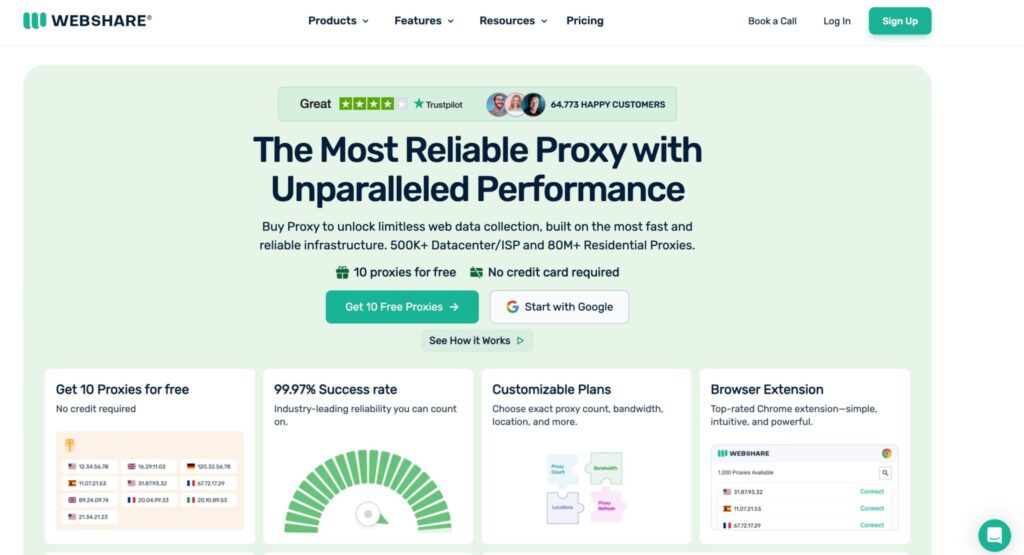
Webshare is the budget-friendly self-serve option. Its static residential proxies use ISP-issued IPs and support HTTP and SOCKS5, making it approachable for developers, freelancers, and small automation teams.
The setup is fast, the pricing is easy to understand, and the dashboard does not feel bloated. Webshare is a sensible choice when you need simple ISP proxies for testing, scraping, account sessions, or regional checks.
The downside is support depth. If your project needs custom routing, SLA-level support, or advanced compliance documentation, you may outgrow it. For cost-controlled workloads, though, Webshare is hard to ignore.
ISP Proxy Comparison Table
| Provider | Best For | Targeting Depth | Rotation Control | Bandwidth Style | Strength | Watch-Out |
|---|---|---|---|---|---|---|
| Bright Data | Enterprise data teams | Country, city, ASN, carrier | Static and advanced routing | Plan-based | Huge infrastructure | Cost and setup complexity |
| Oxylabs | Large scraping operations | Country, city, ASN options | Long sessions | Plan-based | Stability and support | Premium pricing |
| NetNut | Fast data collection | Global ISP coverage | Static sessions | Plan-based | Direct ISP connectivity | Less beginner-friendly |
| Decodo | Agencies and mid-market teams | 195+ locations | Static and session controls | Usage-based | Easy setup | Less enterprise customization |
| SOAX | Geo-specific testing | Country, region, city, ISP | Sticky and rotating | Usage-based | Fine targeting | Needs tuning |
| IPRoyal | Budget ISP access | Country, state, city | Static with rotation options | Often unlimited | Value for money | Smaller ecosystem |
| Rayobyte | Retail and SEO workflows | Location and ASN options | Static and rotating ISP options | IP or traffic plans | Speed and transparency | Check niche location supply |
| Webshare | Low-cost self-serve users | 50+ countries | Static lists | IP and bandwidth tiers | Simple pricing | Limited advanced support |
How to Choose ISP Targeting Proxies
Match the Proxy Type to the Job
Use ISP proxies when identity consistency matters. They are excellent for account logins, checkout flows, localized testing, ad verification, SEO rank tracking, and dashboards that dislike sudden IP changes.
Use rotating residential proxies when you need huge IP diversity for broad scraping. Use datacenter proxies when speed and cost matter more than trust. Use mobile proxies when the target platform strongly favors mobile carrier traffic.
Pro-Tip: If your task needs one IP per account, choose dedicated static ISP proxies. If your task needs millions of page requests, mix ISP proxies with rotating residential pools.
Study the IP Pool, Not Just the Number
A giant pool sounds impressive, but location quality matters more. Ask which countries are actually available, how many ASNs are supported, whether city targeting is real, and whether IPs are exclusive or shared.
For local SEO, city and ISP accuracy matter. For ecommerce, clean reputation matters. For ad verification, ASN diversity matters. For account management, dedicated IP history matters.
Understand Rotation Protocols
ISP proxies are usually static, but some providers offer rotating ISP pools. Static means the same IP remains assigned for long periods. Sticky means the IP stays the same for a timed session. Rotating means the IP changes by request or interval.
HTTP and HTTPS are common for browser and scraping tools. SOCKS5 is better when you need broader protocol support. Some newer platforms also support UDP or QUIC, but check tool compatibility first.
Test Before Scaling
Run a small pilot with your real target sites. Measure login success, CAPTCHA frequency, response time, ban rate, and session survival. Do not judge proxies only with speed tests. A fast proxy that gets flagged is still a bad proxy.
Pro-Tip: Keep a clean IP ledger. Track which IP was used for which account, region, device profile, and target. Most “bad proxy” problems are actually messy operations problems.
Common Mistakes to Avoid
The first mistake is using shared ISP proxies for sensitive accounts. Shared IPs can inherit another user’s bad behavior.
The second mistake is rotating too aggressively. If a platform expects stable sessions, constant IP changes look suspicious.
The third mistake is ignoring ASN mix. If all accounts come from the same provider range, pattern detection becomes easier.
The fourth mistake is buying only on price. Cheap ISP proxies can work, but dirty IP history, weak support, and thin location coverage can make them expensive later.
Recommended Setup by Use Case
For account management, buy dedicated static ISP proxies, assign one IP to one account, and keep the same browser profile, timezone, language, and device fingerprint attached to that identity. This setup reduces sudden trust changes and keeps login behavior predictable.
For ad verification, prioritize providers with city, ASN, and ISP filters. You do not always need thousands of IPs. You need the right IPs in the right markets, refreshed often enough to avoid stale results.
For scraping, use ISP proxies for targets that require session trust, then add rotating residential proxies for volume. This hybrid model is often cheaper than forcing ISP proxies to handle every request.
For ecommerce and retail monitoring, ask for dedicated or low-share IPs. Product pages, carts, and checkout flows can be sensitive to dirty IP history, especially during high-demand drops.
Pro-Tip: Build your proxy stack around failure cost. If a failed request is cheap, use rotating pools. If a failed session breaks an account, use dedicated ISP IPs.
One more practical rule: never judge a provider during the first five minutes. Warm the IPs slowly, copy normal user pacing, and compare results over several hours. Good ISP proxies should stay consistent after repeated logins, repeated searches, and mixed request patterns, not just pass an IP lookup page. That patience reveals weak routing and recycled IP ranges quickly.
FAQs About ISP Targeting Proxies
1. Are ISP proxies the same as static residential proxies?
Most of the time, yes. ISP proxies are static residential IPs assigned through internet service providers and hosted on stable infrastructure.
2. Are ISP proxies better than residential proxies?
They are better for stable sessions, speed, and account consistency. Rotating residential proxies are better for massive IP diversity.
3. Can ISP proxies rotate?
Some can. Standard ISP proxies are static, but providers may offer rotating ISP pools or allow rotation through a private pool.
4. Which protocol should I use?
Use HTTP or HTTPS for most scraping and browser work. Use SOCKS5 when your software needs broader traffic handling.
5. Are ISP proxies good for SEO tracking?
Yes. They work well for rank tracking, local SERP checks, competitor monitoring, and ad previewing when region accuracy is important.
6. How many ISP proxies do I need?
For account work, start with one dedicated IP per account. For scraping, calculate by request volume, rate limits, session length, and target sensitivity.
7. Why do ISP proxies still get blocked?
Because IP trust is only one signal. Bad headers, poor cookies, unrealistic behavior, reused fingerprints, and excessive request rates can still trigger blocks.
8. What is the safest buying approach?
Start small, test real targets, track success rates, then scale with the same provider only after the IPs prove stable.