
Best State-Level Proxies.
State-level proxies sound simple until you actually need them to work.
Anyone can sell “US proxies.” That does not mean you can reliably pull IPs from Texas, Florida, California, New York, or a smaller state with enough volume to run ads checks, localized SERP tracking, app testing, price monitoring, or public data collection. State targeting is where weak proxy networks start showing cracks.
The best state-level proxy providers give you three things: a real residential or mobile IP pool, clear geo filters, and rotation controls that do not destroy your sessions halfway through a workflow. Get those right and your data looks cleaner. Get them wrong and you burn bandwidth, trigger blocks, and wonder why your “California” test keeps landing in Nevada.
This guide compares the top providers for state-level proxies, with a practical focus on IP pools, targeting depth, sticky sessions, rotation behavior, protocols, and real buying decisions.
What Are State-Level Proxies?
State-level proxies let you route traffic through IP addresses associated with a specific state or region. In the US, that means targeting places like California, Texas, Ohio, Georgia, or Arizona instead of just selecting “United States.”
Most reliable state-level proxies are residential or mobile proxies. These IPs come from real consumer networks, so websites often treat them as normal local users. Some ISP proxy networks also support state targeting, but coverage is usually thinner than large rotating residential pools.
Use state-level proxies when country-level targeting is too broad but city or ZIP-level targeting is unnecessarily narrow.
Common use cases include:
- Local SEO rank tracking
- Ad verification by state
- Price comparison testing
- Streaming and content availability checks
- Marketplace monitoring
- App QA and localization testing
- Public web data collection
- Fraud prevention and compliance checks
Pro-Tip: Do not buy state-level proxies only by pool size. Ask how many active IPs are available in your target states during your working hours.
Quick Comparison Table: Best State-Level Proxy Providers
| Provider | Best For | State Targeting | Proxy Types | Rotation Control | Protocols | Starting Price Style |
|---|---|---|---|---|---|---|
| Bright Data | Enterprise geo accuracy | Excellent | Residential, ISP, mobile, datacenter | Per request, sticky sessions | HTTP, HTTPS, SOCKS5, advanced options | Premium bandwidth plans |
| Oxylabs | Large-scale scraping and QA | Excellent | Residential, ISP, mobile, datacenter | Rotating and sticky | HTTP, HTTPS, SOCKS5 | Tiered GB plans |
| Decodo | Best balance for teams | Strong | Residential, ISP, mobile, datacenter | Rotating, sticky sessions | HTTP, HTTPS, SOCKS5 | PAYG and monthly |
| SOAX | Clean geo filtering | Strong | Residential, mobile, ISP, datacenter | Auto-rotation, sticky sessions | HTTP, HTTPS, SOCKS5 | Monthly traffic plans |
| IPRoyal | Affordable state testing | Good | Residential, ISP, mobile, datacenter | Rotating and sticky | HTTP, HTTPS, SOCKS5 | PAYG friendly |
| ProxyEmpire | Flexible location filters | Good | Residential, mobile, ISP, datacenter | Rotating and sticky | HTTP, HTTPS, SOCKS5 | Trial and GB plans |
| DataImpulse | Low-cost traffic | Good | Residential, mobile, datacenter | Rotating and sticky | HTTP, HTTPS, SOCKS5 | Budget PAYG |
| Rayobyte | US-focused workflows | Good | Residential, ISP, datacenter | Sticky up to set durations | HTTP, HTTPS, SOCKS5 | PAYG and plans |
| NetNut | Stable business use | Moderate to strong | Residential, static residential, mobile | Rotating and static options | HTTP, HTTPS, SOCKS5 | Business plans |
1. Bright Data
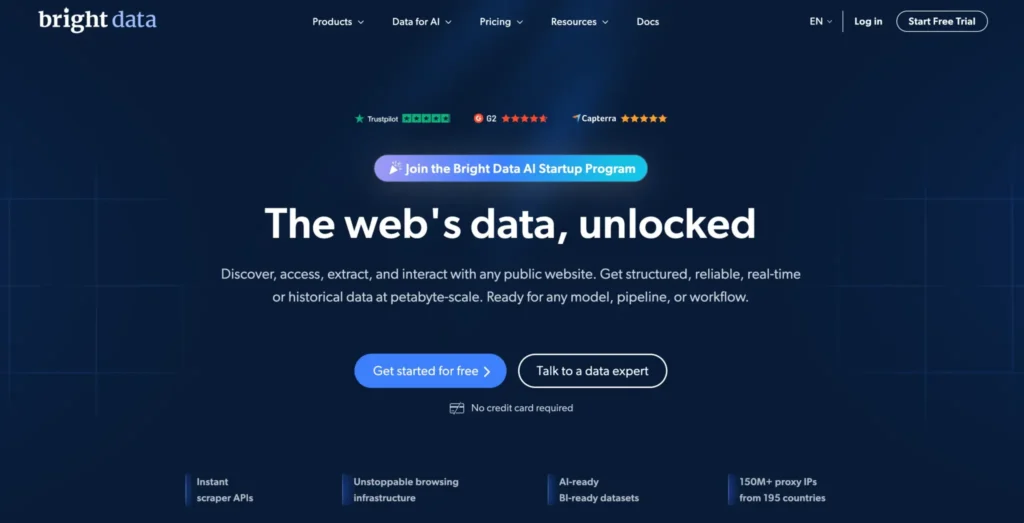
Bright Data is the safest pick when state-level accuracy matters more than saving a few dollars. Its residential network is huge, and the targeting stack is one of the most mature in the industry. You can target by country, state, city, ZIP code, ASN, and other filters depending on the product.
The main advantage is control. You can build clean proxy zones, apply geo rules, rotate IPs, and hold sessions when a workflow needs continuity. That matters for multi-step tasks like localized checkout testing, account dashboards, or ad previews.
Bright Data is not the cheapest option. It also has a stricter onboarding and compliance process than many budget providers. For serious companies, that is a plus. For a solo user who only needs 5GB of traffic, it may feel heavy.
Best for: enterprise state targeting, ad verification, SEO data, public web data collection, brand monitoring.
Pro-Tip: Use Bright Data when failure is expensive. If your client needs state-level proof for paid media or compliance, the extra cost is easier to justify.
2. Oxylabs
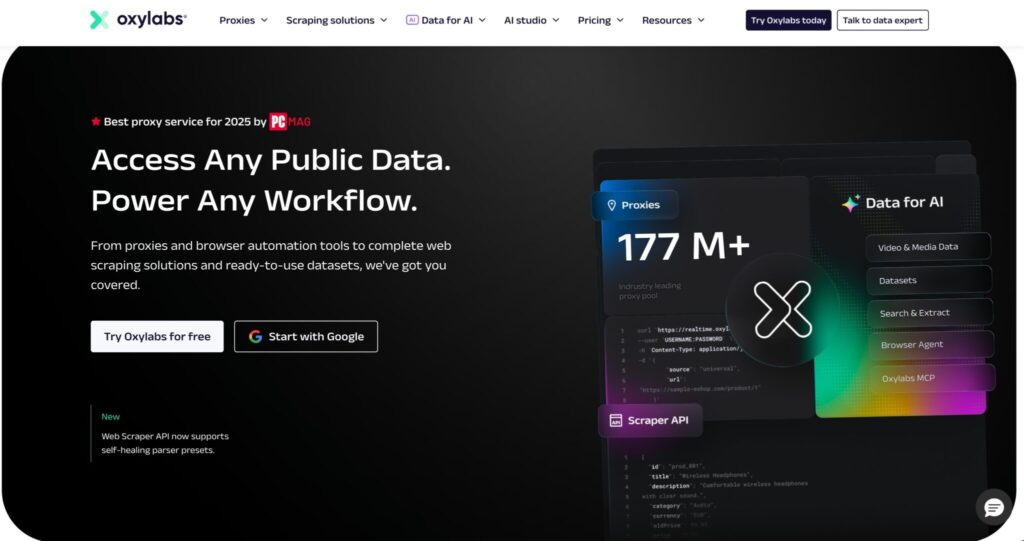
Oxylabs is built for teams that need scale, documentation, and support. Its residential proxies offer deep geo-targeting, including state-level options, with rotating and sticky sessions. The provider is especially strong for public data collection, pricing intelligence, search monitoring, and large QA workflows.
Where Oxylabs shines is reliability under load. If you are sending thousands or millions of requests, small differences in success rate, retry behavior, and session management start to matter. Oxylabs also supports SOCKS5, which helps when your tooling requires more than standard HTTP connections.
The trade-off is price. Oxylabs is not a bargain-bin proxy provider. It is better for companies that care about uptime, support, and clean infrastructure.
Best for: enterprise scraping, large datasets, state-level market intelligence, technical teams.
Pro-Tip: For state-level scraping, do not rotate too aggressively. Start with sticky sessions for pages that require cookies, then rotate per request only for simple stateless pages.
3. Decodo
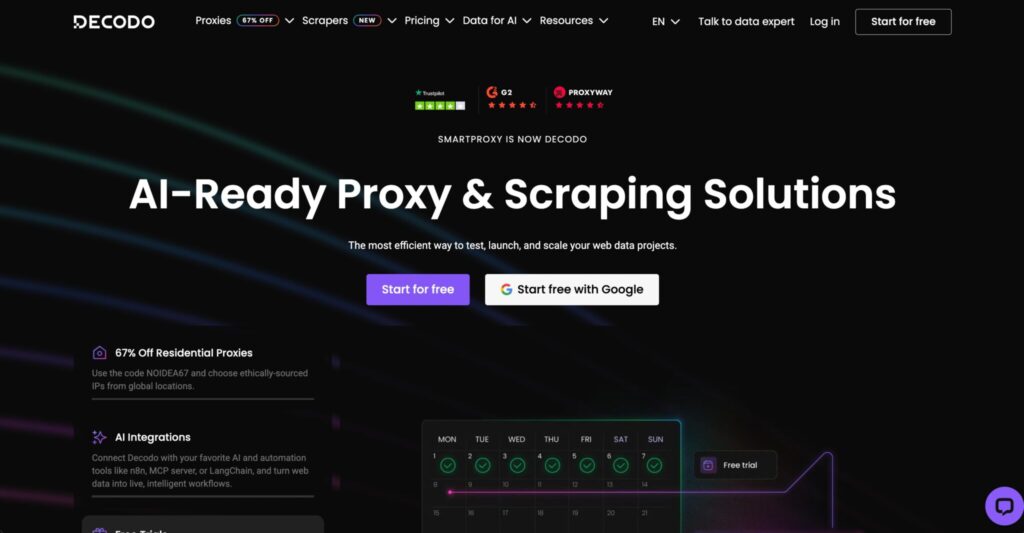
Decodo, formerly Smartproxy, is one of the best middle-ground choices. It has a large residential pool, state and city targeting, sticky sessions, SOCKS5 support, and a dashboard that is easier for non-enterprise users to manage.
This is a good pick if Bright Data feels too complex and Oxylabs feels too expensive. Decodo works well for SEO agencies, affiliate teams, eCommerce monitoring, QA testers, and small data teams that need state-level targeting without a long procurement process.
Session control is practical. You can rotate IPs when speed and volume matter, or keep sticky sessions when the target website tracks continuity. That flexibility is exactly what state-level proxy users need.
Best for: agencies, affiliate SEO, localized testing, mid-volume scraping.
Pro-Tip: Use Decodo’s state targeting for rank tracking and ad checks, but test each state separately. Some states naturally have deeper pools than others.
4. SOAX
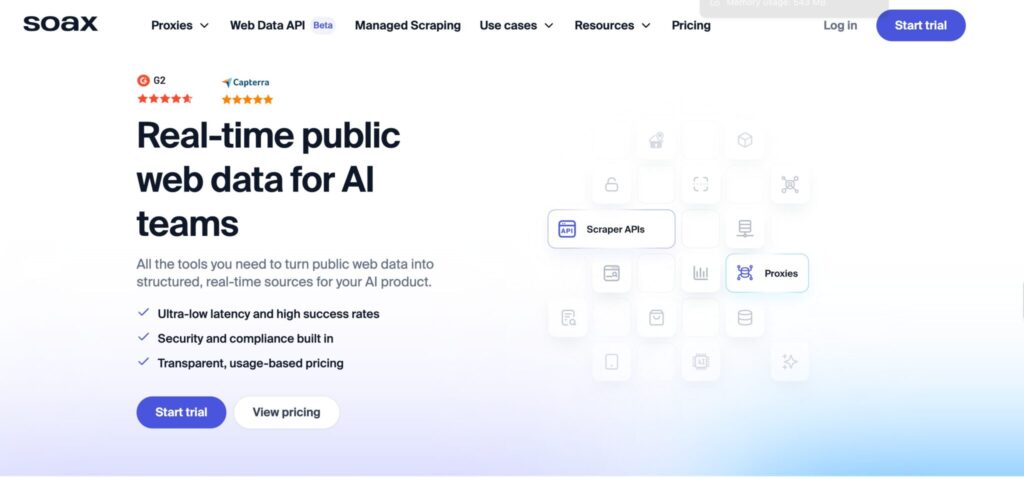
SOAX has built a strong reputation around clean geo-targeting. It supports country, region, city, ISP, and carrier-style filtering depending on proxy type. For users who care about location precision, SOAX is a serious candidate.
The interface is also friendly. You can set filters without feeling like you need a network engineering background. Rotation controls include automatic IP rotation and sticky sessions, which makes SOAX useful for both scraping and account-based workflows.
The main thing to watch is pricing structure. SOAX plans may be less attractive if you only need tiny tests in one or two states. For consistent workloads, it becomes more practical.
Best for: geo-sensitive scraping, ad verification, mobile testing, localized research.
Pro-Tip: SOAX is especially useful when you need both state-level targeting and ISP or carrier filters. Just remember that every extra filter can shrink the available pool.
5. IPRoyal
IPRoyal is a good choice when you want affordable residential proxies with practical geo-targeting. It supports rotating and sticky sessions, and its pay-as-you-go model is friendly for smaller buyers.
It is not the biggest network on this list, but it gives enough control for many state-level use cases. If you are testing localized SERPs, checking regional content, or running a small monitoring setup, IPRoyal can be a sensible starting point.
The main limitation is scale. For high-volume state targeting in less populated regions, you should test pool availability before committing. Smaller providers can work well, but they need validation.
Best for: budget testing, small SEO projects, lightweight scraping, entry-level state targeting.
Pro-Tip: Buy a small amount of traffic first and test your target states at different times of day. Residential availability changes because real users come and go.
6. ProxyEmpire
ProxyEmpire supports state or region targeting on rotating residential and mobile proxies, plus city and ISP targeting. That makes it useful for buyers who need flexible filters without jumping straight into an enterprise contract.
It also offers sticky and rotating sessions, which is important for state-level workflows. Rotating sessions are useful for large-scale data collection. Sticky sessions are better for login-style tasks, pagination, cart flows, or anything with a temporary identity.
ProxyEmpire’s pricing often includes trials and discounted plans, so it can be attractive for testing. Still, users should confirm exact state coverage before relying on it for production work.
Best for: flexible geo testing, mobile state targeting, smaller data teams.
Pro-Tip: If you choose ProxyEmpire, separate your residential and mobile tests. Mobile IPs can behave very differently from home broadband IPs.
7. DataImpulse
DataImpulse is one of the more interesting budget providers. It offers residential proxies with state, city, ZIP, and ASN targeting, plus rotating and sticky sessions. Its pricing is usually more accessible than premium enterprise platforms.
This makes it a good option for testing, smaller projects, or teams that need a lot of traffic without premium pricing. The catch is that lower pricing should always be tested against your target sites. Cheap traffic is only cheap if it succeeds.
DataImpulse is best used with a clear test plan. Pick your target states, run a sample workload, measure success rate, and compare cost per successful request.
Best for: budget state-level scraping, experiments, bulk traffic testing.
Pro-Tip: Do not judge proxy cost by price per GB only. Track cost per successful page, not cost per raw traffic.
8. Rayobyte
Rayobyte is worth considering for US-heavy workflows. Its residential proxy setup supports country, region or state, and city targeting, with sticky session options. It also has ISP and datacenter products for users who need speed and stability.
The provider is practical rather than flashy. It fits teams that want straightforward controls and decent US coverage. For state-level proxies, Rayobyte can work well for localized research, QA, and monitoring.
The best approach is to test the exact state list you care about. California, Texas, Florida, and New York are usually easier. Smaller states can be harder for any provider.
Best for: US state workflows, QA testing, straightforward proxy management.
Pro-Tip: Use Rayobyte’s sticky session controls for any workflow where cookies matter. Random rotation can break sessions that look normal from a user’s browser.
9. NetNut
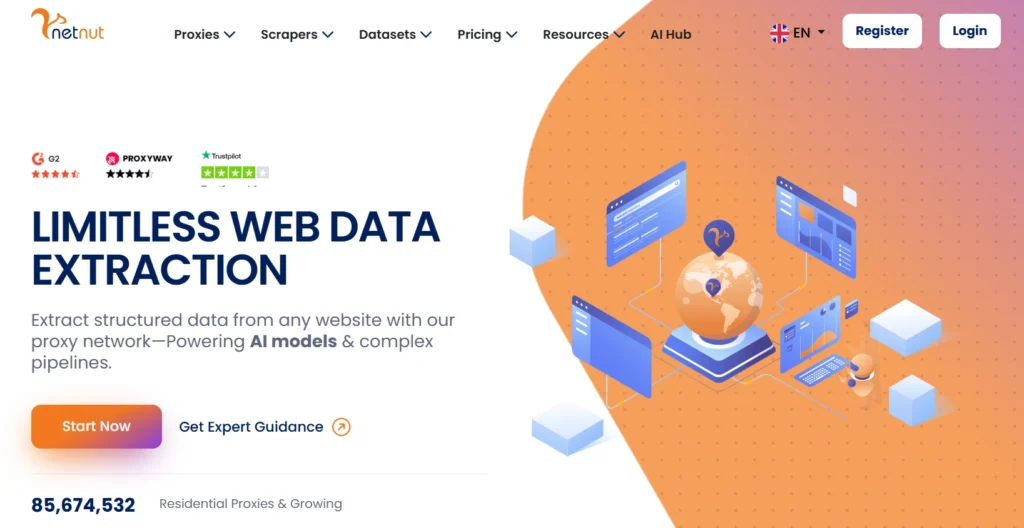
NetNut is a business-focused proxy provider with residential, rotating residential, static residential, and mobile products. Its strength is stability. The static residential and ISP-style approach can be useful when you need cleaner, longer-lasting sessions.
For state-level work, NetNut is better suited to business use than casual testing. It can be a strong fit for teams that need predictable infrastructure, account management, and a more stable connection model.
The limitation is flexibility compared with providers that heavily market city, ZIP, and state filters. Always confirm whether the exact state targeting you need is available on the proxy type you plan to buy.
Best for: business workflows, stable sessions, compliance-heavy data operations.
Pro-Tip: Choose NetNut when session stability matters more than constantly rotating through huge pools.
How to Choose the Best State-Level Proxies
Check Real State Coverage, Not Just Global Pool Size
A provider may advertise 100M+ IPs globally, but that does not tell you how many active IPs exist in Oregon, Nevada, Michigan, or North Carolina.
Ask these questions:
- How many active IPs are available in my target state?
- Is state targeting free or paid?
- Does state targeting work on residential, mobile, ISP, or all proxy types?
- Can I combine state with city, ZIP, ASN, or ISP filters?
- Does narrower targeting reduce success rate?
Pro-Tip: Start broad at state level. Only move to city or ZIP targeting if the project demands it.
Understand Rotation Protocols
Rotation decides when your IP changes.
Per-request rotation changes the IP on every request. It is useful for simple scraping, search pages, product listings, and large stateless jobs.
Sticky sessions keep the same IP for a set time. They are better for logins, carts, account dashboards, form flows, and multi-page journeys.
Static proxies keep the same IP for long periods. They are useful for stability, but state-level selection may be limited.
A strong provider should support both rotating and sticky modes. Bonus points if session duration can be configured.
Match Proxy Type to the Job
Residential proxies are the default for state-level work because they balance trust and scale.
Mobile proxies are stronger for mobile-first platforms, app testing, and carrier-level checks, but they cost more.
ISP proxies are faster and more stable, but state-level availability may be thinner.
Datacenter proxies are cheap and fast, but they are often easier to detect and weaker for location-sensitive testing.
Test Success Rate by State
Do not test only one state and assume the provider is good everywhere. Run a pilot across your real target states.
Track:
- Success rate
- CAPTCHA rate
- Average response time
- Wrong-location rate
- Cost per successful request
- Session drop rate
- Ban or block frequency
The winner is not always the cheapest provider. The winner is the provider with the lowest usable cost.
FAQs
1. What are the best state-level proxies?
Bright Data, Oxylabs, Decodo, SOAX, IPRoyal, ProxyEmpire, DataImpulse, Rayobyte, and NetNut are strong options. The best choice depends on budget, state coverage, rotation control, and workload size.
2. Are state-level proxies legal?
Proxies are legal in many places, but how you use them matters. Use them for lawful tasks like QA, ad verification, SEO monitoring, and public data collection. Respect website rules, privacy laws, and platform terms.
3. Are residential proxies better for state targeting?
Yes, in most cases. Residential networks usually offer better state-level coverage because they pull from real consumer IPs across many locations.
4. Can I target a specific US state with proxies?
Yes, many premium providers support US state targeting. Some also support city, ZIP code, ASN, or ISP targeting.
5. Should I use rotating or sticky state-level proxies?
Use rotating proxies for large stateless jobs. Use sticky sessions when you need the same IP for a short workflow, such as login testing or multi-page browsing.
6. Why is my proxy showing the wrong state?
Geo databases are not perfect. IP location can differ across MaxMind, IP2Location, Google, ad platforms, and target websites. Always test location accuracy against the system that matters to your project.
7. Do state-level proxies cost more?
Sometimes. Some providers include state targeting for free, while others charge extra for advanced geo filters. Narrower targeting can also increase effective cost because the available pool gets smaller.
8. What is the safest first choice?
For enterprise work, start with Bright Data or Oxylabs. For agencies and mid-sized teams, Decodo and SOAX are strong. For budget testing, try IPRoyal, DataImpulse, or ProxyEmpire.
Final Verdict
The best state-level proxy is not the one with the biggest homepage number. It is the one that gives you accurate state targeting, enough active IPs in your chosen locations, clean rotation controls, and a stable cost per successful request.
Choose Bright Data or Oxylabs for enterprise reliability. Choose Decodo or SOAX for a strong balance of control and usability. Choose IPRoyal, ProxyEmpire, or DataImpulse when budget matters. Choose Rayobyte for practical US-focused workflows. Choose NetNut when stable business sessions are more important than constant rotation.
Buy small first. Test your exact states. Measure real success. Then scale.