
Best Regional Scraping Proxies.
Regional scraping sounds simple until the data starts lying to you.
A product page shown in Texas may not match the one shown in California. A local SERP in Manchester may look different from London. A marketplace can show different pricing, inventory, tax estimates, delivery dates, ads, and rankings based on city, state, ZIP code, ASN, or even mobile carrier.
That is why regional scraping proxies matter. They are not just “proxies with locations.” The good ones let you control where your requests appear to come from, how often IPs rotate, how long sessions stay alive, and whether your scraper behaves like normal local traffic.
Below is a practical buyer’s guide to the best regional scraping proxies for SEO monitoring, price intelligence, ad verification, travel fare tracking, local market research, marketplace scraping, and multi-region testing.
What Are Regional Scraping Proxies?
Regional scraping proxies route your scraping requests through IP addresses tied to specific geographic locations. That location can be broad, like country-level targeting, or highly specific, like city, state, ZIP code, ISP, ASN, or mobile carrier.
For basic scraping, a country-level proxy may be enough. For serious regional data, it usually is not.
If you are checking hotel prices in Miami, store availability in Leeds, search results in Toronto, or competitor pricing in Mumbai, you need tighter geo controls. Otherwise, your scraper may collect generic national results instead of the local data your team actually needs.
The best regional proxy setup normally combines three things:
- A large residential or mobile IP pool
- Accurate geo-targeting
- Flexible rotation and sticky session controls
Best Regional Scraping Proxies: Quick Comparison Table
| Provider | Best For | IP Pool | Geo Targeting | Rotation Control | Protocols | Key Strength | Watch Out For |
|---|---|---|---|---|---|---|---|
| Bright Data | Enterprise scraping and strict geo control | 400M+ residential IPs | Country, state, city, ZIP, ASN | Rotating and sticky | HTTP(S), SOCKS5, QUIC | Deepest tooling and huge pool | Premium pricing |
| Oxylabs | Large-scale web intelligence teams | 175M+ residential IPs | Country, city, state, ZIP, coordinates | Rotating and sticky | HTTP(S), SOCKS5 | Strong reliability and scraper APIs | Better for serious budgets |
| Decodo | Balanced price, scale, usability | 125M+ monthly IPs | Country, state, city, ZIP, ASN | Rotating and sticky | HTTP(S), SOCKS5 | Clean dashboard, strong all-rounder | Some advanced needs require higher plans |
| SOAX | Precision targeting and flexible sessions | 155M+ residential IPs | Country, city, region, ISP/ASN | Custom sticky and rotating | HTTP(S), SOCKS5, UDP/QUIC | Great targeting depth | Can get costly at scale |
| NetNut | Stable ISP-style regional scraping | 85M+ residential IPs | City/state targeting | Sticky and rotating | HTTP(S), SOCKS5 | One-hop ISP connectivity | Interface may feel more B2B |
| Webshare | Affordable regional scraping | 80M+ residential IPs | Country and city | Rotating and sticky | HTTP, SOCKS5 | Budget-friendly entry point | Less advanced scraping stack |
| IPRoyal | Small teams and flexible budgets | 32M+ residential IPs | Country, state, city | Rotating and sticky | HTTP(S), SOCKS5 | Simple pricing and easy setup | Smaller pool than top-tier rivals |
| ProxyEmpire | Region and ISP-targeted scraping | 195+ locations | Country, state, city, ISP | Rotating and sticky | HTTP, HTTPS, HTTP/2, SOCKS5 | Good ISP-level options | Validate performance by region |
| DataImpulse | Low-cost pay-as-you-go scraping | 90M+ IPs | Country, region, city, ASN, ZIP | Rotating and sticky | HTTP(S), SOCKS5 | Cheap traffic, no heavy commitment | Advanced targeting may cost extra |
| Rayobyte | US-heavy regional workflows | 40M+ IPs | Country, city, state | Sticky sessions | HTTP(S) | Strong support and clean setup | Smaller global footprint |
Detailed Reviews of the Best Regional Scraping Proxy Providers
1. Bright Data
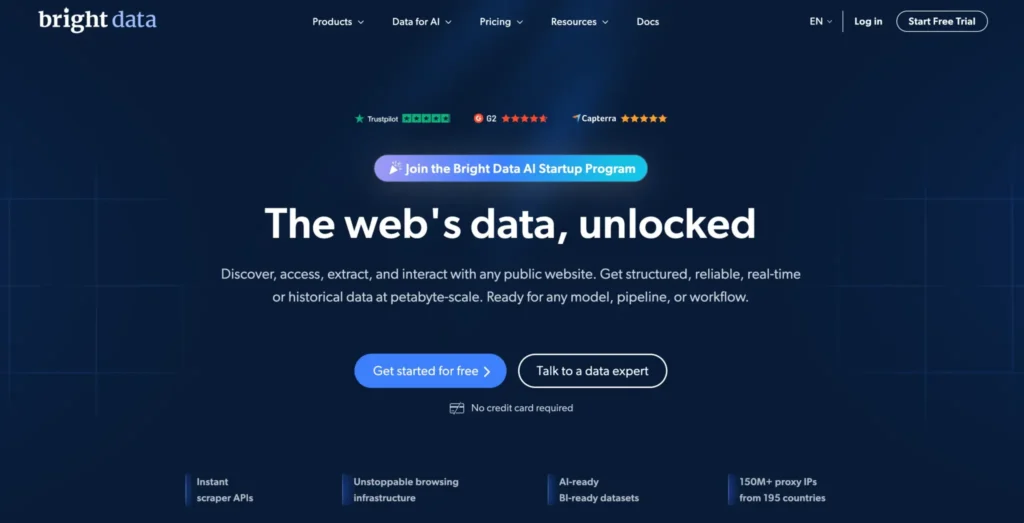
Bright Data is the provider I would shortlist first for complex regional scraping. It is built for teams that need more than “pick a country and rotate.” You can target by country, state, city, ZIP code, and ASN, which makes it useful for local SERP tracking, ad verification, regional retail pricing, and marketplace monitoring.
The big advantage is control. You can run rotating sessions when you need fresh IPs for high-volume crawling, then switch to sticky sessions when the workflow needs continuity, such as cart checks, paginated results, or multi-step forms.
Bright Data also has a mature scraping ecosystem around its proxy products. That matters if your team wants more than raw proxies and needs unlockers, scraping APIs, datasets, or compliance workflows.
Pro-Tip: Use Bright Data when wrong regional data is more expensive than proxy cost. For example, ad verification, national retail audits, or financial data monitoring.
2. Oxylabs
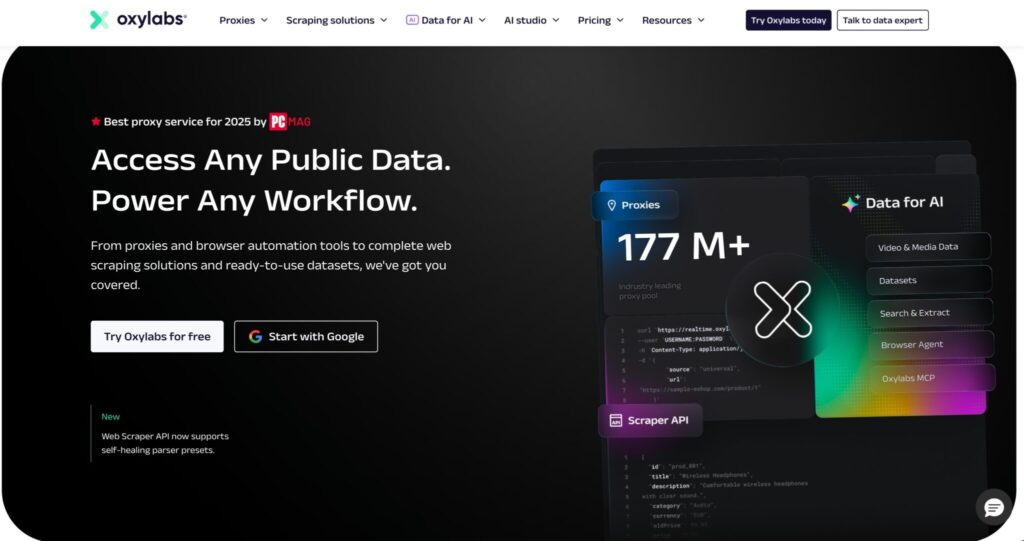
Oxylabs is another heavyweight option, especially for companies that scrape at scale. Its residential network is large, the geo-targeting is strong, and the platform is well suited to web intelligence teams that need consistent delivery.
The platform supports location targeting across country, city, state, ZIP/postal code, and coordinates. That is valuable when you need to compare results between regions without polluting your dataset with random proxy exits.
Oxylabs also offers scraper APIs and unblocker products, so it fits teams that want infrastructure support rather than managing every retry, header, session, and block response manually.
Pro-Tip: Use Oxylabs when your scraping project has internal stakeholders expecting clean datasets, SLAs, and fewer “the proxy failed again” excuses.
3. Decodo
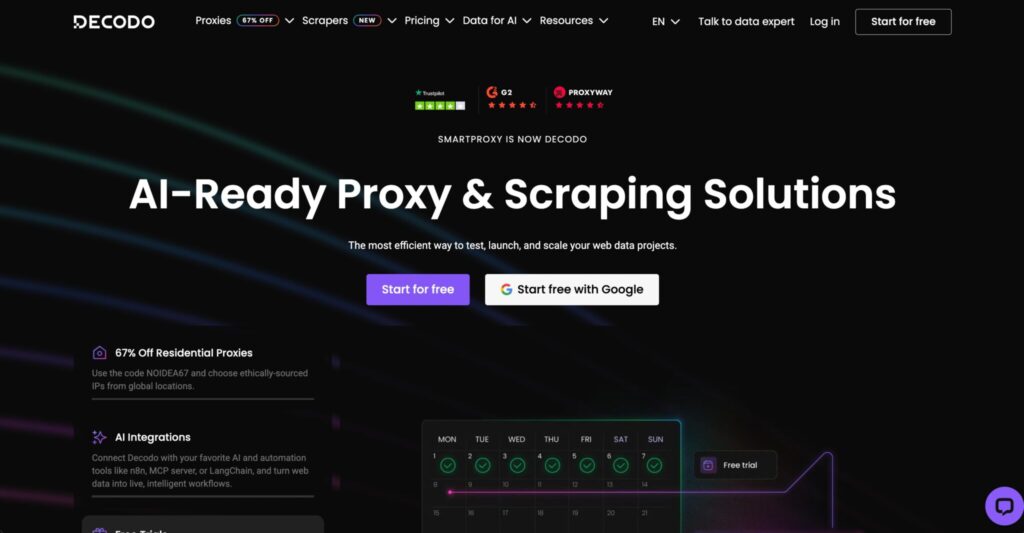
Decodo, formerly Smartproxy, is one of the easiest providers to recommend for teams that want strong regional scraping without jumping straight into enterprise procurement.
It offers a large pool, broad location coverage, and targeting options that can go down to state, city, ZIP, and ASN depending on the product setup. The dashboard is friendly, the integrations are straightforward, and the learning curve is lower than many enterprise-first platforms.
Decodo works well for SEO agencies, affiliate publishers, e-commerce analysts, and research teams that need reliable regional data but do not want a complicated setup.
The sweet spot is balance. You get serious capability, but the product still feels approachable.
Pro-Tip: For local SEO tracking, start with sticky sessions for each city query batch. Rotating too aggressively can make your data noisier than needed.
4. SOAX
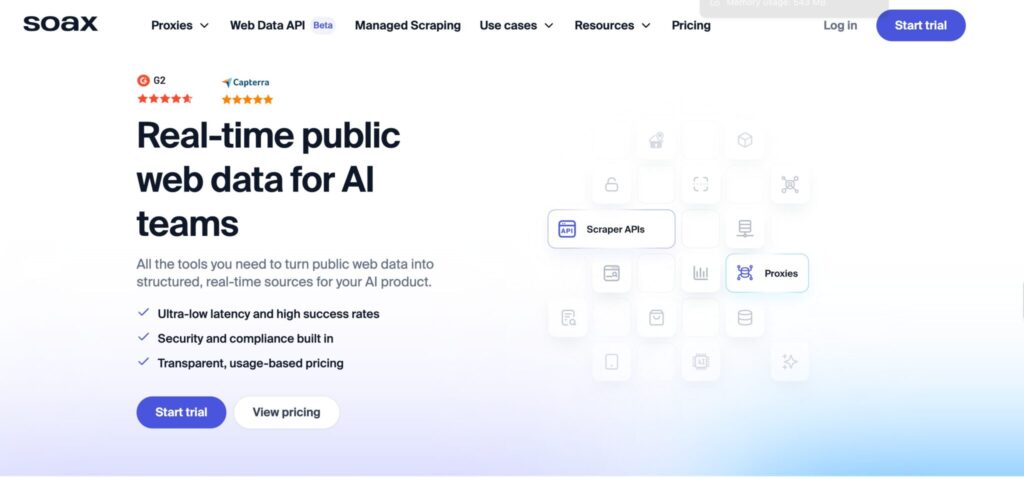
SOAX is strong when regional precision matters. It gives users detailed targeting, flexible session control, and support for multiple protocols, including HTTP(S), SOCKS5, and newer transport options like UDP/QUIC.
For scraping, SOAX is useful when you need to control session length carefully. Some targets behave better with a fresh IP on each request. Others need the same IP for 5, 10, or 30 minutes. SOAX gives you room to tune that.
It is a good fit for ad verification, sneaker and marketplace monitoring, social data collection, travel pricing, and city-level testing.
The main thing to watch is cost. Like most quality residential networks, SOAX can become expensive if your scraper is inefficient.
Pro-Tip: Before scaling, log success rate by target, region, and session length. The cheapest setup is rarely the one with the lowest per-GB price.
5. NetNut
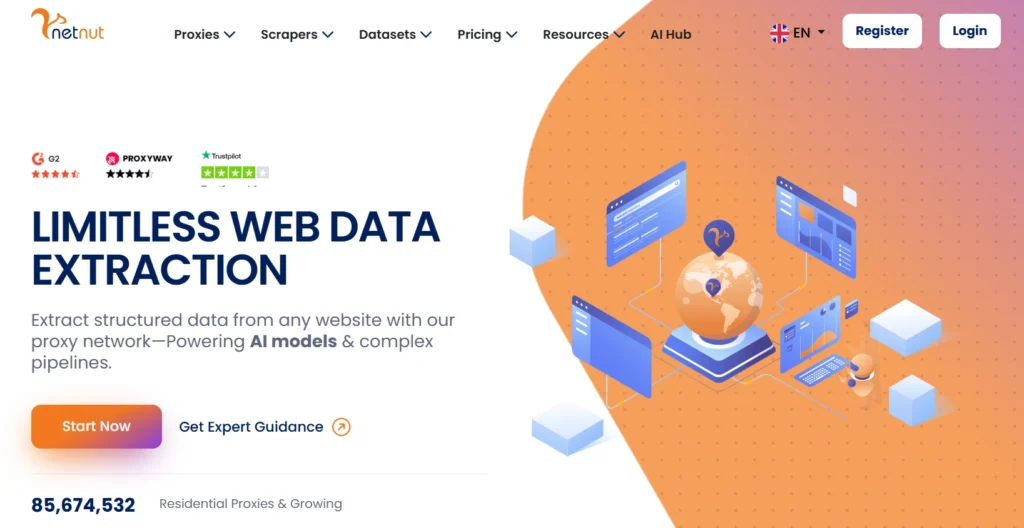
NetNut stands out because of its ISP-style connectivity and focus on performance. For regional scraping, that can be useful when you need residential credibility but also want stable sessions and faster response times.
It supports city and state selection, sticky IP sessions, private pools, API access, and near real-time usage stats. That makes it more appealing to B2B users than hobby scrapers.
NetNut is especially useful for price monitoring, brand protection, competitive intelligence, and large-scale SERP checks where session stability matters.
Its platform is not always the cheapest or the most beginner-focused. But for teams that want consistent infrastructure, it deserves a close look.
Pro-Tip: Ask for test access in your priority regions. A provider can have a large global pool and still underperform in the exact cities you care about.
6. Webshare
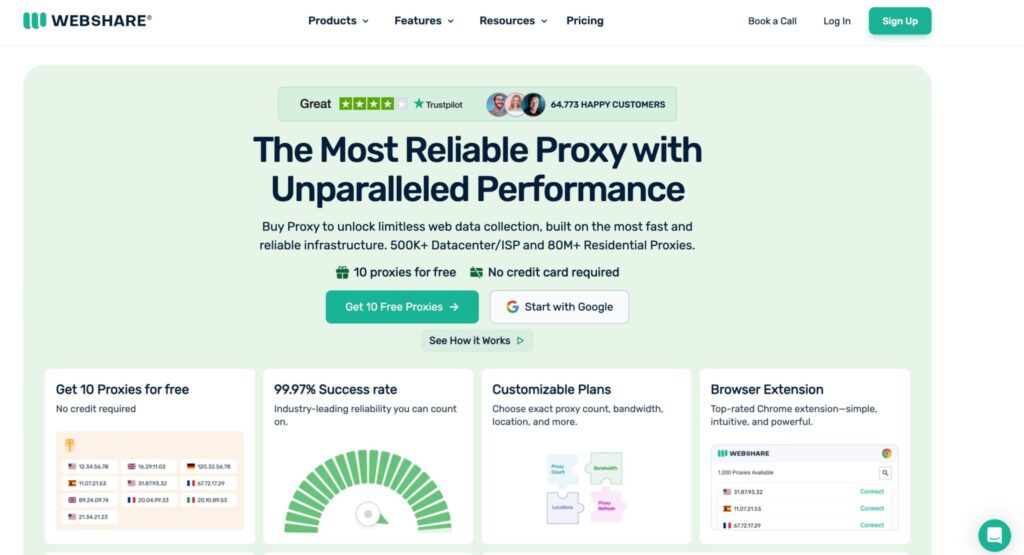
Webshare is a strong value pick for regional scraping. It offers rotating residential proxies, country and city targeting, and support for HTTP and SOCKS5.
The appeal is simple: it is easier to start, pricing is accessible, and the product is not overloaded with enterprise features that smaller teams may never use.
Webshare makes sense for affiliate SEO checks, basic price monitoring, testing localized landing pages, and collecting public data from less aggressive targets.
It is not the first provider I would choose for a heavily defended marketplace or a mission-critical data pipeline. But for many teams, it is more than enough.
Pro-Tip: Use Webshare for early validation. Once you know which regions, targets, and data fields matter, upgrade only the parts of your stack that actually hit limits.
7. IPRoyal
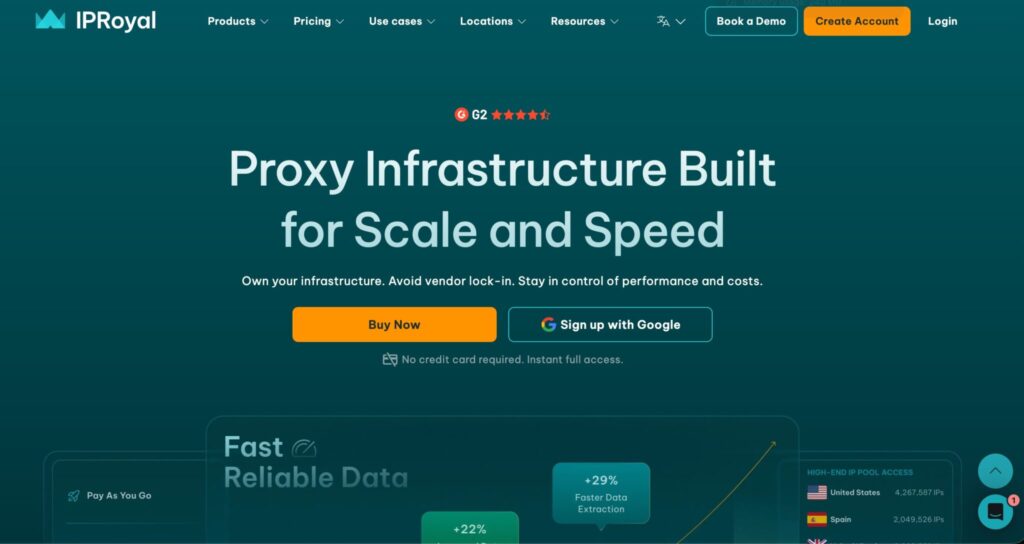
IPRoyal is a good choice for smaller teams, freelancers, and buyers who want flexible residential proxies without a painful contract. Its residential pool is smaller than Bright Data or Oxylabs, but it still covers a wide range of countries and supports country, state, and city-level targeting.
The product supports rotating and sticky sessions, which gives you enough control for most regional scraping projects. HTTP(S) and SOCKS5 support also make it easy to plug into common scraping tools.
IPRoyal works best for moderate-volume scraping, local SEO checks, travel research, competitor monitoring, and region-specific content testing.
Pro-Tip: If your scraping volume is unpredictable, IPRoyal’s flexible model can be safer than committing to a large monthly plan too early.
8. ProxyEmpire
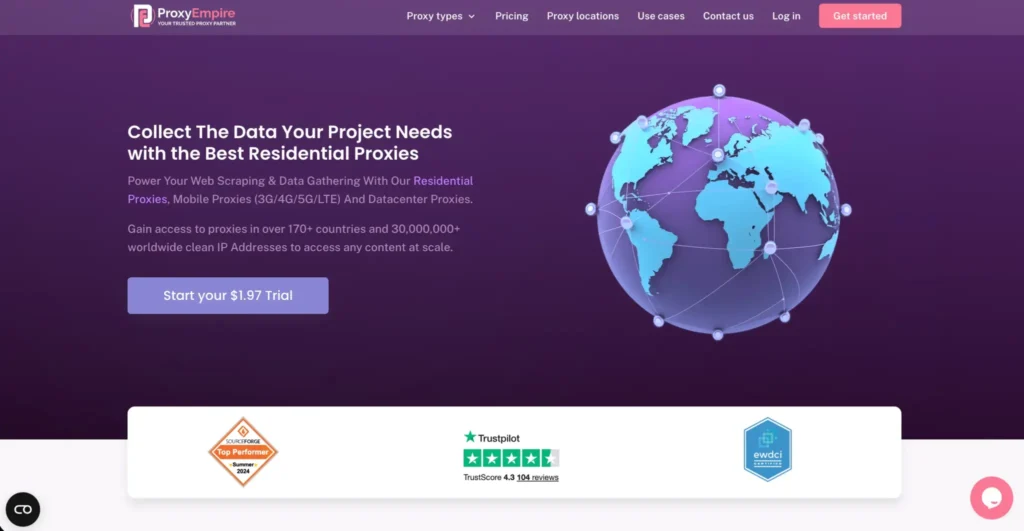
ProxyEmpire is worth considering when ISP or carrier-level targeting matters. It supports country, state, city, and ISP targeting for rotating residential and mobile proxies, with both rotating and sticky sessions.
That makes it useful for workflows where the network identity matters as much as the geography. Think ad verification, app testing, localized content checks, and regional marketplace research.
The provider also supports HTTP, HTTPS, HTTP/2, and SOCKS5, which gives technical teams flexibility across scraping frameworks.
The practical advice here is to test before scaling. With regional proxies, the only performance that matters is performance in your target locations.
Pro-Tip: Build a test sheet with 10 target URLs, 5 regions, and 3 session settings. Run every provider through the same test before buying volume.
9. DataImpulse
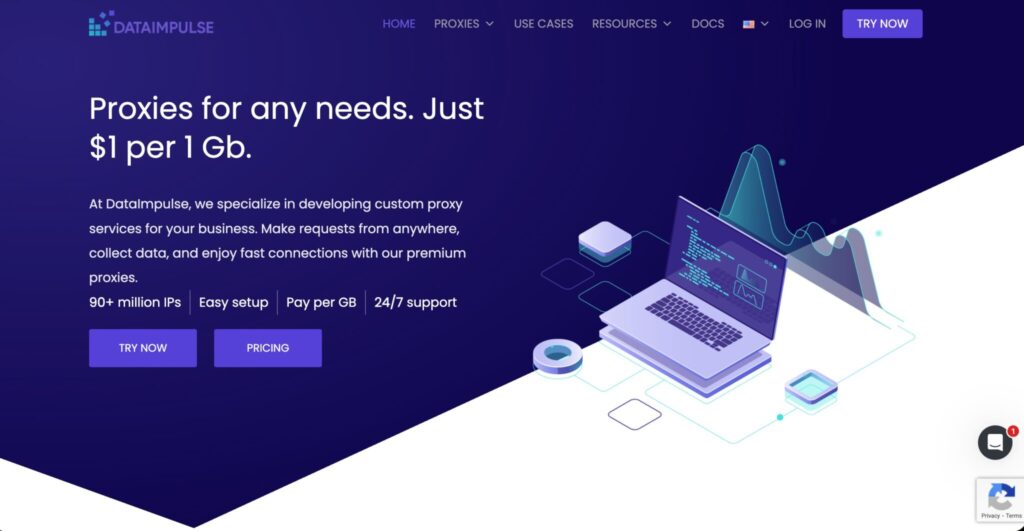
DataImpulse is the budget-friendly option that has become harder to ignore. It offers a large IP pool, pay-per-GB pricing, 195-country coverage, and targeting options that can include country, region, city, ASN, and ZIP.
The main appeal is cost control. If you are testing a scraping idea, running seasonal research, or managing small client projects, low-cost traffic and flexible usage can be more valuable than enterprise dashboards.
It is a practical pick for basic regional market research, SERP checks, public pricing pages, and content localization tests.
The tradeoff is that advanced targeting can add cost, and you should still test success rates on your exact targets.
Pro-Tip: Cheap proxy traffic is only cheap if your scraper is clean. Bad retries, oversized pages, and missing filters can burn bandwidth quickly.
10. Rayobyte
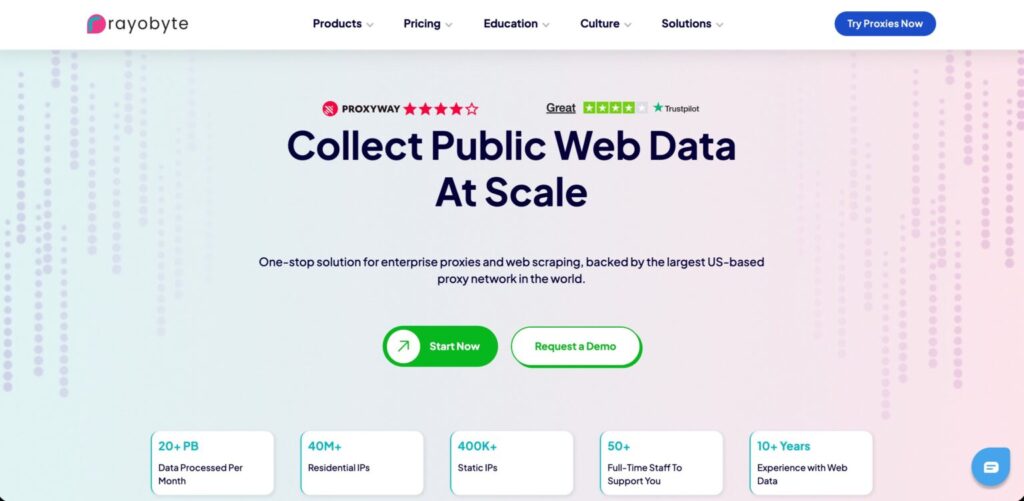
Rayobyte is a sensible pick for teams that want residential proxies with free country, city, and state targeting, sticky sessions, and responsive support.
Its pool is smaller than the largest providers, but the product is straightforward and works well for many regional scraping use cases. It is especially relevant for agencies and businesses focused on US market data, e-commerce tracking, and local SEO.
Rayobyte also provides live support and account management, which can matter when your scraping setup needs practical help rather than only documentation.
Pro-Tip: Rayobyte is worth testing for US regional campaigns where support quality and clean setup matter more than having the biggest global pool.
How to Choose Regional Scraping Proxies
Check the Real Geo-Targeting Depth
Do not buy based only on “195 countries.” That is the starting point, not the finish line.
Ask what levels are available:
- Country
- State or region
- City
- ZIP or postal code
- ASN
- ISP
- Mobile carrier
For local SEO, city-level targeting may be enough. For ad verification, ASN or ISP targeting can matter. For retail and delivery testing, ZIP-level accuracy can be the difference between useful and useless data.
Understand IP Pool Size by Region
A provider may advertise 100M+ IPs, but that does not mean it has deep inventory in every city.
Always ask for regional pool quality. How many usable IPs exist in your target markets? How often do they refresh? Are they residential, mobile, ISP, or datacenter?
For scraping, diversity beats raw size. A smaller but cleaner pool in your target region can outperform a massive pool with thin local coverage.
Pick the Right Rotation Protocol
Rotation is not just a checkbox.
Per-request rotation is good for large crawls, public pages, and high-volume discovery. Sticky sessions are better for login-free workflows that still need continuity, such as pagination, filters, carts, and multi-step browsing.
A good rule:
Use rotating IPs for scale. Use sticky sessions for context.
Match Protocols to Your Stack
Most scrapers work fine with HTTP(S). SOCKS5 is useful when you need broader traffic support, lower-level control, or compatibility with specific automation tools.
QUIC or HTTP/3 support can help in performance-sensitive setups, but it is not automatically better for every target. Test it before making it a deciding factor.
Measure Success Rate, Not Just Price
The cheapest proxy can become expensive if half your requests fail.
Track:
- Success rate by region
- Average response time
- CAPTCHA rate
- Ban rate
- Bandwidth used per successful page
- Retry cost
- Data accuracy
A $4/GB provider with a 90% success rate can beat a $1/GB provider with a 35% success rate.
Best Use Cases for Regional Scraping Proxies
Regional scraping proxies are most valuable when location changes the result.
Use them for:
- Local SEO rank tracking
- Regional product pricing
- Marketplace availability checks
- Travel fare monitoring
- Hotel and rental rate tracking
- Ad verification
- Localized landing page QA
- Public review monitoring
- Competitor intelligence
- App and website localization testing
If your target shows the same content everywhere, you may not need regional residential proxies. A datacenter proxy or scraping API may be enough.
FAQs About Regional Scraping Proxies
1. What are the best proxies for regional scraping?
Bright Data and Oxylabs are best for enterprise-grade regional scraping. Decodo and SOAX are strong all-rounders. Webshare, IPRoyal, and DataImpulse are better for smaller budgets or early-stage projects.
2. Are residential proxies better for regional scraping?
Yes, usually. Residential proxies use ISP-assigned IPs, so websites are more likely to treat them like normal user traffic. That helps when scraping localized pages, search results, marketplaces, and pricing data.
3. Do I need city-level or ZIP-level targeting?
City-level targeting works for most SEO, ad, and pricing tasks. ZIP-level targeting is better when delivery, taxes, store availability, or local inventory changes by neighborhood or postal zone.
4. What is the difference between rotating and sticky sessions?
Rotating sessions change the IP often, sometimes every request. Sticky sessions keep the same IP for a set time. Use rotating sessions for scale and sticky sessions for workflows that need continuity.
5. Are regional scraping proxies legal?
Proxies are legal tools, but how you use them matters. Scrape public data responsibly, respect website terms where applicable, avoid personal data misuse, and do not bypass protected systems or access private accounts.
6. Which proxy protocol should I use for scraping?
HTTP(S) works for most web scraping. SOCKS5 is useful for broader traffic handling and some automation tools. QUIC or HTTP/3 can help with performance in certain cases, but it should be tested.
7. Why do regional proxies still get blocked?
Blocks can happen because of bad headers, high request rates, poor session handling, repeated patterns, weak IP quality, or aggressive target defenses. Proxies help, but they do not fix a badly designed scraper.
8. How many proxy IPs do I need?
It depends on request volume, target difficulty, region count, and crawl frequency. Start small, measure success rate per region, then scale. Buying a huge pool before testing usually wastes money.
9. What is the best low-cost regional scraping proxy?
DataImpulse, Webshare, and IPRoyal are strong budget picks. For heavier workflows, Decodo often gives a better balance between price, usability, and regional control.
Final Buying Advice
Choose Bright Data or Oxylabs if regional accuracy, compliance, and scale matter most.
Choose Decodo or SOAX if you want strong targeting and session control without overcomplicating the setup.
Choose Webshare, IPRoyal, or DataImpulse if you are testing projects, managing smaller campaigns, or watching budget closely.
Choose NetNut, ProxyEmpire, or Rayobyte if your work depends on stable sessions, ISP-level targeting, or specific regional workflows.
The best regional scraping proxy is not the provider with the loudest pool-size claim. It is the one that gives clean, repeatable, location-accurate data from the exact markets you care about.