
Best Location Verification Proxies.
Location verification sounds simple until you test it at scale.
You search from “New York,” but the website thinks you are in New Jersey. You check an ad from “London,” but the landing page serves a national offer. You audit local SERPs from “Austin,” but the results look like a generic U.S. page. That is where location verification proxies earn their keep.
A good location verification proxy does not just change your IP. It helps you see the web the way real users see it in a specific country, state, city, ZIP code, carrier, or ISP region. For SEO teams, ad verification firms, price intelligence platforms, marketplace sellers, SaaS QA teams, and compliance monitors, that difference matters.
Below is a practical buyer’s guide built around the things professionals actually care about: geo accuracy, IP pool quality, rotation control, session persistence, protocol support, dashboard usability, and cost predictability.
What Are Location Verification Proxies?
Location verification proxies are proxy networks used to route traffic through IP addresses tied to specific geographic locations. The goal is to verify how websites, ads, search results, pricing, availability, app content, or compliance pages appear from a chosen region.
The best setups usually use residential, mobile, or ISP proxies because these IPs look closer to normal user traffic than standard datacenter IPs. For local testing, the proxy should support granular targeting such as country, state, city, ZIP code, ASN, or carrier.
For serious work, avoid cheap random proxies that only offer country selection. Location verification depends on precision, not just volume.
Best Location Verification Proxies: Quick Comparison Table
| Provider | Best For | Proxy Types | Geo Targeting | Rotation Options | Protocols | Strength | Watch Out For |
|---|---|---|---|---|---|---|---|
| Bright Data | Enterprise-grade verification | Residential, ISP, mobile, datacenter | Country, state, city, ZIP, ASN | Rotating and sticky | HTTP, HTTPS, SOCKS5 | Deep targeting and huge network | Higher learning curve |
| Oxylabs | Large-scale ad and SERP checks | Residential, mobile, ISP, datacenter | Country, city, state, ZIP | Rotating and sticky | HTTP, HTTPS, SOCKS5 | Strong infrastructure and support | Pricing may suit larger teams |
| Decodo | Balanced performance and usability | Residential, ISP, mobile, datacenter | Country, city, state, ASN, ZIP in some cases | Per request and sticky | HTTP, HTTPS, SOCKS5 | Clean setup and strong coverage | Advanced controls vary by product |
| SOAX | Flexible geo-sensitive testing | Residential, mobile, ISP, datacenter | Country, region, city, ASN/ISP | Auto rotation and sticky | HTTP, HTTPS, SOCKS5 | Strong mobile and residential mix | Trial limits may feel tight |
| NetNut | Stable business verification | Residential, mobile, ISP | Country-level and broader location filters | Rotating and sticky | HTTP, HTTPS, SOCKS5 | ISP-sourced stability | Less beginner-friendly pricing |
| Webshare | Budget-conscious teams | Residential, static residential, datacenter | Country and city on rotating residential | Rotating and sticky | HTTP, HTTPS, SOCKS5 | Affordable and easy dashboard | Not as feature-rich as enterprise tools |
| IPRoyal | Small teams and pay-as-you-go buyers | Residential, ISP, mobile, datacenter | Country, state, city | Rotating and sticky | HTTP, HTTPS, SOCKS5 | Flexible pricing | Smaller pool than top enterprise brands |
| Infatica | Regional research and QA | Residential, mobile, datacenter | Country and location-based targeting | Per request, timed, sticky | HTTP, HTTPS, SOCKS5 | Good rotation control | Interface is less polished |
| Rayobyte | U.S.-focused verification | Residential, ISP, datacenter | Country, region, city | Rotating and sticky | HTTP, HTTPS, SOCKS5 | Solid for structured projects | Smaller global footprint than giants |
1. Bright Data
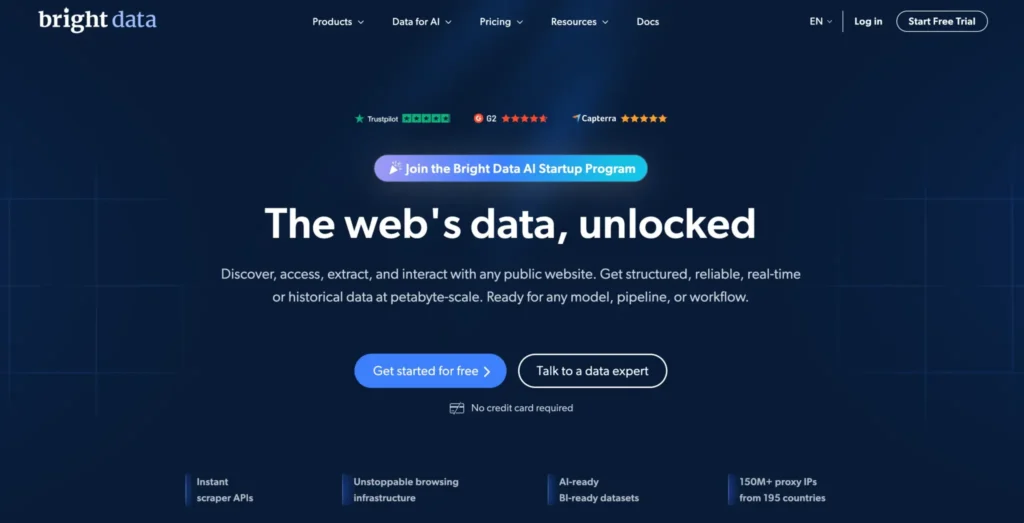
Bright Data is the premium pick for teams that need location verification with tight controls. Its residential network supports granular targeting, including country, state, city, ZIP code, and ASN. That makes it useful for local SERP monitoring, ad preview checks, regional pricing audits, and fraud-sensitive compliance workflows.
The big advantage is control. You can build sessions around very specific locations instead of settling for broad country-level routing. For example, if you need to compare search results from Dallas, Miami, and Chicago, Bright Data gives you the targeting depth to make those checks more meaningful.
It also offers residential, mobile, ISP, and datacenter proxies, so teams can match proxy type to the task. Mobile proxies work well for app and carrier-sensitive verification. ISP proxies are helpful when you need stable identity and faster performance. Residential proxies are the safest general choice for location-sensitive web views.
Pro-Tip: Use sticky sessions for login-based QA or multi-step checkout testing. Use rotating sessions for large SERP or ad availability checks where each request should look independent.
Best for: Enterprise SEO teams, ad verification firms, compliance monitoring, travel fare checks, and marketplace intelligence.
2. Oxylabs
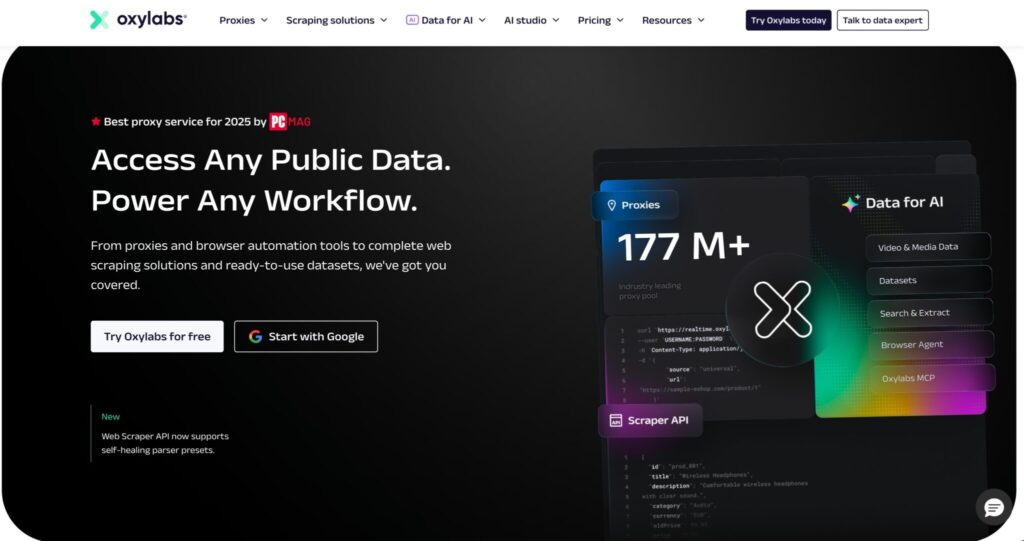
Oxylabs is another heavyweight option for location verification, especially when you need scale, documentation, and account support. Its residential proxies support rotating and sticky sessions, and the platform is well suited for ad verification, review monitoring, price aggregation, and local data collection.
Where Oxylabs stands out is operational reliability. Large teams usually care less about getting the cheapest gigabyte and more about clean infrastructure, predictable success rates, and support when a target starts blocking traffic. Oxylabs fits that style of buyer.
For location verification, Oxylabs is strong when you need to test many regions repeatedly. Sticky sessions help when a website expects continuity. Rotating sessions help when you are checking many pages across many markets.
Its learning curve is reasonable for technical teams, though smaller buyers may find the pricing and product range more than they need.
Pro-Tip: For ad verification, rotate IPs across the same region instead of hammering one sticky session. You want to see how the ad appears to different users in that location, not just one repeated identity.
Best for: Agencies, enterprise scraping teams, ad verification platforms, and companies with recurring location audits.
3. Decodo
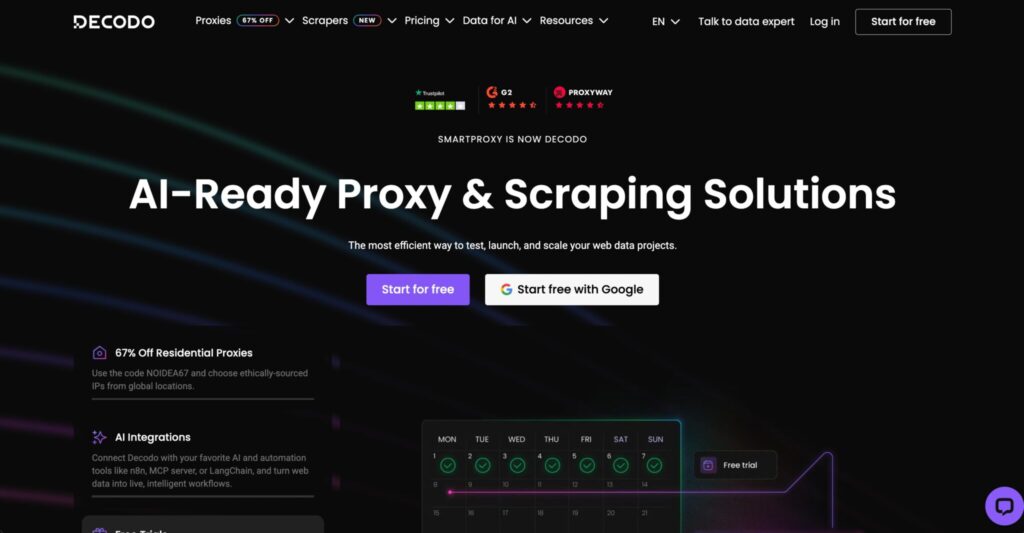
Decodo, formerly Smartproxy, is one of the best middle-ground choices. It gives strong geo coverage, a cleaner user experience than many enterprise-first tools, and enough targeting depth for most serious location verification projects.
Its residential proxy setup supports country, city, state, and ASN-style controls, with rotation per request or sticky sessions depending on configuration. For teams doing SEO rank checks, localized landing page QA, pricing tests, or regional content audits, that is usually enough.
Decodo is also easier to recommend to teams that are not full-time proxy engineers. The dashboard is straightforward, the setup process is friendly, and integrations are not painful. You can generate endpoints, choose locations, and test sessions without getting buried in technical options.
That said, Decodo is not a toy. It has enough scale and session control for heavy workflows, especially if you are checking hundreds or thousands of regional pages.
Pro-Tip: Create separate proxy users or endpoint groups for each verification project. Mixing local SEO checks, ad audits, and marketplace scraping in one pool makes debugging harder.
Best for: SEO agencies, growth teams, marketplace researchers, and mid-sized data teams.
4. SOAX
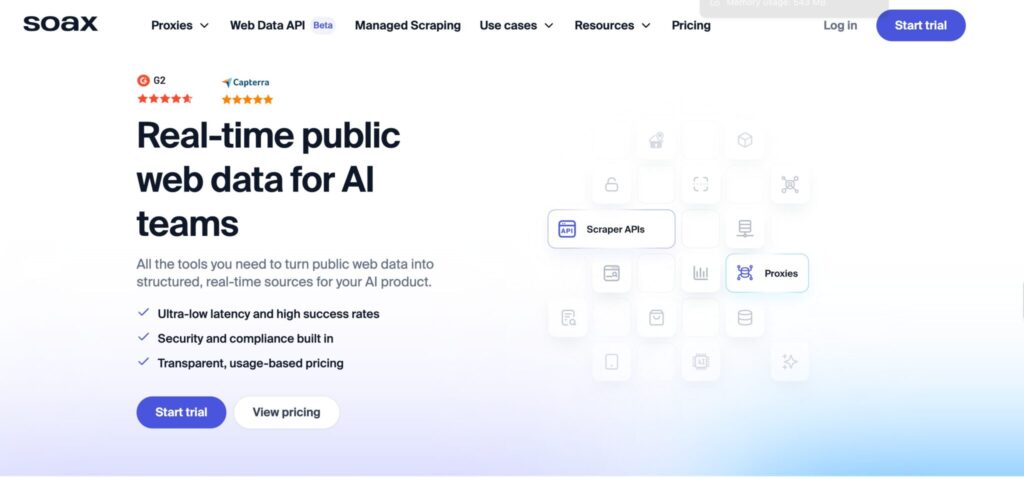
SOAX is a strong choice when location flexibility matters. It offers residential and mobile proxies with country, city, and ISP/ASN-style targeting options, making it useful for verifying mobile-first experiences, local offers, regional blocks, and app flows.
The dashboard is one of SOAX’s better qualities. It gives users a practical way to build connections without manually editing long proxy strings every time. For teams that run frequent location tests but do not want a heavy engineering setup, that matters.
SOAX also supports sticky sessions, which are important for multi-step verification. For example, checking whether a regional promo remains consistent from homepage to cart requires the same IP for several requests. A rotating proxy might break the journey or create inconsistent results.
Its residential pool is large, but the best use case is not blind mass scraping. SOAX works best when you define the region, session length, and target workflow clearly.
Pro-Tip: For mobile location verification, test on both mobile proxy IPs and residential IPs. Some websites serve different content based on IP type, device fingerprint, and user-agent together.
Best for: Mobile QA, localized content testing, regional compliance checks, and ad preview workflows.
5. NetNut
NetNut focuses on business-grade proxy access with a strong residential and mobile proxy footprint. It is a good fit for teams that care about stable connections and repeatable data collection.
For location verification, NetNut can be especially useful when your project needs consistent performance across global locations. Its ISP-sourced positioning helps with speed and reliability, which matters when running recurring verification jobs.
The platform is less “plug and play” than some budget proxy dashboards, but that is not always a negative. Larger buyers often prefer managed support, custom pools, and direct help tuning campaigns. NetNut leans into that business buyer profile.
It is a good option for ad verification, brand protection, regional market research, and local price monitoring. Smaller teams should compare costs carefully before committing.
Pro-Tip: Ask about available IP density in your target cities before buying. A provider can have a large global pool but still be thin in the exact local market you need.
Best for: Business users, managed verification projects, market intelligence, and stable recurring checks.
6. Webshare
Webshare is the practical budget pick. It is not as advanced as Bright Data or Oxylabs, but it is affordable, simple, and good enough for many location verification tasks.
Its rotating residential proxies support country and city targeting, with rotating and sticky session options. That makes it useful for small SEO teams, affiliate marketers, review sites, and local QA projects that need to check regional pages without enterprise-level spend.
The dashboard is clean, and the endpoint generator makes setup easy. You can build proxy endpoints for specific locations, choose authentication, and start testing quickly.
The trade-off is depth. Webshare does not offer the same advanced compliance tooling, scraping APIs, or enterprise workflow controls as the bigger players. But if your goal is to verify local search pages, landing page localization, regional pricing, or availability, it can be a smart starting point.
Pro-Tip: Use Webshare for early testing before moving to a higher-cost provider. If a location workflow proves valuable, then upgrade for scale and deeper targeting.
Best for: Small teams, affiliate SEO, local rank checks, simple geo QA, and budget-sensitive users.
7. IPRoyal
IPRoyal is a strong value option for buyers who want residential proxies without committing to enterprise contracts. It supports country, state, and city-level targeting, with rotating and sticky sessions.
For location verification, IPRoyal works well for simple but important checks: does this page show the right local offer, does this SERP change by city, does this marketplace listing appear in a target region, and does a localized landing page redirect correctly?
Its pay-as-you-go approach is attractive for smaller teams. You do not have to buy huge monthly traffic bundles just to run occasional verification checks.
The main limitation is scale and depth compared with the largest providers. If you need millions of requests across hundreds of micro-locations, you may eventually outgrow it. For regular content, SEO, and ad checks, it is a solid choice.
Pro-Tip: For state or city testing, run several checks at different times of day. Localized search and ad systems can shift based on inventory, budget, and user demand.
Best for: Freelancers, small agencies, affiliate teams, and budget-friendly location testing.
8. Infatica
Infatica is worth considering for teams that want residential proxies with flexible rotation logic. Its documentation shows support for rotation per request, timed rotation, and sticky sessions, which gives testers useful control over identity behavior.
That flexibility matters in location verification. Some tasks need a fresh IP every request. Others need a 10-minute identity. Others need a fixed session while you move through a flow. Infatica gives enough room to build those patterns.
It is not always as polished as the most mainstream providers, but it can work well for regional research, SEO checks, travel data validation, and public web monitoring.
Pro-Tip: Match rotation timing to user behavior. A real user does not change IP every page during checkout, but a rank tracker may need a new IP for each query batch.
Best for: Technical users, regional QA, timed rotation workflows, and data collection teams.
9. Rayobyte
Rayobyte is a good fit for structured proxy buyers, especially those focused on U.S. testing or mixed proxy strategies. It offers residential, ISP, and datacenter options, which lets you choose between accuracy, speed, and stability.
For location verification, its residential proxies are the better choice when you need realistic local views. ISP proxies are better when you need long sessions or more stable performance. Datacenter proxies can work for low-risk checks, but they are easier for platforms to detect.
Rayobyte is not always the first name mentioned in enterprise proxy buying, but it has a loyal user base and clear use cases for data collection, ad verification, and regional testing.
Pro-Tip: Do not use datacenter proxies for sensitive local ad checks unless you already know the target accepts them. Residential and mobile IPs produce more realistic results.
Best for: U.S. regional checks, mixed proxy setups, and teams that want residential plus ISP options.
How to Choose the Best Location Verification Proxy
1. Check IP Pool Depth, Not Just Pool Size
A provider may advertise 100 million IPs, but that does not guarantee strong coverage in your target location. For location verification, density matters.
Ask these questions:
Does the provider support your exact country, state, city, or ZIP code?
How many available IPs exist in that region?
Can you target ASN or ISP?
Can you use mobile IPs for carrier-specific checks?
Can the provider maintain quality during peak hours?
A smaller provider with strong coverage in your target cities may beat a huge provider with shallow local availability.
2. Choose the Right Proxy Type
Residential proxies are best for general location verification because they come from real consumer ISP environments.
Mobile proxies are best for app testing, mobile ads, carrier checks, and mobile-first websites.
ISP proxies are best when you need stability, speed, and long sessions while still looking more residential than datacenter traffic.
Datacenter proxies are best for low-cost, low-sensitivity checks, but they are less reliable for true local verification.
3. Understand Rotation Protocols
Rotation controls how often your IP changes.
Per-request rotation gives a new IP for each request. Use it for SERP scraping, bulk ad checks, and high-volume availability tests.
Sticky sessions keep the same IP for a period. Use them for checkout testing, login flows, region-based redirects, and multi-step journeys.
Timed rotation changes IPs after a set interval, such as 5, 10, 30, or 60 minutes. Use it when you want a balance between consistency and freshness.
Manual rotation lets you refresh the IP only when needed. This is useful for debugging.
The wrong rotation model ruins your results. A checkout test with per-request rotation can look broken. A SERP test with one sticky IP can become biased.
4. Match Protocol Support to Your Tools
Most teams need HTTP and HTTPS. SOCKS5 is useful for browsers, apps, automation tools, and use cases where you want broader traffic support.
Before buying, check compatibility with:
Rank trackers
Ad verification tools
Anti-detect browsers
Scraping frameworks
QA browsers
Custom Python or Node scripts
Internal compliance tools
A proxy that looks good on paper is useless if your tool cannot authenticate or rotate it correctly.
5. Test Accuracy Before Scaling
Run a small pilot first. Check the IP location using multiple lookup services. Then compare what websites actually show.
Do not trust IP databases blindly. Google, Meta, Amazon, travel sites, and local directories may interpret location differently. Your job is not just to get a city-labeled IP. Your job is to see whether the target platform treats that IP as the intended location.
FAQs About Location Verification Proxies
1. What are the best proxies for location verification?
The best options are usually residential, mobile, or ISP proxies from providers with granular geo-targeting. Bright Data, Oxylabs, Decodo, SOAX, NetNut, Webshare, IPRoyal, Infatica, and Rayobyte are all worth considering depending on budget and scale.
2. Are residential proxies better for geo verification?
Yes, in most cases. Residential proxies use IPs associated with real consumer internet connections, so websites are more likely to treat them like normal local users.
3. Do I need city-level targeting?
City-level targeting is important for local SEO, local ads, regional pricing, food delivery checks, travel availability, and marketplace testing. Country-level targeting is often too broad.
4. What is the difference between rotating and sticky proxies?
Rotating proxies change IPs frequently, often every request. Sticky proxies keep the same IP for a set session. Use rotating proxies for scale. Use sticky proxies for multi-step user journeys.
5. Can proxies verify Google search results by location?
Yes, but use them carefully. Local search results depend on IP, browser settings, language, device, search history, and sometimes GPS signals. A proxy helps with IP location, but it is only one part of accurate SERP testing.
6. Are mobile proxies needed for location verification?
Mobile proxies are useful when checking mobile ads, app content, carrier routing, and mobile-only experiences. For desktop web checks, residential proxies are usually enough.
7. Are cheap proxies reliable for local testing?
Sometimes, but cheap proxies often have poor geo accuracy, overused IPs, weak dashboards, and limited session control. For one-off checks, they may work. For professional verification, reliability matters more than the lowest price.
8. How do I know if a proxy location is accurate?
Check the IP with multiple location databases, then test the actual platform you care about. If the target website serves the correct local content, the proxy is doing its job.
9. Which provider is best overall?
Bright Data is the strongest overall for deep targeting and enterprise workflows. Oxylabs is excellent for scale. Decodo is the best balanced option for most teams. Webshare and IPRoyal are better for smaller budgets.