
Geo routing proxies are built for one job: sending your web requests through IPs that match a specific country, state, city, carrier, ASN, or sometimes even ZIP code. That sounds simple until you actually need reliable results at scale.
A weak proxy setup may show you the wrong version of a website, trigger blocks, rotate too aggressively, or fail when you move from broad country targeting to city-level testing. A good geo routing proxy network gives you clean location control, stable sessions, predictable rotation, and enough IP depth to avoid burning through the same subnet again and again.
This guide breaks down the best geo routing proxy providers for SEO monitoring, ad verification, localized price tracking, travel fare checks, app testing, SERP analysis, and public web data collection.
What Are Geo Routing Proxies?
Geo routing proxies let you route internet traffic through proxy IPs tied to specific locations. Instead of appearing as a generic user from a random region, your request can come from New York, Berlin, Mumbai, Toronto, Sydney, or a specific ISP network.
The best providers offer more than country targeting. They let you choose state, city, ZIP/postcode, ASN, ISP, carrier, or mobile network. That matters when search results, ads, shipping prices, tax estimates, streaming catalogs, and marketplace listings change by location.
For professional use, residential and mobile proxies usually perform better than basic datacenter proxies because they come from real consumer networks. Datacenter proxies are faster and cheaper, but they are easier for strict websites to flag.
Quick Comparison Table: Best Geo Routing Proxies
| Provider | Best For | IP Pool | Geo Targeting Depth | Rotation Control | Protocols | Main Strength |
|---|---|---|---|---|---|---|
| Bright Data | Enterprise geo routing | 400M+ residential IPs | Country, city, state, ZIP, ASN | Rotating and sticky | HTTP, HTTPS, SOCKS5 | Deepest targeting stack |
| Oxylabs | Large-scale scraping and QA | 175M+ residential IPs | Country, city, state, ZIP, coordinates, ASN | Rotating and sticky | HTTP, HTTPS, SOCKS5 | Strong enterprise reliability |
| Decodo | Teams wanting easy setup | 125M+ proxy IPs | Country, state, city, ASN | Flexible sessions | HTTP, HTTPS, SOCKS5 | Clean dashboard and good value |
| SOAX | Precise residential and mobile routing | 155M+ residential IPs | Country, region, city, ISP/carrier | Rotating and sticky | HTTP(S), SOCKS5, UDP/QUIC | Strong location filtering |
| NetNut | Stable ISP-backed routing | 85M+ residential IPs | Country, state, city | Rotating and static options | HTTP, HTTPS, SOCKS5 | Direct ISP connectivity |
| Webshare | Budget geo routing | 80M+ residential IPs | Country and city | Rotating residential | HTTP, SOCKS5 | Low-cost entry |
| IPRoyal | Small teams and flexible traffic | 32M+ residential IPs | Country, state, city | Rotating and sticky | HTTP(S), SOCKS5 | Traffic does not expire |
| Rayobyte | Ethical residential routing | 40M+ residential IPs | Country, region, city | Sticky sessions | HTTP, HTTPS, SOCKS5 | Consent-based IP sourcing |
| ProxyEmpire | Rollover data and niche markets | 30M+ residential IPs | Country, region, city, ISP, carrier | Rotating and static | HTTP, HTTPS, SOCKS5 | Useful for long campaigns |
Best Geo Routing Proxy Providers Reviewed
1. Bright Data
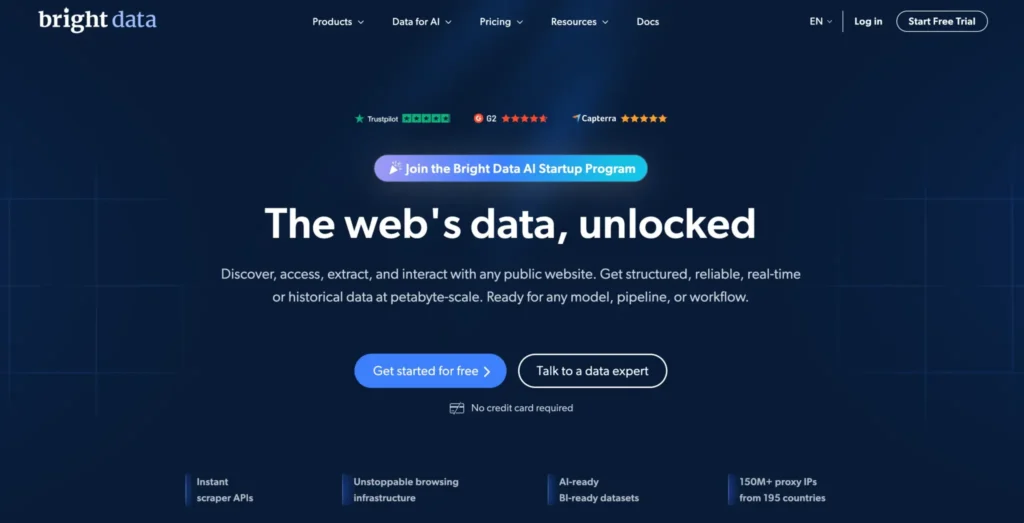
Bright Data is the premium option for businesses that need exact geo routing and strict compliance controls. Its residential pool is massive, and the targeting depth is one of the strongest in the market. You can route by country, state, city, ZIP code, carrier, and ASN, which is useful for serious ad verification, SERP testing, fraud checks, price intelligence, and marketplace monitoring.
The platform is not the cheapest, and beginners may find the dashboard more advanced than they need. Still, for teams that care about accuracy, uptime, documentation, and compliance review, Bright Data is hard to beat.
Pro-Tip: Use Bright Data when your workflow depends on repeatable local results. If you only need broad country-level access, cheaper providers may be enough.
2. Oxylabs
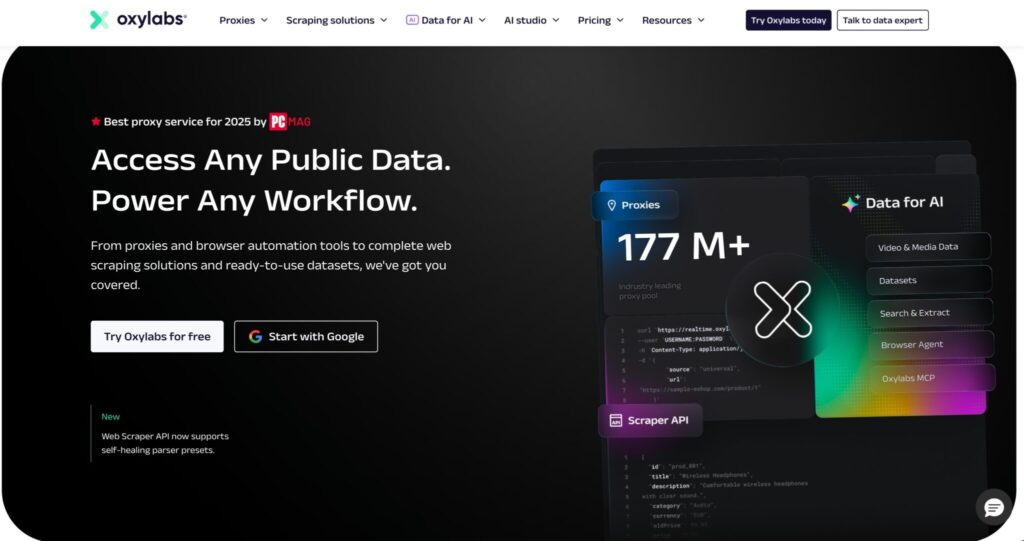
Oxylabs is another enterprise-grade choice with a strong residential network, mobile proxy options, and advanced location settings. Its geo routing tools support country, state, city, ZIP/postal code, coordinate-level, and ASN targeting. That makes it useful for large SEO teams, ad intelligence platforms, cybersecurity teams, and data companies.
Oxylabs also offers strong session control. You can rotate often for high-volume collection or hold sessions when the target website expects a consistent visitor identity.
The biggest drawback is cost. It is built for businesses, not hobby users. But for high-volume jobs where failed requests become expensive, Oxylabs often pays for itself.
3. Decodo
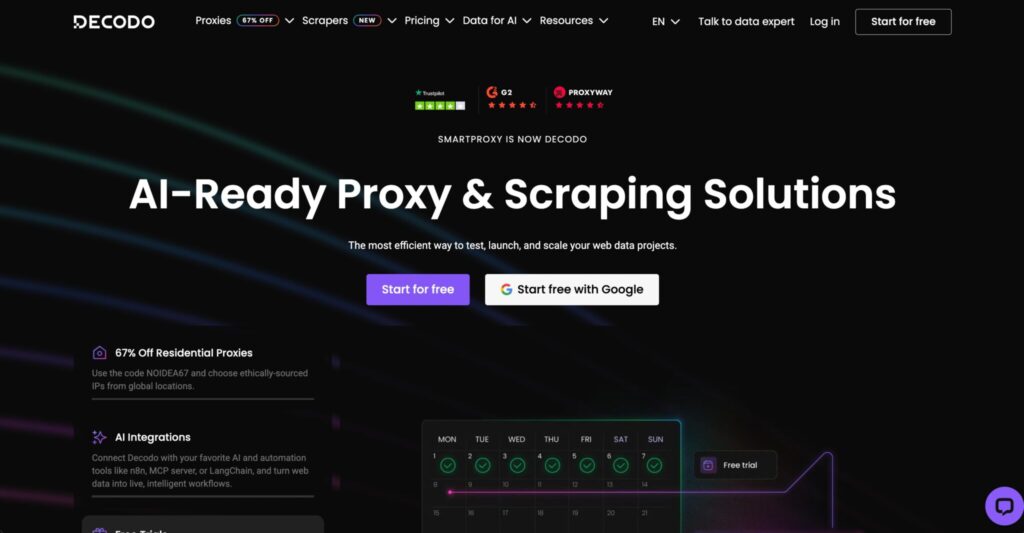
Decodo, formerly Smartproxy, is a strong mid-market geo routing option. It gives users access to a large proxy pool across 195+ locations, with country, state, city, and ASN targeting. The platform is easier to use than many enterprise tools, which makes it attractive for SEO agencies, affiliate teams, ecommerce analysts, and web testing teams.
The dashboard is clean, setup is simple, and documentation is beginner-friendly. Decodo is especially good when you need solid coverage without dealing with heavy enterprise onboarding.
It may not offer the same depth as Bright Data or Oxylabs for every advanced routing case, but for most business use, it strikes a practical balance between price, performance, and usability.
4. SOAX
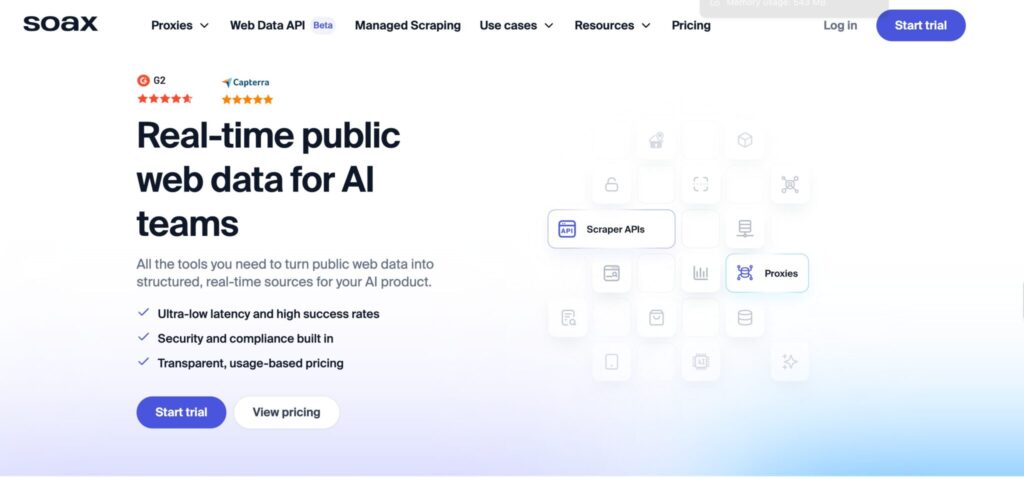
SOAX is built for users who care about precise filters. Its residential proxy product supports country, region, city, and ISP/carrier targeting. It also supports HTTP(S), SOCKS5, UDP, and QUIC, which gives technical teams more flexibility than basic proxy services.
SOAX works well for localized web testing, ad checks, mobile-first research, travel pricing, ecommerce tracking, and data collection from markets where location accuracy matters.
The dashboard takes a little learning, but once configured, SOAX is strong for repeatable geo workflows. Its mobile proxy coverage also makes it useful when websites serve different results to cellular traffic.
5. NetNut
NetNut is a good pick when stability matters more than endless targeting layers. It offers a large residential pool and static residential proxies backed by direct ISP connectivity. That can help reduce latency and improve session reliability.
Geo routing options include country, state, and city targeting. NetNut does not always go as deep as Bright Data or Oxylabs for ZIP or ASN-level workflows, but it performs well for broad and mid-level local testing.
It is especially useful for price monitoring, brand protection, SEO checks, and workflows where you need a stable route rather than constant IP churn.
6. Webshare
Webshare is one of the more budget-friendly geo routing proxy providers. It offers rotating residential proxies, country and city-level targeting, HTTP/SOCKS5 support, and a simple dashboard.
This is a good choice for smaller teams that need affordable localized access without a complicated setup. It is also useful for testing proxy workflows before moving to a larger provider.
The tradeoff is that Webshare is not as feature-rich as enterprise platforms. You should not expect the same level of targeting precision, managed support, or scraping infrastructure. Still, for basic geo routing, it offers strong value.
7. IPRoyal
IPRoyal is a flexible choice for freelancers, small teams, and agencies that want residential geo routing without heavy commitments. Its residential network covers 195+ countries and supports country, state, and city targeting.
The standout feature is traffic rollover. If your usage changes month to month, this can save money because unused residential traffic does not disappear immediately.
IPRoyal is not the largest provider, and it lacks some advanced scraping APIs. But for manual testing, SEO audits, localized browsing, small scraping jobs, and affiliate compliance checks, it is easy to use and cost-friendly.
8. Rayobyte
Rayobyte focuses heavily on ethically sourced residential proxies. Its network supports country, region, and city-level geo targeting, plus sticky sessions and unlimited threads.
For geo routing, Rayobyte is best suited to teams that want straightforward location control with an emphasis on clean sourcing. It may not be the first pick for deep ASN or ZIP-level testing, but it works well for localized SERP checks, ecommerce research, and ad verification.
The platform is practical, not flashy. That is a good thing if you want fewer moving parts and predictable routing behavior.
9. ProxyEmpire
ProxyEmpire is worth considering if you need geo routing with rollover bandwidth and niche-market flexibility. It offers rotating residential proxies across many countries with targeting by country, region, city, ISP, and mobile carrier.
The rollover data model is useful for campaigns that pause and restart. For example, if you run monthly ad verification or seasonal price monitoring, unused bandwidth can stay useful instead of being wasted.
It is not as widely adopted as Bright Data, Oxylabs, or Decodo, but its mix of targeting, session control, and rollover pricing makes it a serious option for lean teams.
How to Choose Geo Routing Proxies
Check the Real IP Pool, Not Just the Big Number
A provider may advertise millions of IPs, but your usable pool depends on the location you need. A huge global pool does not help if the provider has weak coverage in your target city.
Ask for test access in your top markets. Check IP diversity, ASN spread, block rate, speed, and whether the website actually serves the correct local version.
Match Targeting Depth to Your Use Case
Country targeting is enough for basic access testing. State and city targeting are better for local SEO, shipping estimates, and ad previews. ZIP, ASN, ISP, and carrier targeting are needed for advanced ad verification, mobile testing, fraud analysis, and telecom-specific research.
Do not overpay for targeting depth you will never use.
Understand Rotation Protocols
Rotation controls how often your proxy IP changes. Per-request rotation is good for large-scale scraping where every request can use a fresh IP. Sticky sessions are better for logins, carts, localized browsing, and websites that expect the same visitor to stay on one IP for a few minutes.
For most geo routing workflows, a blend works best: rotating IPs for discovery, sticky sessions for validation.
Choose Residential, Mobile, ISP, or Datacenter Carefully
Residential proxies are best for realistic local access. Mobile proxies are stronger for app testing and carrier-based results. ISP proxies are useful when you need speed and stability with residential-like trust. Datacenter proxies are cheap and fast, but weaker for strict geo-sensitive websites.
Look at Protocol Support
HTTP and HTTPS are enough for many browser and scraper setups. SOCKS5 gives more flexibility for apps, automation tools, and non-browser traffic. UDP/QUIC support is useful for advanced technical cases, but most buyers will not need it.
Test Location Accuracy
Always verify proxies with multiple location databases. Some IPs show one city in one database and another city elsewhere. That mismatch can break local testing.
Run checks through the same target platforms you care about, not just generic IP lookup tools.
Pro-Tips for Better Geo Routing Results
Pro-Tip 1: Do not use the same city pool too aggressively. Small local pools burn faster than country-level pools.
Pro-Tip 2: Keep sticky sessions long enough for the task, but not longer than needed. Long sessions reduce freshness.
Pro-Tip 3: For SERP tracking, test desktop residential and mobile proxies separately. Search results often differ by device type and network.
Pro-Tip 4: For ad verification, prioritize ASN, ISP, or carrier filters when available. Country targeting alone can miss local campaign issues.
Pro-Tip 5: Track success rate by location. A provider may perform well in the US but poorly in smaller markets.
FAQs About Geo Routing Proxies
1. What is a geo routing proxy?
A geo routing proxy routes your internet request through an IP address from a selected location. That location can be a country, city, state, ISP, ASN, ZIP code, or mobile carrier depending on the provider.
2. Are geo routing proxies legal?
Geo routing proxies are legal when used for lawful purposes such as public data collection, SEO testing, ad verification, QA testing, and market research. They should not be used for fraud, account abuse, identity misuse, or breaking platform rules.
3. What is the best proxy type for geo routing?
Residential proxies are usually the best all-around choice because they come from real consumer networks. Mobile proxies are best for carrier-based testing. ISP proxies are good for stable sessions, while datacenter proxies are better for speed and low cost.
4. Do I need city-level targeting?
You need city-level targeting if search results, ads, prices, delivery options, or content availability changes by metro area. For broad country checks, city targeting may be unnecessary.
5. What is ASN targeting?
ASN targeting lets you route traffic through a specific internet network or carrier. This is useful for ad verification, telecom testing, fraud research, and cases where results change by ISP.
6. What is the difference between rotating and sticky proxies?
Rotating proxies change IPs regularly, often every request or at set intervals. Sticky proxies keep the same IP for a fixed session. Rotating proxies help with scale. Sticky proxies help with continuity.
7. Which provider is best for enterprise geo routing?
Bright Data and Oxylabs are the strongest enterprise choices because they offer large pools, deep targeting, compliance controls, and advanced infrastructure. Decodo is a strong middle option for teams that want power without heavy complexity.
8. Which provider is best for budget users?
Webshare and IPRoyal are good budget-friendly picks. Webshare is simple and low-cost, while IPRoyal is flexible and useful for small teams that do not want unused traffic to go to waste.
9. How do I avoid blocks when using geo routing proxies?
Use realistic rotation settings, avoid overusing small city pools, respect rate limits, keep sessions consistent when needed, and match proxy type to the task. A cheap proxy with poor location accuracy often costs more through failed requests.