
Best Shared Proxy Providers.
Shared proxies are the practical middle ground of the proxy world. They are cheaper than dedicated proxies, easier to scale than free proxy lists, and good enough for many SEO, scraping, price tracking, ad verification, market research, and lightweight automation tasks.
The catch is simple. You share the IP pool with other users. That keeps the price low, but it can also increase block rates if the provider does not manage rotation, abuse control, and pool quality properly.
Below is a practical buyer’s guide to the best shared proxy providers in 2026, based on pricing, pool size, targeting, rotation controls, use cases, and overall value.
When Shared Proxies Make Sense:
Shared proxies are worth using when your work does not require clean, exclusive IPs. They make sense for SEO rank tracking, SERP monitoring, simple scraping, market research, ad verification, sneaker or retail monitoring, and testing tools at a lower cost.
They are also a smart choice when you need volume. For example, Oxylabs offers shared datacenter proxies with a 22K+ IP pool, automatic rotation, sticky sessions, and pricing from around $0.44 per GB. Webshare is also highly budget friendly, with datacenter proxy pricing starting from very low per IP rates and residential proxies from around $1.40 per GB.
When They Do Not Make Sense:
Shared proxies are not ideal for account creation, account management, payment-heavy workflows, sensitive logins, or platforms with aggressive anti-abuse systems. In those cases, dedicated datacenter, ISP, mobile, or private residential proxies are usually safer.
The main risk is IP reputation. If another user abuses the same shared pool, your requests can suffer. That is why rotation quality, provider reputation, and session control matter more than the cheapest headline price.
9 Best Shared Proxy Providers in 2026
1. Webshare: Best Budget Shared Proxy for Developers and Independent Users
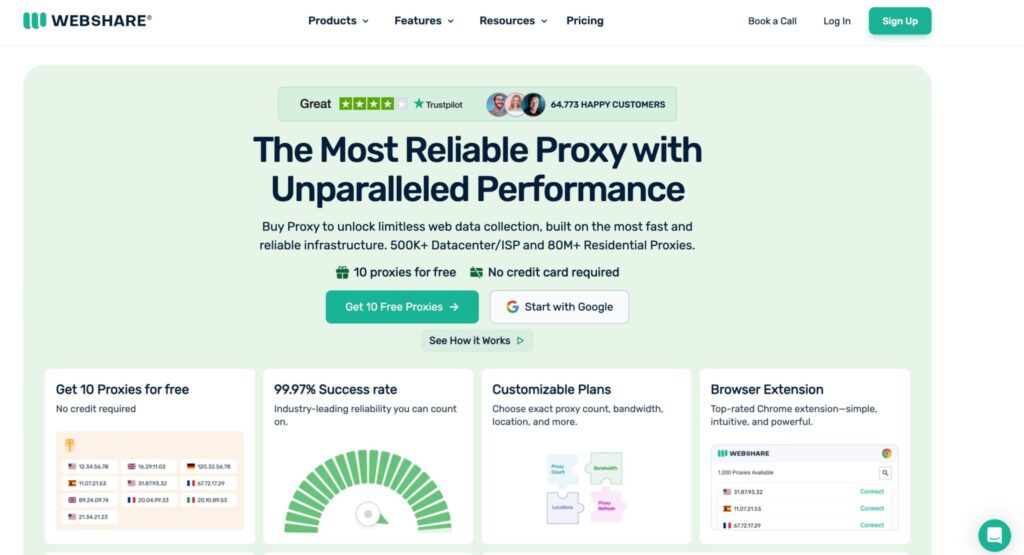
Webshare is one of the easiest providers to recommend for budget-focused users. It is simple, cheap, and developer friendly. You can buy datacenter proxies, static residential proxies, or rotating residential proxies without dealing with an enterprise sales process.
Webshare lists residential proxies from around $1.40 per GB and datacenter proxy servers from extremely low per-IP pricing. It also supports HTTP and SOCKS5, which makes it useful for scraping tools, SEO software, automation scripts, and browser-based workflows.
The dashboard is clean. The API is usable. The pricing is transparent enough for beginners. That is why Webshare is often the first “real” proxy provider many users try after getting tired of free proxies.
Best for: developers, solo SEOs, small scraping jobs, tool testing, low-budget automation
Avoid if: you need advanced managed scraping tools, dedicated support, or enterprise compliance workflows
Pro Tip: Start with Webshare if you are still testing your proxy workflow. Once your targets, request volume, and block rates are clear, then move higher up the market if needed.
2. Oxylabs: Best Overall Shared Proxy for Enterprise-Grade Reliability
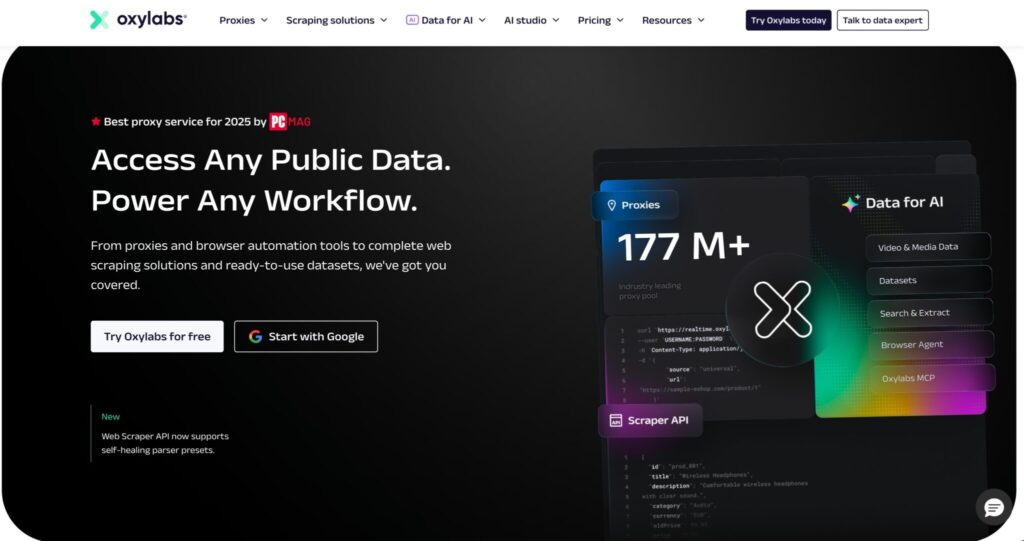
Oxylabs is the opposite of a cheap throwaway proxy seller. It is built for serious data operations, especially teams that care about uptime, support, compliance, and scale.
Its shared datacenter proxy product includes a 22K+ IP pool, automatic rotation, sticky sessions, multiple geo locations, and average uptime listed at 99.9%. Pricing for shared datacenter proxies starts from around $50 per month, with usage-based pricing also advertised from around $0.44 per GB.
Oxylabs is not the cheapest option, but it is reliable. That matters when your scraping pipeline feeds pricing intelligence, SEO dashboards, ad verification tools, or internal analytics.
Best for: agencies, enterprise scraping, SERP monitoring, ad verification, large-scale public data collection
Avoid if: you only need a few cheap proxies for casual browsing
Pro Tip: Use Oxylabs when failure costs more than the proxy bill. If blocked requests slow your team down, cheaper providers can become expensive fast.
3. Decodo: Best Value Shared Proxy for Agencies and Growing Teams
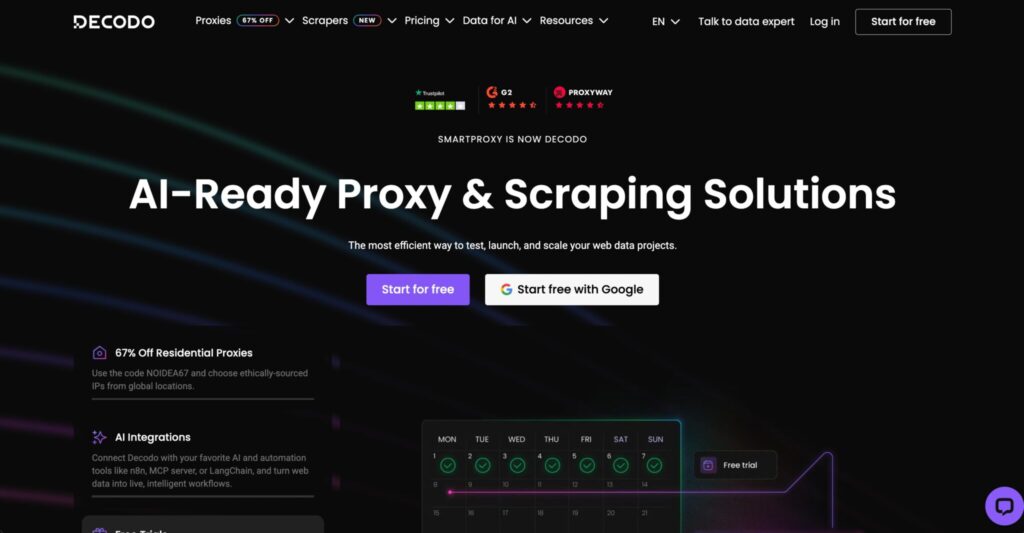
Decodo, formerly known as Smartproxy, is one of the strongest value picks in this category. It sits between budget providers and enterprise providers nicely.
Its shared datacenter proxy page advertises access to 40,000 datacenter IPs, with pricing described as low as $0.50 per GB and fixed monthly options around the shared pool model. Its residential proxy pricing starts from around $2 per GB, with smaller plans also available.
What makes Decodo attractive is balance. You get a cleaner product experience than many low-cost providers, but you do not have to jump straight into Bright Data or Oxylabs pricing.
Best for: SEO agencies, affiliate teams, mid-size scraping projects, growth teams
Avoid if: you need the largest enterprise pool or custom data infrastructure
Pro Tip: Decodo is a strong fit for agencies running several SEO tools at once because the pricing is still manageable while the pool quality is better than most bargain-bin options.
4. SOAX: Best Shared Proxy for Multi-Account Management and Granular Targeting
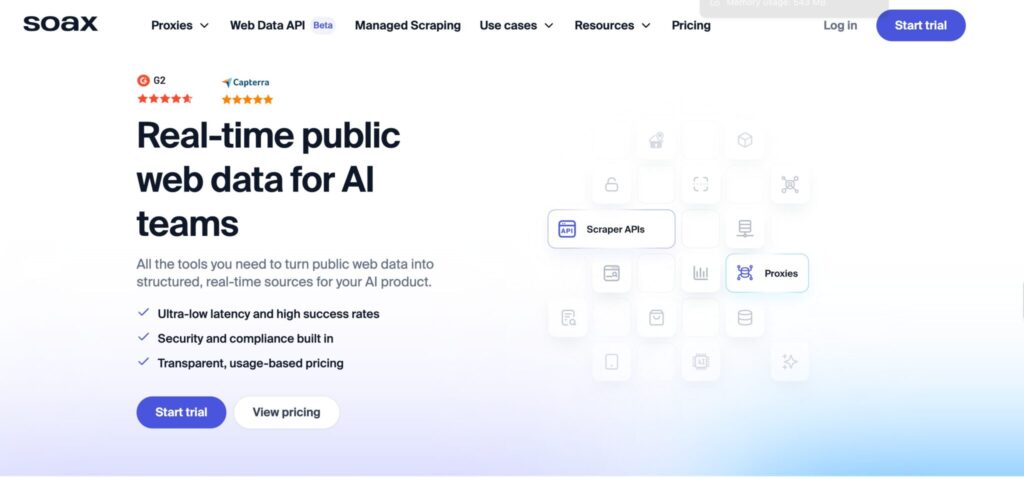
SOAX is best known for residential, mobile, ISP, and datacenter proxies with strong targeting controls. Its residential proxy plans start around $90 per month for 25 GB, with listed pricing around $3.60 per GB on the starter plan. SOAX also offers a 3-day trial with 400 MB for $1.99.
The real reason to consider SOAX is control. It is useful when you care about country, city, ISP, ASN, and rotation behavior. That makes it attractive for multi-account workflows, localized testing, ad verification, and market research across specific regions.
Best for: geo-targeted research, multi-account workflows, localized scraping, agencies
Avoid if: you want the cheapest possible shared datacenter proxies
Pro Tip: SOAX is stronger when location accuracy matters. If you only need random IP rotation, you may not need to pay for its targeting depth.
5. IPRoyal: Best Shared Proxy for Budget Teams with Non-Expiring Bandwidth
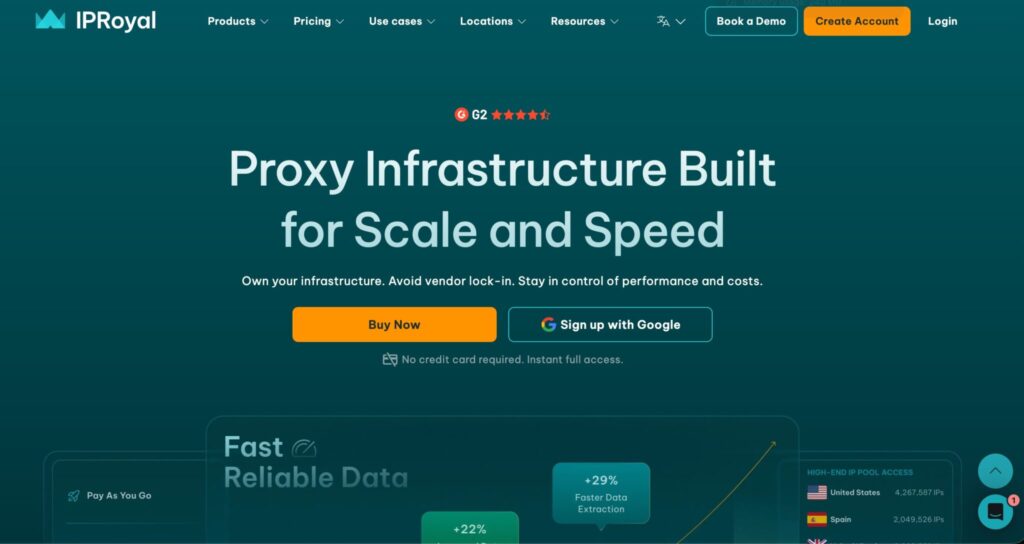
IPRoyal is a strong choice for smaller teams that hate wasting unused bandwidth. Its residential proxy plans include non-expiring traffic, which means purchased data stays available until used. IPRoyal lists residential proxies from around $1.75 per GB at higher volumes, with entry pricing around $7 per GB depending on plan size.
That non-expiring model is a big deal for freelancers, small agencies, and part-time scraping projects. With many providers, unused monthly bandwidth disappears. IPRoyal reduces that pressure.
Best for: budget teams, freelancers, low-volume scraping, users with irregular proxy needs
Avoid if: you need enterprise scraping APIs or the largest IP pool
Pro Tip: IPRoyal works well when your usage is inconsistent. Buy bandwidth when needed and avoid paying monthly for data you may not use.
6. Proxy-Cheap: Best Budget Shared Residential Option

Proxy-Cheap focuses heavily on affordability. Its residential proxy page lists access to 155M+ IPs and mentions prices starting around $2.99 per GB. Its own cheap proxy guide also highlights low-cost plans and shared datacenter options starting around $2.99.
This provider is for people who want a low entry cost and a simple buying experience. It is not the most polished enterprise option, but it can work well for small SEO tasks, research, basic scraping, and testing.
Best for: low-cost residential proxies, small teams, lightweight scraping, testing
Avoid if: you need premium support, enterprise SLAs, or advanced compliance controls
Pro Tip: Use Proxy-Cheap for non-critical tasks first. Test success rates on your exact target websites before scaling spend.
7. Bright Data: Best Enterprise Shared Proxy for Large-Scale Data Operations
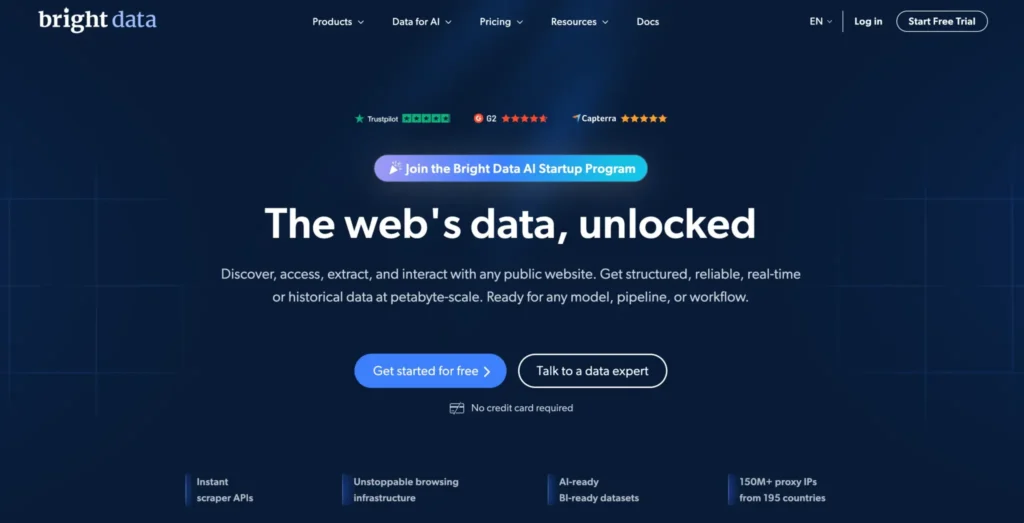
Bright Data is one of the biggest names in the proxy industry. It offers residential, datacenter, ISP, and mobile proxies, plus scraping APIs and datasets. Its datacenter proxy page mentions shared and dedicated datacenter proxy options with 1.3M IPs, unlimited bandwidth, and simultaneous connections. Its residential proxy pricing starts from around $5.88 per GB.
Bright Data is not a casual-user provider. It is best for companies that need scale, compliance, advanced tooling, and support. If you are running serious data collection across many regions and sources, Bright Data gives you more infrastructure than most shared proxy sellers.
Best for: enterprise scraping, market intelligence, pricing data, ad verification, large data teams
Avoid if: you only need cheap proxies for small tasks
Pro Tip: Bright Data makes the most sense when you need more than proxies. If scraping APIs, datasets, compliance tools, and enterprise controls matter, the higher cost is easier to justify.
8. ProxyEmpire: Best Shared Proxy for Unlimited Data Rollover
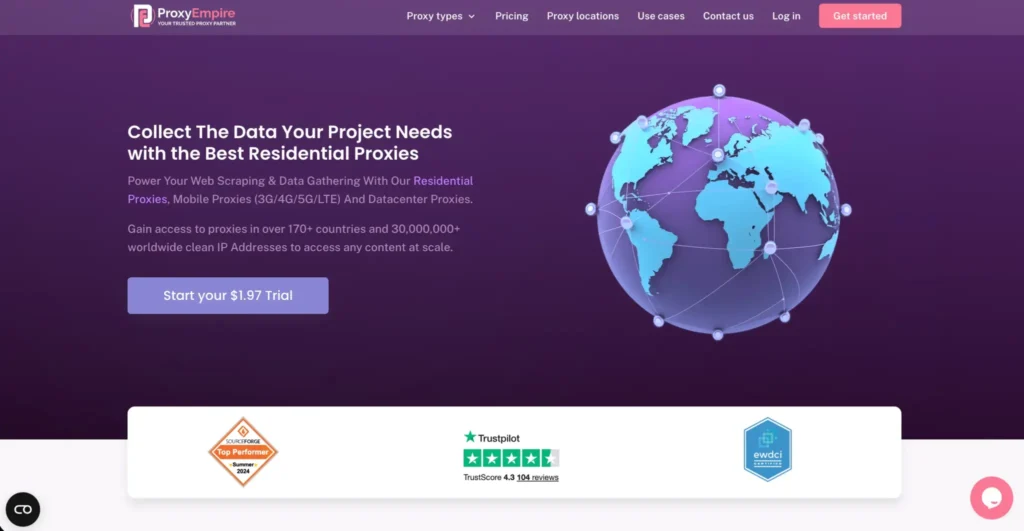
ProxyEmpire is a flexible option for residential, static residential, mobile, and datacenter proxies. Its site lists residential and static residential proxies from around $0.75, mobile proxies from around $1.25, and datacenter proxies from around $0.35, depending on plan type. Its pricing table also shows rotating datacenter plans from around $0.625 per GB and custom plans from lower rates at larger volumes.
The standout angle is rollover-style value. ProxyEmpire is attractive for users who want flexible usage without feeling forced to burn bandwidth quickly.
Best for: agencies, location-sensitive tasks, users who want rollover-friendly pricing
Avoid if: you want the most famous enterprise brand or the simplest beginner dashboard
Pro Tip: ProxyEmpire is worth testing if your traffic volume changes month to month. Rollover flexibility can save money over time.
9. Rayobyte: Best Shared Proxy for Ethical Datacenter and Residential Mix
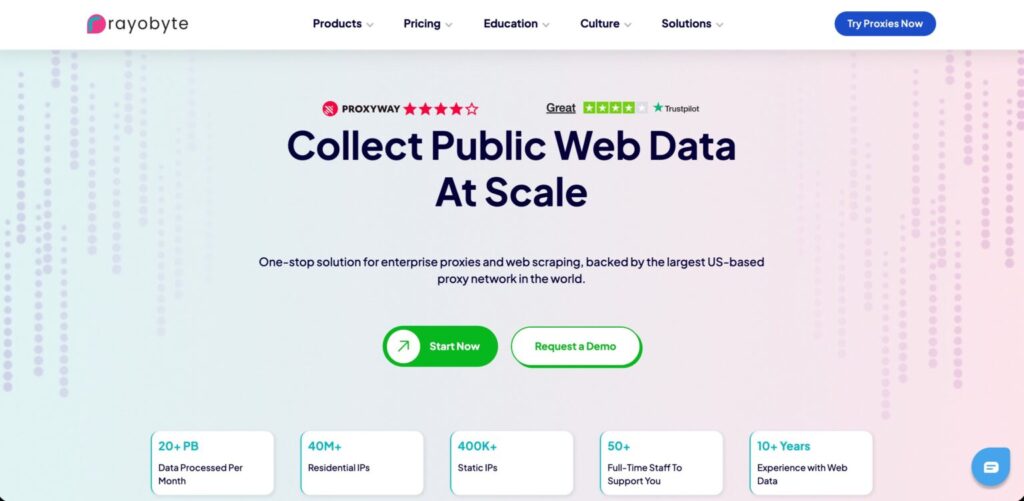
Rayobyte has a long history in datacenter proxies and has expanded strongly into residential and public web data collection. Its site highlights 40M+ residential IPs, 400K+ static IPs, and over 10 years of experience with web data.
Rayobyte is a good pick if you want a provider that blends datacenter, residential, ISP-style stability, and scraping-focused infrastructure. It is not always the cheapest, but it has a more serious feel than many small proxy shops.
Best for: ethical scraping, datacenter and residential mix, US-heavy proxy needs, data teams
Avoid if: you only care about the lowest per-GB price
Pro Tip: Rayobyte is worth considering for teams that want datacenter speed but may also need residential fallback for tougher targets.
Quick Comparison Table: Best Shared Proxy Providers
| Provider | Best For | Proxy Types | Starting Price Signal | Key Strength |
| Webshare | Budget users and developers | Datacenter, residential, static residential | Residential from around $1.40/GB | Very affordable and easy to use |
| Oxylabs | Enterprise reliability | Shared datacenter, residential, ISP, mobile | Shared datacenter from around $50/mo or $0.44/GB | Stable network and strong uptime |
| Decodo | Agencies and growing teams | Shared datacenter, residential, ISP, mobile | Shared datacenter from around $0.50/GB | Strong value for teams |
| SOAX | Granular geo targeting | Residential, mobile, ISP, datacenter | Residential starter around $90 for 25 GB | Location and ASN targeting |
| IPRoyal | Non-expiring bandwidth | Residential, ISP, datacenter, mobile | Residential from around $1.75/GB at scale | No-expiry traffic |
| Proxy-Cheap | Cheap residential proxies | Residential, datacenter, mobile | Residential around $2.99/GB | Low-cost access |
| Bright Data | Large-scale data operations | Residential, datacenter, ISP, mobile | Residential from around $5.88/GB | Enterprise tooling |
| ProxyEmpire | Rollover-friendly usage | Residential, mobile, datacenter, static residential | Datacenter from around $0.35 to $0.625/GB signals | Flexible plans |
| Rayobyte | Ethical datacenter and residential mix | Datacenter, residential, ISP, scraping tools | Custom and plan-based pricing | Strong US-based infrastructure |
How to Choose the Best Shared Proxy Provider
1. Check the IP Pool, Not Just the Price
A cheap proxy with a tiny abused pool is not cheap. It wastes time. Look for pool size, country coverage, and whether the provider separates datacenter, ISP, residential, and mobile traffic clearly.
For example, Oxylabs publicly lists a shared datacenter pool of 22K+ IPs, while SOAX lists large residential proxy access with bundled plans and strong targeting controls.
2. Understand Rotation Protocols
Rotation decides how often your IP changes. For scraping, rotating sessions help avoid rate limits. For login-based work, sticky sessions are safer because they keep the same IP for longer.
Look for:
| Rotation Feature | Why It Matters |
| Per-request rotation | Good for scraping many pages |
| Sticky sessions | Useful for sessions, carts, dashboards, and localized browsing |
| Manual rotation | Helpful for testing and troubleshooting |
| Geo-based rotation | Needed for country or city-specific data |
| ASN or ISP targeting | Useful for advanced localization and account workflows |
3. Match Proxy Type to the Job
Shared datacenter proxies are fast and cheap. Residential proxies look more natural but cost more. ISP proxies are stable and trusted, but usually pricier. Mobile proxies are best for social, app, and mobile-first platforms, but they are the most expensive.
Use datacenter proxies for speed and cost. Use residential proxies for harder targets. Use ISP proxies when you need stable sessions. Use mobile proxies only when the target environment truly requires mobile carrier traffic.
4. Test Block Rates Before Scaling
Never judge a proxy provider only by homepage claims. Run a small test with your real target websites. Measure success rate, CAPTCHA frequency, response time, timeout rate, and cost per successful request.
The best provider is not always the one with the lowest price per GB. It is the one with the lowest cost per clean result.
5. Check Compliance and Use Restrictions
Good providers care about acceptable use. That is not a bad thing. It protects the pool from abuse and keeps IP reputation healthier for everyone.
If a provider allows everything with no checks, that can look convenient at first. Later, it often means dirty IPs, more blocks, and poor support.
FAQs: Best Shared Proxy Providers 2026
What is a shared proxy?
A shared proxy is an IP address or proxy pool used by multiple customers instead of one exclusive user. It costs less than a dedicated proxy because the infrastructure is shared.
Are shared proxies safe?
Shared proxies can be safe if you buy from a reputable provider. Avoid free proxy lists because they can be unreliable, slow, or unsafe. Paid shared proxies from trusted providers are better for SEO tools, scraping, research, and testing.
What is the difference between shared and dedicated proxies?
Shared proxies are used by multiple users, so they are cheaper but may have weaker IP reputation. Dedicated proxies are used only by you, so they are cleaner, more stable, and better for sensitive workflows.
Can I use shared proxies for SEO tools?
Yes. Shared proxies can work well with rank trackers, SERP scrapers, keyword tools, backlink checkers, and competitor research tools. For heavy scraping, choose a provider with strong rotation and enough IP pool depth.
Why does my shared proxy keep getting blocked?
Your proxy may be blocked because the IP was overused, the target website has strict anti-bot systems, your rotation settings are poor, your request pattern looks automated, or other users damaged the IP reputation.
What is the cheapest legitimate shared proxy in 2026?
Webshare is one of the cheapest legitimate options for shared and datacenter-style proxy needs, with very low per-IP pricing and residential plans starting around $1.40 per GB. IPRoyal is also strong for budget users because its residential bandwidth does not expire.
Are shared residential proxies better than shared datacenter proxies?
Not always. Shared residential proxies are better for websites that block datacenter traffic aggressively. Shared datacenter proxies are better when speed, price, and high-volume requests matter more than looking like a home user.
Which shared proxy provider is best overall?
For most users, Webshare is the best budget pick, Decodo is the best value pick, and Oxylabs is the best overall pick for reliability. For enterprise data operations, Bright Data is the strongest option.
Conclusion: Best Shared Proxy Providers 2026
The best shared proxy provider depends on your use case.
Choose Webshare if you want the cheapest practical starting point. Choose Oxylabs if reliability matters most. Choose Decodo if you want strong value for agency work. Choose SOAX if targeting controls are important. Choose IPRoyal if non-expiring bandwidth fits your workflow. Choose Bright Data if your team needs enterprise infrastructure.
For most users, the smartest path is simple: start small, test real targets, measure block rates, then scale with the provider that gives the lowest cost per successful request.