
Backconnect proxies are built for one job: making large-scale proxy rotation easier.
Instead of loading thousands of proxy IPs into your scraper, bot, browser profile, price tracker, SERP tool, or research pipeline, you connect to one gateway. The provider handles the messy part behind the scenes: IP assignment, rotation, session control, load balancing, geo-targeting, and pool health.
That sounds simple, but the quality gap between providers is huge.
A weak backconnect setup burns through IPs, triggers blocks, creates unstable sessions, and makes your logs look like a crime scene. A good one quietly routes traffic through a clean, diverse IP pool, gives you control over rotation timing, supports sticky sessions, and scales without forcing your team to babysit credentials all day.
For 2026, the best backconnect proxy providers are not just selling “rotating IPs.” They are selling infrastructure. The difference shows up in pool size, response time, ASN diversity, session controls, protocol support, dashboard quality, support speed, pricing flexibility, and how cleanly the proxies fit into real workflows like public web scraping, ad verification, price monitoring, SEO tracking, market research, and AI data collection.
Use proxies responsibly. Stick to public data, respect site terms where applicable, avoid abusive request patterns, and do not use proxy infrastructure for spam, credential abuse, fraud, or unauthorized access.
What Makes Backconnect Proxies Different?
A backconnect proxy works through a stable gateway endpoint. Your tool connects to one host and port, while the provider routes each request through a rotating pool of exit IPs. Proxyway describes this model as a load-balancing server that selects an IP from the provider’s pool, while the gateway itself stays the same even when the exit IPs change.
That is the key difference.
With a normal static proxy list, you manage the IPs yourself. You import them, test them, rotate them, remove dead ones, and replace burned ones. With a backconnect proxy, the provider handles that logic. Your script keeps using the same endpoint, and the backend chooses the right exit IP based on your location, session, rotation, and authentication settings.
Bright Data also describes backconnect proxies as proxy servers that use a pool of residential proxies for continuous rotation, which is why the term is often used interchangeably with rotating residential proxy gateways.
Here is the practical difference:
| Proxy Type | How It Works | Best For |
|---|---|---|
| Static proxy | One fixed IP until you replace it | Account access, long sessions, controlled identity |
| Rotating proxy | IP changes based on request or time | Scraping, monitoring, localized research |
| Backconnect proxy | One gateway routes traffic through rotating backend IPs | Scale, automation, easy rotation management |
| Sticky backconnect proxy | One gateway keeps the same IP for a set session window | Logins, carts, multi-step flows, localized journeys |
The best backconnect proxies give you both rotation and control. You can rotate every request for crawling public pages, or keep the same IP for 10, 30, or 60 minutes when your workflow needs continuity.
That is where provider selection matters.
Quick Comparison: Best Backconnect Proxy Providers in 2026
| Rank | Provider | Best For | Pool / Coverage | Rotation & Session Control | Pricing Signal | Main Strength |
|---|---|---|---|---|---|---|
| 1 | Oxylabs | Enterprise scraping, AI data workflows | 175M+ residential IPs, 195 locations | Flexible session control, unlimited concurrent sessions | Residential plans shown from $6/GB on Starter, lower at higher tiers | Premium scale and reliability |
| 2 | Decodo | Best value gateway for teams | 125M+ IPs, 195+ locations | Rotating residential setup, scraping tools, developer-friendly dashboard | Residential proxies promoted from $2/GB | Strong balance of price, scale, and usability |
| 3 | Webshare | Developer-first teams | 80M+ residential IPs, 195+ locations | Backconnect supported on datacenter and residential proxies | Rotating residential shown from $1.40/GB | Clean setup, API-friendly, budget-friendly |
| 4 | Bright Data | Advanced proxy management | 400M+ rotating residential IPs, 195 countries | Proxy Manager, free geo-targeting, enterprise controls | Pay-as-you-go listed at $8/GB, promotional $4/GB at time of check | Deepest management stack |
| 5 | SOAX | Long sticky sessions and flexible data extraction | 155M+ residential IPs, 195+ locations | Residential, mobile, ISP, datacenter, and Web Data API credits | Starter shown at $3.60/GB, 25GB included | Strong for location-sensitive workflows |
| 6 | IPRoyal | Never-expiring traffic and simple rotation | Residential proxy dashboard with instant IP change | Auto-rotate every 1, 10, or 30 minutes | Pay-as-you-go and subscription pricing | Affordable and beginner-friendly |
| 7 | Proxy-Cheap | Low-cost rotating residential access | 50M+ residential IPs, 195+ countries claimed | Rotating residential with HTTPS/SOCKS5 support | 1GB plan shown at $4.99/GB | Cheap entry point for smaller workloads |
| 8 | ProxyEmpire | Unlimited rollover and mixed proxy types | 30M+ clean IPs, 195+ locations | Rotating residential, mobile, datacenter, sticky sessions docs | Trial shown at $1.97 | Good for teams that care about rollover and targeting |
| 9 | DataImpulse | Budget backconnect gateway | 90M+ residential IPs, 195 countries | Rotating and sticky sessions, HTTP(S)/SOCKS5 | Starts at $1/GB, traffic never expires | Best low-cost option for testing and lean teams |
9 Best Backconnect Proxy Providers in 2026
#1: Oxylabs: Best Backconnect Proxy for AI and Enterprise Workflows
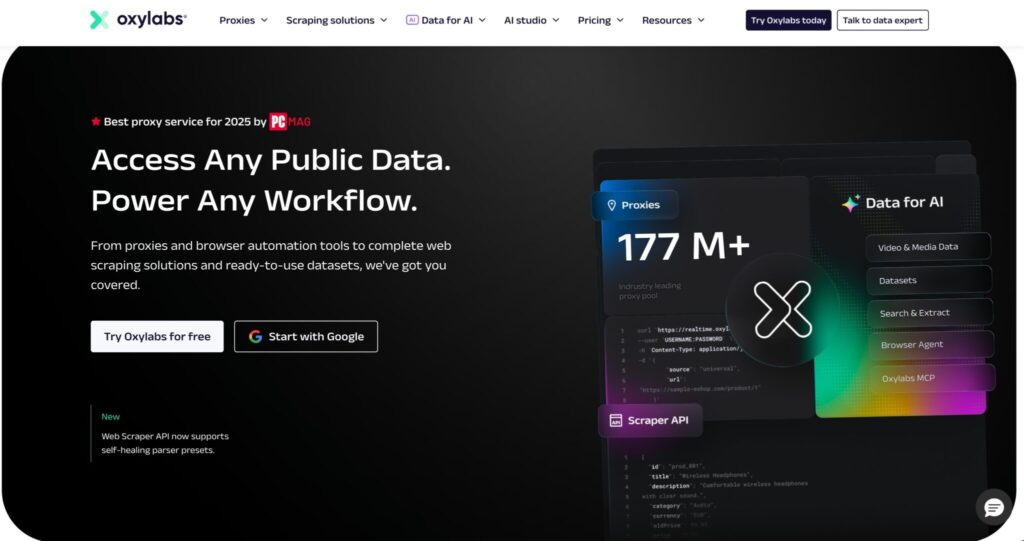
Oxylabs is the provider I would place at the top for enterprise-grade backconnect proxy workloads. It is not the cheapest option, and that is not really the point. Oxylabs is built for teams that care about uptime, IP quality, geo-targeting depth, support, and predictable scaling.
Its residential proxy product lists 175M+ residential IPs and coverage across 195 locations. The pricing page also highlights flexible session control, unlimited concurrent sessions, 24/7 support, and country, city, state, and ZIP-code targeting.
That combination makes Oxylabs especially strong for AI training data collection, large-scale public web scraping, brand monitoring, travel fare aggregation, review monitoring, cybersecurity research, and price intelligence.
The backconnect experience is clean because teams do not need to manually rotate massive proxy lists. You authenticate through a gateway, define targeting and session behavior, then let Oxylabs handle the exit IP routing.
Where Oxylabs stands out is operational maturity. You get documentation, account management, scraping APIs, and serious infrastructure depth. This matters when a project moves from “we need 20GB this month” to “we need stable extraction pipelines across 30 countries.”
Pros
| Pros | Details |
|---|---|
| Huge residential pool | Strong global coverage and deep targeting |
| Enterprise-ready | Good fit for teams with high request volume |
| Session control | Useful for both rotating and sticky workflows |
| Strong support | Better suited for serious operations than hobby use |
Cons
| Cons | Details |
|---|---|
| Not the cheapest | Better value appears at higher usage tiers |
| May be overkill | Small teams may not need this much infrastructure |
Pro-Tip: Use Oxylabs when failed requests cost more than the proxy bill. If your workflow feeds pricing intelligence, AI datasets, or business reporting, reliability usually beats the cheapest per-GB rate.
#2: Decodo: Best Value Backconnect Proxy Gateway
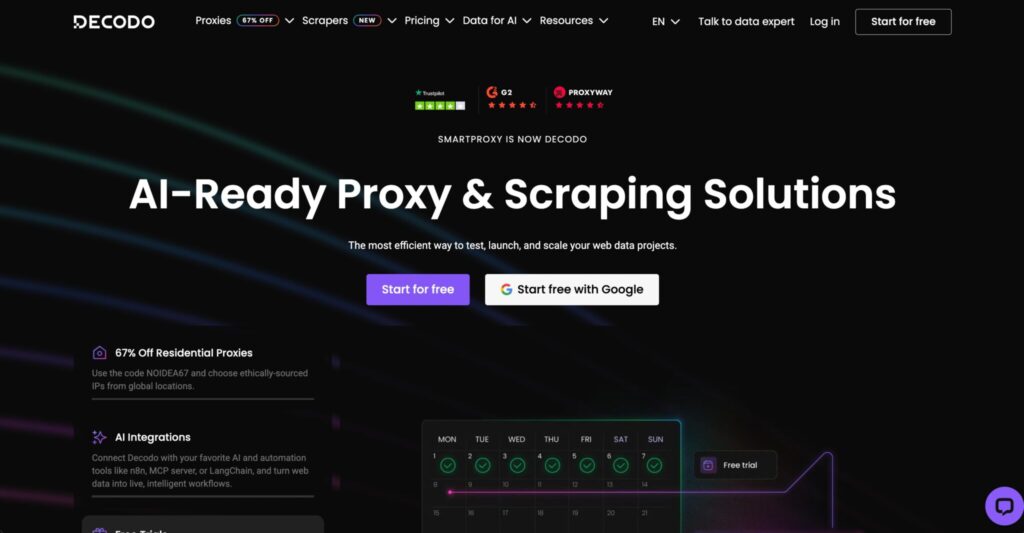
Decodo, formerly Smartproxy, has become one of the strongest value picks in the rotating and backconnect proxy market. Its current homepage lists 125M+ IPs, 195+ locations, 99.99% uptime, and residential proxies promoted from $2/GB.
The real appeal is balance. Decodo is easier to start with than many enterprise-first providers, but it still has enough pool size and tooling for professional teams. It is especially attractive for agencies, SEO teams, affiliate marketers, data teams, and smaller engineering teams that want reliable backconnect-style rotation without jumping straight into enterprise contracts.
The platform also leans into scraping workflows, with a Web Scraping API and AI-ready positioning. That matters because many buyers in 2026 are not just buying proxies. They are buying a stack that can support automation, structured extraction, and cleaner data delivery.
Decodo is also a good pick for teams that want to test fast. The dashboard is cleaner than many old-school proxy panels, and the setup process is friendly enough for non-networking experts.
Pros
| Pros | Details |
|---|---|
| Strong value | Good price-to-scale ratio |
| Large pool | 125M+ IPs and broad country coverage |
| Beginner-friendly | Easier setup than many advanced tools |
| Good for agencies | Works well for SEO, SERP, ad verification, and scraping teams |
Cons
| Cons | Details |
|---|---|
| Less advanced than Bright Data | Not as deep for complex enterprise routing |
| Pricing can vary by product | Check exact plan before scaling |
Pro-Tip: Decodo is a strong “first serious provider” for teams graduating from cheap proxy lists. You get enough structure to run real campaigns without drowning in configuration.
#3: Webshare: Best Backconnect Proxy for Developer-First Teams
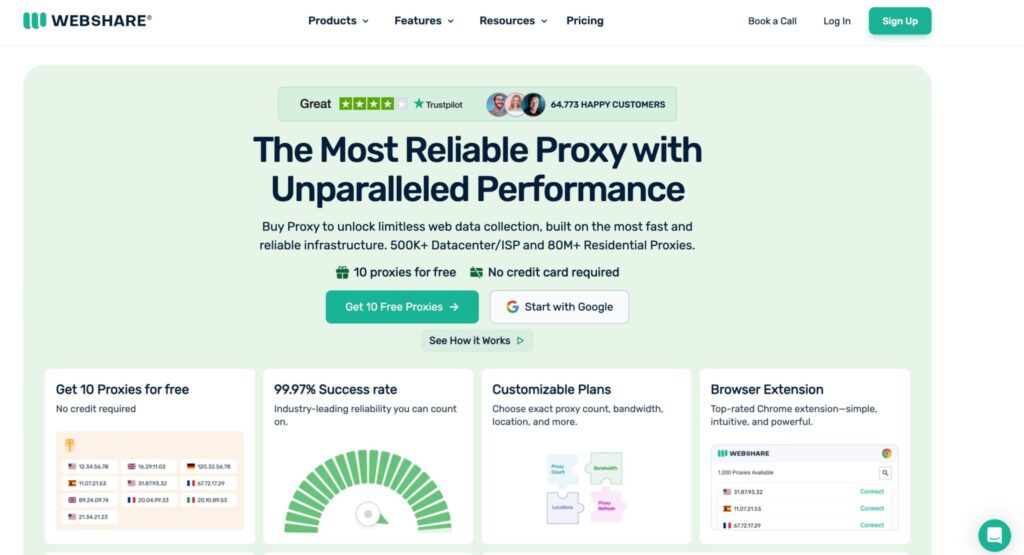
Webshare is one of the cleanest options for developers who want fast setup, simple pricing, and API-friendly proxy management. Its residential proxy page lists rotating residential proxies from $1.40/GB, while its backconnect proxy page says datacenter and residential proxies support the backconnect connection type.
That makes Webshare a practical pick for smaller teams, builders, SaaS products, and technical users who care about automation more than hand-holding.
Webshare also does a good job keeping its product categories clear: residential, datacenter, static residential, private proxies, dedicated proxies, and backconnect support. That helps when you are building mixed workflows. For example, you may use datacenter proxies for fast low-risk pages, then switch to rotating residential backconnect proxies for sites where residential IP reputation matters.
The provider’s strength is not massive enterprise consulting. It is clean self-service access.
Pros
| Pros | Details |
|---|---|
| Low starting price | Rotating residential pricing is competitive |
| Backconnect support | Works across datacenter and residential products |
| Developer-friendly | Dashboard and API are easy to work with |
| Flexible product range | Useful for teams mixing proxy types |
Cons
| Cons | Details |
|---|---|
| Less managed support | Not ideal if you need heavy account guidance |
| Fewer advanced scraping tools | More proxy-focused than full data platform |
Pro-Tip: Webshare is best when your team already knows what it is doing. If you have developers who can manage headers, sessions, retries, and rate limits properly, Webshare gives you a lot of value.
#4: Bright Data: Most Advanced Backconnect Proxy Management
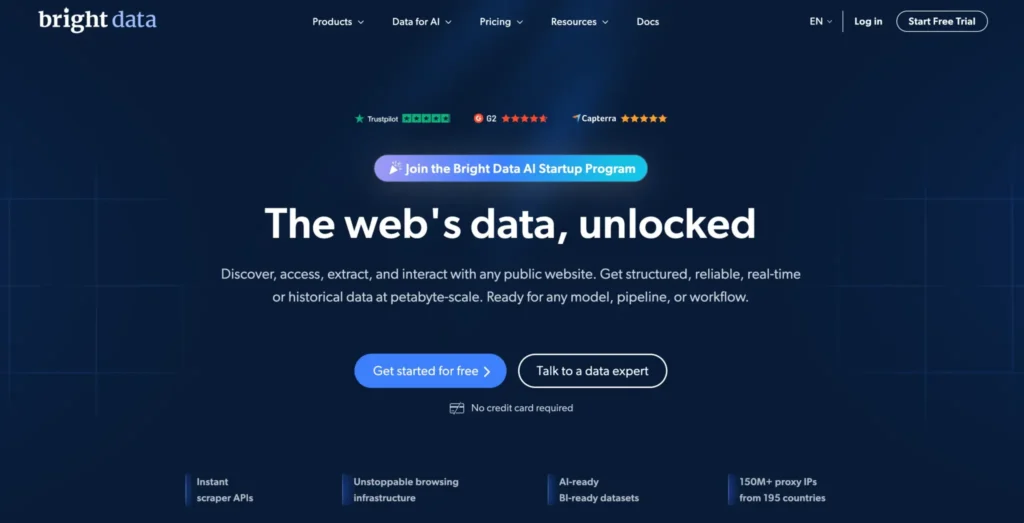
Bright Data is the power-user option. It is not built only for people who need proxies. It is built for companies that need proxy infrastructure, scraping APIs, datasets, SERP APIs, browser APIs, proxy management, and enterprise compliance controls under one roof.
Its residential pricing page lists 400M+ rotating residential IPs in 195 countries, free country, state, city, and ZIP-code geo-targeting, and a pay-as-you-go plan listed at $8/GB with a promotional $4/GB rate at the time of checking. The same pricing page also references free Proxy Manager, 99.99% network uptime, unlimited seats, premium SLA, and custom enterprise pricing.
That makes Bright Data one of the most advanced backconnect proxy providers for companies that need fine-grained control. If your workflows need ASN targeting, location filtering, sticky sessions, advanced rotation settings, and detailed monitoring, Bright Data is difficult to beat.
The tradeoff is complexity. Beginners may find the platform heavier than needed. But for mature data teams, that complexity is often useful.
Pros
| Pros | Details |
|---|---|
| Massive network | One of the largest residential proxy pools |
| Advanced controls | Strong targeting, rotation, and management features |
| Full data stack | APIs, datasets, browser tools, scraping tools |
| Enterprise fit | Better for serious data operations |
Cons
| Cons | Details |
|---|---|
| Can feel complex | Not the simplest platform for beginners |
| Premium pricing | Cheaper options exist for basic rotation |
Pro-Tip: Choose Bright Data when the proxy layer is only one part of a bigger data acquisition system. If you also need SERP APIs, datasets, or managed data delivery, it can replace several separate tools.
#5: SOAX: Best Backconnect Proxy with Ultra-Long Sticky Sessions
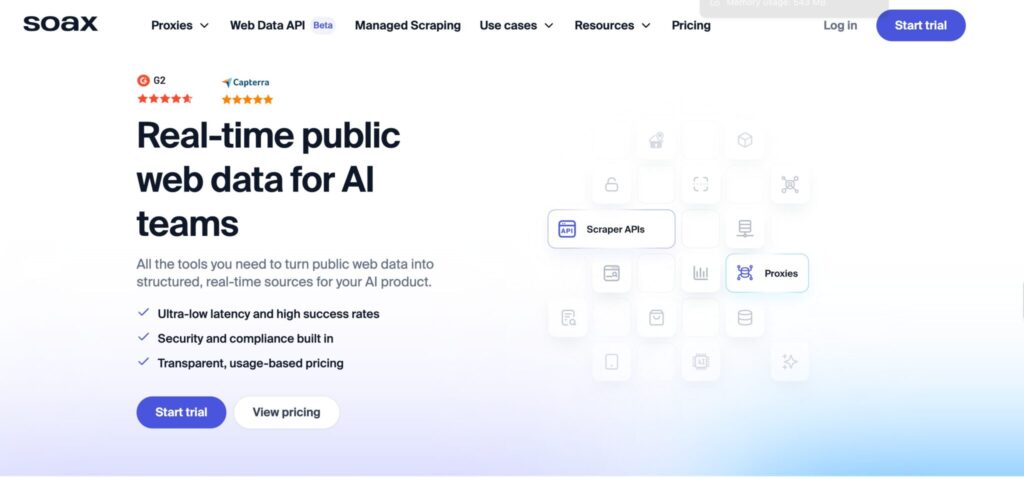
SOAX is a strong choice for users who need precise targeting and session stability. Its residential proxy page lists 155M+ IPs in 195+ locations, and its bundled pricing model gives access across residential proxies, mobile proxies, US datacenter proxies, ISP proxies, and Web Data API under one credit-based plan. The Starter plan is shown at $3.60/GB with 25GB included.
SOAX works well for workflows where location accuracy matters. Think localized price checks, ad verification, regional SERP tracking, app testing, and market research where you need traffic to appear from a specific city or country.
The biggest advantage is flexibility. You are not locked into only one proxy category. You can test residential, mobile, ISP, and datacenter options based on the target site’s sensitivity and your cost limits.
SOAX is also useful when sticky sessions matter. Some tasks break when your IP changes too quickly. Login flows, checkout journeys, search personalization, and localized browsing sessions may need a consistent IP for several minutes or longer.
Pros
| Pros | Details |
|---|---|
| Strong geo-targeting | Good for country and city-level workflows |
| Multiple proxy types | Credits work across different products |
| Good session flexibility | Useful for sticky and rotating setups |
| Data API included | Helpful for teams that want more than raw proxies |
Cons
| Cons | Details |
|---|---|
| Minimum monthly spend | Not always ideal for tiny tests |
| Pricing structure needs review | Credit model may require planning |
Pro-Tip: SOAX is a smart pick when you are still testing which proxy type works best. You can compare residential, mobile, ISP, and datacenter routes before committing heavily.
#6: IPRoyal: Best Backconnect Proxy with Never-Expiring Traffic
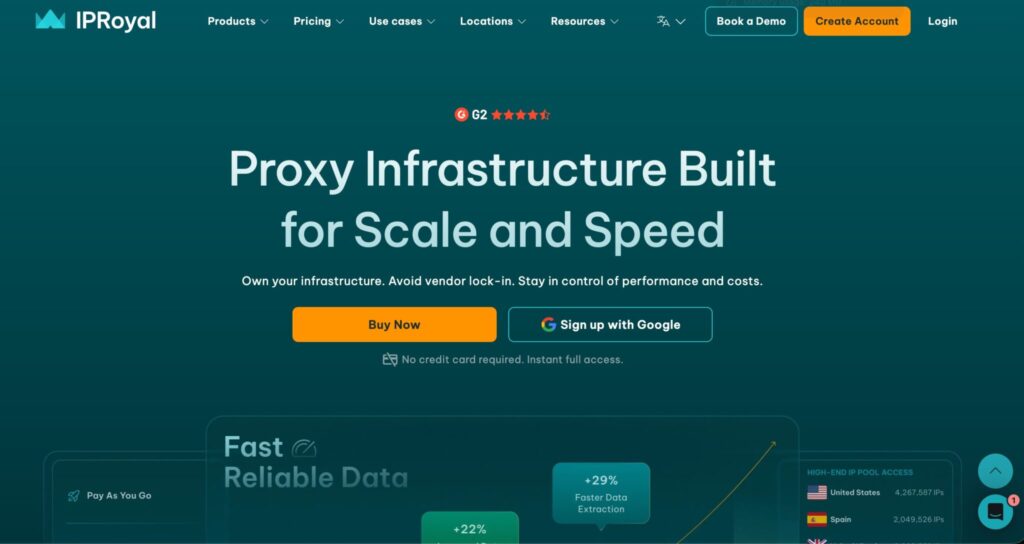
IPRoyal is popular because it keeps things simple. It is not trying to be the most complex proxy infrastructure platform in the market. Instead, it focuses on affordability, flexible buying, and an easy dashboard.
Its residential proxy pricing page highlights instant IP change and auto-rotation, allowing users to replace residential IPs at set intervals such as every 1, 10, or 30 minutes.
That makes IPRoyal useful for buyers who want practical rotation controls without needing an enterprise setup. It is a strong fit for freelancers, small agencies, SEO users, lightweight scraping jobs, market research, and testing environments.
The never-expiring traffic angle is also useful. Many proxy providers force you into monthly usage windows. If your usage is inconsistent, expiring bandwidth can quietly waste budget. IPRoyal is often attractive to users who run projects in bursts rather than steady daily volume.
Pros
| Pros | Details |
|---|---|
| Simple rotation controls | Easy auto-rotate intervals |
| Good for beginners | Dashboard is easy to understand |
| Budget-friendly | Strong fit for smaller teams |
| Flexible usage | Helpful for inconsistent workloads |
Cons
| Cons | Details |
|---|---|
| Smaller enterprise stack | Less advanced than Bright Data or Oxylabs |
| Not ideal for massive data operations | Better for lean to mid-sized use cases |
Pro-Tip: IPRoyal is a good fit when your proxy usage is uneven. If you scrape heavily for three days, then pause for two weeks, non-expiring traffic can help control waste.
#7: Proxy-Cheap: Most Affordable Backconnect Proxy Gateway

Proxy-Cheap is built around affordability. Its rotating residential proxy page shows a 1GB monthly option at $4.99/GB and describes rotating residential proxies with pay-as-you-go flexibility.
This is a provider for users who want to keep costs low while still getting access to rotating residential infrastructure. It can work well for smaller scraping jobs, regional checks, testing, lightweight SEO monitoring, and projects where budget matters more than enterprise polish.
Proxy-Cheap supports common proxy use cases and offers products across static residential, rotating residential, datacenter, IPv6, and mobile proxies. That variety helps buyers who want one affordable vendor for several proxy categories.
Still, do not judge it against Oxylabs or Bright Data on the same enterprise criteria. Proxy-Cheap is not trying to be a premium data acquisition platform. It is a cost-focused proxy gateway.
Pros
| Pros | Details |
|---|---|
| Affordable entry | Good for low-budget users |
| Multiple proxy types | Residential, datacenter, mobile, IPv6 options |
| Pay-as-you-go options | Useful for flexible usage |
| Simple enough | Easy to start without much overhead |
Cons
| Cons | Details |
|---|---|
| Less enterprise depth | Not ideal for complex data pipelines |
| Quality can vary by use case | Test before scaling heavily |
Pro-Tip: Use Proxy-Cheap for controlled workloads first. Run a small test across your target locations, measure success rate, latency, and block rate, then scale only the routes that perform well.
#8: ProxyEmpire: Best Backconnect Proxy with Unlimited Rollover
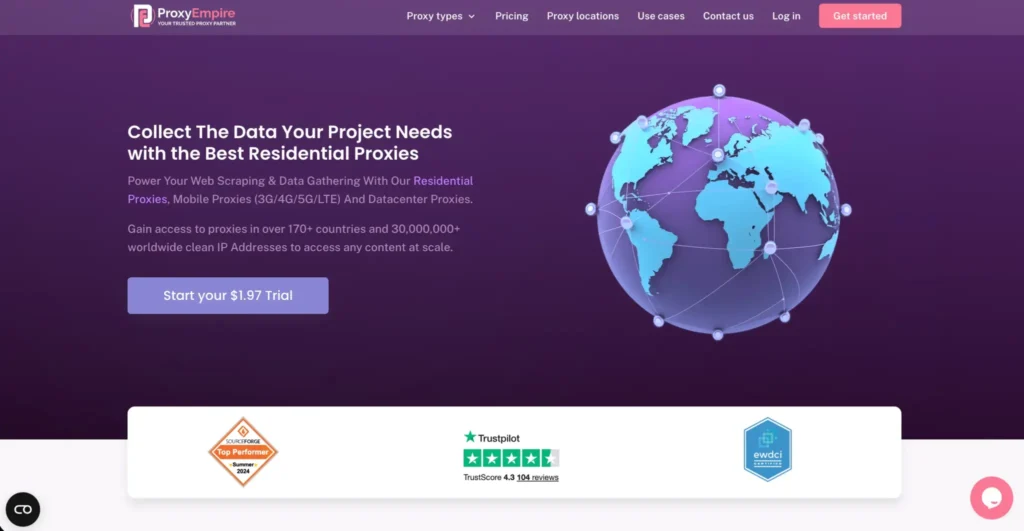
ProxyEmpire is a good fit for buyers who care about rollover, mixed proxy types, and flexible targeting. Its homepage lists residential, mobile, and datacenter proxy products, 30M+ clean IPs, 99.9% uptime, and 24/7 support. Its docs also reference rotation control, sticky sessions, protocol support, billing rollover, and unused data questions.
ProxyEmpire is especially interesting for teams that do not want bandwidth waste. If unused data can roll over, that gives more breathing room for seasonal or campaign-based workloads.
Its product mix is broad: rotating residential, unlimited residential, static residential, rotating mobile, dedicated mobile, and rotating datacenter. That gives buyers room to build different routes for different jobs.
For example, a brand monitoring workflow may use rotating residential IPs in many countries, while app testing may use mobile proxies, and internal QA may use datacenter proxies.
Pros
| Pros | Details |
|---|---|
| Broad product range | Residential, mobile, datacenter, static options |
| Rollover-friendly positioning | Useful for inconsistent workloads |
| Sticky session docs | Helpful for session-based tasks |
| Good targeting options | Strong for global campaigns |
Cons
| Cons | Details |
|---|---|
| Smaller than giant providers | Lower pool size than Oxylabs or Bright Data |
| Pricing details can require checking | Confirm exact plan terms before buying |
Pro-Tip: ProxyEmpire is worth testing when your traffic volume changes month to month. Rollover-friendly plans can be more valuable than a slightly lower headline per-GB price.
#9: DataImpulse: Best Budget Backconnect Proxy Gateway
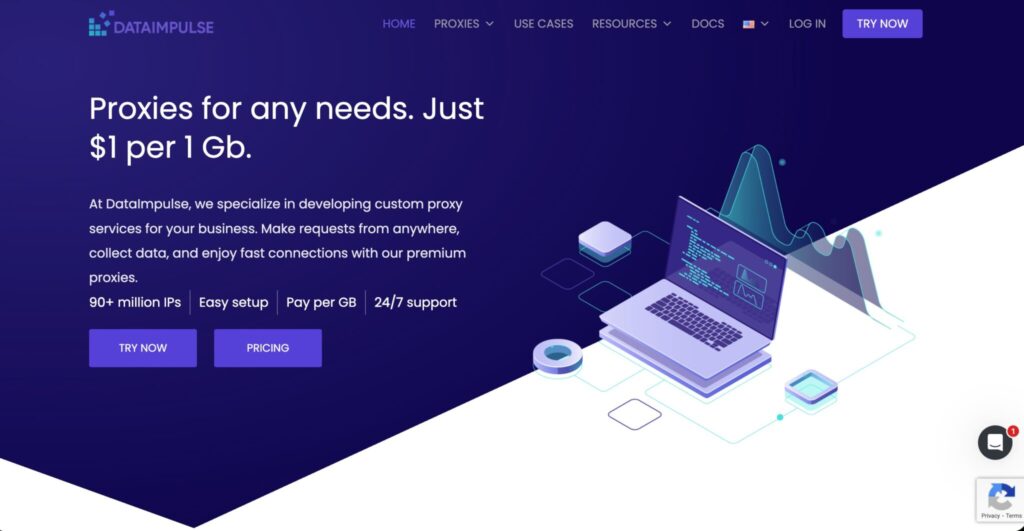
DataImpulse is one of the strongest budget picks in 2026. Its residential proxy page lists pay-as-you-go pricing from $1/GB, traffic that never expires, HTTP(S)/SOCKS5 support, rotating sessions, sticky sessions, API access, country targeting, 90M+ residential IPs, and 195 countries.
That is a serious value proposition.
DataImpulse works best for teams that need low-cost residential rotation without enterprise complexity. It is useful for SERP tracking, price intelligence, ad verification, web scraping, and smaller data jobs where cost control is the main priority.
The never-expiring traffic model is also a big advantage. If you are testing multiple projects, building a proof of concept, or running irregular campaigns, you do not want unused bandwidth disappearing at the end of the month.
Of course, budget providers should always be tested carefully. Check latency, IP freshness, target success rate, country availability, and support responsiveness before depending on them for mission-critical work.
Pros
| Pros | Details |
|---|---|
| Very low pricing | Starts from $1/GB |
| Traffic never expires | Great for irregular usage |
| Rotating and sticky sessions | Covers both crawl and session workflows |
| HTTP(S)/SOCKS5 support | Easy integration with common tools |
Cons
| Cons | Details |
|---|---|
| Less enterprise polish | Not as mature as premium platforms |
| Test before scaling | Quality should be validated per target |
Pro-Tip: DataImpulse is excellent for testing new projects. Use it to validate target behavior, estimate bandwidth needs, and build early scraping logic before deciding whether you need a premium provider.
How to Choose the Best Backconnect Proxy Provider
1. Start With the IP Pool, But Do Not Stop There
A large IP pool looks impressive, but pool size alone does not guarantee success. You also need clean IPs, real residential diversity, strong country availability, enough ASN spread, and active pool maintenance.
For example, Bright Data lists 400M+ rotating residential IPs, Oxylabs lists 175M+ residential IPs, Decodo lists 125M+ IPs, and DataImpulse lists 90M+ residential IPs. Those numbers matter, but the real question is how many usable IPs are available for your target location and use case.
A provider with fewer but cleaner IPs in your target country may outperform a massive pool that is noisy or poorly matched.
2. Match Rotation Timing to the Workflow
Use fast rotation when each request is independent. Product pages, public SERPs, catalog checks, and broad discovery crawls usually benefit from frequent IP changes.
Use sticky sessions when the journey needs continuity. Login flows, multi-page browsing paths, search personalization, localized carts, or session-based testing often break if the IP changes too quickly.
The best providers let you control both.
3. Check Protocol Support
At minimum, look for HTTP and HTTPS support. SOCKS5 is useful when your tool needs more flexible traffic handling. DataImpulse, for example, lists HTTP(S)/SOCKS5 support on its residential proxy page.
For developers, protocol support can decide whether integration takes 10 minutes or turns into a debugging headache.
4. Review Geo-Targeting Depth
Country targeting is common. City, state, ZIP, ASN, and carrier targeting are more advanced.
If you are doing SERP tracking, ad verification, pricing checks, or localized research, geo-targeting is not a bonus. It is the whole point.
Oxylabs and Bright Data both highlight deep location targeting options, while providers like SOAX and ProxyEmpire also position themselves around broad location coverage.
5. Calculate Real Cost, Not Just Price per GB
A cheap proxy that fails 40% of requests is not cheap.
Calculate:
| Cost Factor | Why It Matters |
|---|---|
| Price per GB | Main bandwidth cost |
| Minimum spend | Can make “cheap” plans expensive |
| Traffic expiry | Expiring bandwidth wastes money |
| Success rate | Failed requests increase total cost |
| Latency | Slow requests reduce throughput |
| Support | Poor support costs engineering time |
| Add-ons | Some tools charge extra for targeting or APIs |
For small teams, DataImpulse, Webshare, IPRoyal, and Proxy-Cheap can be strong budget options. For enterprise teams, Oxylabs and Bright Data may justify higher pricing through reliability and tooling.
6. Test With Your Actual Target Sites
Do not buy based only on reviews. Test with your real workflow.
Run a small pilot and measure:
| Metric | Good Sign |
|---|---|
| Success rate | High number of completed requests |
| Block rate | Low number of CAPTCHA, 403, or timeout responses |
| Latency | Stable response times |
| Location accuracy | IPs match required countries or cities |
| Session stability | Sticky sessions hold long enough |
| Support speed | Provider answers technical questions clearly |
The “best” provider is the one that works on your targets, in your locations, at your volume.
FAQs: Best Backconnect Proxy Providers in 2026
What is a backconnect proxy?
A backconnect proxy is a gateway-based proxy setup where your tool connects to one stable endpoint, while the provider routes traffic through a rotating pool of backend IPs. The gateway stays the same, but the exit IP can change based on your rotation settings, session rules, or location targeting.
Are backconnect proxies the same as rotating proxies?
They are closely related, but not always identical. A rotating proxy changes IPs over time or per request. A backconnect proxy usually gives you one gateway that handles that rotation in the backend. In simple terms, backconnect is often the gateway model used to deliver rotating proxies at scale.
Can I use sticky sessions with backconnect proxies?
Yes, many providers support sticky sessions. Sticky sessions keep the same exit IP for a defined period, which helps when a task needs continuity. This is useful for login flows, carts, multi-step browsing, localized testing, and any workflow where switching IPs mid-session could break the process.
How do backconnect proxies improve web scraping success rates?
They reduce manual proxy management and distribute requests across a larger IP pool. Instead of hammering a site from one IP, your scraper can route requests through rotating residential, mobile, ISP, or datacenter IPs. That can reduce rate-limit pressure when used responsibly with proper request pacing and public data workflows.
What is the difference between backconnect residential and backconnect datacenter proxies?
Backconnect residential proxies route traffic through residential IPs assigned by internet service providers to real users or devices. They are better for reputation-sensitive targets but usually cost more per GB. Backconnect datacenter proxies route traffic through data center IPs. They are faster and cheaper, but easier for advanced systems to identify as proxy traffic.
Which backconnect proxy provider is best for beginners?
Decodo, Webshare, IPRoyal, and DataImpulse are easier starting points for most beginners. Decodo gives a good balance of usability and scale. Webshare is clean for developers. IPRoyal is simple and flexible. DataImpulse is strong for low-cost testing.
Which backconnect proxy provider is best for enterprise scraping?
Oxylabs and Bright Data are the strongest enterprise picks. Oxylabs is excellent for large-scale residential proxy workflows, AI data collection, and high-volume scraping. Bright Data is best when you need advanced proxy management, APIs, datasets, and enterprise controls in one platform.
Are cheap backconnect proxies worth it?
Cheap backconnect proxies can be worth it for testing, light scraping, SERP checks, and smaller workflows. But you should always test success rate, speed, IP quality, and target compatibility. A low per-GB price is only useful if the proxies actually complete the job.
How much do backconnect proxies cost in 2026?
Pricing varies widely. Budget residential options can start around $1/GB, while premium and enterprise plans may range from a few dollars per GB to custom pricing at scale. DataImpulse lists residential pricing from $1/GB, Webshare lists rotating residential pricing from $1.40/GB, SOAX shows plans from $3.60/GB, and Oxylabs lists residential starter pricing at $6/GB with lower rates on larger plans.
Conclusion: Best Backconnect Proxy Providers in 2026
The best backconnect proxy provider depends on what you are trying to run.
Choose Oxylabs if you need enterprise-grade reliability, huge residential coverage, and serious support. Choose Bright Data if you want the most advanced proxy management stack with APIs, datasets, and granular controls. Choose Decodo if you want the best balance of price, ease of use, and scale. Choose Webshare if your developers want clean, affordable, API-friendly proxies. Choose SOAX if geo-targeting and sticky sessions matter. Choose IPRoyal if you want simple rotation and flexible buying. Choose Proxy-Cheap if budget is tight. Choose ProxyEmpire if rollover and mixed proxy types are important. Choose DataImpulse if you want the lowest-cost residential backconnect option for testing and lean workflows.
For most buyers, the smart move is not to pick the biggest provider blindly. Start with your target sites, countries, bandwidth needs, and session requirements. Then test two or three providers with the same workload.
That is how you find the real winner.