
Brazil is not a small proxy market. It is one of the most important digital economies in Latin America, with a huge online population, strong mobile usage, regional pricing differences, Portuguese-language SERPs, local e-commerce platforms, and a fragmented ISP landscape. Brazil had around 217 million active cellular mobile connections in late 2025, equal to 102% of the population, which makes mobile and residential IP quality especially important for Brazil-focused testing, research, and data collection.
A good Brazil proxy provider should not just give you “BR” in a dropdown. It should offer clean Brazilian IPs, stable sessions, rotation controls, useful geo-targeting, good success rates, and enough IP depth to avoid burning through the same small pool. For serious scraping, ad verification, SERP monitoring, app localization, marketplace research, or brand protection, that difference matters a lot.
Below is a practical, buyer-focused breakdown of the best Brazil proxy providers in 2026.
What Makes a Proxy Great for Brazil?
Brazil has a few proxy challenges that you do not always see in smaller markets.
First, Brazil is geographically large. A São Paulo IP may not behave the same way as a Recife, Brasília, Rio de Janeiro, Salvador, or Curitiba IP when you are checking local search results, delivery coverage, ads, app availability, or regional pricing. City-level targeting is not just a nice extra for Brazil. For some projects, it is the whole point.
Second, Brazil is strongly mobile-driven. If your project involves mobile apps, social platforms, app stores, mobile ads, or local consumer behavior, residential proxies may not always be enough. Mobile proxies can look more natural for mobile-first workflows, but they cost more and require careful rotation.
Third, Brazil has major national telecom players and a long tail of regional providers. Reports on the Brazilian broadband market show national providers like Vivo, TIM, Claro, and regional operators competing across key cities, with performance varying by location. For proxy buyers, this means ASN and city targeting can be useful when accuracy matters.
A strong Brazil proxy provider should offer:
- Large Brazilian residential IP coverage
- City, state, ZIP, or ASN targeting where possible
- Sticky sessions for logins, carts, testing, and multi-step flows
- Fast rotation for scraping and market monitoring
- HTTP, HTTPS, and SOCKS5 support
- Transparent pricing
- Clean sourcing and compliance checks
- Good dashboard controls and API support
Pro-Tip: For Brazil SERP tracking, ad verification, and marketplace research, start with residential proxies. Move to mobile proxies only when you specifically need mobile carrier behavior or mobile app realism.
7 Best Brazil Proxy Providers in 2026
#1: Oxylabs: Best Overall Brazil Proxy Provider
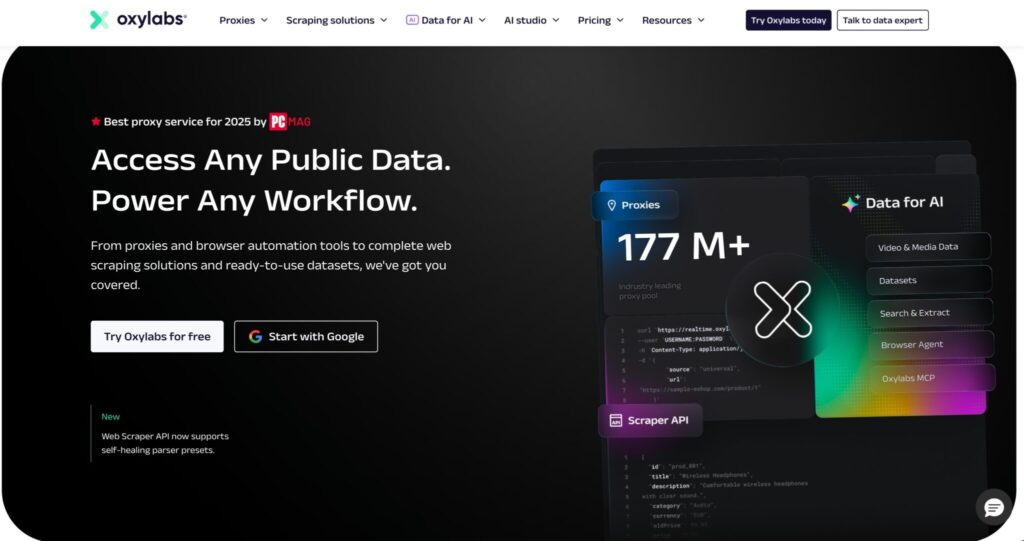
Oxylabs is the safest pick for teams that need scale, reliability, and fewer surprises. It is not the cheapest Brazil proxy provider, but it is one of the strongest choices for high-volume scraping, ad verification, SEO monitoring, travel research, e-commerce intelligence, and enterprise workflows.
Its Brazil proxy page highlights a large Brazil residential proxy pool, unlimited concurrent sessions, and city-level targeting at no extra cost. Oxylabs also advertises a broader residential network of 175M+ IPs and support for SOCKS5 on residential proxies, which is useful if your tooling needs more than basic HTTP or HTTPS routing.
What makes Oxylabs stand out for Brazil is control. If you need Brazilian IPs by city, want to run many threads at once, or need infrastructure that can handle serious scraping loads, Oxylabs feels built for that level of work. Its dashboard and documentation are also more mature than most budget providers.
The downside is price. Oxylabs is better suited for businesses, agencies, data teams, and affiliate/SEO operators who care more about success rate than saving a few dollars per GB.
Best for: Enterprise scraping, SERP monitoring, ad verification, e-commerce intelligence, large-scale public data collection.
Pros
- Strong Brazil residential coverage
- City-level targeting
- Unlimited concurrent sessions
- SOCKS5 support
- Reliable for scaling workloads
- Good documentation and support
Cons
- More expensive than budget providers
- May be overkill for small one-off testing
- Some advanced features require proper setup
Pro-Tip: Use Oxylabs when failed requests cost more than proxy bandwidth. If your workflow involves retries, blocked sessions, or unstable cheaper proxies, Oxylabs can become cheaper in practice.
#2: Decodo: Best Value Brazil Proxy Provider
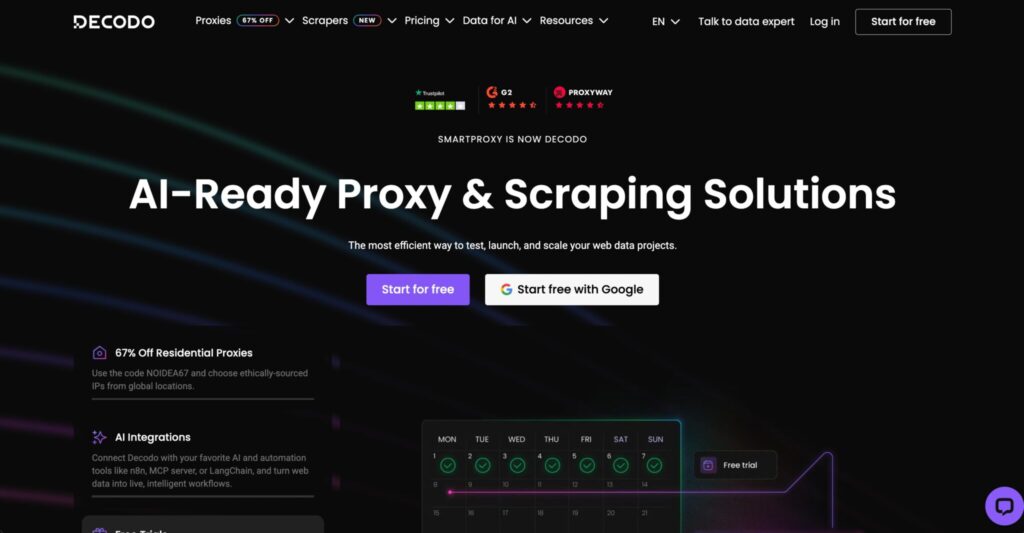
Decodo, formerly Smartproxy, is one of the best middle-ground choices for Brazil proxies. It gives you solid infrastructure, good usability, and broad proxy type coverage without feeling as heavy or enterprise-first as Oxylabs or Bright Data.
Decodo’s Brazil proxy page mentions residential, ISP, mobile, and datacenter IP options across Brazil, along with 24/7 support, a 3-day trial, and a 14-day money-back option. Its main site lists residential proxies from $2/GB, static residential proxies from $0.27/IP, and mobile proxies from $2.25/GB.
For Brazil use cases, Decodo is especially good when you want a clean dashboard, quick setup, and enough targeting control for SEO, scraping, QA, and localization tasks. It is also friendly for agencies because the learning curve is not steep.
Decodo may not always give the same deep enterprise customization as Oxylabs or Bright Data, but for many teams, that is fine. It gives you enough power without turning proxy management into a full-time job.
Best for: Agencies, SEO teams, mid-sized scraping projects, localization testing, app QA, price monitoring.
Pros
- Good balance of price and quality
- Brazil residential, ISP, mobile, and datacenter options
- Easy dashboard
- Trial and refund options
- Strong fit for SEO and scraping workflows
Cons
- Not the absolute cheapest
- Advanced users may want deeper ASN-level control
- Heavy enterprise scraping may require custom plans
Pro-Tip: Decodo is a smart first paid provider for Brazil if you are moving away from free proxies or unreliable small vendors.
#3: Webshare: Best Free Brazil Proxy Tier
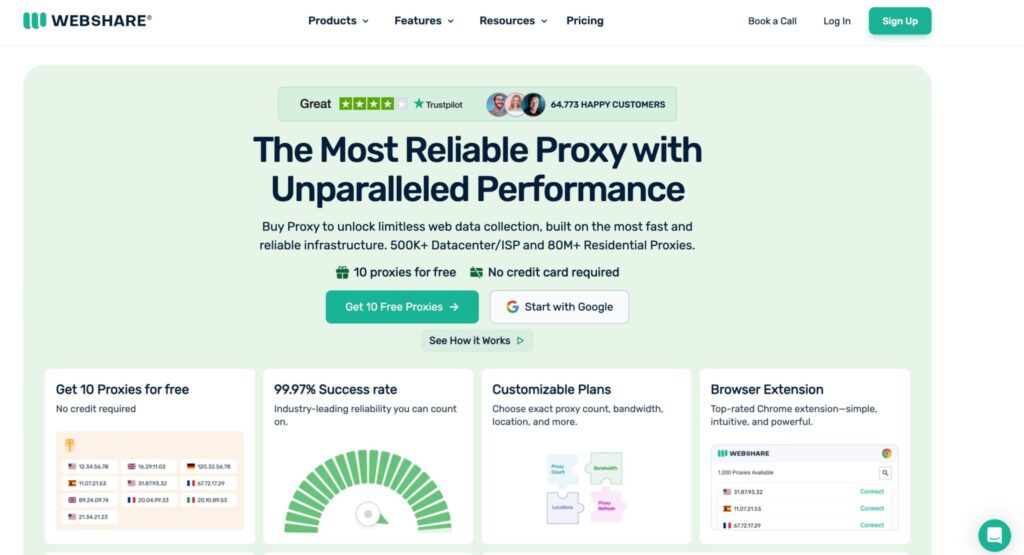
Webshare is the best option on this list for users who want to test proxies without immediately committing to a paid plan. It offers a free plan with 10 proxies and 1 GB of monthly bandwidth, with no credit card required.
For Brazil specifically, Webshare has a Brazil proxy location page and lists Brazil proxy pricing from $0.029/IP. It also offers datacenter proxy servers, static residential proxies, and rotating residential proxies, which gives beginners enough flexibility to test different proxy types without jumping between platforms.
Webshare is not the provider I would choose for a demanding Brazil scraping operation where success rate, city targeting, and session quality are mission-critical. But for lightweight scraping tests, basic regional access checks, QA, and learning proxy workflows, it is hard to ignore.
The biggest benefit is simplicity. Webshare is easy to use, cheap to start, and good enough for many small projects.
Best for: Beginners, small scraping tests, QA checks, low-budget proxy testing, free proxy experimentation.
Pros
- Free tier with 10 proxies and 1 GB monthly bandwidth
- Low starting price
- Simple dashboard
- HTTP and SOCKS5 support on free proxy plan
- Good for testing proxy workflows
Cons
- Not ideal for serious enterprise scraping
- Free proxies are limited
- Brazil residential quality may vary by plan
- Less advanced than Oxylabs, Bright Data, or Decodo
Pro-Tip: Use Webshare to test your scraper logic first. Once your code is stable, move important Brazil workloads to residential or mobile proxies with stronger targeting.
#4: SOAX: Best Brazil Proxy for Mobile IP Quality
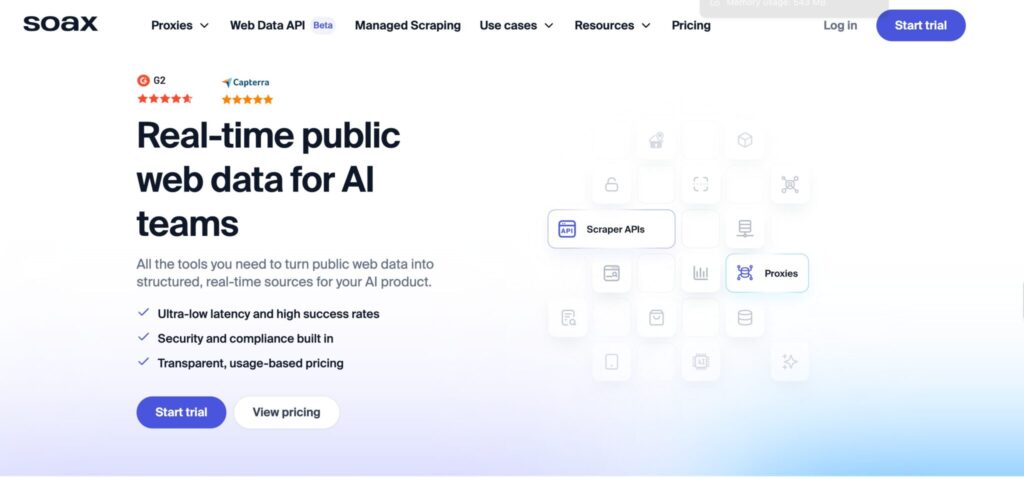
SOAX is a strong pick when Brazil mobile proxy quality matters. If your project involves mobile apps, localized mobile ads, social platforms, mobile-first testing, or app store research, SOAX deserves a close look.
SOAX advertises residential proxies with 155M+ IPs in 195+ locations and bundled plans starting at $3.60/GB with 25 GB included. Its mobile proxy page lists 5G, 4G, 3G, and LTE mobile proxies across 195+ locations, with the same starter pricing shown at $3.60/GB for 25 GB.
The big reason to choose SOAX is filtering and session control. It is known for giving users practical controls over location, rotation, and sticky sessions. That matters in Brazil because many workflows need consistency. For example, checking a mobile ad funnel from Brazil is different from running basic desktop scraping.
SOAX is not the cheapest provider, and its entry plans may feel high for casual users. But for mobile-heavy Brazil work, it is one of the cleaner options.
Best for: Mobile app testing, mobile ad verification, social platform research, mobile SERP checks, Brazil localization QA.
Pros
- Strong residential and mobile proxy coverage
- Supports mobile proxy use cases
- Good session and rotation controls
- Useful for app and ad testing
- Solid option for mobile-first Brazil projects
Cons
- Starter plan may be too high for small users
- Requires setup discipline for best results
- Not the cheapest Brazil residential option
Pro-Tip: For Brazil mobile testing, do not rotate too aggressively during login or checkout flows. Use sticky sessions for multi-step journeys, then rotate between test cases.
#5: DataImpulse: Best Budget Brazil Proxy Provider
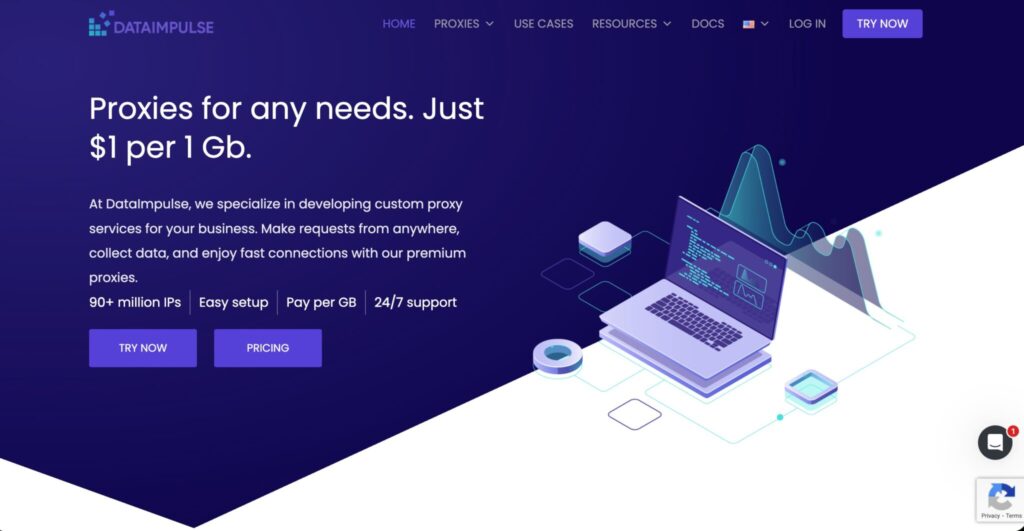
DataImpulse is the budget-friendly pick for Brazil residential proxies. It is simple, cheap, and surprisingly useful for teams that need affordable traffic without long contracts.
Its residential proxy page lists 90M+ residential IPs worldwide, coverage in 195 countries, pay-as-you-go pricing starting from $1/GB, 24/7 support, and targeting options including country, city, ZIP, and ASN. DataImpulse also lists residential proxies at $1/GB, mobile proxies at $2/GB, datacenter proxies at $0.5/GB, and premium residential proxies at $5/GB.
For Brazil projects, DataImpulse makes sense when cost control is your main priority. It is especially useful for light scraping, rank checks, content localization, price monitoring, and experiments where you do not want to pay enterprise rates.
That said, budget proxies require testing. You should always benchmark success rate, speed, and IP freshness against your specific targets before committing large workloads.
Best for: Budget scraping, small SEO projects, low-cost testing, price checks, starter data collection.
Pros
- Very low starting price
- Pay-as-you-go model
- Brazil access through global residential pool
- City, ZIP, and ASN targeting listed
- Good for testing and lean projects
Cons
- May need more retries than premium providers
- Less enterprise polish
- Support and performance may vary by workload
- Not always the best choice for sensitive workflows
Pro-Tip: If you use DataImpulse for Brazil scraping, track cost per successful request, not just cost per GB. Cheap bandwidth only matters if the requests complete cleanly.
#6: IPRoyal: Best Brazil Proxy for Flexible Budgets
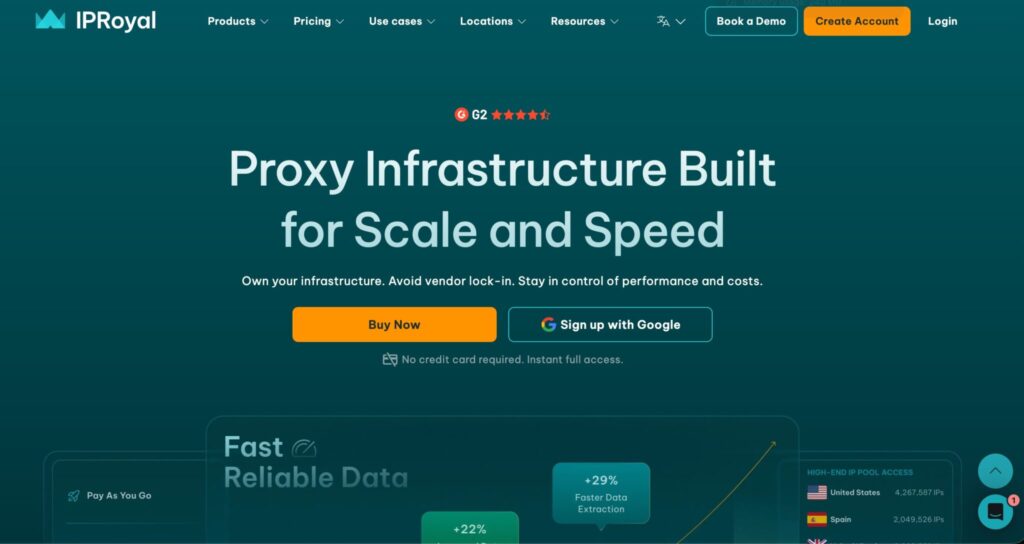
IPRoyal is a flexible choice for buyers who want Brazil residential proxies without committing to a high monthly spend. It works well for freelancers, small agencies, affiliate marketers, SEO operators, and developers who need location-specific proxies but want budget control.
IPRoyal’s Brazil page lists more than 908,824 Brazil IPs in its network. Its residential pricing page shows 32M+ genuine residential IP addresses, while its quick-start guide lists residential proxies from $1.75/GB, ISP proxies from $2/proxy, datacenter proxies from $1.39/proxy, and mobile proxies from $4/GB.
What makes IPRoyal attractive is flexibility. You can start small, buy based on your needs, and avoid the bigger commitments required by some premium networks. It is not always the first choice for enterprise-grade scraping, but it is practical for many everyday Brazil proxy tasks.
Best for: Small businesses, SEO users, affiliate marketers, budget-conscious teams, flexible Brazil proxy testing.
Pros
- Brazil-specific proxy page
- Flexible pricing
- Residential, ISP, datacenter, and mobile proxy options
- Good for smaller teams
- Easier entry point than enterprise providers
Cons
- Smaller pool than top enterprise networks
- Performance should be tested per target
- Not as advanced as Bright Data or Oxylabs for large-scale operations
Pro-Tip: IPRoyal is a good option when you need Brazil IPs for recurring but moderate workloads, like checking rankings, ads, landing pages, or localized content.
#7: Bright Data: Best Enterprise Brazil Proxy Network
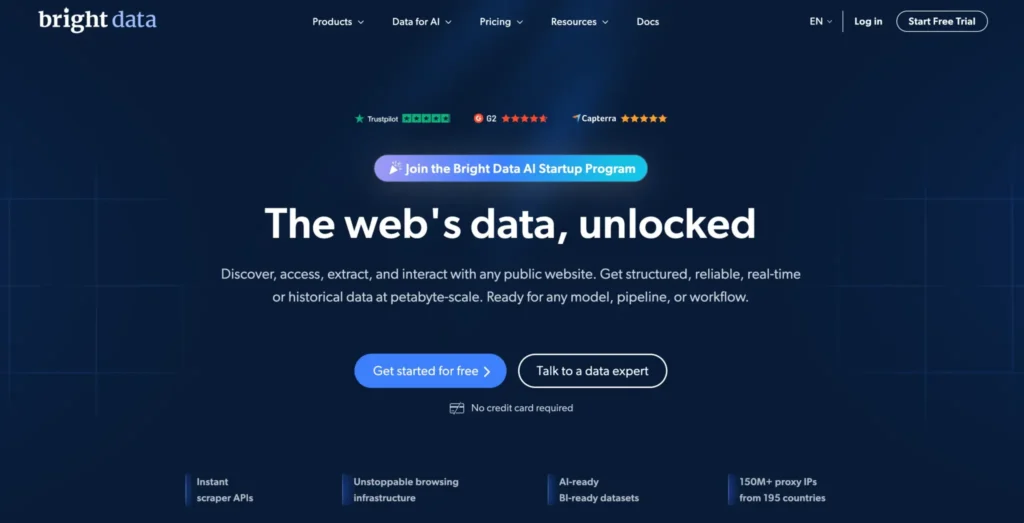
Bright Data is one of the strongest Brazil proxy providers for enterprise teams that need deep targeting, scale, and advanced tooling. It is not the most beginner-friendly or cheapest provider, but it is one of the most powerful.
Bright Data’s residential proxy page lists 400M+ monthly residential IPs across 195 countries, free geo-targeting, sticky and rotating sessions, HTTP/S and SOCKS5 support, and Brazil coverage of more than 4.5M residential IPs. Its Brazil proxy page also shows a 7-day trial and Brazil-specific proxy plans.
Bright Data is best for teams that need more than raw proxies. If you want proxy infrastructure, scraping APIs, datasets, compliance processes, and high-level targeting in one ecosystem, it is one of the strongest options.
The tradeoff is complexity and price. Smaller teams may find it more than they need. Enterprise teams, however, may appreciate the control.
Best for: Enterprise data collection, compliance-focused scraping, large-scale market intelligence, ad verification, brand protection.
Pros
- Huge residential proxy network
- Brazil IP depth
- Advanced targeting options
- Sticky and rotating sessions
- HTTP/S and SOCKS5 support
- Strong enterprise tooling
Cons
- Expensive for small users
- More complex setup
- Not ideal for casual proxy buyers
Pro-Tip: Choose Bright Data when you need Brazil proxies plus a full data collection stack. Choose a simpler provider if you only need a few Brazilian IPs for basic testing.
Quick Comparison: Best Brazil Proxy Providers
| Provider | Best For | Brazil Proxy Types | Starting Price Signal | Key Strength | Best Buyer Type |
|---|---|---|---|---|---|
| Oxylabs | Best overall | Residential, mobile, datacenter, SOCKS5 | Brazil page shows paid plans from $9/GB | Enterprise reliability and city targeting | Data teams, agencies, enterprises |
| Decodo | Best value | Residential, ISP, mobile, datacenter | Residential from $2/GB on main site | Strong balance of price and usability | SEO teams, agencies, mid-sized users |
| Webshare | Best free tier | Datacenter, static residential, rotating residential | Free 10 proxies with 1 GB monthly bandwidth | Easy testing and low-cost entry | Beginners, small testers |
| SOAX | Best mobile IP quality | Residential, mobile | Starter plan shown at $3.60/GB with 25 GB | Mobile-first controls | App testers, ad verification teams |
| DataImpulse | Best budget option | Residential, mobile, datacenter | Residential from $1/GB | Low-cost pay-as-you-go traffic | Budget scrapers, lean teams |
| IPRoyal | Best flexible budget | Residential, ISP, datacenter, mobile | Residential from $1.75/GB | Small-plan flexibility | Freelancers, SMBs, affiliate marketers |
| Bright Data | Best enterprise network | Residential, ISP, mobile, datacenter | Residential pricing varies by plan | Huge Brazil pool and advanced targeting | Enterprise data and compliance teams |
How to Choose the Best Brazil Proxy Provider
1. Match Proxy Type to the Job
Do not buy mobile proxies just because they sound stronger. They are not always necessary.
Use residential Brazil proxies for SERP tracking, e-commerce research, ad verification, localized content checks, and most scraping tasks.
Use mobile Brazil proxies for app testing, mobile ad checks, mobile social workflows, and carrier-style traffic behavior.
Use datacenter Brazil proxies for speed-sensitive, low-risk tasks where the target does not aggressively block non-residential IPs.
Use ISP proxies when you need a stable IP that looks more trustworthy than a datacenter address but does not rotate like a normal residential pool.
2. Check Targeting Depth
For Brazil, country-level targeting may not be enough. If your project depends on local accuracy, look for city, state, ZIP, or ASN targeting.
City targeting is useful for:
- Local SERP tracking
- Local delivery availability checks
- Brazilian marketplace research
- Regional ad previews
- App localization
- Price monitoring by city
ASN targeting is useful when you want IPs from specific networks or want to compare how different telecom providers see a website.
3. Understand Rotation Controls
Rotation can either save your project or break it.
Fast rotation works well for scraping lists, public pages, product pages, SERPs, and large-scale monitoring.
Sticky sessions work better for login flows, carts, forms, multi-step app journeys, and QA testing.
For Brazil, a practical setup is:
- Rotate per request for public page scraping
- Use 5 to 20 minute sticky sessions for multi-step workflows
- Use longer sessions for QA and localization checks
- Avoid changing IPs mid-session when testing account-based flows
4. Measure Cost Per Successful Request
Many buyers compare proxies by price per GB. That is a mistake.
A $1/GB proxy that needs 5 retries may cost more than a $4/GB proxy that completes requests cleanly. Track:
- Success rate
- Block rate
- CAPTCHA rate
- Average response time
- Retry volume
- Cost per completed page
- Session stability
This is especially important for Brazil because IP quality, target sensitivity, and city-level accuracy can vary widely.
5. Test Before Scaling
Before buying a large plan, run a small benchmark.
Test at least:
- 500 to 1,000 requests against your actual targets
- Multiple Brazilian cities if geo-accuracy matters
- Both rotating and sticky sessions
- Peak and non-peak hours
- Residential vs mobile if app workflows are involved
- Your real browser, scraper, or automation stack
The best Brazil proxy provider is not always the one with the biggest pool. It is the one that performs best against your target websites.
FAQs: Best Brazil Proxy Providers 2026
Why do I need a Brazilian proxy?
You need a Brazilian proxy when you want your traffic to appear as if it comes from Brazil. This is useful for localized SERP tracking, ad verification, price monitoring, marketplace research, app testing, content localization, and public web data collection. It helps you see Brazilian websites, offers, ads, and search results closer to how local users see them.
Is Brazil a mobile-first proxy market?
Yes, Brazil is heavily mobile-driven. DataReportal reported 217 million cellular mobile connections in Brazil in late 2025, equal to 102% of the total population. That does not mean every project needs mobile proxies, but it does mean mobile IPs are valuable for app testing, mobile ads, and mobile-first consumer research.
Are residential or mobile Brazil proxies better?
Residential proxies are better for most Brazil scraping, SEO, ad verification, and market research tasks because they are cheaper and easier to scale. Mobile proxies are better when you need mobile carrier behavior, mobile app testing, social platform checks, or mobile ad validation. Start with residential unless your workflow clearly needs mobile traffic.
Which Brazilian ISPs do proxy providers cover?
Coverage varies by provider and plan. In general, Brazil proxy pools may include IPs linked to major networks such as Vivo, Claro, TIM, Oi, Algar, and regional ISPs, but providers do not always publish exact ISP-level availability. Brazil’s telecom market includes major fixed and mobile players such as Claro, Vivo, Oi, and TIM, with regional operators also playing an important role. If ISP accuracy matters, choose a provider with ASN targeting and test the actual IP mix before scaling.
Are Brazil proxies legal?
Buying and using Brazil proxies is generally legal, but legality depends on how you use them. Safe use cases include public data collection, QA testing, ad verification, brand monitoring, localization, and security research. Avoid credential stuffing, spam, fraud, account abuse, private data scraping, or activity that violates laws or platform terms.
Which Brazil proxy provider is best for scraping?
Oxylabs is the best overall choice for serious Brazil scraping because of its scale, city targeting, and enterprise reliability. Decodo is a strong value option for mid-sized scraping projects. DataImpulse is good for low-budget scraping tests, while Bright Data is best for enterprise teams that need advanced controls and a full data collection ecosystem.
Which Brazil proxy provider is best for beginners?
Webshare is the easiest starting point because it offers a free proxy tier with 10 proxies and 1 GB of monthly bandwidth. Decodo is the better next step once you need higher-quality Brazil residential proxies, better support, and more reliable paid infrastructure.
Which Brazil proxy provider is best for mobile proxies?
SOAX is one of the best choices for Brazil mobile proxy workflows because it focuses strongly on mobile and residential proxy controls. Oxylabs and Bright Data are also strong choices for larger teams that need premium mobile IP infrastructure.
Can I use free Brazil proxies?
You can, but free public proxies are usually unstable, slow, risky, and often abused by many users. They may work for basic testing, but they are not a good option for serious scraping, account-based workflows, or business research. A controlled free tier from a known provider like Webshare is safer than random public proxy lists.
What is the best budget Brazil proxy provider?
DataImpulse is the best budget pick because residential proxy traffic starts at $1/GB, and the model is pay-as-you-go. IPRoyal is also a strong flexible-budget option for smaller buyers who want Brazil IPs without enterprise commitments.
Conclusion | Best Brazil Proxy Providers 2026
The best Brazil proxy provider depends on what you are actually trying to do.
Choose Oxylabs if you need the best overall mix of scale, Brazil targeting, and reliability. Choose Decodo if you want strong value without too much complexity. Pick Webshare if you need a free or low-cost starting point. Go with SOAX if mobile proxy quality is the priority. Use DataImpulse when budget matters most. Choose IPRoyal if you want flexible plans for smaller recurring projects. Pick Bright Data if you need enterprise-grade Brazil coverage, advanced controls, and a broader data collection stack.
For most users, the smart path is simple: start with Decodo or Webshare for testing, move to Oxylabs or Bright Data for serious scale, and use SOAX when your Brazil workload depends on mobile behavior.