
Best Country Specific Proxies
Best Country Specific Proxies: Buyer’s Guide for Serious Geo-Targeted Work
Country specific proxies sound simple until you start using them at scale.
One provider says it has millions of IPs. Another says it supports 195 countries. A third promises rotating sessions, sticky sessions, ASN targeting, city targeting, and “clean” residential routes.
The real question is not who has the biggest number on the homepage. It is whether you can reliably get the right country, keep sessions stable, rotate without burning your pool, and avoid wasting money on locations that barely have active IPs.
Country specific proxies are mainly used for localized SERP tracking, ad verification, price monitoring, market research, app testing, content localization, travel fare checks, and regional QA. If you are checking how a website behaves in Germany, Brazil, India, Canada, or Japan, a generic proxy pool will not cut it. You need controlled routing.
Below is a practical buyer’s guide based on proxy pool quality, country coverage, targeting depth, rotation control, protocol support, and overall usability.
Quick Comparison Table
| Provider | Best For | Proxy Types | Country Coverage | Rotation Control | Protocols | Main Strength | Watch Out For |
|---|---|---|---|---|---|---|---|
| Bright Data | Enterprise geo-targeting | Residential, mobile, ISP, datacenter | 195 countries | Rotating and sticky | HTTP, HTTPS, SOCKS, more by product | Deep targeting and tooling | Higher cost |
| Oxylabs | Large-scale scraping and compliance-heavy teams | Residential, mobile, ISP, datacenter | 195 locations | Session control | HTTP, HTTPS, SOCKS5 | Strong infrastructure | Premium pricing |
| Decodo | Balanced performance and ease of use | Residential, mobile, ISP, datacenter | 195+ countries | Rotating and sticky | HTTP, HTTPS, SOCKS5 | Clean dashboard, large pool | Advanced users may need custom tuning |
| SOAX | Flexible geo and ISP targeting | Residential, mobile, ISP, datacenter | 195+ countries | Custom refresh, sticky, rotating | HTTP(S), SOCKS5, UDP, QUIC | Strong targeting filters | Plans can be complex |
| NetNut | High-volume residential traffic | Residential, mobile, ISP | 195 countries | Rotating and sticky | HTTP, HTTPS, SOCKS5 | Scalable residential network | Better for teams than hobby users |
| IPRoyal | Budget-friendly country targeting | Residential, ISP, mobile, datacenter | 195+ countries | Rotation and long sticky sessions | HTTP(S), SOCKS5 | Non-expiring traffic options | Smaller pool than giants |
| Webshare | Affordable proxy setup | Residential, static residential, datacenter | 195 countries | Rotating endpoint | HTTP, SOCKS5 | Simple pricing, easy dashboard | Fewer scraping tools |
| DataImpulse | Pay-as-you-go country proxies | Residential, mobile, datacenter | 195 countries | Rotating and sticky | HTTP(S), SOCKS5 | Low entry cost | Less enterprise polish |
| Rayobyte | Ethical residential sourcing | Residential, ISP, datacenter | 163+ locations | Sticky sessions | HTTP(S) | Strong transparency | Smaller country footprint |
1. Bright Data: Best for Enterprise Country Targeting
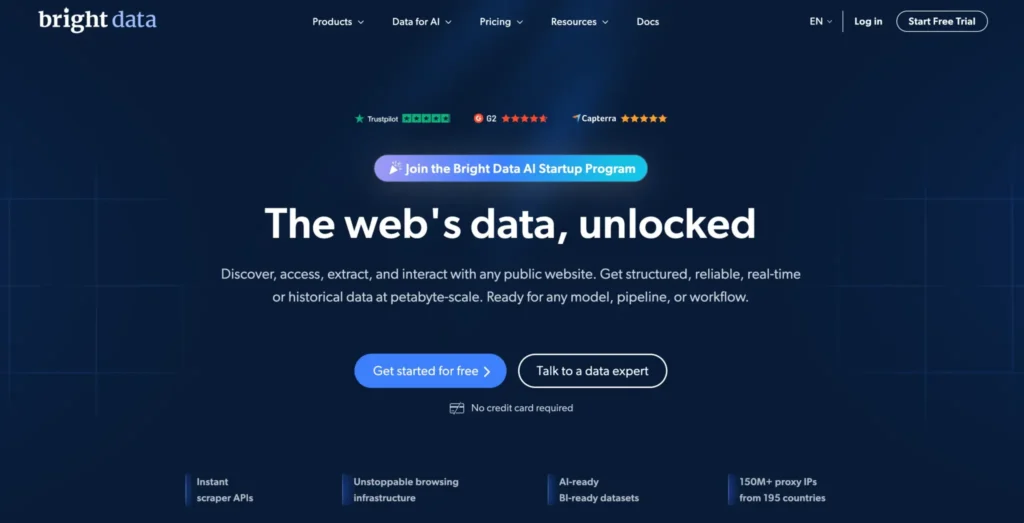
Bright Data is the provider you look at when country targeting is business-critical, not experimental. Its network covers residential, mobile, ISP, and datacenter proxies, which gives technical teams flexibility when a target site reacts differently to each proxy type.
The big advantage is control. You can target by country, city, ZIP code, ASN, and carrier depending on the proxy type. That matters when “United States” is too broad and you need traffic from Texas, New York, or a specific mobile carrier.
For SERP tracking, localized ad checks, travel aggregation, and large product intelligence jobs, Bright Data is one of the most complete options. It also has scraping tools, browser tools, APIs, and strong documentation.
Pro-Tip: Use residential rotating sessions for discovery jobs, then switch to ISP or sticky residential sessions for account-based QA or checkout flow testing.
Best for: Enterprise teams, agencies, compliance-focused scraping, ad verification, and large geo-distributed workflows.
2. Oxylabs: Best for High-Scale Professional Scraping
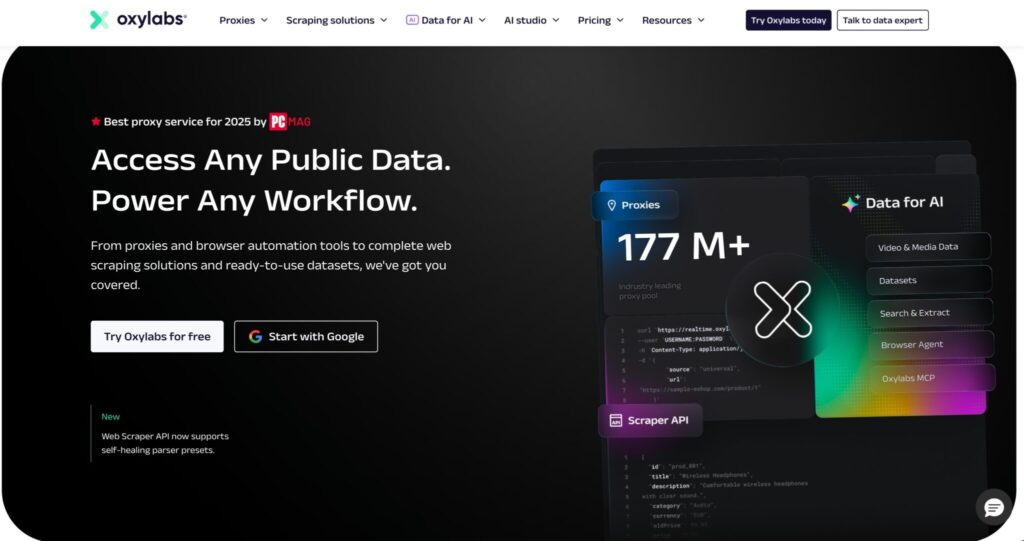
Oxylabs sits in the same premium tier as Bright Data. It is built for teams that care about stability, documentation, and large country pools. Its residential proxy network supports country, state, city, ZIP, coordinate, and ASN targeting.
That level of precision is useful for brands that need to verify pricing or ad placements across multiple regions. It is also strong for monitoring e-commerce catalogs where inventory, tax, delivery options, and prices change by country.
Oxylabs is not usually the cheapest route, but it is one of the safer options when uptime and support matter. If your scraping jobs feed dashboards, reports, or business decisions, reliability is worth paying for.
Pro-Tip: For country-specific scraping, do not rotate every request blindly. Use sticky sessions for multi-step flows, such as search page to product page to cart page.
Best for: Data teams, e-commerce intelligence, cybersecurity research, and serious web scraping operations.
3. Decodo: Best Balance of Pool Size and Usability
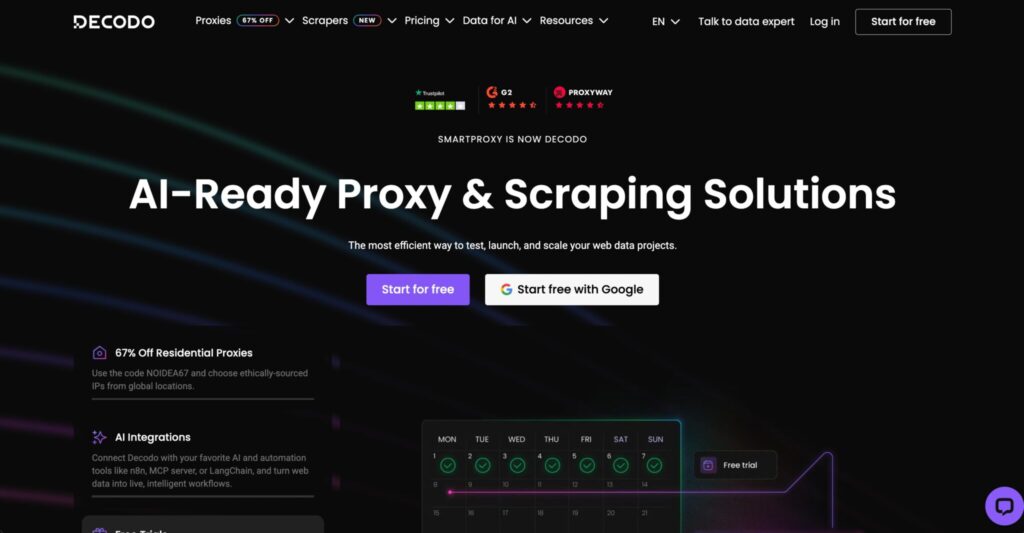
Decodo, formerly Smartproxy, has become one of the easiest recommendations for buyers who want strong country targeting without an enterprise-only feel. It offers a large IP pool across 195+ countries and supports country, city, state, and ASN targeting.
The dashboard is easier than many premium platforms, which makes it good for SEO teams, affiliate teams, QA testers, and mid-sized scraping operations. You can use rotating proxies for high-volume data collection or sticky sessions when you need the same identity for a longer task.
Decodo is especially useful when you want to test multiple countries quickly without spending days configuring proxy zones. For many teams, it hits the sweet spot between power and simplicity.
Pro-Tip: Build separate proxy profiles for each target country instead of switching countries inside one messy project. Cleaner segmentation makes debugging much easier.
Best for: SEO tracking, affiliate localization checks, price monitoring, and teams that need strong performance without heavy setup.
4. SOAX: Best for Granular Geo and ISP Targeting
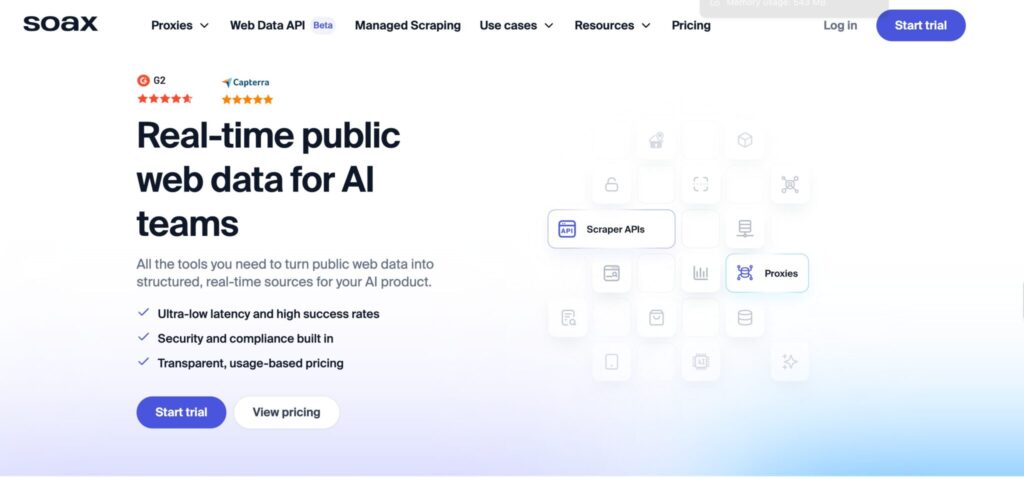
SOAX is a strong pick when targeting depth matters. It supports country, region, city, ISP, and carrier-style filtering depending on the proxy product. That makes it useful for use cases where a simple country proxy is not accurate enough.
For example, if you are checking how a telecom offer appears on mobile IPs in France, or how a marketplace behaves in a specific city, SOAX gives you tighter control than basic providers.
It also supports sticky and rotating sessions, customizable refresh rates, and multiple protocols. This helps when you need one setup for scraping and another for browser-based testing.
Pro-Tip: If your target website changes content by ISP or mobile carrier, choose a provider like SOAX or Bright Data instead of a basic country-only pool.
Best for: Mobile testing, ad verification, regional app QA, and ISP-sensitive workflows.
5. NetNut: Best for Scalable Residential Traffic
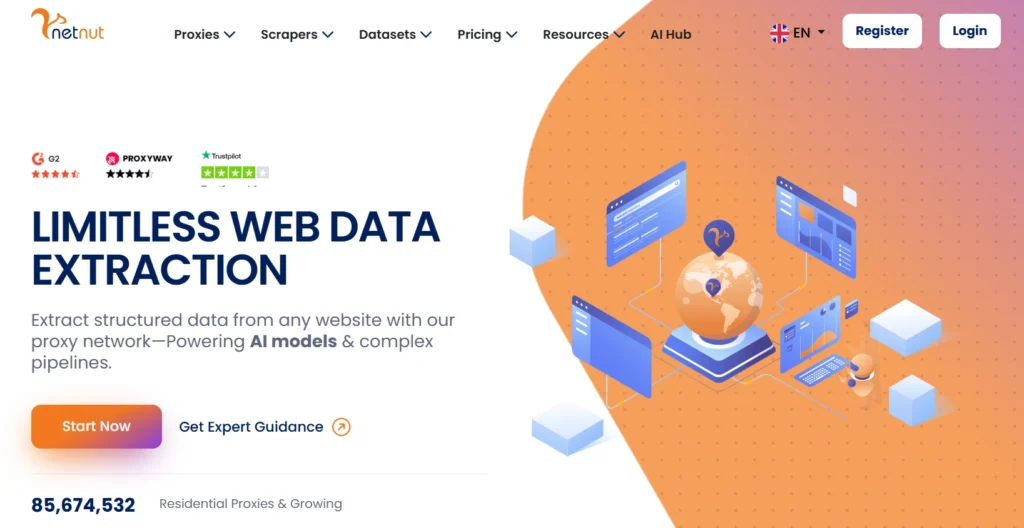
NetNut is built for volume. Its rotating residential proxies cover 195 countries and support HTTP, HTTPS, and SOCKS5. The platform is positioned toward teams that need concurrency, stable routing, and large data collection jobs.
One reason buyers like NetNut is its focus on performance through a hybrid residential infrastructure. For country-specific scraping, that can be useful when you are collecting thousands or millions of pages across several markets.
It may be more than a casual user needs, but for enterprise scraping, SEO monitoring, and market intelligence pipelines, NetNut is a serious option.
Pro-Tip: Always test country availability at the city or region level before buying a large plan. A provider may have a large global pool but uneven density in smaller markets.
Best for: High-volume scraping, market intelligence, SERP tracking, and enterprise data collection.
6. IPRoyal: Best Budget-Friendly Country Specific Proxies
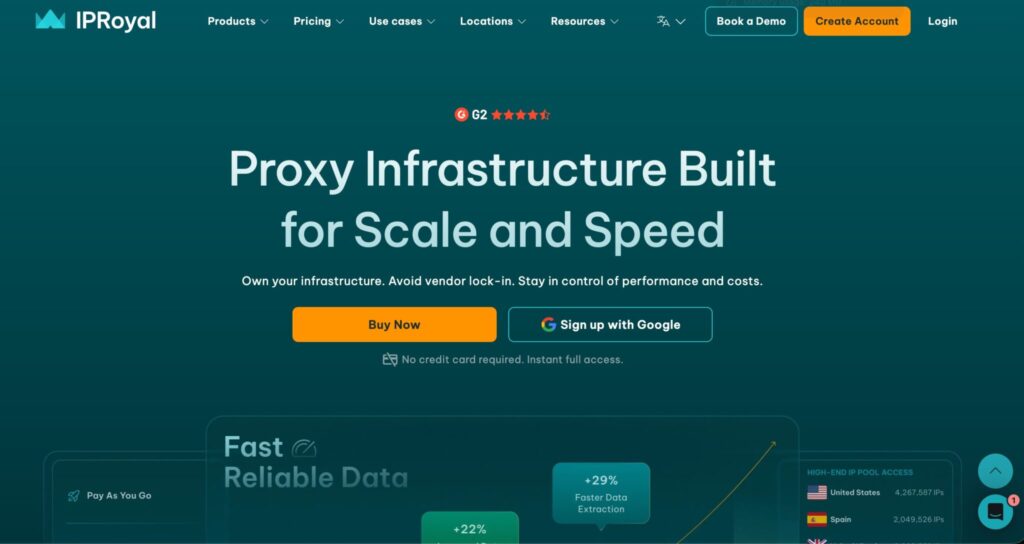
IPRoyal is a good option for buyers who want country-specific residential proxies without jumping straight into premium enterprise pricing. It supports 195+ countries, country, state, and city-level targeting, rotating sessions, sticky sessions, HTTP(S), and SOCKS5.
The biggest draw is flexibility. Smaller teams can start without massive commitments, and non-expiring traffic options are helpful if your usage is irregular. That makes IPRoyal attractive for SEO freelancers, small affiliate teams, and QA testers.
It does not have the same scale or scraping ecosystem as Bright Data or Oxylabs, but it offers enough control for many practical geo-targeted tasks.
Pro-Tip: For low-volume country testing, buy smaller traffic first and test success rates on your real target sites. Do not judge proxies only by dashboard features.
Best for: Budget users, smaller SEO teams, browser testing, and country-based verification.
7. Webshare: Best Simple and Affordable Setup
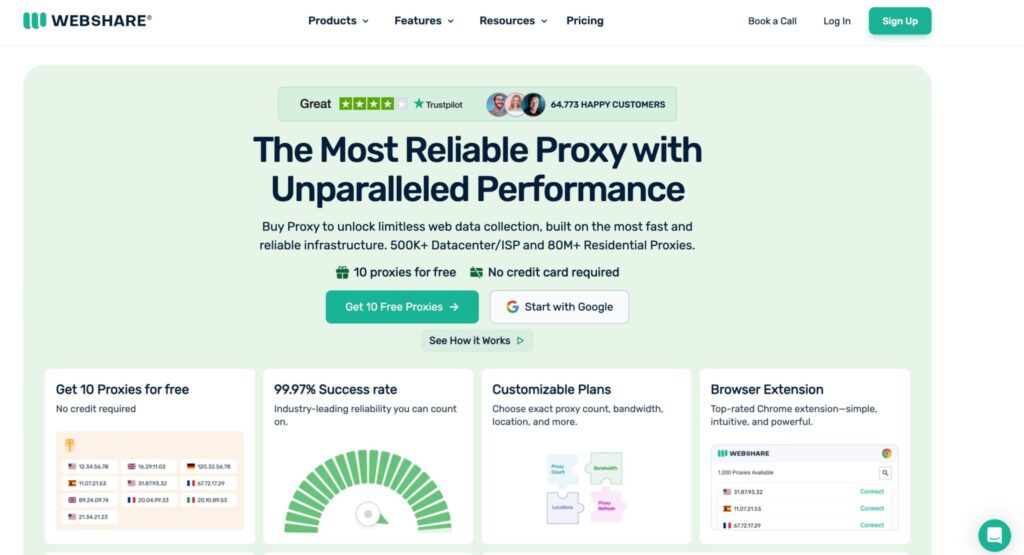
Webshare is one of the easiest providers to start with. It offers residential proxies with country and city targeting across 195 countries, plus rotating and static residential options.
The dashboard is clean, pricing is straightforward, and the setup process is beginner-friendly. If your priority is quickly getting country-specific IPs for testing, Webshare is practical.
The trade-off is tooling. Webshare is not as advanced as Bright Data, Oxylabs, or Decodo for scraping APIs, unblockers, or complex data workflows. But not every buyer needs that. Sometimes you just need affordable country proxies that work with your browser, scraper, or automation stack.
Pro-Tip: Webshare is useful for testing proxy logic before moving to a higher-end provider for production workloads.
Best for: Beginners, smaller scraping jobs, affordable country proxies, and simple rotation setups.
8. DataImpulse: Best Pay-As-You-Go Country Proxy Option
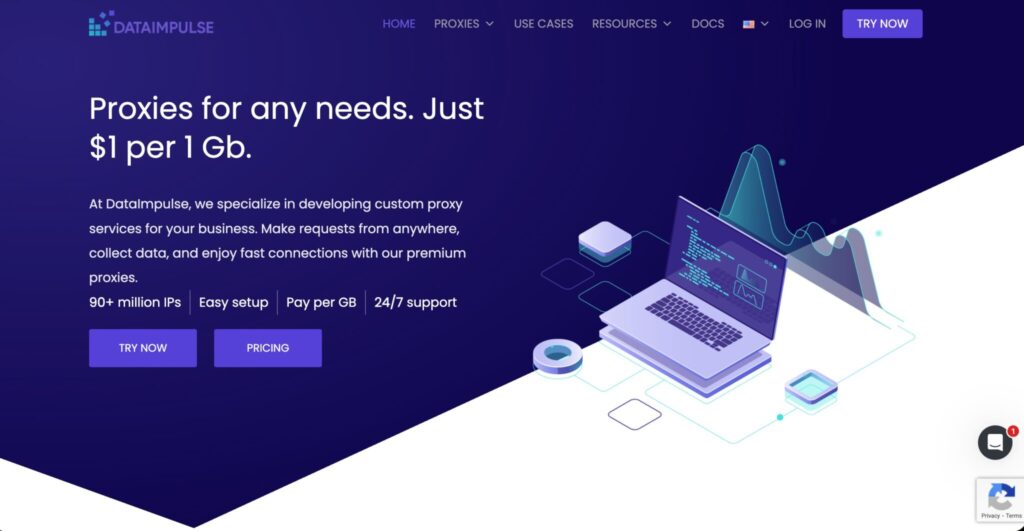
DataImpulse is attractive because of its pay-per-GB model and low entry pricing. It offers residential, mobile, datacenter, and premium residential proxies, with country targeting and rotating or sticky sessions.
For buyers who do not want monthly commitments, this is a strong value play. You can test India, the US, Germany, Brazil, or other target markets without locking yourself into a large plan.
It is especially useful for one-off research, seasonal price monitoring, or campaign checks where usage spikes and then drops.
Pro-Tip: Pay-as-you-go proxies are great for irregular use, but if you run daily scraping jobs, compare monthly volume pricing carefully.
Best for: Flexible budgets, testing projects, smaller agencies, and occasional geo-targeted scraping.
9. Rayobyte: Best for Ethical Residential Sourcing
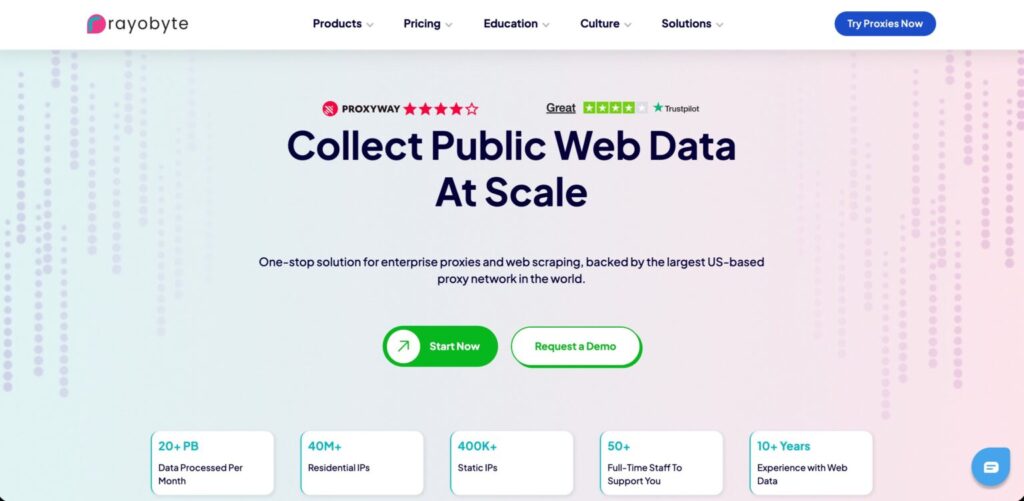
Rayobyte is a solid pick for buyers who care about proxy sourcing and transparency. Its residential proxy product includes 40M+ IPs, country, city, and state targeting, sticky sessions, unlimited threads, and 24/7 support.
The country footprint is smaller than some competitors, but Rayobyte has a strong reputation for ethical sourcing and clear usage controls. That can matter if your brand is sensitive to compliance risk.
For country-specific work, Rayobyte fits best when you need clean residential IPs for research, testing, or market data collection and do not require the absolute largest global pool.
Pro-Tip: Ask support about target country density before purchase, especially for smaller countries or less common markets.
Best for: Ethical sourcing, US and major-market testing, and teams that prefer transparent providers.
How to Choose Country Specific Proxies
Check Real Country Pool Density
A provider saying “195 countries” does not mean every country has the same number of usable IPs. The US, UK, Germany, India, Brazil, and Canada usually have stronger coverage. Smaller countries may have fewer active IPs.
Ask for country-level pool estimates, active IP counts, and success rates. If your target market is small, test first.
Match Proxy Type to Use Case
Residential proxies are best for websites that block datacenter traffic. Mobile proxies are better for app testing, social platforms, and carrier-sensitive content. ISP proxies are useful when you need speed and stable sessions. Datacenter proxies are cheapest, but easiest to flag.
Understand Rotation Protocols
Rotation decides how often your IP changes. Per-request rotation is good for scraping public pages. Sticky sessions are better for login flows, carts, forms, and browser testing. Time-based rotation works well when you need a stable identity for 5, 10, or 30 minutes.
Avoid rotating too fast on multi-step flows. It can look unnatural.
Look at Protocol Support
HTTP and HTTPS are enough for most scraping and browser tasks. SOCKS5 is useful for apps, automation tools, and non-browser traffic. UDP and QUIC support can matter for special cases, but most buyers will not need them.
Test with Your Actual Target Sites
Proxy performance changes by website. A provider that works beautifully on Google may struggle on a retail site with aggressive bot protection. Always run a small test on your real targets before scaling.
Review Compliance and Sourcing
Country specific proxies should come from ethical, consent-based networks. Avoid shady “free proxy” lists. They are unreliable, slow, and risky. For business use, choose providers with clear acceptable use policies, KYC, and abuse prevention.
Best Country Specific Proxy by Use Case
- For enterprise scraping, choose Bright Data or Oxylabs.
- For a balance of price, usability, and scale, choose Decodo.
- For granular ISP and mobile geo-targeting, choose SOAX.
- For high-volume residential traffic, choose NetNut.
- For budget-friendly country proxies, choose IPRoyal or DataImpulse.
- For beginner-friendly setup, choose Webshare.
- For ethical sourcing and transparent residential pools, choose Rayobyte.
FAQs About Country Specific Proxies
1. What are country specific proxies?
Country specific proxies route your internet requests through IP addresses located in a selected country. They help you see localized search results, prices, ads, content, and app behavior.
2. Are residential proxies better than datacenter proxies?
For geo-targeted work, residential proxies are usually better because they come from real consumer networks. Datacenter proxies are faster and cheaper, but easier for websites to detect.
3. Can I target a city instead of a country?
Yes, many premium providers support city targeting. Some also support state, ZIP code, ASN, ISP, carrier, or coordinate-level targeting.
4. What is a sticky session?
A sticky session keeps the same IP for a set time. It is useful for browsing sessions, login testing, shopping carts, forms, and app QA.
5. What is rotating proxy behavior?
A rotating proxy changes the IP automatically. It can rotate every request, after a fixed time, or when a session expires. This helps distribute requests across a wider pool.
6. Which country proxies are best for SEO tracking?
Decodo, Bright Data, Oxylabs, IPRoyal, and Webshare are strong options for SEO tracking. Choose based on target country density, SERP success rate, and cost per GB.
7. Do country specific proxies work for ad verification?
Yes. They are commonly used to check if ads appear correctly in different countries, regions, and languages. Residential or mobile proxies usually give the most realistic view.
8. Are country specific proxies legal?
Proxies are legal tools in most places, but how you use them matters. Follow website terms, privacy laws, robots.txt guidance, and local regulations. Do not use proxies for fraud, credential attacks, spam, or bypassing legal restrictions.
9. How many IPs do I need?
For small QA or SEO checks, a few GB of residential traffic may be enough. For scraping thousands of pages across multiple countries, you need a larger pool, smart throttling, retries, and proper rotation logic.
Final Recommendation
The best country specific proxy provider depends on your workload. Bright Data and Oxylabs are the safest picks for enterprise-scale geo-targeting. Decodo is the most balanced option for most SEO, affiliate, and research teams. SOAX is excellent when ISP, city, or mobile precision matters. IPRoyal, Webshare, and DataImpulse are better if price and simplicity matter more than advanced tooling.
Do not buy based only on pool size. Buy based on the country you need, the type of IP that works on your target site, rotation control, session stability, and support quality. That is where the real difference shows up.Country specific proxies sound simple until you start using them at scale.
One provider says it has millions of IPs. Another says it supports 195 countries. A third promises rotating sessions, sticky sessions, ASN targeting, city targeting, and “clean” residential routes. The real question is not who has the biggest number on the homepage. It is whether you can reliably get the right country, keep sessions stable, rotate without burning your pool, and avoid wasting money on locations that barely have active IPs.
Country specific proxies are mainly used for localized SERP tracking, ad verification, price monitoring, market research, app testing, content localization, travel fare checks, and regional QA. If you are checking how a website behaves in Germany, Brazil, India, Canada, or Japan, a generic proxy pool will not cut it. You need controlled routing.