
Best Geo Targeted Mobile Proxies.
Geo targeted mobile proxies are not “nice to have” anymore. If your work depends on seeing the web exactly as a real mobile user sees it in New York, London, Mumbai, Berlin, Toronto, or Sydney, normal datacenter IPs will not cut it.
Mobile proxies route traffic through carrier networks such as 4G, 5G, LTE, and sometimes 3G. That matters because many platforms treat carrier traffic as higher trust than server-hosted IP traffic. The difference shows up fast in ad verification, localized SERP tracking, app testing, sneaker monitoring, social media QA, fraud research, and mobile-first scraping.
The hard part is choosing the right provider. A big IP pool sounds impressive, but geo accuracy, rotation control, carrier filtering, session stability, and clean sourcing matter more.
Quick Picks
- Best overall: Bright Data
- Best enterprise mobile pool: Oxylabs
- Best clean dashboard and geo filters: SOAX
- Best value for teams: Decodo
- Best high-volume mobile data work: NetNut
- Best dedicated mobile slots: IPRoyal
- Best US-focused scraping stack: Rayobyte
- Best manual rotation control: Proxy-Seller
- Best budget-friendly testing: DataImpulse
Massive Comparison Table
| Provider | Best For | Mobile Pool | Geo Targeting | Rotation Control | Protocols | Main Weak Spot |
|---|---|---|---|---|---|---|
| Bright Data | Enterprise geo control | Very large global network | Country, city, state, ZIP, ASN, carrier | Session and rotation parameters | HTTP(S), SOCKS5 | Expensive for small users |
| Oxylabs | Reliable large-scale scraping | 20M+ mobile IPs | Country, state, city, coordinates, ASN | Automatic rotation, sessions | HTTP(S), SOCKS5 | Premium pricing |
| SOAX | Precise geo and ISP filters | 33M+ mobile IPs | Country, region, city, ISP/carrier | Custom refresh rates | HTTP(S), SOCKS5 | Can get costly at scale |
| Decodo | Balanced price and usability | 10M+ mobile IPs | Country, city, ASN | Rotating and sticky sessions | HTTP(S), SOCKS5 | Less enterprise-heavy than Bright Data |
| NetNut | Heavy data collection | 5M+ mobile IPs | Region and country focus | Rotating sessions | HTTP(S), SOCKS5 | Finer filters may depend on plan |
| IPRoyal | Dedicated mobile proxies | 2.5M+ mobile IPs | Country, state, city, carrier | Dashboard-based sticky or rotating | HTTP(S), SOCKS5 | Smaller pool than top-tier players |
| Rayobyte | Ethical scraping teams | Not heavily publicized | City, region, country on mobile pages | Automatic rotation | HTTP(S) | Less transparent mobile pool data |
| Proxy-Seller | Manual control | Dedicated/shared mobile endpoints | Location-based selection | Timer or on-demand link | HTTP(S), SOCKS5 | Better for slots than huge pools |
| DataImpulse | Low-cost experiments | 90M+ total network | Country, city, ASN, ZIP options | Rotating and sticky sessions | HTTP(S), SOCKS5 | Mobile-specific depth is lighter |
Detailed Reviews
1. Bright Data
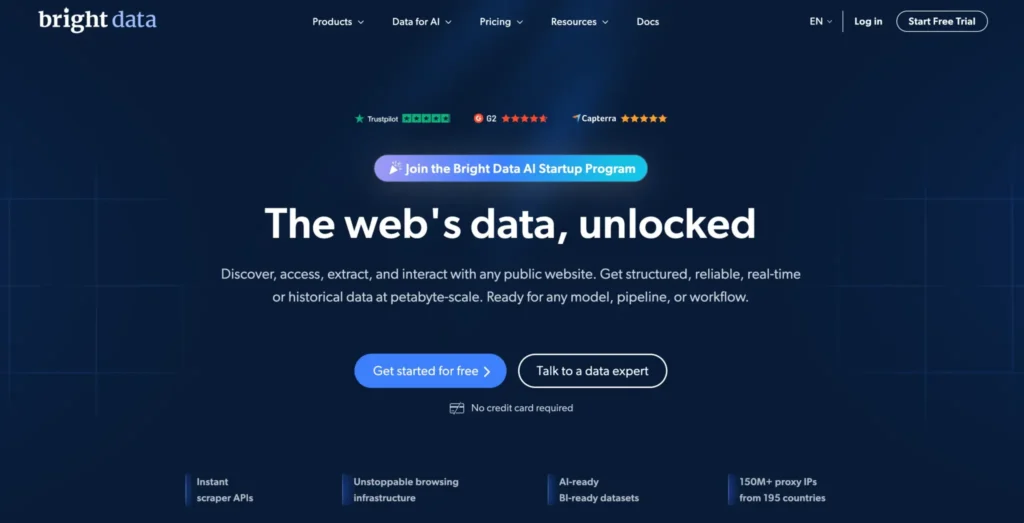
Bright Data is the premium choice when geo targeting is not negotiable. Its biggest strength is control. You can work with country, city, state, ZIP, ASN, and carrier-level targeting, which makes it useful for ad verification, localized pricing checks, and mobile SERP monitoring.
The platform is built for teams that need governance, logs, scraping APIs, and strict compliance. That is good for agencies and enterprise data teams, but overkill if you only need a few mobile IPs for account testing.
Pro-Tip: Use Bright Data when your client asks, “Can you prove what users see in this exact location?” Its targeting depth is the real selling point.
2. Oxylabs
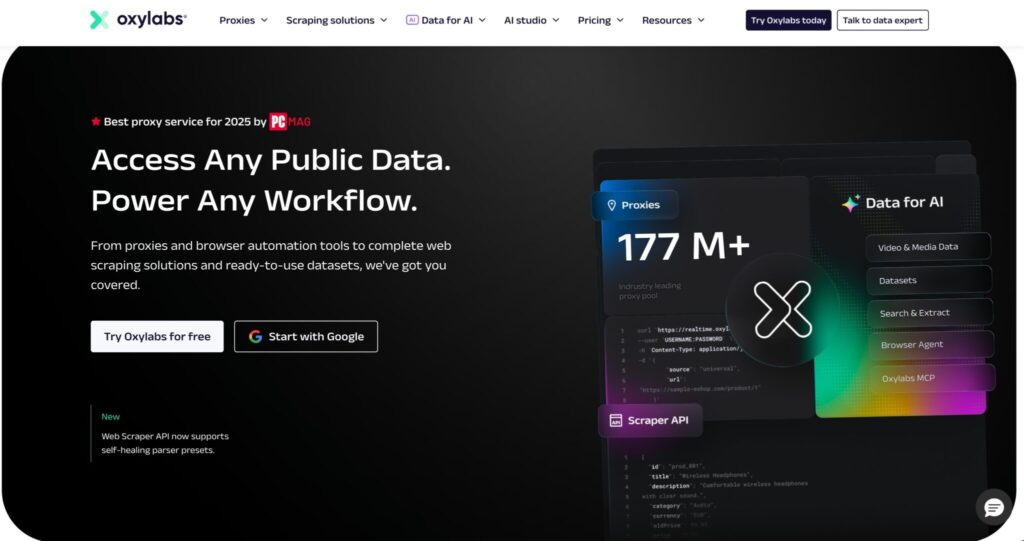
Oxylabs is the safest pick for large mobile scraping and location-sensitive data extraction. Its mobile network is built around 3G, 4G, 5G, and LTE carrier IPs, with targeting by country, state, city, coordinates, and ASN.
The clean part is that Oxylabs combines mobile proxies with scraping tools and solid account support. If your workflow involves public data collection at scale, you will appreciate fewer moving pieces.
It is not the cheapest option, but it feels dependable. For enterprise buyers, that often beats saving a few dollars per GB.
3. SOAX
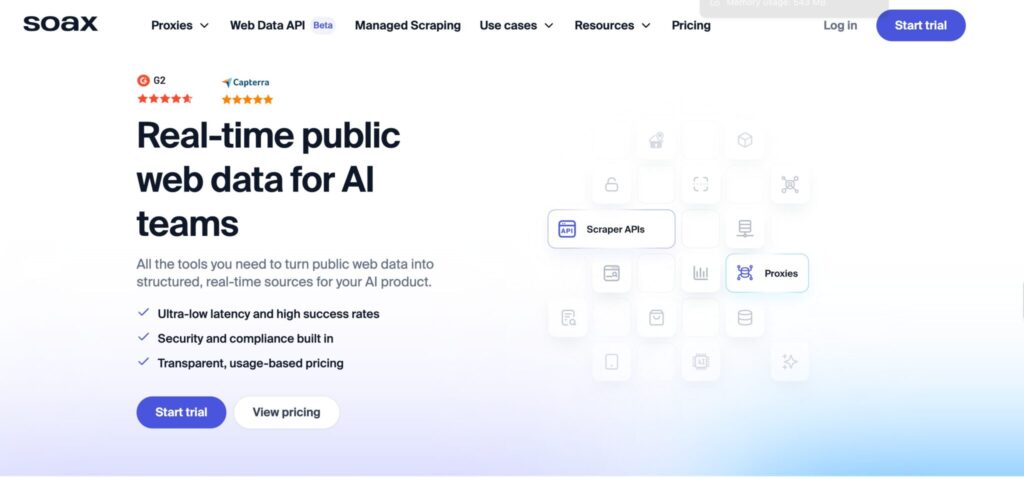
SOAX is strong when you want precise targeting without fighting a clunky dashboard. Its mobile proxy product supports country, region, city, and ISP or carrier targeting, with custom refresh rates.
That makes SOAX a practical option for localized testing, social platform QA, and mobile web scraping where you need to hold a session long enough to behave naturally, then rotate when the risk score rises.
SOAX also suits teams that want a flexible mid-market provider. It has serious scale, but it does not feel as intimidating as some enterprise platforms.
4. Decodo
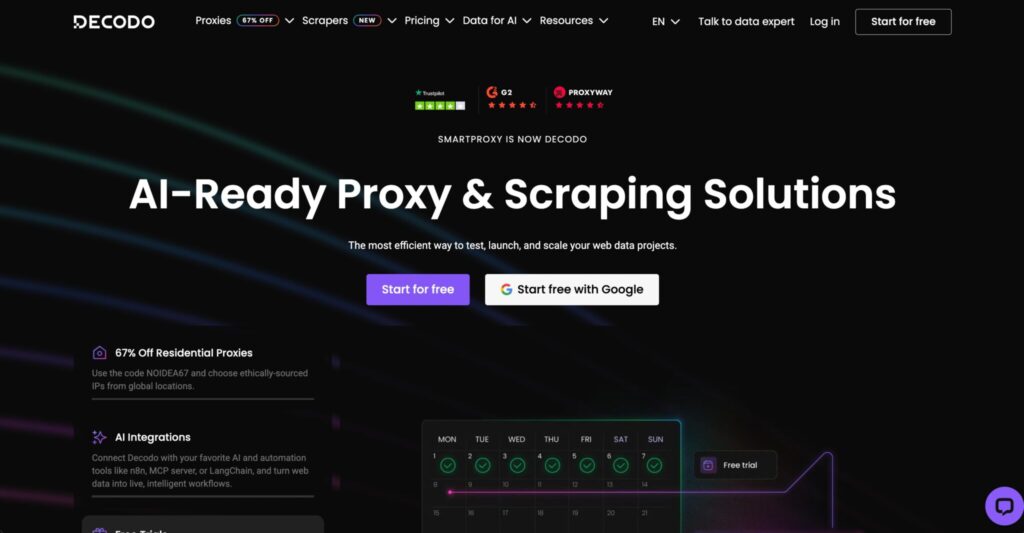
Decodo, formerly Smartproxy, is one of the easiest providers to recommend to teams that want mobile geo targeting without enterprise friction. It offers mobile IPs across many carriers, plus country, city, and ASN targeting.
The dashboard is beginner-friendly, but the feature set is not basic. You get sticky sessions, rotating sessions, simple authentication, and documentation that most marketers and developers can understand quickly.
Pick Decodo if you need a balance between usability, price, and coverage. It is especially good for agencies running several moderate campaigns rather than one massive data pipeline.
5. NetNut
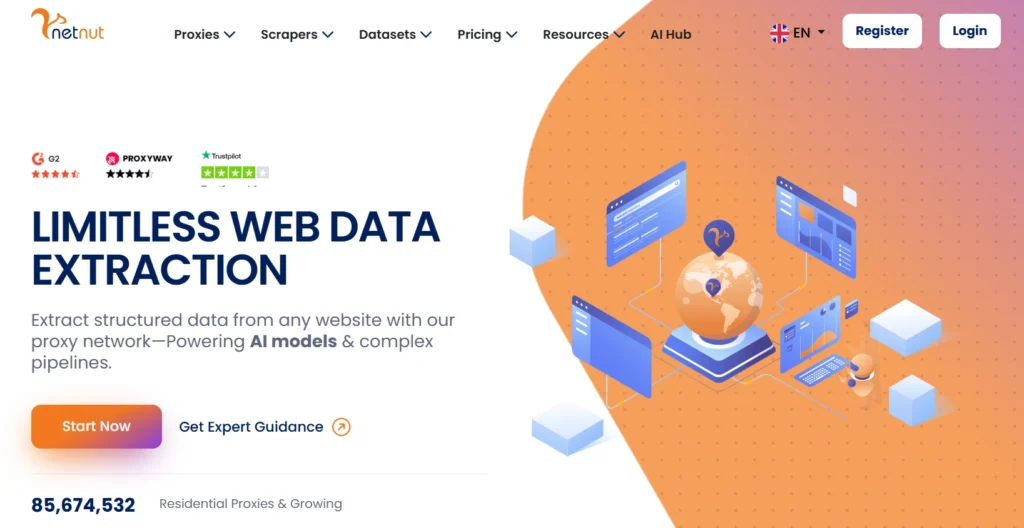
NetNut is best for users who care about high-volume access and stable proxy infrastructure. Its mobile proxy product covers millions of mobile carrier IPs across many countries and supports common protocols.
For geo targeted work, NetNut makes sense when your campaigns span several markets and you need a provider that can handle volume. It is often more business-focused than hobbyist-friendly.
The main buying question is how granular your targeting needs to be. If you need basic country or region coverage, NetNut is strong. If you need exact city plus carrier combinations every day, confirm availability before paying.
6. IPRoyal
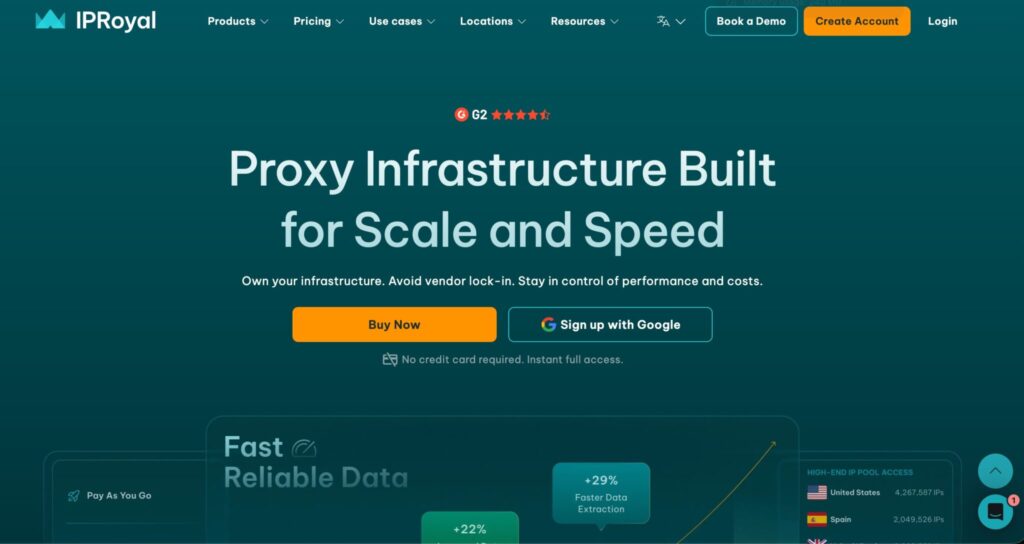
IPRoyal is attractive because it offers dedicated mobile proxies with unlimited traffic on slot-based plans. That setup is useful for social account management, app testing, and workflows where bandwidth billing becomes annoying.
You can select location, configure session behavior, and use carrier-based options depending on availability. The dashboard is simple, which helps if your team is not deeply technical.
IPRoyal is not the largest pool in this list, but it is practical. For smaller teams, dedicated mobile access can be easier to manage than huge rotating pools.
7. Rayobyte
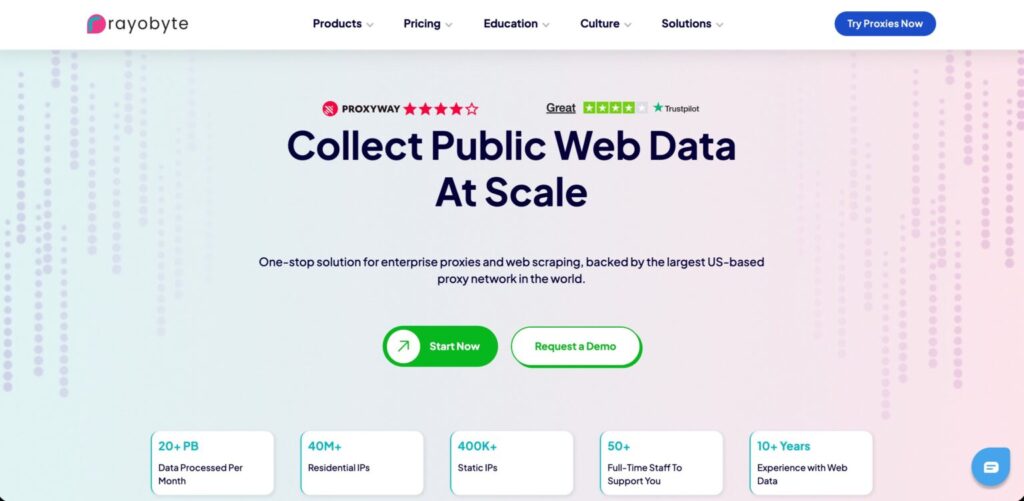
Rayobyte is worth considering if ethical sourcing and scraping infrastructure are part of your buying criteria. Its mobile proxy positioning is tied closely to web scraping, with free geo-targeting mentioned by city, region, or country.
The provider is not as loud about mobile pool size as Bright Data, Oxylabs, or SOAX. That may bother buyers who need every metric before testing. Still, Rayobyte has a good reputation among teams that want proxy products plus scraping support.
Use Rayobyte for structured, legitimate data collection where support and sourcing matter more than chasing the largest advertised number.
8. Proxy-Seller
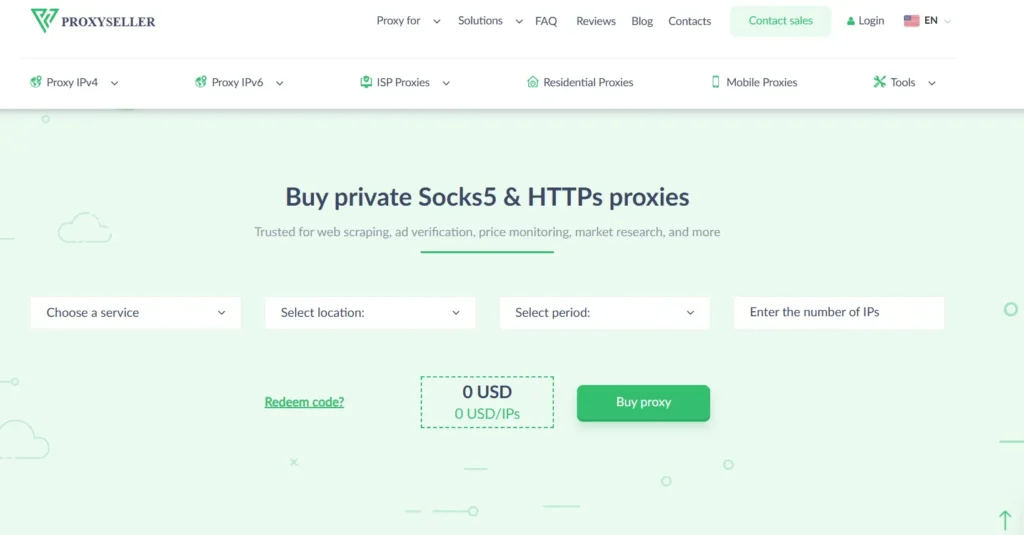
Proxy-Seller fits a different buyer: someone who wants dedicated or shared mobile endpoints and hands-on rotation control. You can rotate by timer or trigger IP changes on demand through a dashboard or link.
That control is useful for social media testing, browser profiles, sneaker workflows, and QA sessions where you do not want a new IP every request.
The trade-off is scale. Proxy-Seller is more about controlled mobile proxy slots than massive scraping infrastructure. For small operational teams, that can be a benefit.
9. DataImpulse
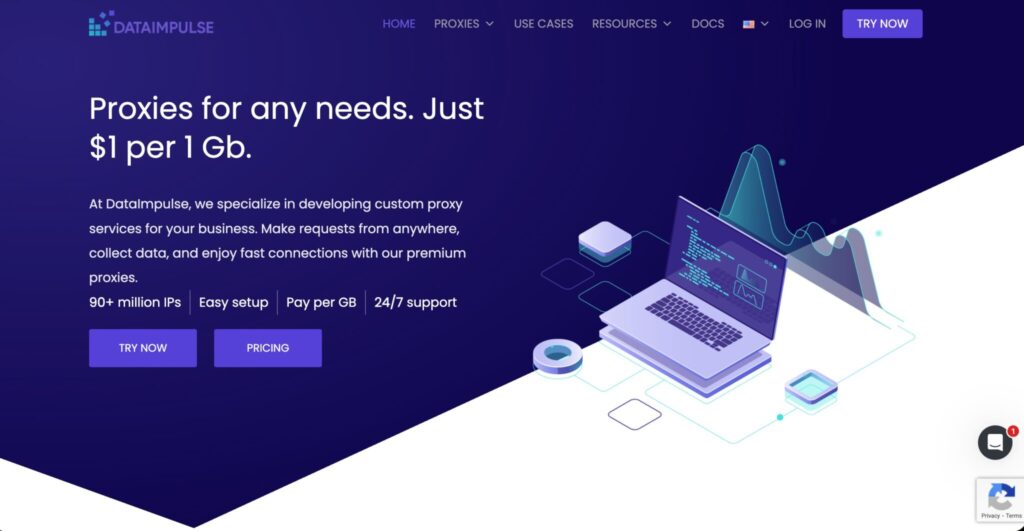
DataImpulse is the budget-conscious option for testing geo targeted proxy workflows before committing to a bigger provider. Its broader network supports location-based options, rotating sessions, sticky sessions, and pay-per-GB billing.
It is not the first provider I would choose for demanding mobile-only enterprise work, but it is useful for experiments, SERP checks, market research, and smaller scraping jobs.
If you are building a proof of concept, DataImpulse gives you room to test assumptions without locking yourself into a large monthly bill.
How to Choose Geo Targeted Mobile Proxies
Check the IP Pool, But Do Not Worship It
A provider can advertise millions of IPs and still perform poorly in your target city. Ask where the IPs are strongest. A 5M pool with good carrier density in your market may beat a 30M pool with weak local coverage.
For serious work, request sample tests in your top five countries, cities, or carriers. Measure success rate, latency, IP uniqueness, and how often the location matches third-party IP databases.
Understand Rotation Protocols
Rotation is not one feature. There are several patterns:
Per-request rotation gives you a fresh IP on every request. It is useful for scraping public pages at scale, but risky for logged-in workflows.
Sticky sessions keep the same IP for a set time. They are better for account actions, checkout tests, ad preview tools, and app flows.
Manual rotation lets you change the IP when you decide. This is ideal for browser profile work, QA testing, and social media management.
Pro-Tip: If a provider only says “rotating proxies” without explaining session length, endpoint format, and cooldown behavior, ask support before buying.
Match Geo Level to the Use Case
Country targeting is enough for broad market research. City targeting is better for local SEO, ad verification, and pricing checks. Carrier or ASN targeting is useful when you need to test how a mobile operator sees content.
ZIP-level targeting sounds powerful, but availability varies. Do not build your entire strategy around ZIP targeting unless the provider can prove coverage.
Check Protocol Support
HTTP and HTTPS are enough for many scraping and browser workflows. SOCKS5 gives more flexibility for apps, automation tools, and non-browser traffic. If you work with mobile apps or anti-detect browsers, confirm protocol support before paying.
Test Geo Accuracy
Never assume a proxy is accurate because the dashboard says so. Run IP checks through multiple databases, then test the target platform itself. Some websites use their own location logic, which can differ from public IP lookup tools.
Buyer Mistakes to Avoid
Do not buy only because of pool size. Do not use datacenter proxies for mobile-first targets. Do not rotate too aggressively on logged-in accounts. Do not ignore carrier quality. Do not run production campaigns before testing speed during peak hours.
The biggest mistake is using one proxy setup for every task. Scraping, ad verification, account management, and app testing all need different rotation behavior.
Best Use Cases
Local SEO and SERP Tracking
Geo targeted mobile proxies are valuable when desktop results are not enough. Mobile search results can change by city, device type, language, and carrier routing. For SEO teams, this means you can check map packs, local ads, mobile snippets, and competitor visibility from the market you actually care about.
Ad Verification
If you buy mobile ads, you need to know whether the correct creative appears in the correct place. A London campaign should not show a New York landing page. A telecom offer should not leak into an unsupported carrier. Mobile proxies help QA teams spot those mistakes before budget is wasted.
App and Mobile Web Testing
Mobile apps often behave differently by region. Pricing, sign-up screens, payment methods, blocked features, language, and promotions can shift from one market to another. A stable sticky mobile session lets testers move through a flow without looking like a bot.
Final Buying Checklist
Before you pay for a plan, ask five questions. Does the provider cover my exact locations? Can I choose country, city, carrier, or ASN? Can I control sticky session length? Does it support my tools through HTTP(S) or SOCKS5? Can support confirm available inventory before I scale?
The best provider is not always the one with the largest headline number. It is the one that gives you clean mobile IPs in the markets where your money is actually made.
FAQs
1. What are geo targeted mobile proxies?
They are mobile carrier IPs that let you route traffic through selected countries, states, cities, carriers, ASNs, or sometimes ZIP codes. They help you see localized mobile content more accurately.
2. Are mobile proxies better than residential proxies?
For mobile-first platforms, yes. Mobile proxies usually look closer to real smartphone traffic. Residential proxies are often cheaper and better for broad web scraping.
3. Which provider has the best geo targeting?
Bright Data has the deepest targeting controls. Oxylabs is excellent for enterprise-scale mobile targeting. SOAX and Decodo are strong for practical day-to-day geo filtering.
4. Do mobile proxies support city targeting?
Yes, many providers support city targeting, but coverage changes by country and carrier. Always test the exact city before buying a large plan.
5. Should I use rotating or sticky mobile proxies?
Use rotating proxies for scraping public pages. Use sticky sessions for logins, app flows, carts, account checks, and anything that needs continuity.
6. Are geo targeted mobile proxies legal?
They are legal tools when used for lawful purposes such as ad verification, public data collection, QA testing, and market research. Misuse, unauthorized access, spam, or fraud can violate laws and platform rules.
7. Why are mobile proxies expensive?
Carrier IPs are harder to source and maintain than datacenter IPs. You are paying for higher trust, lower block rates, and access to real mobile network routes.
8. Can I target a specific mobile carrier?
Some providers support carrier or ASN targeting. Bright Data, SOAX, Decodo, Oxylabs, and IPRoyal are good places to check first, but availability depends on location.
9. What is the best geo targeted mobile proxy provider?
For enterprise control, choose Bright Data or Oxylabs. For balanced value, choose Decodo or SOAX. For dedicated slots, choose IPRoyal or Proxy-Seller. For testing on a tighter budget, try DataImpulse.