
ISP proxies sit in a sweet spot that most proxy buyers eventually discover after wasting money on the wrong setup.
Datacenter proxies are fast and cheap, but they often look too “server-like” for sensitive targets. Residential proxies look more natural, but they can be slower, more expensive per GB, and harder to keep stable during long sessions. ISP proxies try to solve that gap. They use IP addresses associated with real internet service providers, but they usually run on more stable infrastructure than standard peer-based residential networks.
That makes them especially useful for work where you need speed, consistent sessions, and stronger IP reputation at the same time. Think public web data collection, ad verification, SERP monitoring, ecommerce intelligence, QA testing, account-based workflows, and long-running research tasks.
The key is choosing the right provider. Some ISP proxy platforms are built for enterprise scraping teams. Others are better for small agencies, SEO teams, affiliate marketers, or developers who want clean static IPs without signing a large contract.
Below is a practical breakdown of the 9 best ISP proxy providers in 2026, based on infrastructure quality, IP pool strength, rotation options, pricing flexibility, targeting controls, support, and overall value.
Why ISP Proxies Beat Both Datacenter and Residential for Certain Tasks
ISP proxies are often called static residential proxies. They combine the trust profile of residential IPs with the stability of hosted infrastructure. Webshare describes static residential, or ISP proxies, as IP addresses assigned by internet service providers, with higher reliability than standard rotating residential proxies.
The advantage is simple: you get a cleaner, more consistent identity.
With normal rotating residential proxies, your IP may change frequently. That is useful for broad scraping or distributed requests, but it can become messy for login sessions, dashboards, cart flows, region-specific testing, or long data collection jobs. With ISP proxies, you can often keep the same IP for a longer period, sometimes for weeks or months, depending on the provider.
They also tend to be faster than peer-based residential networks because traffic is not usually routed through random end-user devices. Decodo describes ISP proxies as a balance between datacenter-like stability and residential credibility, while Bright Data notes that ISP proxies are static residential IPs designed for long sessions.
That said, ISP proxies are not magic. If your use case needs huge location diversity, mobile carrier targeting, or millions of rotating IPs, residential or mobile proxies may still win. But for stable, repeatable, high-trust workflows, ISP proxies are often the cleaner choice.
Pro-Tip: Do not choose ISP proxies only because they sound “premium.” Choose them when session stability matters. If your project needs a new IP on every request, rotating residential may be more practical.
9 Best ISP Proxy Providers 2026
#1 — Oxylabs: Best Premium ISP Proxy Provider
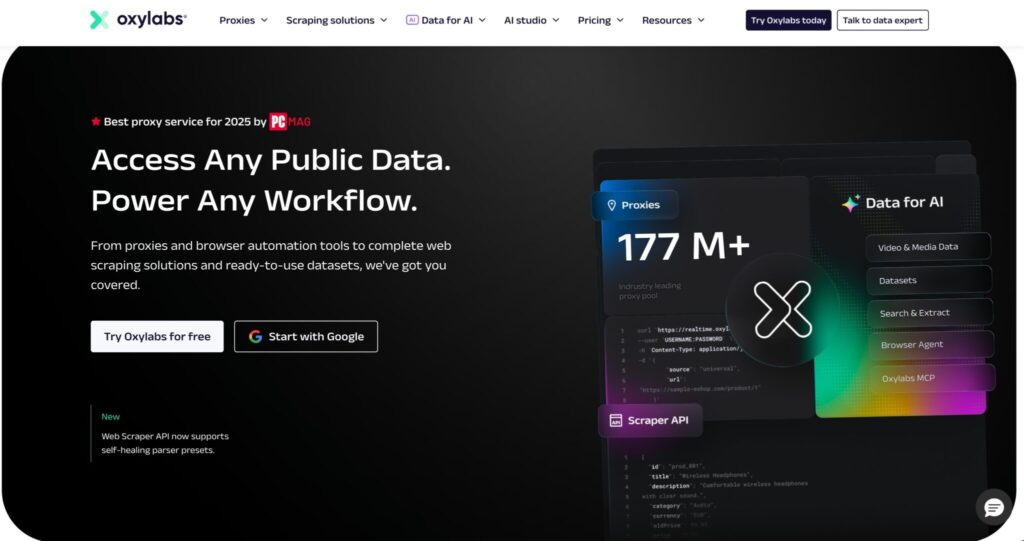
Oxylabs is one of the strongest options for serious teams that care about reliability, support, and large-scale data collection. Its ISP proxy product supports both dynamic IP rotation and unlimited-duration sessions, which means you can either rotate IPs or keep the same IP for longer workflows.
That flexibility matters. Some projects need sticky identity. Others need controlled rotation. Oxylabs gives technical teams room to design the setup around the target, not the other way around.
Oxylabs is especially strong for companies running public web data collection, ecommerce monitoring, ad verification, cybersecurity research, and market intelligence. Its ecosystem also includes scraping APIs, web unblocker tools, and enterprise data products, which makes it more than a simple proxy seller. The main Oxylabs platform highlights a large proxy network and multiple data collection tools for advanced scraping workflows.
The downside is price. Oxylabs is not usually the cheapest route for small users or casual proxy buyers. It makes the most sense when uptime, success rate, support, and compliance matter more than squeezing every dollar.
Best for: Enterprise teams, data companies, ecommerce intelligence, ad verification, serious scraping infrastructure.
Why it stands out: Premium infrastructure, strong support, flexible ISP sessions, and enterprise-grade tooling.
Pro-Tip: Oxylabs is a better fit when proxy failure costs more than proxy pricing. If a blocked workflow delays your team or breaks your data pipeline, premium support can pay for itself.
#2 — Decodo: Best Value ISP Proxies
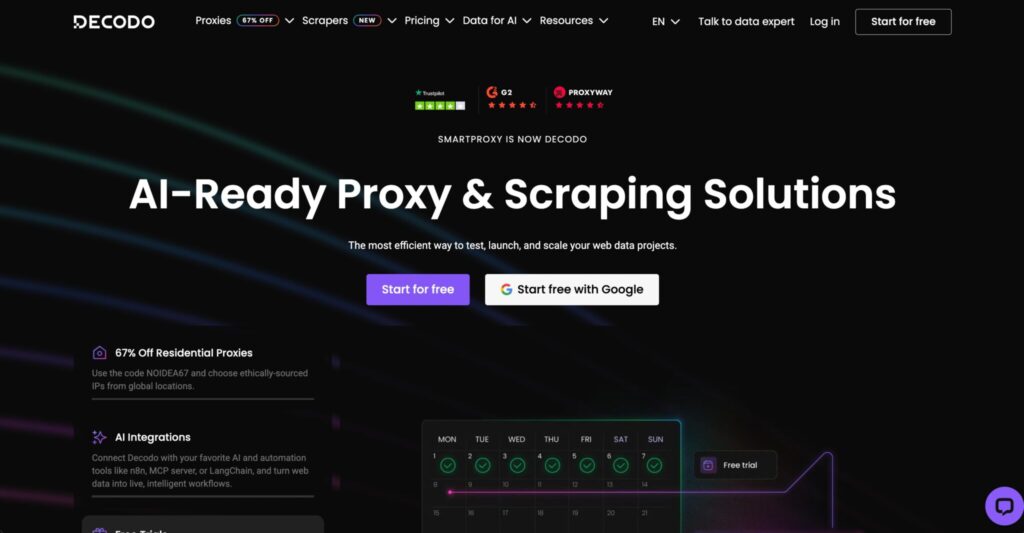
Decodo, formerly Smartproxy, has become one of the most balanced proxy providers for buyers who want strong features without enterprise-level complexity. The company officially rebranded from Smartproxy to Decodo, and its platform now lists static residential proxies starting from low per-IP pricing.
For ISP proxies, Decodo offers both Pay/GB and Pay/IP models, which is useful because not every buyer consumes proxies the same way. If you run bandwidth-heavy workflows, a GB-based plan may be easier to manage. If you need fixed IP identity, Pay/IP gives you cleaner cost control. Decodo’s ISP proxy page says users can choose between Pay/GB and Pay/IP, while dedicated ISP proxies provide exclusive access with unlimited traffic.
Decodo also does a good job with usability. The dashboard is easier to understand than many enterprise platforms, and the pricing is more approachable for small teams, agencies, and developers. Its static residential proxy pricing page lists multiple IP-based plans, starting from small packages that are easy to test.
Its location coverage is also respectable. Decodo documentation lists multiple dedicated ISP locations, including the United States, Canada, Germany, France, India, Japan, the Netherlands, Poland, Singapore, and more.
Best for: Agencies, SEO teams, developers, small businesses, account-based workflows, and buyers who want a strong middle ground.
Why it stands out: Flexible pricing, clean dashboard, dedicated ISP options, and good entry-level accessibility.
Pro-Tip: Decodo is a smart first ISP proxy testbed. Start with a smaller Pay/IP package, test target behavior, then scale only the locations and IP types that actually perform.
#3 — Webshare: Best Self-Service ISP Proxies from Major Carriers
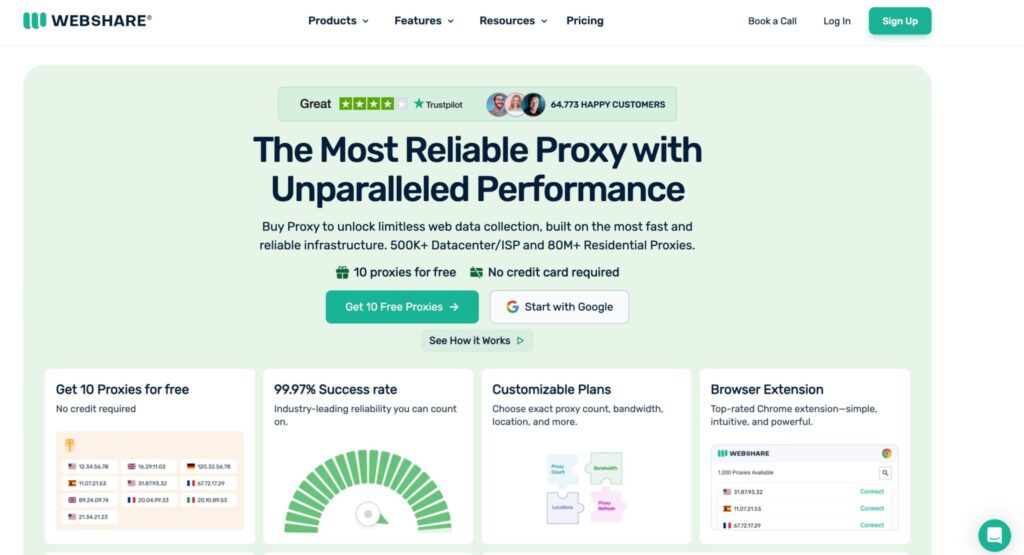
Webshare is one of the best self-service options for buyers who want affordable static residential proxies without talking to sales. Its static residential proxy page lists ISP proxies with pricing starting at $0.30/IP, up to unlimited bandwidth under fair usage conditions, and support for high thread limits depending on the plan.
Webshare’s biggest strength is convenience. You can choose proxy types, authentication settings, and plan sizes from a clean dashboard. It is also attractive for budget-sensitive users because the starting price is low compared with many premium ISP providers.
The provider says its static residential proxies come from ISPs such as Comcast, AT&T, and others, which makes them useful for US-focused tasks where carrier credibility matters. Webshare also offers datacenter, rotating residential, and static residential products, so buyers can keep multiple proxy types under one account.
The trade-off is that Webshare is more self-service than white-glove. If you need custom enterprise onboarding, complex targeting, managed scraping tools, or strategic support, Oxylabs or Bright Data may be stronger. But if you want affordable ISP access that you can configure quickly, Webshare is hard to ignore.
Best for: Developers, small teams, automation testing, budget ISP proxy buyers, and self-service users.
Why it stands out: Low entry pricing, simple dashboard, carrier-backed static residential IPs, and flexible IP quantities.
Pro-Tip: Webshare is a strong choice for testing ISP proxies before committing to a larger provider. Use it to benchmark success rates, then decide whether you need a premium platform.
#4 — Bright Data: Most Comprehensive Enterprise ISP Proxy Platform
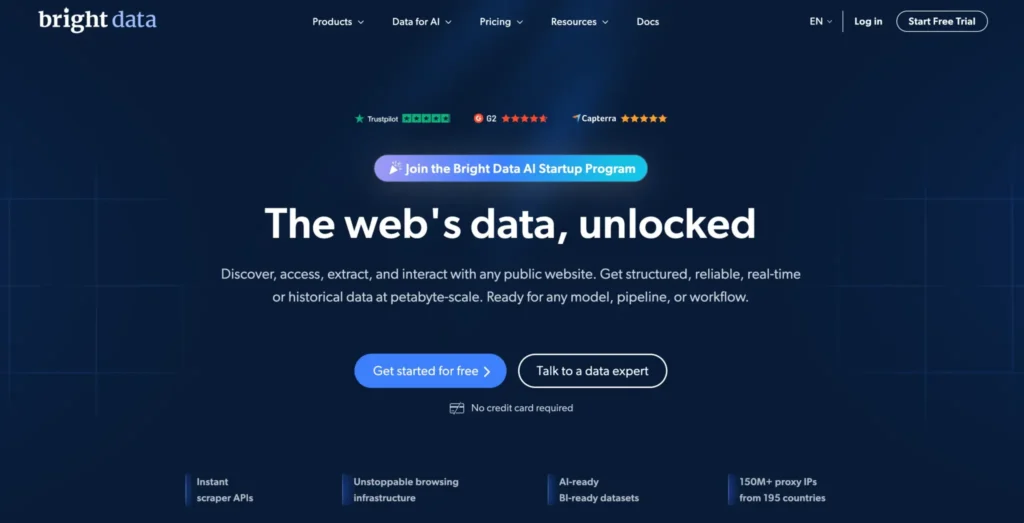
Bright Data is built for advanced users who want maximum control. It is not just a proxy provider. It is a full data collection ecosystem with proxy networks, scraping APIs, datasets, browser tools, and compliance systems.
Bright Data’s ISP proxy page lists a large static residential proxy network, high uptime, real-time network monitoring, and flexible pay-per-IP or bandwidth options. The company also says its ISP proxies can support long-term static sessions, which is important for account-based work and persistent workflows.
Where Bright Data shines is depth. You get advanced targeting, API controls, compliance tooling, and infrastructure built for teams that collect public data at scale. It is the kind of platform data engineering teams and enterprise research teams choose when they need more than a list of proxies.
The drawback is complexity and cost. Bright Data can be overkill for smaller buyers. If all you need is 20 static IPs for light usage, you may not need this much platform power. But for enterprise proxy management, Bright Data remains one of the most complete options in the market.
Best for: Enterprises, data teams, ad verification, SERP intelligence, market research, price monitoring, and complex geo-targeting.
Why it stands out: Massive infrastructure, advanced controls, strong compliance posture, and broad data collection tools.
Pro-Tip: Bright Data is best when you need governance and visibility. If multiple teams use proxies across campaigns, dashboards, APIs, and audit trails become more valuable than low sticker pricing.
#5 — IPRoyal: Best ISP Proxy with Unlimited Bandwidth
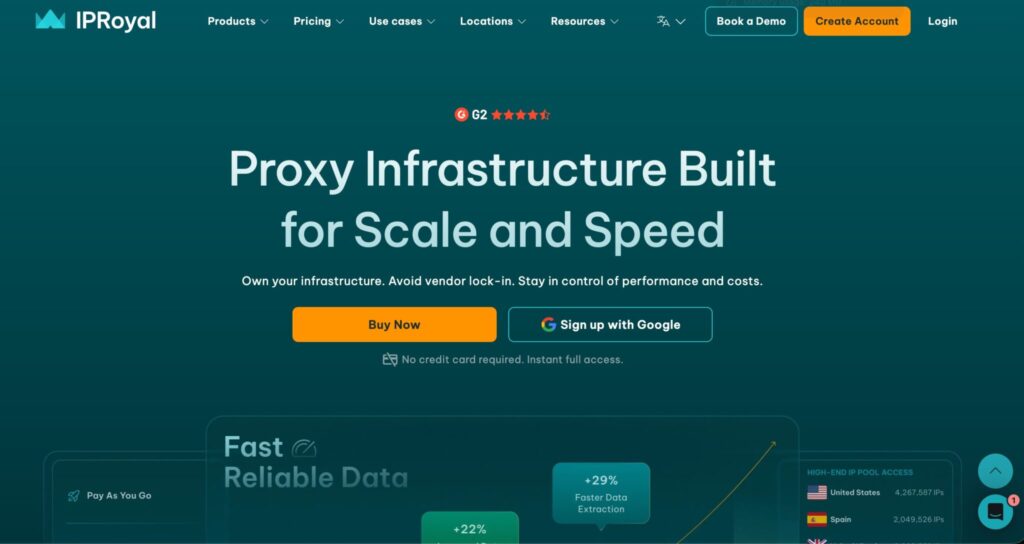
IPRoyal is a strong option for buyers who want simple pricing and unlimited traffic on static residential or ISP proxies. Its ISP proxy page highlights unlimited traffic, HTTP(S) and SOCKS5 support, and per-IP pricing.
This makes IPRoyal appealing for bandwidth-heavy workflows. With many residential proxy providers, costs rise quickly when usage grows because pricing is tied to GB consumption. IPRoyal’s per-IP approach can be easier to forecast when your project sends a lot of traffic through a smaller number of stable IPs.
The provider also lists 500K+ unique ISP IPs and positions them for ecommerce automation, ad verification, and long-session reliability. That long-session angle is exactly where ISP proxies make sense.
IPRoyal is not always as polished as the largest enterprise providers, but it gives small and mid-sized users a practical path into ISP proxies without a huge commitment. The dashboard is straightforward, and the pricing structure is easier to understand than many bandwidth-heavy plans.
Best for: Bandwidth-heavy users, small teams, ecommerce workflows, ad verification, and buyers who want predictable per-IP pricing.
Why it stands out: Unlimited traffic, SOCKS5 support, simple pricing, and dedicated static residential access.
Pro-Tip: IPRoyal can be cost-effective when you need fewer IPs with heavy usage. If you need thousands of locations or complex scraping APIs, compare it against bigger platforms first.
#6 — SOAX: Best ISP Proxy for Filtering and Speed
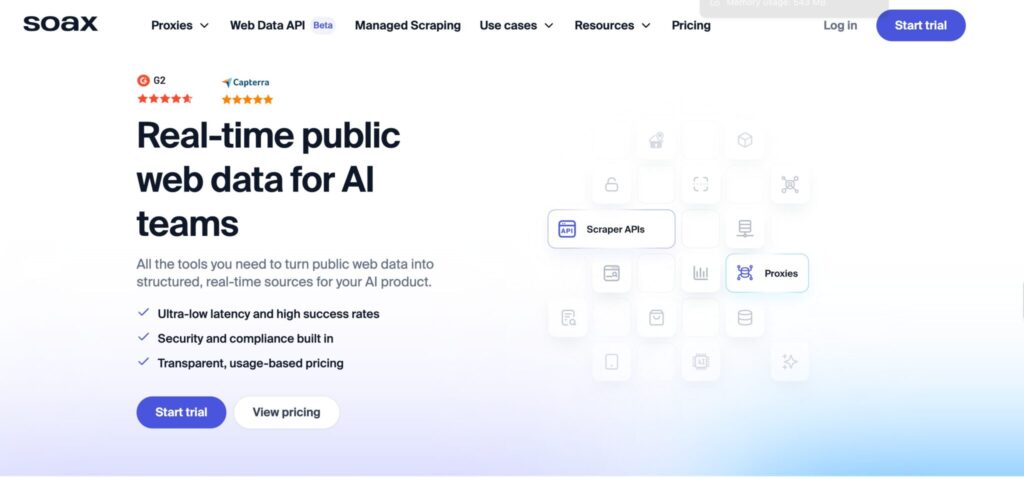
SOAX is known for strong targeting controls, clean filtering, and a growing proxy ecosystem. Its residential proxy page lists bundled access to residential proxies and Web Data API, with plans structured around GB usage.
While SOAX is often discussed more in the residential and mobile proxy space, it remains relevant for buyers who care about targeting precision. Third-party reviews also highlight SOAX for granular filtering by country, city, ASN, and ISP, along with HTTP, HTTPS, and SOCKS5 support.
That filtering strength is useful when you are testing localized pages, checking ad placements, validating regional SERPs, or comparing user experiences across locations. For many proxy buyers, raw pool size is less important than being able to pick the right location and connection profile.
The main thing to watch is plan fit. SOAX may not be the cheapest choice if you only need a handful of static ISP IPs. It becomes more attractive when targeting quality and workflow flexibility matter.
Best for: Geo-testing, localized research, ad verification, QA testing, and teams that need granular targeting.
Why it stands out: Strong filtering, flexible proxy ecosystem, targeting depth, and API-friendly setup.
Pro-Tip: Use SOAX when targeting accuracy matters more than the lowest per-IP price. A cheaper proxy is not cheaper if it gives you the wrong country, ASN, or user context.
#7 — Proxy-Cheap: Most Affordable ISP Proxy Access

Proxy-Cheap is a budget-focused provider that appeals to users who want low-cost static residential proxy access. Its static residential proxy page lists plans starting around low monthly per-proxy pricing, with unlimited bandwidth, HTTP/SOCKS5 support, dedicated IP options, and country or ISP-level targeting.
The biggest reason to consider Proxy-Cheap is affordability. If you are testing workflows, running small-scale automation, or building a low-cost proxy stack, it gives you a cheap entry point.
Of course, cheap proxies require more testing. Budget providers can be good, but performance may vary by location, target, and IP history. You should test response times, failure rates, and account/session consistency before moving important workflows onto any low-cost pool.
Proxy-Cheap is best treated as a practical budget option, not a premium enterprise solution. For smaller jobs, it can be enough. For regulated enterprise data collection or high-stakes campaigns, you may want stronger support and deeper reporting.
Best for: Budget buyers, small tests, lightweight automation, and entry-level ISP proxy experiments.
Why it stands out: Low pricing, unlimited bandwidth options, SOCKS5 support, and accessible setup.
Pro-Tip: With budget ISP proxies, always test IP reputation before scaling. Run a small batch through your real workflow before buying hundreds of IPs.
#8 — Rayobyte: Best ISP Proxy for Dedicated Carrier-Grade Access
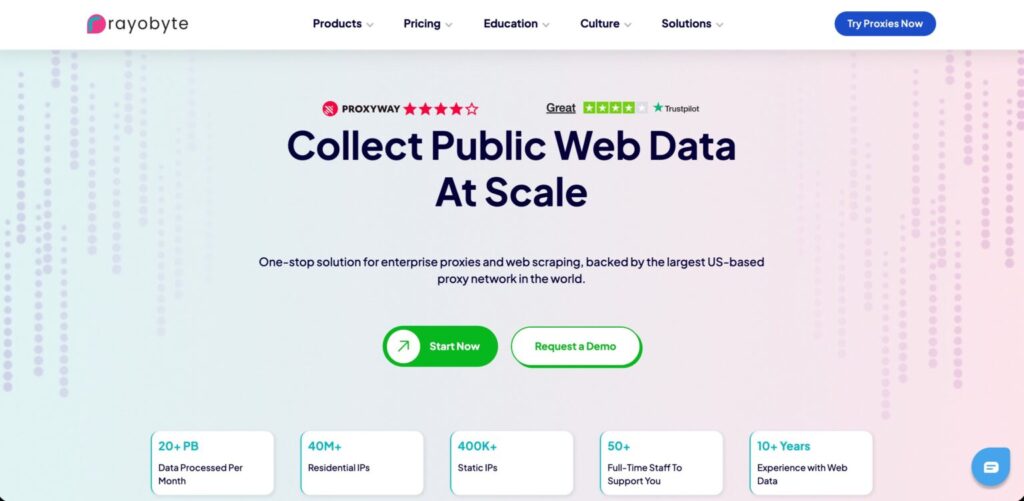
Rayobyte is a strong fit for users who want dedicated ISP proxies from a provider with a long proxy history. Its ISP proxy page emphasizes unlimited bandwidth, zero throttling, diverse IP pools across multiple ASNs and subnets, and high-authenticity ISP addresses.
Rayobyte’s positioning is interesting because it focuses heavily on ethical proxy sourcing and US-based infrastructure. Its main site also describes the company as a public web data and proxy provider with a large US-based proxy network.
The provider offers both static ISP and rotating ISP options, which gives buyers room to choose between fixed identity and automated rotation. Static ISP proxies are better when you want consistent sessions. Rotating ISP proxies are better when you need more automated IP changes across repeated requests.
Rayobyte may not be the cheapest provider on this list, but it is a strong contender for teams that value dedicated access, carrier-grade IP diversity, and proxy infrastructure built for serious public data workflows.
Best for: Dedicated ISP access, US-focused proxy needs, public web data collection, and users who want static plus rotating ISP options.
Why it stands out: Unlimited bandwidth, multiple ASNs, dedicated infrastructure, and ethical sourcing focus.
Pro-Tip: Rayobyte is worth testing when ASN diversity matters. For some targets, subnet variety can matter as much as country-level location.
#9 — DataImpulse: Best Budget ISP-Tier Proxy Access
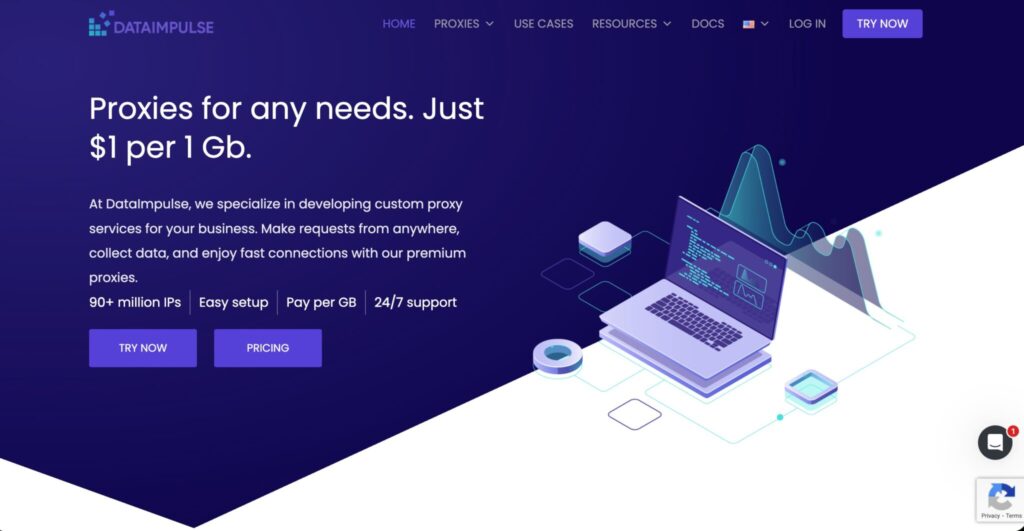
DataImpulse is best known as a low-cost residential proxy provider, but it deserves attention from buyers who need budget-friendly proxy access for data collection, SERP tracking, ad verification, and price monitoring. Its official site highlights proxy pricing from $1 per GB, a 90M+ IP pool, pay-per-GB setup, and 24/7 support.
The company also says its traffic does not expire and positions its proxies for use cases such as web scraping, SERP tracking, ad verification, price comparison, and website testing.
DataImpulse is not the most classic “static ISP proxy” provider in this list. It fits better as a budget proxy access option for teams that want affordable traffic and do not necessarily need premium dedicated ISP IPs for every task. For some buyers, that is exactly the point. Not every project requires enterprise ISP infrastructure.
Use DataImpulse when cost efficiency matters and your workflow can tolerate more testing and tuning. For long-term static account identity, compare it carefully with IPRoyal, Webshare, Decodo, or Rayobyte.
Best for: Budget proxy users, price monitoring, SERP tracking, public data collection, and teams that want low-cost traffic.
Why it stands out: Very low starting bandwidth pricing, non-expiring traffic, simple setup, and broad proxy use cases.
Pro-Tip: DataImpulse is better for cost-sensitive proxy traffic than premium static identity. Use it where bandwidth cost matters, not where one fixed IP must remain trusted for months.
Completed Comparison Table: Best ISP Proxy Providers 2026
| Provider | Best For | Key Strength | Pricing Style | Rotation / Sessions | Protocol Support | Buyer Fit |
|---|---|---|---|---|---|---|
| Oxylabs | Premium ISP proxy infrastructure | Enterprise-grade reliability and flexible sessions | Per-IP and enterprise-style plans | Dynamic rotation plus unlimited-duration sessions | HTTP(S), SOCKS5 depending on setup | Large teams, data companies, ad verification |
| Decodo | Best overall value | Flexible Pay/GB and Pay/IP ISP options | Pay/GB or Pay/IP | Dedicated ISP and rotating pool options | HTTP(S), SOCKS5 | Agencies, SEO teams, developers |
| Webshare | Self-service ISP proxies | Low-cost static residential IPs from major carriers | Per-IP plans | Static IP lists with rotation options | HTTP, SOCKS5 | Small teams, developers, budget buyers |
| Bright Data | Enterprise control | Large ISP network, monitoring, compliance, APIs | Pay per IP or bandwidth | Static long sessions and platform controls | HTTP(S), SOCKS5 | Enterprises, data teams, compliance-heavy use |
| IPRoyal | Unlimited bandwidth ISP proxies | Per-IP pricing with unlimited traffic | Per-IP | Static dedicated ISP sessions | HTTP(S), SOCKS5 | Bandwidth-heavy users, small businesses |
| SOAX | Filtering and targeting | Strong geo, city, ASN, and ISP filtering | GB-based plans | Flexible proxy sessions | HTTP, HTTPS, SOCKS5 | QA testing, ad verification, geo research |
| Proxy-Cheap | Low-cost ISP access | Cheap static residential proxy plans | Per-proxy monthly plans | Static proxies | HTTP/SOCKS5 | Budget users and small tests |
| Rayobyte | Dedicated carrier-grade access | Unlimited bandwidth and diverse ASNs | Per-IP and custom options | Static and rotating ISP options | HTTP(S), SOCKS5 depending on plan | Dedicated ISP buyers, US-focused teams |
| DataImpulse | Budget proxy traffic | Low-cost GB pricing and non-expiring traffic | Pay per GB | More suited to rotating proxy workflows | HTTP(S), SOCKS5 depending on setup | Price monitoring, SERP tracking, budget scraping |
How to Choose the Best ISP Proxy Provider
1. Start with IP Origin, Not Just Pool Size
A large IP pool sounds impressive, but ISP proxy quality depends heavily on where those IPs come from. You want ISP-assigned IPs, strong ASN diversity, and clean IP history.
A provider with fewer but cleaner ISP IPs can outperform a larger pool with abused or overused ranges.
Ask these questions:
- Are the IPs dedicated or shared?
- Are they static residential or true ISP-labeled proxies?
- Can you choose country, city, ASN, or carrier?
- How often are IPs refreshed?
- Does the provider explain sourcing and compliance?
For sensitive workflows, dedicated ISP IPs are usually better than shared ones because you are not affected by another user’s behavior.
2. Match Rotation to the Workflow
Rotation is one of the most misunderstood proxy features.
For scraping broad public pages, rotating IPs can help distribute requests. For login flows, dashboards, social tools, testing accounts, or ecommerce sessions, constant rotation can break the workflow.
Choose static ISP proxies when you need identity consistency. Choose rotating ISP or residential proxies when you need larger request distribution.
Pro-Tip: If your session has cookies, carts, accounts, or dashboards, do not rotate too aggressively. Stable IP plus stable browser fingerprint usually performs better than random rotation.
3. Check Bandwidth Pricing Carefully
ISP proxy pricing usually follows one of three models:
- Pay per IP
- Pay per GB
- Hybrid Pay/IP and Pay/GB
Pay per IP is better when you need stable addresses and heavy traffic. Pay per GB is better when you need broad access without owning many fixed IPs. Hybrid pricing is best when your team has mixed workflows.
For example, IPRoyal’s unlimited traffic model can be attractive for heavy usage through fewer IPs, while Decodo’s Pay/IP and Pay/GB options give more flexibility across different campaigns.
4. Test With Your Real Target Before Scaling
Proxy performance is target-specific. A provider can work beautifully for ecommerce monitoring and poorly for a different platform. That does not always mean the provider is bad. It means the IP type, ASN, region, or request pattern may not match the target.
Before scaling:
- Test at least 20 to 50 IPs if possible.
- Track success rate, latency, blocks, and CAPTCHA frequency.
- Test multiple locations.
- Compare static vs rotating behavior.
- Measure session stability over several days.
Do not rely only on homepage claims.
5. Look at Support Quality
Support matters more with ISP proxies than many buyers expect. When something breaks, you may need help with authentication, IP replacement, geo selection, subnet issues, session settings, or target-specific behavior.
Enterprise users should prioritize Oxylabs, Bright Data, or Rayobyte. Smaller teams may prefer Decodo or Webshare for ease of use. Budget users can try Proxy-Cheap or DataImpulse, but should expect more self-testing.
When to Choose ISP Proxies Over Alternatives
Choose ISP proxies when you need stable identity, stronger trust signals, and faster performance than standard residential proxies.
They are especially useful for:
- Long-running public data collection
- Ad verification
- SERP tracking
- Ecommerce price monitoring
- QA testing across regions
- Account-based workflows
- Social media management within platform rules
- Market intelligence
- Brand protection
- Localized page testing
Choose datacenter proxies when speed and price matter more than IP reputation. Choose residential proxies when you need a large rotating pool and broader location diversity. Choose mobile proxies when the target experience depends on mobile carrier IPs.
ISP proxies are the middle path. Not always cheapest. Not always largest. But often the most stable for serious workflows.
FAQs: Best ISP Proxy Providers in 2026
What is an ISP proxy?
An ISP proxy is a proxy that uses an IP address associated with an internet service provider. It is often called a static residential proxy because it combines residential-style trust with hosted infrastructure stability. These proxies are useful when you need a stable IP identity for longer sessions.
ISP proxies vs residential proxies — which is better?
ISP proxies are better for speed, stability, and long sessions. Residential proxies are better when you need a very large rotating pool with broad location coverage. If you need fixed identity, choose ISP proxies. If you need large-scale rotation, choose residential proxies.
Are ISP proxies good for social media management?
Yes, ISP proxies can be useful for social media management because they provide stable IP identity. That said, users should follow each platform’s rules and avoid spammy automation. ISP proxies help with consistency, but they do not replace safe account behavior.
How do ISP proxies compare to datacenter proxies?
ISP proxies usually have better trust signals because their IPs are associated with real ISPs. Datacenter proxies are often faster and cheaper, but they can be easier to detect on sensitive platforms. ISP proxies cost more, but they offer a stronger balance of speed and credibility.
What is the cheapest ISP proxy provider in 2026?
Webshare and Proxy-Cheap are among the most affordable options for static residential or ISP-style proxies, while DataImpulse is attractive for low-cost proxy traffic. The cheapest option depends on whether you pay per IP or per GB.
Are ISP proxies static or rotating?
They can be either, depending on the provider. Many ISP proxies are static, meaning you keep the same IP. Some providers also offer rotating ISP proxies, where the IP changes based on request, session, or manual rotation settings.
Are ISP proxies legal?
ISP proxies are legal when used for legitimate purposes such as public data collection, ad verification, market research, security testing, and QA. The important part is how you use them. Always respect website terms, privacy rules, and applicable laws.
Which ISP proxy provider is best for enterprise teams?
Oxylabs and Bright Data are the strongest enterprise choices. They offer larger infrastructure, stronger support, better controls, and more advanced data collection tools than most budget providers.
Which ISP proxy provider is best for beginners?
Decodo and Webshare are easier starting points. Decodo gives a strong balance of usability and flexibility, while Webshare is excellent for self-service buyers who want affordable static residential proxies.
Conclusion: Best ISP Proxy Providers in 2026
The best ISP proxy provider depends on your workflow, budget, and tolerance for technical setup.
Choose Oxylabs if you need premium enterprise-grade ISP infrastructure. Choose Decodo if you want the best balance of price, usability, and dedicated ISP options. Choose Webshare if you want affordable self-service static residential proxies. Choose Bright Data if your team needs a full enterprise data platform with advanced controls.
For specific needs, IPRoyal is excellent for unlimited bandwidth, SOAX is strong for filtering and targeting, Proxy-Cheap is the low-cost testing option, Rayobyte is a solid pick for dedicated carrier-grade access, and DataImpulse works well for budget proxy traffic.
My practical recommendation: start with Decodo or Webshare if you are testing ISP proxies for the first time. Move to Oxylabs, Bright Data, or Rayobyte when uptime, compliance, and support become business-critical. Use IPRoyal when bandwidth predictability matters. Keep Proxy-Cheap and DataImpulse for budget testing and lower-risk workflows.
ISP proxies are not the answer to every proxy problem, but when you need speed, trust, and session stability in one package, they are one of the smartest proxy types to buy in 2026.