
Best Japan Proxy Providers.
Japan looks like a simple market from the outside. Fast internet. Big eCommerce platforms. Heavy mobile usage. Strong gaming culture. Deep local search behavior. Then you try to collect data from Japanese websites at scale, test local SERPs, check regional prices, or access JP-only content, and suddenly the quality of your proxy network matters a lot more than the dashboard screenshot.
A good Japan proxy provider is not just “a provider with Japan on the country list.” You need real Japanese IP availability, stable rotation, good session control, low latency into Tokyo and Osaka, clean IP reputation, and enough proxy types to match your use case. Residential proxies are better for scraping and localized research. Datacenter proxies are cheaper and faster for lighter tasks. ISP proxies work well when you need a stable Japanese IP that behaves more naturally than a typical datacenter address. Mobile proxies are useful when your work depends on carrier-level behavior or mobile-first testing.
This buyer’s guide ranks the best Japan proxy providers for 2026 based on Japan coverage, proxy types, pricing, technical flexibility, scraping reliability, and value for serious users.
What Makes a Proxy Great for Japan?
The best Japanese proxy is not always the biggest one. A huge global IP pool helps, but Japan-specific depth matters more when you are targeting local platforms, JP SERPs, retail listings, streaming libraries, gaming servers, or ad verification flows.
A strong Japan proxy provider should offer:
Real Japanese IPs:
You want IPs that actually resolve to Japan, not “Asia region” endpoints with inconsistent geolocation.
Multiple proxy types:
Residential, datacenter, ISP, and mobile proxies solve different problems. A good provider gives you enough flexibility to switch when a target becomes sensitive.
Rotation control:
For scraping public data, rotating IPs can reduce friction. For logins, carts, QA testing, or session-based workflows, sticky sessions are usually better.
City or carrier targeting:
Tokyo-only testing, Osaka SERPs, mobile carrier checks, and localized app testing can require more precise filters than country-level targeting.
Clean IP reputation:
Cheap proxies can work for basic access, but burned IPs lead to CAPTCHAs, failed requests, and unstable results.
SOCKS5 and HTTPS support:
SOCKS5 is useful for apps, automation tools, gaming clients, and custom workflows. HTTPS is enough for many browser and scraping use cases.
Transparent pricing:
Japan proxies can get expensive fast. The right provider should make bandwidth, IP count, trial limits, and renewal costs clear before you scale.
A quick rule: use datacenter proxies when speed and cost matter most, residential proxies when trust and geo-authenticity matter most, ISP proxies when you need stable long sessions, and mobile proxies when you need Japanese carrier-level behavior.
7 Best Japan Proxy Providers in 2026
#1: Oxylabs: Best Overall Japan Proxy Provider
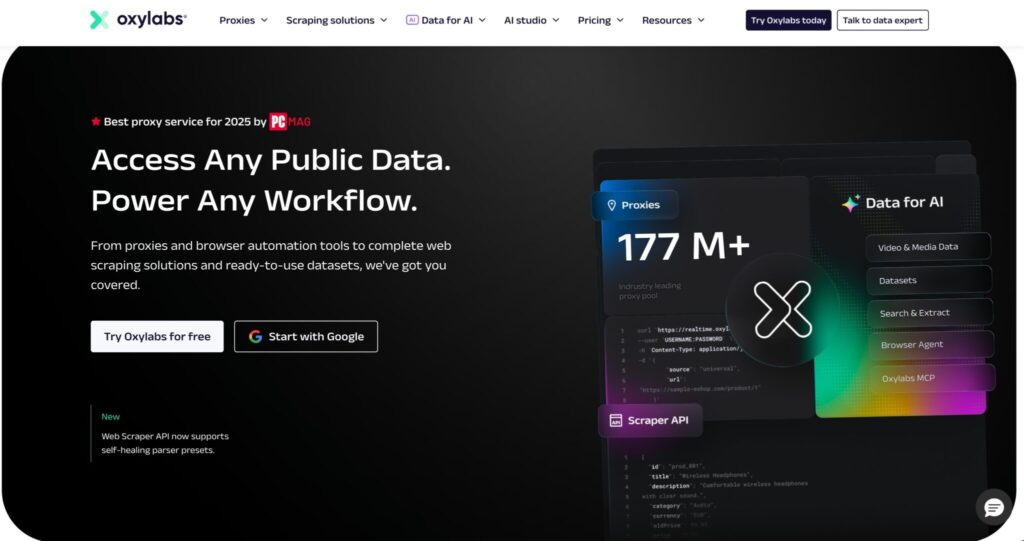
Oxylabs is the safest top pick for teams that care about reliability, scale, and clean infrastructure. Its Japan proxy page currently lists 2,633,211 Japan IPs, with access to residential and datacenter proxies across Japan. Oxylabs also highlights uptime up to 99.9% for its Japanese proxies, which matters when your workflow involves large scraping jobs or scheduled monitoring.
What makes Oxylabs strong is not just IP count. It has a mature product stack for data collection, including residential proxies, datacenter proxies, scraper APIs, and enterprise-grade tooling. Its residential proxy product advertises 175M+ residential IPs globally, city-level targeting, sticky sessions up to 24 hours, SOCKS5 support, and coverage across 195 locations.
For Japan-specific use, Oxylabs fits teams scraping public eCommerce data, monitoring local SERPs, verifying ads, testing localized experiences, and running research pipelines where failed requests cost more than the proxy bill.
Best for: Enterprise scraping, public data collection, SERP tracking, eCommerce monitoring, and high-volume research.
Strengths:
- Strong Japan IP pool
- Residential and datacenter options
- Good uptime positioning
- SOCKS5 support
- Strong tooling for serious data teams
- Good fit for scaling beyond Japan
Weak spots:
- More expensive than budget-first providers
- May feel heavy for small users
- Best value comes when you know your traffic volume
Pro-Tip:
Use Oxylabs residential proxies for sensitive Japanese targets, but test datacenter proxies first for simple public pages. If datacenter works, you can save a lot of budget without losing speed.
#2: Decodo: Best Value Japan Proxy Provider
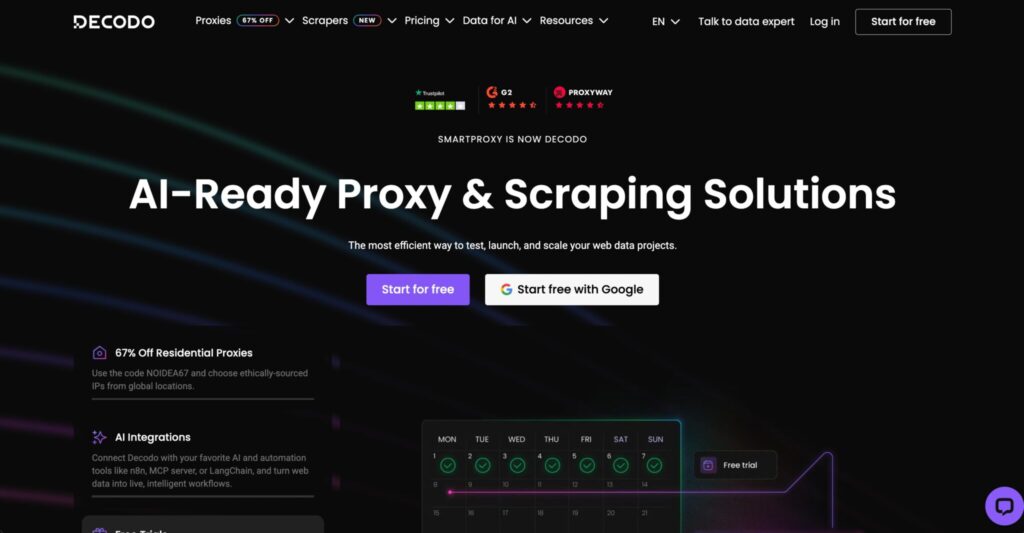
Decodo, formerly Smartproxy, is the value pick for users who want strong features without moving straight into enterprise pricing. Its Japan proxy page offers Japanese residential, datacenter, mobile, and ISP proxy networks. The same page lists Japan proxy pricing from $1.50/GB for residential proxies, $0.27/IP for ISP proxies, $2.25/GB for mobile proxies, and $0.026/IP for datacenter proxies.
Decodo’s broader platform includes over 125M residential, mobile, static residential, and datacenter proxies, plus Site Unblocker and scraping API products. Its residential product page lists 115M+ residential IPs, country, state, city, and ZIP-level targeting, unlimited concurrent sessions, 99.86% success rate, and 99.99% uptime.
For Japan, the major advantage is balance. You get enough proxy types to test different workflows, but the pricing is still approachable. That makes Decodo a strong fit for agencies, SEO teams, small data teams, affiliate researchers, and developers who want Japanese IPs without building a full enterprise data stack.
Best for: Value-focused scraping, SEO research, ad verification, localized testing, and mixed proxy workflows.
Strengths:
- Japan residential, ISP, mobile, and datacenter options
- Competitive starting prices
- Strong global IP pool
- Good dashboard experience
- Good option for beginners and mid-sized teams
Weak spots:
- Not as enterprise-heavy as Bright Data or Oxylabs
- Some advanced use cases may still require Site Unblocker or API products
- Final cost depends heavily on bandwidth usage
Pro-Tip:
For Japan eCommerce monitoring, start with Decodo residential proxies and test sticky sessions. If your target accepts longer sessions, you can reduce login friction and avoid unnecessary IP switching.
#3: Webshare: Best Free Japan Proxy Tier
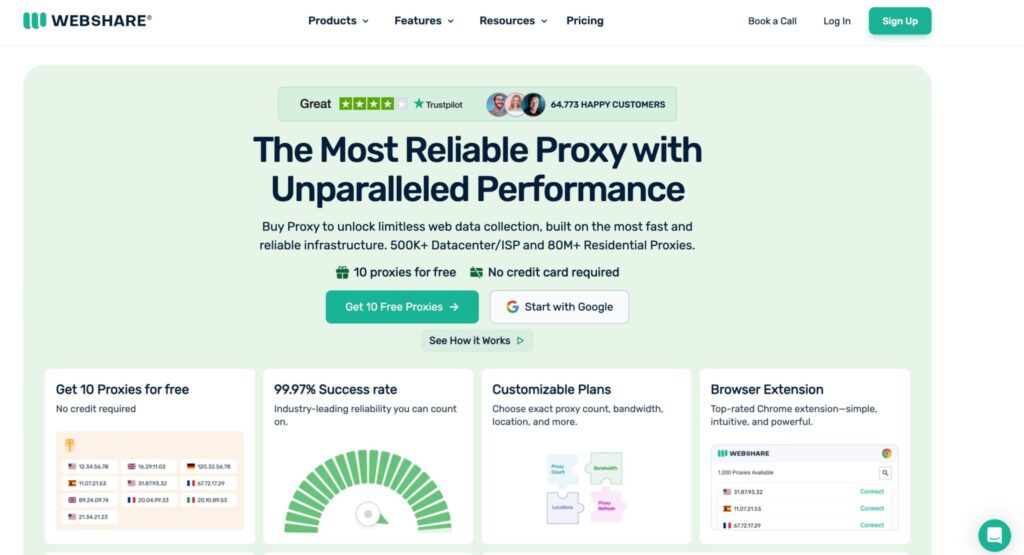
Webshare is the best choice if you want to test proxy workflows before committing real money. It offers 10 free proxies with up to 1GB per month, without a credit card or fixed trial period. Its pricing page lists datacenter proxies from $0.05/IP, rotating residential proxies from $1.40/GB, and static residential proxies from $0.23/IP.
Webshare’s official product page also lists support for HTTP and SOCKS5 proxy endpoints, 50+ country locations, and 99.97% uptime for its proxy server product.
For Japan specifically, Webshare has published a Yahoo Auctions Japan proxy guide that mentions over 12,814 proxies available for Japan in that use case context.
Webshare is not the most advanced Japan proxy provider on this list, but it is practical. If you are testing a scraper, validating a tool, checking Japanese SERPs occasionally, or running low-risk tasks, Webshare gives you a cheap way in.
Best for: Free testing, small projects, light scraping, simple browser tasks, and budget-conscious users.
Strengths:
- Free proxy tier
- Low-cost paid plans
- HTTP and SOCKS5 support
- Simple dashboard
- Good for beginners
Weak spots:
- Not as advanced for enterprise scraping
- Japan targeting depth may be less refined than premium providers
- Support and tooling are lighter than Decodo, Oxylabs, or Bright Data
Pro-Tip:
Use Webshare to validate your setup first. Once your script, browser profile, or automation flow works, move the same workflow to residential or ISP proxies from a stronger Japan-focused provider.
#4: SOAX: Best Japan Proxy for Clean IP Quality
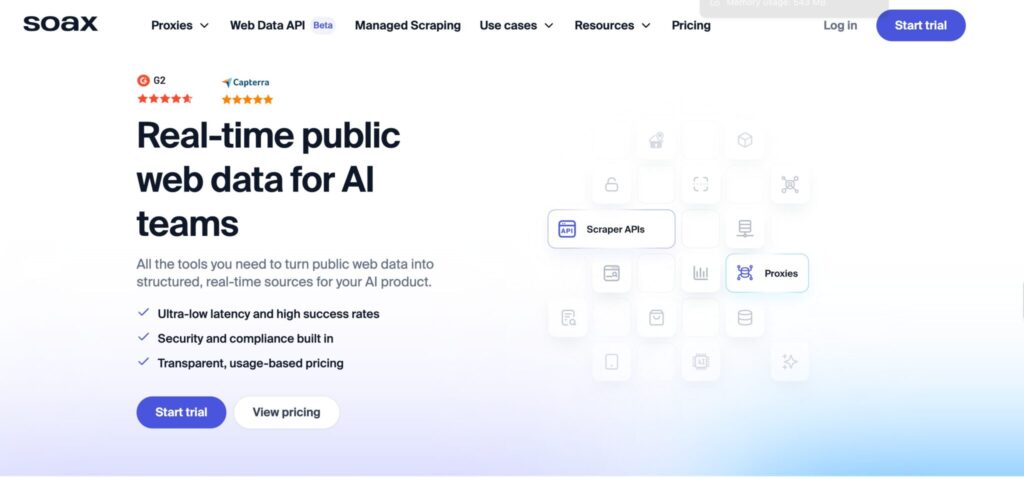
SOAX is a strong pick when precision matters. Its Japan proxy page lists 210,600 Japan IPs and supports Japanese residential and mobile proxies, with targeting by region, city, or carrier.
The provider’s broader pricing model is also simple. SOAX currently uses bundled plans where credits can be used across residential proxies, mobile proxies, ISP proxies, US datacenter proxies, and Web Data API. Its Starter plan is listed at $3.60/GB with 25GB included, while Business is listed at $2.00/GB with 800GB included.
SOAX is especially useful for Japanese workflows where IP quality matters more than raw cheap traffic. Think marketplace research, app localization, mobile-first testing, ad verification, and regional data checks where bad IPs create messy results.
Best for: Clean residential IPs, mobile proxy testing, carrier-level targeting, localized QA, and Japan market research.
Strengths:
- Clear Japan IP count
- City and carrier targeting
- Residential and mobile proxy options
- Unified pricing across proxy types
- Good for mobile-heavy Japan testing
Weak spots:
- Minimum monthly spend can be higher than low-budget tools
- Not the cheapest option for casual users
- Datacenter coverage is less central to its product positioning
Pro-Tip:
For Japan mobile testing, do not rotate too aggressively. A fresh mobile IP on every request can look unnatural for session-based actions. Use rotation for discovery and sticky sessions for workflows that mimic a real user path.
#5: Bright Data: Best Japan Proxy for Enterprise Use
Bright Data is built for companies that want maximum control, compliance processes, and a deep data collection stack. Its Japan page says users can access Japan IPs through datacenter, residential, mobile, and ISP proxy solutions.
Bright Data’s residential proxy product lists 400M+ monthly residential IPs across 195 countries, sticky and rotating sessions, free geo-location targeting, and a stated 99.95% success rate. Its locations page also lists four proxy types across global locations, including residential, datacenter, ISP, and mobile proxies.
Pricing is premium. Bright Data’s residential proxy pricing page currently lists residential proxies starting from $5.88/GB, while its broader proxy stack includes ISP, datacenter, and scraping-related products.
Bright Data is not the cheapest choice for Japanese IPs. It is the choice for bigger teams that need governance, documentation, targeting depth, proxy managers, scraping APIs, and enterprise support.
Best for: Enterprise scraping, data teams, compliance-heavy workflows, large ad verification projects, and advanced geo-targeting.
Strengths:
- Huge global residential network
- Japan support across key proxy types
- Strong targeting options
- Enterprise-grade tooling
- Good support for complex data workflows
Weak spots:
- Expensive for small users
- More setup complexity than beginner-friendly platforms
- Overkill for occasional streaming or simple browsing
Pro-Tip:
Bright Data makes the most sense when you are not only buying Japanese proxies, but also building a repeatable data operation. If you only need a few GBs of Japanese residential traffic, Decodo, SOAX, IPRoyal, or Webshare may be easier to justify.
#6: DataImpulse: Best Budget Japan Proxy Provider
DataImpulse is the budget pick for users who want cheap residential proxy bandwidth without dealing with bloated enterprise pricing. Its homepage currently advertises 90M+ IPs, pay-per-GB pricing, easy setup, 24/7 support, and pricing from $1 per GB.
Its price comparison use case page describes DataImpulse as offering ethically sourced residential, mobile, and datacenter addresses from 195 countries, with typical pricing starting from $1/GB.
For Japan, DataImpulse is best viewed as a value option rather than a premium Japan specialist. It is useful when you need Japanese IP access at a low cost and can tolerate more testing. For example, scraping low-risk public pages, doing market checks, or running early-stage validation before moving to a more polished provider.
Best for: Budget scraping, price comparison, SERP checks, market research, and low-cost testing.
Strengths:
- Very low starting price
- Large global pool
- Residential, mobile, and datacenter coverage
- Good for cost-sensitive workflows
- Simple pay-per-GB model
Weak spots:
- Japan-specific pool details are less prominently published than Oxylabs, SOAX, or IPRoyal
- May need more testing per target
- Fewer enterprise features than Bright Data or Oxylabs
Pro-Tip:
Use DataImpulse when volume matters and the target is not extremely sensitive. For protected Japanese websites, keep a premium backup provider ready so one weak pool does not stop the whole project.
#7: IPRoyal: Best Pay-As-You-Go Japan Proxy Provider
IPRoyal earns the seventh spot because it has a dedicated Japan proxy page and a strong value angle. Its Japan page says it offers almost half a million mobile, datacenter, and residential Japan IP addresses across the country.
IPRoyal’s main site lists residential proxies from $1.75/GB, a 32M+ proxy pool, and ISP proxies from $2.00/proxy with 500K+ unique IPs.
This makes IPRoyal a practical pick for users who want Japan proxies without committing to large plans. It is especially useful for smaller agencies, solo marketers, SEO testers, and developers who want flexible buying.
Best for: Pay-as-you-go users, small teams, SEO testing, ad checks, and flexible residential proxy usage.
Strengths:
- Dedicated Japan proxy page
- Japan residential, mobile, and datacenter options
- Affordable residential pricing
- Good for smaller users
- Flexible traffic buying
Weak spots:
- Smaller global residential pool than Bright Data or Oxylabs
- Advanced enterprise tooling is more limited
- Quality can vary by target, so testing matters
Pro-Tip:
IPRoyal is a good second provider to keep in your stack. If your main Japanese proxy pool starts getting blocked, switching to a different ASN mix can quickly show whether the issue is your code, your headers, or the IP reputation.
Quick Comparison: Best Japan Proxy Providers
| Provider | Best For | Japan Coverage Signal | Proxy Types | Starting Price Signal | Best Use Case |
|---|---|---|---|---|---|
| Oxylabs | Best overall | 2.6M+ Japan IPs listed | Residential, datacenter, SOCKS5 support | Residential plans vary by volume | Enterprise scraping, eCommerce, SERP tracking |
| Decodo | Best value | Dedicated Japan proxy page | Residential, ISP, mobile, datacenter | Japan residential from $1.50/GB | Agencies, SEO, mixed proxy workflows |
| Webshare | Best free tier | Japan proxies referenced in official Yahoo Auctions guide | Datacenter, rotating residential, static residential | 10 free proxies, residential from $1.40/GB | Testing, small projects, light scraping |
| SOAX | Best clean IP quality | 210,600 Japan IPs listed | Residential, mobile, ISP, datacenter credits | Starter $3.60/GB | Mobile testing, localized research, ad checks |
| Bright Data | Best enterprise option | Japan page with residential, ISP, mobile, datacenter options | Residential, ISP, mobile, datacenter | Residential from $5.88/GB | Enterprise data collection, compliance-heavy teams |
| DataImpulse | Best budget option | 195-country global pool | Residential, mobile, datacenter | From $1/GB | Budget scraping, early validation, price checks |
| IPRoyal | Best pay-as-you-go | Almost 500K Japan IPs listed | Residential, mobile, datacenter, ISP | Residential from $1.75/GB | Small teams, flexible traffic, backup pools |
How to Choose the Best Japan Proxy Provider
1. Match the Proxy Type to the Job
Do not buy residential proxies just because they sound premium. Buy them because your target needs them.
Use datacenter proxies when you need speed, low cost, and simple access. They are useful for lightweight monitoring, basic browsing, and tasks where the target is not strict.
Use residential proxies when the website checks whether your IP looks like a real household user. This is usually better for eCommerce scraping, localized SERPs, price monitoring, public marketplace research, and region-sensitive testing.
Use ISP proxies when you need the same Japanese IP for longer sessions. They combine residential-like trust with more stable availability.
Use mobile proxies when the workflow depends on Japanese mobile carrier behavior, mobile app testing, or mobile-first web experiences.
2. Check Japan-Specific Pool Depth
A provider with 400M global IPs may still have limited usable Japan inventory for your exact target. Look for providers that publish Japan-specific IP counts or at least dedicated Japan location pages.
The clearest Japan-specific numbers in this list come from Oxylabs, SOAX, and IPRoyal. Oxylabs lists over 2.6M Japan IPs, SOAX lists 210,600 Japan IPs, and IPRoyal says it has almost half a million Japan IPs.
3. Test Rotation Before Scaling
Rotation is not always better. Too much rotation can break sessions. Too little rotation can trigger rate limits.
For scraping public pages, try rotating per request or every few requests. For login-based QA, carts, account dashboards, or streaming tests, use sticky sessions. For Japan mobile workflows, session behavior should look natural.
4. Look for City, ASN, or Carrier Targeting
Country-level Japan targeting is enough for many jobs. But serious testing may require Tokyo, Osaka, or carrier-specific routing.
SOAX openly highlights region, city, and carrier targeting for Japan, while Bright Data and Decodo offer strong geo-targeting controls across their broader platforms.
5. Price by Successful Result, Not by GB Alone
A $1/GB proxy is not cheap if half your requests fail. A $6/GB provider can be cheaper if it gives cleaner IPs, fewer retries, and fewer workflow breaks.
When testing Japan proxies, track:
- Success rate
- CAPTCHA rate
- Average response time
- Cost per 1,000 successful pages
- Session failure rate
- Ban or block frequency
- City or ISP accuracy
That gives you a real cost number, not just a pricing-page number.
6. Keep at Least Two Providers
For serious Japan scraping or research, use one primary provider and one backup. This is not paranoia. Proxy pools change, targets update their filters, and even good IPs can fail on certain domains.
A strong setup could look like this:
- Primary premium provider: Oxylabs, Decodo, SOAX, or Bright Data
- Budget or backup provider: DataImpulse, IPRoyal, or Webshare
This gives you room to compare block rates and avoid blaming your scraper when the problem is actually the pool.
FAQs: Best Japan Proxy Providers 2026
Why do I need a Japanese proxy?
You need a Japanese proxy when a website, app, search engine, marketplace, game, or streaming platform shows different behavior to users in Japan. Japanese proxies are useful for local SEO checks, price monitoring, ad verification, app testing, public web scraping, gaming latency tests, and checking region-specific content.
Which Japanese ISPs do proxy providers cover?
Coverage depends on the provider and changes over time. Some providers support ASN, ISP, or carrier-level targeting, but many do not publish a fixed list of Japanese ISPs because residential and mobile pools rotate. In practice, you may see IPs associated with major Japanese networks and carriers, but you should verify inside the provider dashboard before buying at scale.
Are Japanese proxies faster than other geographies?
They can be fast if your target is hosted in or near Japan and your proxy provider has strong routing. But speed depends on proxy type, network path, target server, and your own location. Japanese datacenter proxies are usually faster than residential proxies, while residential and mobile proxies usually trade some speed for better trust.
What is the best Japan proxy provider overall?
Oxylabs is the best overall Japan proxy provider for scale and reliability. Decodo is the best value pick. SOAX is strong for clean IP quality and carrier targeting. Bright Data is best for enterprise workflows. Webshare is best for free testing. DataImpulse is best for budget traffic. IPRoyal is best for flexible pay-as-you-go use.
Are Japan residential proxies better than datacenter proxies?
For sensitive targets, yes. Residential proxies look more like real local users because they come from ISP-assigned household IPs. Datacenter proxies are faster and cheaper, but they are easier for websites to identify. Start with datacenter proxies for simple tasks, then switch to residential if you see blocks, CAPTCHAs, or inaccurate localized results.
Can I use Japan proxies for streaming?
Japan proxies can help test whether content is available in Japan or check region-specific streaming behavior. That said, streaming platforms often restrict proxy and VPN usage in their terms. For business use, keep it to compliance-friendly testing, QA, localization checks, and content availability research.
Can I use Japan proxies for gaming?
Yes, but choose carefully. For gaming, latency matters more than pool size. Datacenter or ISP proxies are usually better than rotating residential proxies because they are more stable. Avoid fast rotation for gaming because it can break sessions or trigger account security checks.
Are free Japan proxies safe?
Free public proxies are usually risky. They can be slow, shared by too many users, unstable, or unsafe for anything involving accounts. A provider like Webshare is different because it offers a controlled free tier through its own platform. For serious work, paid proxies are safer and more predictable.
How many Japanese IPs do I need?
For small SEO checks or browser testing, a few IPs may be enough. For scraping, you need to estimate request volume, target sensitivity, rotation frequency, and session length. A small scraper may work with a few GB of residential traffic. A serious monitoring system may need hundreds of GB and several proxy types.
Which Japan proxy is best for scraping?
For scraping public Japanese websites, Oxylabs, Decodo, SOAX, Bright Data, and DataImpulse are the strongest choices. Oxylabs and Bright Data fit larger teams. Decodo gives a strong price-to-feature balance. SOAX is good when IP quality and targeting matter. DataImpulse is useful when budget is the top priority.
Conclusion | Best Japan Proxy Providers 2026
The best Japan proxy provider depends on what you are actually doing.
Choose Oxylabs if you want the strongest overall Japan proxy setup for serious scraping and large-scale research. Choose Decodo if you want the best mix of pricing, proxy types, and usability. Choose Webshare if you want a free or low-cost way to test your setup. Choose SOAX if you need clean Japan IPs with city and carrier targeting. Choose Bright Data if your team needs enterprise tooling, compliance controls, and advanced data infrastructure. Choose DataImpulse if budget matters most. Choose IPRoyal if you want flexible Japanese residential, mobile, and datacenter proxies without a large commitment.
For most users, the smartest path is simple: start with Decodo or SOAX, keep Webshare or IPRoyal for testing and backup, and move to Oxylabs or Bright Data when your Japan data workflow becomes mission-critical.