
Best Private Proxy Services.
Private proxies sound simple on paper. You pay for IPs that only you can use, connect them to your scraper, browser profile, SEO tool, automation stack, or ad verification workflow, and you get cleaner control than you would with shared proxies.
The catch is that not every “private proxy” is built the same.
Some providers sell private datacenter IPs that are fast and cheap, but easier for tough websites to detect. Some sell ISP proxies, which behave more like residential IPs while keeping the speed and stability of datacenter infrastructure. Others offer dedicated pools, static residential IPs, rotating private gateways, or premium proxy networks wrapped inside scraping APIs.
So the real question is not, “Which private proxy is best?”
The better question is, “Which private proxy service fits my target websites, budget, rotation needs, IP quality expectations, and risk tolerance?”
That is what this guide is built to answer.
What Is a Private Proxy?
A private proxy is an IP address or proxy endpoint reserved for one user, team, or account. Unlike shared proxies, private proxies are not used by random customers at the same time. That gives you better control over reputation, speed, usage patterns, and account safety.
Private proxies usually come in three main forms:
| Type | Best For | Main Strength | Main Weakness |
|---|---|---|---|
| Private datacenter proxies | SEO tools, scraping, monitoring, automation | Fast and affordable | Easier to detect on strict sites |
| Private ISP proxies | Ecommerce, account management, ad checks, web scraping | Static, fast, trusted ASN type | More expensive than datacenter |
| Static residential proxies | Long sessions, logins, location testing | More natural IP footprint | Can be costly at scale |
| Dedicated rotating pools | Scraping, market research, SERP tracking | Better distribution | Less predictable IP control |
For most professional users, private ISP proxies are the sweet spot. They are static, fast, and usually harder to flag than standard datacenter proxies. But if you are scraping less protected websites or running SEO software, private datacenter proxies can still be the better value.
Massive Comparison Table: Best Private Proxy Services
| Provider | Best For | Private Proxy Types | Starting Price Snapshot | IP Pool / Coverage | Rotation Control | Protocols | Key Strength | Main Limitation |
|---|---|---|---|---|---|---|---|---|
| Webshare | Budget private datacenter and static residential proxies | Dedicated datacenter, static residential | Dedicated proxy pricing starts around $0.825 per proxy in listed plans, while datacenter plans start lower depending on volume | 400K+ proxy servers listed on its site | Static, configurable plans | HTTP, SOCKS5 depending on plan | Very affordable and self-service | Not as enterprise-heavy as Bright Data or Oxylabs |
| Oxylabs | Enterprise scraping and high-scale private proxies | Dedicated datacenter, ISP, residential | Datacenter starts around $1.20/IP, ISP starts around $1.60/IP, residential plans start at $6/GB on Starter | 175M+ residential and 2M datacenter IPs listed | Sticky and rotating options | HTTP, HTTPS, SOCKS5 | Strong infrastructure and scraping tools | Pricing can be higher for small users |
| Bright Data | Advanced targeting, enterprise compliance, complex data collection | Datacenter, ISP, residential, mobile | Datacenter starts from around $1.40/IP, ISP from around $1.8/IP on small plans, residential from listed per-GB plans | 400M+ monthly residential IPs in 195 countries | Strong session and geo controls | HTTP, HTTPS, SOCKS5 depending on product | Deep targeting and mature platform | Can feel complex and pricey |
| Decodo | Balanced private ISP and datacenter proxy setup | Dedicated ISP, dedicated datacenter, residential | Datacenter proxies listed from $0.020/IP on homepage and residential from $2/GB on pricing page | 400K+ dedicated IPs and 1.5K+ subnets on private proxy page | Sticky, rotating, endpoint filters | HTTP, HTTPS, SOCKS5 | Clean dashboard and practical pricing | Some advanced setups cost more |
| IPRoyal | Affordable private proxies for smaller teams | Datacenter, ISP, residential, mobile | Datacenter from $1.39/proxy, ISP from $2/proxy, residential from $1.75/GB in listed plans | 32M+ residential pool, 500K+ ISP IPs listed | Sticky and rotating options | HTTP, HTTPS, SOCKS5 | Good price-to-control ratio | Smaller ecosystem than enterprise providers |
| Rayobyte | Dedicated datacenter and ISP proxy buyers | Dedicated, semi-dedicated, ISP, rotating | Dedicated from around $2.13/IP for 100 to 999 proxies, ISP around $4.80/IP in listed tiers | Multiple proxy categories with custom setups | Static and rotating options | HTTP, HTTPS, SOCKS5 depending on plan | Long-standing dedicated proxy focus | Pricing varies by proxy type and volume |
| Proxy-Seller | Private proxies with many locations and flexible rental periods | Datacenter IPv4, IPv6, ISP, mobile, residential | ISP proxies listed from $1/IP, private proxy catalog lists multiple formats | 200+ countries mentioned in catalog pages | Mostly static, some mobile rotation | HTTP(S), SOCKS5 | Flexible buying options | Quality depends heavily on selected proxy type |
| Storm Proxies | Small private proxy jobs and simple setups | Private dedicated, rotating backconnect | 5 private proxies listed at $10/month on dedicated proxy page | US-focused dedicated locations | Rotating options on backconnect products | HTTP, HTTPS | Simple and low-cost | Limited advanced targeting |
| NetNut | Static residential and ISP-style enterprise use | Static residential, ISP, residential | ISP proxy plans shown from $350/month for 20GB in official pricing snippet | 85M+ residential IPs across 195+ countries listed | Static and rotating options | HTTP, HTTPS | Strong ISP/static residential positioning | Higher minimum spend |
1. Webshare: Best Budget Private Proxy Service for Self-Service Buyers
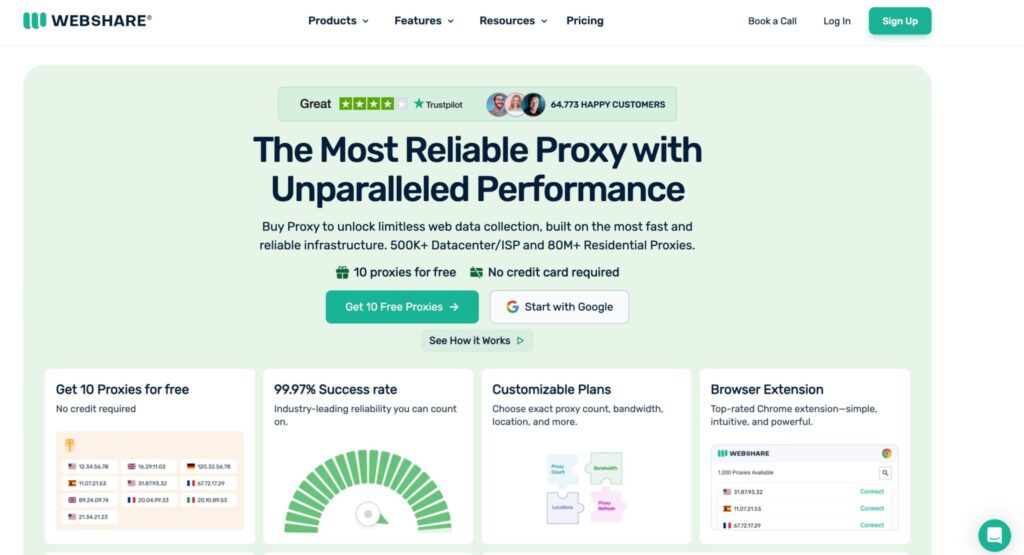
Webshare is one of the easiest private proxy services to recommend when price, control, and fast setup matter more than enterprise hand-holding. It offers datacenter proxy servers, dedicated proxies, static residential proxies, and residential proxies from a clean dashboard.
The big appeal is pricing. Webshare lists datacenter pricing from low per-IP rates, and its dedicated proxy plans are built for users who want IPs fully owned by their account rather than shared across multiple customers. Its static residential product also gives buyers ISP-style IPs from providers like Comcast and AT&T, which can be useful when standard datacenter proxies trigger too many checks.
For SEO tools, rank tracking, lightweight scraping, website QA, and simple automation tasks, Webshare is often enough. You can configure countries, bandwidth, speed, and threads without dealing with a sales call.
Pro Tip
Use Webshare dedicated datacenter proxies for speed-sensitive tasks where your targets are not extremely protected. If you are dealing with ecommerce logins, social platforms, or high-sensitivity checkout flows, move to static residential or ISP proxies instead.
Best For
Webshare is best for freelancers, small agencies, SEO teams, and developers who want affordable private proxies without a long onboarding process.
2. Oxylabs: Best Enterprise Private Proxy Service
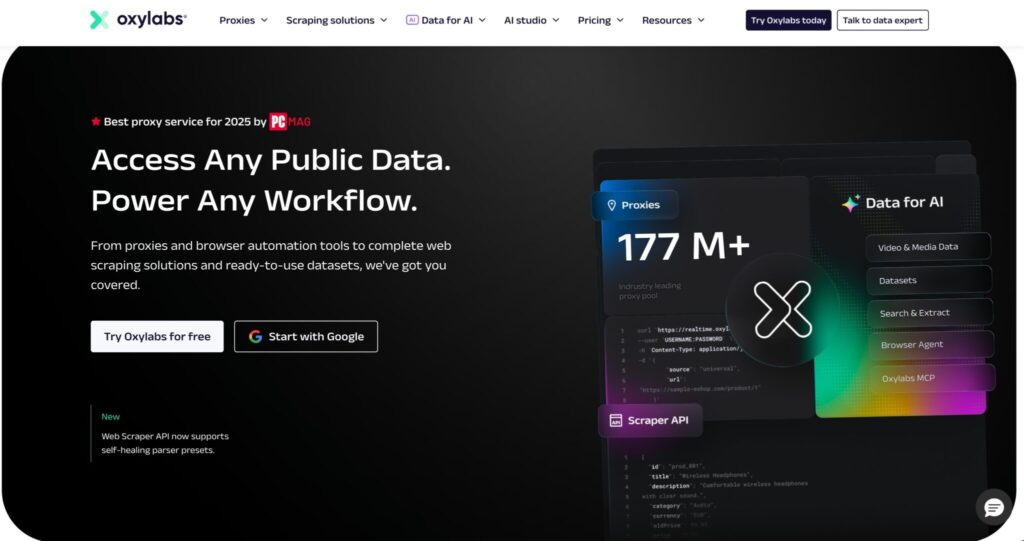
Oxylabs is built for teams that care about scale, uptime, support, and data collection reliability. It offers residential proxies, dedicated datacenter proxies, ISP proxies, mobile proxies, Web Unblocker, and scraper APIs. The company lists 175M+ residential IPs and 2M datacenter IPs, which puts it among the largest proxy infrastructures available.
For private proxies, Oxylabs is especially strong in dedicated datacenter and ISP options. Its datacenter proxy pricing page lists a free trial with 5 IPs and paid datacenter proxies from around $1.20/IP, while ISP proxies start around $1.60/IP on the 10-IP plan.
The platform is overkill if you only need five private IPs for a small automation project. But for enterprise scraping, brand monitoring, threat intelligence, ecommerce tracking, and price intelligence, Oxylabs feels more reliable than cheaper, smaller providers.
Pro Tip
Do not buy residential bandwidth by default. Test your target first with dedicated datacenter proxies. If you see blocks, CAPTCHAs, or inconsistent sessions, upgrade to ISP proxies before jumping straight to residential rotation.
Best For
Oxylabs is best for serious data teams, enterprise scraping projects, security research, and businesses that need support along with raw proxy infrastructure.
3. Bright Data: Best for Advanced Targeting and Compliance-Minded Teams
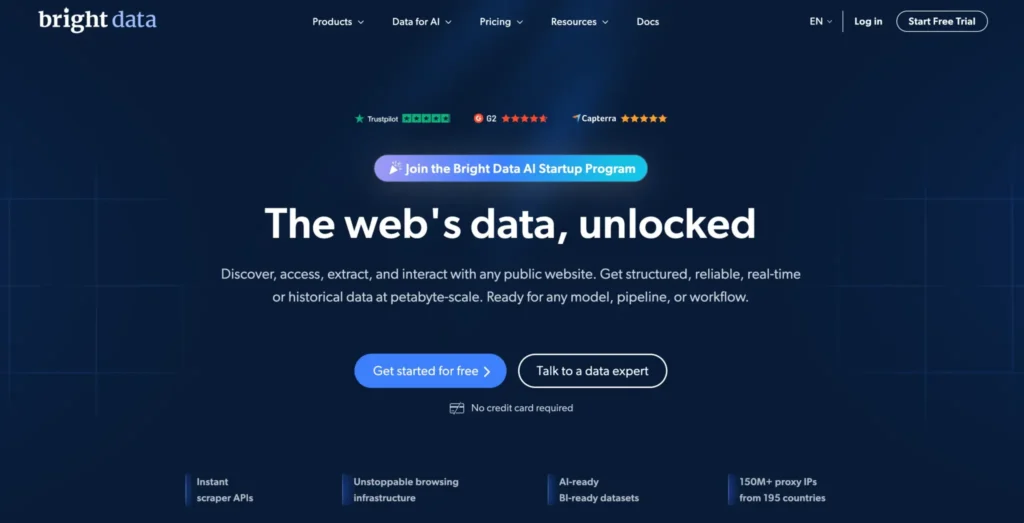
Bright Data is one of the most advanced proxy platforms in the market. It offers residential, datacenter, ISP, and mobile proxies, plus scraping APIs and data products. Its location page states coverage across 195 countries with 400M+ monthly IPs, while its residential proxy page highlights sticky and rotating sessions, geo-targeting, and high success-rate claims.
For private proxy buyers, Bright Data is strongest when you need control. You can work with datacenter proxies, ISP proxies, and residential networks depending on the target. Official pricing pages list datacenter proxies from around $1.40/IP on small monthly packages and ISP proxies from around $1.8/IP for a 10-IP plan.
Bright Data is not the simplest option. The dashboard, product range, zone settings, compliance checks, and API layers can feel heavy for beginners. But for businesses handling sensitive data collection, strict geo-targeting, city-level checks, ad verification, and large-scale scraping, it is one of the safest premium picks.
Pro Tip
Bright Data makes the most sense when targeting accuracy matters more than the lowest cost. If you only need cheap private proxies for basic scraping, you may be paying for features you will never touch.
Best For
Bright Data is best for larger teams, compliance-aware data operations, ad verification, SERP intelligence, and geo-specific public data collection.
4. Decodo: Best Balanced Private Proxy Service
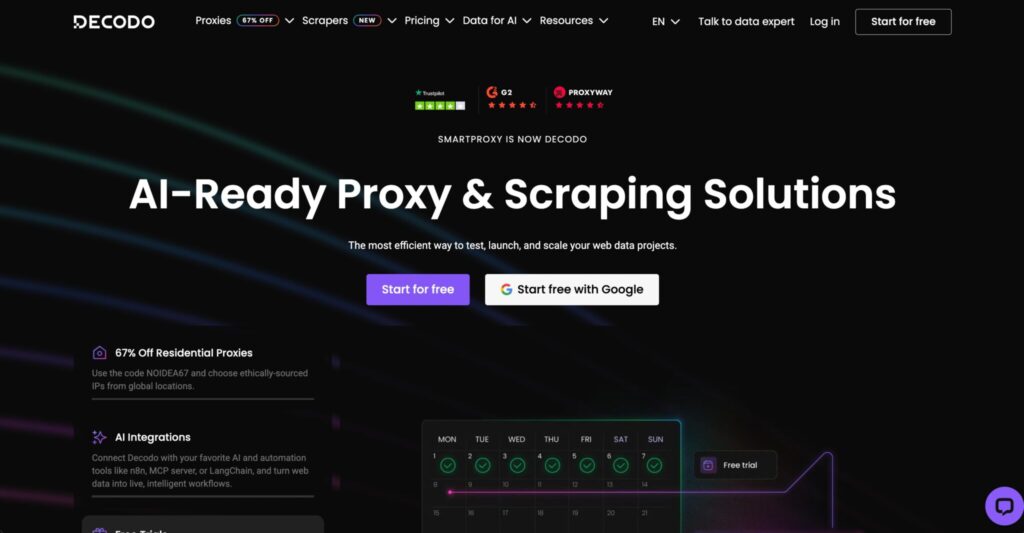
Decodo, formerly Smartproxy, sits in a nice middle ground. It is easier to use than many enterprise platforms, but stronger than most bargain-bin proxy shops. Its private proxy page lists dedicated ISP and datacenter IPs, 400K+ dedicated IPs, 1.5K+ subnets, 99.99% uptime, and HTTP(S)/SOCKS5 support.
The pricing is also attractive. Decodo’s homepage lists datacenter proxies from $0.020/IP, while its residential pricing page lists plans starting at $2/GB.
For private proxy work, Decodo is especially useful if you want dedicated ISP proxies without dealing with a complex enterprise sales process. It also offers endpoint filtering for country, city, and US ZIP-level targeting in its dashboard guidance, which helps when testing localized websites.
Pro Tip
Decodo is a smart pick when you are not sure whether your project needs datacenter, ISP, or residential proxies. Start with private datacenter or ISP IPs, measure block rates, then upgrade only if the target demands it.
Best For
Decodo is best for growth teams, ecommerce monitoring, SEO tracking, app testing, and mid-sized scraping workflows.
5. IPRoyal: Best Affordable Private Proxy Service
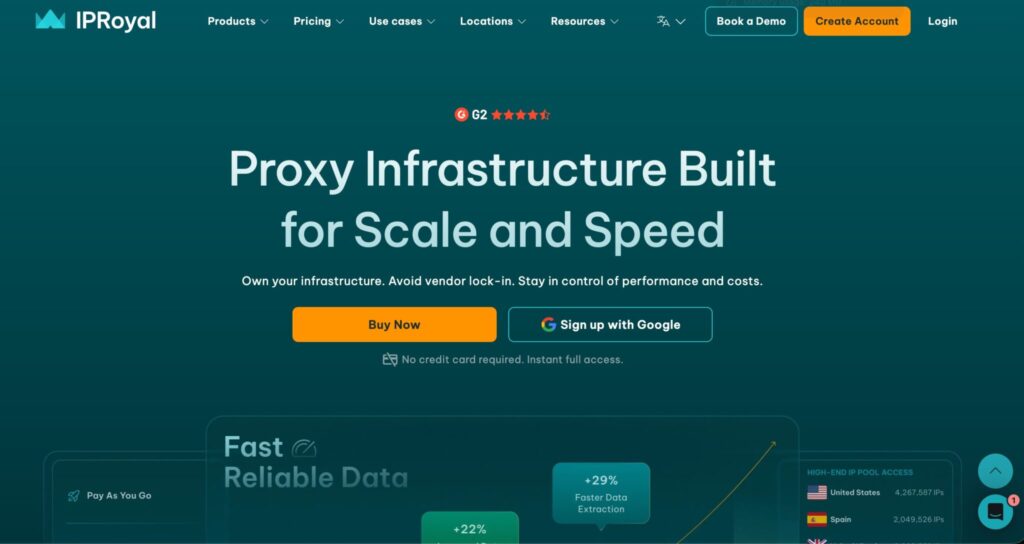
IPRoyal has become popular because it makes paid proxies feel approachable. The company offers residential, ISP, datacenter, and mobile proxies. Its homepage lists residential proxies from $1.75/GB, ISP proxies from $2/proxy, and datacenter proxies from $1.39/proxy. It also lists a 32M+ residential proxy pool and 500K+ ISP IPs.
This is not the biggest platform in the space, and it does not have the same scraping API ecosystem as Bright Data or Oxylabs. But the pricing is friendly, the dashboard is simple, and the product range is strong enough for most individual users and small businesses.
IPRoyal is a good fit when you want private IPs for SEO software, account management, basic scraping, sneaker research, web testing, or geo checks without committing to enterprise pricing.
Pro Tip
For long-running browser sessions, test IPRoyal ISP proxies before residential rotation. Static IPs are often more stable for logins, dashboards, and accounts that do not like frequent IP changes.
Best For
IPRoyal is best for budget-conscious users who still want real proxy products instead of random low-quality IP lists.
6. Rayobyte: Best for Dedicated Datacenter Proxy Buyers
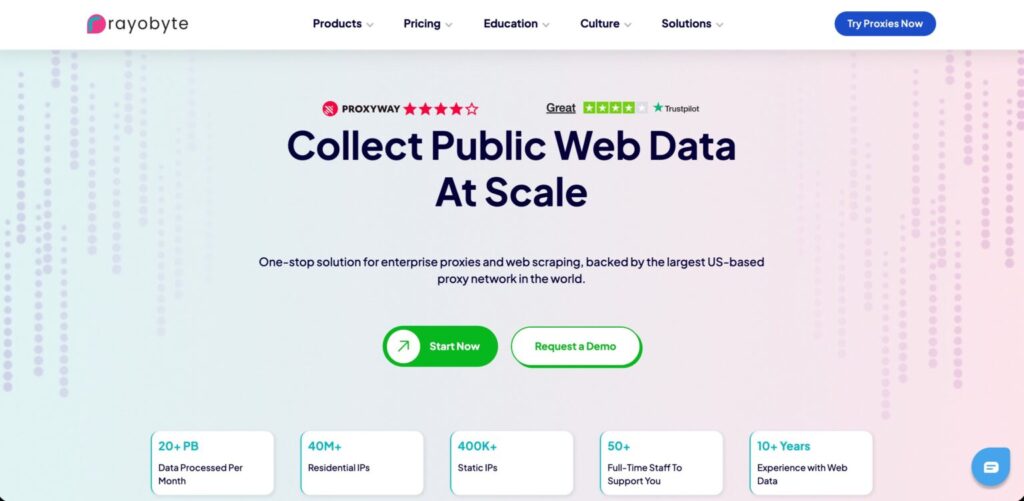
Rayobyte has long been known for dedicated datacenter proxies, and that still makes it relevant in 2026. It offers dedicated, semi-dedicated, rotating, ISP, and IPv6 proxy options. Its pricing page lists dedicated proxies around $2.13/IP for 100 to 999 proxies, semi-dedicated options at lower rates, and ISP proxies around $4.80/IP for certain tiers.
Rayobyte is not always the cheapest provider, but it is one of the more established names for users who want traditional private proxy infrastructure. It is especially useful when you need larger IP batches, unmetered bandwidth options, and custom configurations.
Pro Tip
Use dedicated datacenter proxies from Rayobyte for lower-risk scraping, crawlers, and SEO tools. For stricter sites, Rayobyte ISP proxies may perform better, but the price jump is noticeable.
Best For
Rayobyte is best for agencies, developers, and teams that still prefer classic dedicated proxy packages over pay-per-GB residential networks.
7. Proxy-Seller: Best for Flexible Private Proxy Buying
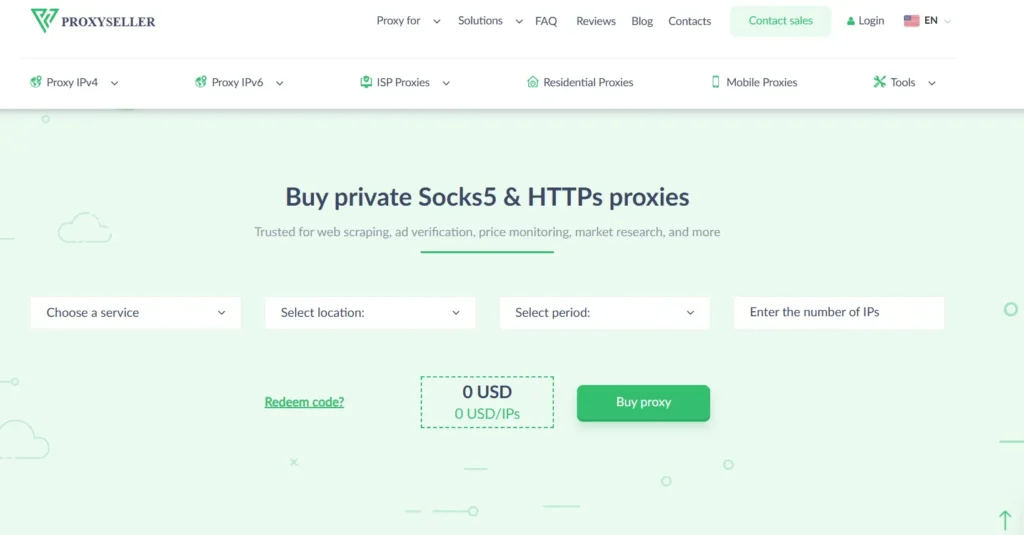
Proxy-Seller gives buyers a wide catalog: datacenter IPv4, IPv6, ISP, residential, and mobile proxies. Its site mentions private proxy servers with unlimited bandwidth up to 1 Gbps, SOCKS5 and HTTP(S) support, and username/password or IP whitelist authentication.
The ISP proxy page lists ISP proxies from $1/IP and explains that ISP proxies are static by nature and sourced through internet service providers, which makes them useful for consistent sessions.
The main advantage here is flexibility. You can buy by type, country, period, and use case. That said, the experience is more catalog-style than strategy-led. You need to know what you are buying.
Pro Tip
Avoid choosing a proxy only because the country and price look good. Check protocol support, replacement policy, subnet diversity, and whether the IPs are truly dedicated to you.
Best For
Proxy-Seller is best for users who want flexible private proxy purchases by location, proxy type, and rental period.
8. Storm Proxies: Best Simple Private Proxy Service for Small Tasks

Storm Proxies is not trying to be an enterprise data platform. That is part of the appeal. It sells simple private dedicated proxies and rotating backconnect proxies. Its private dedicated proxy page lists 5 private proxies at $10/month, with unlimited bandwidth, a 1Gbps network, multiple subnets, and USA locations.
This makes Storm Proxies useful for small jobs, testing, basic automation, and users who do not need detailed targeting. The tradeoff is clear: fewer advanced controls, fewer locations, and less enterprise polish.
Pro Tip
Storm Proxies can be good for quick experiments, but do not build a business-critical scraping system on it without testing replacement speed, uptime, and target-site performance first.
Best For
Storm Proxies is best for beginners, small automation projects, and users who want low monthly pricing over advanced infrastructure.
9. NetNut: Best for Static Residential and ISP-Style Reliability
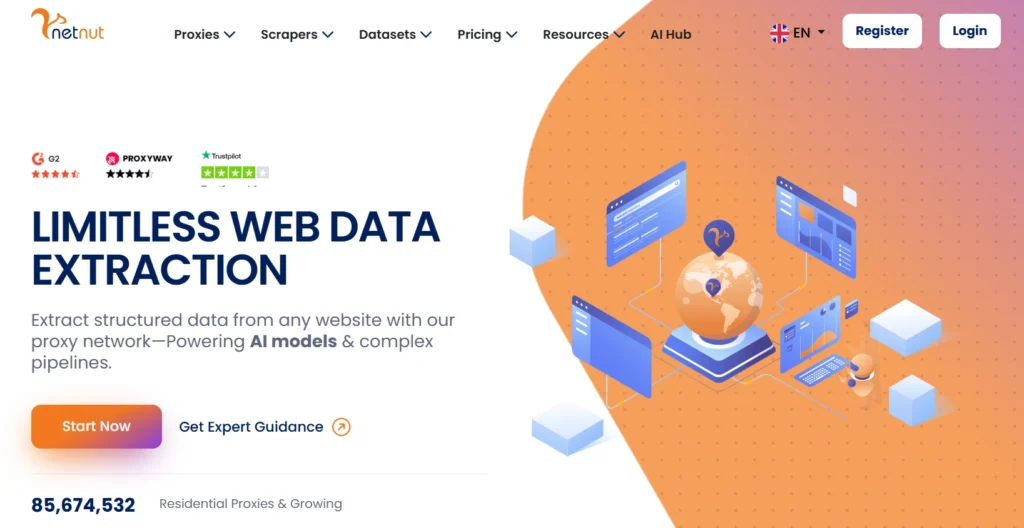
NetNut focuses heavily on residential, rotating residential, static residential, mobile, and ISP proxy products. Its site lists 85M+ residential IPs across 195+ countries, and its static residential page emphasizes direct ISP connectivity with no dependency on end-user devices.
NetNut’s ISP proxy pricing is not as low-entry as budget providers. The official pricing snippet shows ISP plans starting at $350/month for a 20GB plan.
This makes NetNut more suitable for businesses than casual buyers. If your workflow depends on stable IP availability, static sessions, and ISP-style trust, it deserves a look. If you only need a few cheap private IPs, Webshare, IPRoyal, or Storm Proxies will feel more practical.
Pro Tip
NetNut is a stronger fit when uptime and static residential reliability matter more than low entry pricing.
Best For
NetNut is best for businesses running ad verification, brand protection, market research, and long-session data collection.
How to Choose the Best Private Proxy Service
1. Start With the Website You Need to Access
Your target decides your proxy type.
If you are scraping a simple directory, private datacenter proxies may work well. If you are checking ecommerce pricing, private ISP proxies may be safer. If you are testing mobile ads, you may need mobile proxies. If you are logging into accounts, static residential or ISP proxies often make more sense than rotating residential proxies.
A cheap proxy is not cheap if it burns your accounts, triggers blocks, or wastes your developer’s time.
2. Check IP Pool Quality, Not Just Pool Size
Big numbers look impressive, but pool quality matters more.
Look at:
- ASN diversity
- Subnet diversity
- Replacement policy
- Abuse history
- Country and city availability
- Whether IPs are shared, semi-dedicated, or fully dedicated
- How often the provider refreshes inventory
For private proxies, subnet diversity is especially important. If you buy 100 IPs and all come from the same subnet, one bad pattern can affect the whole batch.
3. Understand Rotation Protocols
Private proxies are often static, but many providers also offer rotating products.
Here are the main rotation styles:
| Rotation Type | How It Works | Best Use Case |
|---|---|---|
| Static IP | Same IP until you replace it | Accounts, logins, dashboards |
| Time-based rotation | IP changes every few minutes | Scraping and monitoring |
| Per-request rotation | New IP for each request | High-volume scraping |
| Sticky sessions | Same IP for a set time | Cart flows, forms, multi-step sessions |
| Backconnect gateway | You connect to one endpoint and provider rotates backend IPs | Scraping at scale |
4. Match Protocol Support to Your Tools
Most users need HTTP or HTTPS. Some tools need SOCKS5. If you use browser automation, sneaker software, SEO crawlers, Python scripts, or custom scraping stacks, confirm compatibility before buying.
SOCKS5 is useful when your tool needs broader traffic handling. HTTP(S) is usually enough for web scraping and browser-based tasks.
5. Test Before Scaling
Buy the smallest plan that matches your target. Then test:
- Success rate
- Response time
- Block rate
- CAPTCHA rate
- Session stability
- Replacement support
- Dashboard reporting
- Authentication options
- Country accuracy
Once you know the numbers, scaling becomes easier.
Quick Recommendations
| Use Case | Best Provider Picks |
|---|---|
| Cheapest private datacenter proxies | Webshare, Storm Proxies |
| Best enterprise private proxies | Oxylabs, Bright Data |
| Best private ISP proxies | Decodo, Oxylabs, Bright Data |
| Best budget-friendly mixed proxy setup | IPRoyal |
| Best traditional dedicated proxies | Rayobyte |
| Best flexible location-based buying | Proxy-Seller |
| Best static residential reliability | NetNut |
| Best for SEO tools | Webshare, Rayobyte, IPRoyal |
| Best for ecommerce monitoring | Decodo, Oxylabs, Bright Data |
| Best for ad verification | Bright Data, NetNut, Oxylabs |
FAQs About Private Proxy Services
What is the best private proxy service overall?
For most users, Webshare is the best budget-friendly private proxy service, while Oxylabs and Bright Data are better for enterprise-grade scraping and advanced targeting. Decodo is the best balanced choice if you want private ISP and datacenter options without too much complexity.
Are private proxies better than shared proxies?
Yes, private proxies are usually better than shared proxies because you control the IP usage. With shared proxies, another user can damage the IP reputation before you even start using it.
Are private datacenter proxies still useful?
Yes. Private datacenter proxies are still useful for SEO tools, website testing, scraping less protected sites, uptime monitoring, and internal automation. They are fast and affordable, but they are easier to detect than ISP or residential proxies.
What is the difference between private proxies and ISP proxies?
A private proxy means the IP is reserved for you. An ISP proxy means the IP comes from an internet service provider or appears under an ISP-style network. Many ISP proxies are private, but not all private proxies are ISP proxies.
Should I choose rotating or static private proxies?
Choose static private proxies for logins, accounts, browser profiles, and long sessions. Choose rotating proxies for scraping, monitoring, and collecting public data at scale.
How many private proxies do I need?
For light SEO tools or browser testing, 5 to 20 proxies may be enough. For scraping, the number depends on request volume, target sensitivity, delay settings, and block rates. Start small, test success rates, then scale.
Are private proxies legal?
Private proxies are legal tools, but how you use them matters. Use them for lawful activities such as testing, privacy, public web data collection, ad verification, and SEO monitoring. Avoid account abuse, fraud, credential attacks, spam, or violating website terms.
Which private proxy is best for scraping?
For simple scraping, Webshare or Rayobyte dedicated datacenter proxies can work well. For tougher websites, Decodo, Oxylabs, or Bright Data ISP and residential proxies are stronger choices.
Which private proxy is best for social media accounts?
Static residential or ISP proxies are usually safer than cheap datacenter proxies for account-based workflows. IPRoyal, Decodo, Bright Data, and Oxylabs are stronger choices here than basic datacenter-only providers.
Final Verdict: Which Private Proxy Service Should You Choose?
If you want the best value and a clean self-service experience, start with Webshare. It is affordable, flexible, and easy enough for most users.
If your work is more serious, especially scraping, ecommerce monitoring, threat intelligence, or ad verification, Oxylabs and Bright Data are safer enterprise picks. They cost more, but you get stronger infrastructure, better targeting, and broader proxy options.
If you want the middle path, Decodo is probably the smartest all-rounder. It gives you dedicated ISP and datacenter proxies with enough control for professional work, without making the setup feel too heavy.
For smaller budgets, IPRoyal is a strong choice. For traditional dedicated datacenter proxies, Rayobyte still deserves attention. For flexible country-based private proxy buying, Proxy-Seller is useful. For simple low-cost private proxies, Storm Proxies works. For static residential reliability at business scale, NetNut is worth testing.
The best private proxy service is not the one with the biggest headline number. It is the one that gives you clean IPs, stable sessions, enough rotation control, fair pricing, and low block rates on your actual target websites. Test first. Scale second. That one habit will save you more money than any discount code.