
Ad verification sounds simple until you actually try to do it properly.
You run ads in different cities, countries, devices, browsers, carriers, and audience segments. Then you need to know one basic thing: are real users seeing the right ad, in the right place, at the right time?
That is where things get messy.
A campaign that looks fine from your office WiFi may look completely different from a residential IP in Texas, a mobile carrier in Germany, or a local connection in Singapore. Fraudsters know this too. They can cloak bad placements, fake traffic sources, suspicious redirects, and low quality inventory when they detect verification crawlers.
That is why ad verification teams need proxy infrastructure that looks like real user traffic. Not just any proxy. You need clean residential IPs, strong geo targeting, mobile coverage, session control, rotation rules, and enough IP depth to avoid showing up as the same checker again and again.
This guide breaks down the 9 best proxies for ad verification in 2026, with a practical look at where each provider fits, what type of buyer it serves, and how to choose the right network for your workflow.
Why Ad Verification Requires Specialized Proxy Infrastructure
Ad verification is not regular browsing. It is controlled observation.
You are checking whether ads appear correctly across search engines, publisher sites, apps, affiliate pages, display placements, video inventory, and local SERPs. The problem is that ad delivery depends heavily on location, device type, browser behavior, cookies, network type, and sometimes carrier data.
A generic datacenter proxy can help with basic checks, but it often fails in serious verification work. Datacenter IPs are easier to identify, easier to block, and less useful when you need to view ads the same way a real household or mobile user would.
Residential and mobile proxies solve that by routing requests through real ISP or mobile network connections. Oxylabs, for example, positions residential proxies for ad verification because they provide organic, diverse, geo located IPs that help verification teams monitor ads without being blocked.
For ad verification, the best proxy setup usually needs:
| Requirement | Why It Matters |
|---|---|
| Residential IPs | Helps you view ads as regular home internet users see them |
| Mobile proxies | Useful for mobile app ads, carrier based targeting, and mobile web campaigns |
| City and state targeting | Needed for local campaigns, franchise campaigns, and region specific offers |
| Carrier targeting | Important for mobile ad verification and telecom based routing |
| Rotation control | Helps avoid pattern detection during repeated checks |
| Sticky sessions | Useful when you need to follow redirects, landing pages, or conversion paths |
| Large IP pool | Reduces repeated fingerprints and improves coverage across regions |
| API access | Helps teams automate checks at scale |
| Clean IP sourcing | Reduces compliance and quality risks |
The key is not just “more IPs.” The real value is the right IP in the right location with the right session behavior.
9 Best Proxies For Ad Verification in 2026
#1 Oxylabs: Best Ad Verification Proxy for Enterprise Campaigns
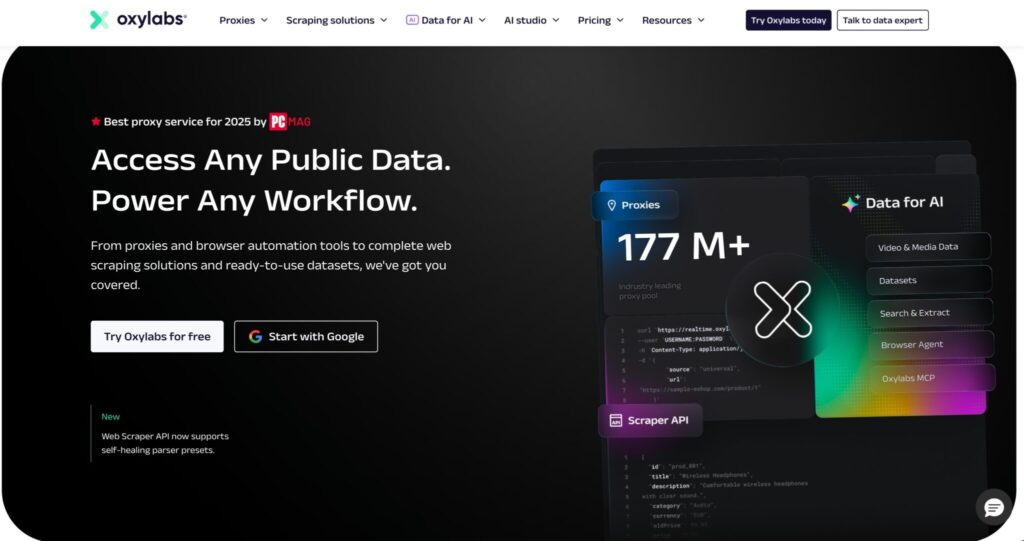
Oxylabs is one of the strongest choices for enterprise ad verification teams that need scale, stability, and strict control over proxy quality.
Its residential proxy network includes 175M+ residential IPs across 195+ countries, with geo targeting and automatic rotation. The company also highlights a large datacenter proxy network and enterprise grade scraping infrastructure, which makes it useful for teams that handle more than ad checks alone.
For ad verification, Oxylabs fits best when you are checking campaigns across many markets and cannot afford unreliable routing. Think multinational campaigns, agency level ad monitoring, affiliate compliance checks, brand safety reviews, search ad monitoring, and fraud detection across multiple publishers.
Its residential proxies are especially useful when you need to check ads from specific countries, cities, or local environments. The larger the campaign footprint, the more valuable this becomes. Smaller proxy pools can work for light testing, but they start showing limits when you need repeated checks across many locations.
Oxylabs also offers strong support for teams that need account management, onboarding, and custom setups. That matters if your ad verification process is tied into internal dashboards, automated QA, or fraud monitoring systems.
Best for: Enterprise advertisers, ad verification vendors, agencies, compliance teams, and high volume monitoring.
Pros
| Pros | Details |
|---|---|
| Large residential pool | Strong coverage for multi country ad checks |
| Enterprise grade setup | Good for structured teams and heavy workflows |
| Precise geo targeting | Useful for local and regional campaign monitoring |
| Strong reputation | Trusted by larger data and verification teams |
Cons
| Cons | Details |
|---|---|
| Not the cheapest | Better suited for serious teams than casual users |
| Can feel advanced | Smaller users may not need all the controls |
Pro Tip: Use Oxylabs when your main problem is not price, but accuracy. If you are verifying ads across many regions and need fewer failed checks, the larger network depth can save time.
#2 Decodo: Best Value Ad Verification Proxy
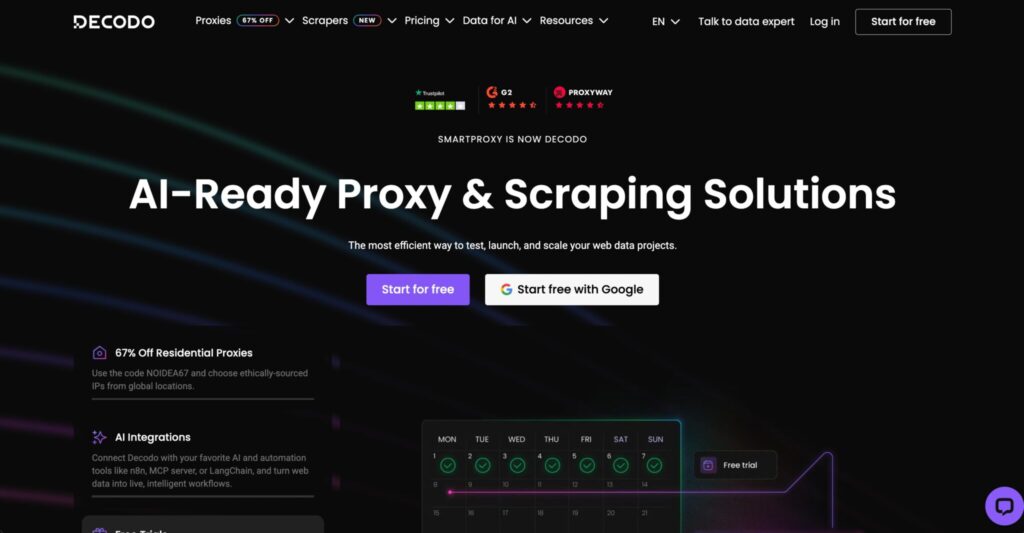
Decodo, formerly known as Smartproxy, is a strong middle ground between premium infrastructure and approachable pricing. Its residential proxies start from $2 per GB, and the provider lists 115M+ IPs, country, continent, state, city, and ZIP level targeting, plus unlimited concurrent sessions.
That mix makes Decodo one of the best value options for ad verification teams that want serious functionality without jumping straight into enterprise pricing.
For ad verification, Decodo works well for agencies, affiliate teams, SEO teams, and internal marketing departments that need to check ad visibility in many locations. Its city and ZIP level targeting can be especially helpful for campaigns where ad delivery changes by local market.
A good example is a franchise campaign. A user in Miami may see one offer, while a user in Dallas may see another. If your proxy can only target the United States broadly, you will miss the local differences. Decodo’s granular targeting gives you a better shot at seeing what the local audience sees.
Decodo also supports residential, static residential, mobile, and datacenter proxies, which gives teams flexibility. You can use residential proxies for normal ad monitoring, mobile proxies for app and carrier checks, and static residential IPs for longer sessions.
Best for: Agencies, affiliate marketers, in house ad teams, SEO teams, and growing verification workflows.
Pros
| Pros | Details |
|---|---|
| Strong price to feature ratio | Good balance between cost and performance |
| Granular targeting | City, state, and ZIP targeting help with local checks |
| Large residential pool | Suitable for repeated monitoring |
| Unlimited concurrent sessions | Useful for automation and parallel tasks |
Cons
| Cons | Details |
|---|---|
| Pricing can rise with usage | Heavy users need to watch bandwidth spend |
| Some advanced needs may require higher plans | Enterprise style workflows may need custom setup |
Pro Tip: Decodo is a smart pick when you want ad verification coverage across multiple locations but still need to keep the cost controlled.
#3 Webshare: Best Ad Verification Proxy for In-House Teams
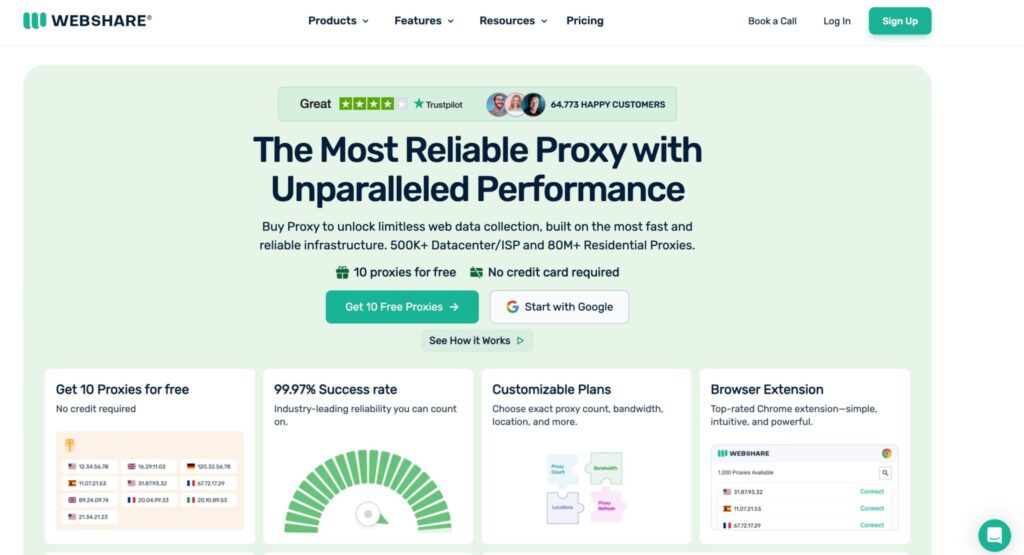
Webshare is a practical option for in house marketing teams that want simple proxy access without a complicated setup.
Its pricing page lists rotating residential proxies with 80M+ residential IPs, residential pricing from $1.4 per GB, and static residential options starting from $0.23 per IP. Webshare also offers datacenter and static residential products, giving teams several ways to build a basic verification stack.
Webshare is not the most advanced ad verification platform on this list. That is also part of its appeal. If your team needs to check ads from different countries, test landing page redirects, monitor basic placements, or validate localized SERP ads, Webshare can be easier to manage than some heavier enterprise platforms.
It is especially useful for teams that prefer dashboard simplicity, predictable pricing, and API access without needing a full enterprise sales process.
For smaller ad teams, the main win is affordability. You can test workflows without committing to a premium contract. That makes Webshare a good fit for startup teams, small agencies, SaaS marketers, and affiliate teams checking ads manually or semi automatically.
Best for: In house teams, small agencies, startups, and cost conscious marketers.
Pros
| Pros | Details |
|---|---|
| Affordable entry point | Good for smaller verification budgets |
| Simple dashboard | Easier for non technical teams |
| Residential and static options | Useful for both rotating and stable sessions |
| Good for manual checks | Works well for lightweight monitoring |
Cons
| Cons | Details |
|---|---|
| Less enterprise focused | May lack some deeper verification controls |
| Not ideal for carrier heavy testing | Mobile focused campaigns may need another provider |
Pro Tip: Use Webshare for routine checks, local landing page testing, and light ad monitoring. For app based or carrier based campaigns, pair it with a stronger mobile proxy provider.
#4 Bright Data: Most Comprehensive Ad Verification Proxy Platform
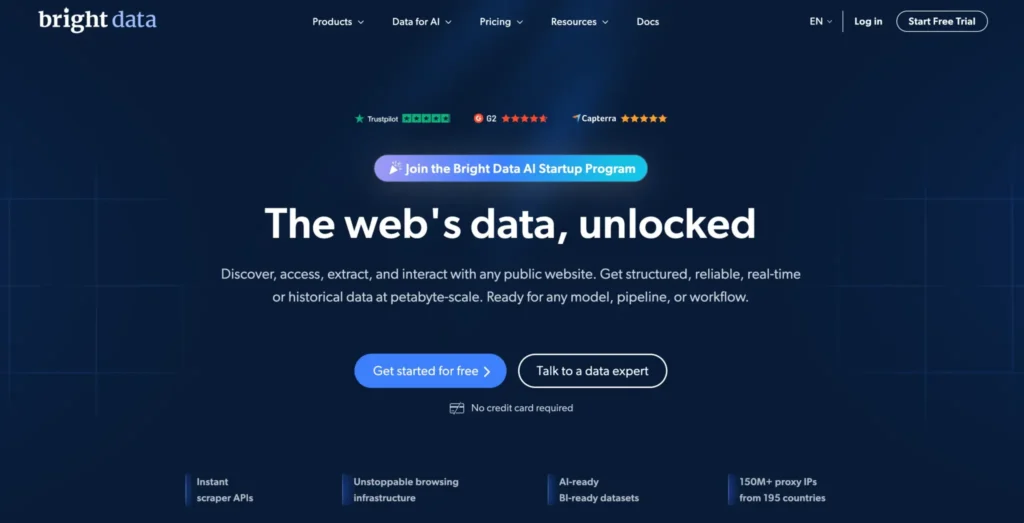
Bright Data is one of the most complete proxy platforms available for ad verification. It offers residential, mobile, ISP, and datacenter proxies, plus a wider data collection stack.
Bright Data states that its network includes 400M+ residential IPs and supports targeting by country, city, carrier, and ASN. Its ad verification proxy page also highlights unlimited concurrent sessions, no bandwidth or target limitations, long session control, and 24/7 support.
For ad verification, this level of control is valuable. You may need to inspect desktop display ads from residential IPs, check mobile placements through carrier level routing, and test ISP style sessions where consistency matters. Bright Data gives larger teams the toolkit to do all of that from one ecosystem.
The platform is especially strong for companies that need advanced routing rules, automation, and compliance controls. If you are building a serious ad intelligence or verification operation, Bright Data is one of the most capable choices.
The tradeoff is complexity. Bright Data is powerful, but it is not the simplest option for beginners. The platform makes the most sense when your team knows what it wants to test and has the technical ability to configure sessions properly.
Best for: Enterprise ad verification, fraud intelligence, brand safety monitoring, mobile ad checks, and advanced automation.
Pros
| Pros | Details |
|---|---|
| Huge residential network | Strong global coverage for large campaigns |
| Carrier and ASN targeting | Useful for mobile and network specific checks |
| Multiple proxy types | Residential, mobile, ISP, and datacenter options |
| Built for scale | Good for automation and data heavy operations |
Cons
| Cons | Details |
|---|---|
| Can be complex | Not the easiest tool for beginners |
| Premium pricing | Better for teams with clear ROI from verification |
Pro Tip: Bright Data is best when ad verification is not a side task. If it is part of your fraud prevention, compliance, or competitive intelligence workflow, the extra controls make sense.
#5 SOAX: Best Ad Verification Proxy for Carrier-Level Precision
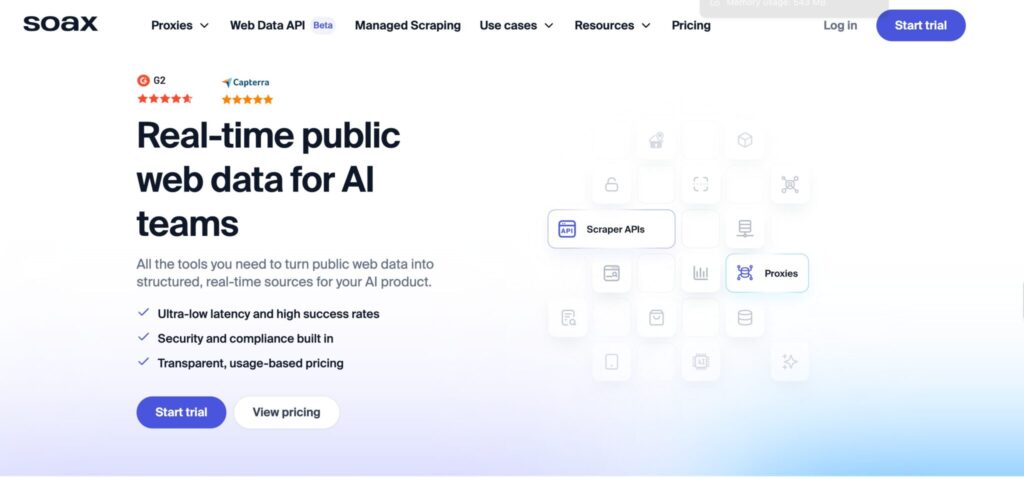
SOAX is a strong option when location and carrier precision matter. Its pricing page lists access to 155M+ residential proxies, 33M+ mobile proxies, and 2.6M+ ISP proxies. It also allows flexible rotation, including rotation on each request or at set intervals, with mobile and residential refresh windows up to one hour.
That makes SOAX especially useful for mobile ad verification. Mobile campaigns often behave differently depending on country, carrier, device environment, and network. If you are checking app install ads, mobile landing pages, or carrier specific redirects, basic residential proxies may not be enough.
SOAX gives you both residential and mobile coverage, which helps you compare what desktop and mobile users see in different markets. That is important when a campaign looks clean on desktop but redirects poorly on mobile.
It is also useful for teams that care about repeatable session behavior. Rotation per request is good for broad scanning. Sticky sessions are better when you need to follow the full ad path, from impression to click to redirect to landing page.
Best for: Mobile ad verification, carrier specific testing, app campaign checks, and location sensitive monitoring.
Pros
| Pros | Details |
|---|---|
| Strong mobile proxy pool | Good for mobile ad and app testing |
| Flexible rotation | Works for both scanning and session based checks |
| Residential, mobile, ISP access | Useful for mixed verification workflows |
| Good location controls | Helpful for regional campaign testing |
Cons
| Cons | Details |
|---|---|
| Requires proper setup | Carrier and rotation controls need planning |
| Not always the lowest cost | Better for precision than bargain usage |
Pro Tip: Use SOAX when your campaign depends heavily on mobile traffic. A desktop residential check alone will not show the full picture.
#6 IPRoyal: Best Ad Verification Proxy for Continuous Brand Monitoring
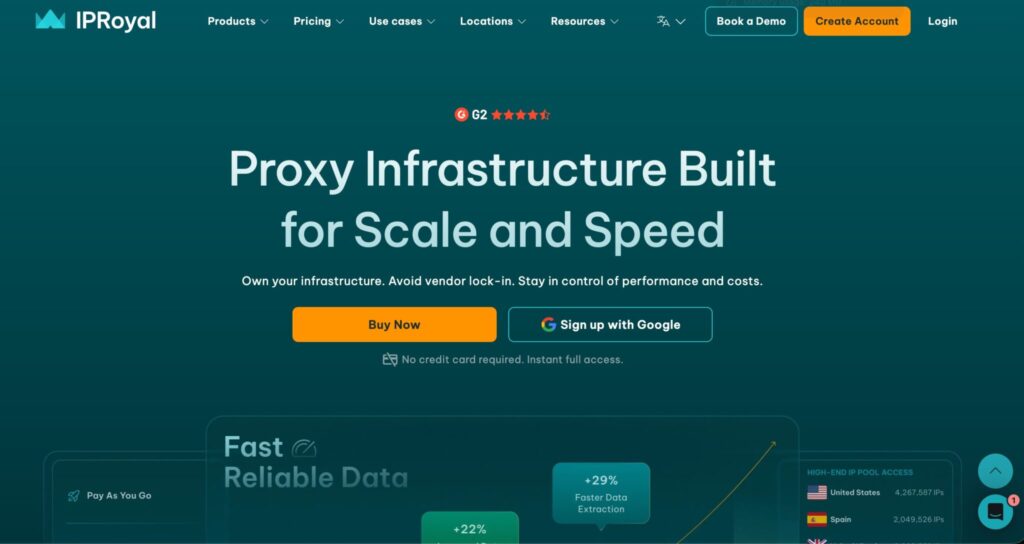
IPRoyal is a practical choice for teams that need regular monitoring without premium platform costs. The provider lists residential proxies from $1.75 per GB with a 32M+ proxy pool, plus ISP proxies with 500K+ unique IPs that it specifically positions for ad verification and long session reliability.
The non expiring traffic model is one of IPRoyal’s biggest advantages for smaller teams. If you only run ad verification checks a few times per week, you may not want a plan where unused bandwidth expires quickly.
IPRoyal is useful for continuous brand monitoring, affiliate ad checks, competitor ad review, and periodic geo based validation. It may not be the first choice for massive global verification operations, but it can be a cost effective choice for teams that want flexibility.
Its ISP proxies are also worth noting. ISP proxies can be helpful when you need stable sessions with a residential style identity. That can work well for checking landing pages, repeat visits, ad paths, or account based viewing scenarios.
Best for: Continuous monitoring, small to mid sized teams, affiliate compliance, and flexible budget usage.
Pros
| Pros | Details |
|---|---|
| Flexible pricing | Good for teams with uneven usage |
| Non expiring traffic | Useful for periodic checks |
| ISP proxy option | Helps with long session verification |
| Simple setup | Easier than many enterprise platforms |
Cons
| Cons | Details |
|---|---|
| Smaller pool than top enterprise providers | May not fit very large campaigns |
| Less advanced than Bright Data or Oxylabs | Better for practical monitoring than deep enterprise workflows |
Pro Tip: IPRoyal is a good fit when you need to check campaigns regularly but do not want to overpay for unused bandwidth.
#7 Proxy-Cheap: Best Budget Ad Verification Proxy
Proxy-Cheap is built around affordability. Its residential proxy page lists 50M+ residential IPs across 195+ countries, HTTPS and SOCKS5 support, rotating IPs, and 99.9% uptime.
For ad verification, Proxy-Cheap works best for low budget checks, small affiliate teams, small agencies, and marketers who need basic residential coverage. If your main goal is to check how ads and landing pages appear in different regions, it can do the job without a large budget.
The provider supports residential, mobile, and datacenter proxies, which gives you flexibility. But its biggest draw is still price. It is not the most polished enterprise option. It is not the provider I would pick for complex fraud intelligence. But for simple monitoring, it can be useful.
For example, if you run campaigns in five countries and need to confirm that ad copy, landing pages, redirects, and offers appear correctly, Proxy-Cheap can be enough. If you need city level accuracy, carrier level testing, or advanced fraud workflows, look at SOAX, Bright Data, Oxylabs, or Decodo.
Best for: Budget ad checks, small campaigns, affiliate marketers, and basic geo monitoring.
Pros
| Pros | Details |
|---|---|
| Budget friendly | Good for low cost verification |
| Global residential coverage | Useful for international checks |
| HTTPS and SOCKS5 support | Works with many tools and browsers |
| Rotating IP support | Helps with repeated checks |
Cons
| Cons | Details |
|---|---|
| Less enterprise depth | Not ideal for complex fraud detection |
| Quality may vary by region | Test important locations before scaling |
Pro Tip: Use Proxy-Cheap for lightweight verification, but always test your priority countries before relying on it for client reporting.
#8 ProxyEmpire: Best Ad Verification Proxy for Mobile Ad Coverage
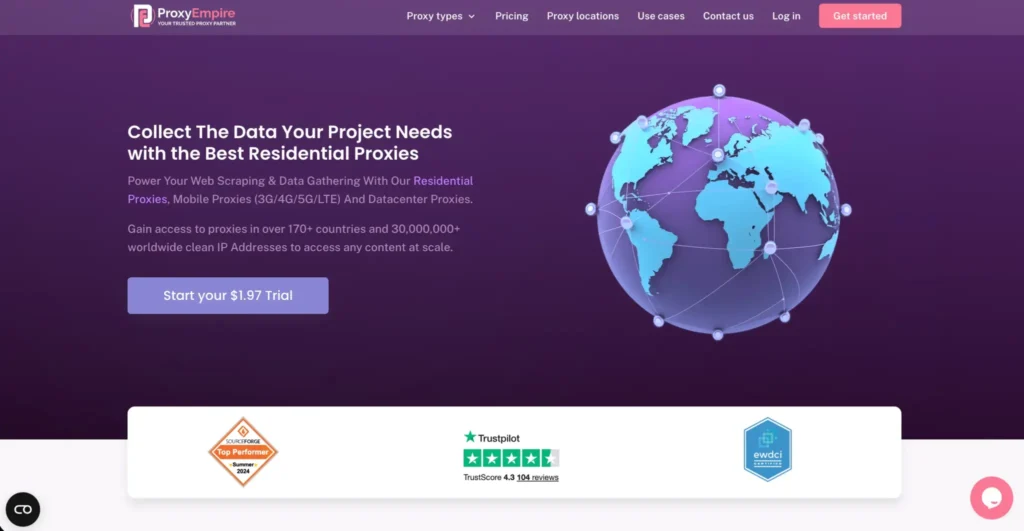
ProxyEmpire is a strong pick for teams that need residential and mobile coverage with detailed targeting. Its homepage lists 30M+ rotating residential proxies, coverage across 170+ countries, and targeting by country, region, city, ISP, and mobile carrier. It also supports HTTP, HTTPS, and SOCKS5.
That combination makes ProxyEmpire useful for mobile ad coverage, regional checks, and campaigns where carrier data matters. If your ads are running across mobile networks, you need to know what users on specific carriers actually see.
ProxyEmpire’s targeting depth is its main advantage. Country targeting is useful, but city, ISP, and carrier targeting make it much better for ad verification. This is especially true for industries where offers, redirects, or compliance rules change by geography.
It also offers static residential proxies, which can help when you need to keep the same IP for longer periods. That is useful when verifying multi step flows or checking ads that behave differently after a first visit.
Best for: Mobile ad checks, carrier level monitoring, region specific campaigns, and ad path verification.
Pros
| Pros | Details |
|---|---|
| Mobile carrier targeting | Valuable for mobile ad verification |
| Country, region, city, ISP filters | Strong targeting depth |
| Residential and static options | Useful for both rotation and stability |
| SOCKS5 support | Works with broader technical setups |
Cons
| Cons | Details |
|---|---|
| Smaller than giant providers | Not as massive as Bright Data or Oxylabs |
| Needs testing by location | Performance can vary depending on target region |
Pro Tip: ProxyEmpire is a good fit when you want more targeting control than basic budget providers offer, especially for mobile focused checks.
#9 DataImpulse: Best Budget Ad Verification Proxy
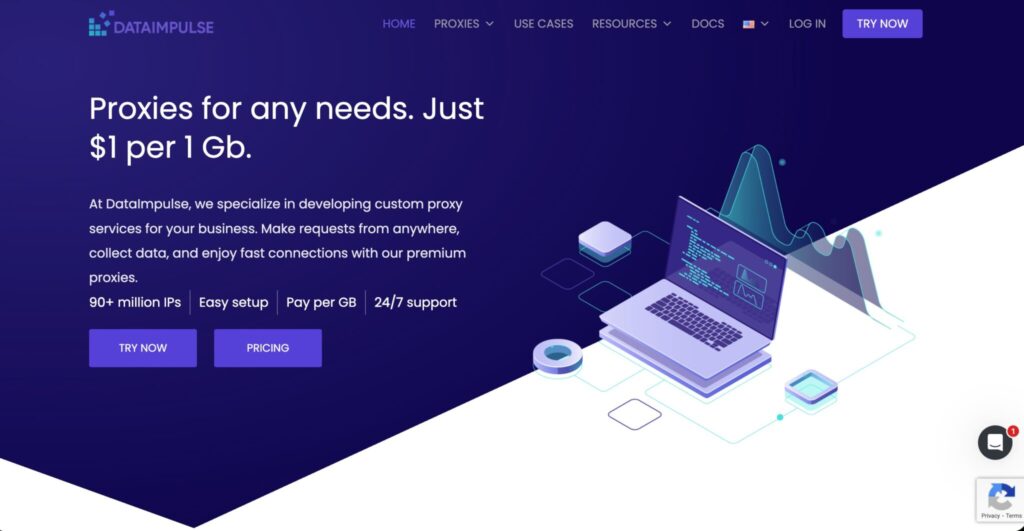
DataImpulse is one of the most attractive budget options in 2026. Its residential proxy page lists 90M+ residential IPs, coverage across 195 countries, HTTP(S) and SOCKS5 support, rotating and sticky sessions, API access, free country targeting, and pricing starting at $1 per GB.
That is a strong package for teams that want low cost residential traffic for ad checks.
The biggest advantage is simple: price. Ad verification can burn bandwidth quickly, especially when you are checking multiple regions, placements, and landing pages. A low per GB rate helps smaller teams run more checks without watching every request like a hawk.
DataImpulse also supports sticky sessions, which matters for ad verification. If you click an ad and need to follow redirects or view a landing page flow, a rotating IP on every request can break the session. Sticky sessions help preserve continuity.
It also includes country targeting without extra cost, while more detailed targeting may come with extra conditions depending on the setup. That makes it strong for country level verification and basic regional monitoring.
Best for: Budget residential checks, startups, affiliate teams, and high volume users watching costs.
Pros
| Pros | Details |
|---|---|
| Very low entry price | $1 per GB is attractive for budget teams |
| Large residential pool | Useful for broad monitoring |
| Sticky and rotating sessions | Works for both scanning and flow checks |
| Non expiring style credit model | Helpful for uneven usage patterns |
Cons
| Cons | Details |
|---|---|
| Not as enterprise mature | Better for cost efficient checks than complex compliance teams |
| Advanced targeting may cost more | Check pricing for city, ZIP, or ASN needs |
Pro Tip: DataImpulse is a strong second proxy source even if you already use a premium provider. Use it for broad low cost checks, then reserve premium bandwidth for high value locations.
Massive Comparison Table: Best Proxies for Ad Verification in 2026
| Rank | Provider | Best For | Proxy Types | IP Pool Claim | Targeting Strength | Rotation Support | Sticky Sessions | Starting Price Style | Best Use Case |
|---|---|---|---|---|---|---|---|---|---|
| 1 | Oxylabs | Enterprise campaigns | Residential, datacenter, mobile, ISP style products | 175M+ residential IPs | Country, city, advanced geo options | Yes | Yes | Premium monthly and bandwidth based plans | Global campaign monitoring |
| 2 | Decodo | Best value | Residential, static residential, mobile, datacenter | 115M+ residential IPs | Country, state, city, ZIP | Yes | Yes | From around $2 per GB | Agency level ad verification |
| 3 | Webshare | In house teams | Residential, static residential, datacenter | 80M+ residential IPs | Country level and product dependent targeting | Yes | Product dependent | From around $1.4 per GB | Simple and affordable checks |
| 4 | Bright Data | Full platform | Residential, mobile, ISP, datacenter | 400M+ residential IPs | Country, city, carrier, ASN | Yes | Yes | Premium usage based pricing | Advanced fraud and brand safety |
| 5 | SOAX | Carrier precision | Residential, mobile, ISP, datacenter | 155M+ residential, 33M+ mobile | Location and carrier focused | Yes | Yes | From around $3.60 per GB on listed plans | Mobile and carrier checks |
| 6 | IPRoyal | Continuous monitoring | Residential, ISP, datacenter, mobile | 32M+ residential pool | Geo targeting with flexible sessions | Yes | Yes | From around $1.75 per GB in bulk | Periodic brand monitoring |
| 7 | Proxy-Cheap | Budget users | Residential, mobile, datacenter | 50M+ residential IPs | Country coverage across 195+ countries | Yes | Yes | Budget pricing | Basic geo ad checks |
| 8 | ProxyEmpire | Mobile coverage | Residential, mobile, static residential | 30M+ residential IPs | Country, region, city, ISP, carrier | Yes | Yes | Trial and bandwidth based plans | Mobile ad verification |
| 9 | DataImpulse | Low cost residential traffic | Residential, mobile, datacenter | 90M+ residential IPs | Country included, advanced targeting available | Yes | Yes | From $1 per GB | Broad budget verification |
How to Choose the Best Proxy for Ad Verification
Choosing a proxy for ad verification is not about grabbing the biggest IP pool and calling it a day. The best choice depends on your campaign type, regions, fraud risk, and how often you verify placements.
1. Start With the Type of Ads You Need to Verify
Search ads, display ads, app install ads, affiliate ads, and video ads do not behave the same way.
| Campaign Type | Best Proxy Type |
|---|---|
| Search ads | Residential proxies with city targeting |
| Display ads | Residential proxies with strong rotation |
| Mobile app ads | Mobile proxies with carrier targeting |
| Affiliate ads | Residential plus sticky sessions |
| Local service ads | City, state, or ZIP targeting |
| Video ads | Residential or mobile proxies with stable sessions |
| Brand safety checks | Premium residential proxies with broad geo coverage |
If most of your traffic is desktop search, residential proxies are enough. If you run mobile heavy campaigns, mobile proxies become much more important.
2. Check Geo Targeting Depth
Country targeting is basic. City, state, ZIP, ASN, and carrier targeting are advanced.
For ad verification, targeting depth matters because ads are often localized. A campaign in New York may show different copy, pricing, and landing pages than the same campaign in Los Angeles.
If you only verify at the country level, you may miss local issues.
Pro Tip: For local campaigns, choose Decodo, Bright Data, SOAX, ProxyEmpire, or DataImpulse with advanced targeting. For general country level checks, Webshare, IPRoyal, and Proxy-Cheap may be enough.
3. Look at Rotation Rules
Rotation controls how often your IP changes.
For broad scanning, rotating on every request can work well. For checking a full ad journey, sticky sessions are usually better.
Example:
A user sees an ad, clicks it, passes through a tracking redirect, lands on a localized page, and maybe sees a follow up offer. If your proxy changes IP halfway through that journey, the advertiser or publisher may serve a different page.
That makes your verification result unreliable.
4. Do Not Ignore Mobile Proxies
Mobile ad fraud is tricky because mobile traffic can vary by carrier, app environment, device type, and region.
If you verify mobile campaigns using only desktop residential proxies, you are not seeing the full user experience.
Use mobile proxies when checking:
| Use Case | Why Mobile Proxies Help |
|---|---|
| App install ads | Ads may change inside mobile environments |
| Carrier targeted offers | Routing can differ by mobile network |
| Mobile redirects | Some fraud appears only on mobile |
| In app placements | Desktop proxies cannot recreate app conditions |
| Mobile landing pages | Pages may behave differently on cellular IPs |
SOAX, Bright Data, and ProxyEmpire are especially relevant here.
5. Match Proxy Quality to Risk
Not every campaign needs enterprise infrastructure.
If you are checking a few landing pages, a budget provider may work. If you are monitoring fraud across high spend campaigns, cheap proxies can become expensive if they miss bad placements.
Use this simple rule:
| Risk Level | Proxy Recommendation |
|---|---|
| Low spend, basic checks | Webshare, DataImpulse, Proxy-Cheap |
| Mid sized campaigns | Decodo, IPRoyal, ProxyEmpire |
| High spend, high risk | Oxylabs, Bright Data, SOAX |
| Mobile heavy campaigns | SOAX, Bright Data, ProxyEmpire |
| Global enterprise campaigns | Oxylabs, Bright Data |
6. Test Your Priority Locations Before Scaling
A provider can have a huge global pool and still be weaker in your exact target city or carrier.
Before buying a large plan, test:
- Connection success rate
- Ad visibility from target locations
- Redirect behavior
- Latency
- Session stability
- Block rate
- IP repetition
- Landing page consistency
A proxy provider that works beautifully in the United States may perform differently in smaller markets. Always test where your money is being spent.
7. Choose Ethical and Compliant Proxy Sources
Ad verification often touches sensitive advertiser, publisher, and consumer trust issues. Use providers that talk clearly about proxy sourcing, consent, and acceptable use.
This matters for both legal risk and technical quality. Poorly sourced IPs can be unstable, abused, or more likely to trigger security systems.
FAQs: Best Proxies For Ad Verification 2026
Why do ad verification tools need residential proxies specifically?
Ad verification tools need residential proxies because many ads are served based on real user location and network identity. A residential IP looks like a normal home internet connection, which helps verification tools see ads closer to how regular users see them.
Datacenter proxies can still help with basic checks, but they are easier for ad platforms, publishers, and fraud systems to identify. Residential proxies are better for checking geo targeted ads, local landing pages, affiliate redirects, and suspicious placements.
What is geo-targeted ad verification?
Geo targeted ad verification means checking how ads appear from specific locations.
For example, a campaign may target users in Chicago, London, Sydney, and Dubai. A geo targeted proxy lets your verification tool view the campaign from those locations without physically being there.
This helps confirm whether:
- The right ad is showing in the right region
- The correct language appears
- The landing page matches the location
- Pricing or offers are accurate
- Fraudulent redirects are not hiding in certain markets
How do proxies detect ad fraud?
Proxies do not detect ad fraud by themselves. They help ad verification tools observe ads from different user environments.
The fraud detection comes from comparing what appears across locations, devices, IP types, and sessions. If an ad behaves normally from one region but redirects to a suspicious page from another, proxies help reveal that behavior.
Proxies are especially useful for finding:
- Cloaked landing pages
- Unauthorized affiliate redirects
- Fake geo placements
- Hidden mobile redirects
- Misplaced display ads
- Brand safety issues
- Competitor bidding patterns
Can proxies verify mobile ad placements?
Yes, but mobile ad verification works best with mobile proxies.
Mobile proxies route traffic through real mobile networks, which helps teams check app install ads, mobile landing pages, carrier specific campaigns, and mobile redirects.
Residential proxies can help with mobile web checks in some cases, but they do not fully recreate cellular network conditions. For serious mobile ad verification, choose providers with strong mobile proxy pools, such as SOAX, Bright Data, or ProxyEmpire.
Are datacenter proxies useful for ad verification?
Datacenter proxies can be useful for fast, low cost checks, but they are not ideal for sensitive verification work.
They are best for simple tasks like checking page availability, testing ad URLs, or running internal QA. For real world ad visibility, residential and mobile proxies are usually better because they look closer to normal user traffic.
A good setup may use datacenter proxies for basic technical checks and residential proxies for final verification.
What proxy features matter most for ad verification?
The most important features are:
- Residential IP quality
- Accurate geo targeting
- City or ZIP targeting
- Mobile carrier targeting
- Sticky sessions
- Rotation control
- API access
- Large IP pool
- Low block rate
- Ethical IP sourcing
If you are verifying mobile campaigns, carrier targeting and mobile proxy quality become much more important.
Which proxy is best for small ad verification teams?
For small teams, Decodo, Webshare, IPRoyal, Proxy-Cheap, and DataImpulse are usually the most practical options.
Decodo gives the best balance of features and scale. Webshare is simple and affordable. IPRoyal is good for flexible monitoring. Proxy-Cheap and DataImpulse are useful when budget matters most.
Which proxy is best for enterprise ad verification?
Oxylabs and Bright Data are the strongest enterprise options.
Oxylabs is excellent for large global campaigns and structured enterprise monitoring. Bright Data is better when you need a full proxy and data collection platform with residential, mobile, ISP, datacenter, carrier, and ASN targeting.
SOAX is also strong for enterprise style mobile verification when carrier level precision matters.
Conclusion: Best Proxies For Ad Verification 2026
The best proxy for ad verification depends on how serious your monitoring needs are.
If you need enterprise scale coverage, Oxylabs is the safest all round pick. If you want the most complete proxy platform with advanced targeting, Bright Data is hard to beat. If you need strong value without sacrificing serious targeting, Decodo is one of the smartest choices in 2026.
For mobile ad checks, SOAX and ProxyEmpire deserve close attention. For in house teams and smaller workflows, Webshare, IPRoyal, Proxy-Cheap, and DataImpulse give you more affordable ways to verify ads without building a huge infrastructure budget.
My practical recommendation is simple:
Use a premium provider for high value checks and a budget provider for broad monitoring. That gives you cost control without sacrificing accuracy where it matters most.
For most professional ad verification teams, the best starting shortlist is:
| Use Case | Best Provider |
|---|---|
| Enterprise campaign verification | Oxylabs |
| Full platform and advanced controls | Bright Data |
| Best value for agencies | Decodo |
| Mobile and carrier checks | SOAX |
| Budget residential traffic | DataImpulse |
| Simple in house checks | Webshare |
| Ongoing brand monitoring | IPRoyal |
| Mobile regional coverage | ProxyEmpire |
| Low cost basic checks | Proxy-Cheap |
Ad verification is really about trust. You are not just checking whether an ad loads. You are checking whether your budget, brand, and customer experience are being protected in every market where your campaign runs. A good proxy network gives you the eyes to see that clearly.