
Brand protection used to mean checking a few marketplaces, filing the occasional takedown, and hoping your legal team caught the worst offenders before customers did.
That approach no longer works.
Counterfeit sellers, coupon hijackers, gray market distributors, fake social profiles, unauthorized resellers, pirated content hubs, and trademark bidders rarely expose the same web experience to everyone. They may show one version to shoppers in the United States, another to users in Europe, and nothing at all to corporate IP ranges. Some even cloak content when they detect monitoring tools.
That is where proxies become practical infrastructure, not just a technical add-on.
A good proxy setup lets brand protection teams view the internet from the same locations, networks, and device environments as real customers. You can check how your products appear on marketplaces, inspect suspicious reseller pages, monitor search ads, verify social media impersonation, track fake reviews, and collect public evidence without constantly getting blocked or served sanitized pages.
The key word here is quality. Cheap, abused, or poorly rotated proxies can create false negatives, trigger blocks, or make your monitoring setup look suspicious. For serious brand protection work, residential proxies, ISP proxies, and mobile proxies usually matter more than raw speed alone.
This guide ranks the best proxy providers for brand protection in 2026 based on IP pool depth, geographic coverage, rotation control, session stability, targeting options, compliance posture, dashboard quality, and suitability for enforcement workflows.
Why Brand Protection Demands High-Quality Residential Proxies
Brand protection is not the same as casual scraping. You are not just collecting random pages. You are trying to see what a real buyer, reviewer, marketplace visitor, or search user sees from a specific location.
That creates a different set of proxy requirements.
Residential proxies route traffic through IPs associated with real internet service providers. This makes them useful when checking marketplaces, search engines, social platforms, review sites, and suspicious storefronts that may treat datacenter traffic differently. For brand protection, that realism matters.
A team investigating counterfeit products may need to compare listings across the US, UK, Germany, UAE, India, and Southeast Asia. A legal operations team may need long sessions to capture screenshots, checkout flows, seller details, and product claims. A paid search compliance team may need rotating residential IPs to detect unauthorized trademark bidding across different cities and devices.
That is why the best brand protection proxy setup usually combines three proxy types:
Residential proxies are best for marketplace monitoring, counterfeit detection, search result checks, review monitoring, and social profile verification.
ISP proxies are useful when you need stable sessions, faster speeds, and a more consistent identity while still using IPs tied to internet service providers.
Mobile proxies help when monitoring mobile-first platforms, app behavior, mobile SERPs, and social media environments where mobile network signals can affect visibility.
The best providers also offer session control. This matters because brand protection often involves multi-step workflows. You may need to open a product page, inspect seller details, compare shipping options, capture evidence, and revisit the page later. If your IP rotates too aggressively, the website may reset your session or show a different experience.
Geo-targeting is just as important. Country-level targeting is useful, but city, state, ASN, or ZIP-level targeting can be valuable when monitoring location-specific ads, local reseller abuse, regional pricing violations, or selective counterfeiting campaigns.
One more point matters: compliance. Brand protection teams often work with legal departments, agencies, vendors, and enterprise customers. Ethically sourced IPs, clear acceptable-use policies, audit-friendly practices, and transparent vendor documentation are not small details. They reduce business risk.
9 Best Proxies For Brand Protection in 2026
| Rank | Provider | Best For | Proxy Types | Notable Strength | Starting Point |
|---|---|---|---|---|---|
| 1 | Oxylabs | Enterprise brand protection | Residential, datacenter, mobile, ISP, Web Unblocker | 175M+ residential IPs and deep targeting | Premium |
| 2 | Decodo | Value-focused brand monitoring | Residential, mobile, datacenter, scraping APIs | 125M+ IPs, strong usability, good price balance | Mid-range |
| 3 | Webshare | Ongoing monitoring at scale | Residential, static residential, datacenter | Budget-friendly self-service dashboard | Low-cost |
| 4 | Bright Data | Anti-piracy and complex enforcement | Residential, ISP, mobile, datacenter, Web Unlocker | 400M+ monthly residential IPs and strong tooling | Premium |
| 5 | SOAX | Gray market detection | Residential, mobile, ISP, datacenter | Large pool and precise targeting | Mid to premium |
| 6 | IPRoyal | Long-term enforcement campaigns | Residential, ISP, mobile, datacenter | 32M+ pool and flexible pricing | Affordable |
| 7 | Proxy-Cheap | Budget brand checks | Residential, static residential, mobile, datacenter | Affordable entry pricing | Budget |
| 8 | ProxyEmpire | Geo-specific gray market tracking | Residential, mobile, datacenter | 30M+ clean IPs and rollover-friendly plans | Mid-range |
| 9 | DataImpulse | Budget monitoring workloads | Residential and mobile proxies | 90M+ residential IPs from $1 per GB | Budget |
#1: Oxylabs: Best Brand Protection Proxy for Enterprise Operations
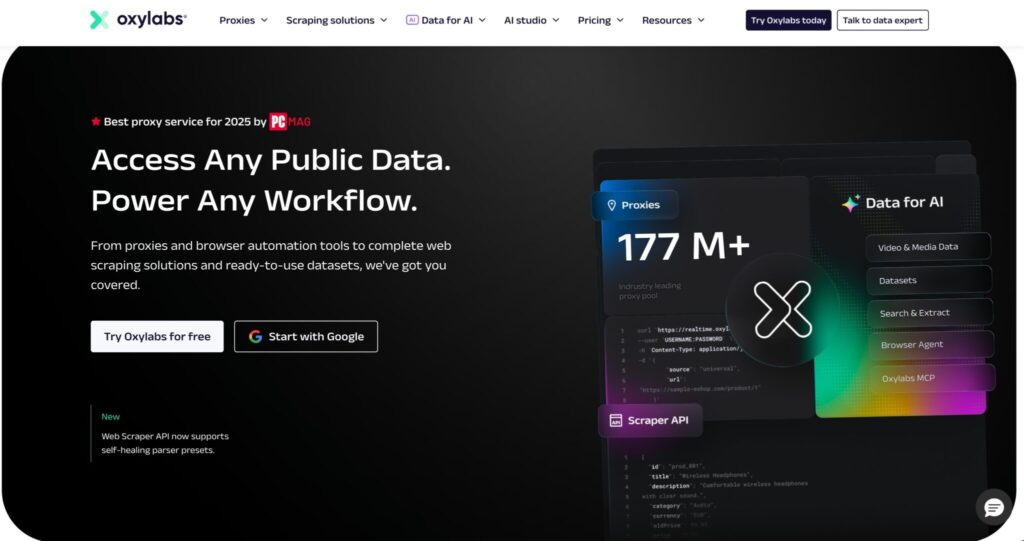
Oxylabs is the provider I would place at the top for enterprise-level brand protection teams that need scale, reliability, clean infrastructure, and enough targeting flexibility to support serious enforcement work.
Its residential proxy network is one of the largest in the industry, with Oxylabs listing 175M+ residential IPs across 195 locations, along with IP rotation, session control, unlimited concurrent sessions, and granular geo-targeting options such as country, city, state, and ZIP code targeting.
That scale matters when you are monitoring hundreds or thousands of suspicious pages across marketplaces, search engines, coupon sites, resellers, regional ecommerce stores, and social platforms. A small or overused IP pool can quickly create blind spots. Oxylabs gives larger teams enough room to rotate identities without burning through the same IP ranges too often.
For brand protection, Oxylabs is especially strong in four areas.
First, its targeting depth helps teams inspect location-specific abuse. If an unauthorized reseller only shows discounted inventory in a certain city or region, broad country targeting may miss it. Oxylabs gives more control over where the request appears to come from.
Second, session control helps with evidence gathering. If your team needs to capture listing details, seller profile data, checkout behavior, shipping restrictions, and page screenshots, you do not want the proxy identity changing mid-flow.
Third, Oxylabs is built for high-volume operations. It is not just for one analyst checking a few URLs manually. It fits teams running scheduled monitoring jobs, automated crawlers, marketplace checks, and internal dashboards.
Fourth, it has a strong enterprise feel. The documentation, support model, and data collection tooling make more sense for legal, compliance, and brand intelligence teams than a basic proxy dashboard.
Where Oxylabs fits best
Oxylabs is ideal for global brands, anti-counterfeit vendors, IP enforcement agencies, marketplace monitoring teams, and companies that need reliable public web data collection at scale.
It is especially useful when your team needs to monitor multiple regions and gather clean evidence without frequent blocks.
Where it may not fit
Oxylabs may be more than a small brand needs. If you only need to check a handful of reseller pages each week, a lower-cost provider may be enough.
Pro-Tip: Use Oxylabs residential proxies for discovery and evidence collection, then use ISP proxies for repeated checks on the same target pages where session consistency matters more than rotation volume.
#2: Decodo: Best Value Brand Protection Proxy
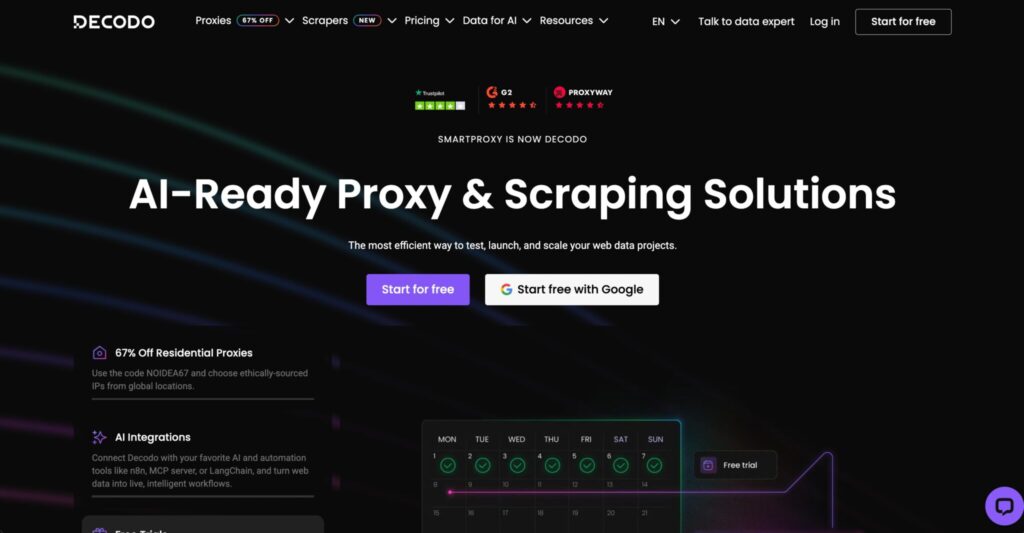
Decodo, formerly Smartproxy, is one of the strongest value picks for brand protection teams that want a serious proxy network without jumping straight into a premium enterprise contract.
Decodo’s official site states that Smartproxy has rebranded to Decodo and lists 125M+ IPs, 195+ locations, 99.99% uptime, and a fast average speed claim on its homepage. Its residential proxy page also highlights security and compliance messaging, including ISO/IEC 27001:2022 certification and ethically sourced residential IPs through transparent opt-in programs.
That makes Decodo attractive for brand protection because it balances scale, price, ease of use, and business-friendly positioning. Not every brand protection project needs Oxylabs-level infrastructure. Some teams need clean residential IPs, good targeting, a simple dashboard, and predictable performance.
Decodo fits that middle ground well.
For counterfeit monitoring, Decodo can help teams check marketplace listings, seller pages, and suspicious product pages from multiple regions. For paid search compliance, it can help inspect whether affiliates, resellers, or competitors are bidding on protected brand terms in certain markets. For social impersonation monitoring, it can support regional checks where platform behavior changes by country.
One of Decodo’s biggest advantages is usability. Some proxy providers feel built only for technical users. Decodo is easier for mixed teams where SEO analysts, brand managers, researchers, and developers may all touch the same workflow.
Its scraping tools and APIs can also help teams that want to move beyond simple proxy access. If your brand protection team is building monitoring workflows around public search results, ecommerce pages, and regional web pages, having proxy infrastructure and scraping tooling under one roof can reduce friction.
Where Decodo fits best
Decodo is a strong choice for mid-sized brands, agencies, ecommerce monitoring teams, and affiliate compliance teams that need reliable residential proxies without unnecessary complexity.
It is also a practical option when the team wants technical capability but still needs a dashboard that non-engineers can understand.
Where it may not fit
For highly complex anti-piracy or advanced web unblocker workflows, Bright Data or Oxylabs may offer deeper enterprise tooling. Decodo is powerful, but the biggest global enforcement teams may still want more advanced infrastructure support.
Pro-Tip: Use Decodo’s residential proxies for broad discovery across marketplaces and search engines, then create separate proxy groups by country so reports are cleaner and easier to audit.
#3: Webshare: Best Brand Protection Proxy for Ongoing Monitoring
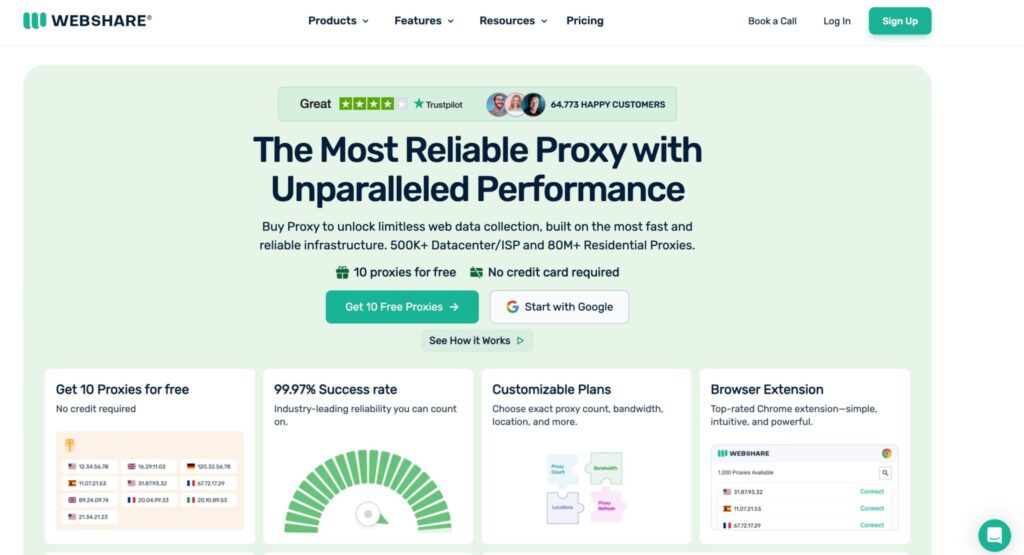
Webshare is a strong fit for teams that need affordable, repeatable monitoring instead of heavy enterprise infrastructure. It is not the flashiest option on this list, but for ongoing checks, scheduled crawls, and budget-sensitive monitoring, it deserves attention.
Webshare’s proxy server page lists HTTP and SOCKS5 endpoints, 100+ Gbps aggregate network capacity, 50+ countries, and 99.97% uptime. Its pricing page lists rotating residential proxies with 80M+ residential IPs and residential pricing starting at $1.40 per GB, while static residential proxies start from $0.23 per IP.
That pricing makes Webshare appealing for brand protection teams that need to run frequent checks without turning every monitoring job into a high-cost workflow.
A common use case would be daily or weekly monitoring of reseller pages, coupon abuse, unauthorized product listings, fake review pages, and trademark mentions across smaller websites. Webshare is also useful when you want a self-service setup and do not want to speak to sales before testing.
Its static residential proxies can be helpful when your team needs stable identities for repeated access. For example, if you monitor the same set of sellers or marketplace pages over time, rotating IPs may be useful for discovery, but static residential IPs can be better for consistent re-checks.
Webshare also supports SOCKS5, which gives more flexibility for certain tools and browser-based workflows. That can matter if your team uses custom monitoring scripts, browser profiles, or internal QA tools.
Where Webshare fits best
Webshare is best for budget-conscious monitoring, small to mid-sized brand protection teams, SEO and affiliate compliance checks, recurring marketplace scans, and teams that want direct self-service pricing.
It is also useful for agencies that manage multiple smaller brand accounts and need to keep proxy costs under control.
Where it may not fit
Webshare may not be the first pick for complex anti-piracy operations or aggressive targets that require advanced unblocker infrastructure. It is better for practical monitoring than deep enterprise enforcement.
Pro-Tip: Use Webshare for scheduled monitoring and baseline checks, but keep a premium provider available for high-priority investigations where blocks, cloaking, or legal evidence capture are more sensitive.
#4: Bright Data: Best Brand Protection Proxy for Anti-Piracy Operations
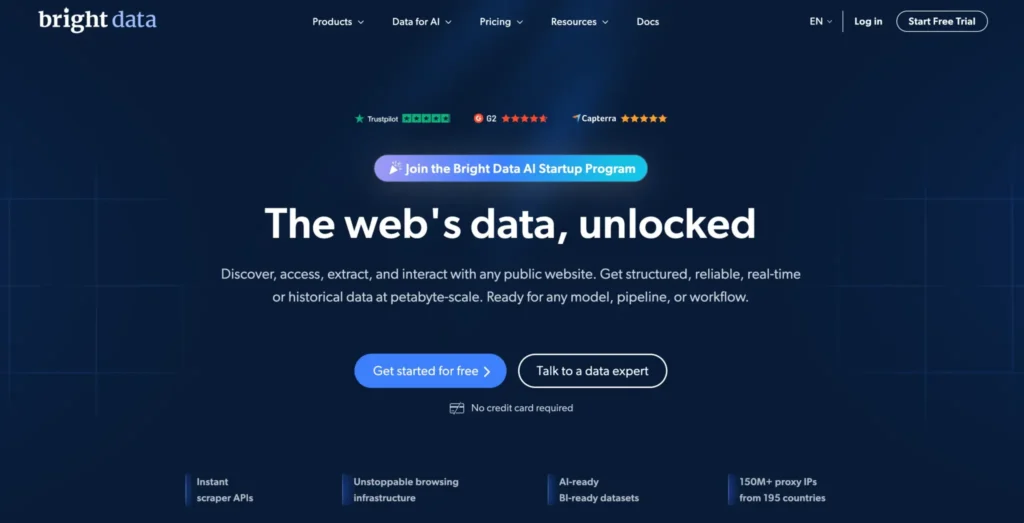
Bright Data is one of the most capable providers for complex brand protection and anti-piracy work. It is also one of the more advanced platforms on this list, so it makes the most sense for teams that need more than basic residential proxy access.
Bright Data has a dedicated brand protection proxy solution page that mentions brand protection, anti-piracy efforts, IP rotation, city or country customization, and compliance with data protection requirements such as GDPR and CCPA. Its residential proxy page lists 400M+ monthly residential IPs from 195 countries, free geo-targeting, sticky and rotating sessions, and a 99.95% success rate.
That combination makes Bright Data especially strong for large-scale enforcement work.
Brand protection teams often face targets that are more evasive than normal websites. Piracy networks, counterfeit storefronts, unauthorized streaming pages, and fraud-heavy domains may block suspicious traffic, vary content by geography, or disappear and reappear under different URLs. Bright Data’s tooling is built for that kind of messy web environment.
Its value is not just the proxy pool. It is the broader platform. Bright Data offers proxy infrastructure, web scraping tools, datasets, unlocker technology, and brand protection use-case support. For teams that need to collect public evidence at scale, that ecosystem can reduce the number of vendors involved.
Bright Data is also strong for anti-piracy workflows. If your brand needs to monitor unauthorized content distribution, fake download pages, streaming mirrors, regional piracy portals, or illegal copies of digital products, you need flexible access from multiple locations. Bright Data’s large network and advanced targeting are useful here.
For paid search and affiliate compliance, Bright Data can help teams inspect ads and landing pages from different regions. That matters when a violator shows a clean page to one location and a trademark-infringing offer to another.
Where Bright Data fits best
Bright Data is best for enterprise brand protection teams, anti-piracy vendors, legal intelligence teams, and organizations that need advanced public web data collection with strong targeting and compliance controls.
It is also a good fit when you want proxy access plus web unlocker and data collection tools from one vendor.
Where it may not fit
Bright Data can feel heavy for small teams. If your needs are simple, you may not use half of what the platform offers. It also tends to sit in the premium category, so budget-sensitive users may prefer Webshare, IPRoyal, Proxy-Cheap, or DataImpulse.
Pro-Tip: Use Bright Data for the hardest targets first. If a website blocks normal residential proxies, shows inconsistent regional content, or requires reliable evidence capture, that is where a premium platform earns its place.
#5: SOAX: Best Brand Protection Proxy for Gray Market Detection
SOAX is a strong pick for brands that need to track gray market sellers, unauthorized regional distributors, suspicious pricing gaps, and location-specific marketplace behavior.
Gray market detection is tricky because sellers often do not show the same offer everywhere. A product might appear properly priced in one region but heavily discounted in another. A reseller may hide shipping options for certain countries. A marketplace listing may use slightly changed product titles, altered packaging images, or vague descriptions to avoid easy detection.
SOAX helps with this because its residential proxy network includes 155M+ IPs across 195 countries, with support for HTTP(S), SOCKS5, UDP, and QUIC. It also highlights unlimited concurrent sessions, ethically sourced proxies, and 99.9% network uptime.
For brand protection teams, that combination gives you three useful advantages: broad global visibility, stable enough performance for recurring checks, and protocol flexibility for different monitoring tools.
SOAX is also useful when you need country-level, city-level, or ISP-level views. For example, a brand may want to know whether unauthorized sellers are appearing in Germany, the UAE, India, or Brazil, while staying hidden in the US. A basic datacenter proxy setup can miss that. Residential proxies from the right locations make the investigation more realistic.
SOAX works well for:
- counterfeit listing checks
- gray market pricing checks
- regional ecommerce monitoring
- localized search result tracking
- marketplace seller discovery
- social media and mobile web monitoring
The platform sits in a nice middle ground. It is more advanced than basic budget proxy tools, but usually easier to approach than the heaviest enterprise platforms. That makes it attractive for ecommerce brands, agencies, compliance teams, and mid-market companies that need serious coverage without going straight to a complex enterprise setup.
Where SOAX fits best
SOAX is best for brand protection teams that care about regional visibility. If your biggest problem is unauthorized sellers appearing in different countries, SOAX gives you the coverage and control needed to monitor those markets more closely.
It is also useful for teams running recurring checks across multiple ecommerce platforms, especially when the same seller uses different pricing, images, or product claims across regions.
Where it may not fit
SOAX may not be the cheapest option for high-volume monitoring. Budget-focused teams may find DataImpulse, Proxy-Cheap, Webshare, or IPRoyal more comfortable for basic scheduled checks.
Pro-Tip: Use SOAX when your enforcement team needs to prove that a reseller is showing different product claims, prices, or availability based on location. Run the same URL from multiple countries and document the differences clearly.
#6: IPRoyal: Best Brand Protection Proxy for Long-Term Enforcement Campaigns
IPRoyal is a practical choice for teams that need affordable residential proxy access for long-running brand protection campaigns.
Not every investigation is a one-week project. Some counterfeit sellers disappear, rebrand, return under a new name, change product titles, or move across marketplaces. Some affiliate violators stop bidding on your brand terms for a few days, then restart when they think nobody is watching. Long-term monitoring matters.
IPRoyal’s residential proxy page lists more than 32M IPs across 195 countries and regions, dedicated residential IP options, and unlimited concurrent sessions. Its main site also highlights security features such as strict KYC, IP whitelisting, two-factor authentication, and account-level permissions.
That makes IPRoyal useful for teams that want a balance of price, control, and security.
For brand protection, IPRoyal’s value is not just about having the biggest pool. It is about keeping recurring monitoring affordable. If you need to check search results, seller pages, review platforms, and suspicious websites every week, bandwidth cost matters. A lower-cost provider with enough targeting can make long-term enforcement more realistic.
IPRoyal can work well for:
- ongoing counterfeit monitoring
- paid search trademark abuse checks
- affiliate compliance reviews
- marketplace seller tracking
- review site monitoring
- localized SERP visibility checks
Its dedicated residential IPs can be useful when your team wants a consistent identity for repeated access. Rotating residential proxies are excellent for broad discovery, but stable IPs help when you want to revisit the same targets over time without looking like a completely new user each time.
The security controls also matter if multiple people on your team or agency access the same proxy account. Account permissions, 2FA, and IP whitelisting reduce the risk of misuse.
Where IPRoyal fits best
IPRoyal is best for small to mid-sized teams that want residential proxies for continuous monitoring without paying premium enterprise rates.
It also fits agencies managing brand protection for several clients, where cost control and easy access management matter.
Where it may not fit
IPRoyal’s pool is smaller than some premium giants. If you need extremely high-volume, multi-region, enterprise-scale monitoring with advanced unblocker tools, Oxylabs or Bright Data may be stronger.
Pro-Tip: Use IPRoyal for weekly monitoring lists. Keep separate campaigns for marketplace checks, search ad checks, and social impersonation checks so your evidence stays organized.
#7: Proxy-Cheap: Best Budget Brand Protection Proxy
Proxy-Cheap is a good option when budget is the main concern but you still need access to residential, static residential, mobile, and datacenter proxy options.
Brand protection is often expensive. Legal reviews, takedown requests, marketplace reporting, monitoring software, analysts, and proxy infrastructure all add up. Smaller brands and agencies may not have the budget for premium proxy networks from day one.
Proxy-Cheap gives those teams a more accessible starting point.
Its main site lists several proxy products, including static residential, rotating residential, datacenter IPv4, datacenter IPv6, and static mobile proxies. The site shows rotating residential proxies starting at $4.99 per GB and static mobile proxies starting at $7 per proxy, while also offering datacenter IPv6 from a lower entry price. Its residential proxy page mentions 50M+ residential IPs across 195+ countries, SOCKS5 and HTTPS support, functional IP rotation, and 99.9% uptime.
For brand protection, Proxy-Cheap is not the first tool I would choose for high-risk investigations. Still, it can be very useful for regular checks where you need affordability more than advanced enterprise features.
Think of it as a monitoring layer.
You can use it to check suspicious reseller URLs, scan regional product pages, review coupon abuse, monitor basic SERPs, and inspect fake storefronts. If you discover something serious, you can then move the investigation to a premium proxy provider for deeper validation and evidence capture.
Proxy-Cheap also supports mobile proxies, which can help when monitoring mobile-first abuse. Some social platforms, local ads, and app-related pages behave differently on mobile networks. That makes mobile proxies useful for brand teams checking impersonation, unauthorized promotions, or mobile-specific landing pages.
Where Proxy-Cheap fits best
Proxy-Cheap is best for budget-conscious brands, affiliate compliance teams, small agencies, and teams that want a low-cost way to begin proxy-based monitoring.
It also works well as a secondary provider for routine checks while premium providers handle complex cases.
Where it may not fit
For legal evidence collection, anti-piracy work, or high-risk investigations, you may want a provider with stronger enterprise support, cleaner documentation, and more advanced tooling.
Pro-Tip: Use Proxy-Cheap for early discovery. Once you identify a serious trademark violation, counterfeit listing, or cloaked landing page, re-check it through a premium residential or ISP proxy before escalating.
#8: ProxyEmpire: Best Brand Protection Proxy for Geo-Specific Gray Market Detection
ProxyEmpire is another strong option for teams that care about geography, session control, and flexible proxy types.
The provider offers residential, static residential, mobile, and datacenter proxies. Its website highlights static residential proxies from $0.75 and mobile proxies from $1.25, with static residential IPs positioned for stable, long-lasting sessions. Its pricing table shows multiple plans, including static dedicated IP pricing and residential bandwidth packages, with larger custom plans available from $0.75 per GB.
ProxyEmpire is useful for brand protection because gray market abuse is often regional. A product may be distributed legally in one country but sold through unauthorized channels in another. Sellers may use local marketplaces, regional ecommerce sites, or social selling pages that do not rank globally.
A proxy provider with broad location access and stable sessions helps you inspect those regional differences.
ProxyEmpire can be a fit for:
- localized price monitoring
- unauthorized reseller discovery
- regional ecommerce checks
- parallel import tracking
- marketplace enforcement research
- brand abuse monitoring across multiple countries
The static residential option is especially useful for long-running checks. If your team repeatedly monitors the same sellers or ecommerce pages, stable IPs can reduce session disruption. Mobile proxies can also help when monitoring social commerce, app-linked promotions, or mobile landing pages.
ProxyEmpire may not have the same brand recognition as Bright Data or Oxylabs, but it deserves a place in this list because it gives teams practical tools for geography-heavy monitoring.
Where ProxyEmpire fits best
ProxyEmpire is best for teams that need to track brand abuse across specific countries and regions. It is especially useful when the abuse is tied to pricing, availability, shipping, or local marketplace behavior.
Where it may not fit
If you need a full enterprise data collection platform with mature unblocker tools, ProxyEmpire may feel narrower than Bright Data or Oxylabs. It is better as a flexible proxy provider than a complete brand intelligence platform.
Pro-Tip: Use ProxyEmpire for regional comparison tests. Check the same product page from multiple countries and save screenshots showing price, seller name, shipping promise, and product description differences.
#9: DataImpulse: Best Budget Brand Protection Proxy
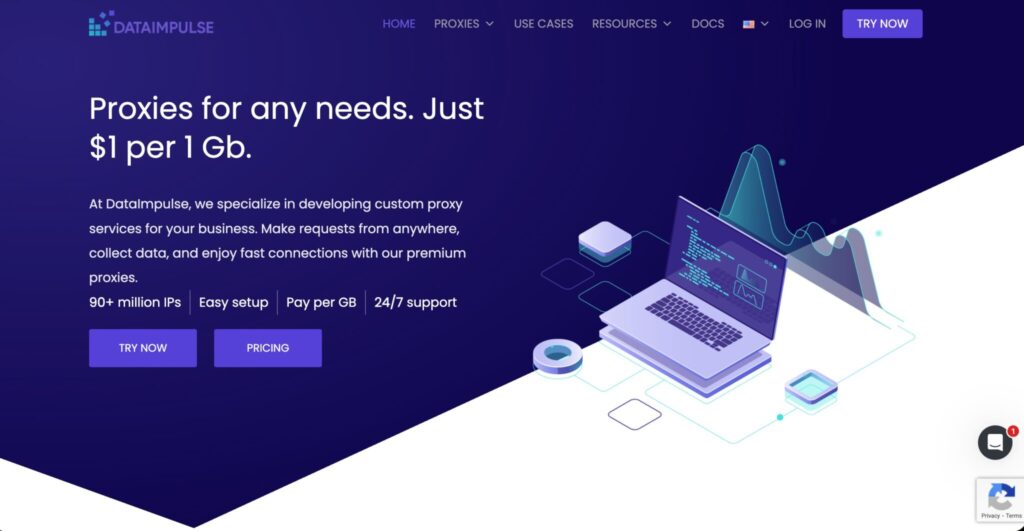
DataImpulse is one of the most interesting budget options for brand protection in 2026 because of its simple pay-as-you-go model.
The provider lists 90M+ residential IPs, pricing from $1 per GB, pay-per-GB billing, 24/7 support, and easy setup on its homepage. Its residential proxy page adds more useful details, including 90M+ ethical residential IPs, 195 countries, traffic that never expires, HTTP(S) and SOCKS5 support, rotating sessions, sticky sessions, API access, and new state, city, ZIP, and ASN targeting.
That is a strong package for small teams.
The non-expiring traffic model is especially helpful. Many brands do not run proxy-heavy checks every day. You might monitor heavily during a product launch, sale period, holiday campaign, or enforcement push, then slow down for a few weeks. Expiring bandwidth can waste budget. Non-expiring traffic gives smaller teams more breathing room.
DataImpulse can work well for:
basic marketplace monitoring
search result checks
price comparison
suspicious reseller audits
ad verification
lightweight brand monitoring workflows
Its mobile proxy page also lists 16M+ carrier IPs across 195 countries and pricing from $2 per GB. That can help teams checking mobile search, app-related pages, social media visibility, and mobile-first abuse.
DataImpulse is not the provider I would choose first for the most aggressive targets. But for budget monitoring, it is hard to ignore. The low entry price and flexible traffic model make it appealing for brands that need to start collecting better visibility without a large monthly commitment.
Where DataImpulse fits best
DataImpulse is best for startups, small ecommerce brands, solo analysts, and agencies testing brand protection workflows before investing in a larger platform.
It also works well for low-frequency monitoring where non-expiring traffic helps control cost.
Where it may not fit
For high-risk legal evidence gathering, enterprise support, or complex anti-piracy operations, you may want Oxylabs, Bright Data, SOAX, or another premium provider with deeper tooling and account support.
Pro-Tip: Use DataImpulse for early-stage brand monitoring. Build your first list of suspicious marketplaces, fake sellers, ad violations, and social profiles, then upgrade only when your volume or enforcement needs justify it.
How to Choose the Best Proxy for Brand Protection
Choosing a proxy provider for brand protection is not just about picking the largest IP pool. A big pool helps, but it does not automatically solve your monitoring problem.
You need the right proxy type, location depth, rotation logic, session behavior, and operational fit.
1. Start With the Threat You Are Monitoring
Different brand protection problems need different proxy setups.
If you are tracking counterfeit products on marketplaces, residential proxies are usually the best starting point. They help you view pages like normal shoppers.
If you are checking mobile app behavior, mobile search, or social impersonation, mobile proxies can be more useful.
If you are repeatedly monitoring the same pages, ISP or static residential proxies may provide better stability.
If you are checking high-volume public web data, you may need rotating residential proxies with strong concurrency.
Match the proxy to the threat first. Do not buy a large package just because the pool sounds impressive.
2. Check IP Pool Quality, Not Just Pool Size
Every proxy provider talks about pool size. That number matters, but quality matters more.
A clean, ethically sourced pool with strong regional coverage will usually outperform a large but overused network. For brand protection, weak proxies create false negatives. You may think a counterfeit listing is gone when the real issue is that your proxy was blocked or served a different version.
Look for:
residential IPs from real ISPs
clear sourcing policies
country and city coverage
low block rates
sticky session support
rotation control
transparent documentation
The best proxy pool is the one that lets you see what real customers see.
3. Understand Rotation Protocols
Rotation decides how often your IP changes.
For broad discovery, rotating IPs are useful. You can scan many pages without relying on the same identity.
For evidence capture, sticky sessions are better. You can keep the same IP while moving through a site, opening seller pages, checking cart behavior, or capturing screenshots.
For ongoing checks, static residential or ISP proxies may be better. They help you revisit the same targets with a consistent identity.
A strong brand protection setup often uses all three:
rotating residential proxies for discovery
sticky residential sessions for investigation
ISP or static residential proxies for repeated monitoring
4. Prioritize Geo-Targeting
Country targeting is the minimum. City, state, ZIP, ASN, or ISP targeting is better.
Why? Because brand abuse is often local.
A seller may violate MAP pricing in one region only. An affiliate may bid on your trademark in one city but not another. A counterfeit store may ship to certain markets while hiding from others.
Good geo-targeting helps your team catch abuse that broad monitoring misses.
5. Look at Compliance and Vendor Risk
Brand protection often touches legal workflows. That means your proxy provider should not create extra risk.
Look for providers with clear acceptable-use policies, ethical sourcing statements, account controls, KYC processes, and business-grade support.
This matters even more if you work with enterprise clients, regulated industries, or legal departments.
6. Test With Real Targets Before Scaling
Do not judge proxies only by dashboard claims.
Create a test list with:
marketplace pages
search result pages
regional ecommerce stores
social profiles
coupon pages
suspicious reseller URLs
known enforcement targets
Then test success rates, speed, session stability, and content consistency across locations.
The right provider should help you collect repeatable evidence, not just load random pages.
FAQs: Best Proxies for Brand Protection in 2026
How do proxies help detect counterfeit products?
Proxies help brand protection teams view ecommerce pages, marketplaces, and seller profiles from different locations and networks.
This matters because counterfeit sellers may hide listings from certain countries, block corporate IPs, or show different product details based on user location. Residential proxies make your traffic look closer to a normal shopper’s traffic, which improves your chance of seeing the same listings your customers see.
A good workflow is simple. Search for your branded product terms from multiple countries, capture suspicious listings, compare seller names, check images and descriptions, and document price differences. Then re-check the same pages with sticky sessions before filing takedowns.
What type of proxy is best for brand protection monitoring?
Residential proxies are usually the best starting point because they use IPs associated with real internet service providers.
For most brand protection workflows, residential proxies work well for marketplace monitoring, search checks, fake storefront discovery, coupon abuse detection, and reseller tracking.
Mobile proxies are better for mobile-first platforms, app behavior, mobile search, and social media checks. ISP proxies or static residential proxies are better when you need stable sessions for repeated monitoring.
The best setup often combines all three.
Can proxies detect trademark violations in paid search?
Yes, proxies can help detect trademark bidding and paid search abuse.
Search ads can vary by country, city, device, time of day, and user profile. A brand may not see the same ads from its office network that a real customer sees in another region.
With residential or mobile proxies, your team can search branded keywords from different locations and capture evidence of unauthorized ads, misleading copy, affiliate hijacking, or landing pages using your trademark without permission.
For stronger evidence, log the keyword, location, device type, timestamp, ad copy, display URL, landing page URL, and screenshot.
How do I monitor social media for brand impersonation using proxies?
Use proxies to check public social profiles, search results, hashtags, local pages, and mobile views from different regions.
Impersonation accounts often target specific markets. They may use your logo, product images, brand name variations, fake discounts, fake support pages, or scam landing pages. Mobile proxies can be useful here because many social platforms are mobile-first and may show different behavior on mobile networks.
A practical workflow is to build a keyword list with brand names, misspellings, product names, executive names, and support-related terms. Then monitor across regions and save public evidence before reporting the account.
Are datacenter proxies good enough for brand protection?
Sometimes, but they are not ideal for sensitive monitoring.
Datacenter proxies can work for simple checks on open websites, but many marketplaces, search engines, and social platforms treat datacenter traffic differently. They may block it, limit results, or show incomplete data.
For serious brand protection, residential proxies are usually safer. ISP proxies can also work well when you need stable sessions with better performance.
Datacenter proxies are useful for low-risk tasks, but they should not be your only proxy type if enforcement accuracy matters.
How often should brand protection teams rotate proxies?
It depends on the task.
For broad discovery, rotate frequently. This helps when scanning many pages, sellers, keywords, or regions.
For evidence gathering, use sticky sessions. You want the same IP while you inspect a seller page, open related listings, check shipping details, and capture screenshots.
For repeated monitoring of known targets, use ISP or static residential proxies. They provide a stable identity and reduce unnecessary session resets.
A good rule: rotate for discovery, stick for investigation, stay stable for recurring checks.
Can proxies help detect gray market sellers?
Yes. Proxies are very useful for gray market detection because unauthorized sellers often operate region by region.
A product might appear at a suspicious price in one country, show different shipping terms in another, or use altered product details on local marketplaces. Residential proxies let your team compare these views from different locations.
For gray market work, prioritize providers with strong country coverage, city targeting, sticky sessions, and enough IP diversity to avoid repeated blocks.
Are proxies legal for brand protection?
Using proxies for brand protection can be legitimate when you are accessing public web pages, respecting applicable laws, and following platform rules where required.
The risk comes from how proxies are used. Avoid collecting private data, bypassing authentication, violating terms in risky ways, or using questionable IP sources.
For business use, choose providers with ethical sourcing, compliance documentation, and clear acceptable-use policies. If your work supports legal enforcement, involve your legal team in the process.
Conclusion: Best Proxies for Brand Protection in 2026
The best proxy for brand protection depends on the kind of abuse you need to monitor.
If you run enterprise investigations, Oxylabs is the strongest all-around choice because of its large network, targeting depth, and enterprise-grade reliability.
If you need advanced anti-piracy and complex enforcement workflows, Bright Data is one of the most capable options because it combines a large proxy network with deeper data collection tooling.
If you want strong value without sacrificing serious coverage, Decodo is a smart middle-ground pick.
If your main challenge is gray market tracking, SOAX and ProxyEmpire are both strong options because they support regional visibility and flexible proxy types.
If you want long-term monitoring without premium pricing, IPRoyal is a practical choice.
If budget matters most, Webshare, Proxy-Cheap, and DataImpulse give you accessible ways to start monitoring counterfeit listings, reseller abuse, suspicious ads, and fake brand pages without overspending.
For most brand protection teams, the winning setup is not one proxy type. It is a layered system:
use rotating residential proxies for discovery
use sticky sessions for investigation
use ISP or static residential proxies for repeat monitoring
use mobile proxies for social, app, and mobile search checks
Brand abuse moves fast. Your monitoring setup has to move faster. A good proxy provider gives your team the visibility to spot violations early, document them properly, and act before fake sellers, bad affiliates, or impersonators damage customer trust.