
Best Proxies For Cloud Gaming
Cloud gaming sounds simple on paper. You press a button, the game runs on a remote server, and the video stream lands on your screen. In reality, it is one of the harshest stress tests for any network setup.
A proxy that works fine for browsing, scraping, or ad verification can feel terrible for cloud gaming. Why? Because cloud gaming is not just asking for a clean IP. It needs low latency, steady bandwidth, low packet loss, and a session that does not randomly rotate mid match.
That is why choosing the best proxies for cloud gaming is different from choosing proxies for bulk automation. You do not want the biggest IP pool by default. You want the right IP type, the right region, and the right rotation behavior.
This guide breaks down the best proxy providers for cloud gaming use cases such as network testing, regional QA, multi location performance checks, account access consistency, and privacy focused routing where allowed by the gaming platform’s terms.
What Makes A Proxy Good For Cloud Gaming?
A good cloud gaming proxy should feel invisible. It should not add noticeable delay, break login sessions, trigger endless security checks, or route your traffic through a crowded server.
For most cloud gaming setups, static ISP proxies are the safest starting point. They combine the speed of datacenter infrastructure with IPs registered through internet service providers. That gives you better stability than rotating residential proxies and better trust than plain datacenter IPs.
Residential proxies are useful when you need real user style IP diversity across locations. Datacenter proxies are fast and cheap, but many cloud gaming platforms and payment systems may flag them faster. Mobile proxies can work for mobile cloud gaming tests, but they are usually expensive and not ideal for long play sessions.
Pro Tip: Avoid aggressive rotation for cloud gaming. A proxy that changes every request or every few minutes can break sessions, increase login friction, and cause platform warnings.
Best Proxies For Cloud Gaming: Quick Comparison Table
| Provider | Best For | Proxy Types | Rotation Control | Geo Targeting | Cloud Gaming Fit |
|---|---|---|---|---|---|
| Bright Data | Enterprise testing | Residential, ISP, datacenter, mobile | Advanced | Country, city, ASN | Best for large scale QA |
| Oxylabs | Premium infrastructure | Residential, ISP, datacenter, mobile | Strong | Country, city | Best for reliability |
| Decodo | Balanced value | Residential, ISP, datacenter, mobile | Flexible sessions | 195 locations | Best overall pick |
| IPRoyal | Budget static IPs | Residential, ISP, datacenter, mobile | Sticky and static options | City and state | Best for small teams |
| SOAX | Precise location testing | Residential, mobile, datacenter | Session based | Country, city, carrier | Best for geo checks |
| NetNut | ISP backed stability | Residential, static residential, mobile, datacenter | Sticky sessions | Global | Best for stable routes |
| Webshare | Low cost setup | Datacenter, residential, static residential | Configurable | Global | Best starter option |
| Rayobyte | Static ISP and datacenter | ISP, datacenter, residential | Static and rotating options | Multiple locations | Best for fixed sessions |
| RapidSeedbox | Gaming style routing | Static proxies | Static | 100 plus countries | Best niche option |
1. Decodo: Best Overall Proxy Provider For Cloud Gaming
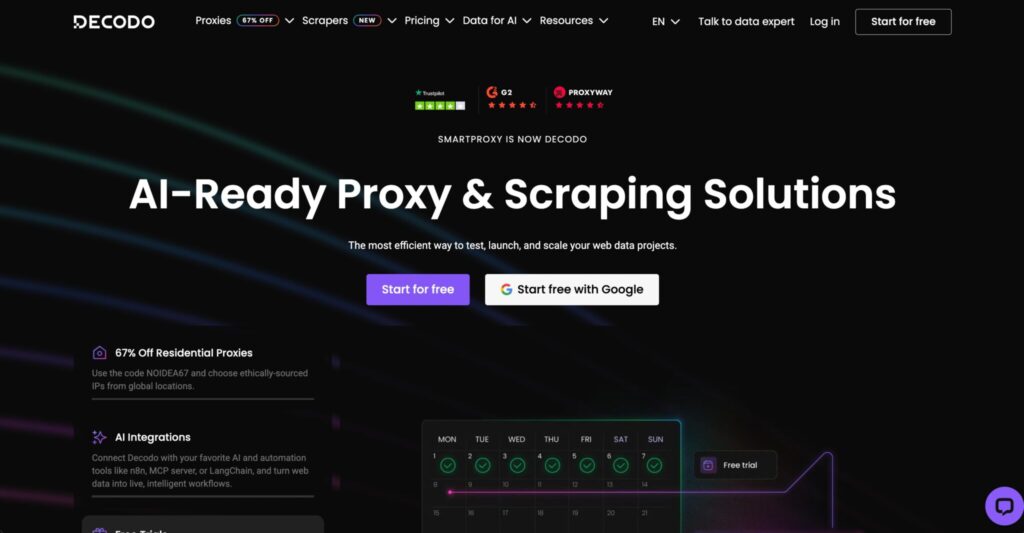
Decodo, formerly Smartproxy, is one of the best balanced choices for cloud gaming related proxy work. It offers a strong mix of residential, ISP, mobile, and datacenter proxies, which means you can test different routing styles without moving between vendors.
For cloud gaming, the most useful products are static residential or ISP style proxies. These are better for maintaining one consistent IP during a session. That matters when you are logging into Xbox Cloud Gaming, GeForce NOW, Boosteroid, or a browser based gaming platform from the same account.
Decodo also gives strong session control. You can use sticky sessions when you need the same IP for a longer period, or rotate when you are testing access from multiple locations.
It is not the cheapest option, but it is easier to manage than many enterprise first platforms. The dashboard is clean, setup is fast, and support is helpful enough for teams that do not want to spend hours fixing proxy authentication.
Best for: Agencies, QA teams, affiliate teams, and gaming researchers that want a reliable middle ground.
Pro Tip: Start with ISP proxies for session stability. Use rotating residential only when you are testing regional access or login behavior across multiple markets.
2. Bright Data: Best For Enterprise Cloud Gaming Testing
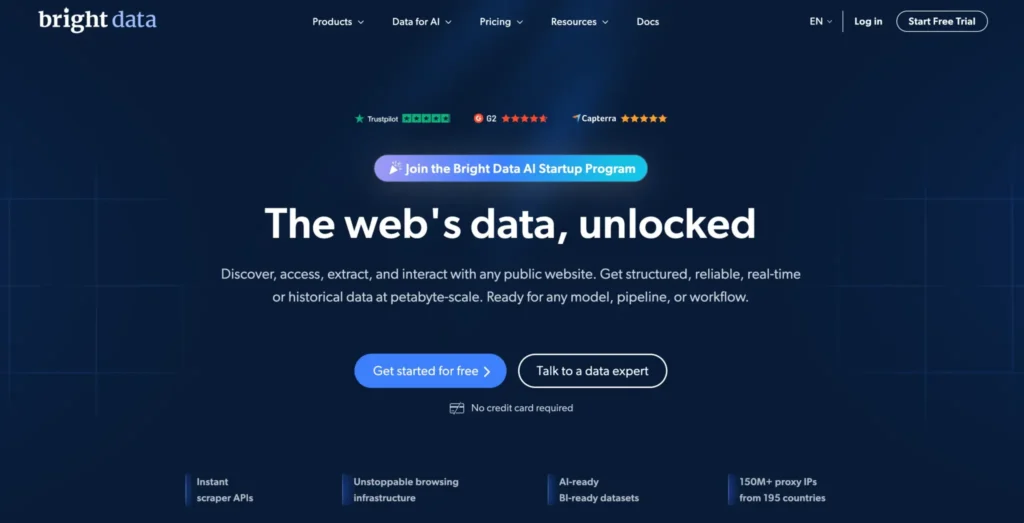
Bright Data is built for teams that need scale, precision, and control. Its proxy network is one of the largest in the market, with residential, ISP, mobile, and datacenter options across a wide location spread.
For cloud gaming, Bright Data makes sense when you are not just playing. It fits use cases like regional availability testing, latency route checks, app QA, price localization checks, and multi country platform monitoring.
The main advantage is control. You can target specific countries, cities, carriers, and even network types depending on the product. That is useful if you need to see how a cloud gaming platform behaves from London, Frankfurt, New York, Mumbai, or Singapore.
The downside is cost and complexity. Bright Data is not the proxy provider I would suggest for a casual gamer. It is better for companies, labs, and serious technical teams.
Best for: Enterprise QA, game studios, cloud gaming platforms, and network performance teams.
Pro Tip: Do not use the largest pool just because it exists. For gameplay style sessions, stable ISP proxies are usually more useful than massive rotating residential pools.
3. Oxylabs: Best Premium Proxy Network For Reliability
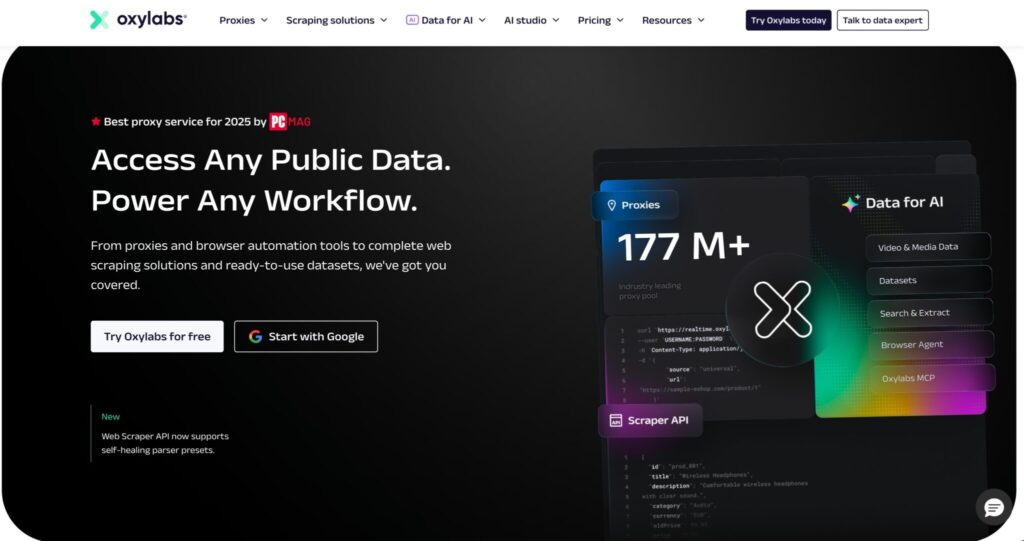
Oxylabs is another premium option with a large residential network, datacenter proxies, ISP proxies, and mobile proxies. It is known more for business grade web data collection, but its infrastructure quality also makes it relevant for cloud gaming testing.
For cloud gaming, Oxylabs works best when stability matters more than low entry cost. Its ISP proxies are particularly interesting because they are designed to combine datacenter level speed with residential style trust.
This is useful for long sessions where you do not want the IP to change. If you are testing cloud gaming from different cities or checking performance differences across regions, Oxylabs gives you enough targeting depth to build proper test cases.
The biggest drawback is pricing. Smaller users may find it too expensive. Large teams will appreciate the performance consistency and support.
Best for: Businesses that need reliable routing, compliance focused sourcing, and high quality infrastructure.
Pro Tip: Test your target region before buying a large plan. In cloud gaming, the closest proxy region is not always the fastest route to the gaming server.
4. IPRoyal: Best Budget Friendly ISP Proxies
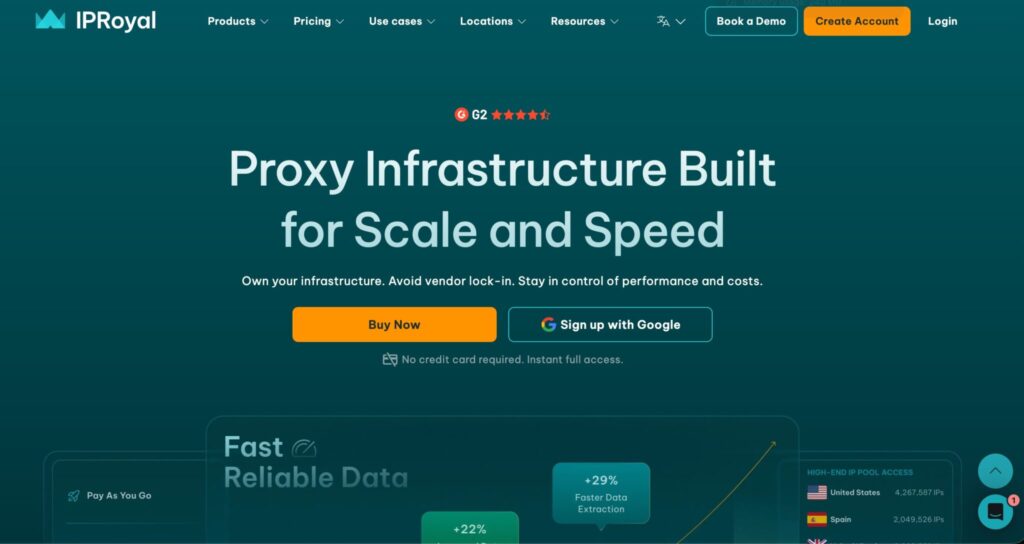
IPRoyal is a practical option for users who want ISP, datacenter, residential, and mobile proxies without jumping straight into enterprise pricing.
For cloud gaming, IPRoyal’s ISP proxies are the highlight. They are static, fast, and better suited for long sessions than rotating residential IPs. The provider also supports useful targeting options, including city and state level controls across several proxy products.
This makes IPRoyal a good fit for smaller QA teams, solo technical users, and affiliate testing workflows where cost control matters.
The tradeoff is that the network is not as massive as Bright Data or Oxylabs. Still, for many cloud gaming workflows, a clean static IP in the right location is more valuable than millions of rotating IPs you will never use.
Best for: Budget conscious users who need static IP stability.
Pro Tip: If your session keeps asking for verification, stop rotating. Pick one clean ISP IP, keep it consistent, and test again.
5. SOAX: Best For Precise Geo Testing
SOAX is strong when you need location accuracy. It offers residential, mobile, and datacenter proxy options with flexible targeting and session controls.
For cloud gaming, SOAX is useful when your main goal is testing regional behavior. That could include checking which countries show a service, how a platform handles location based restrictions, or how login flows behave from different regions.
SOAX is not my first pick for pure low latency gameplay because mobile and residential routes can vary. Still, it is very useful for location sensitive testing.
The dashboard is modern, and the targeting options are friendly enough for teams that do not want to build everything manually.
Best for: Regional QA, app testing, and market access checks.
Pro Tip: Use SOAX for geo validation, not necessarily for your longest play sessions. Once you find a working region, test a static ISP option for stability.
6. NetNut: Best For ISP Backed Stability
NetNut focuses heavily on residential and ISP style infrastructure. It offers a large residential pool, mobile proxies, static residential proxies, and datacenter options.
For cloud gaming, NetNut’s biggest strength is stable routing. Static residential and ISP backed proxies can help maintain session consistency while still looking closer to a normal user connection than a standard datacenter IP.
NetNut is better suited for professional users than casual buyers. The pricing and product structure make more sense when you are doing repeated testing, running controlled workflows, or checking multiple regions.
If your goal is stable account access, lower verification friction, and repeatable testing, NetNut deserves a place on your shortlist.
Best for: Professional teams that care about consistency and ISP style trust.
Pro Tip: Ask support which proxy type is best for persistent sessions before buying. The right product choice matters more than the brand name.
7. Webshare: Best Low Cost Proxy Option For Beginners
Webshare is one of the easiest ways to start with proxies. It offers datacenter, residential, and static residential proxies at accessible prices.
For cloud gaming, Webshare’s static residential proxies are more interesting than its basic datacenter proxies. Static residential IPs are better for maintaining a consistent identity during longer sessions.
The dashboard is simple, and the pricing is friendly. This makes Webshare a good testing ground if you are still learning whether proxies can help your specific cloud gaming workflow.
The limitation is support and advanced features. Webshare is not as hands on as premium enterprise providers. If you need deep troubleshooting, custom routing advice, or complex geo testing, you may outgrow it.
Best for: Beginners, small teams, and low budget testing.
Pro Tip: Avoid free proxies for cloud gaming. They are slow, crowded, risky, and often already abused.
8. Rayobyte: Best For Fixed ISP And Datacenter Sessions
Rayobyte is a solid option for users who want static ISP proxies, datacenter proxies, and residential proxies from one provider.
For cloud gaming, Rayobyte’s static ISP proxies are the most relevant. They are designed for speed and stability, which makes them better suited for long sessions than rotating proxy pools.
Rayobyte also offers rotating ISP options, but for cloud gaming, static usually wins. Rotation makes sense for testing many locations, not for staying inside the same gaming session.
The provider is especially useful if you want a more traditional proxy setup with clear IP allocation and predictable behavior.
Best for: Users who want dedicated or static IP style control.
Pro Tip: For cloud gaming, always test jitter, not just ping. A proxy with 45 ms stable latency can feel better than one jumping between 25 ms and 120 ms.
9. RapidSeedbox: Best Niche Proxy For Gaming Style Routing
RapidSeedbox is not as broad as Bright Data or Oxylabs, but it has a clear appeal for users looking for static proxies, high bandwidth, and simplified setup.
Its cloud gaming focused positioning makes it interesting for people who do not want to translate scraping proxy features into gaming use cases. Static IPs, global locations, and straightforward setup are useful when you need stable routing.
That said, treat it as a niche option. If you need large residential pools, advanced targeting, or enterprise scale testing, bigger providers offer more flexibility.
Best for: Users who want a simpler gaming oriented proxy setup.
Pro Tip: Pick a proxy location close to the cloud gaming server, not just close to you. The full route matters.
How To Choose The Best Proxy For Cloud Gaming
Choose ISP Proxies For Long Sessions
ISP proxies are usually the best choice for cloud gaming. They are static, fast, and more trusted than normal datacenter IPs. If you want one IP to stay active for a full session, start here.
Use Residential Proxies For Regional Testing
Residential proxies are useful when you need to test many real world locations. They are not always the fastest, but they are helpful for checking access, login behavior, and regional availability.
Be Careful With Datacenter Proxies
Datacenter proxies can be very fast, but they are easier to detect. They work best for basic network tests, not sensitive account sessions.
Avoid Fast Rotation
Rotation is useful for scraping. It is usually bad for cloud gaming. Choose sticky sessions, static IPs, or long rotation windows.
Test Latency, Jitter, And Packet Loss
Ping alone does not tell the full story. Cloud gaming needs stable delivery. Watch for sudden spikes, dropped frames, input lag, and stream quality drops.
Match Region To The Gaming Server
A proxy in Germany may be better for a European cloud gaming server than a proxy in your own country. Always test the route.
FAQs About Cloud Gaming Proxies
1. What is the best proxy type for cloud gaming?
Static ISP proxies are usually the best choice because they offer speed, consistency, and stronger trust than basic datacenter IPs.
2. Can proxies reduce ping in cloud gaming?
Sometimes, but not always. A proxy can improve routing if your ISP path is poor, but it can also increase latency if the proxy adds distance or congestion.
3. Are residential proxies good for cloud gaming?
They can be useful for regional testing, but they are not always ideal for long play sessions because speeds can vary.
4. Should I use rotating proxies for cloud gaming?
Usually no. Rotating proxies can break sessions and trigger security checks. Use sticky or static sessions instead.
5. Are free proxies safe for cloud gaming?
No. Free proxies are often slow, crowded, unstable, and risky for account security.
6. Can I use proxies with Xbox Cloud Gaming or GeForce NOW?
Technically, proxies may work in some setups, but you should follow each platform’s terms and supported region rules. Do not use proxies for abuse, ban evasion, or account fraud.
7. What matters more for cloud gaming, IP pool size or latency?
Latency and stability matter more. A huge IP pool means little if the route is slow or unstable.
Final Verdict: Which Cloud Gaming Proxy Should You Pick?
For most serious users, Decodo is the best overall choice because it balances proxy variety, ease of use, location coverage, and session control.
Bright Data and Oxylabs are better for enterprise testing. IPRoyal and Webshare are better for budget focused users. SOAX is strong for geo testing. NetNut and Rayobyte are solid when stable ISP backed sessions matter most.
The main rule is simple: do not buy cloud gaming proxies like you are buying scraping proxies. You need clean static routes, controlled sessions, low jitter, and locations that match the cloud gaming servers you are testing.
If the proxy adds instability, it is not helping. It is just another bottleneck between your controller and the game.