
Best Proxies for Ethical Hacking: A Practical Buyer’s Guide for Security Teams Ethical hacking is not just about running scanners and collecting reports. Good testing depends on controlled traffic, clean routing, safe repeatability, and a setup that does not break the client’s systems while you are trying to protect them.
That is where proxies become useful.
For ethical hackers, proxies are not magic invisibility tools. They are routing tools. A good proxy setup helps you test geo-based behavior, validate rate-limit rules, check exposed public assets, run authorized recon, monitor fraud patterns, and separate test traffic from your own office or home network.
The wrong proxy, though, creates problems fast. Dirty IPs get blocked. Shared pools create noisy results. Weak dashboards waste hours. Poor sourcing can create legal and compliance issues. So this guide focuses on proxy providers that make sense for professional, authorized security work.
Quick Comparison: Best Proxies for Ethical Hacking
| Provider | Best For | Proxy Types | IP Pool Strength | Rotation Control | Protocol Support | Main Advantage | Watch Out For |
|---|---|---|---|---|---|---|---|
| Bright Data | Enterprise security research | Residential, ISP, mobile, datacenter | Very large global pool | Advanced sticky and rotating sessions | HTTP, HTTPS, SOCKS5 | Strong controls and compliance tooling | Can feel expensive for small teams |
| Oxylabs | Large-scale authorized testing | Residential, ISP, mobile, datacenter | Huge enterprise-grade pool | Strong session options | HTTP, HTTPS, SOCKS5 | Reliable infrastructure and targeting | Higher learning curve |
| Decodo | Balanced teams and agencies | Residential, ISP, mobile, datacenter | Large global coverage | Easy rotation controls | HTTP, HTTPS, SOCKS5 | Beginner-friendly dashboard | Some advanced features cost more |
| SOAX | Geo-specific testing | Residential, mobile, ISP, datacenter | Strong location coverage | Flexible sticky sessions | HTTP, HTTPS, SOCKS5 | Precise filtering by location | Pricing can rise with bandwidth |
| NetNut | Stable enterprise routing | Residential, mobile, static residential | Strong ISP-backed network | Good session stability | HTTP, HTTPS, SOCKS5 | Consistent performance | Less ideal for tiny budgets |
| IPRoyal | Budget-conscious researchers | Residential, ISP, mobile, datacenter | Mid-sized but useful | Session TTL control | HTTP, HTTPS, SOCKS5 | Affordable entry point | Smaller pool than top enterprise tools |
| Webshare | Datacenter and ISP testing | Residential, ISP, datacenter | Strong for low-cost use | Simple rotation setup | HTTP, HTTPS, SOCKS5 | Cheap, clean dashboard | Fewer managed services |
| Rayobyte | US-focused and ISP-heavy tasks | Residential, ISP, datacenter | Strong static IP options | Static and rotating options | HTTP, HTTPS, SOCKS5 | Ethical sourcing focus | Not as broad globally as some rivals |
1. Bright Data: Best Overall for Enterprise Ethical Hacking
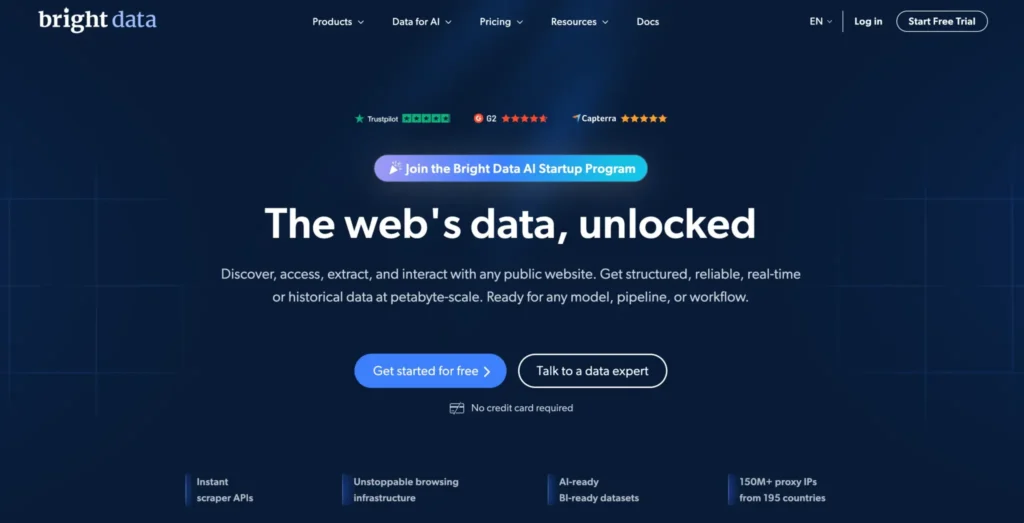
Bright Data is one of the strongest options when your work needs scale, control, and documentation. For ethical hacking teams, that matters because you may need clean routing across countries, cities, ISPs, and device-like environments without relying on random free proxies.
Its strength is flexibility. You can use residential proxies for real-user environment testing, ISP proxies for stable authenticated sessions, mobile proxies for mobile app behavior checks, and datacenter proxies for fast, repeatable scanning within an approved scope.
Bright Data is especially useful for mature security teams that need audit-friendly workflows, permissioned access, user management, and granular targeting.
Pro Tip: Use ISP proxies for login flow testing and residential proxies for geo-behavior validation. Do not rotate aggressively during authenticated tests because you may trigger false positives.
2. Oxylabs: Best for Large-Scale Authorized Security Research
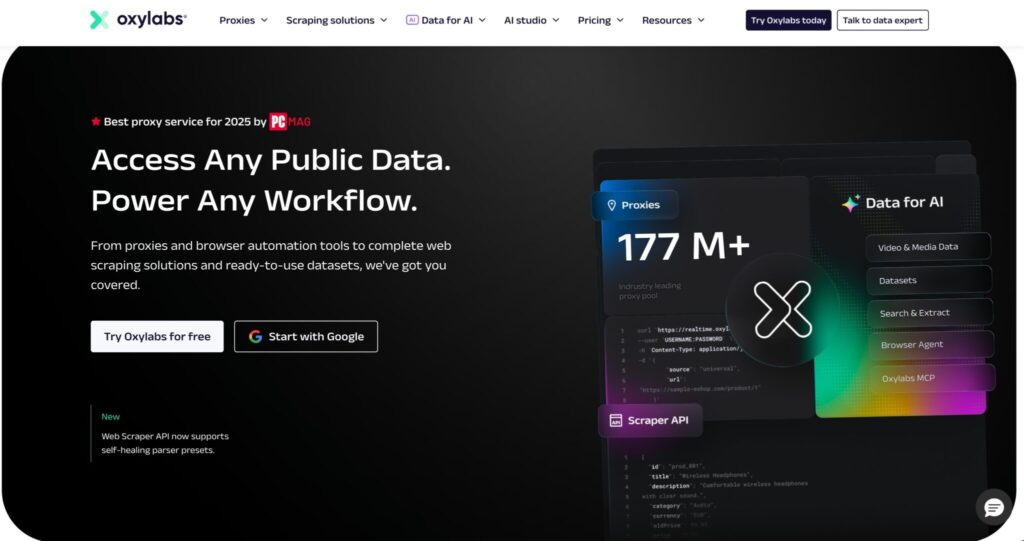
Oxylabs is built for teams that care about reliability. If you are running authorized recon across multiple regions, checking public attack surfaces, testing fraud controls, or validating localized security behavior, Oxylabs gives you a premium proxy stack with strong infrastructure.
Its residential pool is large, its datacenter network is fast, and its ISP proxies are useful when you need stable sessions that still look closer to regular ISP traffic than pure datacenter traffic.
For ethical hacking, Oxylabs is a strong fit when consistency matters more than the lowest price. It is not the cheapest provider, but the stability can save hours during complex testing windows.
Pro Tip: For repeated vulnerability verification, avoid changing exits too often. A sticky residential or ISP session gives cleaner evidence and fewer confusing logs.
3. Decodo: Best Balance of Price, Usability, and Coverage
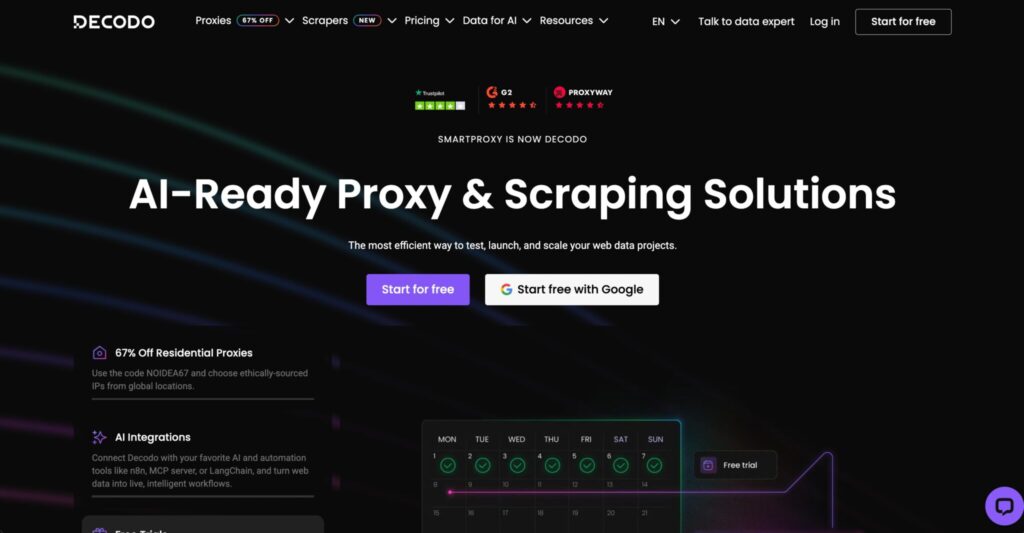
Decodo, formerly Smartproxy, is a strong middle-ground provider. It gives access to residential, mobile, ISP, and datacenter proxies, but the dashboard is easier to understand than many enterprise-heavy platforms.
That makes it a good pick for small security consultancies, affiliate fraud researchers, app testers, and bug bounty hunters working inside approved scopes.
Decodo’s biggest advantage is practical usability. You can set up rotating or sticky sessions without feeling like you need a full infrastructure engineer beside you. Its pricing is also more approachable than some premium enterprise tools.
Pro Tip: Use Decodo’s static residential or ISP proxies when testing dashboards, checkout flows, or admin portals where session continuity matters.
4. SOAX: Best for Geo-Targeted Security Testing
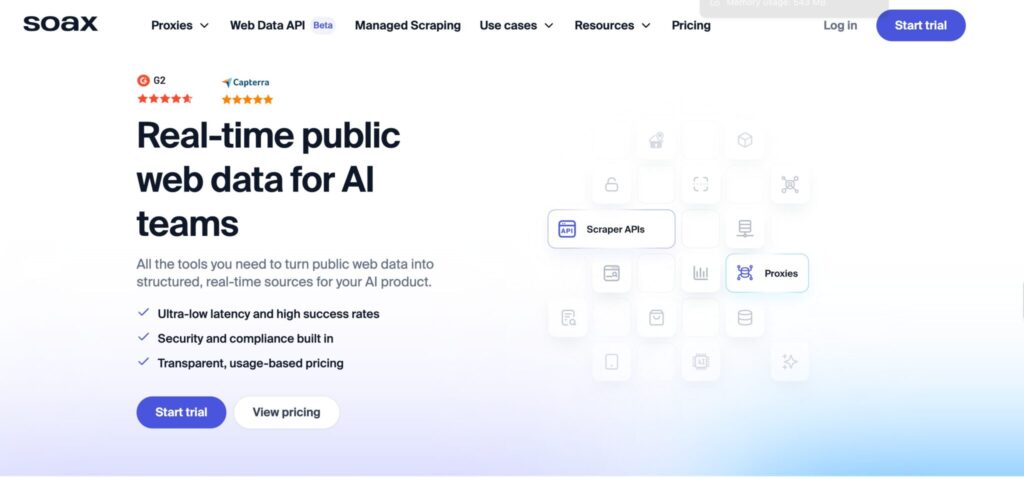
SOAX is useful when location accuracy is your main concern. Ethical hackers often need to check whether a website, app, or API behaves differently by region. That includes country-specific login rules, localized fraud controls, CDN behavior, content restrictions, and suspicious traffic handling.
SOAX provides detailed filtering options, which makes it attractive for controlled location-based testing. It also supports residential and mobile proxies, so you can test more realistic user paths.
For teams auditing global platforms, SOAX can be a practical choice because it lets you narrow traffic without wasting too much time on manual proxy filtering.
Pro Tip: Keep a location matrix before testing. List country, city, ASN, session length, and target URL. It makes reports cleaner and easier for clients to verify.
5. NetNut: Best for Stable Enterprise Proxy Routing
NetNut is a good option for teams that want stable routing and less random pool behavior. Its network is often positioned around direct ISP connectivity and business-grade proxy access, which can help when you need fewer interruptions during authorized testing.
It works well for ongoing monitoring, brand-protection security checks, phishing page research, and public web intelligence tasks where unstable IP quality can ruin data.
NetNut is not always the first choice for a solo researcher with a small budget, but for agencies and internal security teams, it can be a dependable option.
Pro Tip: Use NetNut for recurring checks where you compare results week after week. Stable routing makes trend analysis more reliable.
6. IPRoyal: Best Budget Pick for Ethical Hackers
IPRoyal is a practical choice if you want proxy flexibility without enterprise pricing. It offers residential, ISP, mobile, and datacenter proxies, and the platform is simple enough for freelancers and smaller security teams.
The residential pool is not as large as Bright Data or Oxylabs, but it is enough for many common ethical hacking tasks, especially geo checks, public asset review, test account validation, and controlled data collection.
Its session TTL controls are useful because you can decide whether to rotate frequently or keep a longer session. That matters when you are trying to avoid messy test results.
Pro Tip: Start with a small residential plan and test IP quality against your actual target scope before buying large bandwidth.
7. Webshare: Best Low-Cost Datacenter and ISP Proxy Option
Webshare is attractive for teams that want affordable proxies with a clean interface. It is especially useful for datacenter and static residential proxy work, where speed, budget, and simple management matter.
For ethical hacking, Webshare works well for non-sensitive testing, QA automation, public endpoint checks, and fast routing where you do not need premium mobile or advanced enterprise controls.
Its static residential proxies can be useful when you need consistent sessions, while datacenter proxies can help with faster internal lab-style tests.
Pro Tip: Use Webshare datacenter proxies for speed testing and basic public endpoint checks. Use ISP or static residential proxies when accuracy matters more than raw speed.
8. Rayobyte: Best for ISP and US-Focused Proxy Needs
Rayobyte is a solid option for ethical hackers who want ethically sourced proxies and strong static IP availability. Its ISP proxies are useful for stable test sessions, while its residential and datacenter options support broader routing needs.
Rayobyte works well for teams doing public data security checks, brand abuse monitoring, phishing intelligence, and approved reconnaissance where IP reputation matters.
It may not be as globally broad as the largest enterprise networks, but its transparency and static proxy options make it worth considering.
Pro Tip: Choose static ISP proxies for repeatable testing. Choose rotating residential proxies only when the test case actually requires varied user-like routing.
How to Choose Proxies for Ethical Hacking
1. Match Proxy Type to the Test
Do not buy residential proxies just because they sound premium. Use the right type.
Datacenter proxies are fast and affordable. They work well for basic testing, lab automation, QA, and approved scanning where IP realism is not important.
Residential proxies are better when you need to observe how a public system behaves for normal consumer traffic.
ISP proxies sit in the middle. They are stable like datacenter proxies but carry ISP-associated IPs, which helps with long sessions.
Mobile proxies are useful for mobile app testing, carrier-specific behavior, and mobile fraud research.
2. Check IP Pool Quality, Not Just Pool Size
A provider may advertise millions of IPs, but size alone does not guarantee quality. Look for clean reputation, strong geo coverage, ASN diversity, low error rates, and clear sourcing policies.
For ethical hacking, clean IPs help reduce false positives. If every request gets blocked because the pool is dirty, your report becomes noisy.
3. Understand Rotation Protocols
Rotation controls decide how often your exit IP changes. Common options include rotating every request, rotating after a fixed time, sticky sessions, or manual rotation through an API.
For vulnerability verification, sticky sessions are often better. For public exposure checks across regions, rotation may help. For login testing, too much rotation can trigger security systems and distort your results.
4. Prefer SOCKS5 When Traffic Type Matters
HTTP and HTTPS proxies work well for browser and web traffic. SOCKS5 is more flexible because it can support different traffic types beyond standard web requests.
That said, do not use protocol flexibility as an excuse to spray traffic everywhere. Keep your work inside written authorization.
5. Demand Compliance and Sourcing Clarity
Ask the provider how it sources residential and mobile IPs. Avoid shady free proxies, unknown peer networks, and providers that cannot explain consent.
This is not just an ethical issue. Bad sourcing can create legal risk, polluted results, and client trust problems.
Final Verdict: Which Proxy Should You Pick?
If you need the strongest all-round setup for professional ethical hacking, choose Bright Data. It has the depth, controls, and infrastructure for serious teams.
If you want enterprise reliability with strong targeting, choose Oxylabs.
If you need a practical balance of price and usability, choose Decodo.
If your work depends heavily on location-specific testing, choose SOAX.
For smaller budgets, IPRoyal and Webshare make sense. For stable ISP-heavy work, Rayobyte is a smart pick. For enterprise monitoring and repeatable routing, NetNut deserves a close look.
The best proxy is not the one with the biggest pool. It is the one that gives you clean IPs, clear controls, legal sourcing, reliable sessions, and results your client can trust.
FAQs About Proxies for Ethical Hacking
1. Are proxies legal for ethical hacking?
Yes, proxies are legal when used for authorized testing, privacy, security research, QA, and public data work. The key is permission. If you are testing systems without approval, a proxy does not make that activity ethical or legal.
2. What type of proxy is best for ethical hacking?
It depends on the task. Datacenter proxies are best for speed. Residential proxies are better for user-like web behavior. ISP proxies are best for stable long sessions. Mobile proxies are useful for testing mobile apps, carrier behavior, and mobile-specific security checks.
3. Should ethical hackers use free proxies?
Usually, no. Free proxies are slow, unreliable, risky, and often poorly sourced. They can leak data, inject traffic, disappear mid-test, or create inaccurate results. For professional work, paid providers are safer and easier to document.
4. Are SOCKS5 proxies better than HTTP proxies?
SOCKS5 proxies are more flexible because they can handle more traffic types. HTTP and HTTPS proxies are fine for standard web testing. Choose based on the protocol your authorized test requires, not because one sounds more advanced.
5. How many proxies do I need for ethical hacking?
For small tests, a handful of clean static or ISP proxies may be enough. For geo testing, you may need access to multiple regions. For larger public research projects, bandwidth and location diversity matter more than the raw number of proxy IPs.
6. Do proxies hide ethical hacking activity?
A proxy routes traffic through another IP, but it does not make activity invisible. Clients, providers, logs, browsers, DNS patterns, and application behavior can still reveal details. Ethical hackers should focus on clean test design, not hiding from accountability.
7. What is the safest way to use proxies during a security test?
Use written authorization, define target scope, set rate limits, log your own activity, avoid third-party systems outside scope, and choose a provider with clear sourcing policies. Good documentation protects both the tester and the client.
8. Which proxy provider is best for beginners?
Decodo, IPRoyal, and Webshare are easier starting points because their dashboards are simple and pricing is more approachable. Bright Data and Oxylabs are stronger for enterprise teams but may feel heavier for a first setup.