
Best Proxies For Gaming Automation.
Gaming automation is no longer just about running scripts in the background and hoping nothing breaks. Teams now use automation for QA testing, regional server checks, game marketplace monitoring, bot behavior research, anti-fraud testing, latency diagnostics, and multi-location performance audits.
The tricky part is simple: games are aggressive with traffic signals.
A weak proxy setup can ruin the whole workflow. Bad IP reputation, poor session control, overloaded endpoints, random disconnects, and poor geo-targeting can make your automation look unstable before your scripts even start working.
The best proxies for gaming automation are not always the cheapest or the largest. You need clean IPs, stable sessions, location control, protocol support, and enough rotation flexibility to match the job.
Also, keep your work inside the game’s rules. Proxies should support legitimate testing and research, not cheating, account abuse, or ban evasion.
Quick Comparison Table: Best Gaming Automation Proxy Providers
| Provider | Best For | Proxy Types | IP Pool Strength | Rotation Options | Protocols | Main Advantage |
|---|---|---|---|---|---|---|
| Bright Data | Enterprise gaming QA and large automation teams | Residential, ISP, mobile, datacenter | Very large global pool | Rotating and sticky sessions | HTTP, HTTPS, SOCKS5 | Strong controls and compliance |
| Oxylabs | High-scale data and testing workflows | Residential, mobile, ISP, datacenter | 175M+ residential IPs | Auto rotation and sticky options | HTTP, HTTPS, SOCKS5 | Premium infrastructure |
| Decodo | Balanced price, usability, and scale | Residential, ISP, mobile, datacenter | 125M+ total IPs | Sticky and rotating sessions | HTTP, HTTPS, SOCKS5 | Easy dashboard and strong value |
| SOAX | Geo-specific gaming tests | Residential, mobile, ISP, datacenter | Large global pool | Sticky, rotating, custom session modes | HTTP, HTTPS, SOCKS5 | Precise location targeting |
| IPRoyal | Budget-conscious automation teams | Residential, ISP, mobile, datacenter | Mid-size global pool | Rotating and sticky options | HTTP, HTTPS, SOCKS5 | Flexible pay-as-you-go plans |
| Webshare | Affordable static and rotating setups | Residential, static residential, datacenter | 80M+ residential IPs | Rotating and static options | HTTP, SOCKS5 | Low-cost entry point |
| NetNut | Simple scaling with residential IPs | Residential, mobile, ISP, datacenter | 85M+ residential IPs | Rotating and sticky options | HTTP, HTTPS, SOCKS5 | Easy enterprise setup |
| Rayobyte | US-focused proxy workloads | Residential, datacenter, ISP | Strong US-based network | Rotating and static options | HTTP, HTTPS | Reliable support and datacenter depth |
1. Bright Data: Best Overall for Enterprise Gaming Automation
Bright Data is the provider I would look at first for serious gaming automation teams that need control, documentation, compliance checks, and multiple proxy networks under one roof. It supports residential, ISP, mobile, and datacenter proxies, which gives technical teams more room to build different testing environments.
For gaming automation, Bright Data is useful when you need to test access from different regions, check multiplayer server behavior, monitor public game data, or run controlled browser-based workflows. The big advantage is session handling. You can use rotating sessions when your task needs fresh IPs, or sticky sessions when a login, cart, marketplace, or game account dashboard needs session consistency.
It is not the cheapest option. Smaller teams may feel the pricing before they feel the benefits. But for agencies, QA labs, and teams handling many locations, the control panel and proxy network quality make it a strong pick.
Pro-Tip
Use ISP proxies for longer session stability and residential proxies for region diversity. Do not rotate IPs too aggressively during login-style workflows, as that can create suspicious traffic patterns.
2. Oxylabs: Best for High-Scale Gaming Data Workflows
Oxylabs is built for scale. Its residential proxy pool is huge, and the platform is designed for data-heavy use cases where reliability matters more than saving a few dollars. If your gaming automation work includes public data collection, price tracking, esports market monitoring, or large regional checks, Oxylabs is one of the safer premium choices.
The provider supports residential, mobile, ISP, and datacenter proxies. That matters because gaming automation is not one single use case. A marketplace checker may need residential IPs, a speed test may work better with datacenter proxies, and mobile app testing may require mobile IPs.
Oxylabs also has strong documentation and enterprise support. For technical teams, that can save hours during setup. The downside is pricing. Oxylabs makes the most sense when your automation project has real commercial value behind it.
Pro-Tip
For workflows that need repeated actions from the same identity, use sticky or ISP sessions. For public page checks, rotating residential proxies are usually more practical.
3. Decodo: Best Balance of Price, Scale, and Ease of Use
Decodo, formerly Smartproxy, is one of the most practical choices for gaming automation teams that want good infrastructure without enterprise complexity. It has a large IP pool, supports several proxy types, and offers a clean dashboard that does not feel painful for new users.
For gaming automation, Decodo fits well for QA testing, regional content checks, marketplace monitoring, and multi-account browser environments where each profile needs its own clean network identity. Its sticky residential proxies are especially useful when you need to keep the same IP for a short controlled session.
Decodo also works well for teams using anti-detect browsers, automation tools, and custom scripts. It is not as deeply enterprise-focused as Bright Data or Oxylabs, but that is part of its appeal. You get strong coverage, good usability, and flexible plans.
Pro-Tip
Create separate proxy users or endpoints for each automation project. It makes bandwidth tracking easier and helps you spot failing workflows faster.
4. SOAX: Best for Granular Geo-Targeting
SOAX is a strong choice when location accuracy matters. Gaming automation often depends on geography. You may want to test how a game store appears in Germany, how a matchmaking page loads in Brazil, or whether a regional promo is visible in a specific city.
SOAX gives you strong filtering options and supports sticky sessions, automatic rotation, and multiple proxy types. The platform is especially useful when your automation depends on country, city, carrier, or ISP-level targeting.
It works well for mobile-first testing too. Many gaming platforms now behave differently across desktop, mobile web, and app environments. Mobile proxies help teams test those experiences with more realistic network signals.
The only catch is that advanced targeting can increase cost. If you only need basic traffic routing, SOAX may be more than you need.
Pro-Tip
Use city-level targeting only when the test truly needs it. For general regional checks, country-level targeting is usually enough and often more cost-efficient.
5. IPRoyal: Best Budget-Friendly Option
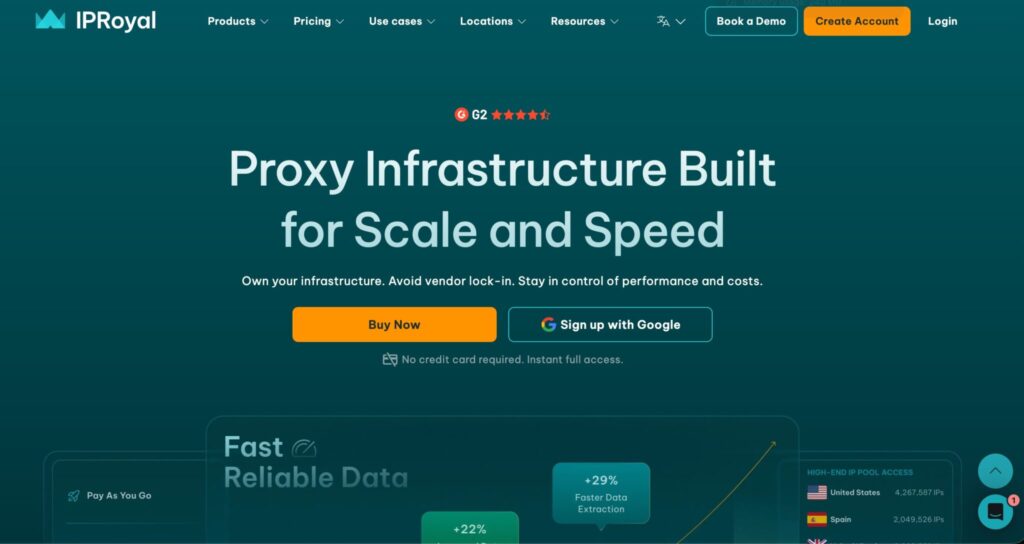
IPRoyal is a good pick for smaller teams, solo developers, and gaming automation projects that need flexible pricing. It offers residential, ISP, mobile, and datacenter proxies, so you can test different proxy types without jumping into a large contract.
The biggest appeal is flexibility. If your project is still experimental, you may not want to buy a large monthly package. IPRoyal’s pay-as-you-go approach can make early testing less risky.
For gaming automation, IPRoyal is suitable for lightweight workflows such as public data checks, region testing, and simple automation tasks. It may not match the enterprise polish of Bright Data or Oxylabs, but it gives you enough coverage to build and test without heavy upfront spend.
Pro-Tip
Start with a small residential plan, test success rate by region, then scale only the countries that perform well. Do not assume every location will behave the same.
6. Webshare: Best Low-Cost Proxy Setup
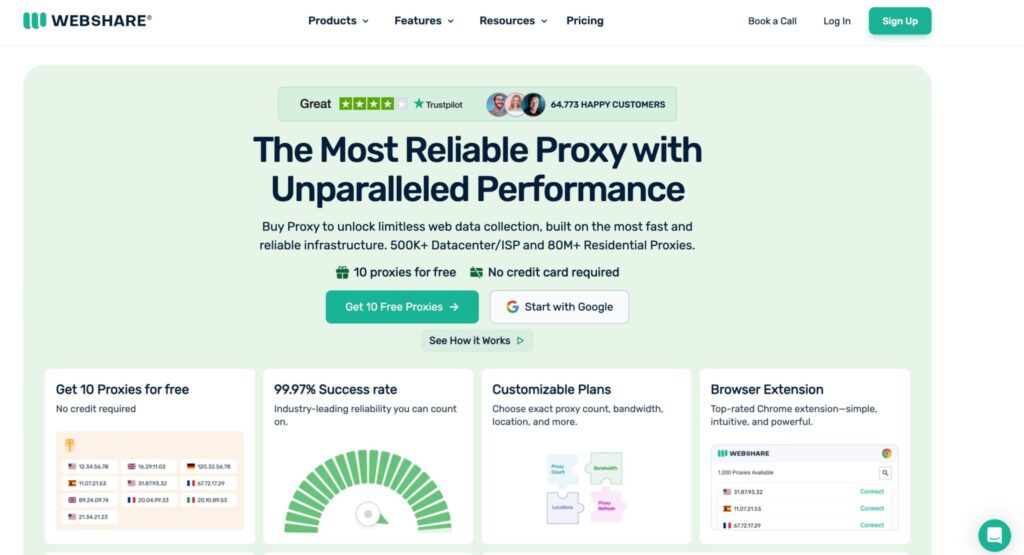
Webshare is one of the most accessible options for teams that want simple proxy infrastructure at a friendly price. It offers rotating residential proxies, static residential proxies, and datacenter proxies. For gaming automation, that mix is useful because not every task needs expensive residential traffic.
Static residential proxies are especially interesting. They combine ISP-like trust signals with better stability than rotating residential sessions. For account dashboards, QA flows, and longer browser sessions, that can be helpful.
Webshare is also beginner-friendly. The dashboard is simple, pricing is clear, and the setup process is not too technical. The tradeoff is that it lacks some advanced scraping and automation features offered by premium providers.
Pro-Tip
Use Webshare datacenter proxies for basic speed and server checks, then move to residential or static residential only for workflows where IP trust matters.
7. NetNut: Best for Simple Enterprise Scaling
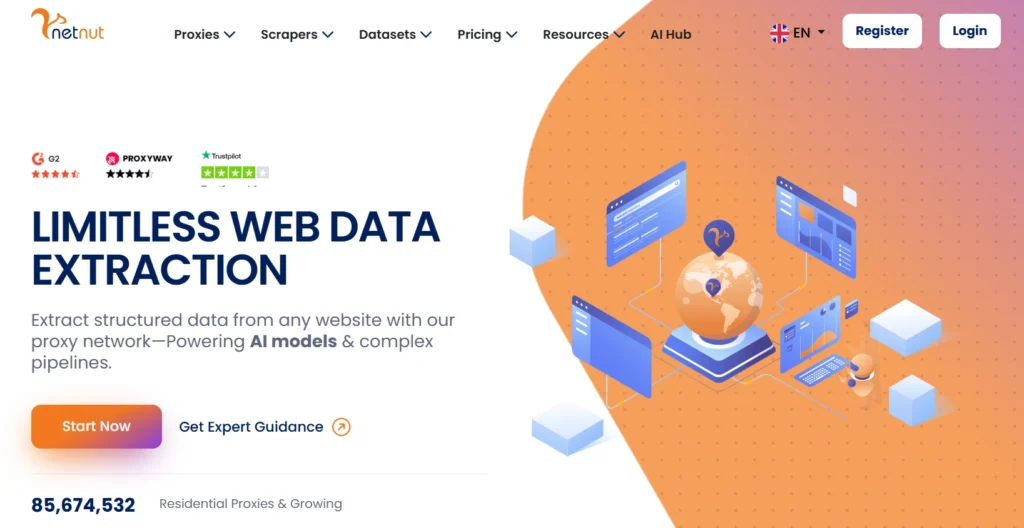
NetNut is a solid choice for teams that want residential proxies with strong scalability and fewer setup headaches. It offers rotating residential proxies across many countries, along with support for HTTP, HTTPS, and SOCKS5.
For gaming automation, NetNut works well when you need a large number of concurrent sessions. That matters for QA teams running repeated regional checks, public marketplace tracking, or controlled load-style testing on owned systems.
The platform also leans toward business users, so it may feel less attractive for very small hobby projects. But if you want simple scaling without building too much proxy logic yourself, NetNut deserves a spot on the shortlist.
Pro-Tip
Monitor success rate by endpoint, not only total bandwidth. A cheaper proxy setup can become expensive if failed requests keep repeating.
8. Rayobyte: Best for US-Centric Automation and Datacenter Depth
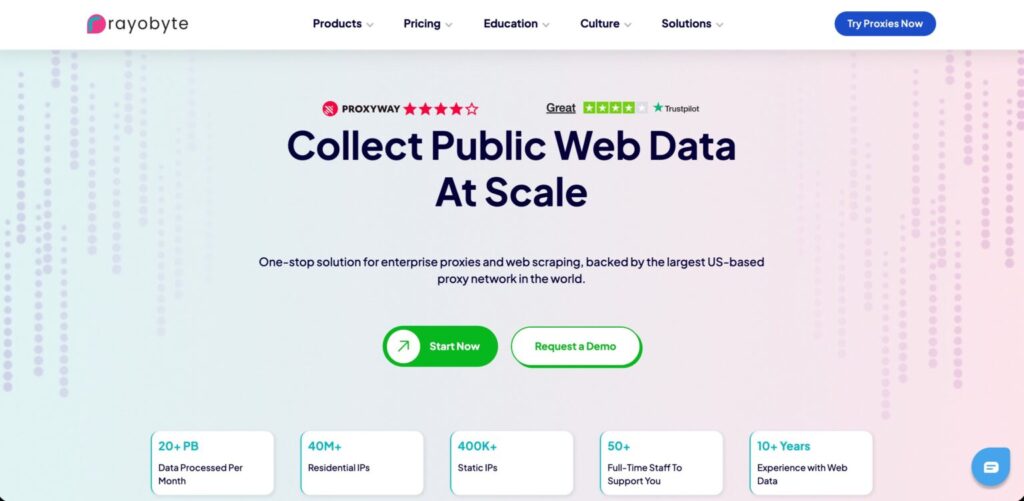
Rayobyte is a good fit when your gaming automation work has a strong US focus or when you need reliable datacenter and ISP-style options. It has been around for years and is known for proxy infrastructure aimed at public web data collection.
For gaming workflows, Rayobyte can be useful for server checks, public data monitoring, pricing research, and automation that does not require heavy residential rotation. Its datacenter proxies can be fast and stable, which matters for performance testing.
Residential coverage is available too, but Rayobyte’s strongest appeal is its infrastructure depth and support-oriented approach. If your target use case does not require a massive global residential pool, Rayobyte can be a practical and stable option.
Pro-Tip
Do not use datacenter proxies for everything. They are fast, but gaming platforms often treat datacenter traffic differently from residential or ISP traffic.
How to Choose Proxies for Gaming Automation
Understand Your Actual Use Case First
Before buying proxies, define the workflow. Are you testing game servers? Monitoring public marketplace prices? Running browser QA? Checking regional availability? Testing mobile app behavior? Each job needs a different proxy type.
Residential proxies are better for realism. ISP proxies are better for longer stable sessions. Datacenter proxies are better for speed and cost. Mobile proxies are useful for app testing and mobile-first traffic behavior.
Look at IP Pool Quality, Not Just Pool Size
A huge IP pool sounds impressive, but quality matters more. You want clean IPs, diverse ASN coverage, stable uptime, and low failure rates. For gaming automation, bad IP reputation creates noisy results. Your script may look broken when the actual issue is the proxy.
Test a provider with your exact target regions before scaling. A provider can perform well in the US and poorly in Southeast Asia, or the opposite.
Choose the Right Rotation Style
Rotation is where many teams make mistakes.
Rotating per request works well for public data checks and lightweight scraping. Sticky sessions work better for login flows, profile-based testing, and workflows that need identity consistency. Static or ISP proxies are best when you need the same IP for a longer period.
For gaming automation, random aggressive rotation can look unnatural. Controlled rotation is almost always better.
Check Protocol Support
HTTP and HTTPS proxies are fine for most browser and web automation. SOCKS5 is useful when your workflow needs broader traffic support, lower-level app compatibility, or non-browser tools.
If your automation stack uses Playwright, Selenium, Puppeteer, custom clients, or anti-detect browsers, check compatibility before buying a large plan.
Watch Bandwidth Pricing
Gaming automation can burn bandwidth quickly, especially with browser rendering, media-heavy pages, game stores, and repeated tests. A low per-GB price matters, but success rate matters more.
A provider charging more per GB may still be cheaper if it reduces retries, failed sessions, and blocked requests.
Best Proxy Type for Gaming Automation
Residential proxies are the safest general choice for realistic regional testing. ISP proxies are best for stable account-based workflows. Mobile proxies are useful for app testing and carrier-level checks. Datacenter proxies are best for speed, low cost, and non-sensitive workloads.
Most serious teams use a mix. For example, datacenter proxies for basic checks, residential proxies for public marketplace monitoring, and ISP proxies for longer browser sessions.
FAQs About Gaming Automation Proxies
1. What are the best proxies for gaming automation?
Bright Data, Oxylabs, Decodo, SOAX, IPRoyal, Webshare, NetNut, and Rayobyte are strong choices. The best one depends on your use case, budget, location needs, and session requirements.
2. Are residential proxies better for gaming automation?
Residential proxies are usually better when you need realistic user-like traffic from specific locations. They are not always needed for simple server checks or speed tests.
3. Should I use rotating or sticky proxies?
Use rotating proxies for public data checks and repeated page requests. Use sticky proxies when the workflow needs the same IP for a short session, such as QA testing or account dashboard checks.
4. Are datacenter proxies good for gaming automation?
Yes, but only for the right tasks. They are fast and affordable, but they can be easier to identify than residential or ISP proxies. Use them for basic checks, not sensitive workflows.
5. Do proxies reduce gaming ping?
Not usually. A proxy can even add latency. For actual gameplay, proxies are rarely the best solution. For testing, automation, and regional checks, they are useful.
6. Are gaming proxies legal?
Proxy use itself is legal in many cases, but how you use them matters. Always follow the game platform’s terms, local laws, and ethical testing rules.
7. What is the safest setup for multi-region gaming tests?
Use residential or ISP proxies from the target countries, keep sessions consistent, avoid unnecessary rotation, and monitor success rate by region.
8. Which proxy provider is best for beginners?
Decodo, Webshare, and IPRoyal are easier starting points. Bright Data and Oxylabs are better for larger teams with bigger budgets and more complex requirements.
Final Buying Advice
For enterprise-grade gaming automation, start with Bright Data or Oxylabs. For the best balance of usability and price, Decodo is the easiest recommendation. For location-heavy testing, SOAX is excellent. For smaller budgets, IPRoyal and Webshare make sense. For simple scaling, NetNut is strong.
For US-focused or datacenter-heavy workflows, Rayobyte is worth testing.
The smartest approach is not to buy the largest plan first. Pick two providers, test them with your actual automation stack, compare success rate, latency, session stability, and cost per successful task. That final metric matters more than the headline price.
A good proxy setup should make your gaming automation quieter, cleaner, and more predictable. If it only gives you more failed requests, it is not a bargain. It is just a noisy bill.